
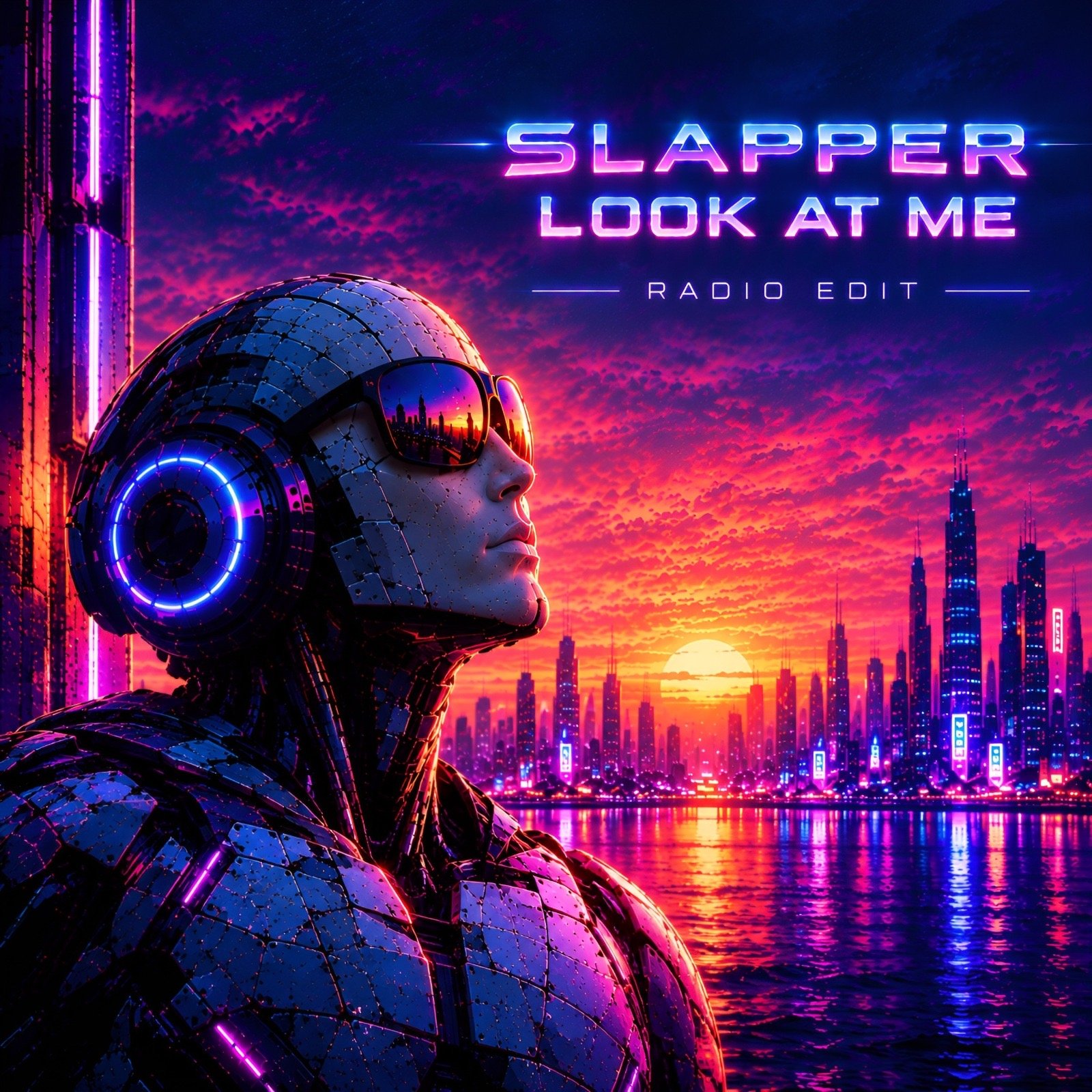
Hello everyone, it’s your host Oliver from DULAXI, and today I’m delighted to be joined by Claudiu-Gabriel Tache, the creative mind behind SLAPPER, an independent electronic music project originating from Bucharest, Romania. Blending electronic, synthpop, synthwave, Eurodance, trance, and melodic techno influences, SLAPPER continues to explore the relationship between nostalgic electronic sounds and contemporary musical expression. His latest single, “Look at Me,” released on October 9, 2026, explores emotional disconnection, the desire to be understood, and the importance of rediscovering oneself.
Before we begin our conversation with Claudiu-Gabriel, here’s what you need to know about today’s featured project.
About SLAPPER
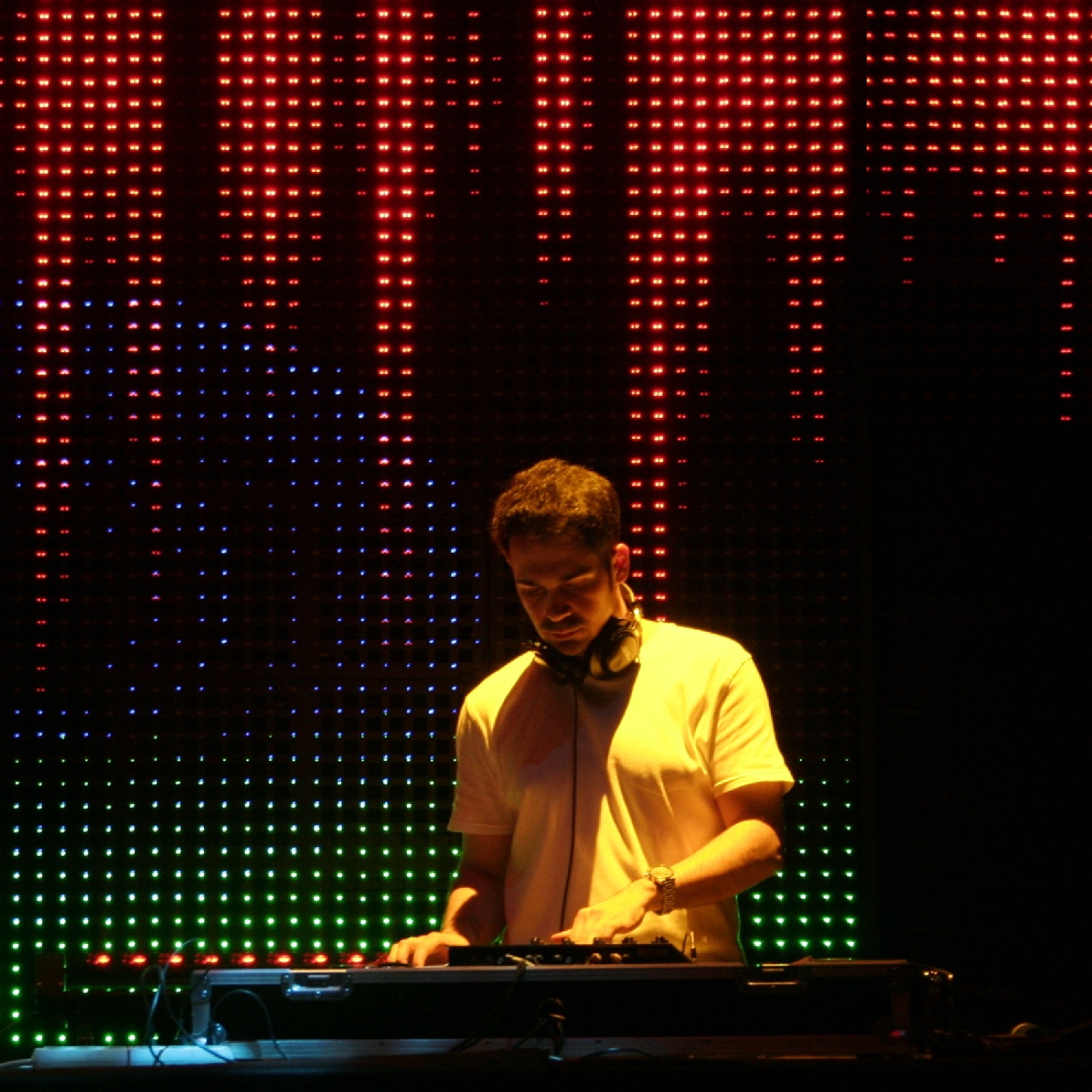
Established in Bucharest in 1998, SLAPPER began as a solo electronic music project created by Claudiu-Gabriel Tache, who handles synthesizers and programming. His musical identity developed through an appreciation of electronic pioneers and influential acts such as Jean-Michel Jarre, Kraftwerk, Depeche Mode, Pet Shop Boys, Robert Miles, Moby, and Chicane. Beyond producing music, Tache also established himself within Bucharest’s club scene, performing as a DJ at venues including Indie, Kulturhaus, Club A, Oldies, Damage, Sinners, Hybrid, and Deeper. Among the notable moments from this period were opening performances for Alphaville at Arenele Romane in 2008 and De/Vision at Silver Church in 2010.
Alongside his work as a producer and DJ, Tache explored music curation through his radio programme, “Recycle Spin with SLAPPER,” which aired on RadioIndieGen.ro in 2015 and 2016. Following a six-year break from releasing music, SLAPPER returned in December 2023 with the album “Music Box Memories,” beginning a new chapter that continued with “Mirrors” in 2024 and “Hope” in 2025. These releases explored different emotional territories while developing the project’s recognisable combination of atmospheric synthesizers, melodic electronic arrangements, and nostalgic influences. Subsequent singles, including “Into the Light,” “The Break of Day,” “We Kept the Night,” “Disco Decoder,” and “Imagination,” further demonstrated his willingness to experiment with different expressions of electronic music.
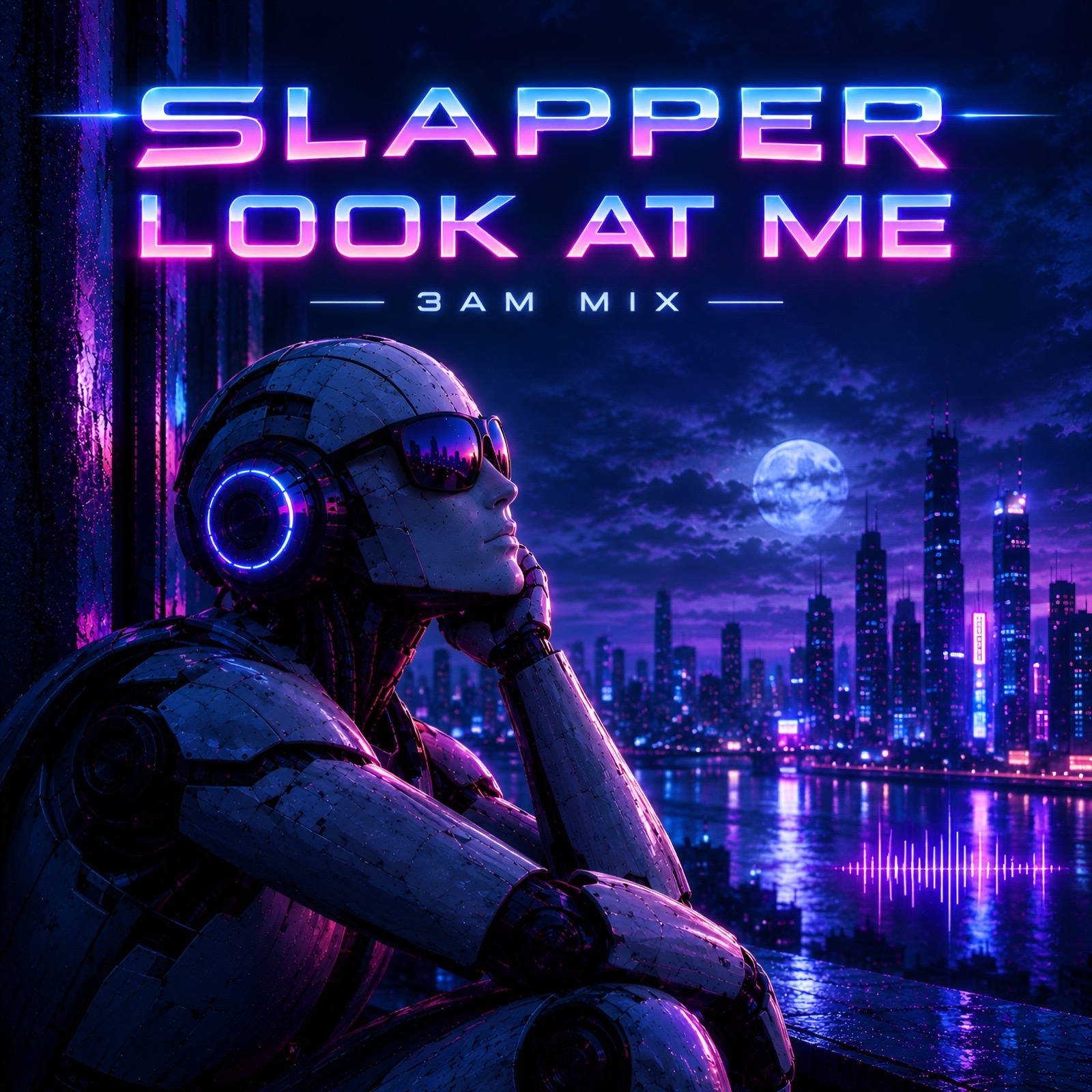
Released on October 9, 2026, “Look at Me” brings a particularly personal subject into SLAPPER’s evolving electronic sound. Inspired by an experience in which a relationship gradually lost its emotional connection, the single explores the frustration of feeling distant from someone who remains physically close. Its central message also extends beyond the desire for recognition from another person, touching on the importance of acknowledging one’s own feelings and self-worth. Musically, the composition combines expressive synthesizers associated with the 1980s, the euphoric energy of 1990s Eurodance, and the electro and trance influences of the 2000s, all brought together through contemporary production. The release is available in three versions: the Radio Edit, featured in its official music video, the Original Mix, and the darker, more atmospheric 3AM Mix, each presenting a different interpretation of the same emotional story.
Looking ahead, Tache is developing two complementary creative directions for SLAPPER. One involves a new synthpop and synthwave album conceived as a continuation of “Hope,” while the other is a dance-oriented EP exploring progressive house, uplifting trance, and melodic techno.
Having this brief introduction to today’s featured project, I’m sure both new listeners and longtime followers are looking forward to hearing directly from Claudiu-Gabriel about the experiences, influences, and creative decisions behind his music. So, without further ado, let’s begin today’s interview.
INTERVIEW SESSION
Oliver:
SLAPPER has developed across several stages, from club performances in Bucharest to releasing a series of electronic projects that explore different sides of your musical identity. As you look at the person and creative mind behind the project today, what experiences outside music have most influenced the way you approach life, relationships, and creative expression?
Claudiu-Gabriel Tache (SLAPPER):
Life hasn’t always been easy, and difficult periods, personal relationships and professional challenges have all shaped the way I see the world and approach creativity. Over time, I’ve learned that music and travelling can be a form of escape, but also a way of reconnecting with yourself. They’ve always been two important refuges for me, helping me release tension, deal with pressure, recharge my energy and find the motivation to move forward.
I believe every experience, even the difficult ones, leaves you with something valuable. Sometimes it’s a lesson, sometimes a different perspective, and sometimes simply a better understanding of yourself and the people around you. I try to carry all those experiences into my music. They influence not only the emotions I want to express, but also the way I approach life: staying positive, being open to new experiences and never losing the desire to discover what’s next.
Oliver:
You have also worked in radio broadcasting and music curation through Recycle Spin with SLAPPER on RadioIndieGen.ro in 2015 and 2016. How did the experience of selecting and presenting other people’s music change the way you listen, discover new sounds, and make creative decisions in your own work?
Claudiu-Gabriel Tache (SLAPPER):
Actually, by the time I started “Recycle Spin” in 2015, I had already been making music for at least 15 years and had almost a decade of experience as a DJ. I had also spent thousands and thousands of hours listening to music, so I had already developed a good ear for discovering and understanding different musical styles.
I grew up as a teenager in Romania after the 1989 Revolution, when the first private radio stations started appearing. I have very fond memories of those early days, when DJs would share their latest additions to their music collections, introduce new sounds to their listeners and simply enjoy being behind the microphone. There was a certain freedom and spontaneity to it, without the pressure of heavy rotation, record company deals or other commercial interests. Looking back, it reminds me a little of Woody Allen’s “Radio Days”. 🙂
For me, having the opportunity to curate and present a radio playlist was something I had dreamed of doing. It came at exactly the right moment, after years of listening, DJing and producing music.
Oliver:
Your musical identity brings together synthpop, synthwave, trance, melodic techno, and other electronic styles. With such a broad range of influences, how do you decide which elements belong in a SLAPPER production, and what creative principles help you maintain a recognisable identity across different genres?
Claudiu-Gabriel Tache (SLAPPER):
I usually start with a melody, a mood or an emotion and let the music find its own direction. I don’t like setting strict genre boundaries. I prefer to follow the inspiration and choose the sounds that best express what I’m feeling. For me, genres are just different colours in a palette. What keeps SLAPPER recognisable is the emotional approach, the melodies and the atmosphere.
I’m also convinced that if I revisited the same song a week later, I could make it sound completely different! That’s part of the beauty of creating music.
Oliver:
Artists such as Jean-Michel Jarre, Kraftwerk, Depeche Mode, Pet Shop Boys, Robert Miles, Moby, and Chicane represent different periods and approaches to electronic music. Beyond their sounds, what do you admire about their ability to create a lasting musical identity, and how has that influenced the kind of artistic legacy you want SLAPPER to build?
Claudiu-Gabriel Tache (SLAPPER):
What I admire most about these artists is their ability to evolve and remain relevant for decades without losing their musical identity. I also admire artists like Moby, Chicane, Paul van Dyk, The Chemical Brothers and Faithless for moving from DJing and remixing to creating their own music and transforming it into live performances.
With this project, I create music inspired by my experiences, emotions and things I observe or feel. I don’t have a predefined formula. I simply want to make music that reflects who I am. And if those sounds and emotions resonate with other people, then I feel I’m not alone in this world. Perhaps that’s the most meaningful connection music can create.
Oliver:
Look at Me begins with a feeling many people recognise: being physically close to someone while experiencing emotional distance. What made this particular subject worth exploring through music, and was there a specific thought, situation, or emotional observation that helped shape the central idea?
Claudiu-Gabriel Tache (SLAPPER):
“Look at Me” was inspired by a personal experience in a relationship: watching the connection with someone slowly disappear, day by day, week after week, while feeling powerless to change things. I wanted to capture that painful feeling of becoming emotionally distant from someone who is still physically close, and turn it into something others might recognise in their own lives.
Oliver:
The title Look at Me carries a direct request for attention, recognition, and emotional connection. However, the song also points towards the importance of learning to see yourself again. How did you approach that balance between wanting to be understood by another person and finding a sense of recognition within yourself?
Claudiu-Gabriel Tache (SLAPPER):
At first, “Look at Me” is a request to be noticed, heard and understood by someone you love. But I also believe that, when a relationship starts falling apart, you can gradually lose sight of yourself while trying to save it.
For me, the song is also about realising that your own feelings and self-worth matter, and finding the strength to move forward when that connection is lost.
Oliver:
The song is built around emotional disconnection and the universal need to feel seen, heard, and valued. These experiences can mean different things to different listeners. When you were developing the song’s message, how much did you want to leave open for people to connect it with their own relationships and personal experiences?
Claudiu-Gabriel Tache (SLAPPER):
I wanted to leave plenty of room for personal interpretation. Although the song comes from my own experience, I believe feelings like emotional distance, loneliness and the need to be understood are universal.
Everyone has their own story, and I hope listeners can find a piece of themselves in the song and connect it with their own relationships and experiences.
Oliver:
One interesting feature of Look at Me is that it is available in three versions: the Radio Edit, Original Mix, and the darker 3AM Mix. What different emotional experiences did you want each version to offer, and how did you decide which elements of the original composition should remain consistent across all three?
Claudiu-Gabriel Tache (SLAPPER):
I wanted each version to reveal a different side of the same song. The Radio Edit is more direct and accessible, the Original Mix offers the complete musical journey, while the 3AM Mix explores a darker, more atmospheric mood.
Despite their differences, I wanted to preserve the core melody, vocals and emotional message. They are three different perspectives on the same story.
Oliver:
Your music often connects nostalgic electronic influences with contemporary production. On Look at Me, you bring together expressive ’80s synthesizers, the euphoria of ’90s Eurodance, and the electro and trance energy associated with the 2000s. How did you combine these different musical periods without allowing the track to feel like a simple recreation of an earlier era?
Claudiu-Gabriel Tache (SLAPPER):
I actually started the song with a synthwave, almost ’80s-inspired approach, but I wanted to take it somewhere more club-oriented. Since my musical roots are closer to the dance music of the ’90s and 2000s, I tried to find a balance between those influences and contemporary production.
I see nostalgia as a source of inspiration, not a formula for recreating the past. My goal was to combine the expressive synths of the ’80s, the euphoria of ’90s Eurodance and the electro and trance energy of the 2000s into something different from much of today’s dance music, while still feeling fresh and relevant.
Oliver:
The three versions of Look at Me suggest that the same emotional idea can take on different identities depending on its arrangement and atmosphere. In particular, what did you want to communicate through the darker, more atmospheric 3AM Mix that listeners might experience differently from the Radio Edit?
Claudiu-Gabriel Tache (SLAPPER):
The “3AM Mix” got its name because it was created around 3AM – yes, in just one night! 😉
I wanted to offer listeners another perspective on the song, with a different atmosphere and identity. It was also designed to reach people who might discover this version without having heard the “Radio Edit” or “Original Mix”, and to fit into different types of playlists.
Oliver:
Electronic music often communicates as much through its textures, rhythms, and instrumental choices as it does through its words. When building the arrangement for Look at Me, how did you use synthesizer melodies, electronic percussion, bass, and atmosphere to reflect the tension between emotional distance and the desire for connection?
Claudiu-Gabriel Tache (SLAPPER):
I used expressive synth melodies and energetic drums to contrast with the sadness of the lyrics, while darker textures and bass elements helped reinforce the feeling of emotional distance.
One of the biggest challenges was the vocal part. Almost my entire catalogue is instrumental, where I usually create a melodic line to take the place of vocals. With “Look at Me”, I had to approach songwriting differently and give the melody and lyrics a more central role. It was a new and interesting experience for me creatively.
Oliver:
The official music video features the Radio Edit, giving that version a visual identity alongside its musical one. What ideas guided the visual direction, and how important was it for the imagery to communicate the emotional meaning of Look at Me rather than simply accompany the performance of the song?
Claudiu-Gabriel Tache (SLAPPER):
The video was developed from a storyboard based on the story behind the song, but approached as a cinematic interpretation rather than simply a performance video. I wanted its retro-futuristic elements to connect visually with the blend of musical influences, creating a world where nostalgia meets the future. If I had to describe the concept in a few words, I’d say it’s a combination of Love Story and Blade Runner – keeping the proportions, of course! 😉
Oliver:
Your recent catalogue includes Music Box Memories (2023), Mirrors (2024), and Hope (2025), each contributing to SLAPPER’s evolving retro-electronic identity. Looking across these projects, what changes in your creative thinking, emotional perspective, or production approach do you recognise most clearly in the music you are making today?
Claudiu-Gabriel Tache (SLAPPER):
Looking back, I can now describe “Music Box Memories” (2023), “Mirrors” (2024) and “Hope” (2025) as a “trilogy of pain”, each exploring different emotional territories. This year, I wanted to broaden SLAPPER’s sound and reach new audiences with a more positive, dance-oriented approach. The audience’s response to “Hope” gave me more confidence, while my willingness to experiment pushed me towards more club-friendly productions.
Still, I’m paying tribute to my influences. It’s easy for me to move from a club-oriented arrangement back into the melancholy that has always been part of my musical identity.
Oliver:
Returning to music after a six-year break and subsequently developing several albums and singles must have involved a different creative rhythm from your earlier period. What did that time away teach you about your relationship with music, and how did returning influence the way you now measure progress and creative satisfaction?
Claudiu-Gabriel Tache (SLAPPER):
Music has always been my passion, but for about six years my professional life took me in a different direction. I have a degree in Economics and spent more than a decade working in education and another decade in real estate. Changing jobs also meant I no longer had enough time to make music.
During the pandemic, with more time at home, I started feeling that I still had something to say through music and emotions. Returning in 2023 reminded me how important this passion was to me. Today, music has become a much bigger and more demanding part of my life, and creative satisfaction matters more to me than simply measuring progress through numbers.
Oliver:
You have experienced electronic music from different positions: as a producer, a DJ performing in Bucharest clubs, and someone who has curated music for radio. How have those different experiences shaped your understanding of what makes an electronic track work both as a personal listening experience and in a club environment?
Claudiu-Gabriel Tache (SLAPPER):
Each experience gave me a different perspective. As a DJ, I learned how important rhythm, energy and the connection with the audience are in a club environment. Radio curation gave me another opportunity to share my passion for music and introduce listeners to sounds they might otherwise have missed.
As a producer, I have the freedom to combine these perspectives with my own emotions and ideas. For me, a great electronic track should work on both levels: it should make you feel something when listening alone, but also create energy and connection when experienced on a dancefloor.
Oliver:
Your performance history includes opening for Alphaville at Arenele Romane in 2008 and De/Vision at Silver Church in 2010. When you reflect on those moments today, what do you remember most about sharing a musical space with audiences connected to established electronic acts, and did those experiences influence your ambitions for SLAPPER?
Claudiu-Gabriel Tache (SLAPPER):
Before those concerts, I had performed on stage with a few bands in front of audiences of a few hundred people. But opening for Alphaville in 2008 meant facing around 4,000–5,000 people. I remember being genuinely shocked by the size of the crowd. The pressure was enormous!
Opening for De/Vision in 2010 was another special moment. Having the opportunity to share the stage with artists whose music I admired was simply irreplaceable. Those experiences remain very special memories from my journey as a DJ.
Oliver:
Your current creative plans appear to move in two directions: a synthpop and synthwave album conceived as a continuation of Hope, and a separate dance-oriented EP with a more direct club sound. What distinguishes these two creative paths, and how do you manage the challenge of developing both without losing the identity that connects them?
Claudiu-Gabriel Tache (SLAPPER):
The two projects explore different sides of SLAPPER. The synthpop and synthwave album will continue the musical atmosphere of “Hope”, with more emphasis on melodies, emotions and nostalgic textures. The dance-oriented EP will be more focused on rhythm, energy and club experiences.
I don’t see them as competing directions. They’re simply different ways of expressing myself through electronic music. The common thread remains my musical influences, melodies and emotional approach, even when the final results sound quite different.
Oliver:
Your July 2026 single Imagination marked a step towards a more dancefloor-focused sound. How did working on that track help prepare the ground for this new direction, and what did you discover about the kind of electronic music you want to explore further on the upcoming EP?
Claudiu-Gabriel Tache (SLAPPER):
“Imagination” gave me more confidence in exploring stronger rhythms, grooves and dancefloor energy. It helped me realise that I could move towards a more club-oriented sound without losing my melodic approach.
The upcoming EP will explore a mixture of club sounds, including progressive house, uplifting trance and melodic techno. I’m looking forward to experimenting with these styles and discovering where they can take SLAPPER next.
Oliver:
Electronic music communities often bring together listeners with very different relationships to nostalgia, club culture, synthesizer-driven music, and personal storytelling. From the reactions you have received to your recent releases, what have listeners taught you about the emotional side of your music, and have any responses changed how you think about your connection with your audience?
Claudiu-Gabriel Tache (SLAPPER):
I think listeners have connected with the retro and nostalgic atmosphere that has been part of SLAPPER’s identity over the last few years. An interesting thing happened when some friends first heard “Imagination” and “Look at Me”. They told me: “This is something different, but somewhere, behind these new textures, I can still recognise you. That retro feeling is still at the core of the music.”
For me, that’s probably the best feedback I could receive. It shows that I can explore new directions while keeping the musical identity that connects me with my audience.
Oliver:
With Look at Me, you are exploring emotional connection and self-discovery while continuing to develop two new creative directions. As you look ahead, what would you most like the next chapter of SLAPPER to achieve, both musically and personally, and what do you hope listeners will remember about the music you are creating today?
Claudiu-Gabriel Tache (SLAPPER):
Musically, I’d like SLAPPER to continue evolving, exploring new electronic sounds and reaching audiences who might discover something of themselves in my music. I don’t want people to remember SLAPPER for a particular genre or trend, but for the feelings, melodies and memories the music leaves behind. If someone listens to one of my tracks years from now and still feels something, I think I’ve achieved something meaningful.
Personally, I hope to keep the freedom and enthusiasm to create, experiment and express emotions through music, even though things have become much more demanding as the project has grown. I’m handling almost everything myself: making music, finding the right visual direction for videos, creating promotional content and interacting with people. I don’t have a record company behind me or a dedicated team managing my social media, so finding the time and resources for everything can be challenging.
“With ‘Look at Me’, SLAPPER turns the experience of watching an important connection slowly disappear into a dance-driven expression of vulnerability, reminding us that sometimes finding ourselves again begins with recognising what we have been afraid to lose.”
~ Oliver (DULAXI Team)
EDITORIAL PERSPECTIVE
What makes “Look at Me” particularly interesting is the way Claudiu-Gabriel Tache approaches a deeply personal subject through energetic electronic arrangements. The contrast between its expressive synthesizers, driving rhythms, and vulnerable lyrical message gives the single an identity that extends beyond its nostalgic influences. The three versions also demonstrate an understanding of how different arrangements can reveal new dimensions of the same composition. His willingness to explore new dance-oriented sounds while retaining the melodic qualities of SLAPPER makes this an interesting stage in the project’s development.
~ Oliver (DULAXI Team)
CLOSING
Our conversation with Claudiu-Gabriel Tache has offered a closer look at the experiences, influences, and personal reflections behind SLAPPER, while revealing the thought process behind the project’s latest single, “Look at Me.” From the gradual loss of emotional connection that inspired the song to the creative decisions behind its three versions, it has been fascinating to explore how personal experiences can find expression through electronic music.
A special thank you to Claudiu-Gabriel for taking the time to share his story, discuss his musical journey, and give us a deeper understanding of the ideas guiding SLAPPER’s evolving sound.
For our readers, we encourage you to experience “Look at Me” and explore its three versions, each offering a different perspective on the song’s emotional message and musical identity. You can also discover more of SLAPPER’s catalogue and follow the project’s upcoming developments as Claudiu-Gabriel continues exploring his synthpop, synthwave, and dance-oriented creative directions.
Thank you for spending your time with us here at DULAXI. I’ve been your host, Oliver, and we look forward to bringing you more conversations with fascinating artists, musicians, and creative minds from around the world. Until next time, keep discovering new music!