
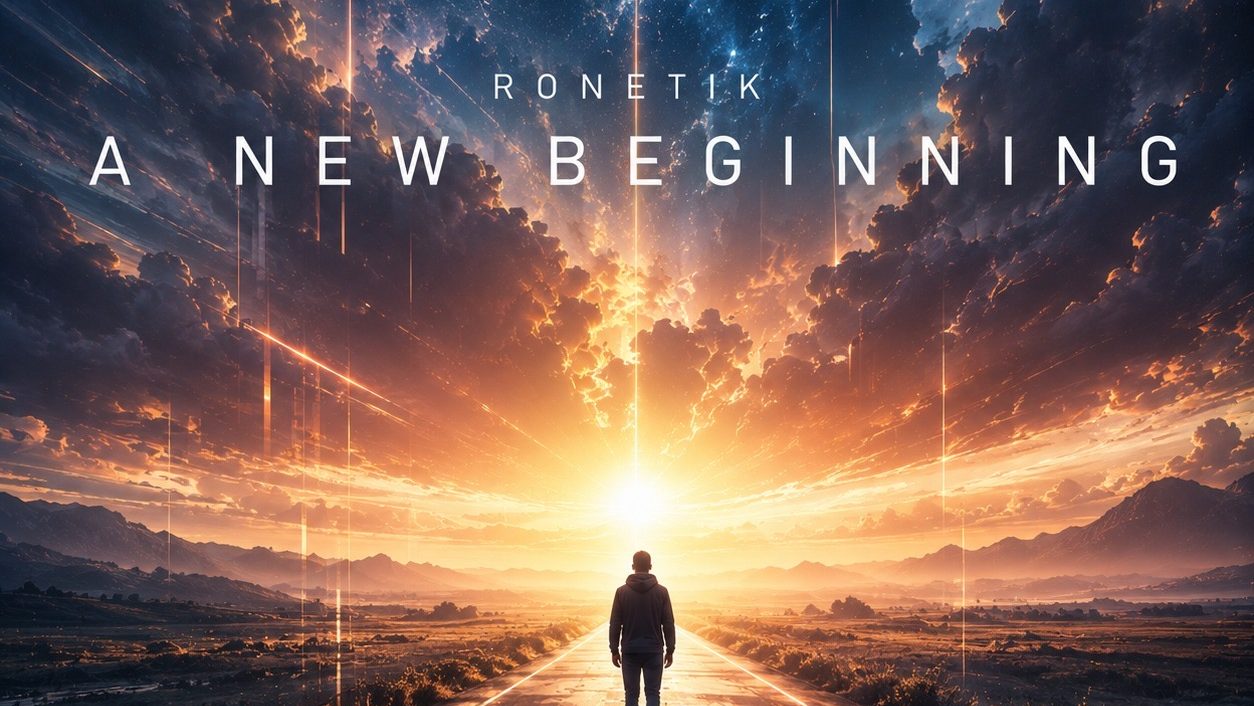
Hello everyone, it’s your host Oliver from DULAXI, and today I’m delighted to be joined by Ronetik, an independent electronic music artist and producer from Rostock, Germany. Working across melodic house, synth pop, and cinematic electronic music, Ronetik has developed a distinctive sound built around expressive vocals, atmospheric synth arrangements, and emotionally driven storytelling. His latest single, “A New Beginning,” released on September 25, 2026, explores the experience of leaving the familiar behind, finding renewed strength, and embracing the possibilities of a new chapter. Before we begin our conversation with Ronetik, here’s what you need to know about today’s featured project.
About Ronetik
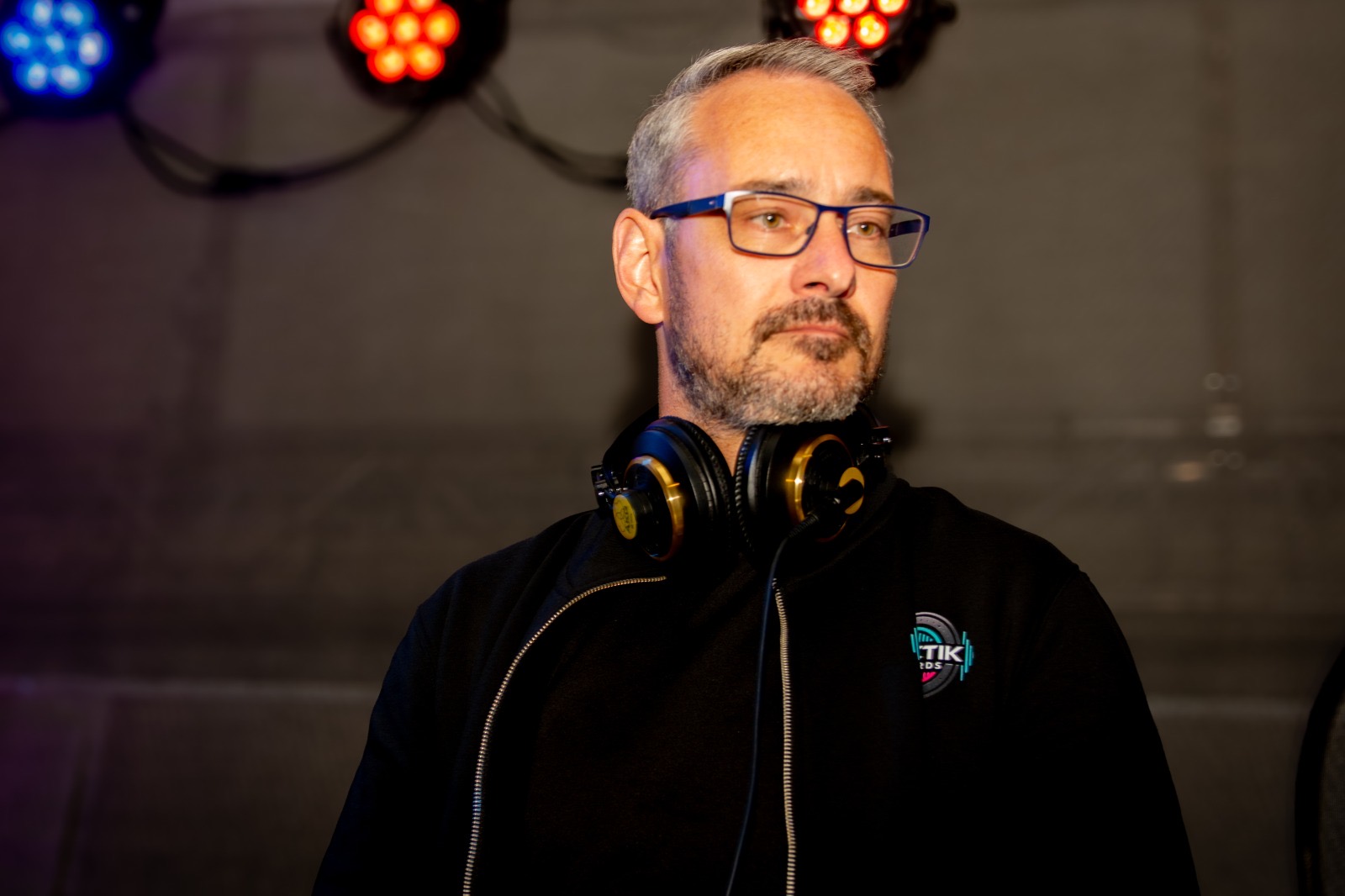
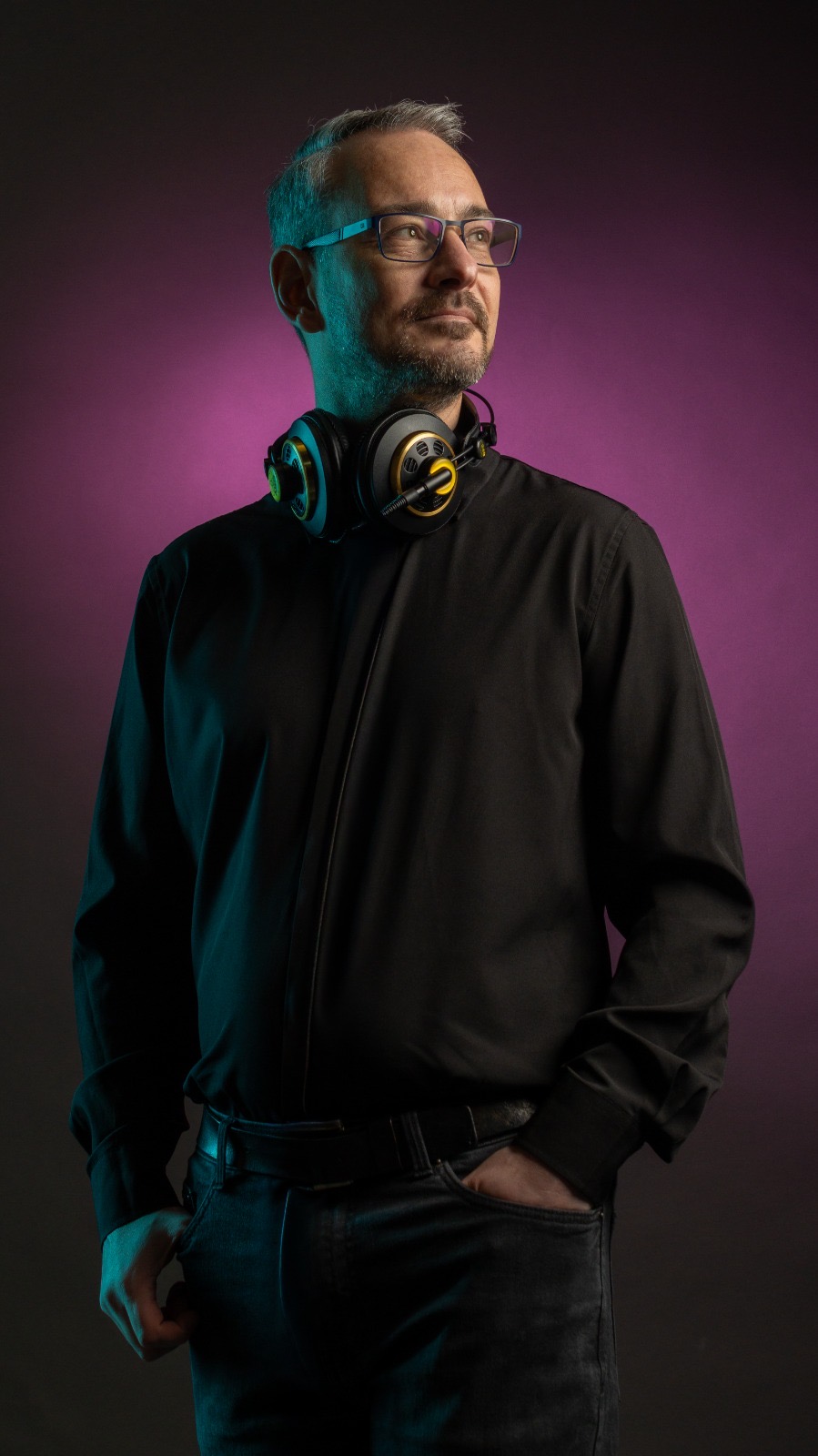
Based in Rostock, Germany, Ronetik is an independent artist who has spent several years developing and releasing music shaped by his appreciation for melody, atmosphere, and emotional expression. His musical connection began in childhood, with an early fascination for keyboards, melodies, and recreating songs he had heard. Growing up with the sounds of the 1980s also influenced his appreciation for synthesizers and emotionally expressive music. Over time, these influences developed into a personal approach that combines melodic pop with electronic production, creating music intended to connect with listeners beyond the immediate listening experience. For Ronetik, music has always been about communicating feelings and experiences that ordinary words cannot fully capture.
His artistic identity moves between melodic house, synth pop, and cinematic electronic elements, with expressive vocals playing an increasingly important role in his productions. Rather than allowing genre expectations or current trends to determine his direction, Ronetik places emotion at the centre of his creative process. His approach is reflected in his statement, “No trend sound – my sound.” Previous releases, including “Whole Again,” “Hurricane,” and “For Eternity,” demonstrate different expressions of this philosophy, with each composition developing according to the mood and character of its vocal melody. His admiration for cinematic film music, particularly the work of Hans Zimmer, has also influenced his appreciation for expansive arrangements and layered soundscapes.
Released on September 25, 2026, “A New Beginning” continues this musical direction through a personal exploration of change, uncertainty, and renewed hope. The inspiration came from a significant decision in Ronetik’s own life, as he accepted a new professional opportunity that required him to leave a familiar working environment, an established position, and colleagues he genuinely valued. The experience brought excitement alongside sadness and uncertainty, becoming the emotional foundation of the single. Musically, the track brings together warm synthesizers, cinematic textures, expressive vocals, and a steadily developing melodic house groove. Its arrangement gradually moves from reflection towards greater energy, allowing the musical progression to mirror the complicated emotions associated with moving into an unfamiliar chapter.
Beyond the release itself, Ronetik continues to develop his identity as an independent artist while placing greater emphasis on allowing each composition the time it needs. His approach has gradually moved away from releasing music according to a fixed schedule, with quality and personal satisfaction taking priority over quantity. Alongside his ongoing work on new music, he is also developing Light After the Rain, a live performance project designed to bring his compositions together through a continuous musical narrative.
Having this brief introduction to today’s featured project, I’m sure both new listeners and longtime fans are interested in hearing more about the experiences, creative decisions, and personal reflections behind “A New Beginning.” So, without further ado, let’s begin today’s interview.
INTERVIEW SESSION
Oliver:
You are based in Rostock, Germany, and have spent several years creating and releasing music independently. Looking back at the experiences that have shaped your life so far, what first drew you towards music, and how did it gradually become such an important way for you to express yourself?
Ronetik:
My connection to music began in childhood, when I had a small keyboard and loved playing melodies or trying to recreate songs I had heard. I was fascinated by where sounds came from and what I could create with those little hands. That curiosity has stayed with me ever since.
Growing up with the sounds of the 80s also shaped my love for synthesizers, melodies and emotional music. Today, as Ronetik, I combine these influences to create electronic music that tells stories and connects with people.
For me, music has always been about emotion rather than perfection or trends. The possibilities have grown since those early days, but the feeling is still the same: creating something of my own that can touch someone else.
Oliver:
You describe music as a way of communicating feelings and stories that words alone cannot always express. Can you recall a particular period or personal experience when you realised that creating music allowed you to communicate something you struggled to put into ordinary conversation?
Ronetik:
I wouldn’t point to one particular period in my life. For me, it’s more about emotional situations – joy, sadness, love, and everything in between. I believe every moment has its own melody.
I think almost everyone has a song that takes them back to a particular moment, even if it happened many years ago. Words communicate information and can trigger emotions, but music has the power to reach us on a much deeper level. It connects directly with our feelings and can keep memories alive for years.
That’s what fascinates me about music. A song can become an emotional anchor, connecting us to people, places, and moments in our lives. And that emotional spectrum has no limits – it can embrace every feeling we experience as human beings.
Oliver:
Your artistic philosophy places emotion before technique, suggesting that the feeling behind a composition matters more to you than simply achieving technical perfection. Where did that belief come from, and how does it influence the decisions you make when creating a track?
Ronetik:
All my songs begin with emotion. For me, everything starts with the melody of the vocal. Very early on, I can sense whether a track will feel melancholic, driving, or full of energy, and I let those feelings guide my production.
If a vocal has a melancholic melody and meaningful lyrics, I build the instruments and atmosphere around it to capture that feeling as naturally as possible. Technical aspects are important, of course, but they come second in the early stages.
I also deliberately choose not to add a drop, an instrument, or unnecessary elements if they take away from the emotion. That’s why some of my tracks differ in style. For Eternity, for example, is a much calmer song that allows the vocal to take centre stage. Turning it into a trance track simply wouldn’t feel right to me.
Musical taste is subjective, and everyone hears things differently. But I want to stay true to my own approach: emotion before technique.
Oliver:
You have built an identity around a sound that moves between melodic house, synth pop, and cinematic electronic music. How did you arrive at this combination, and what elements do you feel are essential to making a Ronetik production recognisable as your own?
Ronetik:
It wasn’t that long ago that I was producing music entirely without vocals. But when I started working with vocals, my sound changed almost completely. I believe that’s when the expression and emotion in my music really began to unfold.
I love accompanying vocals with beautiful harmonies, pads, and synths. I’ve really found my place in that combination. It’s where I feel at home musically.
The cinematic side of my sound actually developed rather by chance. I simply love having wide, expansive layers of sound that carry through a track and convey emotion. As a big Hans Zimmer fan, I find it fascinating how modern and powerful film scores can be structured – sometimes almost like a rock concert. I think anyone who has attended one of his concerts will understand what I mean.
I love films and their music, and I believe they have influenced me more than I may realise. However, making my productions sound cinematic was never a deliberate concept or a fixed goal. It happened naturally, and I love the result because these wide soundscapes and synths can carry emotions in such a unique way.
This becomes especially noticeable during live performances. When those layers of sound spread throughout the room and almost surround the audience, they can create genuine goosebump moments. Those are exactly the kinds of feelings I want people to experience through my music.
Oliver:
Your statement, “No trend sound – my sound,” communicates a clear commitment to artistic independence. In an electronic music environment where trends and algorithms can influence how artists approach production and promotion, how do you protect your creative identity while still finding ways to reach new listeners?
Ronetik:
This is actually the most challenging part. People tend to gravitate towards what feels familiar, and algorithms can make it difficult for independent niche artists to build a wider audience. However, I refuse to let that discourage me.
Of course, there are artists who follow current trends to achieve quick success and generate profits. There is nothing inherently wrong with that, but I believe my path can be more sustainable in the long run. I want to create music that people will still listen to 20 years from now. Music that connects with people of different ages and isn’t tied to a particular moment in time.
For me, emotion is at the heart of everything. Of course, some people primarily look for music to party to and might find my tracks a little too calm. But I believe my music can find its place in many different situations: when you’re reflecting on life, driving in your car, listening in the background, or going through the beautiful and difficult moments life brings.
At the same time, I want my music to remain danceable and work on stage. It’s about combining emotion with entertainment. I want to reach people who love music with feeling, who enjoy getting carried away by melodies, but still want to move to the music.
When it comes to reaching new listeners, I need to find my own way without changing my music to please algorithms. I can learn how to present my songs and introduce them to new audiences. But the music itself must always carry my own signature.
I don’t want to chase trends. I want to create music that lasts.
Oliver:
Your releases include “Whole Again,” “Hurricane,” and “For Eternity,” each contributing to your growing catalogue. When you look at these earlier tracks alongside “A New Beginning,” what changes do you notice in your approach to music-making, and what aspects of your original artistic vision have remained consistent?
Ronetik:
My approach to making music has remained the same across all my releases. The vocal determines the mood of a song, and I let it guide me throughout the production process.
With For Eternity, the melody is calm and reflective. Hurricane, on the other hand, developed with the intensity of a storm, while Whole Again is driven by its powerful energy. A New Beginning followed exactly the same process. Ultimately, it is my own emotion that I put into every track.
A New Beginning represents a fresh start, and its more energetic, driving character reflects that idea. The vocal naturally allows for this energy and helps convey the feeling of moving forward into something new. For me, there is one consistent guiding principle: the emotion and melody of the vocal show me the way. That has been true for every song so far.
However, the more I think about it, the more I realise that one thing has changed. I give myself more time during production. When you start releasing music, you often feel that you need to put out a new track every month, especially when you’re thinking about reach and visibility. I’ve moved away from that mindset.
I no longer want to let a release schedule dictate my creative process. I release a song only when I genuinely feel it is ready and meets my own standards. For me, it has become a question of quality over quantity. I’d rather take more time to create something I truly believe in than release music simply to keep up with a schedule.
Oliver:
“A New Beginning” centres on leaving the past behind, finding renewed strength, and allowing yourself to move forward. What personal thoughts, experiences, or reflections first brought this particular subject to the forefront of your creative process?
Ronetik:
There was actually a very specific moment in my life that connected me to this theme. Music isn’t my full-time profession; I have a regular job, and I pursue music alongside it with great passion. But sometimes life unexpectedly presents you with an opportunity that you simply can’t turn down.
I received an offer that I couldn’t refuse. However, accepting it meant consciously leaving a place where I felt safe and secure. I had built a good position in my previous company, earned recognition, and worked with some great colleagues. That made the decision to move on far from easy, because it also meant leaving behind people I genuinely enjoyed working with.
That’s where my personal connection to A New Beginning comes in. A new beginning can be painful and exciting at the same time. You leave something familiar behind, something you may look back on with fondness, without knowing exactly what lies ahead. Yet you choose to move forward and give something new a chance.
So, in the truest sense of the words, this song is also a new beginning for me personally. I’m approaching this new chapter in my life with a positive mindset, because otherwise I wouldn’t have made that decision in the first place. I’m looking forward to what’s ahead, even though part of me looks back with a heavy heart. This mixture of the sadness of saying goodbye, the courage to take a new path, and the excitement of what’s to come is exactly what A New Beginning means to me. And that’s why the song feels so relevant and authentic to me right now.
Oliver:
The title suggests a moment when one chapter closes and another becomes possible, but the song approaches that transition through quiet strength rather than a dramatic break. Why was this more restrained and reflective interpretation important to the story you wanted to tell?
Ronetik:
I think that, as I mentioned earlier, moving away from something familiar towards something new is always accompanied by a lot of thoughts and emotions. If I use my own situation as an example, the decision to make this change occupied my mind for quite some time. There were many sleepless nights, countless thoughts about whether I was making the right or wrong decision, and a level of uncertainty that could be mentally exhausting.
Ultimately, I allowed myself to embrace the opportunity for change. But even when you approach something new with a positive attitude and genuine excitement, you are still stepping into the unknown. That naturally brings a certain sense of reflection and uncertainty with it. You can be happy about what lies ahead and still have that little voice in the back of your mind wondering whether you’ve made the right choice. Sometimes, you can only answer that question with time.
I’m naturally a very thoughtful person. I tend to analyse every possible advantage and disadvantage, and I often plan far into the future, both when it comes to music and in my personal life. While that can be helpful, it doesn’t always make decisions easier, especially when sometimes you simply need to trust your instincts and follow your heart.
That’s why a more restrained and reflective approach felt right for A New Beginning. For me, a new beginning isn’t about suddenly leaving every doubt behind or making a dramatic break with the past. It’s about finding the courage to move forward, even when you don’t have all the answers yet. I wanted the song to capture that feeling of being optimistic about the future while still reflecting on what you’re leaving behind. Because sometimes, strength isn’t about having no doubts at all. It’s about moving forward despite them.
Oliver:
The track gradually moves from a reflective opening into a more uplifting and energetic melodic house arrangement. How did you connect that musical progression to the emotional movement from uncertainty and reflection towards hope and renewed confidence?
Ronetik:
For me, the musical progression of A New Beginning reflects the emotional journey I’ve been going through myself. As I mentioned earlier, making the decision to leave something familiar behind and step into the unknown wasn’t easy. There was a lot of reflection, uncertainty and weighing up the pros and cons before I finally decided to embrace the change.
I wanted the music to reflect that feeling. The more reflective opening represents those moments when you’re alone with your thoughts, questioning your decision and wondering what the future might bring. It’s that phase where you know you want something new, but you haven’t quite left all your doubts behind.
As the track gradually builds and becomes more energetic, it reflects the moment when you begin to accept your decision and focus more on the opportunities ahead. The uncertainty doesn’t necessarily disappear overnight, but the excitement and confidence in what lies ahead start to become stronger. That’s when hope begins to take over.
This is very close to what I’m experiencing in my own life right now. I still look back on what I’m leaving behind with a certain sadness, especially because of the people I’ve worked with. At the same time, I’m genuinely excited about this new chapter and everything it might bring.
For me, that’s what the musical progression is all about. It’s not about suddenly switching from sadness to happiness, but about allowing those emotions to exist alongside each other while gradually finding the strength to move forward. I wanted the energy of the melodic house arrangement to carry that sense of optimism and renewed confidence. By the end, the feeling is no longer dominated by uncertainty, but by the courage to embrace what comes next.
Oliver:
One of the song’s central ideas is that an ending can create space for something new. What do you hope listeners understand about change through this message, particularly those who might be experiencing a difficult transition or trying to find the confidence to move forward?
Ronetik:
I think one of the most important things I hope listeners take away from A New Beginning is that change doesn’t always mean losing something. Sometimes, it means making room for something new, even if letting go of what you know is difficult.
I’m experiencing this myself right now. Leaving a familiar environment, good colleagues and a position I felt comfortable in wasn’t an easy decision. There were doubts, sleepless nights and plenty of questions about whether I was doing the right thing. But at some point, I realised that if I wanted to embrace this new opportunity, I had to be willing to leave my comfort zone.
I think many people experience similar moments in their lives. Whether it’s changing jobs, ending a relationship or simply reaching a point where something no longer feels right, moving forward can be frightening because we don’t know what awaits us. We often focus so much on what we might lose that we forget to consider what we could gain.
I don’t believe you have to be completely free of doubt to make a change. Sometimes, you just have to trust yourself enough to take that first step. You can feel sad about what you’re leaving behind and still be excited about what lies ahead. Those feelings don’t contradict each other; they’re simply part of being human.
That’s the message I want to share with A New Beginning: don’t let the fear of the unknown stop you from exploring new possibilities. You can’t always know whether a decision will turn out to be the right one, and sometimes only time will tell. But if you never dare to take that step, you may never discover what could have been waiting for you.
For me, a new beginning isn’t about forgetting the past. It’s about appreciating what it has given you, finding the courage to move forward and remaining open to what life might bring next.
Oliver:
The lyric, “the break of the day holds all of the answers,” uses the arrival of daylight as an image of clarity and renewal. What does that particular line represent to you, and how does imagery help you communicate emotions that might otherwise be difficult to explain directly?
Ronetik:
For me, the line “the break of the day holds all of the answers” connects directly to what I’ve been talking about throughout this interview. Sometimes, you simply have to take that step and trust yourself enough to follow a path, even when you don’t know where it will lead. Just like in my own situation, only the future will show whether the decision was the right one.
I see the arrival of daylight as a symbol of clarity. When you’re going through a difficult decision, your thoughts can keep going around in circles, and it’s not always possible to see things clearly in that moment. But as time passes, things can fall into place. Looking back, you may understand your feelings and decisions in a way that wasn’t possible before. The answers don’t necessarily come all at once, but sometimes you need to move forward before you can find them.
I also believe that not every decision has a clear right or wrong answer. What matters is having the courage to stand by your feelings and your choices, whatever the future may bring. You can’t control everything that happens, but you can choose to move forward with conviction and accept where that path takes you.
That’s also why I love using imagery in my lyrics. A picture or a metaphor can communicate emotions in a way that a direct explanation sometimes can’t. The arrival of a new day is something almost everyone can relate to, but each listener may connect it to a different experience in their own life. I want people to be able to step into the world of the song, feel what it means to them personally, and create their own images and interpretations. For me, that’s one of the most beautiful things about music: the same line can mean something completely different to two people, and both interpretations can be equally meaningful.
Oliver:
Another significant moment comes through the realisation, “Now I know that I will never be the same.” How does this line capture the relationship between personal change and identity, and what makes accepting that you have changed an important part of beginning again?
Ronetik:
Throughout my life, I’ve had to make many important decisions, and one of the things I’ve learned is that you shouldn’t be afraid of making them. Every decision brings some form of change, depending on how significant it is. But with every change comes an opportunity to learn something about yourself and grow as a person.
Looking back, not every decision I’ve made was necessarily the right one. But I believe that’s part of life. You learn from the choices that worked out, as well as from those that didn’t. Those experiences shape you, influence the way you think, and help you develop your personality over time. The important thing is to accept that process rather than hold on to the person you used to be.
I’m certainly not the same person I was twenty years ago. I’ve grown and changed through the decisions I’ve made, both the good ones and the bad ones. Some experiences have taught me what I want in life, while others have shown me what I would do differently today. That’s how you learn, gain perspective, and hopefully avoid repeating the same mistakes.
For me, accepting that you’ve changed is an essential part of beginning again. You can’t move forward if you’re constantly trying to be the person you once were. Your past will always be part of you, but it doesn’t have to define who you are today or who you can become tomorrow. Sometimes, a new beginning also means accepting that you’ve outgrown a previous version of yourself. And I think there’s real strength in recognising that and being open to who you might become next.
Oliver:
Your production combines warm synths, cinematic electronic elements, crisp percussion, and a steady groove, while maintaining enough space for the vocal performance to communicate the song’s message. How did you approach balancing these different elements so the production could retain its dancefloor appeal without losing its personal and emotional character?
Ronetik:
For me, the vocal always comes first. It’s the emotional foundation of the track, and everything else is built around it. My main priority is to preserve the feeling and character of the vocal while creating a production that gives it enough power to work on the dancefloor.
That’s why I usually focus on tempos between 120 and 130 BPM. For me, this range offers the right balance between danceability and emotion, depending on the mood of the song. I feel that this is where my music works best. If I pushed a track like A New Beginning to something like 140 BPM, I think the overall mood could change too much, and some of that emotional depth might get lost.
At 120–130 BPM, I have enough room to let the warm synths, atmospheric pads and cinematic elements breathe, while still maintaining a steady groove and enough rhythmic energy to keep people moving. It allows me to bring together the emotional and danceable sides of my music without one overpowering the other.
Ultimately, I don’t approach production by simply trying to fit as many elements as possible into a track. Every sound needs to serve a purpose and support the feeling I want to communicate. I keep working on a production until I feel that the emotional atmosphere and the dancefloor elements come together naturally.
For me, there’s one particularly important test: the goosebump moment. When I listen to a track and genuinely get goosebumps, I know I’m getting close to what the song needs. That feeling tells me more than any technical decision ever could. Because in the end, I want people not only to dance to my music, but to feel something while they do it.
Oliver:
The arrangement develops gradually rather than relying on an immediate burst of energy, allowing the listener to experience the transition from introspection to upliftment. What was your creative process behind shaping this progression, and were there any particular production decisions that helped you achieve the final direction?
Ronetik:
As a rule, all of my songs have a certain introductory phase, almost like a little opening chapter. You could argue that algorithms expect a drop or some kind of big moment within the first 30 seconds, but I don’t let that dictate my creative decisions. With A New Beginning, I also start quietly and gradually introduce more elements as the track progresses.
I see a song a little like a book and its story. You don’t open a book and expect everything to happen on the first page. You allow the story to unfold, get to know its atmosphere, and discover where it takes you. That’s the approach I follow with my music, and A New Beginning is no exception.
I deliberately want to move away from the hectic world of constant scrolling, especially on social media, where people jump from one thing to the next at incredible speed. I want my music to slow things down a little and encourage people to listen more consciously. That isn’t easy nowadays, because we’re so used to being attracted to something that immediately grabs our attention.
But I don’t want to create music that has to hit hard straight away to keep someone’s attention. I want to connect with people who are willing to slow down, take a moment, and let a song develop naturally. That’s what I stand for as an artist, and it’s reflected in A New Beginning.
For me, the gradual progression is essential because the uplifting energy towards the end should feel earned. The listener has time to settle into the atmosphere before the music builds and opens up. It’s not simply about adding more energy; it’s about taking the listener on a journey. And when that journey finally reaches its more powerful moments, I want them to feel the difference.
Oliver:
You work independently and have developed a signature style through several releases. What have been the most important lessons you’ve learned about managing your own creative process, and how has working independently influenced the way you make decisions about your music?
Ronetik:
One of the most important lessons I’ve learned is that you have to stay true to yourself as an artist. Especially when you work independently, you’re constantly exposed to influences and expectations. You see what works for other artists, which sounds are trending, and how frequently new music is being released. It’s easy to feel tempted to follow those patterns. But at some point, you have to ask yourself whether that’s really the music you want to make or whether you’re simply trying to meet certain expectations.
For me, it was important to find my own style and understand what makes my music unique. I like to describe my approach as “No Trend Sound – My Sound.” I don’t want to copy trends; I want to create music that I can genuinely identify with. Emotion always comes before technique for me. A production can be technically perfect, but if it doesn’t move me emotionally, then something essential is missing.
Another important lesson is that creativity takes time. Especially in the beginning, I felt that I needed to release new songs regularly, partly because you constantly hear how important consistency is for reach and visibility. Nowadays, I see things differently. I no longer want to put myself under pressure to release something every month. I give each track the time it needs and only release it when I’m completely happy with it. Quality matters more to me than quantity.
Working independently also means making your own decisions and taking responsibility for them. There’s nobody telling me which song I should release or which musical direction I should take. That can be challenging, but it also gives me the freedom to follow my own instincts.
I believe the greatest freedom lies in accepting that you don’t have to appeal to everyone. Of course, I’m happy when people discover my music and connect with it. But I don’t want to change my sound just to reach as many people as possible if that means losing its identity. I would rather reach the people who genuinely feel what I’m trying to express through my music.
Ultimately, it’s about following my own path, remaining open to growth, and staying true to my principles. I learn something new with every production, but I never want to lose sight of why I make music in the first place: because I want to express emotions that sometimes can only truly be communicated through music.
Oliver:
With “A New Beginning,” you continue exploring the space between melodic house, synth pop, and cinematic electronic music. What did creating this track teach you about your own development as a producer and artist, and where do you feel your sound has grown most noticeably?
Ronetik:
I think A New Beginning is a little more driving than some of my previous releases. If you look at the development from Whole Again to Hurricane and now A New Beginning, I think you can hear that progression. I’ve become more willing to experiment with sounds that have a little more power and energy. With A New Beginning, those elements have become more prominent, but only because I felt they suited the song. For me, it’s never about making a track more powerful just for the sake of it. The sound has to fit the emotion and the direction of the song.
Sometimes, the most interesting things also happen by accident. You can spend hours searching for the right sound to complement a melody. And when you think about it, you might only be listening to a single note, but with dozens of different synth sounds. After a while, your ears can almost start to hurt! You may already have a clear idea of what you want, but finding or creating that one particular sound that fits perfectly is a completely different challenge.
That’s exactly what happened with the synth that leads the melody in A New Beginning. I spent hours experimenting, adjusting sounds, turning knobs and filtering different possibilities until I finally found the one that felt right. And then, after all those hours of work, the actual decision took just a few seconds. You hear it, and you immediately know: that’s the sound I was looking for.
Experiences like that remind me that you never stop learning as a producer. Every track teaches you something new, whether it’s about sound design, arrangement or simply trusting your own instincts. With A New Beginning, I also learned that you can introduce stronger, more powerful sounds without losing the emotional character of a song. It all comes down to finding the right balance.
I think that’s where my sound has grown most noticeably. I’m becoming more confident in exploring different levels of energy while staying true to the emotional foundation of my music. I don’t want to stand still, but I also don’t want to change my sound just for the sake of change. Every new release should be a natural next step, and that’s exactly how I see A New Beginning.
Oliver:
Your music is intended to connect with listeners both on the dancefloor and in more personal listening moments. When someone discovers “A New Beginning,” what kind of emotional response or personal reflection would mean the most to you, and how would you like the song to stay with them after listening?
Ronetik:
For me, the most important thing is that people feel something when they listen to my music. It doesn’t necessarily have to be the same emotion I had in mind when creating the song. Everyone has their own experiences, their own struggles and their own story. If A New Beginning can connect with someone on that personal level, then I’ve achieved something meaningful.
The song is about change, about having the courage to leave something familiar behind and being open to what lies ahead. That can be exciting, but it can also be frightening. Sometimes, a new beginning means making a difficult decision without knowing exactly where it will lead you. I know that feeling from my own life, and I hope people can recognise a little of themselves in the song.
Of course, I want the music to move people on the dancefloor. I love that combination of energy and emotion. But I would also be happy if someone listened to A New Beginning alone, perhaps during a quiet moment, and found a little hope or motivation in it. Maybe the song reminds them that it’s never too late to take a new direction or that uncertainty doesn’t necessarily mean you’re making the wrong decision.
Ultimately, I don’t want to tell people what they should feel or how they should live their lives. I simply want to give them a moment in which they can feel understood, reflect on their own journey or perhaps find the courage to take their next step. If the song stays with someone after the music has stopped, and gives them a little more hope for what comes next, then that means more to me than any number or statistic ever could.
Oliver:
As you continue building the Ronetik project, what would you like the next chapter of your musical journey to look like? Are there particular creative directions, sounds, or ideas you hope to explore as you continue developing your identity and connecting with a wider audience?
Ronetik:
I already have a new track in the works, so the creative process never really stops. But one thing I can say with confidence is that I will stay true to my own direction. For me, Ronetik will continue to stand for emotional and danceable music. That combination is at the heart of what I do, and I don’t want to lose it as the project grows.
At the same time, I want to put more energy into developing my project Light After the Rain. This is where I bring my songs together to tell one continuous story. It’s danceable, of course, and designed for the stage, but it also carries enough emotion to capture different moods and take the audience on a journey.
I don’t want it to be just another DJ mix. Light After the Rain is a live performance with unique elements that you won’t find in any of my individual tracks. It begins with the sound of a thunderstorm, for example, and leads towards a sunrise accompanied by a cinematic musical outro inspired by the atmosphere of Hans Zimmer. Every element has a purpose. I want to tell a story on stage, with a beginning, a development and an ending that leaves the audience with a feeling.
That’s the direction I want to pursue, and I’m planning to work towards several live performances next year. Of course, building something like this takes persistence. I hope to convince event organisers that Ronetik is not only a music production project but also an artist who belongs on stage. I know I still have to prove myself, and I’m prepared to put a lot more energy into making that happen.
New music will continue to come out alongside these plans. For me, both sides belong together: creating new songs in the studio and bringing them to life on stage.
That’s how I envision the Ronetik identity moving forward: music to feel, to dance to, and to experience. I believe this combination is what sets me apart, both as a producer and as an artist performing live. I don’t just want people to hear my music. I want them to experience it.
“A New Beginning reminds us that moving forward does not require us to forget where we have been. Sometimes, the most meaningful changes begin with the courage to leave something familiar behind, carrying its memories while making room for everything still waiting ahead.”
~ Oliver (DULAXI Team)
EDITORIAL PERSPECTIVE
What makes “A New Beginning” particularly interesting is the way its personal inspiration informs both its arrangement and musical identity. The vocal remains central, while the gradual introduction of atmospheric synths and rhythmic elements gives the composition room to develop without rushing its emotional progression. Ronetik’s preference for allowing a song to unfold naturally also reflects his wider creative philosophy. His commitment to making danceable electronic music without sacrificing its emotional character gives this release a clear sense of purpose and offers an interesting perspective on his continuing artistic development.
~ Oliver (DULAXI Team)
CLOSING
A special thank you to Ronetik for taking the time to share the personal experiences, creative principles, and artistic decisions behind “A New Beginning.” This conversation has offered a closer understanding of the thoughts that shaped the single, particularly the connection between his own experiences of change and the emotional progression that runs throughout the composition.
His reflections also highlight the importance of remaining authentic as an independent artist, allowing creativity to develop naturally, and finding the confidence to pursue a musical identity without constantly measuring it against external expectations. For listeners who have not yet experienced “A New Beginning,” the single offers an opportunity to discover Ronetik’s combination of melodic house, expressive vocals, and cinematic electronic production.
We encourage you to explore the release and continue following Ronetik as he develops his next musical chapter, including his plans for Light After the Rain and future live performances.
Thank you for spending your time with us here at DULAXI. This has been Oliver, and we look forward to bringing you more conversations with artists whose music, experiences, and creative perspectives deserve to be heard. Until our next interview, keep discovering new music and supporting independent artists.