
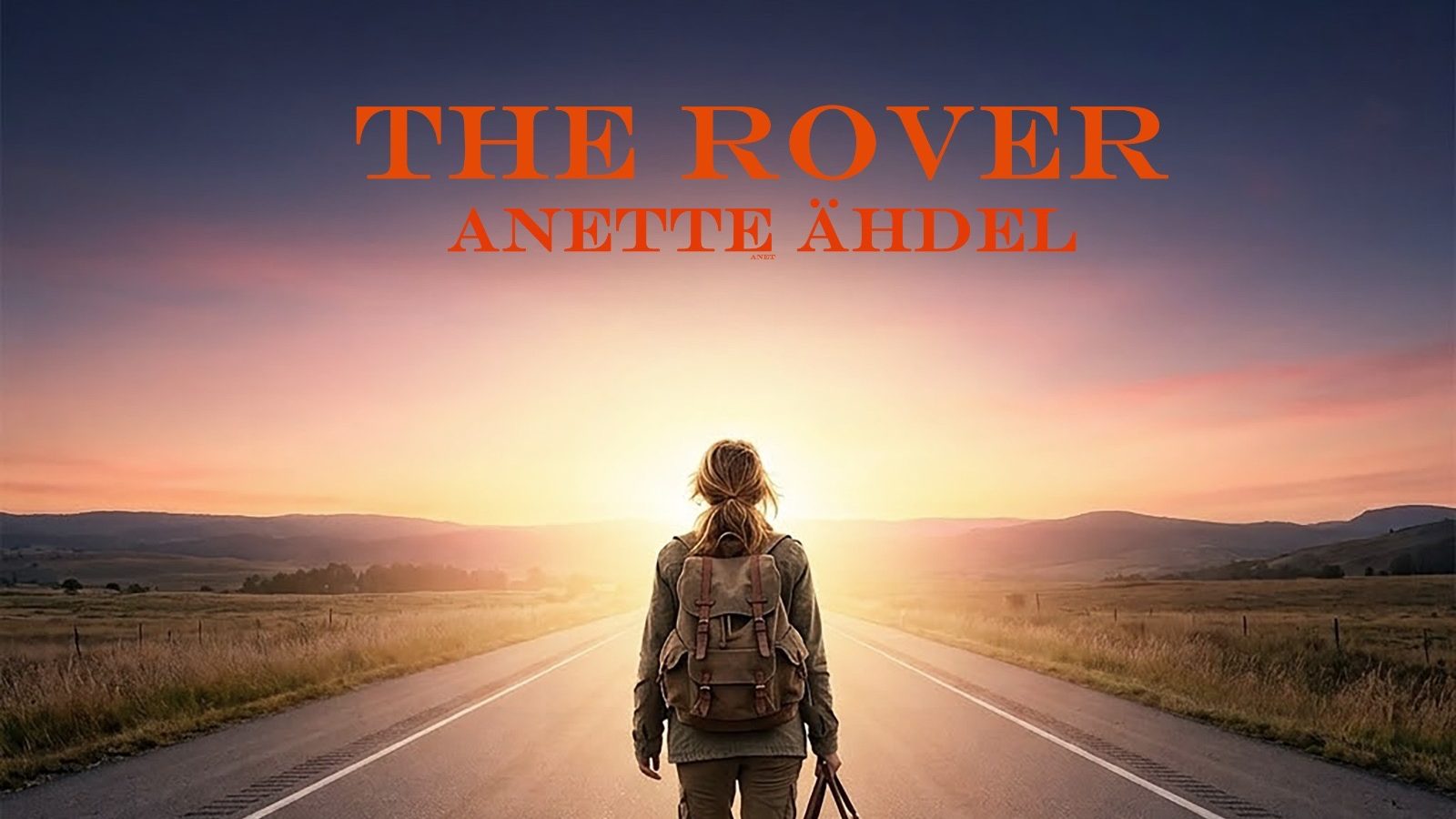
Anette Ähdel’s “The Rover,” released on July 14th, 2026, is an atmospheric Indie Pop and Alternative-leaning single that transforms the difficult act of leaving into something empowering and liberating. Rather than presenting departure as a moment defined entirely by sadness, Ähdel frames it as a necessary step toward self-discovery, independence, and renewal. The song captures that pivotal space between closing the door on what has become stagnant and facing the uncertainty of what lies ahead. Its steady rhythmic drive and spacious sonic textures create the impression of movement, immediately placing the listener on an emotional road where every mile represents another step away from the past. There is melancholy within “The Rover,” but it never overwhelms the song’s central sense of determination.
One of the track’s strongest qualities is Ähdel’s vocal performance, which gives the narrative an intimate and deeply human character. During the verses, she adopts a conversational, almost whispered delivery that makes the lyrics feel less like a conventional pop performance and more like a private confession being shared directly with the listener. That restrained approach allows the emotional details to breathe, particularly as she reflects on the exhaustion of carrying old promises and commitments. As the song develops, her voice gradually acquires greater conviction, creating a noticeable emotional progression from weariness to resolve. This vocal transformation mirrors the journey at the heart of the song. She begins from a place of emotional weight and gradually arrives at the freedom of standing independently, making the performance feel honest rather than theatrically overstated.

The instrumentation reinforces this journey with remarkable consistency. “The Rover” is built around a sparse but persistent rhythmic foundation that resembles the cadence of walking, driving, or simply continuing forward when turning back is no longer an option. Atmospheric synth layers expand the track’s sonic environment, giving the production a spacious, almost dreamlike quality. These textures complement the imagery of an open highway stretching toward an uncertain horizon, while the steady pulse keeps the composition moving. The contrast between reflective lyrics and forward-driving rhythm is particularly effective because it prevents the song from becoming static. Even when Ähdel is looking inward, the music continues to move outward, creating a sonic representation of someone processing the past while actively stepping into a new chapter.
Structurally, the song also benefits from resisting excessive pop grandiosity. Instead of relying on dramatic shifts or oversized climaxes, Ähdel embraces a circular, meditative approach that makes the track feel like an ongoing journey. The recurring chorus functions almost like a mantra, repeatedly reinforcing the decision to keep moving and embrace the identity of being “just a rover.” This repetition gives the central message additional weight, allowing the idea of independence to become increasingly ingrained as the song progresses. The references to leaving the old “game” behind strengthen that sense of personal liberation, suggesting that the narrator is no longer interested in conforming to expectations established by her previous life. The arrangement therefore becomes an extension of the lyrics, with repetition representing persistence and the continuous rhythm representing forward motion.
The closing moments provide the emotional resolution the entire composition has been building toward. As the track fades with the stark reassurance, “I’m okay. I’m gone,” the simplicity of the statement makes the departure feel final rather than uncertain. There is no need for an elaborate conclusion because the emotional destination has already been reached. The combination of acoustic sensibilities, modern synth-inflected pulses, atmospheric production, and understated vocal intensity gives “The Rover” a contemporary identity while preserving a personal warmth. It is a song about releasing old ghosts, accepting solitude, and discovering that moving forward can itself become a form of strength. That balance between vulnerability and independence is what gives the single its lasting emotional character.
The Rover Transforms Leaving Into Liberation, Capturing Resilience, Independence, And Courage Through Atmospheric Rhythms That Carry Its Listener Toward New Horizons With Quiet Resolve
~ Faithfulness (Dulaxi Team)
This sense of emotional storytelling also connects naturally with Anette Ähdel’s wider artistic journey. Based in Stockholm, Sweden, Ähdel has carried music with her since her teenage years, when Led Zeppelin were among her major inspirations, while her listening today remains broad and guided by feeling and presence. As the longtime lead singer of local rock band Yesterday’s Gone, she has contributed both lyrics and music while gaining experience performing across different live stages. In recent years, she has increasingly developed her own material and explored an indie direction beyond her rock foundations, writing primarily in English because it feels like her natural musical language. Her lyrics often leave room for interpretation, allowing different listeners to discover their own meanings within them. “The Rover” represents that evolving identity beautifully: an artist drawing from years of musical experience while embracing a more atmospheric and introspective sound. In its portrayal of departure, resilience, and freedom, the song becomes more than a story about leaving; it becomes a reflection of Ähdel’s own continuing artistic movement toward new horizons.
For more information about Anette Ähdel, click on the icons below.