

Hello everyone, it’s your host Tehillah from DULAXI, and today I’m delighted to be joined by London-based singer-songwriter and musician Ben Lester, whose distinctive chamber-pop approach brings together melodic intricacy, evocative songwriting, richly layered arrangements, and an enduring admiration for Brian Wilson. Hailing from England, Ben has spent years developing his craft, from recording music in his bedroom and gaining early radio attention to becoming a BBC Introducing featured artist at 19 and eventually releasing his self-titled debut album through Mayfield Records.
Released on September 5, 2025, Ben Lester is a 13-track album that brings together dream-pop softness, melodic pop-rock, indie textures, singer-songwriter intimacy, and chamber-pop complexity. Years in the making, the album reflects a formative period in Ben’s life and his determination to create music that can be immediately engaging while rewarding listeners who return to it.
Before we begin our conversation with Ben Lester, here’s what you need to know about today’s featured project.
About Ben Lester
Ben Lester’s journey into music began during his school years, when he found himself retreating into music practice rooms while dealing with the pressures of A-Levels. Those spaces became a safe haven and, over time, songwriting became much more than a creative pursuit. It became a way for Ben to understand himself, experiment with ideas, and develop a musical identity of his own.
He went on to study music at Southampton University, while continuing to write, record, and develop his material. Ben began recording what would eventually become his debut album in 2017, when he was only 18. That early start is significant because the songs that make up Ben Lester were created during a period when he was still discovering who he was, both personally and artistically.
His ability to handle the musical process himself also became an important part of his development. Ben’s early recordings were largely created from his bedroom, allowing him to experiment freely with songwriting and production while also forcing him to work within the limitations of the equipment available to him. Through trial and error, he developed an increasingly detailed understanding of how songs could be constructed, recorded, arranged, and presented.
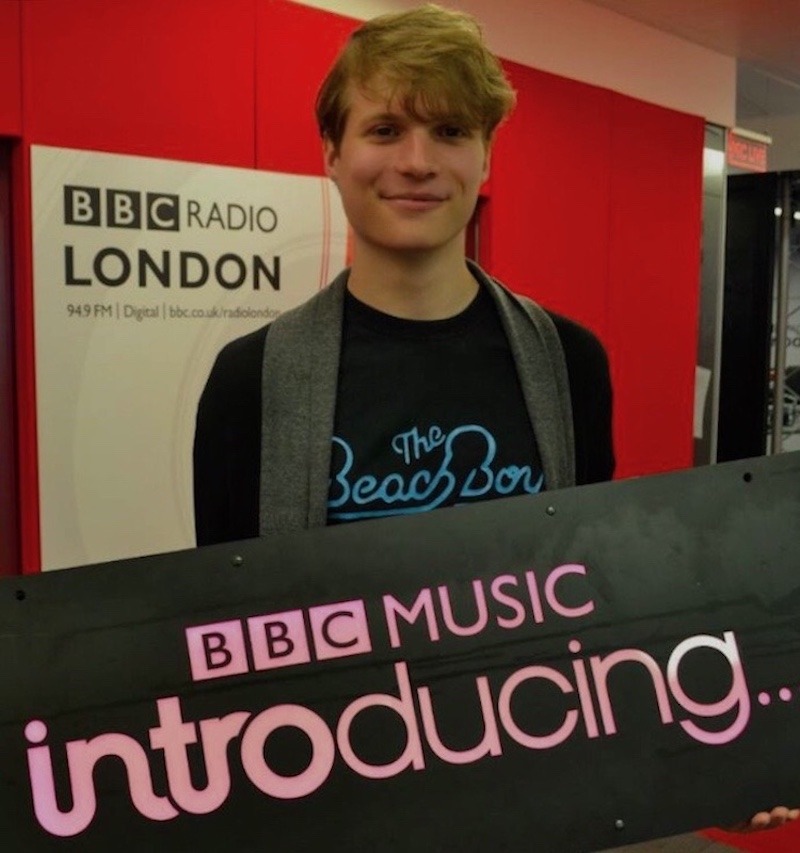
That independent approach helped generate attention around his early recordings, which received regular airplay and eventually led to Ben being selected as a BBC Introducing featured artist at 19. The recognition marked an important turning point. It gave him greater confidence in his abilities and encouraged him to take his musical career more seriously. He began writing and recording constantly and sending his demos to record labels, eventually attracting the attention of Mayfield Records.
At the centre of Ben’s musical identity is his fascination with musical detail. His admiration for Brian Wilson and The Beach Boys has played an important role in shaping his understanding of composition, harmony, structure, and arrangement. Ben’s appreciation for Wilson’s work is particularly evident in his fascination with music that can appear bright and immediately melodic while containing considerably more complexity beneath the surface. At the same time, Ben has been careful not to simply imitate that influence, instead using it as a foundation from which to develop his own sound.
That decision also explains the album’s eventual self-titled identity. The first draft was simply called One, but after the project was shelved for several years and Ben came to believe it might become his first and final release, the title Ben Lester felt more definitive and fitting for a body of work created during such a formative period.
The album’s themes are equally varied. Rather than relying heavily on conventional love-song narratives, Ben explores subjects including loss, depression, drug use, earthquakes, uncertainty, resilience, imagination, and personal transformation. His songwriting allows both direct meaning and sonic interpretation to coexist, with some songs using words primarily for their sound and texture rather than for a single fixed interpretation.
The musical detail of the album is matched by Ben’s perfectionist approach to production. He describes spending days working on individual songs and admits that his attention to detail could sometimes become overwhelming. Throughout the recording process, however, he remained open to outside ideas. Dom Elton, the manager of Mayfield Records, played an important role in helping bring the project to completion, providing studio time and contributing arrangement ideas, including the addition of a gospel choir to “In The Night.”
Having this brief introduction to today’s featured project, I’m sure both new listeners and longtime fans are excited to hear directly from Ben. So, without further ado, let’s begin today’s interview.

INTERVIEW SESSION
Tehillah:
Looking back at your early years as a musician, what was happening in your life at that time that made music such an important form of expression for you, and how did those early experiences shape the person and songwriter you eventually became?
Ben Lester:
I started writing songs when I was still at school – I would cloister myself away in the music practice rooms, which became my safe haven during the stress of A-Levels. I then went to study music at Southampton University so music quickly seeped into every aspect of my life! I started recording the album in 2017 when I was 18 – at such a young age, you’re still figuring out who you are as a person, and I think songwriting greatly facilitated that.
Tehillah:
Being featured by BBC Introducing at just 19 and described as a “hugely talented singer-songwriter” who “creates his own unique moods” must have been a significant moment so early in your journey. What did that period teach you about your abilities, your ambitions, and the kind of artist you wanted to be?
Ben Lester:
Being chosen as a BBC Introducing featured artist was a dream come true! That was my “I’ve made it” moment for me. From then on, I took my musical journey a lot more seriously. I started writing and recording constantly, and sent my demos off to every record label I could contact. It was only a few months before I had a response from Mayfield Records, who were eager to sign me up for an album deal!
Tehillah:
You have built your sound around a distinctive chamber-pop approach, while Brian Wilson’s musical imagination has been an important influence on your work. What specifically about Wilson’s approach to songwriting speaks to you, and how have you taken those influences and transformed them into something that feels personal to you?
Ben Lester:
For me, Brian Wilson is the greatest composer of all time. His mastery of the musical language is just unparalleled! I’ve been enamoured with his and The Beach Boys’ music since I first encountered them at 15. Listening to Pet Sounds, it’s incomprehensible to me that it was the work of a single 23 year old man. And then somehow The SMiLE Sessions are even more astonishing! There’s no doubt in my mind that it would have been the greatest album ever made, had it been finished. The depth of emotion and the harmonic and structural complexity never ceases to astound me. And his lesser known songs like All I Wanna Do and ‘Til I Die are just as incredible as the hits. As much as I love and admire his work, I was careful not to imitate his sound – I didn’t want to sound like a pastiche!
Tehillah:
Your music has been described through its gorgeous melodies, evocative lyrics, and considerable musical intricacy, suggesting that you place equal importance on emotional communication and musical detail. How do you balance the need for a song to feel immediately moving with your desire to give listeners something deeper to discover through repeated listening?
Ben Lester:
I try to hook people with a catchy melody, while hiding enough musical and lyrical detail that it doesn’t get stale after a few listens, as some disposable pop music does. That’s very much the Brian Wilson influence again – beautifully sunny tunes that are deceptively complex and hiding much deeper and darker undertones. Not that I would compare myself to Wilson of course – but it’s what I aspire to!
Tehillah:
Your self-titled debut brings together 13 tracks that were years in the making. When you look at the album as a complete body of work rather than as individual songs, what does the collection reveal about where you were emotionally and creatively during the period in which these songs were written?
Ben Lester:
It’s an album of two halves really. I wrote the songs on the first side in 2019, and the ones on the second side in 2017. I had originally planned to release them as two separate albums, and I had a bunch of other songs already written and recorded, but I’m my own biggest critic and I wasn’t confident about a lot of them. So eventually I decided to just compile all my best songs into a single record. I’d like to think it works quite well, despite the fact that I recorded the songs at different times in my life – and that the first half was recorded in the studio while the second half was recorded mostly in my bedroom! It’s funny listening to the album now, as the songs are all nearing a decade old and I’m quite a different person now than when I wrote them – I was only a teenager at the time after all.
Tehillah:
Choosing to make your debut album self-titled gives the project a very direct connection to your identity as an artist. What made this particular collection feel like the right introduction to Ben Lester, and what parts of yourself did you feel were important to put at the center of that introduction?
Ben Lester:
It wasn’t originally intended to be self-titled actually. In fact, the first draft of the album was simply called ‘One’. But I ended up shelving the album for several years, and by the time I eventually got around to finishing it, I assumed it would be my first and final release. So I renamed it as it felt more definitive – and calling it ‘One’ when there wasn’t going to be a ‘Two’ wouldn’t have been very prudent! I made the album in a very formative time in my life, so naming it after myself also seemed quite fitting.
Tehillah:
The album has been described as music for people who value meaning, with the songs combining intricate musical ideas and emotionally evocative writing. When you are developing a song, how do you decide which personal thought, feeling, or observation is worth turning into a piece of music, and what makes an idea strong enough to remain with you through the writing process?
Ben Lester:
I wrote and discarded dozens of songs over the years that I wasn’t satisfied with. In fact, I had close to 100 songs under my belt by the time I started putting the album’s 13 tracks together. The ones that are worthwhile to me are simply the ones I think are the strongest compositionally, and that I deem worthy of being put out into the world. On a few occasions, I’ve had to rewrite lyrics because I was happy with the music but not the words. But you get there in the end!
Tehillah:
Your early self-released recordings received regular airplay before you signed with Mayfield Records, meaning you had already experienced the process of creating and sharing music independently before the album reached a wider audience. How did that earlier period shape your understanding of songwriting, production, and the realities of building a career in music?
Ben Lester:
Doing everything in your bedroom is both freeing and restricting at the same time. On one hand, you can do it all on your own time – on the other, you’re limited to the tools you have available. Still, I recorded many serviceable demos, and even songs which were polished enough for radio play, all without leaving my house. I learnt a lot about the songwriting and production process simply through trial and error, keeping what worked and chucking what didn’t.
Tehillah:
You are known for having a strong hands-on approach to your material, including performing and producing everything yourself. What does that level of involvement allow you to achieve creatively, and are there moments when being responsible for so much of the musical process becomes a challenge rather than an advantage?
Ben Lester:
I am a perfectionist, for better or worse! I would spend days on end working on the same song, sometimes barely changing anything at all. Dom Elton, the manager of Mayfield Records, was my guardian angel throughout the whole process. He gave me all the studio time I needed, and put up with my unbearable perfectionism from start to end. He also had a couple of fantastic arrangement ideas that really elevated my music – most notably, the addition of the gospel choir on In The Night – that’s one of my favourite moments of the album! So while I did have a clear vision for how I wanted everything to sound, I was not entirely inflexible, and was definitely receptive to new ideas.
Tehillah:
There is a particular richness in the way your music brings together melodic pop-rock sensibilities, dream-pop softness, singer-songwriter intimacy, and chamber-pop intricacy. How do you determine the musical world a song needs, especially when the emotional idea behind it could potentially be expressed through several different styles or arrangements?
Ben Lester:
That’s a great question – and put simply, with great difficulty! I sometimes wish I’d be content with just an acoustic guitar, or let someone else manage the arrangements so I wouldn’t have to worry about them. I find the arrangement can often be the most challenging aspect of creating a song, because the studio is limitless in its capability so how do you decide what timbres and textures to use? In the end, I found myself gravitating towards orchestral instruments like brass, strings and timpani, as much as guitars and synthesisers.
Tehillah:
The album has received recognition from BBC Introducing and strong responses from outlets including Talk Radio and Prog Magazine, with your songwriting being praised for its musicality and ability to create distinct moods. How have those different forms of recognition affected your confidence in your own creative instincts, particularly after spending so many years developing the material?
Ben Lester:
It’s an amazing feeling receiving such positive accolades from such respected outlets. It’s extremely validating to know that I’m good at what I do, as like so many artists I definitely suffer from the occasional bout of low self-confidence! It’s definitely given me the confidence to continue what I’m doing, which is all you can hope for really.
Tehillah:
A debut album can represent both an arrival and the end of a long period of uncertainty, especially when the songs have been developing for years. What was the most difficult part of bringing this particular project from an idea into a finished album, and what did completing it teach you about yourself as a creator?
Ben Lester:
Though the songs were all pretty much completed by the start of 2020, the onset of COVID put my music career on hold indefinitely. So, I quietly put out an unfinished draft of the album and forgot about it for five years. It was only when I revisited it last year that I finally got round to completing and releasing it. So, it’s definitely taught me not to give up on projects – particularly when you’re so close to the end!
Tehillah:
Your songs have been recognized not only for their musical construction but also for the emotional quality of their lyrics. When you are writing lyrics, how important is it for you to leave certain emotions or stories open to interpretation rather than explaining exactly what a song means?
Ben Lester:
I find love songs so tired out, if we never got another new one it would be no great loss! (I will make an exception for Cameron Winter’s Love Takes Miles, which admittedly is one of the greatest songs I’ve ever heard.) So the songs on the album cover a range of themes – from loss, depression and drug use to earthquakes – anything but love! I also admire how artists like Cocteau Twins’ Elizabeth Fraser, or even Jon Anderson from Yes, use words more for their sonic and timbral value rather than explicit meaning. So there are a couple of songs on the album where there is no real meaning – I just liked how the words sounded!
Tehillah:
The response to your music has included descriptions such as “absolutely terrific,” “great voice and great songs,” and “brimming with ideas and musicality.” Beyond the praise itself, what do you hope a listener actually feels or carries with them after spending time with your music?
Ben Lester:
I just hope that my music resonates with them, and that they get some sort of enjoyment, comfort, or really anything out of it. I’m under no illusion that I’m ever going to be a mainstream chart-topping artist with the music I make, and I made my peace with that long ago. Still, the lead single from the album, The Moment, is approaching 300,000 streams on Spotify, so I’m clearly resonating with some people!
Tehillah:
Since your earliest recordings, your journey has moved from attracting attention through BBC Introducing and regular radio play to releasing a fully developed 13-track debut through Mayfield Records and receiving major recognition for the work. In what ways do you feel your understanding of yourself as a musician has changed throughout that journey?
Ben Lester:
I’m more aware of my shortcomings now I think. I know now when I need to step back and ask for input, rather than attempting to do every little thing myself. I think that’s a healthy step for sure. I burnt myself out a bit when creating the album, hence its protracted eight-year gestation. Nobody’s going to think less of you if you ask for help with something!
Tehillah:
Now that your self-titled debut has established such a detailed picture of your songwriting and musical identity, where do you want to take that identity next, and what would you like the next stage of your career to explore that you could not fully express on this album?
Ben Lester:
Moving forward, I definitely intend to explore deeper themes with more sophisticated songwriting. I’m a more confident writer now, and it’s clearer to me when I have an idea worth working on. So I’m hoping the second album is even better than the first – even if it takes another eight years!
“Ben Lester turns the complexity of chamber-pop into something deeply personal, pairing bright melodies with a songwriter’s willingness to explore uncertainty, vulnerability, imagination, and the less predictable corners of human experience.”
~ Tehillah (DULAXI Team)
EDITORIAL PERSPECTIVE
What stands out about Ben Lester is the artist’s determination to make musical detail serve the emotional life of each song. The arrangements are ambitious, yet they remain connected to memorable melodies and direct songwriting. Ben’s willingness to move between intimate singer-songwriter textures and larger orchestral ideas gives the album a distinctive character, while his candid reflections reveal an artist increasingly comfortable with collaboration and restraint. Most importantly, the long journey behind the record gives its eventual arrival a sense of personal resolution.
~ Tehillah (DULAXI Team)
CLOSING

Our conversation with Ben Lester offers a fascinating look at what can happen when a young songwriter gives himself the freedom to experiment, the patience to keep refining his work, and eventually the perspective to recognize when he does not have to create everything alone.
From the early days of recording in his bedroom to BBC Introducing recognition, the signing with Mayfield Records, and the eventual completion of an album that had spent years waiting to be finished, Ben’s story is one of persistence as much as musical ambition. His reflections also reveal an artist who continues to question, refine, and challenge his own creative instincts rather than becoming comfortable with what he has already achieved.
Thank you to Ben Lester for taking the time to speak with DULAXI and for sharing such thoughtful insight into his songwriting, production process, influences, challenges, and future ambitions. We hope this conversation encourages readers to spend time with Ben Lester and discover the many layers within the record for themselves.
And to everyone reading, thank you for spending time with DULAXI. We look forward to bringing you more conversations with artists whose music, stories, and creative journeys deserve to be heard.