
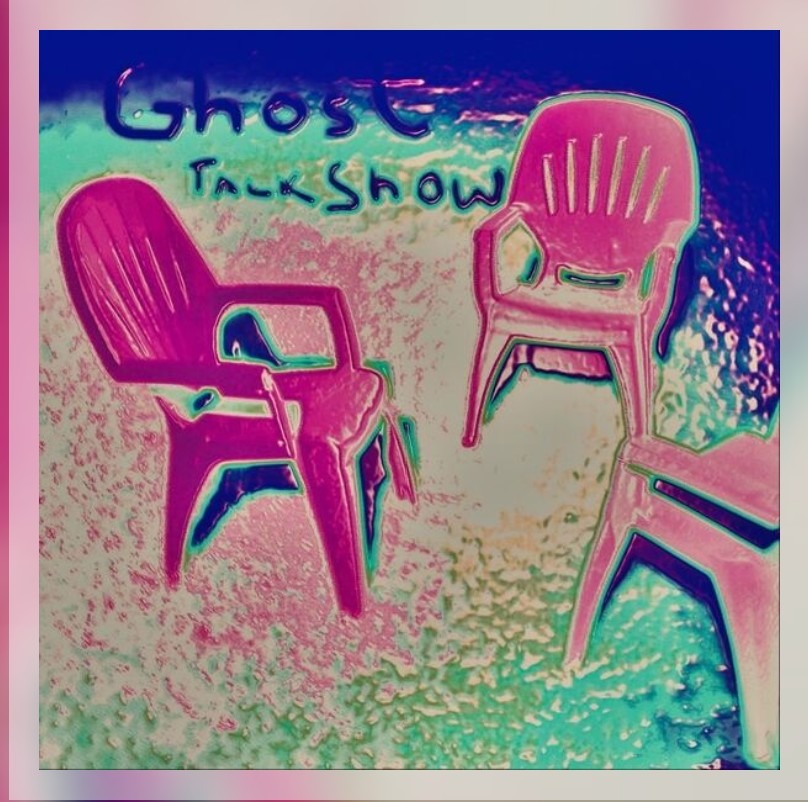
Released on 22nd November 2025, Mark Cee’s “Ghost Talk Show” is an intimate folk-rock and alt-folk album built around emotional honesty, acoustic warmth, atmospheric restraint and the unpolished character of a songwriter returning to public music after decades of largely writing in private. The album feels less like a conventional debut than a personal statement finally brought into the open, with Cee creating the project independently at home, without a label, AI or excessive production. Its guitar-led arrangements, gentle rhythms, spacious ambience and natural imperfections establish an immediate sense of intimacy, making the music feel close and human rather than distant or heavily manufactured. That roughness becomes part of the album’s emotional language, documenting an artist relearning the process of recording and releasing music while refusing to conceal the reality of that process. “Ghost Talk Show” explores memory, loss, nostalgia, longing, regret, imagination, personal change and the difficult process of moving forward without erasing the past. These themes are presented with emotional range, allowing melancholy to exist alongside acceptance, vulnerability alongside humour, and remembrance alongside release.
The acoustic foundation provides continuity, while guitar carries much of the album’s rhythm, atmosphere and emotional colour. Space is equally important, as silence, room ambience and unresolved moments are allowed to remain rather than being filled with unnecessary production. Although rooted in acoustic and indie folk, the album incorporates folk-rock elements and occasional electric textures, giving its sound enough movement to reflect the inconsistencies of human experience. The title “Ghost Talk Show” captures the album’s central atmosphere, where memories, former relationships, past versions of the self and unresolved emotions remain present even when they are physically absent. Yet Mark does not remain trapped within those memories. The album gradually communicates that reflection and forward movement can exist together. Its greatest strength is authenticity: Mark Cee does not attempt to make his circumstances sound grander than they are. Instead, he transforms intimacy into the defining scale of the project, creating an emotionally observant record about vulnerability, distance, imagination and the continuing process of becoming. “Ghost Talk Show” ultimately succeeds because its imperfections feel purposeful, its restraint feels honest, and its accumulated perspective gives this new artistic chapter genuine emotional weight.
I Am Dreaming Of:
Mark Cee’s “I Am Dreaming Of” introduces “Ghost Talk Show” through an intensely stripped-back sound that places intimacy above conventional performance spectacle. The vocal delivery is exceptionally close and delicate, allowing soft breaths, subtle inflections and small changes in phrasing to remain audible. Its airy tone moves naturally through the looping acoustic guitar, creating a hypnotic atmosphere where voice and instrument appear almost inseparable. The restrained presentation avoids vocal excess, dense effects and unnecessary layering, preserving the raw DIY character of the alt-folk style. The acoustic guitar provides both the harmonic foundation and much of the song’s rhythmic identity, combining gentle strums with intricate repeating plucks that create a cyclical, meditative movement. There is no heavy percussion, prominent bass or synthesizer competing for attention. Instead, natural room ambience and the resonance of the wooden instrument occupy the surrounding space, giving the recording an unusually physical and intimate character.
Thematically, Mark Cee’s “I Am Dreaming Of” examines unfulfilled potential, internal longing and the painful need to have one’s hidden development recognized by someone important. The song focuses on the emotional distance between what exists inside a person and what others are capable of seeing from the outside. Its central message is that personal growth can become painful when it remains invisible to the people whose understanding matters most. The dream imagery represents an inner world filled with aspirations, possibilities and emotional movement that has not yet received external validation. The song ultimately transforms private frustration into a universal meditation on recognition. Its minimal instrumentation mirrors the vulnerability of someone exposing an interior world without protection, while the repeating guitar figures embody thoughts that continually circulate. Mark Cee creates an atmosphere in which ambition does not sound triumphant; it sounds fragile, deeply personal and dependent on being genuinely witnessed. As the opening statement of “Ghost Talk Show,” the track establishes an emotional foundation built on introspection, vulnerability and the desire to become fully understood.
Drifting Back Again:
Mark Cee’s “Drifting Back Again” develops its emotional character through restraint, spaciousness and an almost conversational vocal delivery. The performance remains smooth, airy and controlled throughout, with unhurried phrasing that avoids dramatic peaks and allows the emotional details to emerge naturally. The voice blends into the surrounding room ambience rather than dominating it, creating the sensation of an internal monologue unfolding privately. A clean, warmly recorded acoustic guitar provides the principal harmonic and rhythmic foundation, while soft organic rhythmic clicks supply movement without introducing the weight of a conventional drum arrangement. The production preserves the natural resonance of the guitar and the physical character of the recording environment, producing an open, organic texture. There are no dense electronic layers or excessive effects, so the spaces surrounding each sound become an essential part of the composition.
“Drifting Back Again” explores the cyclical nature of memory, the passage of time and the difficulty of achieving complete emotional closure. The song presents the past as something that continues to exist within the present, returning through memories, unfinished thoughts and unresolved emotional attachments. Its message is not that people must remain trapped in their history, but that moving forward does not require pretending that the past has disappeared. Certain experiences remain part of us, resurfacing when circumstances trigger familiar emotions. The gradual thinning of the arrangement toward near silence gives this message its strongest musical expression. Instead of delivering a conventional resolution, the song allows its sound to fade without providing absolute closure. That unresolved ending represents memories and emotional experiences that continue without a definitive conclusion. Mark Cee therefore makes the production itself communicate the theme: the music drifts, just as the mind drifts back toward what remains unfinished. “Drifting Back Again” becomes a quiet meditation on acceptance, demonstrating that emotional progress can coexist with the persistent presence of memories.
Skeletons on Your Lawn:
Mark Cee’s “Skeletons on Your Lawn” creates one of “Ghost Talk Show”’s most striking contrasts by combining an upbeat indie-pop character with emotionally weighty subject matter. The vocal delivery moves between a warm conversational quality and a more expressive melodic approach, maintaining intimacy while giving the short composition additional momentum. The performance feels direct and unguarded, allowing the emotional tension beneath the bright surface to remain prominent. Bright, jangly acoustic guitar chords provide the primary instrumental foundation, establishing a lively rhythmic progression and accessible melodic character. Minimal percussion and subtle rhythmic layers support the guitar without overcrowding the arrangement. The self-produced aesthetic retains a warm, raw and organic quality, favouring bedroom-style immediacy over polished commercial production. This uncluttered approach leaves enough space for the vocal presence and guitar texture to remain clearly defined.
Mark Cee uses this track to confront buried secrets, unresolved trauma, past mistakes and the personal consequences of hiding difficult aspects of oneself. The skeleton imagery represents everything people attempt to conceal but eventually have to acknowledge. The song’s central message is firmly connected to accountability: genuine healing begins with confronting what has been buried rather than maintaining the illusion that painful experiences do not exist. Concealment creates psychological weight, while acknowledgment creates the possibility of understanding and recovery. The bright musical character strengthens this message because the song does not sound weighed down by its subject. Instead, the cheerful guitar movement creates tension between external appearance and internal reality. That contrast reflects how people can carry serious emotional burdens while continuing to participate in ordinary, seemingly happy environments. Mark Cee turns this contradiction into the song’s defining artistic quality. “Skeletons on Your Lawn” ultimately communicates that the past cannot remain hidden forever, and that honesty about personal flaws is essential to meaningful healing. Its combination of jangly guitar, restrained percussion, intimate delivery and raw production makes accountability feel accessible rather than overwhelmingly dark.
Wish You Were Coming Home:
Mark Cee’s “Wish You Were Coming Home” is built around a remarkably soft and intimate vocal presentation that carries melancholy without relying on theatrical intensity. The vocal delivery remains gentle, vulnerable and slightly distant, allowing it to hover naturally over the acoustic instrumentation. Crisp vocal treatment preserves the quieter details, while atmospheric echoes create additional depth around the performance. Bright, melodic acoustic guitar provides the principal instrumental foundation through clean rhythmic strumming that establishes both the chordal structure and breezy momentum. Soft, warm percussion supports the groove without overwhelming the guitar, while spacious production and reverb contribute a hazy, dream-like quality. The major-key brightness of the instrumental palette creates an intentional emotional contradiction: the music feels warm and sunny while the underlying narrative is defined by loneliness, separation and longing.
“Wish You Were Coming Home” examines the emotional consequences of physical separation from someone deeply important. The song captures the movement from shared companionship into solitude, focusing on how familiar surroundings become emotionally altered when the person associated with those spaces is suddenly absent. Its message extends beyond romantic longing because it explores how absence changes perception itself. Places that once represented comfort, routine and shared experience can become reminders of what is missing. The contrast between the bright acoustic arrangement and melancholy subject makes this message especially effective. The guitar preserves the warmth of the relationship being remembered, while the vocal delivery expresses the emptiness created by separation. The spacious production places these elements inside an atmosphere that feels suspended between memory and the present. Mark Cee therefore presents heartbreak not as dramatic collapse but as quiet displacement, where ordinary environments continue existing while feeling fundamentally different. “Wish You Were Coming Home” ultimately communicates the enduring desire for reunion and the emotional weight of distance, using warm guitar, restrained percussion, intimate vocals and hazy ambience to turn personal separation into a universal portrait of longing.
“Ghost Talk Show” Helps Transform Memory, Loss, Longing And Regret Into Honest Reflection, Showing That Accepting The Past Can Make Moving Forward Possible Without Forgetting.
~ Daniel (Dulaxi Team)
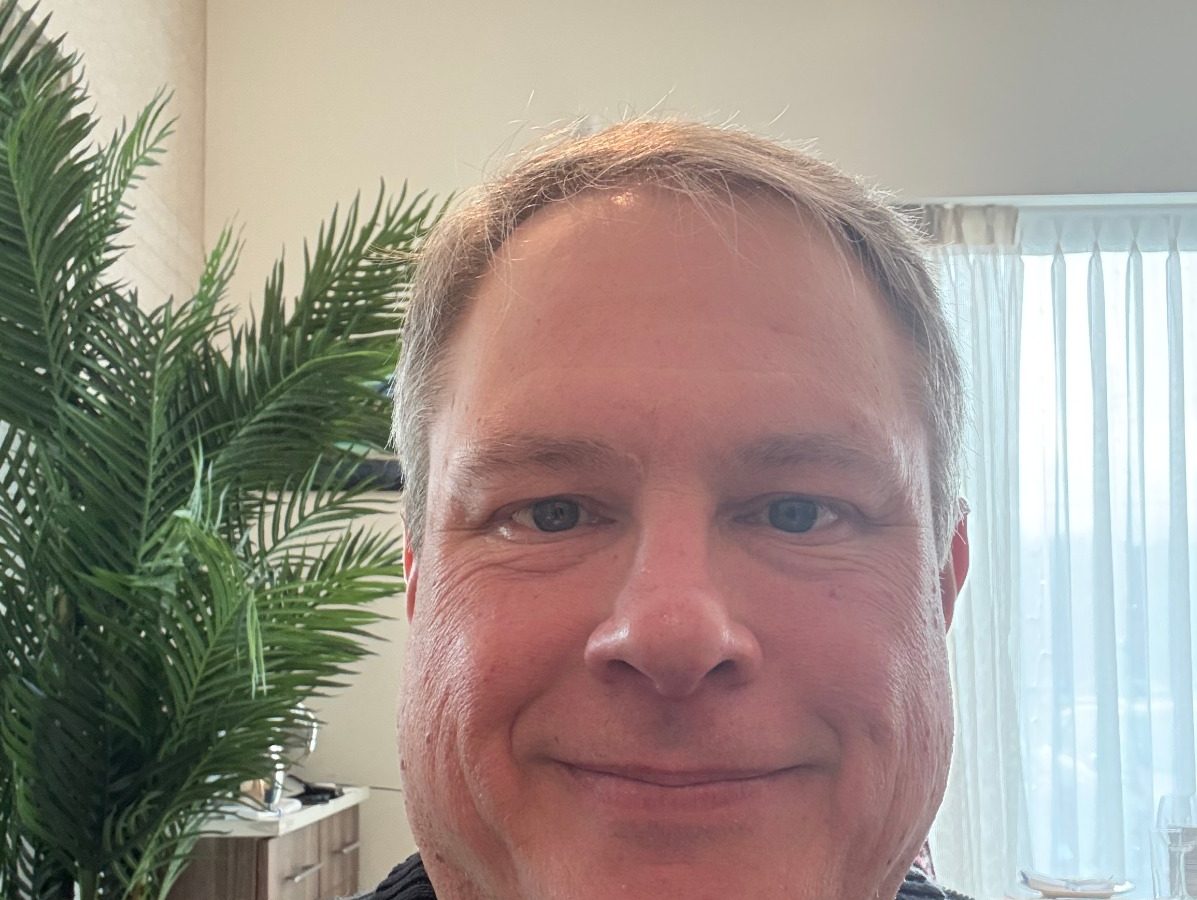
Mark Cee brings decades of songwriting and poetry experience to his ambient indie folk/Americana work, having developed his craft since 1995 before beginning to release music in earnest in 2026. Based on Long Island, he embraces a distinctly human recording philosophy, creating entirely at home without AI-assisted production or live performances, allowing room presence, imperfection and emotional honesty to remain central to his sound. Influenced by Traffic, Bon Iver, Tim Buckley and the Beatles, his music also carries qualities critics have associated with early Bob Dylan, Elliott Smith and Justin Vernon’s most unguarded work. His deeply personal songwriting has already gained attention through “How You Left Me Still,” which transforms grief and sudden loss into a stripped-back acoustic meditation, while “Missed Connection” continues the journey toward his forthcoming EP, “It’s Me, Mark Cee.” Together with “Ghost Talk Show,” this work establishes an artist whose greatest strength is sincerity. For listeners drawn to atmospheric folk, intimate songwriting and records that value emotional truth over studio perfection, “Ghost Talk Show” is an album worth experiencing from beginning to end. Its warmth, vulnerability and deliberately human character make it especially engaging for anyone seeking music that feels personal, reflective and genuinely lived, leaving a quiet but lasting impression after the final note.