
Hello everyone, it’s your host Oliver from DULAXI, and today I’m delighted to be joined by Thomas O’Shea, a producer, songwriter, audio engineer, performer, and artist from Madison, Wisconsin, United States. Working across Electronic, SynthPop, Experimental Music, Alternative Pop, and Electronic Pop, Thomas brings several areas of musical expertise together in his work. Today, we’re talking about his latest original single, “No I Won’t,” released on 8 September 2026.
The release presents Thomas in a more pop-focused setting while continuing to reflect the production instincts he has developed throughout his career. Beneath its relationship-based surface, “No I Won’t” carries a much more personal story, using the language of a toxic relationship to explore Thomas’s past relationship with alcohol and drugs.
Before we begin our conversation with Thomas O’Shea, here’s what you need to know about today’s featured project.
About Thomas O’Shea
Thomas O’Shea is a multidisciplinary music creator whose work has developed through years of writing, producing, performing, engineering, and studying music. Born Yoon Young Hoon and adopted from South Korea by an Irish American family, his connection with music began at an early age after watching the church pianist on Sundays. That fascination eventually led to piano lessons at six, singing at seven, beat-making at 13, and his first songwriting efforts at 14 under the name TY’O.
His early creative development was shaped by a classical music education, but he soon began looking for ways to explore sounds outside that environment. A high school choir assignment involving sampling gave him an early opportunity to experiment with beat-making, and although he describes those first efforts with plenty of self-awareness, the experience gave him something important: the desire to keep creating.
Thomas holds a degree in Audio Production and Music Business and a certificate in Music Composition from the University of Wisconsin-Oshkosh. During his studies, he produced for artists across the United States, co-founded and produced for his band Let Them Eat Cake, and continued developing his understanding of composition, performance, and audio production. His formal musical education included solo piano and chamber music with Dr. Eli Kalman, music composition with Dr. Ed Martin and Dr. John Mayrose, and audio production with Nathan Edwards.
His professional experience has also taken him beyond the studio. Through his work as a live engineer, Thomas has worked with Grammy-winning performers, internationally recognised bands, and television talent, including Samara Joy, Brett Newski, Cash Box Kings, Partyof2, and touring acts connected with shows such as America’s Got Talent, Penn & Teller: Fool Us, and RuPaul’s Drag Race. His productions, remixes, and releases have accumulated more than 500,000 streams across platforms, while his work has received attention from international blogs, magazines, radio stations, and curators.
After graduating and moving away from his former stage name, Thomas established OK Hit Record Productions LLC, focusing on music production and audio engineering for pop and hip hop artists. His experience across live and studio environments has also influenced the way he approaches music, allowing him to consider not only how a recording sounds in isolation but how it translates across different listening environments.
“No I Won’t” represents another side of that creative development. The song began as part of a social media series in which Thomas experimented with different production styles associated with other producers. What started as an experiment eventually became a release because the particular sound and songwriting stayed with him. The song draws from the sound of the 2010s, with influences including Benny Blanco, Katy Perry, Lady Gaga, and Justin Bieber, while also incorporating inspiration from Jon Bellion, Sabrina Carpenter, and Benson Boone.
Production was deliberately kept minimal while gradually building in layers. Thomas drew particular inspiration from Benny Blanco’s ability to create large-sounding records without overcrowding the arrangement. Percussion, bass elements, synths, additional melodies, snares, hi-hats, and background vocals are introduced progressively, allowing different parts of the production to become more prominent at different moments. The final pre-chorus and hook bring many of these elements together to create the song’s largest point of accumulation.
Having this brief introduction to today’s featured project, I’m sure both new listeners and longtime followers of Thomas’s work are excited to hear directly from him. So, without further ado, let’s begin today’s interview.
INTERVIEW SESSION
Oliver:
Before we get into “No I Won’t,” I’d like to understand the person behind the many roles you occupy as a producer, songwriter, audio engineer, performer, and artist. How has moving between those different sides of music shaped the way you understand your own identity as a creative?
Thomas O’Shea:
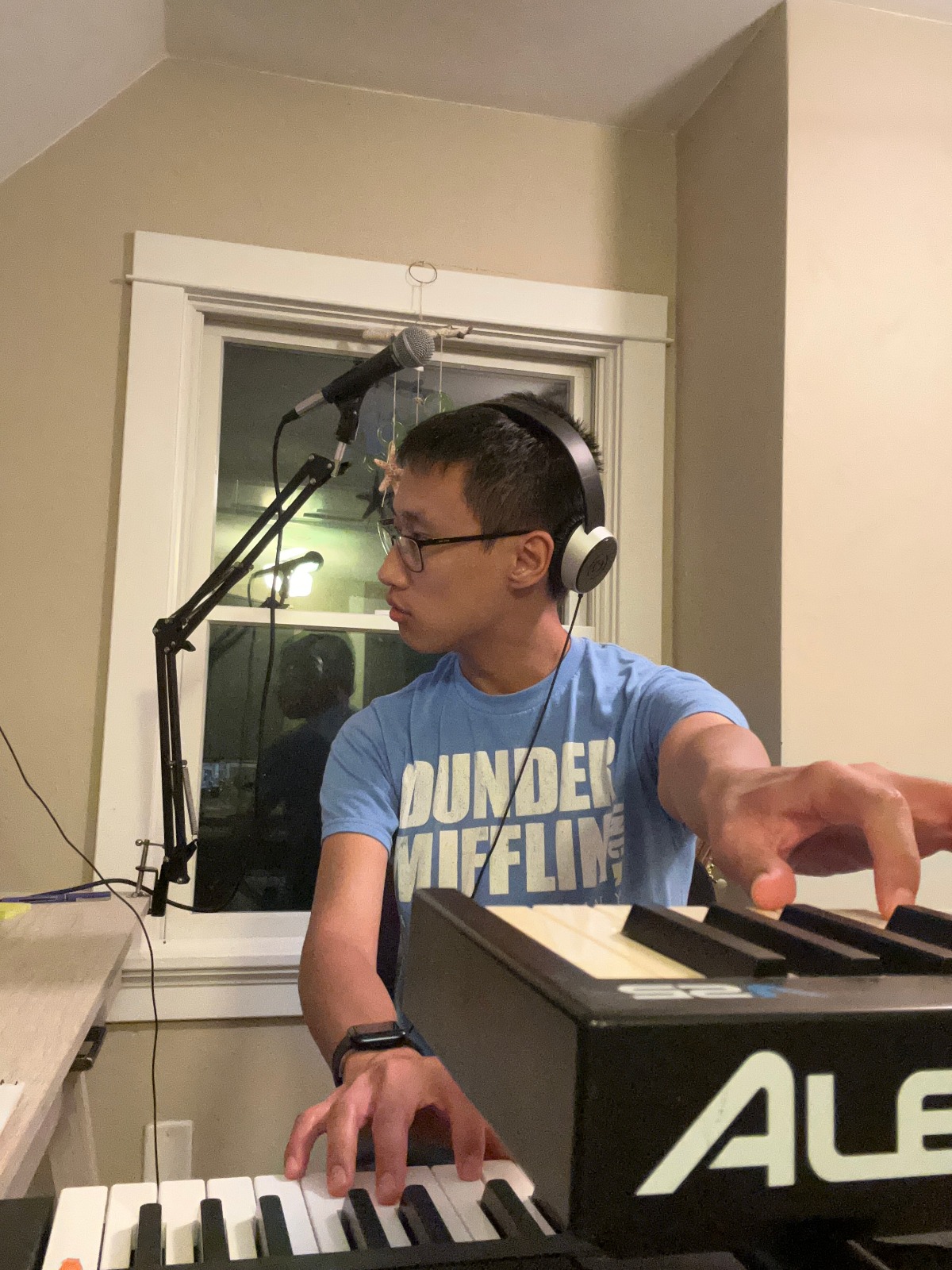
Honestly, I don’t think about it as “sides.” I really just see it as- there’s a job to be done, so I’ll do it. I think because I’ve been doing everything on my own since the beginning, when I started branching out and working with other artists, I just kept the same mentality but just doing that work for more people than just myself. I think I definitely think about the performance of a song or how it will translate between spaces after my time as a live engineer. Furthermore, I’d also say that being able to “switch hats” per say, on the fly makes me a better collaborator for artists.
Oliver:
You were born Yoon Young Hoon and adopted from South Korea by an Irish American family, and your earliest connection to music began by watching the church pianist before you started piano lessons at six and singing at seven. Looking back, what do you remember about those early experiences that made music feel like something you wanted to pursue rather than simply something you enjoyed?
Thomas O’Shea:
It was just so cool to me to see someone take nothing and create a sonic experience. Everytime I saw someone playing music- especially piano- I just knew it was something I wanted to do. Yes, I did start taking piano lessons at age 6, but that was after two years of constantly asking my parents if I could. At that age, I was really drawn to anything creative.
Oliver:
By 13 you were making your first beats, and at 14 you wrote your first song under the name TY’O. What was happening creatively for you during those early teenage years, and what did writing and producing your own music give you that simply performing or learning an instrument could not?
Thomas O’Shea:
Oh God. I really had no idea what I was doing at all. First of all, the only reason why I started making beats in the first place was because my high school choir teacher did a unit on sampling and had everyone in the choir take a sound recording of us singing a spiritual and flip it into a beat to then write something new over it. Both my beat and my verse sucked. Like bad. But I think it just felt right while I was working on it, so I never stopped. In fact, I remember downloading the same app we used onto my phone while I was leaving that class. Back then, producing and writing my own music was to get away from classical for a bit- because for most of my music education up until that point, I had only worked with classical music. And as fun as classical is- I wanted to branch out. To me, it was a chance to explore sound without having to think about all the technical piano things and just think about the music itself and how I could take what was in my head and make it a reality.
Oliver:
Your education brought together Audio Production and Music Business with formal study in Music Composition, while your practical experience has included producing for other artists, performing, live engineering, and working with Grammy-winning and internationally recognised acts. How have those different experiences changed your standards for what makes a recording feel both technically polished and genuinely expressive?
Thomas O’Shea:
I think most of my knowledge and approach for expressive performances comes from studying classical music. A lot of emphasis would be placed on HOW to play a piece of music instead of just the notes. I bring that mentality into every project I do- solo or collaborative. As for being technically polished, I try to make everything I do as polished as possible after years of focus on my craft. I wouldn’t say that working in all the different sides of the industry thus far has swayed how I do things one way or the other, but I would say that working with the more well-known acts definitely confirmed and solidified my ear and was proof that I had reached a level where I could genuinely compete in the industry.
Oliver:
You have described yourself primarily as a producer and songwriter, to the point that your solo work was once treated as secondary. What do you think caused that mindset, and when did you begin to realise that your own releases could become an important part of your artistic identity rather than simply another outlet for your production skills?
Thomas O’Shea:
That’s a good question. I honestly realized it after fully rebranding myself earlier this year. I realized that even though I saw my artistry as something secondary, from looking at my social media, press, and general information on me, other people wouldn’t think that. So, after realizing I had already incorporated my artistry into my brand without even trying, I decided that’s exactly what I should be doing. My production and writing for other artists is still my main focus, but if I ever have a cool idea, or want to try something that really wouldn’t work for artists I’m close with, I’ll just try it myself. No I Won’t is actually a really good example of this.
Oliver:
“No I Won’t” began through a social media series where you experimented with different producers’ production styles, but the particular sound and concept stayed with you strongly enough that you decided to turn the experiment into an official release. What was it about this specific direction that made you feel there was a complete Thomas O’Shea song hiding inside the experiment?
Thomas O’Shea:
Honestly, it wasn’t the series itself. It was the song. I thought at first that I just wrote another toxic relationship song, but then after looking at the lyrics again, I felt something deeper- that the song wasn’t even about a person. It was about alcohol. And I also saw it sparking both support and hate- which told me it was something important to make official. At first listen, a lot of people didn’t understand the point. And I thought it was important to lean into that.
Oliver:
On the surface, “No I Won’t” appears to be another song about repeatedly returning to a toxic relationship, but the person at the centre of that relationship is actually alcohol and drugs, drawing from a difficult period around the time you turned 21. How did you arrive at the decision to hide that subject beneath the language and structure of a familiar love story?
Thomas O’Shea:
Tying back to my last answer- I didn’t really choose to hide it. In fact, when I was looking over the lyrics, I kinda wanted to change the topic and everything altogether. But when I went back over the lyrics, I realized this wasn’t about how I felt about an ex. It was about how I used to be with alcohol. How it had become a crutch and something I would do every single day just because I could. And that metaphor just stuck with me.
Oliver:
There is an interesting connection between the concept of “No I Won’t” and The Weeknd’s “I Can’t Feel My Face,” where a relationship-based interpretation can initially distract from the darker subject underneath. What did you learn from that kind of songwriting approach, and how did you make sure your own story remained distinct rather than simply following the same concept?
Thomas O’Shea:
I learned that songs can be about anything and can even have multiple meanings. It honestly made me think about all the songs I initially judged without knowing the deeper backstory. And I think I was able to make it my own without copying because I wasn’t trying to make a song like “I Can’t Feel My Face,” I was just creating with no filter for a social media challenge. That’s actually a bigger focus of mine as of late- creating without a filter and editing after a draft is fully done. Working without judgement of what I’m doing until everything is at least recorded and in a rough mix.
Oliver:
You wanted the song to make people think, “WHAT THE HELL WAS THAT?” and you deliberately included unexpected lines and moments that encourage repeated listens before someone settles on an opinion. Why was creating that initial sense of confusion or surprise important to the way you wanted people to experience the song?
Thomas O’Shea:
It’s actually a bit of a play on a technique that Charlie Puth uses. Make the listener go “wait what?” and give the reason for it after. The way he approaches it is by starting a verse by saying the first half of a sentence twice. Instead of doing that, I make the payoff figuring out what I actually wrote about and having a second listen with that in mind. Lines like “Maybe I’m drunk on your b*llsh*t, Maybe I’m under your spell. You remind me of an ex b*tch, that doesn’t explain why I fell.” First listen- it sounds fake, cheesy, and a little cringe, almost. But I laid everything out right there- I’m drunk, thinking about an ex, and falling deeper for the bottle. When I was writing it, I was just writing. But after realizing what it was about, I needed to keep the crazier lines in there to hit home for what it truly meant. A lot of songs seem to just spell out exactly what they mean. But music is supposed to make people think- make them feel. It’s art. So, this song is basically my refusal to state plainly what I mean.
Oliver:
The song combines a more hip-hop-influenced vocal flow with production inspired by the sound of the 2010s, while also drawing from artists such as Benny Blanco, Katy Perry, Lady Gaga, Justin Bieber, Jon Bellion, Sabrina Carpenter, and Benson Boone. How did you balance those references with your own instincts so that the track could feel familiar in places while still pushing your sound somewhere new?
Thomas O’Shea:
I always have a bit of a hip hop inspired vocal flow, so that was a little easier to bring in. The 2010’s sound was centered around the social media challenge. The spin-the-wheel thing landed on Benny Blanco, and when I saw that, my mind went to his 2010’s streak on the charts. Once I had the idea in place, the production was pretty easy (especially because I had been listening to 2010’s playlists for a while to prepare after spinning the wheel lol). As for the songwriting and melodies, I kinda ignored the 2010’s inspo and just wrote how I felt over the instrumental.
Oliver:
You have experimented with EDM-inspired, hip-hop-inspired, and R&B-inspired music before, but described “No I Won’t” as an opportunity to finally explore pop more fully. What did working within a pop-oriented structure teach you about your own songwriting and production instincts?
Thomas O’Shea:
That I like making pop music and should shoot to work with more pop artists. It also reinforced my favorite motto to make what you like- cause even though I was creating in a box per se, I still just did what felt natural for the song.
Oliver:
Benny Blanco’s production was particularly important to the track because of the way he can make relatively minimal production feel large and powerful. When you were developing “No I Won’t,” what specific production decisions helped you achieve that sense of scale without overcrowding the arrangement?
Thomas O’Shea:
Layering. That’s by far the biggest technique I used. Cause at the beginning of the song and even up until the bridge, I have barely anything going on besides the vocals. Then I just keep layering in sounds into the same “template” so everything sounds about the same but it just keeps getting more layered over it. Percussion, a melody line doubling the synth bass, and extra bass over the 808, another melody to work with the main one, more snares, more hi-hats, background vocals. And so on.
Oliver:
One of the most interesting production details is the final pre-chorus and hook, where you layer elements that have appeared earlier in the song. What were you trying to achieve with that accumulation, and how did deciding when to introduce each layer affect the song’s final impact?
Thomas O’Shea:
Honestly, I did that because Benny does that a lot in his music- really, all pop artists do. That way it has more of a story than just beginning. Middle. End. done. I like it when sounds have a climax and end just under the climax- so that’s what I wanted for this one. For this particular song, I wanted to add things in a way that parts would peak out then go back into the background so each part has its moment. As for deciding when to introduce each next layer- all by feeling, honestly. I kept things the same until it felt like something else was needed again- which as a general rule for most of my production, was around 4 to 8 bars.
Oliver:
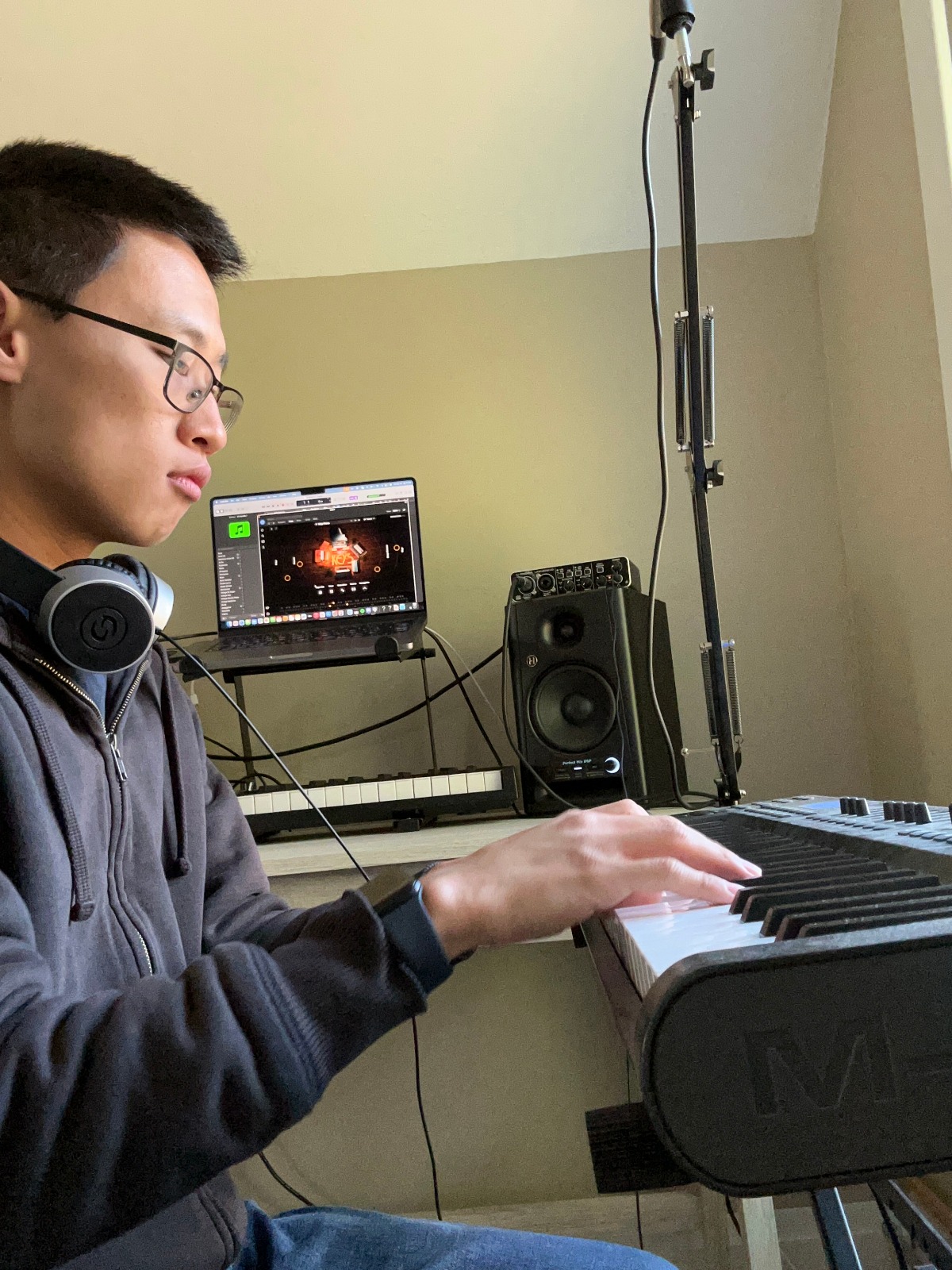
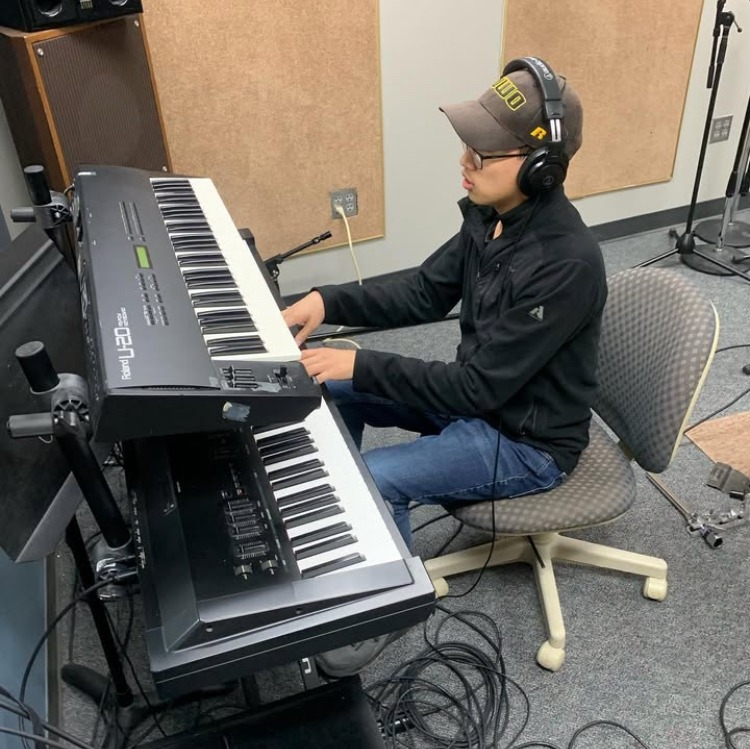
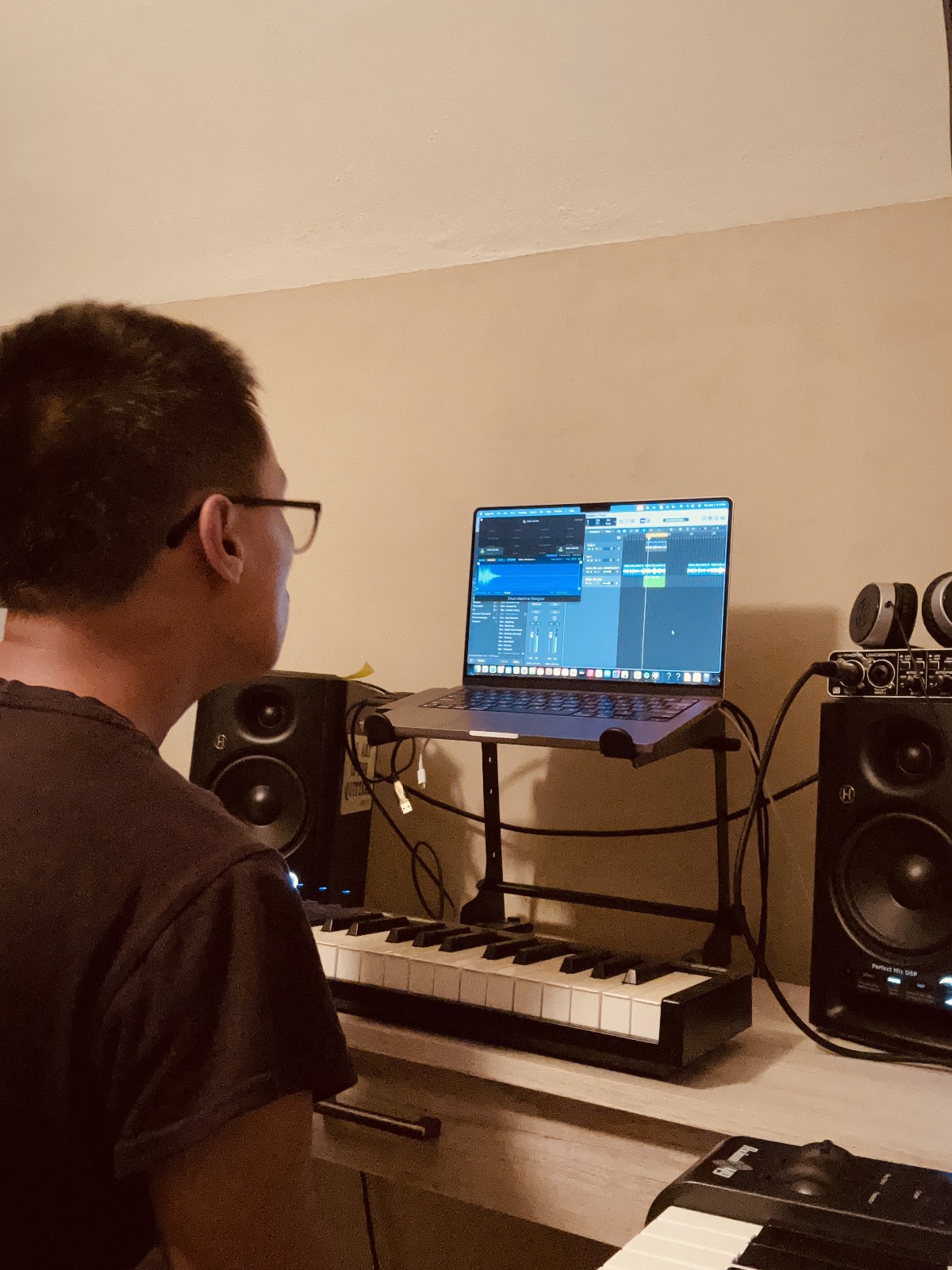
Because you wrote, performed, produced, mixed, and mastered “No I Won’t” entirely yourself in your Madison home studio, the entire recording reflects one continuous creative vision. How did handling every stage yourself affect the decisions you made, particularly when it came to knowing when an experimental idea was worth keeping and when to pull it back?
Thomas O’Shea:
Working on music on your own is a lot different from working with someone else. I actually delayed releasing the video and kept listening to it over and over and over, making small adjustments as I went. Once it felt like I had taken enough out, I showed select people in my circle who also agreed- purposefully, I show my unreleased work to non-music-minded people to get a real reaction instead of overly technical analysis (especially if I already am aware of mix issues or something). As a general rule for myself, I already keep my production pretty minimalistic. The bigger question was how to keep the entire thing more poppy and keep myself from twisting it into different genres.
Oliver:
Your background in live production and audio engineering has put you in environments involving major touring artists and television talent, while your own music gives you a space to experiment without those external expectations. How different is your decision-making when you are creating for yourself compared with engineering or producing for another artist?
Thomas O’Shea:
9 times out of 10 it’s pretty similar. The only difference is that when I’m working with an artist or entertainer, I’m only there to bring THEIR vision to life. So, I’m not going to experiment or move things around if I’m not asked to do so. I will strictly only do things I know work well when I’m working with another artist or entertainer. For example, on my own I might try 10 ideas before settling on 1. In a collaborative or live setting, I might only have 20-30 minutes to get everything right so that we can move on and maximize time to get as much done as possible.
Oliver:
“No I Won’t” deals with a personal struggle, but you chose to present it through humour, surprise, pop conventions, and an intentionally misleading relationship narrative rather than making the song purely confessional. What does that approach allow you to communicate about difficult experiences that a more direct autobiographical song might not?
Thomas O’Shea:
I have written more directly autobiographical songs before, but when doing that, there’s not a lot to interpret for the listeners. It’s just… there. And for a lot of topics, that’s exactly what you want. Love songs, party songs, breakup songs- they all need to be pretty direct to get the point across. But I’ve already done the more direct route about alcohol- WAY too much under my old stage name. I had song after song after verse after verse that was specifically glorifying partying, clubbing, and drinking and I didn’t want to fall back into that again. Mainly because it wouldn’t have challenged me as much, but also because it might have been more triggering for me.
Oliver:
You have accumulated more than 500,000 streams across your productions, remixes, and releases, alongside recognition from blogs, magazines, radio stations, and curators. As your work continues to reach a wider audience, how are you thinking differently about the balance between being the producer behind other artists and establishing a recognisable sound and identity of your own?
Thomas O’Shea:
Ultimately, the goal is to be a producer and songwriter and keep my solo artistry to a few songs here and there or maybe an album once in a while. Not because I don’t like it- I think I’ll always release solo music. But my goal is to write as much music as possible and see that music all over. It doesn’t matter to me who performs it as long as someone does and all are paid. The dream would be to be in a position like Jon Bellion who writes all day for other artists and then does his own thing for songs that HAVE to be for him- either because no other artist would be able to do it or because it’s too personal for another artist to perform. I would hope that as I progress through my career, people will recognize a song as mine because of the production or feeling. I think just based on the sounds I use, the drum patterns I gravitate towards, and the basslines I write, people will start recognizing songs I’ve worked on.
Oliver:
You have said that your solo work is now a chance to experiment and show future collaborators what a Thomas O’Shea song can be. What do you want another artist, songwriter, or producer to understand about your creative instincts when they hear “No I Won’t,” and what kind of collaborations do you hope that understanding leads to?
Thomas O’Shea:
Just like any of my solo songs, I’d want people to think that it’s new and different. And ultimately, I’d want artists and producers to be interested enough in my sound to work with me on their own music. I try to keep hoping out of what I do just because this industry is so unpredictable, but I would maybe want more opportunities in the pop side of the industry after this one- having worked a lot with hip hop thus far.
Oliver:
“No I Won’t” seems to mark both a creative experiment and a personal shift in how seriously you view your solo catalogue. As you look at what comes next, what parts of your sound are you most eager to explore that you have not yet given yourself the opportunity to fully develop?
Thomas O’Shea:
I don’t know, but I’m always pushing myself to figure out what to do next. Cause if I’m too comfortable with a sound, I realize I get quite lazy with what I do. So I’ll definitely keep pushing, but I don’t quite know what that’ll look like yet. I also can’t say too much as a few things are in the works right now, but I can say that as far as my solo artistry goes, my goal is now to try to push boundaries more. Find music and collaborators where most producers and artists wouldn’t immediately look.
Oliver:
Finally, now that “No I Won’t” has allowed you to turn a personal experience, a production experiment, and a new pop direction into one release, what do you hope this song ultimately says about where Thomas O’Shea is heading as an artist rather than simply as a producer behind the scenes?
Thomas O’Shea:
As I said, I try to keep hoping out of what I do just because of an unpredictable industry and so many opinions. But, I think what I would want is for people to see that my sound doesn’t really have boundaries, but has specific things that make my music mine. No I Won’t is definitely more poppy than I normally go, but it still has all the classic production techniques I use every day. Even if some of those techniques are stretched a bit.
“No I Won’t turns experimentation into something personal, using an unexpected story and a deliberately open-ended approach to show just how much creative territory Thomas O’Shea is willing to explore.”
~ Oliver (DULAXI Team)
EDITORIAL PERSPECTIVE
What stands out about “No I Won’t” is the way Thomas allows the production and songwriting to work together without giving the listener every answer immediately. The gradual layering gives the arrangement a sense of movement, while the contrast between the pop-oriented production and hip-hop-influenced delivery creates a distinctive character. More importantly, the decision to approach a personal subject indirectly gives the song room for interpretation. It feels like a release from a creator testing the boundaries of his own sound and discovering where those boundaries disappear.
~ Oliver (DULAXI Team)
CLOSING
Our conversation with Thomas O’Shea offers an insightful look at what can happen when a producer gives himself permission to step outside familiar territory. “No I Won’t” is rooted in a personal experience, but its unusual concept, pop-focused direction, and experimental approach allow the story to unfold in a way that rewards curiosity.
Thank you to Thomas for taking the time to speak with DULAXI and for sharing the creative thinking, experiences, and intentions behind the release. We encourage readers to spend some time with “No I Won’t,” particularly with the understanding of what sits beneath its relationship narrative, and to follow Thomas as he continues developing his work both as a producer and as a solo artist.
From everyone at DULAXI, thank you for spending time with us and exploring another artist’s story. This has been Oliver, and we look forward to bringing you more conversations with artists, producers, songwriters, and creative voices from around the world.