
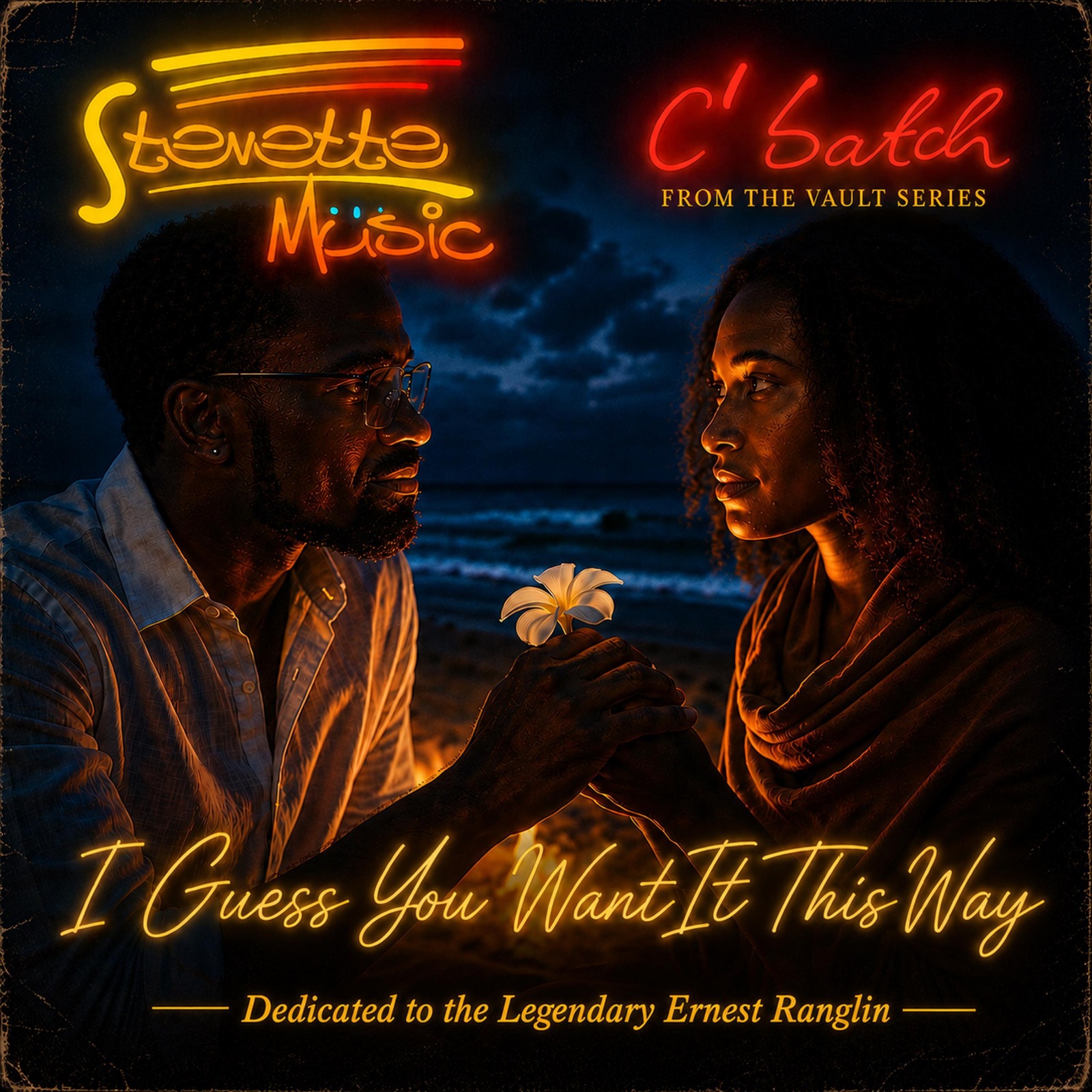
Hello everyone, it’s your host Oliver from DULAXI, and today I’m delighted to be joined by composer, producer, guitarist and independent recording artist C’batch from White Plains, New York. With a musical career shaped by R&B, soul, dance, funk, reggae, jazz-influenced, electronic and cinematic music, C’batch continues to explore the depth of his extensive catalogue through The Vault, his 2026 journey into compositions, recordings and ideas that have remained in his archives across the decades. Today, we are discussing his latest six-track EP, I Guess You Want It This Way, released on September 8, 2026 through Stevette Music, Inc.
Before we begin our conversation with C’batch, here’s what you need to know about today’s featured project.
About C’batch
For C’batch, I Guess You Want It This Way is the result of a musical idea that refused to disappear. The composition reaches back approximately 26 years, beginning with encouragement from his wife, Yvette, who is from Jamaica and had long wanted him to write a reggae song. Although an early version came close, C’batch felt that something was still missing. The hook remained, as did the melody for the verses, but the song never quite reached the point where he felt it was complete.
That unfinished state did not mean the composition was forgotten. It remained part of C’batch’s musical archive, quietly waiting for another opportunity. During a trip to Jamaica in the early 2000s, he even used an early version of the recording as a soundtrack for a personal slideshow built around photographs from the journey. The song, however, still remained unfinished. More than two decades later, the melody and hook were still present in his mind.
In 2026, C’batch finally found another way into the composition. Rather than trying to force the melody into completion through the same approach he had previously taken, he began writing lyrics around the melody that had remained in his head for so many years. That process unlocked the song. What had once been an unfinished idea became a completed composition, and from there, C’batch took the concept even further by developing six different interpretations of the piece.
The result is an EP that explores how one composition can occupy several musical spaces while maintaining its central identity. The project includes two original versions, an instrumental version, a dub interpretation and two cinematic versions. Reggae provides the foundation, while C’batch’s wider musical background allows the composition to move into additional territory without losing its original purpose. Rather than treating the six versions as unrelated recordings, the project uses them to examine the possibilities contained within a single musical idea.
That spirit of experimentation is closely connected to C’batch’s wider creative philosophy. He has never been confined to one musical lane, working across R&B, soul, dance, funk, reggae, jazz-influenced, ambient, electronic and cinematic music. His work as a composer, producer, guitarist, keyboardist, synthesizer and sampler programmer has given him a broad technical and creative vocabulary, although the keyboard has become central to much of the way he develops music. Despite that extensive keyboard-based catalogue, he continues to identify himself first as a guitarist, an identity that also makes his personal connection with legendary Jamaican guitarist Ernest Ranglin especially meaningful.
C’batch met Ranglin at London’s Heathrow Airport in February 2001. While waiting for a returning flight, he noticed a man carrying a guitar and, naturally, recognized him as Ranglin. The two spoke briefly about guitar, with Ranglin remaining approachable and humble throughout the encounter. C’batch asked him for an autograph, and the signed piece of paper has remained in his basement studio alongside a photograph of Ranglin. Years later, that brief personal encounter became the reason I Guess You Want It This Way was dedicated to the Jamaican guitarist.
The release also forms part of C’batch’s larger 2026 “Year of the Vault.” His decision to revisit his archives initially began with the possibility of exploring material for sync licensing. Along the way, however, the project developed into something much broader. C’batch began finding older compositions that he believed deserved another opportunity to be heard.
The Vault has now given that history a new purpose. Alongside recordings, C’batch has also discovered another form of creative expression through music videos. His 2026 video “Next Time (I Won’t Be Falling/You’ve Got Me Falling)” received an Honorable Mention for Best Pop Music Video at the International Music Video Awards, further encouraging his exploration of visual storytelling.
Having this brief introduction to today’s featured project, I’m sure both new listeners and longtime fans are excited to hear directly from C’batch. So, without further ado, let’s begin today’s interview.
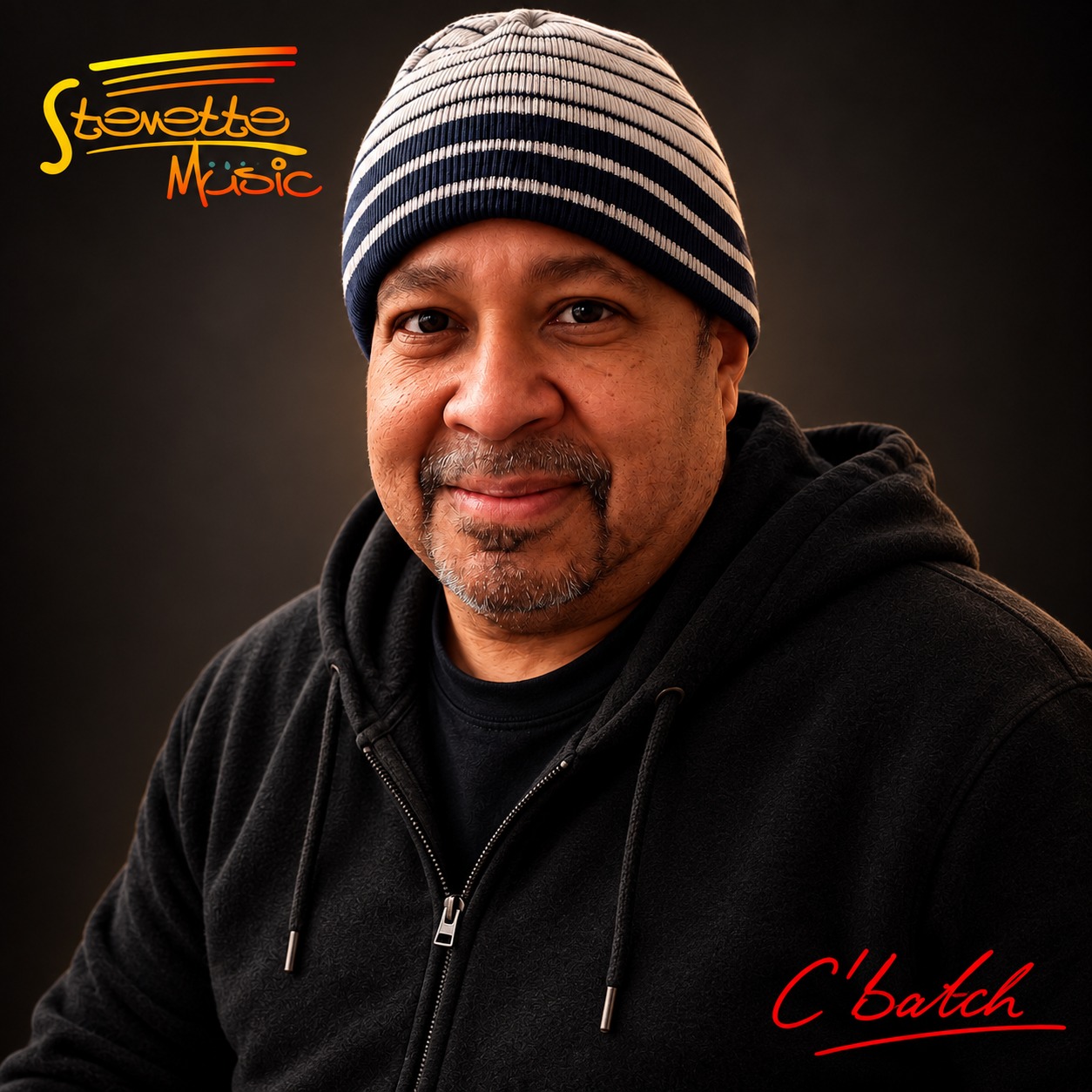
INTERVIEW SESSION
Oliver:
C’batch, your musical story stretches back to New York’s early-1980s dance scene and now reaches into an extensive archive of compositions, recordings, and ideas through The Vault. When you look across all those decades, what experiences have shaped you most deeply as a person and influenced the way you have learned to understand music?
C’batch:
As I mentioned in a previous interview, I believe every experience has taught me valuable lessons that gave me a way to navigate not only the process of creating music, but also the harsh realities of the music business. Over time, I learned that the creative side and the business side are very different things, but you have to understand both.
Oliver:
You have built a creative life alongside your wife, Yvette, including founding Stevette Music, Inc. together in 1984. How has that partnership influenced the person and artist you have become, and what has it meant to have someone who has been part of your musical story for so many years?
C’batch:
Well, if not for the support of my wife, Yvette, I would never have been able to do the things I have done with respect to music. She is truly the backbone of Stevette Music, Inc. and has been behind all of my musical endeavors. Having someone beside me for all these years who understands the journey and has continued to support what I do has meant everything to me.
Oliver:
Yvette’s Jamaican background played an important role in the story of “I Guess You Want It This Way,” particularly through her longtime encouragement for you to write a reggae song. What was it about that encouragement that stayed with you for so many years, even after the original version remained unfinished?
C’batch:
I felt that I really needed to bring Yvette’s vision to fruition. There were many other attempts to write reggae pieces at Yvette’s behest, but each of them-including “I Guess You Want It This Way”-failed, in my opinion, to achieve that truly authentic groove. Until now.
Oliver:
Your catalogue has moved through R&B, soul, dance, funk, reggae, jazz-influenced, ambient, cinematic, and electronic music. What have you discovered about yourself by refusing to remain inside one particular genre or musical identity?
C’batch:
It’s not really deliberate on my part. I have discovered through the years that, apparently, I am not capable of staying in one lane. As a songwriter, I am now more convinced than ever that staying in one lane is simply impossible for me. I simply write in the moment, and as my keyboardist from my early days, Andre Booth, would say, “It is what it is.”
Oliver:
You have worked as a composer, producer, guitarist, keyboardist, synthesizer and sampler programmer, while also building your own independent publishing and production company. How do those different roles interact when you are developing a piece of music, and which part of your musical identity usually takes the lead?
C’batch:
I don’t necessarily think that those various roles interact with each other when it comes to creating a piece of music-at least, I am not conscious of it. At this point, the instrument that has had the greatest impact on the way I develop a piece of music is the keyboard, and that has been true for a very long time. It is central to what I do. It may sound funny, because when it comes to my primary instrument, it is the guitar. I consider myself a guitarist first. My extensive use of the keyboard is largely thanks to observing what Andre Booth was able to manifest in the studio in terms of keyboard, string and synthesizer arrangements on my earlier recordings, such as “I Need You Now,” “Phunk Fusion (With I PHD)” and “Love In The P.M.,” to name a few. I would even venture to say that, at this stage, ninety-eight percent of my catalogue is keyboard-based.
Oliver:
“I Guess You Want It This Way” is unusual because its central hook and verse melody survived for approximately 26 years before the song was finally completed. What do you think made those particular musical ideas stay with you when so many other unfinished ideas might have disappeared over time?
C’batch:
I have no idea. It was just something that kept gnawing at me for some reason all those years. Every time I thought about completing it, there was always the hook on tape, while the melody for the verses remained stuck in my head. I just couldn’t vocally articulate it. Then, perhaps a month or so ago, I decided to try writing lyrics as a way of helping me get that particular melody out of my head. Guess what? It worked! It felt truly liberating, and I am so glad I took that approach. Sometimes you just have to find a different way of getting to the same destination.
Oliver:
When you returned to the composition in 2026, you finally wrote lyrics around a melody that had been living with you for decades. What was happening in your life and creative thinking at that point that made you feel ready to finish a song you had carried for so long?
C’batch:
What was happening at that particular moment, I really can’t say. This year I have been constantly driven to dig into my archives and produce something from the material I find there. I can’t fully explain it, but I have never had this type of creative drive before. I am getting older, and perhaps that has made me more conscious of the music that is still sitting there waiting to be completed and heard. Whatever the reason, I have felt an extraordinary sense of urgency to bring these ideas to life.
Oliver:
There is something almost conversational about describing this project as an unfinished musical conversation finally being completed. When you listen to the finished song now, does it feel like you are answering something you were trying to express all those years ago?
C’batch:
In a way, yes, although I don’t think I understood all those years ago exactly what I was trying to express. The melody was there, the hook was there, and something about the song simply refused to go away. Finishing it now feels less like changing the original idea and more like finally allowing that musical conversation to reach its conclusion.
Oliver:
During your trip to Jamaica in the early 2000s, you created a personal slideshow using photographs from the journey alongside an early version of the recording. What do you remember about that period, and how did experiencing Jamaica personally affect the way you understood the reggae influence you were trying to capture?
C’batch:
The trip itself did not influence the song because the song already existed before we went to Jamaica. I simply thought it was close enough to sounding like reggae to use as a sort of soundtrack for the slideshow I had created from our photographs. That’s really all it was at the time.
Oliver:
The EP is dedicated to Ernest Ranglin, whom you met at Heathrow Airport in February 2001. As a guitarist yourself, what do you remember most vividly about that encounter, and why did meeting him become significant enough to eventually inspire the dedication of this project?
C’batch:
This is what I remember. I saw someone with a guitar while we were waiting in line for a returning flight. Of course, as a guitarist, you notice those things. As I continued to get closer, I recognized him as Ernest Ranglin. I don’t think there was anyone else at the airport who knew who he was. When I approached him, I think I simply said something like, “Ernest Ranglin?” I would imagine he might have been a little surprised that I recognized him. We subsequently got into a discussion about guitar. I remember him telling me that I should have come down to the Royal Albert Hall and mentioning Eric Clapton, who had been performing there around that time. After all these years, I cannot say with certainty exactly how he described his connection to the Clapton performance, so I would rather leave it at what I clearly remember from the conversation. He was extremely approachable, very humble and genuinely nice. I must have asked him to autograph a piece of paper from the Cumberland Hotel, where Yvette and I were staying. That laminated piece of paper now hangs on the wall in my basement studio next to a picture I found of him. I’m just sorry that I didn’t have a camera available at the time to take a picture. Even if I had, though, we immediately dove into conversation, and I probably wouldn’t have thought to take one anyway. The conversation was relatively brief, but the memory of it has always remained with me.
Oliver:
Ernest Ranglin’s contribution to Jamaican music spans generations, and your project seeks to honour that legacy while still remaining your own composition. How did you approach paying tribute to someone you deeply respect without allowing the tribute to overshadow your own artistic voice?
C’batch:
It really doesn’t matter to me if the tribute overshadows my own artistic voice. I simply wanted to thank Mr. Ranglin for taking the time to talk to a stranger-me-who also happened to be a so-called guitar player. He was somebody, and I was nobody to him, yet he was willing to stand there and talk with me about guitar. What a great honor that was for me. The dedication is simply my way of acknowledging that moment and the respect I have for him.
Oliver:
The six versions of “I Guess You Want It This Way” retain the central melody and reggae spirit while approaching the composition from different musical perspectives. What did you want to discover by allowing one song to exist in six distinct interpretations?
C’batch:
Well, again, the song ended up becoming another C’batch experiment. Not only had I finally created what I felt was an authentic reggae piece, but I decided to push the idea further by adding a cinematic twist to it. There are the two original versions, an instrumental version, a dub version and two cinematic versions. What did I want to discover? How many different ways could one piece of music exist within the same space? Again, it was an experiment-another C’batch exploration.
Oliver:
When you are revisiting an older composition and giving it contemporary production, how do you decide which elements need to remain faithful to the original idea and which elements can be transformed for the present?
C’batch:
The original elements are always at the core of the song. They are essential and central to any newly created version or composition that results from it. From there, I allow myself the freedom to explore new sounds, arrangements and possibilities, but I never want to lose the musical idea that made me interested in the composition in the first place.
Oliver:
The Vault is built around opening your musical archives and allowing compositions from different periods of your life to find their way into the world. Has revisiting this older material changed how you understand your younger self and the ideas you were developing at the time?
C’batch:
Yes. Revisiting the older compositions has allowed me to see something about myself when I was younger. I think I mentioned to you in a previous interview that, looking back, I was always too critical of my musical ideas. It is only now that I realize there were a lot of good ideas that simply needed a little more polishing. I never gave many of those ideas a real chance to develop. I just shelved them away in a plastic container-my literal “Vault”-that eventually ended up in my garage.
Oliver:
Your earlier work includes significant moments in New York club music, including “I Need You Now,” “Let Me Do You,” “Playgirls,” and “Geisha Love,” with some of that music later finding new life through sampling and celebrated remixes. How does it feel to see ideas from earlier chapters of your career continue to influence music beyond their original releases?
C’batch:
I find it both surprising and interesting. I am happy to know now that something I did all those years ago-those songs and musical ideas-may have had a significant impact across many genres of music. At the time I was creating them, I certainly wasn’t thinking about what kind of life they might have decades later.
Oliver:
After decades of independent creative work through Stevette Music, you have entered 2026 with what you describe as a “Year of the Vault.” What has motivated you to open this archive now, and what have you learned from finally allowing these older compositions to be heard?
C’batch:
I started the year with a view toward revisiting my archive primarily for the purpose of sync licensing. Somehow, along the way, it turned into what you see now-a so-called artist and his previously unfinished and unreleased music finally being presented for public consumption. Again, that wasn’t my original intention, but I really believe that this is where God has guided me thus far. What began as an effort to examine my catalogue for one purpose became something much larger: an opportunity to finally give this music a chance to be heard.
Oliver:
Your 2026 work has also extended beyond recordings into visual storytelling, with “Next Time (I Won’t Be Falling/You’ve Got Me Falling)” receiving an Honorable Mention for Best Pop Music Video at the International Music Video Awards. How has incorporating visual work changed the way you think about presenting your music and the stories surrounding it?
C’batch:
I would say quite a bit, to the extent that I have now discovered that I really enjoy creating music videos for my compositions. Of course, the original and primary goal was for the music videos to be used as promotional tools. However, I have discovered another creative side of myself that was probably always there but that I never seriously explored until now. I no longer think of the visual simply as something that accompanies the music. It has become another form of creative expression for me.
Oliver:
After spending so much of your life creating music across different eras, technologies, genres, and creative environments, what do you feel has remained constant in your artistic philosophy even as the way you make music has changed?
C’batch:
The one constant is the continued drive, persistence and dedication to always create something. Whether it is creating music or now exploring video, I am always striving to create.
Oliver:
Looking ahead, The Vault still represents a large body of musical history that can be revisited and reimagined. What can listeners expect from the next chapters of this journey, and what kind of legacy do you hope this process of bringing your archive into the present will leave behind?
C’batch:
In a previous interview with you, I recall mentioning that the 2026 Year of the Vault series will conclude with the October 31, 2026 release of a song and accompanying music video, “If There Was Ever A Fool (One of a Cast of Many).” I have tended to think of that piece as my pièce de résistance. I believe it perhaps represents one of the most ambitious and serious works I have ever created. The music is cinematic, theatrical, and rock-guitar-influenced, with true-to-life storytelling. The work itself grew out of another filmed guitar solo from around 2012 that was recorded over a backing track. The lyrics were written during and shortly after the COVID-19 pandemic. Recently, I went back to that solo for compositional purposes, brought those lyrics together with the music and-voilà-a new work emerged.
As for legacy, I hope to leave behind the work of a composer and songwriter who always strove to create the best-quality music he could and offer it to the world for people to truly enjoy.
“C’batch’s latest chapter proves that time does not always close the door on an unfinished musical idea. Sometimes it simply gives the idea more room to become what it was always meant to be.”
~ Oliver (DULAXI Team)
EDITORIAL PERSPECTIVE
What stands out about I Guess You Want It This Way is the patience behind its creation. C’batch does not treat his archive as a collection of outdated material, but as a living source of possibilities. The six interpretations reveal an artist still willing to experiment with arrangement, genre and technology while protecting the musical ideas that first mattered to him. His story also gives the project a personal weight, particularly through its connection to Yvette and his memorable encounter with Ernest Ranglin. Most importantly, the interview reveals an artist who remains driven by the simple need to create.
~ Oliver (DULAXI Team)
CLOSING
Our conversation with C’batch offers a fascinating look at what can happen when an artist refuses to abandon the ideas that continue to call for attention. I Guess You Want It This Way is not simply a new release. It is part of a much longer creative journey, one that connects C’batch’s early musical experiences, his partnership with Yvette, his independent work through Stevette Music, his respect for Ernest Ranglin and his ongoing decision to open The Vault.
We would like to thank C’batch for taking the time to speak with DULAXI and for sharing such personal insight into the story behind the EP, his creative process and the experiences that have shaped his approach to music. His reflections also remind us that unfinished work does not necessarily mean failed work. Sometimes an idea simply needs time, distance and a different perspective before it can reveal its full potential.
We encourage readers to experience I Guess You Want It This Way and explore the different interpretations for themselves. For anyone discovering C’batch’s music for the first time, the EP also provides an entry point into a much larger catalogue and a creative history that continues to develop through The Vault.
Thank you for spending time with DULAXI and for joining Oliver for this conversation with C’batch. We look forward to bringing you more conversations with artists, composers, producers and creative voices from around the world in our future interviews.