
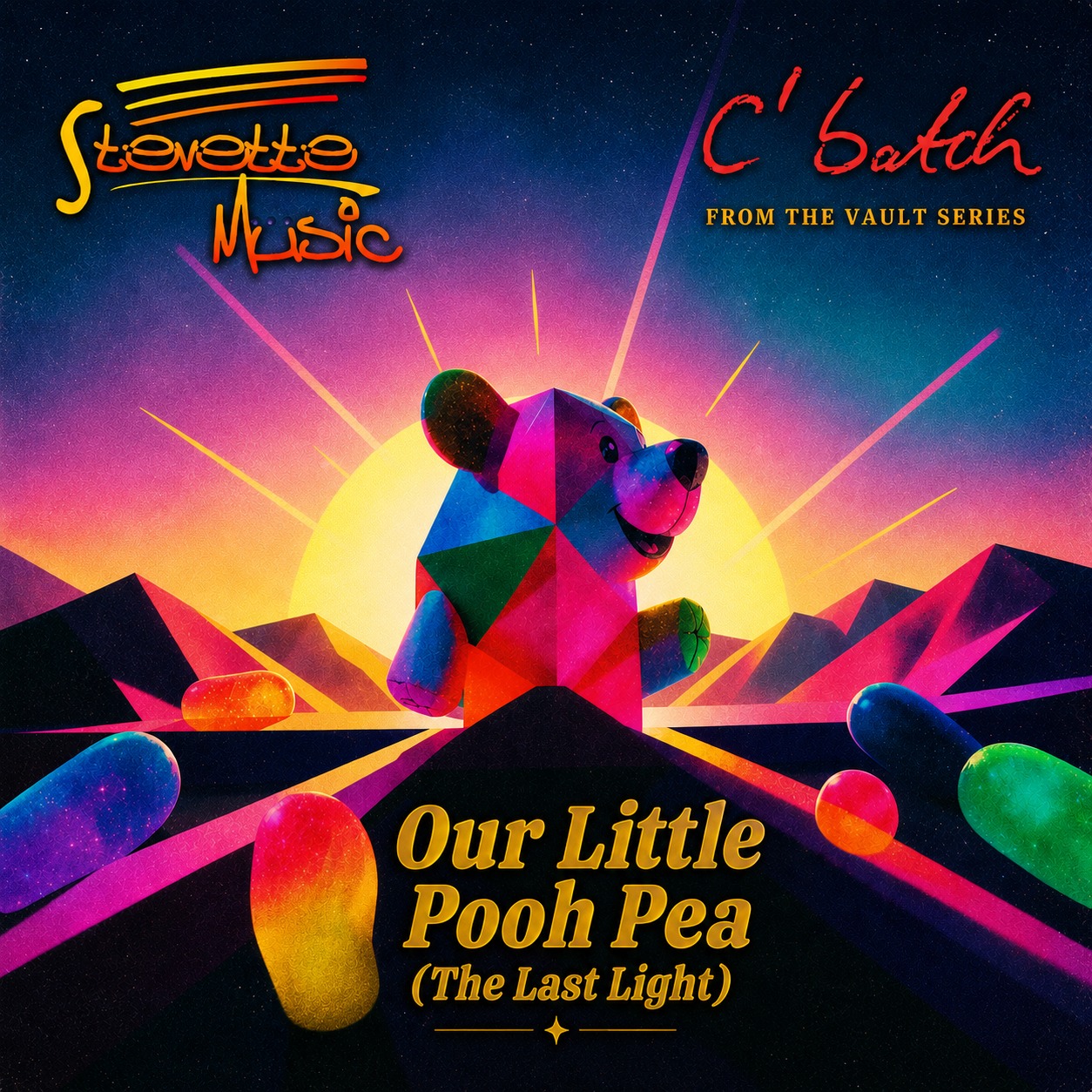
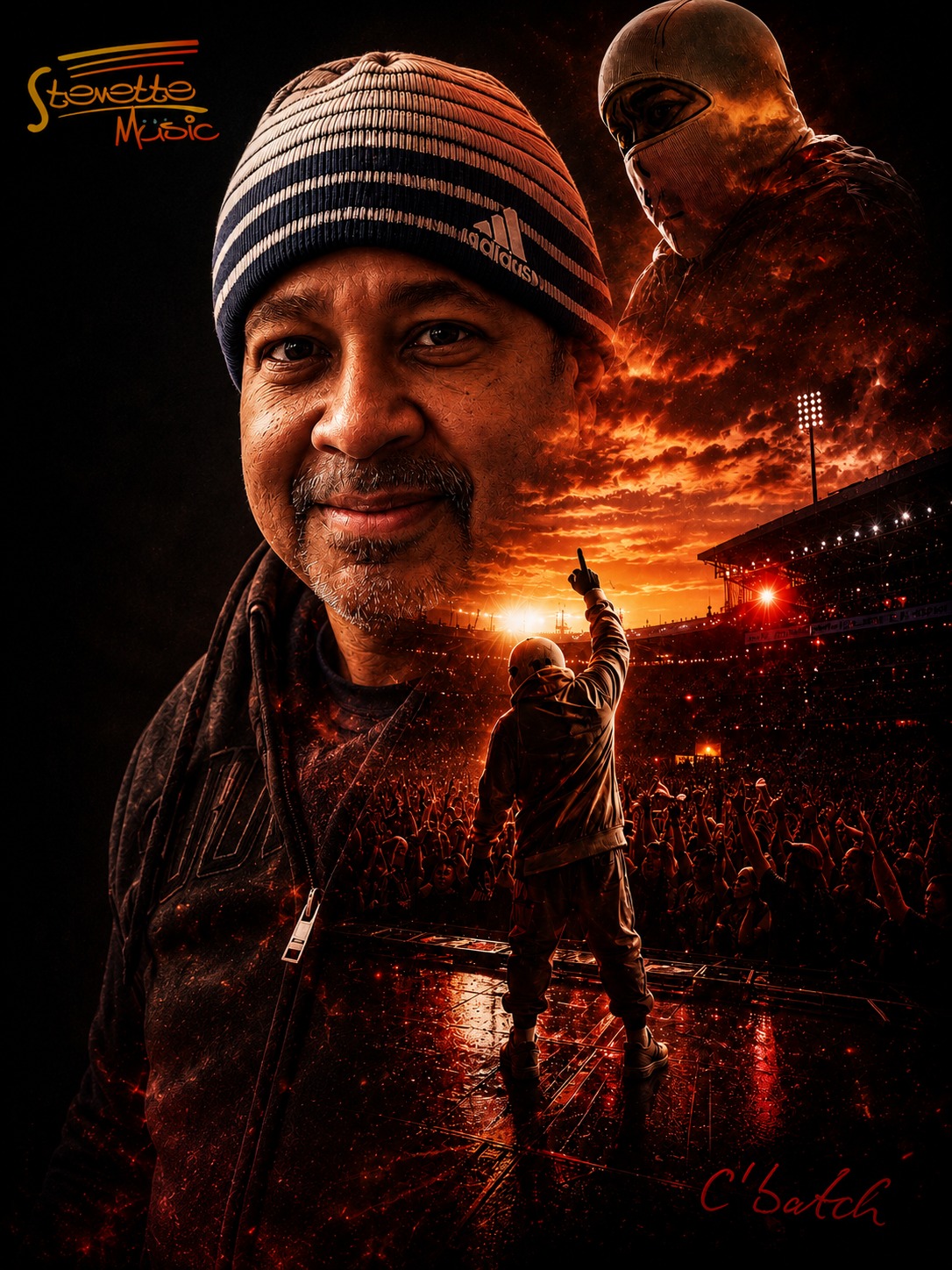
Hello everyone, it’s your host Oliver from DULAXI, and today I’m delighted to be joined by composer, producer, guitarist and independent recording artist C’batch, professionally known as Stephen H. Cumberbatch, from White Plains, New York. Working across Electronic, Dream Pop, Ambient, Experimental, Rock, R&B, Soul, Funk, Reggae and other musical territories, C’batch has developed a career defined by exploration rather than a commitment to one particular sound. Today, we are discussing his latest single, “Our Little Pooh Pea (The Last Light) 4 – Cinematic,” released on 29 August 2026 as part of the EP Our Little Pooh Pea (The Last Light).
Before we begin our conversation with C’batch, here’s what you need to know about today’s featured project.
About C’batch
C’batch’s musical journey reaches back to New York’s influential early-1980s dance scene, but his creative identity has never been limited to that period or to a single genre. As a composer, guitarist, producer, recording artist, and keyboard, synthesizer and sampler programmer, he has spent decades moving between R&B, soul, dance, funk, reggae, jazz-influenced music, rock, electronic production and cinematic work. His catalogue includes published works such as “I Need You Now” by Sinnamon, “Let Me Do You” by NV, “Playgirls” by Kreamsicle and “Geisha Love” by Eleanore Mills.
In 1984, C’batch and his wife, Yvette, founded Stevette Music, Inc., an independent publishing, production and record company that has remained closely connected to his creative work for four decades. That independent foundation has provided a long-term home for his catalogue while allowing him to continue developing music according to his own creative direction.
In 2026, that history has taken on another dimension through The Vault, a multi-volume series that opens C’batch’s archives to the present. The project brings together compositions, recordings and musical ideas from different periods of his career, reflecting influences that range from soul, R&B and dance to rock, reggae, ambient and cinematic music. Rather than treating older material as something permanently fixed in its original form, C’batch has continued to explore what might happen when an earlier musical idea is placed within a new creative environment.
“Our Little Pooh Pea (The Last Light) 4 – Cinematic” is a particularly interesting example of that approach. The single began with a guitar solo C’batch originally played over his composition “Round & Round.” What was initially part of another musical setting eventually revealed possibilities of its own. After revisiting the performance, C’batch recognised melodic material within the improvisation that could become the foundation for something new. He then developed a different production around the guitar, moving the performance away from its original R&B and soul context and toward a more cinematic, electronic and atmospheric space.
This latest release also sits within a particularly active period for C’batch. Alongside his Vault projects, he has entered the world of visual storytelling, discovering a new creative outlet through music videos. His 2026 video “Next Time (I Won’t Be Falling/You’ve Got Me Falling)” received an Honorable Mention for Best Pop Music Video at the International Music Video Awards, adding another dimension to a creative chapter that is already expanding beyond his earlier work.
Having this brief introduction to today’s featured project, I’m sure both new listeners and longtime followers of C’batch’s work are interested to hear directly from him about the ideas, experiences and creative decisions behind the music. So, without further ado, let’s begin today’s interview.
INTERVIEW SESSION
Oliver:
You have spent decades moving between R&B, soul, dance, funk, reggae, rock, jazz-influenced music, electronic production, and cinematic composition. When you look across that history, what has remained consistent in your musical identity, even as the genres, technologies, and creative environments around you have changed?
C’batch:
The one thing that has remained consistent is the inconsistency. By that I mean I have never been able to write in any one particular genre. That’s why I sometimes feel my music is all over the place—and you can probably see that now as well. But I think that has simply become part of my musical identity.
Oliver:
Your musical life stretches back to New York’s early-1980s dance scene and includes publishing, production, recording, programming, and performing. How did those early experiences shape the way you learned to think about music not simply as a performer, but as a composer and producer with control over the wider creative process?
C’batch:
Every experience taught me valuable lessons that gave me a way to navigate not only the process of creating music, but also the harsh realities of the music business. Over time, I learned that the creative side and the business side are very different things, but you have to understand both.
Oliver:
You have worked with guitar, keyboards, synthesizers, samplers, and a wide range of musical styles. How does being both a guitarist and a producer affect the way you hear an idea when you first begin developing it?
C’batch:
I don’t think I have ever consciously thought of any of those roles as having anything to do with the way I hear an idea or a piece of music. When I am writing or playing, I am simply in the moment. I’m not thinking, “I’m the guitarist now,” or “I’m the producer now.” I just follow where the music seems to be taking me.
Oliver:
“Our Little Pooh Pea (The Last Light) 4 – Cinematic” began with a guitar solo that was originally recorded over your composition “Round & Round.” What was it about that particular performance that made you stop and hear the possibility of an entirely different piece within it?
C’batch:
At first, I didn’t completely love the solo. At the end of the video that my granddaughter, Tytiona, recorded, you can actually hear me say, “That’s terrible. That’s old.” That was my immediate reaction to what I had just played. Listening back, however, I realized there was quite a bit of very good melodic content in the improvisation that I actually liked. It wasn’t until recently that I thought about using that performance to create something completely different in terms of a new composition. What I had originally regarded as simply an improvised guitar solo suddenly began to sound like something that could have a life of its own.
Oliver:
There is something fascinating about discovering a new composition inside an existing performance. When you revisited the guitar solo from “Round & Round,” did you immediately know what kind of musical setting you wanted to build around it, or did the new identity of the piece emerge gradually during production?
C’batch:
I was definitely leaning toward something cinematic because I have recently been moving more in that direction. But I wouldn’t say I knew exactly what the final setting would be when I started. It emerged as I worked on it. I followed the emotion and melodic character of the original guitar performance and allowed the production to develop around it.
Oliver:
In the new version, the guitar is effectively carrying the emotional narrative without lyrics explaining what the listener should feel. What do you think the guitar performance communicates through its tone, phrasing, melody, and pauses that words might not have been able to express in the same way?
C’batch:
The guitar is actually playing an entirely different melody from the melody the original lyrics (in Round & Round) were written to. The melody created through the solo performance is very powerful and emotional to me, not only because of the guitar processing and tone, but also because of the sheer emotion of being in the moment that is expressed in the solo. There are things you can express through the way you bend a note, sustain it, pause, or allow a phrase to breathe that you may not be able to express in exactly the same way with words.
Oliver:
You placed the original guitar performance inside a new electronic, ambient, dreamlike and cinematic setting. What were you looking for in the new production that the original “Round & Round” setting could not provide?
C’batch:
Well, the original setting was simply a video of me playing over a backing track, and it wasn’t even close to being a demo. I was looking for greater clarity and for a way to take the performance beyond the realm of R&B, soul and rock. I wanted to explore a more cinematic version of the music because, at that point, that was where everything seemed to be leading me.
Oliver:
The track sits across Electronic, Dream Pop, Ambient and Experimental territory while remaining rooted in an organic guitar performance. How do you decide when different genres should influence a composition without allowing genre expectations to restrict where the music can go?
C’batch:
I really don’t make that decision consciously. The solo was originally played over the backing track for another one of my songs, “Round & Round.” “Round & Round” was initially conceived as an R&B/soul record. However, I decided that I wanted rhythm and lead guitar in it. That lead guitar, along with the chords, is reflected in the two versions of the song found at the beginning of the EP.Once I did that, the song no longer existed solely in the R&B/soul world. I had introduced an element of rock through the distorted guitar. The music then became a hybrid of all those genres and elements. That tends to happen naturally for me rather than as the result of a conscious decision about genre.
Oliver:
“The Last Light” suggests a moment between darkness and hope, where an ending can also feel like the beginning of something else. What does that phrase mean to you personally, and did its meaning change as the track developed?
C’batch:
To me, it reflects a new beginning and a new hope—a movement out of darkness and into the light. It represents the feeling that things can become clearer and better, even after a period of darkness.
Oliver:
You have deliberately left the track open to interpretation, allowing one listener to hear a final film scene, another to hear a memory or farewell, and someone else to connect it with a personal experience. Why was it important for you to leave that emotional space rather than define one specific story for the listener?
C’batch:
I really wasn’t consciously aware that I was doing any of those things. I actually love hearing those kinds of interpretations and analyses of my work. But when I compose a piece of music, I never think about deliberately creating a particular experience that someone else may have. I don’t have the ability, while I’m writing, to think very much about those things. I essentially write and compose in the moment. That’s it. My inner voice, if I have one, dictates the music. What the listener discovers in it afterward belongs to them, and I find that fascinating.
Oliver:
The EP explores different musical interpretations and dimensions of your creative work. How did you approach the idea of allowing one musical concept to exist in different forms, and what can a new interpretation reveal that the original version may not have shown?
C’batch:
I usually try to create a release that can show several sides, interpretations or angles of the same composition. I try to present the composition almost as if it were a living and growing organism. A different arrangement, sound or production environment can reveal something in the composition that may have been there all along but wasn’t as obvious in the original version.
Oliver:
Your wider Vault series is built around revisiting compositions, recordings, and ideas from different periods of your career and bringing them into the present. What have you discovered about your younger creative self through listening back to material that may have been waiting in your archives for years?
C’batch:
I have learned that I was too critical of myself and of the music I created. It is only now that I really love and appreciate many of those ideas—ideas that people around me had always encouraged me to move forward with. Looking back has taught me that sometimes I may have been the person standing most in the way of appreciating what I had already created.
Oliver:
There is a clear philosophy behind your archival work: the original performance remains the foundation, but the music does not have to remain confined to its first incarnation. Has working this way changed how you think about the idea of a finished recording?
C’batch:
I always hear new possibilities within the music. It has always been that way for me. Even when I compose, I sometimes have to stop myself from adding too much. I can start with one idea and then hear several other ideas on top of that one idea. So, for me, it is almost as though a song is never really finished. There can always be life beyond the initial idea. I think the Vault projects have made me appreciate that even more.
Oliver:
Your catalogue includes published works that became part of the New York club era, including “I Need You Now” and “Let Me Do You,” while your current work reaches into cinematic and ambient territory. How does your experience of those earlier musical worlds inform the way you approach the more experimental work you are creating today?
C’batch:
I don’t think it does directly, because even back then I was experimenting with the music. I used to think that R&B was becoming stale and needed to grow a little more, just as jazz had continued to evolve. If you really listen to the original version of “I Need You Now,” some people may hear R&B, soul and funk, but the song also carries elements of jazz in its harmony. I was using larger chord structures—7ths, 9ths, 11ths and sus4 voicings. That was deliberate, and yes, it was experimental for me even back then. So perhaps the connection between then and now is not a particular genre. It is the desire to keep exploring what else the music can become.
Oliver:
You founded Stevette Music, Inc. with your wife Yvette in 1984, and the company has remained connected to your creative work for four decades. What has sustaining that independent musical and publishing path taught you about ownership, patience, and building a creative life over the long term?
C’batch:
More than anything, it has taught me that I can be free to create a vision without unnecessary restrictions. Ownership and patience are simply part of the business landscape; they come with the territory. But having Stevette Music has allowed us to maintain a connection to the work and to make creative decisions based on what we believe in rather than simply following what someone else thinks the music should be.
Oliver:
In 2026, you have been opening your archives while also creating contemporary production and visual projects, including work that has received recognition at the International Music Video Awards. What has this current chapter allowed you to explore that you may not have had the opportunity to explore earlier in your career?
C’batch:
Creating music videos was something I never really conceived of earlier in my career. Back in the day, the thought simply never entered my mind. I recently began creating visuals because I initially thought they might help with the promotion of the music. But something else happened along the way: I discovered that I really enjoyed the visual creative process itself. I was, and still am, very pleased that the video for “Next Time” received an Honorable Mention for Best Pop Music Video at the International Music Video Awards. Until recently, it had never occurred to me that creating visual content for my music could be so fulfilling and rewarding. It has opened another creative world for me.
Oliver:
When you hear the guitar solo from “Round & Round” now inside “Our Little Pooh Pea (The Last Light) 4 – Cinematic,” do you hear it as the same performance you originally created, or has the new production changed the way you understand that performance itself?
C’batch:
It’s the same solo, just a little more polished. Back in 2010, immediately after I played it, my initial reaction was not at all positive. However, when I listened back to it, I realized that I had actually created some very expressive melodic content. Hearing it now in this completely different setting makes me appreciate the original performance even more. The notes haven’t fundamentally changed, but the context around them has changed the way I hear their possibilities.
Oliver:
With your catalogue continuing to move between instrumental music, electronic production, cinematic work, rock, reggae, soul, R&B, and other influences, what are you still curious about creatively, and what kinds of musical ideas are you hoping to bring to life next?
C’batch:
Well, I am beginning to really appreciate the cinematic aspect of my music. I will release one more single on October 31, 2026, which will be my final release for the year. I think of it as my pièce de résistance with respect to the 2026 Vault series. The song is titled “If There Was Ever A Fool (One of a Cast of Many),” and there will also be an accompanying video released on the same date. I think this song expands the cinematic aspect of my music even further and moves it into an almost theatrical realm. It is based on a real-life observation of a relationship that I was aware of. In terms of storytelling, with a somewhat poetic flair, it contains what I believe are probably some of the best lyrics I have ever written. Interestingly, the music itself—again, as with “Our Little Pooh Pea (The Last Light)”—grew out of a guitar solo that I played over a backing track, this time around 2012. So I seem to be discovering that some of these old improvisations contained compositions that I simply hadn’t recognized yet.
Oliver:
Finally, when someone reaches the end of “Our Little Pooh Pea (The Last Light) 4 – Cinematic,” what would you most like them to carry away from those final sounds, whether they hear hope, memory, transition, farewell, or a story entirely their own?
C’batch:
Probably all the things you mentioned, but more than anything, I hope they simply get true enjoyment from listening to the music. Whatever else they find in it—hope, memory, transition, farewell or something entirely personal to them—I’m happy to let the music speak to them in its own way.
“C’batch’s latest work shows how a musician can return to an overlooked moment from the past and discover that it still has something new to say. In ‘Our Little Pooh Pea (The Last Light) 4 – Cinematic,’ an old guitar performance becomes the doorway to a new creative chapter.”
~ Oliver (DULAXI Team)
EDITORIAL PERSPECTIVE
Speaking with C’batch reveals a creative philosophy built around curiosity, instinct and the willingness to reconsider what has already been created. “Our Little Pooh Pea (The Last Light) 4 – Cinematic” is especially interesting because its identity emerged from a performance C’batch initially underestimated. Hearing him describe that transformation adds another layer to the music, showing how composition can continue developing long after the first performance has ended.
~ Oliver (DULAXI Team)
CLOSING
Our conversation with C’batch offers a fascinating look at an artist who has spent decades allowing music to lead him into unexpected places. From the New York club era and his work across R&B, soul, funk, reggae and rock to his current movement toward electronic, ambient and cinematic music, his career has continually demonstrated an openness to exploration.
Thank you to C’batch for taking the time to speak with DULAXI and for sharing the experiences, ideas and creative philosophy behind “Our Little Pooh Pea (The Last Light) 4 – Cinematic.” His reflections on rediscovering older performances, opening his musical archives and finding new possibilities within familiar material provide valuable context for experiencing the release.
We encourage readers to spend time with the single and discover what its guitar melodies, atmosphere and changing emotional character mean to them personally. Whether it brings to mind hope, transition, memory, a visual scene or something entirely different, C’batch has left the interpretation open for each listener.
Thank you for spending time with DULAXI. We appreciate you joining us for another conversation with an independent artist whose creative journey continues to evolve. Stay with DULAXI for more interviews, stories and conversations with artists from around the world.