
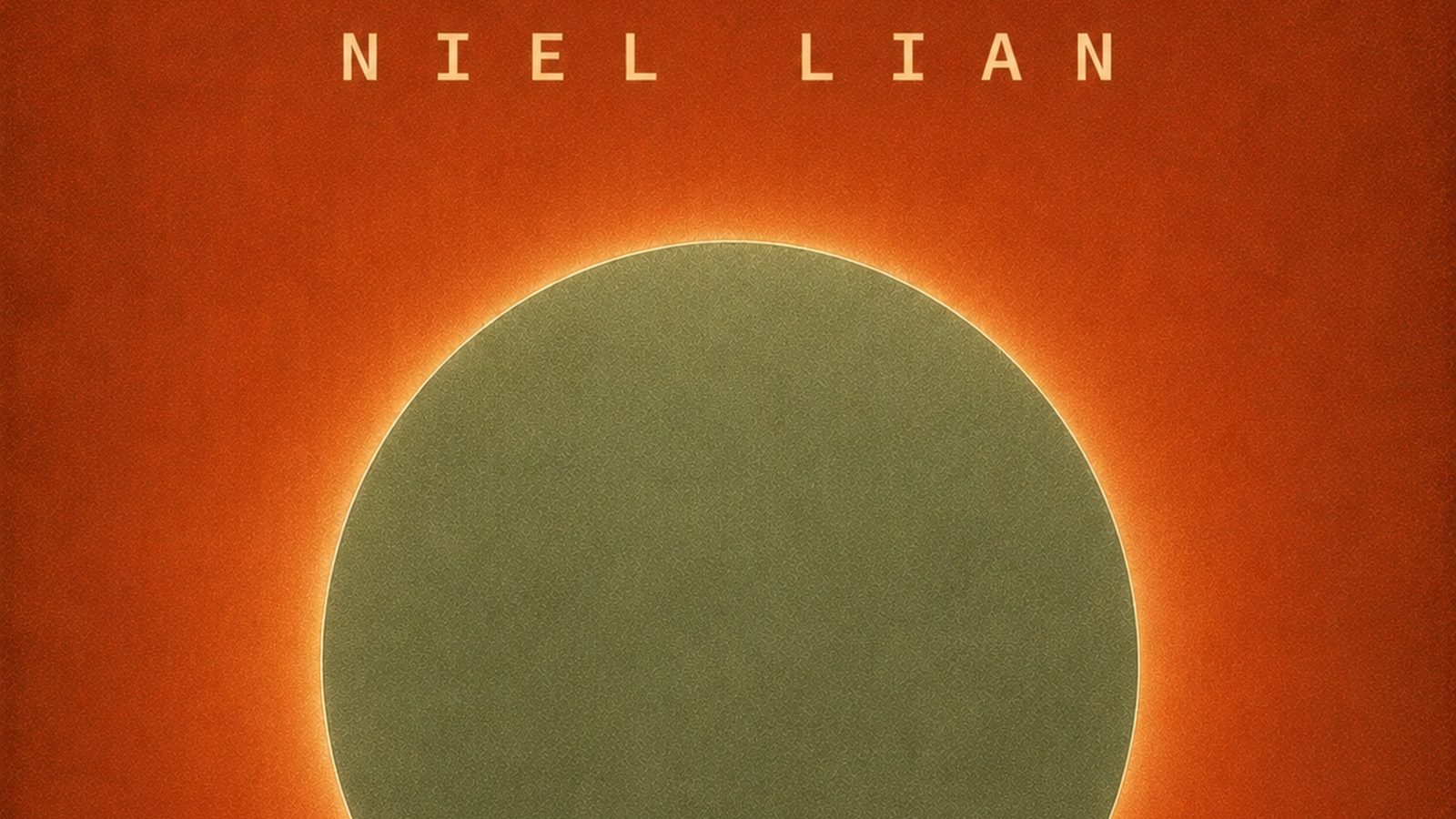
Niel Lian’s “Resilience in a World on Fire” is a twelve track solo piano album that approaches resilience through intimacy rather than grand gestures. Released on September 18th, 2026, the album explores fragility, distance, absence, belonging, fear, healing, identity, movement, gratitude, and the uncertainty that shapes human experience. Recorded on acoustic piano, the project expands upon Lian’s 2025 debut EP of the same name, bringing together new compositions with pieces that have been revisited and refined for this fuller recording. The result is a deeply personal collection in which the piano becomes the central voice, carrying each emotional shift through melody, rhythm, dynamics, silence, and carefully shaped phrasing.
The album’s twelve pieces function independently as individual stories while also contributing to a larger, non linear journey. Its opening movement is rooted in the bonds that create a sense of home and belonging before gradually moving into expectation, distance, return, and the anticipation of absence. Rather than relying on dramatic contrasts, Lian allows emotional changes to develop through the character of the piano itself. Gentle passages can create a sense of closeness, while more restrained and shadowed sections introduce uncertainty and reflection. The acoustic recording gives these compositions an organic presence, allowing the natural resonance of each note and the spaces between phrases to become part of the album’s emotional language.
Resilience in a World on Fire Album Track Reviews:
Ahead, Not Too Far:
“Ahead, Not Too Far” captures the quiet sensation of moving forward without needing to know exactly where the journey will lead. The track is built around a delicate, pulsing mid register ostinato that establishes gentle momentum without creating urgency. Lian supports this movement with subtle open fifths and low register bass notes in the left hand, providing a grounded harmonic foundation while the right hand introduces a minimalist repeating motif. The restrained dynamics, held between pianissimo and mezzo piano, give the performance an intimate quality, while the acoustic room tone adds another layer to the arrangement. The faint sound of felt dampers and mechanical pedal movements becomes part of the piece’s natural rhythmic texture, preserving the physical character of the piano performance. The right hand functions as the piece’s vocal presence through warm, cantabile phrasing and elastic rubato. Lian gently stretches melodic fragments at their emotional peaks before returning to the underlying pulse, creating a natural sense of breathing within the repetition. The rounded, dark wooden tone of the piano reinforces the track’s grounded atmosphere, keeping the music focused on present moment awareness. “Ahead, Not Too Far” ultimately expresses the comfort of taking the next step without demanding certainty about everything beyond it.
Harrowing the Darkness:
“Harrowing the Darkness” takes a markedly more intense direction, replacing the surrounding material’s softer minimalism with a tense and driving piano arrangement. The piece is anchored by heavy, staccato bass chords that establish a relentless marching pulse, while minor key arpeggios climb through increasingly tense intervals before resolving into unexpected open modal harmonies. Lian gives the lower register considerable weight, using sustained pedal tones to create layers of overlapping overtones that broaden the piano’s acoustic presence and suggest the fullness of a string ensemble. The result is a dense and resonant foundation that immediately gives the composition a sense of confrontation. Quiet, tightly controlled motifs can suddenly give way to powerful forte chords, with Lian shifting from rounded phrasing to firm, percussive strikes. This contrast gives the melody an urgent, impassioned character, making it feel like a determined internal dialogue. “Harrowing the Darkness” ultimately becomes an expression of turning towards fear rather than retreating from it, moving through uncertainty with persistence and deliberate strength.
A Breakfast with the Ghosts I’m Afraid Of:
“A Breakfast with the Ghosts I’m Afraid Of” introduces a playful yet emotionally nuanced character to the album, balancing an off kilter rhythmic feel with poignant harmonic movement. Light syncopation gives the arrangement its distinctive personality, while the left hand maintains a gentle walking arpeggio beneath a right hand that moves through unexpected chromatic turns and shifts between major and minor modes. The spacious arrangement allows each note to breathe, with the natural decay of the piano strings and subtle mechanical sounds filling the pauses between phrases. These details give the performance an intimate, organic quality. Lian shapes the melody with whimsical, conversational phrasing that resembles an exchange between two people, moving between delicate staccato notes and flowing legato passages. Soft moments contrast with brighter melodic leaps, creating a bittersweet quality without losing the track’s warmth. There is a quiet acceptance in the performance as the music approaches anxiety with openness and even a touch of irony. “A Breakfast with the Ghosts I’m Afraid Of” turns a long postponed confrontation into a gentle morning encounter with the fears waiting within.
Resilience in a World on Fire:
“Resilience in a World on Fire” brings the album to its emotional climax through an expansive solo piano performance that balances tenderness with quiet strength. Sweeping, cascading arpeggios travel across the full length of the keyboard, creating continuous movement beneath harmonic progressions that shift naturally between intimate minor passages and warm major resolutions. Complex chord voicings enriched by added ninths and sevenths give the harmony considerable depth, while wide dynamic changes carry the piece from delicate single note motifs into rich, layered textures. The bass and treble registers remain beautifully balanced, allowing the acoustic resonance of the piano to surround the composition. Lian shapes the central melodic material with expressive phrasing and flexible rubato, gently stretching the tempo around pivotal harmonic changes and allowing each musical phrase to breathe. The pristine, fluid tone of the piano keeps the performance intimate even as the arrangement reaches its fullest textures. Rather than ending with bombast, the piece gradually settles into a calm and grounded atmosphere. As the album’s closing statement, “Resilience in a World on Fire” leaves a fragile but conscious sense of hope, capturing the willingness to remain present and find steadiness even while uncertainty continues around us.
As the journey progresses, “Resilience in a World on Fire” enters its darker emotional territory, confronting fears that can no longer be postponed. Importantly, the album does not rush from darkness towards an easy resolution. Healing arrives gradually, making the later movement towards self recognition and renewal feel especially meaningful. The music begins to turn towards finding an individual rhythm and way of becoming, before opening into moments of light. Gratitude eventually emerges as another important emotional destination, represented through those fleeting experiences when life appears to settle into place and gives us something worth celebrating and remembering.
At the heart of the album is Lian’s understanding of resilience as presence rather than heroic resistance. The music does not suggest that uncertainty can simply be overcome or that the world’s difficulties disappear. Instead, it captures the quieter process of continuing forward while carrying vulnerability along the way. This gives the album its emotional coherence, as hope and fragility are allowed to exist together rather than being presented as opposites. The recurring sense of movement also makes the twelve tracks feel connected, with each composition contributing another perspective to an experience that remains intentionally unresolved.
Resilience in a World on Fire Is A Tender Solo Piano Journey Through Fragility, Fear, Healing, Belonging, Uncertainty, Gratitude, And The Quiet Persistence Of Hope
~ Faithfulness (Dulaxi Team)
That emotional perspective reflects Niel Lian’s background as an Italian pianist and composer from Lucca, whose classical piano training and studies in modern composition provide the foundation for his musical language. His work brings classical tradition together with contemporary minimalism, drawing inspiration from composers and artists including Chopin, Philip Glass, Wim Mertens, Max Richter, Nils Frahm, Felix Rösch, and Peter Gabriel. On “Resilience in a World on Fire”, those influences inform a sound that remains focused on the expressive possibilities of the piano. Ultimately, Lian creates an album about learning to remain present, finding personal rhythms, recognizing moments of light, and carrying hope forward even when the world remains uncertain.
For more information about Niel Lian, click on the icons below.