
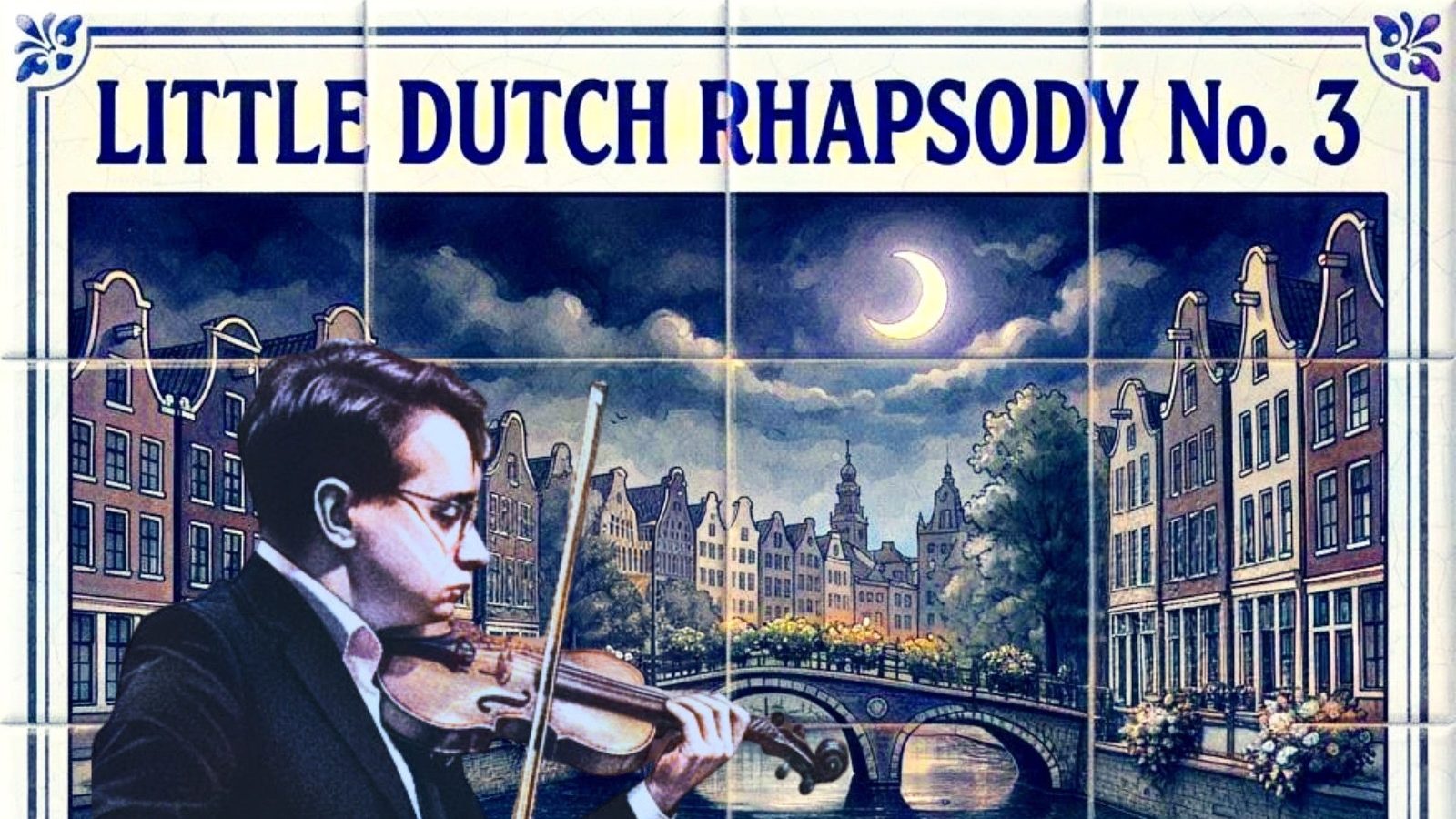
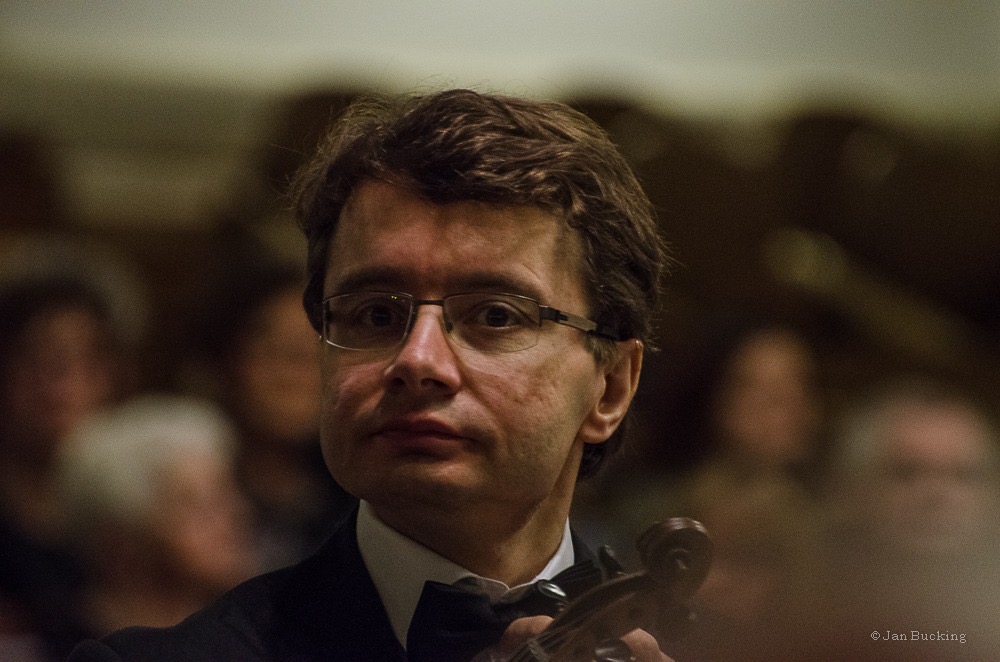
Hello everyone, it’s your host Oliver from DULAXI, and today I’m delighted to be joined by Ukrainian-born concert violinist and composer Sergiy Bolotny, Assistant Second Concertmaster with the Noord Nederlands Orkest in the Netherlands. Based in Groningen, Bolotny brings together classical concert tradition, European musical heritage, folk influences, and original composition through his work as a performer and composer. Today, we are discussing his latest solo violin release, Little Dutch Rhapsody No. 3: Capriccio Amsterdam, a classical, neo-romantic, solo instrumental and crossover work released on October 2, 2026.
The new composition transforms Pieter Goemans’ beloved Dutch melody “Aan de Amsterdamse grachten” into a virtuosic solo violin caprice, drawing strongly from the expressive and technically refined tradition of Old-Viennese violin playing associated with Fritz Kreisler. Through lyrical cantabile phrasing, expressive rubato, double-stops, and playful variations, Bolotny creates a meeting point between Dutch cultural memory and the musical language that shaped much of his own artistic development.
Before we begin our conversation with Sergiy Bolotny, here’s what you need to know about today’s featured project.
About Sergiy Bolotny
Sergiy Bolotny is a Ukrainian-born concert violinist, composer, and Assistant Second Concertmaster with the Noord Nederlands Orkest. Educated at music academies in Lviv, Kyiv, and Vienna, his musical journey has taken him through several important European musical environments, from his early education in Ukraine to the rich concert traditions of Vienna and his professional life in the Netherlands.
His work extends beyond performing established repertoire. Alongside his orchestral responsibilities, chamber music activities, and concert career, Bolotny has developed original compositional projects that explore the relationship between musical heritage, place, memory, and the expressive possibilities of the violin. His 24 Ukrainian Caprices and Little Dutch Rhapsodies cycles reflect this continuing interest in bringing regional musical identities into contemporary concert writing.
Little Dutch Rhapsody No. 3: Capriccio Amsterdam continues that exploration by turning toward the musical and cultural identity of Amsterdam. At the centre of the piece is Pieter Goemans’ “Aan de Amsterdamse grachten”, a melody strongly associated with Amsterdam and Dutch cultural memory. Rather than simply reproduce the familiar theme, Bolotny approaches it as a concert caprice, placing it within a violin tradition influenced by the golden age of Old-Viennese performance and composition.
The recording process was equally important to Bolotny’s concept. Rather than relying heavily on digital production, the piece was recorded acoustically with natural room resonance. This approach keeps the instrument exposed, allowing the physical character of the performance, the natural resonance of the violin, and the details of the playing to remain part of the listening experience.
There is also a deeply personal story behind the composition. Written in August 2021 during an extremely difficult period in Bolotny’s life, the piece emerged after the loss of both of his parents. While alone at home in Ukraine following their funerals, he returned to his violin and encountered “Aan de Amsterdamse grachten”. The composition that became Capriccio Amsterdam came together remarkably quickly, connecting a Dutch melody with a deeply personal moment of grief, displacement, memory, and the idea of returning to the Netherlands, which had been his home since 2010.
With the Little Dutch Rhapsodies continuing to develop alongside his Ukrainian Caprices, Bolotny’s compositional journey remains closely connected to questions of identity and musical heritage. Each new work gives him another opportunity to explore how the violin can carry the memory of a place while speaking through a contemporary artistic voice.
Having this brief introduction to today’s featured project, I’m sure both new listeners and longtime followers of Sergiy Bolotny’s work will be interested in hearing directly from him about the story, musical influences, personal experiences, and creative decisions behind Little Dutch Rhapsody No. 3: Capriccio Amsterdam. So, without further ado, let’s begin today’s interview.
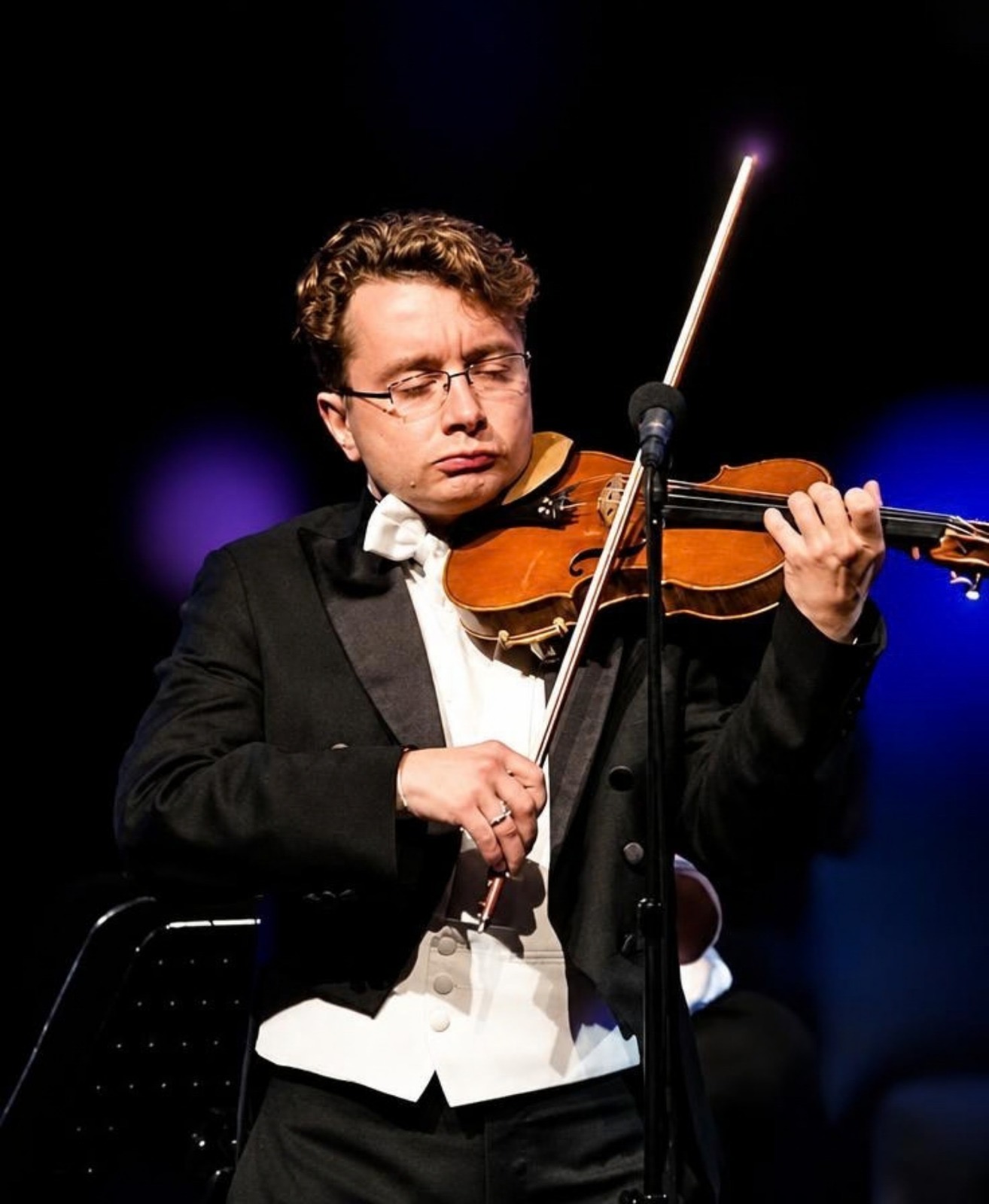
INTERVIEW SESSION
Oliver:
Having explored both Ukrainian and Dutch musical heritage through your compositions and performed across different parts of the classical world, what feels different about the Sergiy Bolotny creating music today compared with the artist who began these explorations several years ago?
Sergiy Bolotny:
I have learned a lot from folklore. Ukrainian and Dutch folk music as well. Often we think that folk songs and dances are just simple music. We hear it every day and we don’t notice many nuances and aspects. But we dive deeply in each song we notice how incredible this music is. It is a historical portrait of the folk… Folk music is honest and innocent. So I discovered many things with this musical heritage, it helped me in my difficult times it showed me right direction in my artistic life and identity.
Oliver:
Your career has placed you in several very different musical environments, from studying in Ukraine and Vienna to performing professionally in the Netherlands. How did moving between these cultures influence the way you understand musical tradition and your own place within it?
Sergiy Bolotny:
As a classical violin player or as a jazz violinist or a fiddler we all preserve the same thing. Our music must be beautiful and enjoyable and honest. So you can move everywhere you go to Mexico or Japan, Argentina or Kenya. I think everywhere people love beauty of music. Music connects us. Of course the most difficult move in my life was the from the post-soviet Ukraine to Austria. But I was young and flexible… In that time I learned a lot, to be honest, the musical air in Vienna plays the crucial role. Just living there and going to Musikverein concerts. A great musical city…City of Mozart Beethoven Schubert and Brahms…
Oliver:
You currently serve as Assistant Second Concertmaster with the Noord Nederlands Orkest, while also creating your own solo compositions. How do you balance the discipline and responsibility of performing within an orchestra with the freedom of expressing your own individual artistic voice?
Sergiy Bolotny:
Actually I don’t know. I’m not a very good organized person. I’m able to be very concentrated time to time but it is necessary to be in time and not to miss the deadline. So I am trying to balance and learn from combining many musical activities. For example when we play with our orchestra whatever doesn’t matter I try always to analyze the Melody and harmony. I also think about how I would compose this melody or how would I harmonize.
Oliver:
Your work brings together European musical heritage, folk traditions, and concert-level violin writing. What is it about preserving or reinterpreting musical traditions from different places that continues to matter to you personally?
Sergiy Bolotny:
I must admit that I still haven’t found my own style. There is a lot of things to learn and improve. But like a sponge I try to take all these musical elements traditions together. Maybe it would be nothing.. or perhaps I wil be able to catch my personal style finally. Will see.
Oliver:
The Little Dutch Rhapsodies have allowed you to explore Dutch cultural identity through the violin. What first drew you toward Dutch musical heritage, and what made Amsterdam the right subject for this particular piece?
Sergiy Bolotny:
the story of the piece is quite sad… It was written in 10 minutes. August 2021 just short before war. August 4th past away my mom and just after 29th my dad also passed away. After the funeral I stayed in my home in Ukraine alone and the time was stopped. I had to return to the Netherlands where I was living since 2010. Just to relax myself I started to play violin and come across the song Aan de Amsterdamse grachten…and in 10 minutes was born the piece. Yes… The Netherlands was my new home…My parents were in the sky…
Oliver:
“Capriccio Amsterdam” takes the familiar melody of Pieter Goemans’ “Aan de Amsterdamse grachten” and places it within a highly virtuosic solo violin setting. What did you hear in that melody that made you want to take it beyond its familiar form and give it a new musical identity?
Sergiy Bolotny:
I love this melody . It gives people a wonderful massage that everything is okay. Life goes on smoothly. Don’t worry. So was after second war period in Holland. But the song has a wonderful catchy melody… a Waltz… so after living in Vienna for 14 years playing a lot of Strauss Lehar and Kreisler music in was very natural to compose such virtuoze Vienna style piece.
Oliver:
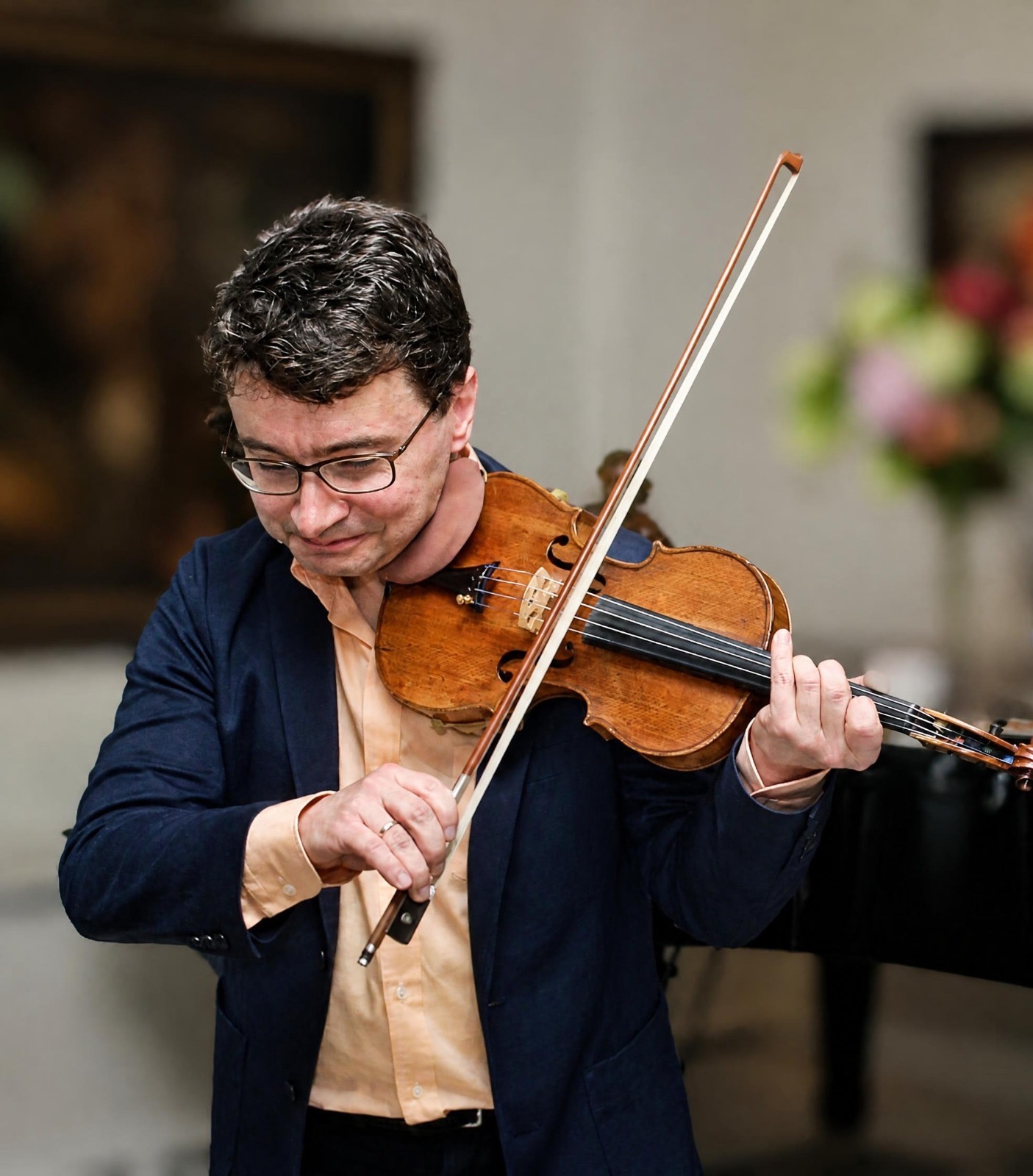
There is an interesting connection between Dutch cultural memory and the Old-Viennese violin tradition of Fritz Kreisler in this work. What does Kreisler’s approach to melody, expression, ornamentation, and virtuosity mean to you, and how did his influence shape the way you approached this composition?
Sergiy Bolotny:
Yes exactly. We continue the Kreisler theme. Fritz Kreisler like Paganini he is my mentor and polar star . His music especially small light form music for violin and piano like Liebesleid, Lebesfreud and Schöne rosmarin was natural reaction of all series academical style in violin music of romantic periode. Yes it’s a great music but heavy difficult very technical. Remember composers Weniawsky Ernst Ysaye… and then came Kreisler of together with neoclassical wind…as reaction of expressionism of post romantic music. The world was hungry for light classical music. Kreisler gave me many ideas. But only for solo violin compositions.
Oliver:
The piece moves between lyrical cantabile phrasing, rubato, double-stops, and playful variations. When you were composing it, how did you decide where the music should remain intimate and lyrical and where the violin should become more technically demanding?
Sergiy Bolotny:
I love typical Capriccio style in music. Where the melancholy switches with virtuosity. I use this style in many my compositions. So I can follow my old musical dream to become a true Fiddleer on the roof. Capriccio on the theme of this musical is coming soon. So I love to connect the Rondo form or Tyrnary form and variation.
Oliver:
Because this is an instrumental composition, the violin itself has to communicate much of what a vocalist might normally express through words. When you perform “Capriccio Amsterdam,” what emotions, images, or sense of place are you hoping the listener can understand without a single lyric being spoken?
Sergiy Bolotny:
For me, the violin is not just an instrument, it is my voice. I hope the listener can feel the romance and the special atmosphere of Amsterdam. The slow moments are like walking along the quiet canals, and the fast, virtuosic parts are like the energy of the city. I want to convey nostalgia, happiness, and a feeling of warmth—all the emotions that the original song gives us, but through the colors and sounds of the violin.
Oliver:
The title combines “Little Dutch Rhapsody No. 3” with “Capriccio Amsterdam.” What does the idea of a capriccio represent for you creatively, and how does that idea connect with the personality of Amsterdam that you wanted to capture?
Sergiy Bolotny:
A capriccio is a piece that is free and full of sudden changes—from lyrical to technical, from sad to playful. Amsterdam is exactly like this. It is a city of surprises. It is historical but also very modern and dynamic. This form allows me to show different sides of the city, just like my own musical personality is always moving and changing. It is a musical portrait of this incredible place.
Oliver:
You chose to record the piece acoustically with natural room resonance rather than relying heavily on digital production. What were you listening for in the recording process, and why was it important for the character of the violin to remain so naturally exposed?
Sergiy Bolotny:
This is very important to me. I wanted to capture the true, honest sound of the violin in a real space. Digital production can make things too perfect, too artificial. I want the listener to feel like they are in the same room with me. You can hear every detail, every emotion. Yes, maybe it is naked, but it is real. It is about a genuine musical moment, not a technical calculation.
Oliver:
Recording a solo violin piece can reveal every detail of an instrument and performance, from bow movement to intonation and changes in dynamics. What did this particular recording process demand from you as a performer, and were there any moments where you had to rethink your approach?
Sergiy Bolotny:
Recording alone is very demanding. You have to be the performer, the conductor, and the critic at the same time. Because everything is so exposed, I had to find a perfect balance. Sometimes I needed to play with more freedom, more rubato, to catch the right mood, but I also had to remember the structure. I had to ensure that the difficult technical passages didn’t stop the musical flow, and the slow, expressive moments didn’t become too slow. It forces you to listen to yourself with new ears.
Oliver:
Your musical background includes both the great classical repertoire and your own original compositions, including the Ukrainian Caprices and Little Dutch Rhapsodies. How has composing your own music changed the way you approach established classical repertoire when you return to the performer’s role?
Sergiy Bolotny:
Composing changes everything. When I play Beethoven or Brahms now, I don’t just see notes. I see the construction. I understand why a composer chose a certain harmony or rhythm. I think, “How would I have composed this?” It gives me a much deeper understanding and more respect for the masters. It helps me find my own unique interpretation because I am looking at the music from the inside.
Oliver:
Your Ukrainian Caprices and Little Dutch Rhapsodies explore different forms of European cultural memory. When you place these bodies of work alongside one another, what similarities do you see in the way you use the violin to connect history, place, and contemporary performance?
Sergiy Bolotny:
Both are a search for identity. Ukrainian and Dutch music are very different, but they both carry the soul of the people. The violin is my way to connect these worlds. It is an instrument that exists everywhere. I use the same classical language of violin playing—like double stops, ornamentation, and variations—to express these different cultural memories. It proves that music is a universal language that connects us all, no matter where we come from.
Oliver:
With “Capriccio Amsterdam” arriving as the third instalment of the Little Dutch Rhapsodies, how has your thinking evolved since beginning this series, and what have you discovered about your own compositional voice through the process?
Sergiy Bolotny:
I am becoming more confident, I think. With each piece, I am experimenting more. For example, my fourth rhapsody is about Groningen, the city where I live now. I am learning to trust my musical instinct, my “feeling.” I am moving beyond just variations and trying to create a true story through the violin. I discover that my voice is something that is always growing and changing, just like a rhapsody itself.
Oliver:
You have experienced the music profession from several perspectives, including international study, orchestral leadership, chamber performance, and solo composition. Which part of that journey challenged you most personally, and what did that challenge teach you about yourself?
Sergiy Bolotny:
The biggest challenge was moving from Ukraine to Vienna. I was young, but everything was new and very competitive. Then later, finding my balance as an orchestral musician, a concertmaster, and a composer was difficult. These challenges taught me patience and discipline. It also taught me that you cannot wait for inspiration—you must work for it. You have to be ready to change and learn every single day.
Oliver:
As someone who performs for audiences across different cultural backgrounds, how do you think listeners respond differently to music rooted in a specific place or tradition, and what do you hope Dutch and international audiences take away from “Capriccio Amsterdam”?
Sergiy Bolotny:
Dutch audiences will immediately recognize the melody of “Aan de Amsterdamse grachten,” and it will bring them special memories and warmth. It is a piece of their home. For international audiences, I hope they can still feel that same joy and beauty, even if they don’t know the song. Music is about emotion, not just words. I want them to feel the charming spirit of Amsterdam and the positive energy of the composition.
Oliver:
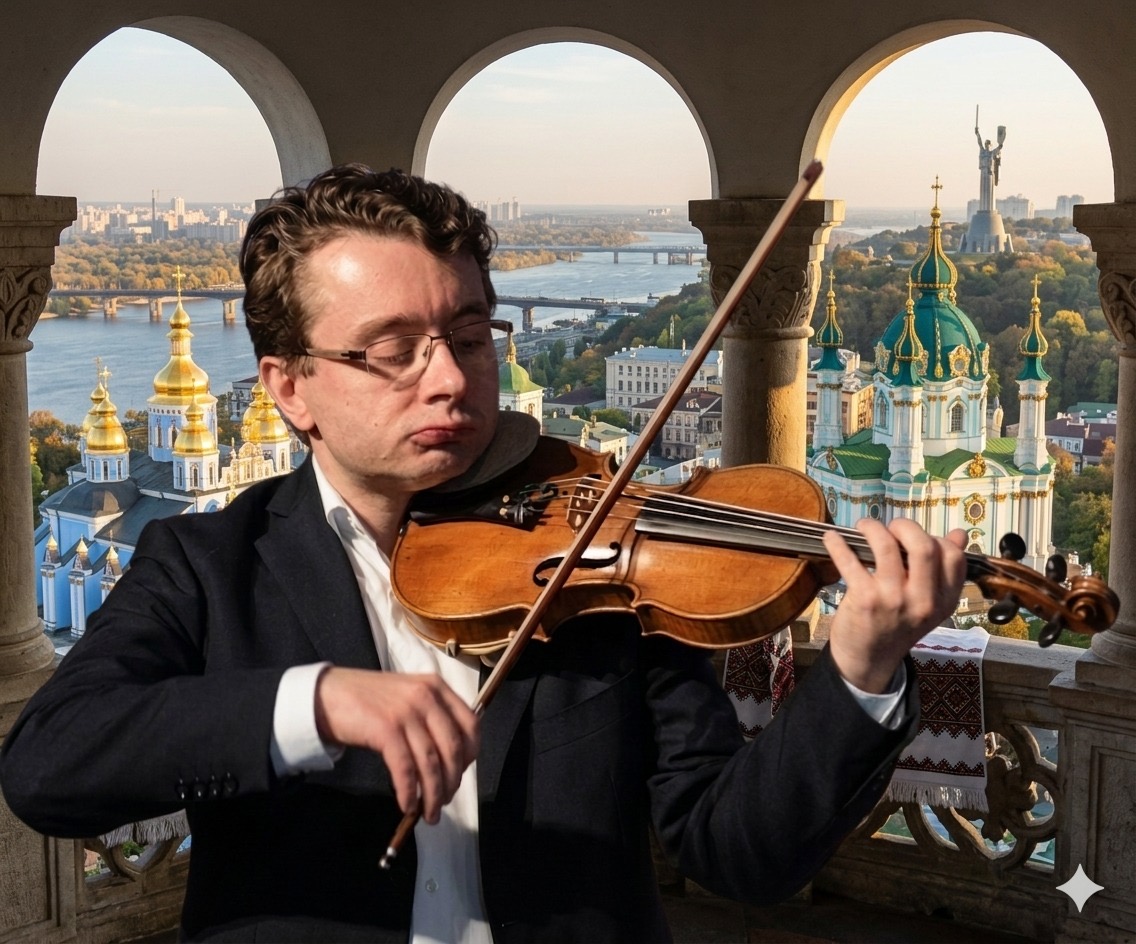
When you imagine yourself years from now, looking back at the music you are creating today, what do you hope you will recognise in “Capriccio Amsterdam” that tells you something important about who you were as an artist, where you came from, and the person you were becoming at this stage of your life?
Sergiy Bolotny:
I hope I will see that it was honest music. “Capriccio Amsterdam” was written in a very difficult moment for me, and I hope I can see that I found hope in music. It marks the moment I truly made the Netherlands my new home. I hope I will see a “fiddler on the roof” who was not afraid to express himself, to mix his past with his present, and to look for beauty in everything.
“Capriccio Amsterdam feels like a meeting between memory and movement, carrying the intimacy of a deeply personal story while allowing the violin to celebrate the life, character, and changing energy of a city.”
~ Oliver (DULAXI Team)
EDITORIAL PERSPECTIVE
What stands out about Capriccio Amsterdam is how naturally its personal and cultural dimensions sit beside its technical demands. The violin does not simply carry a familiar Dutch melody; it becomes the means through which Bolotny explores home, memory, grief, movement, and renewed artistic confidence. The contrast between reflective passages and virtuosic writing gives the composition a strong sense of character, while the acoustic recording keeps the performance immediate and human. Speaking with Bolotny also reveals an artist still actively searching, experimenting, and allowing his musical identity to evolve.
~ Oliver (DULAXI Team)
CLOSING
Our conversation with Sergiy Bolotny offers a fascinating look beyond the technical craft of the violin and into the personal experiences, cultural memories, and artistic questions that shape his work. Little Dutch Rhapsody No. 3: Capriccio Amsterdam carries a particularly meaningful story, connecting Dutch musical heritage with Bolotny’s own experiences of loss, migration, artistic discovery, and finding a new sense of home.
Thank you to Sergiy Bolotny for taking the time to share the story behind this composition and for giving us such an honest insight into his creative process, musical influences, and continuing search for his own artistic voice.
For readers discovering Capriccio Amsterdam for the first time, this is a piece worth experiencing with its story in mind. Listen for the changing character of the violin, the movement between lyrical expression and virtuosity, and the sense of Amsterdam that Bolotny seeks to communicate without words. We also encourage you to follow his continuing journey through the Ukrainian Caprices and Little Dutch Rhapsodies, as his work continues to explore the relationship between musical heritage and contemporary expression.
From all of us at DULAXI, thank you for spending time with us. This has been Oliver, and we look forward to bringing you more conversations with musicians and creative voices from around the world.