
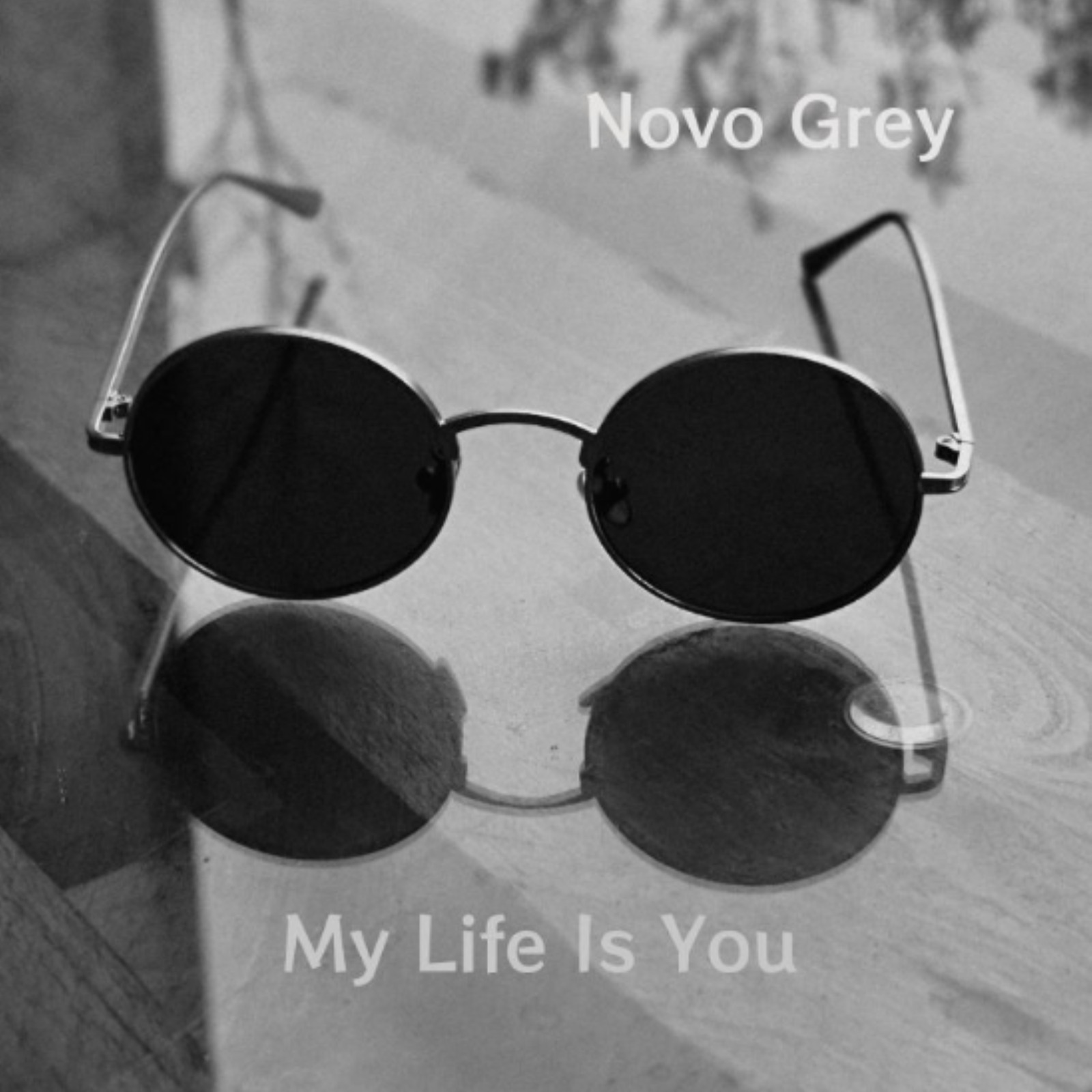
Hello everyone, it’s your host Oliver from DULAXI, and today I’m delighted to be joined by Swiss singer-songwriter Novo Grey, whose music brings together British melancholy, Americana soul, indie rock and a direct, electric guitar-based approach to songwriting. Based in Beringen, Switzerland, Novo Grey released his first professionally produced song, “My Life Is You,” on August 28th, 2026. The single is rooted in a deeply personal reflection on the experience of being with someone he describes as his one true love, capturing the clarity and emotional certainty that can emerge when another person becomes an essential part of your life.
Before we begin our conversation with Novo Grey, here’s what you need to know about today’s featured project.
About Novo Grey
Novo Grey’s musical journey began in early 2024, during a period when everyday life and personal tragedies had become increasingly difficult to carry. Writing became a way of processing those experiences, eventually producing hundreds of lyrics shaped by pain, social observation, harsh realities and hope. Rather than attempting to separate music from the realities that inspired it, Novo Grey has built his artistic identity around confronting those realities directly.
That approach is reflected in the phrase “Blood and Honesty,” which sits at the heart of his creative identity. His music is described as industrial vintage, honest, direct and loud even when the subject matter hurts. Love, peace and genuine community are also important values within that outlook, creating an artistic perspective that is willing to examine difficult subjects without losing sight of human connection.
Coming from a working-class background, Novo Grey carries the motto “Working-Class Hero,” with John Lennon serving as an important role model. His influences also include The Beatles, Oasis, Bruce Springsteen and early Coldplay, drawing together the melodic and melancholic qualities of British music with the storytelling, grit and emotional character associated with Americana. Rather than presenting himself as an imitator of those artists, Novo Grey sees his own life experience as an essential part of what separates his music from its influences.
“My Life Is You” brings that philosophy into a more intimate setting. The song was born from reflection on the time Novo Grey spent with his one true love and the profound feeling of recognizing what that relationship meant to him. Instead of presenting love as a passing emotion, the song focuses on the kind of connection that can become inseparable from a person’s sense of purpose and belonging. Its story is personal, but the emotion behind it leaves room for listeners to connect the song with their own memories and relationships.
The release also represents an important stage in Novo Grey’s development because it is his first professionally produced song. The journey into professional recording came with challenges and lessons about the music business and the studio environment. Working with producer Deean introduced him to new ideas about sonic dynamics, vocal phrasing and allowing individual elements of a recording to breathe, expanding his understanding of how the emotional character of a song can be shaped through production.
His willingness to continue learning is another defining part of the story. At 48, Novo Grey purchased his first electric piano to explore new approaches to composition, embracing the experience of being a beginner rather than treating age as a limitation. That curiosity sits comfortably alongside the extensive body of lyrics he has already created and the broader musical territory he hopes to explore.
Having this brief introduction to today’s featured project, I’m sure both new listeners and longtime fans are excited to hear directly from Novo Grey. So, without further ado, let’s begin today’s interview.
INTERVIEW SESSION
Oliver:
Your journey into music appears to have grown out of a period when everyday life and personal tragedies became difficult to carry, eventually leading you to put those realities into words. When you look back at that point in early 2024, what was happening within you that made writing become the way you began processing everything around you?
Novo Grey:
In early 2024, the noise inside my head simply became louder than the noise of everyday life. When life hits you with heavy blows, you reach a tipping point where you either crumble or find an outlet. Writing wasn’t a calculated artistic decision; it was purely a survival mechanism. Putting those raw realities down on paper was the only way to get the weight out of my chest and see it staring back at me in black and white.
Oliver:
You describe yourself through the ideas of “Blood and Honesty,” while also saying that your music comes from real life and does not avoid subjects that might hurt or sting. What does honesty mean to you as an artist, and how do you know when a lyric has reached a level of truth that you are comfortable sharing with other people?
Novo Grey:
Honesty means leaving the bruises unedited. In modern pop, people polish everything until the human soul is completely scrubbed away. For me, a lyric reaches true honesty precisely when it stings. If reading it makes me slightly uncomfortable or vulnerable to say out loud, that’s when I know it’s ready. If it doesn’t cost you anything emotionally, it’s not honest music.
Oliver:
Coming from a working-class background and carrying “Working-Class Hero” as a personal motto, with John Lennon as one of your greatest role models, what parts of that working-class identity do you feel are most important to preserve in your music and in the way you approach life?
Novo Grey:
The groundedness and the lack of pretense. In warehouse logistics, you don’t get anywhere by pretending; the work either gets done or it doesn’t. John Lennon spoke truth to power with sharp wit and absolute directness. I want to preserve that straightforward work ethic and plainspoken integrity. You don’t need fancy terminology or elite pretension to tell a profound truth about life and heartbreak.
Oliver:
Your influences range from The Beatles and Oasis to Bruce Springsteen and early Coldplay, while you describe your own sound as a meeting point between British melancholy and Americana soul. What have you taken from those different musical worlds, and how have you worked to turn those influences into something that feels distinctly Novo Grey rather than simply sounding like the artists you admire?
Novo Grey:
The Britpop and Beatles side gave me the melodic sensibility, that knack for big, singalong choruses laced with bittersweet melancholy. Springsteen and Americana brought the dust, the storytelling, and the sheer grit of ordinary life. What turns it into Novo Grey is my own voice and life mileage: I’m not a 20-year-old kid in an art school jacket copying Liam Gallagher; I’m carrying four decades of life scars, and you can hear that weathered weight in the vocal delivery.
Oliver:
You have written hundreds of lyrics since beginning this journey, covering pain, society, harsh realities, and hope. When you have that much material to draw from, how do you recognise the particular idea or emotion that deserves to become a finished song rather than remaining in your collection of personal writing?
Novo Grey:
Some words look fine on paper, but only certain lines begin to sing inside your head the moment you write them. A lyric deserves to become a full track when the emotional hook refuses to leave me alone after three days. If an idea still pulls at my gut while I’m going about my regular workday, it demands a melody and an arrangement.
Oliver:
“My Life Is You” comes from reflecting on the time you spent with someone you describe as your one true love, and the song is intended to capture that very specific feeling of realising what a person means to you. What was it about that relationship or period of your life that made you want to preserve those emotions in a song?
Novo Grey:
Certain connections redefine how you see the world forever. It was a time of immense vulnerability where another person became an emotional anchor in the middle of chaos. Even when circumstances change, the purity of that love doesn’t disappear. I wanted to build a monument to that feeling, not out of regret, but out of absolute reverence for the fact that someone can touch your life that deeply.
Oliver:
There is something deeply personal about writing a song around the feeling of recognising that one person has become such an important part of your life. When you were writing “My Life Is You,” were you trying to capture a particular memory, a specific emotional moment, or the larger feeling that remained with you after that relationship?
Novo Grey:
It was the overarching feeling of sudden clarity. It’s that exact moment when the noise falls silent, you look at someone, and you realize: without this, nothing else makes sense. It captures the lasting echo of that realization, long after the dust has settled.
Oliver:
You describe your writing as sometimes melancholic, sometimes romantic, but also occasionally cynical or combative. Where does that emotional range come from, and how important is it for you to allow conflicting emotions to exist alongside each other rather than trying to make every song resolve into one clear feeling?
Novo Grey:
Life is never just one note, so why should a record be? Being a single father, working hard, facing heartbreak, and still finding joy creates an emotional mosaic. You can love deeply and still feel cynical about how society operates; you can be broken-hearted in the verse and defiant in the chorus. Forcing a song to have a tidy, single emotion feels fake to me. The friction between contradiction is where the energy lives.
Oliver:
Your motto of writing songs to “hold stillness in a noisy world” suggests that songwriting serves a purpose beyond simply creating music. What does that stillness give you that everyday life does not, and what do you hope a listener experiences when they enter that space through one of your songs?
Novo Grey:
Everyday modern life bombards us with relentless superficial input and endless rush. Writing songs forces time to freeze; it creates a room where you are finally allowed to feel things fully without interruption. When people put on my headphones, I hope they get that same sanctuary, a few minutes to catch their breath, put their shields down, and reconnect with their own feelings.
Oliver:
“My Life Is You” marks your first professionally produced song, which means the recording process also became part of your learning experience. What did working professionally in the studio teach you about your own creative habits, and was there anything about the process that challenged an idea you previously had about how your music should be made?
Novo Grey:
It taught me that raw passion needs focus to cut through the speakers. Coming from making sketches at home, working with a seasoned producer like Deean opened my eyes to the craft of sonic dynamics, vocal phrasing, and breathing room. It challenged my urge to pack everything into one bar and taught me the power of letting an instrument breathe.
Oliver:
You have spoken openly about being 48 and still learning, even buying your first electric piano as a way of discovering new approaches to composition. How has allowing yourself to be a beginner again affected your confidence, creativity, and willingness to experiment with music?
Novo Grey:
It has been the most liberating experience of my life. When you’re young, ego often gets in the way because you pretend to know it all. At 48, I have zero pride about starting from scratch. Sitting down at a piano and picking out chords by ear felt like stepping into a new universe. Being an open beginner gives you child-like curiosity with the emotional maturity of an adult, a lethal combination for songwriting.
Oliver:
Your description of Novo Grey as “industrial vintage, honest, direct, and loud even when it hurts” creates a very specific artistic image. How do you translate those qualities into the actual sound of your recordings, particularly through your use of electric guitar-based music and the emotional weight of your lyrics?
Novo Grey:
By avoiding overproduced perfection. “Industrial-vintage” implies driving rhythms, analog warmth, distorted guitars, and room mics that sound more like wood, wire, and sweat than digital plastic. When the lyrics are painful, the guitars shouldn’t hold back, they should roar, push forward, and sonically mirror that emotional tension. However, since I have two hearts beating in my chest, British and Americana, my songs don’t all emerge from the same monotonous mold. Sometimes it’s Americana with a country touch, other times a gentle piano ballad.
Oliver:
Your values include love, peace, and genuine community, yet your writing is also willing to confront pain, difficult realities, and subjects that may make people uncomfortable. How do those values influence the way you approach difficult subjects without making the music feel forced or overly polished?
Novo Grey:
Real peace and community aren’t built on pretending everything is fine. You can’t have genuine healing without first addressing where it hurts. When I write about pain or ugly social truths, I do it out of a desire for connection, not despair. It doesn’t feel forced because the intention is always empathy: looking straight into the dark so we can find our way back into the light together.
Oliver:
One of the interesting things about “My Life Is You” is that it comes from a deeply personal experience but is also designed to awaken memories in the listener, allowing people to think about the moment they realised someone made them feel the same way. How important is that balance between telling your own story and leaving enough emotional space for listeners to place their own experiences inside the song?
Novo Grey:
That balance is everything. The magic of songwriting is the paradox: the more specific and honest you are about your own heart, the more universally it resonates. I don’t give the listener a rigid script; I provide the emotional frame and the melody, and they fill the canvas with the faces and memories from their own lives.
Oliver:
You have described the journey so far as challenging, with its own ups and downs, while also saying that you learned a great deal about the music business and working in the studio. What has been the most unexpected lesson from entering music professionally, and how has that experience changed the way you now approach your own career?
Novo Grey:
The biggest lesson was realizing that talent and songs are only half the battle; stamina and navigating the machine are the other half. It’s easy to get distracted by numbers or industry talk. What changed for me is doubling down on core identity: focus on authentic songs, connect directly with real listeners, and let the work speak louder than any hype.
Oliver:
There is a noticeable connection between your personal philosophy and the kind of artist you are becoming: you are not trying to present a perfectly polished version of yourself, but instead seem interested in keeping the imperfections, contradictions, pain, romance, and honesty intact. How important is authenticity to you when making creative decisions, especially when you know certain choices might be less commercially obvious?
Novo Grey:
Authenticity is my only currency. I’m not 21, and I’m not here to win a sterile talent show. People are starving for real human friction in music right now. If a creative choice is less commercially obvious but makes the track hit ten times harder in the heart, I will pick the rough edge every single time.
Oliver:
You began writing during a period when personal tragedies had become an overwhelming burden, but that writing eventually developed into a much larger body of work and a new artistic identity. How do you think the person who first began writing those lyrics in 2024 would respond if they could hear “My Life Is You” today?
Novo Grey:
He probably wouldn’t believe his ears. Back then, it felt like standing in dense fog with no idea how to move forward. If that man could hear the track today, he’d feel immense relief knowing that all the sleepless nights, pain, and uncertainty were not in vain, that they were turned into something lasting and powerful.
Oliver:
As you continue developing Novo Grey, what parts of your identity do you want to explore more deeply in future music, particularly the space between melancholy, romance, social observation, and the harder truths you are willing to confront?
Novo Grey:
I want to dive much deeper into the social landscape and the working-class perspective. While “My Life Is You” showed the romantic, vulnerable heart, there is a gritty, rebellious rock’n’roll side that wants to call things out as they are. Balancing intimate heartbreak with razor-sharp, driving anthems about navigating our strange world is the territory I’m claiming next.
Oliver:
You have already built a foundation around hundreds of lyrics, a defined artistic philosophy, and a growing willingness to learn new instruments and approaches. What do you feel is still unexplored within you as a songwriter, and what kind of creative territory are you most interested in entering next?
Novo Grey:
I want to experiment with tempo, rhythm, and sonic irony, combining upbeat, infectious grooves with profound or cynical lyrics, much like the Beatles did with “Ob-La-Di, Ob-La-Da” or Oasis on their B-sides. I also want to tackle a social issue next. It is time to open people’s eyes and remind them of what, in my view, most have forgotten.
Oliver:
When you look beyond “My Life Is You” and think about the longer journey you want Novo Grey to have, what do you ultimately hope people remember about your music and the person behind it, and what would make you feel that this journey has genuinely meant something to the people who listened?
Novo Grey:
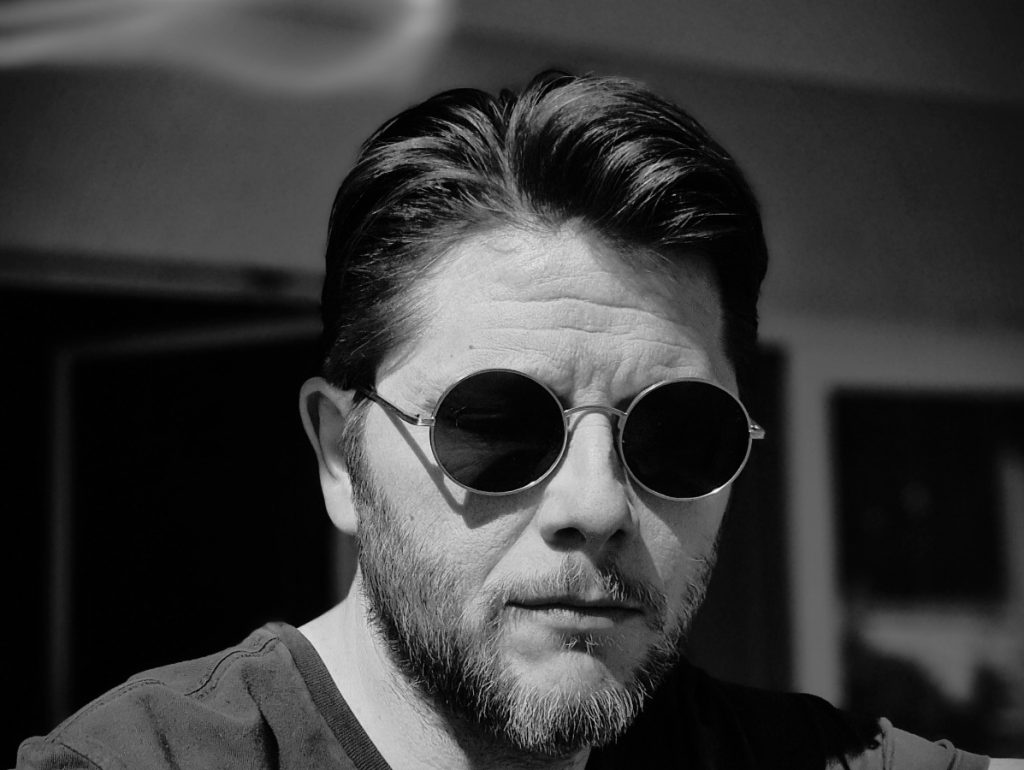
I want people to remember that it was real. That a guy in tinted glasses with a battered heart proved it’s never too late to turn your life around, speak your truth, and go all in. If even just one person out there listens to my music during their darkest hour and feels understood enough to keep going, then this whole journey has been a success. Of course, I’d love to be able to do this for as many people as possible.
“My Life Is You” reveals the quieter side of an artist whose wider identity is built on honesty, working-class experience and a refusal to hide behind polished perfection.
~ Oliver (DULAXI Team)
EDITORIAL PERSPECTIVE
“My Life Is You” feels like an important introduction to Novo Grey because the song connects his personal philosophy with a more vulnerable side of his songwriting. The emotional openness of the piece sits naturally alongside his wider commitment to directness, while the professionally produced setting gives his first release a considered sense of scale. More than simply presenting a love story, the song shows how personal experience can become a starting point for a much broader artistic journey.
~ Oliver (DULAXI Team)
CLOSING
Our conversation with Novo Grey offers an honest look at an artist who has approached songwriting not as an attempt to create a perfect version of himself, but as a way of understanding life, confronting difficult experiences and making space for emotions that are often left unspoken. From the personal story behind “My Life Is You” to his working-class perspective, his approach to authenticity and his willingness to remain a student of music at 48, there is a clear sense that this journey is still developing.
A sincere thank you to Novo Grey for taking the time to speak with DULAXI and for sharing such thoughtful insight into his music, experiences and creative direction. We encourage readers to spend some time with “My Life Is You” and discover the emotions behind the song for themselves, while keeping an eye on what comes next as Novo Grey continues exploring the meeting point between romance, melancholy, rock, Americana and social observation.
Thank you for spending time with DULAXI. This has been Oliver, and we look forward to bringing you more conversations with artists whose stories and music deserve to be heard.