
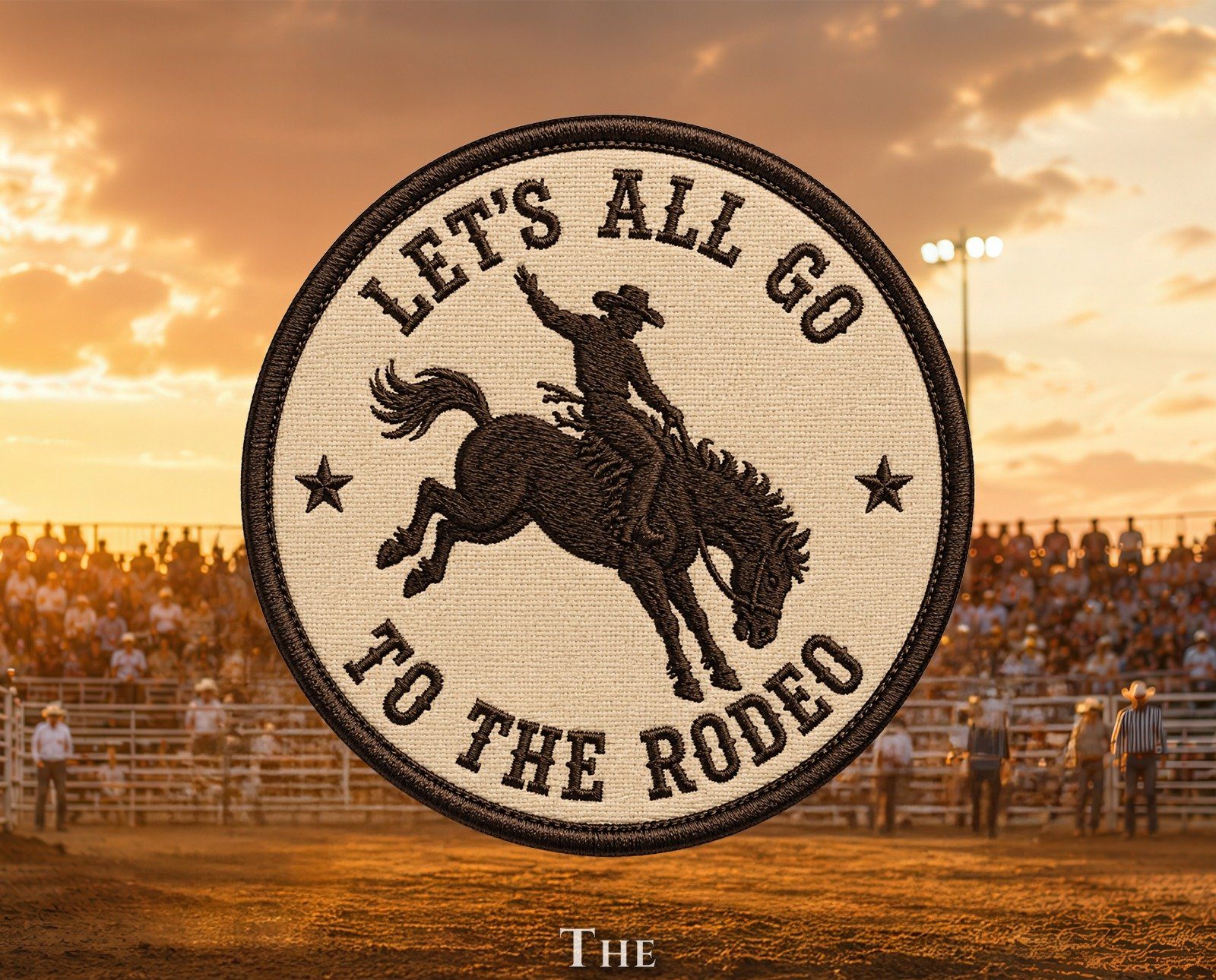
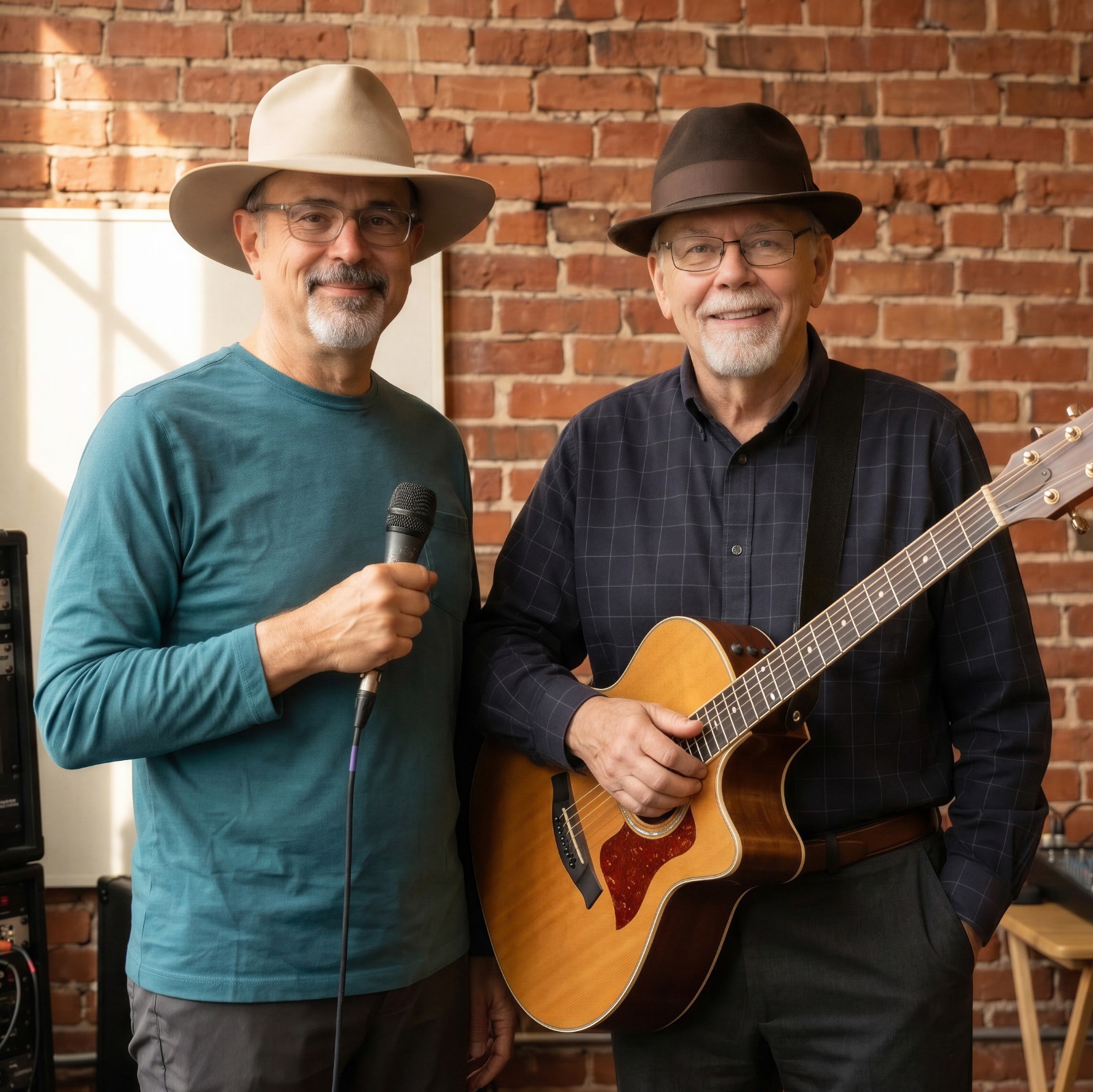
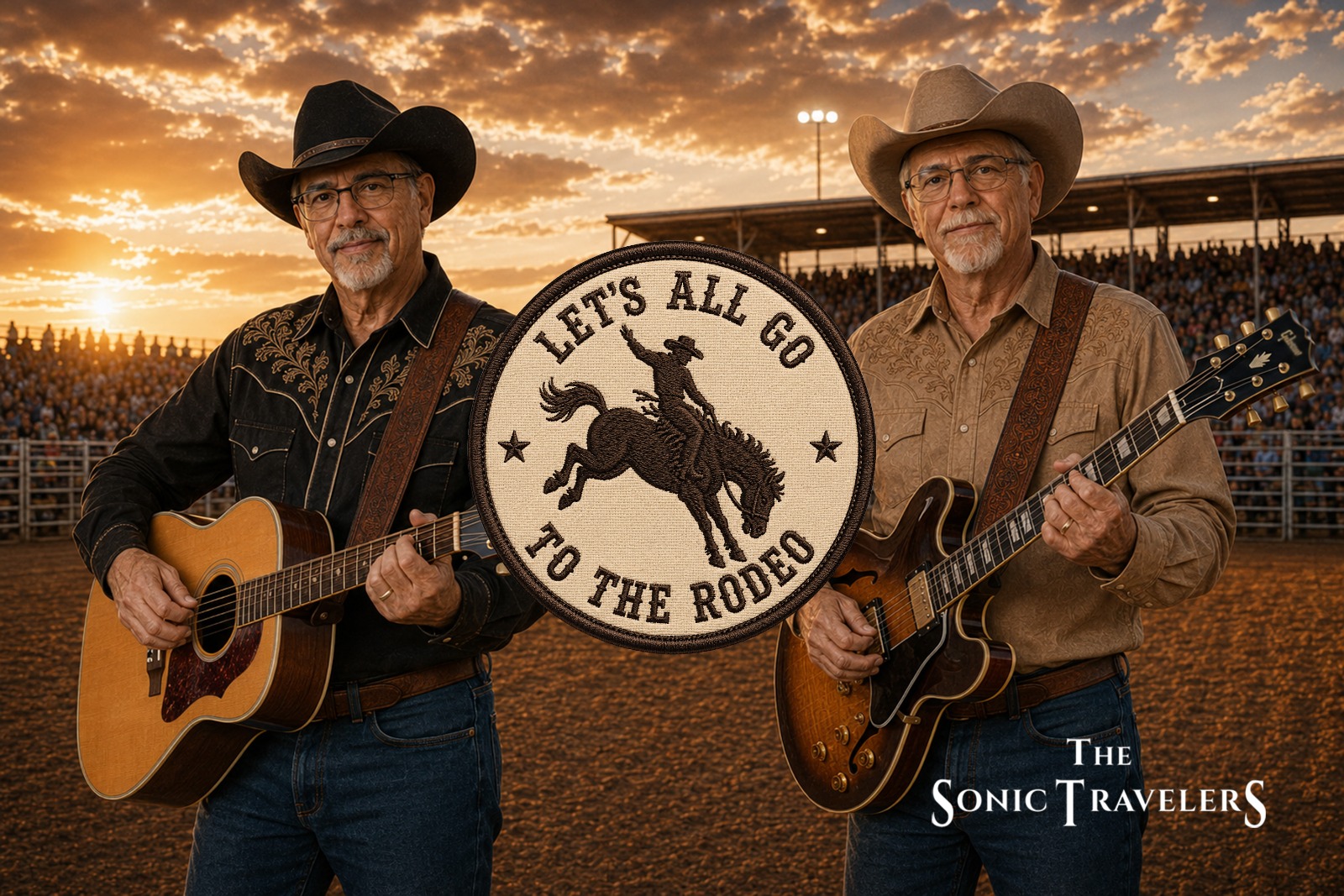
Hello everyone, it’s your host Oliver from DULAXI, and today I’m delighted to be joined by George Aiello and John Ingram of The Sonic Travelers, a songwriting and production partnership based in Henderson, Nevada, United States. With a musical identity that moves across country, Americana, folk-rock, pop, classic rock, blues, and other styles, The Sonic Travelers approach each song according to what the composition itself needs. Today, we’re discussing their latest single, “Let’s All Go To The Rodeo,” a country release written and sung by John Ingram and released on September 4, 2026.
Before we begin our conversation with George Aiello and John Ingram, here’s what you need to know about today’s featured project.
About The Sonic Travelers
The Sonic Travelers is a songwriting-first music project founded by longtime collaborators George Aiello and John Ingram, whose musical partnership dates back to the 1970s. Rather than building their identity around a single genre, the duo allows each song to determine its own direction, drawing from country, Americana, folk-rock, pop, classic rock, blues, cinematic music, and other musical traditions. Their approach is rooted in the belief that a song should be given enough freedom to become what it naturally wants to be, with story, melody, and emotion guiding the creative process.
That philosophy is especially relevant to “Let’s All Go To The Rodeo,” a song that takes a lighter and more openly celebratory approach than some of the duo’s more reflective material. Released on September 4, 2026, the country single was written and sung by John Ingram and grew directly from his experiences attending regional rodeos with his family and grandchildren, particularly in Northern California.
The Sonic Travelers’ approach to the song also reflects their wider songwriting philosophy. Although George Aiello and John Ingram have decades of experience behind them, they do not approach their music with the expectation that every release should fit an established Sonic Travelers sound. Instead, they allow the character of each composition to determine its musical treatment. For “Let’s All Go To The Rodeo,” that meant embracing a straightforward country character, an upbeat feel, familiar imagery, and a chorus designed to be easy to join in with.
The accompanying music video extends that same perspective. Rather than presenting a literal recreation of one of Ingram’s family outings, the video follows a multigenerational family through the broader experience of attending a rodeo. Arriving at the grounds, exploring, eating, meeting people, finding seats, and watching the events all become part of the visual story. Smaller details, including boots, stirrups, ropes, saddles, arena gates, contestant numbers, and horse tack, help establish the setting and give the experience a sense of lived-in detail.
With George Aiello and John Ingram continuing to write, produce, and release music across a wide range of styles, “Let’s All Go To The Rodeo” represents one part of a much larger catalogue still taking shape. Their upcoming material is expected to explore folk-rock, blues, hard rock, big-band rockabilly, cinematic instrumentals, and songs that do not fit neatly into one category.
Having this brief introduction to today’s featured project, I’m sure both new listeners and longtime fans are excited to hear directly from George and John. So, without further ado, let’s begin today’s interview.
INTERVIEW SESSION
Oliver:
The Sonic Travelers is built around a songwriting partnership between you and George Aiello that dates back to the 1970s. What has allowed that creative relationship to last for so many decades, and how has your understanding of songwriting changed as you have continued making music together?
The Sonic Travelers (George & John):
Part of what has allowed it to last is that we’ve never felt we had to agree about everything. We’ve known each other and been making music together in one form or another since the 1970s, but we’ve also had our own lives, experiences, and musical interests along the way. When we come together to work on a song, each of us brings something a little different to it.
There’s also a lot of trust after all these years. If one of us thinks a lyric, melody, arrangement, or musical part can be better, we can say so. Sometimes one of us has a clear idea of where a song should go and the other helps get it there. Other times, the finished song becomes something neither of us originally anticipated. The important thing is that the song wins the argument.
Our understanding of songwriting has changed, too. When you’re young, it’s easy to think there must be rules you need to learn and follow. After writing songs for this many years, we probably think less about rules and more about communication. Does the melody carry the feeling? Does the lyric say what it needs to say without saying too much? Is there something there another person can connect with?
We still care about the craft, probably more than ever. But we’ve also learned not to get in the way of a song by making it more complicated than it needs to be.
Oliver:
You describe The Sonic Travelers as a songwriting-first project where every song should be free to become what it wants to be. Where did that philosophy come from, and how does it influence the decisions you make when a new song begins to take shape?
The Sonic Travelers (George & John):
That probably goes back to when we were coming of age musically in the 1960s and ’70s. We listened to all kinds of music, and the boundaries between genres didn’t seem nearly as important as they sometimes do today. Top 40 radio could play rock, country, soul, folk, pop, and R&B in the same hour. As listeners, we didn’t think much about which category a song belonged in. We just knew whether we liked the song.
That stayed with us. When we started The Sonic Travelers, we didn’t want to decide in advance that we were a country band, an Americana band, a rock band, or anything else. We’re songwriters first. When a song begins to take shape, we try not to impose a style on it simply because that style happens to fit what we’ve released before.
So instead of asking, “Does this sound like The Sonic Travelers?” we’re more likely to ask, “Does this sound right for this song?” Over time, we think the common thread in our music will be the songwriting rather than any particular genre or production style.
Oliver:
Your catalogue moves between country, Americana, folk-rock, pop, classic rock, blues, and other styles rather than staying within one fixed genre. What determines the musical direction of a particular song, and how do you know when a song has found the sound that suits it?
The Sonic Travelers (George & John):
A lot of it comes from listening to what is already there in the melody, lyric, rhythm, and emotional character of the song. Usually those things start pointing us in a direction, and then we experiment with arrangements, instrumentation, tempo, and sometimes different styles until something clicks.
We don’t necessarily know at the beginning where a song will end up. Sometimes we try an approach and discover that it’s technically fine but just doesn’t feel right. In the end, the test is pretty simple: does this treatment help the song say what we wanted it to say?
Oliver:
“Let’s All Go To The Rodeo” is a change of pace from some of your more reflective releases, choosing instead to create something upbeat, humorous, and easy to sing along with. What made you want to step into this lighter side of The Sonic Travelers at this point?
The Sonic Travelers (George & John):
It may seem like a change of pace based on the songs we’ve released so far, but from our perspective it really isn’t. We’re still fairly early in introducing The Sonic Travelers, and those first few releases represent only a small part of the music we’ve written and the songs we have coming.
Some of our songs are serious or reflective, some tell stories, some are romantic, and some are simply meant to be fun. “Let’s All Go To The Rodeo” belongs in that last group. John had a good-time country song based on something he genuinely enjoyed doing with his family, and we didn’t see any reason to make it more serious than it wanted to be.
As more of our music is released, we think that range will become clearer. Sometimes a song has something serious to say, and sometimes getting people to smile and sing along is more than enough.
Oliver:
John, the song grew from years of attending regional rodeos with your family and grandchildren, particularly in Northern California. What are some of the memories from those trips that stayed with you strongly enough to eventually become part of a song?
The Sonic Travelers (John):
A lot of what stayed with me wasn’t necessarily the rodeo competition itself, but everything surrounding it. There was the concession stand food, watching the kids play and seeing how excited they got about their first rodeo events, and everybody cheering for the mutton buster from our camp.
We would camp there, and apparently we sometimes sounded like we were having more fun than anyone else because other rodeo goers would wander into our campsite to see what was going on and end up spending time with us. Later, the campfire guitars would come out, which was always a good way to finish the day.
Those are the things I remembered when I eventually wrote the song. The rodeo was obviously part of it, but so were the food, the kids, the people we met, and the music afterward.
Oliver:
The rodeo itself is only part of the experience in “Let’s All Go To The Rodeo.” You also focus on the people, food, crowds, stands, new friendships, and the feeling of spending an entire day together. Why was it important to tell the story from that wider family and community perspective rather than concentrating only on what happens inside the arena?
The Sonic Travelers (John):
Because that was really the experience. The rodeo events gave us a reason to be there, but a lot of what made those days memorable happened around them.
I also wanted to get at the idea that spending time connecting with other people can lead to experiences you never planned. The people who wandered into our campsite because they heard us having a good time are a perfect example. They arrived as strangers and, for a little while anyway, became part of the group.
Oliver:
There is a line between writing from personal memory and creating something that other people can recognize as their own experience. How did you approach turning your family memories into a song that could connect with listeners who may have completely different rodeo memories?
The Sonic Travelers (John):
Actually, it worked almost in reverse. I started with my own memories and experiences and then looked for the more familiar things within them that other people could recognize.
Once you use familiar phrases and experiences, they bring their own emotions with them. Family, food, crowds, making new friends, sitting in the stands, gathering around a campfire; people don’t have to share my particular memories to know what those things feel like. The connections happen pretty naturally.
Oliver:
The song follows the experience almost from beginning to end, from the morning parade and afternoon events through food, family, friends, and finally the campfire. What made you want to structure the song around the progression of an entire day?
The Sonic Travelers (John):
The traveling, camping, eating, and spending time together were always as important to me as the rodeo itself. When I started thinking about how to get all of that into the song, I began making a list of the things I remembered and wanted to include.
Once I had them in front of me, there was a natural progression. We traveled there, experienced the events and everything going on around them, spent the day with family and friends, and eventually wound up back at the campsite with the guitars. It almost suggested its own chronology, so the song became a kind of day-in-the-life story.
That happened to be the process for this song. Our songwriting process can be completely different the next time around.
Oliver:
Humor and simplicity are important parts of the song, particularly with a chorus designed to be easy for people to sing along with. What did you learn about writing a genuinely fun song without making it feel overly simple or losing the craftsmanship behind it?
The Sonic Travelers (John):
I always wanted part of this song to be a sing-along, something everybody could join in on when the guitars came out around the campfire. That meant keeping the chorus and the images simple and familiar enough that the kids and grandkids could enjoy them and sing along, too.
But simple doesn’t necessarily mean easy to write. You still have to find the right words, rhythm, and images and know what to leave out. With this song, I didn’t want anybody to have to stop and figure out what a line meant. I wanted them to hear it once and be ready to join in the next time the chorus came around.
That’s very different from some of the other songs we write. Some of our lyrics can be almost cryptic by comparison. “Let’s All Go To The Rodeo” was never supposed to be that kind of song. The fun, simple phrases are part of what makes it work.
Oliver:
The accompanying video also follows several generations through a day at the rodeo, including arriving, exploring the grounds, eating, meeting people, finding seats, and watching the events. How did you translate the memories behind the song into a visual story without simply recreating one specific family outing?
The Sonic Travelers (George & John):
We never intended the video to recreate one particular day or one particular family outing. We wanted to capture the kind of day John was writing about and make it broad enough that other people could see some of their own experiences in it.
The song gave us a natural framework, so we built the visual story around a multigenerational family arriving together, walking the grounds, getting something to eat, meeting people, finding their seats, and taking in the rodeo. The idea was to make the viewer feel as though they were spending the day there with them.
Oliver:
The video pays attention to details such as boots, stirrups, ropes, saddles, arena gates, contestant numbers, and horse tack. Why were these smaller details important in communicating the world of the song and the memories behind it?
The Sonic Travelers (George & John):
We thought of many of those details almost like insert shots in a film. You can show a wide view of a rodeo arena and immediately establish where you are, but a close-up of a boot in a stirrup, a hand holding a rope, a contestant number, or tack hanging on a rail adds texture and helps make that world feel more immediate.
They also reflect the way we tend to remember experiences. Years later, you may not remember every event in sequence, but you remember little things: what something looked like, a particular sound, an object you noticed, or a moment that caught your attention.
The larger scenes tell the story, while those smaller details add flavor. They also keep the video from simply illustrating every line of the lyric.
Oliver:
Because the people in the video are not your actual family, how did you guide the visual storytelling so that it captured the emotional truth of those experiences without presenting itself as a literal recreation?
The Sonic Travelers (George & John):
We approached the people in the video as characters rather than stand-ins for John’s actual family. We weren’t trying to reproduce what particular people looked like or recreate specific photographs and events. What mattered was that the relationships and interactions felt believable.
That meant concentrating on ordinary moments: different generations arriving together, children looking around, people sharing food, sitting together in the stands, meeting someone new, and simply enjoying the day. The emotional truth came from the experience rather than the identities of the people on screen. They could be John’s family, but they could just as easily be someone else’s.
Oliver:
You and George combine decades of songwriting experience with contemporary production technology. When working on a song like “Let’s All Go To The Rodeo,” how do you decide which elements should retain a traditional country character and where modern production can help bring the recording into the present?
The Sonic Travelers (George & John):
The relationship between art and technology is an old one. Musicians have always adopted new instruments, recording methods, effects, and production tools as they became available. We don’t see today’s technology as fundamentally different in that respect. The tools change; the question remains whether they help you make the music you intended to make.
With “Let’s All Go To The Rodeo,” the song called for a fairly traditional country character. Modern production tools helped us record, arrange, edit, mix, and refine it, but we don’t want the technology calling attention to itself. If you’re listening to the finished song and thinking about the tools we used to make it, we’ve probably missed the point.
We have a much larger toolbox available to us today than we did when we started making music in the 1970s, and we’re happy to use it. But the song still determines which tools come out of the box.
Oliver:
John, you wrote and sing “Let’s All Go To The Rodeo,” while the project itself is built around your collaboration with George. How do your individual strengths complement each other when turning one songwriter’s personal idea into a finished Sonic Travelers recording?
The Sonic Travelers (John):
We really don’t think of the songs as “John’s songs” and “George’s songs” once we start working on them. One of us may have written the original song, as John did with “Let’s All Go To The Rodeo,” but from that point forward we both take a deep interest in it and work on it as though it were our own.
That can involve almost every part of the process: lyrics, melodies, arrangements, instrumentation, vocals, production, and sometimes fairly small details that can make a difference in the finished recording. We trust each other enough to make suggestions and question things, and neither of us feels that the person who brought in the song has to make every decision about it.
Many of our songs are co-written from the beginning, of course. But even when a song starts with just one of us, by the time it becomes a Sonic Travelers recording, we’re both invested in it.
Oliver:
You have spent decades writing songs, yet the project continues to release new compositions alongside songs from your existing catalog. What keeps you curious about songwriting, and what do you think you understand about the craft now that you could not have understood when you first began?
The Sonic Travelers (George & John):
We’re not sure we know how not to be curious. Writing songs, making music, trying new things, and learning have been part of our lives for so long that at this point they’re simply part of who we are. We’re both in our 70s, but neither of us thinks of creativity as something you eventually finish learning how to do.
If anything, all those years have taught us how much there still is to learn. We have more experience now and probably better instincts about what works and what doesn’t, but we’re still capable of surprising ourselves. A new song can take us somewhere we haven’t been before, and a song we wrote decades ago can reveal possibilities we didn’t hear in it at the time.
When we were younger, we probably thought someday we would figure it all out. Now we know that not figuring it all out is part of what keeps it interesting. At our age, we’re not doing this because we feel we have something left to prove. We’re doing it because we still want to know what the next song might become.
Oliver:
Family memories are at the heart of this particular release, but there is also a broader idea about people coming together and turning an ordinary outing into something memorable. Has making this song changed the way you think about the importance of shared experiences in your own life?
The Sonic Travelers (George & John):
“Let’s All Go To The Rodeo” happens to have its beginnings in experiences John actually had with his family, but we don’t think a songwriter has to personally live everything he or she writes about. If that were the case, our choices as songwriters would be pretty limited.
Inspiration can come from almost anywhere: things we’ve experienced, people we’ve known, stories we’ve heard, things we’ve observed, things we imagine, and even things we wish had happened or wish the world could be. Most of our songs aren’t autobiographical in any literal sense. The imagination is every bit as important to songwriting as memory.
So we’re not sure making this song changed the way we think about shared experiences as much as it reminded us of something we already knew. Sometimes the days that stay with us aren’t the extraordinary ones. They’re simply the days when we were together.
Oliver:
The Sonic Travelers deliberately avoids chasing trends and instead allows story, melody, and emotion to guide each release. In an industry where artists are often encouraged to fit neatly into a genre or current sound, how important is that creative freedom to the identity of the project?
The Sonic Travelers (George & John):
We don’t really think of it as something we decided should become part of the identity of The Sonic Travelers. It’s simply who we are. We grew up listening to a remarkable variety of music, often on the same radio station, and we never stopped listening that way. It would probably feel more artificial for us to restrict ourselves to one genre than to move among several of them.
We also think there was something valuable about being exposed to music that didn’t necessarily come from your own background or experience. Particularly in the 1960s, popular music crossed racial, cultural, regional, and generational boundaries in ways that mattered beyond entertainment. Music was intertwined with the social changes of that period, including the Civil Rights Movement, and it gave people opportunities to hear voices, experiences, and influences they might otherwise never have encountered.
We sometimes wonder whether younger listeners would develop similarly broad tastes if they were routinely exposed to more great music across genres rather than having so much of it separated into categories. You don’t have to like everything you hear, but hearing it gives you the opportunity to discover something you might never have gone looking for.
So our creative freedom isn’t really about making a statement against the music industry or deliberately trying to surprise people. We write and make the kinds of music that interest us. After all these years, putting artificial boundaries around that wouldn’t make much sense.
Oliver:
After spending so much time with the memories behind “Let’s All Go To The Rodeo,” what do you hope someone who has never attended a rodeo feels when they hear the song, and what do you hope someone with their own family rodeo memories recognises in it?
The Sonic Travelers (George & John):
We don’t think someone needs to have attended a rodeo to connect with the song. The rodeo is the setting, but at its heart it’s about family and friends going somewhere together, having a good time, and sharing a day they’ll remember.
For someone who has their own rodeo memories, we hope some of the details bring those experiences back and perhaps make them smile. For someone who has never been to one, their version of that day might have been a county fair, a ballgame, a family picnic, a trip to the beach, or something completely different.
If the song reminds someone of a time when the family piled into the car, went somewhere together, and came home with a few more shared memories than they had that morning, that’s enough for us.
Oliver:
Looking beyond this single, what are you and George currently exploring creatively, and how might the next chapter of The Sonic Travelers continue to surprise listeners while remaining true to your songwriting-first philosophy?
The Sonic Travelers (George & John):
We have a lot of music coming, and anyone trying to figure out what a typical Sonic Travelers song sounds like may have to wait a while longer. We have folk-rock, blues, hard rock, and even some big-band rockabilly on the way, along with a few cinematic instrumentals. And there will be other songs that don’t fit very neatly into any one category.
We’re still writing, still experimenting, and still curious about where the next idea might take us.
For anyone interested in following along, we also publish Postcards From The Road, our Substack newsletter, where we share more of the stories behind the songs, how they develop, and what we’re learning as we make them.
So, stay tuned.
“‘Let’s All Go To The Rodeo’ captures something larger than the event itself, turning a day of horses, crowds, food, music, and family into a story about the memories that grow around the places we return to together.”
~ Oliver (DULAXI Team)
Editorial Perspective
What stands out about “Let’s All Go To The Rodeo” is the way its musical simplicity supports the story rather than competing with it. The country character, direct vocal delivery, accessible songwriting, and clear sense of progression all serve the everyday memories at the centre of the song. Speaking with George and John also makes the release feel like part of a much broader creative philosophy, one where curiosity matters more than staying inside a fixed genre. There is a genuine sense of enjoyment behind this release, and that comes through in both the song and the conversation surrounding it.
~ Oliver (DULAXI Team)
Closing
Our conversation with George Aiello and John Ingram offers a closer look at the ideas, memories, and creative philosophy behind The Sonic Travelers and “Let’s All Go To The Rodeo.” From the decades-long songwriting partnership between George and John to the family experiences that inspired this particular release, the discussion shows how much meaning can grow from seemingly ordinary moments.
Thank you to George and John for taking the time to speak with DULAXI and for sharing the stories behind the music, the songwriting process, and the wider creative journey of The Sonic Travelers. We hope this conversation gives readers a deeper appreciation for “Let’s All Go To The Rodeo” and encourages you to experience the song and its accompanying video for yourself.
As The Sonic Travelers continue exploring new styles, stories, and musical ideas, there is clearly much more still to come from this long-running creative partnership. We look forward to following that journey and bringing you more conversations with artists and musicians from around the world.
Thank you for spending time with DULAXI, and from Oliver and the DULAXI Team, we will see you in our next interview.