
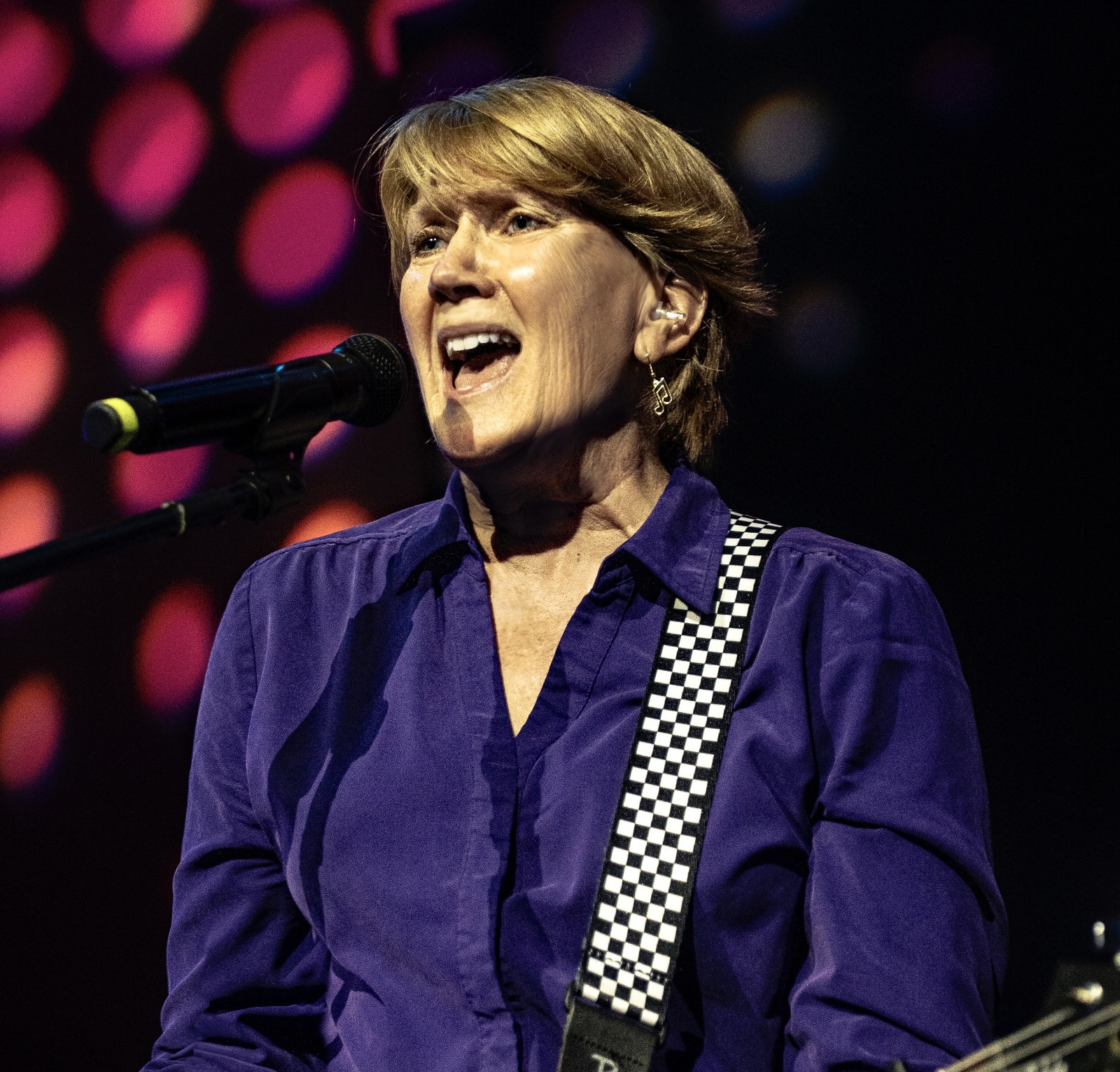
Hello everyone, it’s your host Oliver from DULAXI, and today I’m delighted to be joined by Minneapolis-based indie rocker and songwriter Mary Strand, the creative force behind Mary Strand & The Garage. Hailing from the United States, Strand brings together elements of indie rock, garage rock, punk and alternative rock, and on August 28, 2026, she released “Annunciation,” a deeply personal single responding to the 2025 mass shooting at Annunciation Catholic Church in Minneapolis.
Arriving one day after the first anniversary of the tragedy, “Annunciation” transforms grief, anger and determination into a direct call for meaningful action, particularly when it comes to protecting children from gun violence. Before we begin our conversation with Mary Strand, here’s what you need to know about today’s featured project.
About Mary Strand/ Annunciation
Mary Strand’s journey into songwriting is rooted in a life that had already been shaped by words. She spent 16 years writing 100-page merger agreements before turning to novels, where her work expanded into stories of 300 to 400 pages. Although she continues to love writing novels, songwriting eventually offered her a shorter but remarkably demanding way to tell complete stories.
Her path into original music began in 2018, when songwriter Rodney Crowell hosted his first songwriting camp. Strand had already spent time playing in cover bands and was focused on developing her guitar playing and vocals, but Crowell’s songwriting opened the door to a new creative world. Her development accelerated in 2020 after she joined the Singer/Songwriter Songwriting Challenge, a group of mostly Minnesota songwriters who became mentors, co-writers and friends. Writing 20 songs a year through the group helped transform songwriting from an emerging interest into a central part of her musical life.
Strand’s musical identity has since developed around the high energy and directness of garage rock, punk, indie rock and alternative rock. Her influences include Joan Jett, The Pretenders, The Clash, The Dollyrots, The Replacements, The Melismatics, The Muffs and The Cars. Since the release of her debut album, Golden Girl, in 2023, she has continued developing a sound that gives her songwriting an energetic rock setting while allowing her lyrics to remain central.
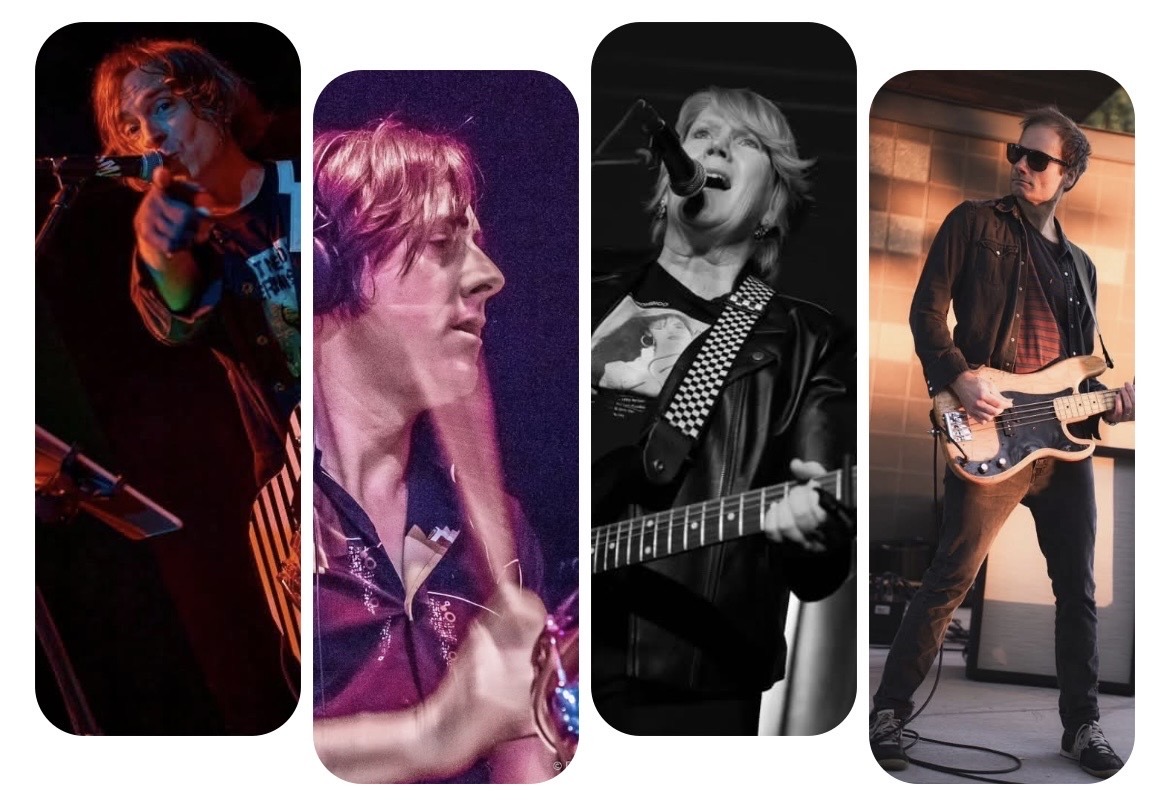
Mary Strand & The Garage grew from a recording project into a live band. Strand had already been working with guitarist and vocalist Ryan Smith of Soul Asylum, UltraBomb and The Melismatics, as well as bassist and vocalist Mark Wade of The Melismatics and The Mood Swings. Her son Jack Strand initially played drums, bringing a family connection into the project. After Jack decided to leave the band to focus on his other musical work, Peter Anderson of The Ocean Blue and Maygen & The Birdwatcher joined on drums. The current lineup brings together these musicians around Strand’s songwriting and distinctive rock approach.
“Annunciation” comes from a far more painful place. Strand lives approximately two miles from Annunciation Catholic Church and attended Mass there as a child. On August 27, 2025, when news broke that a gunman had opened fire through the church’s windows while schoolchildren and teachers had gathered for Mass, the tragedy was not simply something happening somewhere else. It was unfolding within her own community and at a place with personal meaning.
That morning, Strand had picked up her guitar intending to work on an entirely different song for the Singer/Songwriter Songwriting Challenge. The news of the shooting changed that immediately. She abandoned the song she had started and wrote “Annunciation” instead, completing it that same morning. Although the song came quickly, performing and recording it required time. Its subject remained deeply emotional, and Strand has described the process of repeatedly playing it as one that gradually allowed her to find some emotional distance without removing the weight of what she had written.
The result is a song shaped by grief but driven by resolve. Strand’s response is not simply about remembering a devastating event. It confronts the wider normalization of gun violence and asks what responsibility looks like when expressions of sympathy are not accompanied by meaningful action. Her songwriting remains direct because she believes music can be a vehicle for saying what she genuinely thinks and feels.
“Annunciation” was recorded with Mary Strand on electric guitar and lead vocals, Ryan Smith on electric guitar and vocals, Mark Wade on bass and vocals, and Peter Anderson on drums. It serves as the first preview of Strand’s planned fourth album for 2027. Before that project arrives, she is also preparing an original Christmas rock album for release later in 2026.
For Strand, the next stage is about continuing to grow while remaining honest. Her songwriting increasingly reflects her willingness to speak directly about subjects that matter to her, while still leaving room for the humour and lighter moments that are also part of her personality. “Annunciation” therefore sits within a broader creative direction that values truth, energy and emotional immediacy.
Having this brief introduction to today’s featured project, I’m sure both new listeners and longtime fans are excited to hear directly from Mary. So, without further ado, let’s begin today’s interview.
INTERVIEW SESSION
Oliver:
You spent 16 years writing merger agreements and later moved into writing 300- to 400-page novels before discovering songwriting in 2018. Looking back, what did those different forms of writing teach you about yourself, and what made songwriting feel like the right way to express the things you could not say through longer forms?
Mary Strand:
In truth, no one ever set my merger agreements or novels to music, so songwriting is simply more fun! Actually, I do still write novels, and I love writing them. I also wrote a lot of poetry in high school and did some other creative writing, although all very short stuff. Songs are both easier (and far, far faster) and harder to write than novels, because they’re only two pages, but they also mean that I have to tell a complete story in only two pages. As a lawyer, I learned to be great at all technical aspects of writing. Writing novels, and especially the concept of “show, don’t tell,” taught me all about storytelling and how to express feelings through actions. Right now, I miss writing novels when I’m steeped in songwriting, and when I’m writing novels I want to be writing songs. But I don’t miss writing merger agreements!
Oliver:
Your songwriting began more seriously after Rodney Crowell hosted a songwriting camp, and the Singer/Songwriter Songwriting Challenge later became an important part of your development. What was it about those experiences that helped you find your voice and gave you the confidence to see yourself as a songwriter?
Mary Strand:
Rodney Crowell’s first songwriting camp, in 2018, opened up the whole world of songwriting for me. I’d been playing in cover bands for a couple of years, but I didn’t really think about writing songs. I was focused on learning guitar and then addiing vocals to the mix. But I absolutely love Rodney Crowell’s songwriting, so if going to his camp meant I had to write my first song, I was all in. I would say I already had my “voice” because of novels, and my confidence because of practicing law, but at first it was a struggle to learn guitar and vocal melody. Most songwriters I know have been playing guitar or piano since they were kids. I grew up playing sports instead, so everything was new to me. Putting it all together took a while. But then I joined the Singer/Songwriter Songwriting Challenge in 2020, and we write 20 songs a year in that group. I still had a long ways to go, but that was absolutely what turned me into a songwriter.
Oliver:
You have built your music around garage rock, punk, indie rock and rock influences, while drawing inspiration from artists such as Joan Jett, The Pretenders, The Clash, The Dollyrots, The Replacements and The Melismatics. What is it about that tradition of direct, energetic rock music that reflects who you are both personally and artistically?
Mary Strand:
I simply love the high energy, the intensity, the directness, and the power of rock. My own energy levels are insane. I do love a sweet ballad from time to time, but I’m on fire when I’m writing a rocker, and it’s usually what I’d rather listen to. All of those artists (Joan Jett, etc.) are major inspirations to me, but they’re also like holding a mirror up to myself. Their music is simply who I am. I think part of it may come from growing up playing intense sports: it’s all about the endorphins, and rock gives me that.
Oliver:
Since forming Mary Strand & The Garage, you have also brought your son Jack into the band alongside musicians with strong Minneapolis rock backgrounds. How has making music within that combination of family and long-standing musical relationships shaped the way you experience the band beyond simply being a recording project?
Mary Strand:
We decided in 2022 to record my first album (Golden Girl, which released in June 2023). I’d already been working for years with lead guitarist Ryan Smith (of Soul Asylum, UltraBomb, and The Melismatics) and bass player Mark Wade (of The Melismatics and The Mood Swings), and they both immediately said yes to playing on my album. I was the one who suggested Jack for drums. He’s just in his 20s, and he grew up playing mostly jazz and funk as opposed to rock, but he’s an amazing drummer. And he’d played briefly in a cover band I’d been in, so he knew my music and the type of music I like to play. Making music with all three of those guys was fantastic. They’re all worlds ahead of me musically, so I look up to them, but they’re all super supportive of me as a songwriter and musician. Jack and I had to work through the musician vs. mom/son dynamic, which we did after (and not before!) our first recording session, but he was a fantastic addition to the band. At first we were simply an album band. The four of us played an album release show in 2023, but at that point there was no real sense of whether we’d do much as a live band, and I was still playing in my old cover band. A year later, I was invited to be part of a mini music festival in Minneapolis. The guys all said yes, and on the day of the show, we first chose a name: Mary Strand & The Garage. We’ve been playing live shows together as a band ever since. Jack decided early this year, though, to leave the band in order to focus on his other band, Loondale. As he put it, he also wanted to recapture the pure mom/son dynamic we used to have. I was disappointed, but I do get it. So we added the fantastic Peter Anderson (of The Ocean Blue and Maygen & The Birdwatcher) on drums, and it’s been an easy and fun transition.
Oliver:
You live only about two miles from Annunciation Catholic Church and attended Mass there as a child, which makes the events of August 27, 2025 especially close to home. When you first learned what had happened that morning, what went through your mind as you realised this was not simply another tragedy you were hearing about from a distance?
Mary Strand:
I was frankly horrified. Almost immediately, someone posted a photo on social media of a mom running barefoot in the street toward Annunciation. As a mom, I was simply right there with her, and that image is still seared into my brain. And it was my town, my community. But I’m always horrified by school shootings. Sandy Hook was devastating. Columbine, the first biggie that I remember, was also devastating. I feel those tragedies deeply.
Oliver:
You originally picked up your guitar that morning intending to write something completely different for your songwriting challenge group, yet the shooting immediately changed what you felt compelled to write. What happened internally in those moments that made “Annunciation” become the only song you felt you could write that day?
Mary Strand:
It was just gut instinct. I’d already written a few lines on the other song, and I’d picked up my guitar. But the shooting at Annunciation was a devastating moment in Minneapolis, and it was all I could think about. I shook my head and threw the other song away. I didn’t even keep those few lines for another day. Just like that, they were ancient history. That week, our songwriting prompt for the Singer/Songwriter Songwriting Challenge was “evolve.” And I felt powerfully that, as a country, we had to evolve, become enlightened, and do what it takes to end gun violence, but especially against children. Not taking action, over and over, is horrifying. So I knew, musically, exactly what I had to do.
Oliver:
You completed “Annunciation” that same morning, but it took time before you could perform or record it without tears. How did the emotional distance between writing the song and eventually recording it change your relationship with what you had written?
Mary Strand:
The beauty of playing a song repeatedly is that it evolves, and so do you. When I first sang it, especially the line, “And oh, Sandy Hook, Sandy Hook,” I seriously always teared up. But I wrote it last August, we started recording it late last year, and we first performed it as a band in January or February of this year. So I had time to find some level of emotional distance, partly just through repetition. But it’s still emotional to me, and likely always will be. I just played it solo at a songwriters’ show a few nights ago. My energy levels and emotions are extremely high whenever I play it, and the crowds help make that so.
Oliver:
“Annunciation” carries grief and anger, but it also refuses to surrender hope, particularly in its call for meaningful action rather than relying only on sympathy, thoughts and prayers. How did you balance those difficult emotions while making sure the song ultimately expressed resolve rather than despair?
Mary Strand:
I was very active in politics when I was younger, especially in college, and I’ve always fought for what I think is right. It’s why I became a lawyer. So yes, the song is full of grief and anger, but I’m also always thinking of how we can fix something. We absolutely need to fix the scourge of gun violence in the United States, and I refuse to give up. That’s why the song ends with “for the children, for the children, for the children.” That has to be our focus. Despair won’t fix anything, but collective action will.
Oliver:
The chorus directly challenges the presence of guns in streets, churches and schools and connects that reality to society’s responsibility toward children. When you were writing those words on the morning of the shooting, how did you decide how direct you wanted the song to be?
Mary Strand:
My first thought was that I wanted the verses to hammer hard on exactly how many instances of gun violence against children we’ve had, although of course I couldn’t name them all. But by repeating them, I’m refusing to let people forget them. And then the chorus was about my rage at the senselessness of how our country continues to let this happen. Gun violence should absolutely be against the rules of any decent society, as I sing in the song, and we won’t be a decent society until we end it. Frankly, if an issue makes me angry, I’ll be very direct about it in a song. We need to stop all the mindless repetitions of “thoughts and prayers” without taking any action. Beginning on my second album, I Don’t Need Your Permission, I really decided to say how I feel in my songs. Sometimes I’ll wonder about the political leaning of a crowd I’m singing to, especially when I’m outside of Minneapolis or St. Paul, but I’ve found that people universally respond to what I’m saying in “Annunciation.” And if someone actually was okay with gun violence against children, I guess theirs is not an opinion I care about. But, truly, the reception to the song has been powerful and positive. It inspires me to continue to be direct in my songs. My upcoming fourth album will be quite direct.
Oliver:
There is a strong sense of urgency in “Annunciation,” but underneath that urgency is your belief that people can still change the world if they are willing to make enough effort. Where does that belief come from personally, especially when you are confronting an event that could easily make someone lose faith in meaningful change?
Mary Strand:
As a kid, I grew up reading about Martin Luther King and other leaders who spoke out, seeking a better world. About Rosa Parks and other activists in the south who took a stand for civil rights. About all the countries that fought Hitler and the atrocities he committed. And about how the country pretty uniformly stood together in taking down someone like Nixon when he’d taken the wrong path. It caused me to be active politically in college, and in fact I was a political science major. First Amendment cases and similar issues inspired me to become a lawyer. (But then, in law school, I found tax law and mergers and acquisitions to be more fascinating, so it turns out that I’m not perfect. lol.) I will always believe that people can change the world. Enough people, enough effort. Simply voting is a start, and I’m proud to live in a state that’s always among the highest in voter turnout.
Oliver:
The song arrives one day after the first anniversary of the attack, giving the release a very specific place in time. What does August 28, 2026 represent to you, and what did you hope this timing would allow the song to say about remembering the people affected while also looking toward change?
Mary Strand:
In part, of course, the timing was driven by things like when we finished recording, mixing, and mastering “Annunciation.” But then when we looked at release dates (and we always release my music on a Friday), it just instinctively felt perfect to introduce my song into the world and specifically into Minneapolis close to the anniversary date, when everyone was thinking and talking about what happened last year. I actually don’t like to dwell on unhappy memories, but we simply must remember all the kids who’ve died or who’ve been injured and traumatized. If we let people forget, we’ll never take action.
Oliver:
“Annunciation” is the first preview of your planned fourth album for 2027, while you are also preparing an original Christmas rock album for release later this year. How does “Annunciation” fit into the larger artistic direction you are developing, and what does it reveal about where your songwriting is heading?
Mary Strand:
My hope is always to continue to grow as a songwriter and musician, and the songs I’m continuing to write are generally about speaking my truth. (With, okay, some lighthearted or funny songs thrown in, because humor is a big part of my personality.) I feel my most natural when writing songs in the garage, punk, and indie rock style, but I also think those genres tend to be focused on sharing your truth with the world. When I was writing my second album, I Don’t Need Your Permission, my straightforward songwriting style happened naturally because I was also in the middle of coping with grave sickness and a couple of near-death experiences. (I’m totally healthy now!) So issues that might concern the average person made me angry, not merely concerned, and the songs reflected that. Now that I’m completely well again, I’ve found that I want to keep capturing that honesty and passion in my songs without having to be sick! So for right now, I’d just say full steam ahead with what I’ve been writing. Even the Christmas album has more attitude than most Christmas albums, while also celebrating my favorite season of the year. It was a blast to write and record.
Oliver:
The recording brings together your electric guitar and lead vocals with Ryan Smith’s guitar and vocals, Mark Wade’s bass and vocals, and Peter Anderson’s drums. What did each musician bring to “Annunciation,” and how did the chemistry within the band help shape the final version of a song that began as such a personal piece of writing?
Mary Strand:
We have fantastic chemistry as a band. “Annunciation” was Peter’s first time joining us on recording, and I told him at the outset what the other three of us had already made happen: do your thing. As in, make it your own. What I love about our band is that everyone throws in his or her own magic, and you can hear it in the music. Aside from that, Mark is usually the first person to hear my newly written songs, and in fact he heard “Annunciation” on the afternoon of the day I wrote it. So he’s attuned to most of the songs I write from the very beginning, and Ryan is the first to help me shape exactly where we want to go in the recording studio. We’re a team. They’re all amazing musicians, and we trust each other to make it happen.
Oliver:
Your music has consistently embraced the directness of punk, garage and indie rock, and “Annunciation” continues that approach while dealing with a deeply serious subject. How did you use the rawness and immediacy of that musical style to support the emotional weight of the lyrics without allowing the arrangement to overpower their message?
Mary Strand:
Perhaps because I’m a novelist and a lawyer, although no longer practicing law, I’m all about words. To me, although I write both the music and lyrics to my songs, lyrics are my favorite part of a song. I do think punk, garage, and indie rock are the perfect genres to use as a vehicle for telling a powerful story. In fact, I think the genre I use is part of the message. I just make sure that the vocals don’t get drowned out by the drums, bass, and guitars. But I do love loud drums, bass, and guitars!
Oliver:
Your development as a songwriter has happened alongside mentors, co-writers, friends and fellow Minnesota musicians, while your catalogue has grown from “Golden Girl” in 2023 toward multiple full-length projects. When you compare the songwriter who began writing in 2018 with the artist preparing her fourth album, what changes in your confidence, priorities and understanding of your own voice stand out most?
Mary Strand:
For starters, I always choose an inspirational word of the year, and for 2026, that word is “prioritize”! I can’t begin to say how much I’ve changed and grown as a musician and songwriter since I was first writing songs and then recording the first few songs on my Golden Girl album, to where I am now. Ryan and Mark in particular have been incredible mentors. Mark, as usually the first person to hear my songs, pushes me to find more interesting chords or voicings of chords and not to use the same old strum. Ryan’s question is always: “What do you want to do next?” Their support and encouragement, and their ability to push me while keeping it fun, has been everything to me. My songwriting itself has also evolved greatly from my earliest efforts. And I’ve been playing guitar seriously only for the last 10 years or so. I was pretty inept in the beginning, to be quite frank. But I also push myself constantly. I released my first album when I was still a relatively new musician and songwriter. My vocals themselves have changed as I’ve spent time in the recording studio. I had to learn about being prepared to play technically well on a recording as opposed to the looser requirements on stage. I’ve really been recording only about four years. My whole life has changed. Everything!
Oliver:
Your work often comes from real experiences and observations, but “Annunciation” turns a painful event in your own community into something intended to speak beyond Minneapolis. How do you approach the responsibility of taking a deeply personal experience and turning it into a song that other people may use to process their own feelings?
Mary Strand:
I think that there are fairly universal feelings, whether it’s from Annunciation or another school shooting or, say, 9/11. I try to put details that are personal but universal in all of my songs. It’s what I try to do in my novels, too. (My old merger agreements, not so much!) I think that if I make it personal, others will connect with it.
Oliver:
As listeners encounter “Annunciation,” what do you hope stays with them after the song ends—not only emotionally, but also in terms of how they think about violence, children, community responsibility and the possibility of change?
Mary Strand:
Very purposefully, I ended the song with “for our children, for our children, for our children.” I want that feeling to stay with listeners and encourage them to do whatever it takes. For our children.
Oliver:
With a Christmas rock album coming later in 2026 and another full-length project planned for 2027, you are entering an important new chapter in your career. What do you want the next stage of Mary Strand & The Garage to explore, and what kind of artist do you hope to become as that story continues?
Mary Strand:
I hope my 2007 album will be viewed as a powerful love letter to Minneapolis and all of Minnesota. I wrote many of those songs while ICE was trying, and failing, to take us down. As to new songs, I just want to keep feeling passionate about whatever I’m writing about, since those are my best songs. The next big stage for our band is to play at even more venues and in front of as many people as possible. In some ways I’m still the new kid on the block, and this new kid wants to be heard. Thank you so much!
“Mary Strand turns songwriting into an act of direct engagement, taking a painful moment from her own Minneapolis community and refusing to let grief become silence. What stays with me most is the conviction behind the music: sorrow can acknowledge what happened, but only courage, persistence and collective action can begin to change what happens next.”
~ Oliver (DULAXI Team)
EDITORIAL PERSPECTIVE
Speaking with Mary Strand reveals an artist whose songwriting is closely tied to her instinct to communicate honestly. “Annunciation” carries the urgency of its subject without losing the character of the musician behind it. The guitar-driven rock setting gives her words room to remain forceful and immediate, while the band brings a sense of collective energy to a song that began as an intensely personal response. Strand’s willingness to embrace direct songwriting makes the single feel less like a distant observation and more like a personal statement placed deliberately in the hands of its listeners.
~ Oliver (DULAXI Team)
CLOSING
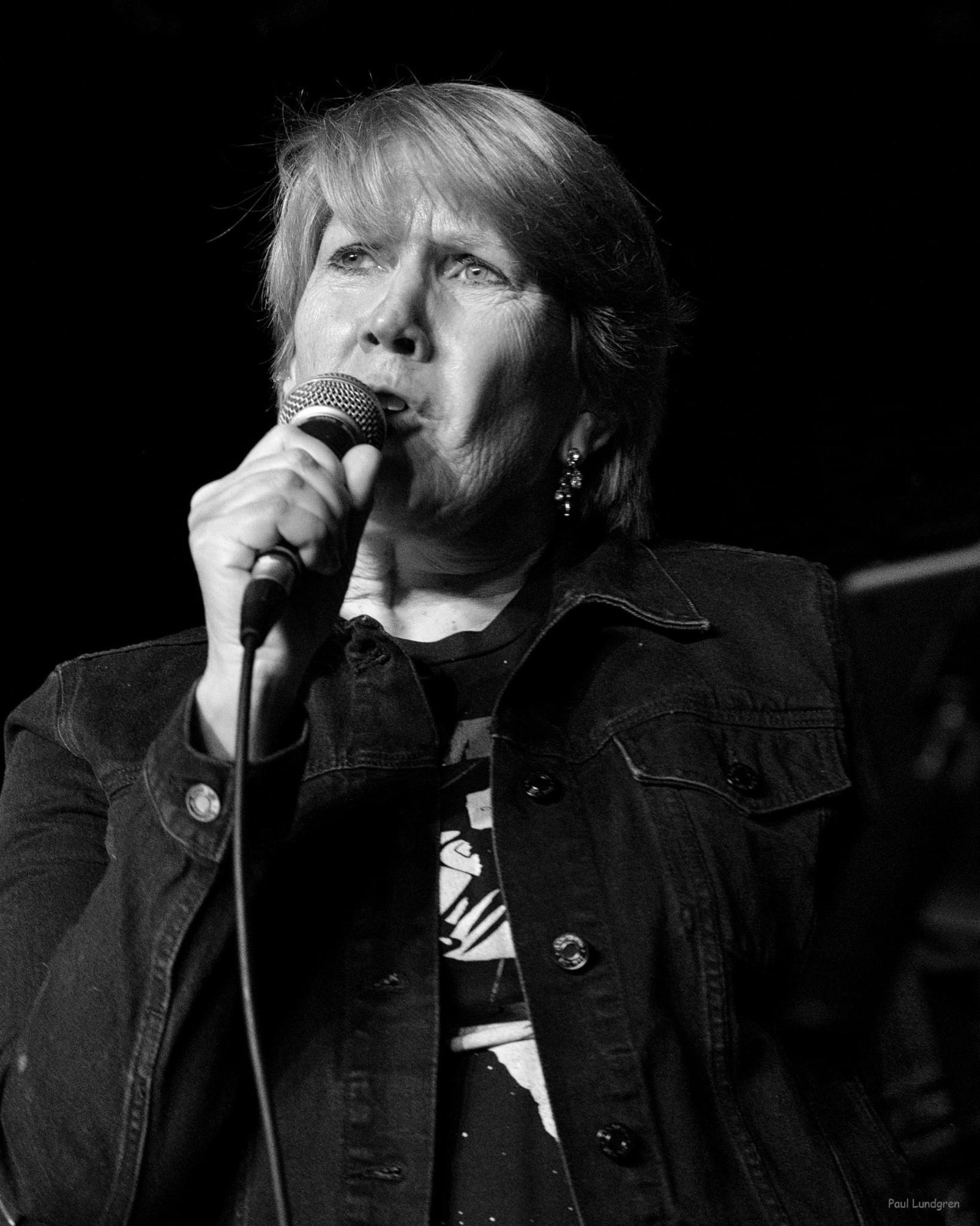
Our conversation with Mary Strand offers a closer look at the person and songwriter behind “Annunciation,” from her unusual journey through law and fiction into music to the experiences that continue to shape her approach to songwriting. Her story also demonstrates how a song can begin with a deeply personal response and grow into something that speaks to a much wider community.
Thank you to Mary Strand for taking the time to share her experiences, creative process and thoughts with DULAXI. We encourage readers to spend time with “Annunciation” and explore the wider body of work she is building with Mary Strand & The Garage.
As Strand continues toward her upcoming Christmas rock album and planned 2027 full-length project, there is clearly more to come from her distinctive blend of garage, punk and indie rock. Thank you for spending time with DULAXI and joining Oliver for this conversation. We look forward to bringing you more conversations with artists and musicians from around the world.