
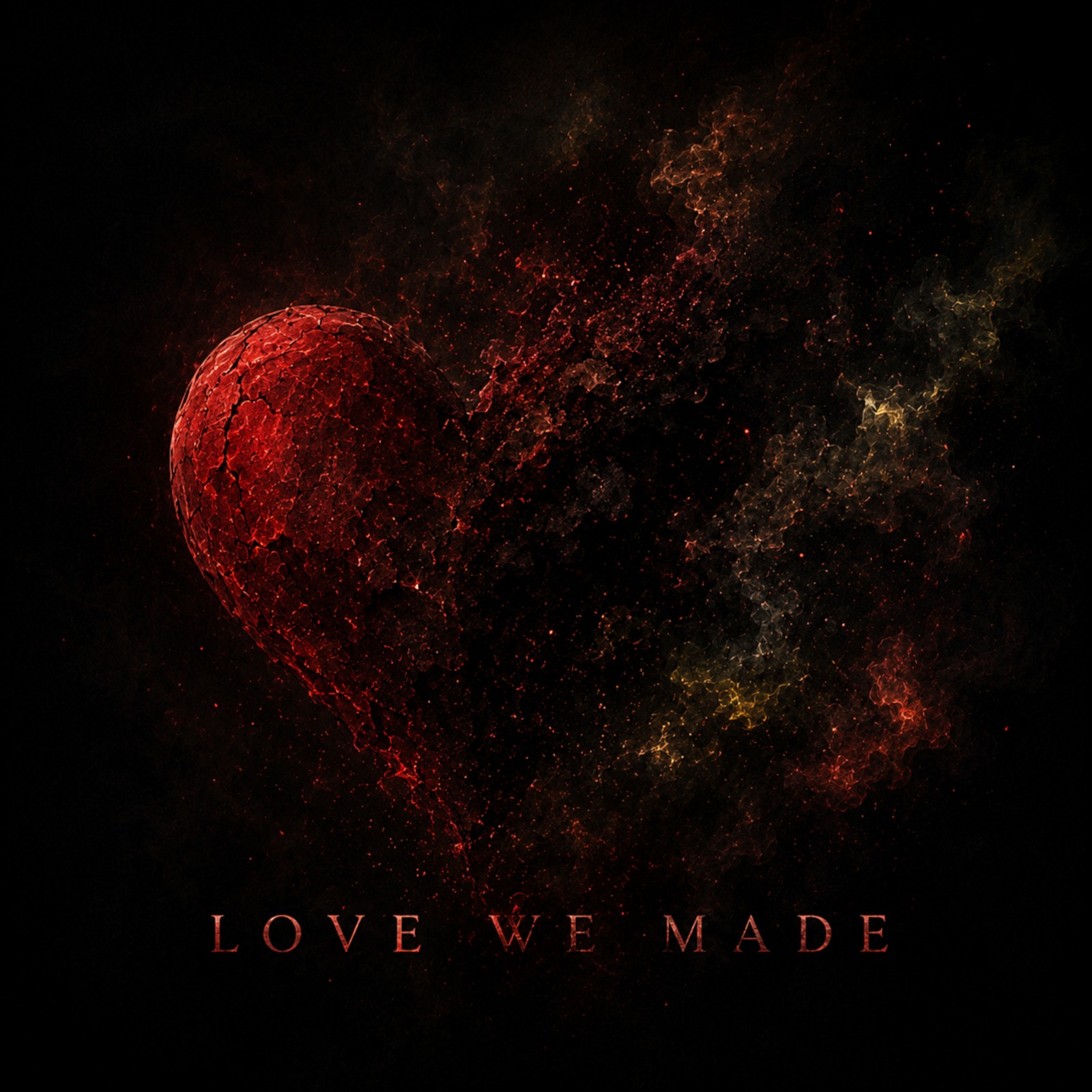
Hello everyone, it’s your host Tehillah from DULAXI, and today I’m delighted to be joined by Bodo Bifroest, the German genre-blending producer, composer and lyricist behind the atmospheric single “Love We Made.” Based in Heidenheim, Germany, Bodo Bifroest moves between Amapiano, Organic House, Afro Fusion and World Music, combining electronic production with atmospheric textures, indigenous-inspired melodies and emotionally expressive vocals. “Love We Made” was released on 7 August 2026, offering a warm and reflective exploration of fading memories, emotional distance, acceptance and human connection.
Before we begin our conversation with Bodo Bifroest, here’s what you need to know about today’s featured project.
About Bodo Bifroest and “Love We Made”
Bodo Bifroest approaches music as a musical wanderer, drawing inspiration from the Bifröst of Norse mythology, the bridge between worlds. That idea provides a fitting foundation for an artist whose work refuses to remain within one musical category. His creative world moves across Electronic, World, HipHop, LoFi, Chill, Ambient and cinematic influences, with each production shaped according to the emotion, subject or atmosphere he wants to communicate.
His relationship with music began with piano lessons and continued through a music-focused high school. During his studies, he returned to music through mixing, mashups and early production work, eventually developing a creative path that has continued for around 15 years. His professional background as an MSc and industrial engineer also informs the way he approaches production, bringing an analytical sense of precision into a process that remains strongly guided by intuition and emotion.
Bodo Bifroest works independently across the entire production process. From concepts, lyrics and composition to arrangement, mixing, mastering and artwork, he handles the different stages of his productions himself. This independence allows him to move freely between genres and production methods, including fully self-composed material and hybrid workflows that combine contemporary tools with more traditional approaches.
His catalogue also reflects the different experiences that have shaped his creative life. After an extended hiatus influenced by illness, reflection and personal challenges, music became an important source of resilience and clarity. His work can explore personal experiences as well as social and global subjects, including themes of injustice and inequality. Yet he does not approach every song through the same kind of storytelling. Some pieces are direct and lyrical, while others are built primarily around atmosphere, emotion and the space listeners can create for themselves.
“Love We Made” belongs strongly to the latter side of that spectrum. Released on 7 August 2026, the single brings together soft Amapiano, Organic House, Afro Fusion and World Music influences in a restrained and immersive setting. Gentle rhythmic movement sits alongside indigenous-inspired melodies, cinematic textures and fragile female vocals, creating an atmosphere that feels intimate without becoming overly defined.
The song is built around the idea that memories do not necessarily disappear. Instead, they can become quieter with time and distance while still retaining their emotional meaning. Rather than attaching the track to one specific story, Bodo Bifroest deliberately leaves space for listeners to bring their own experiences into the music. Love, separation, nostalgia, acceptance and hope can therefore exist within the same listening experience without the song dictating a single interpretation.
Having this brief introduction to today’s featured project, I’m sure both new listeners and longtime fans are excited to hear directly from Bodo about the experiences, ideas and creative decisions behind “Love We Made.” So, without further ado, let’s begin today’s interview.
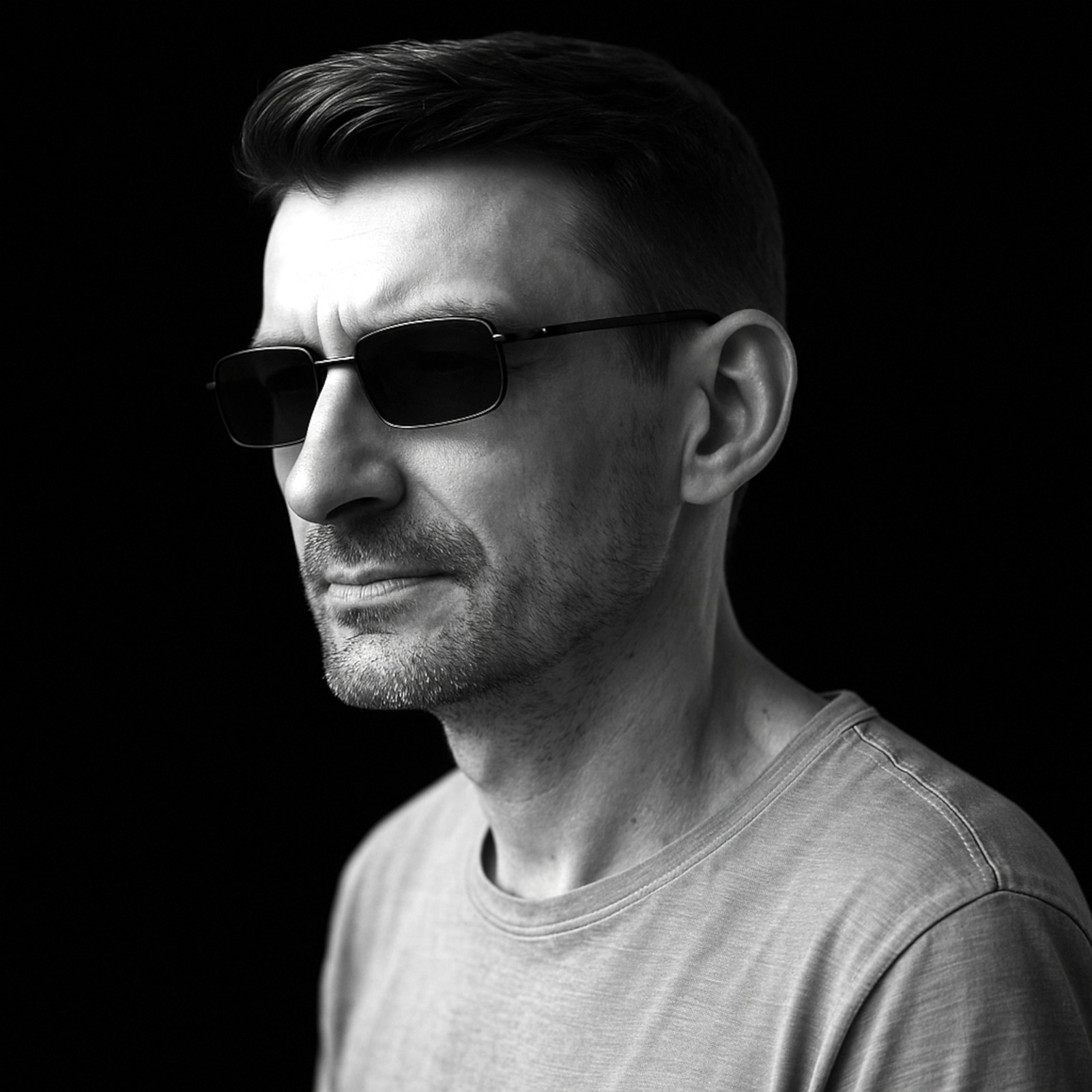
INTERVIEW SESSION
Tehillah:
Your relationship with music began with piano lessons and a music-focused high school, but later developed through mixing, mashups, and early production work during your studies. Looking back at that transition, what was happening in your life at the time that brought you back to music, and when did you realize it was becoming more than an interest and turning into a lasting creative path?
Bodo Bifroest:
Yes, I started with mixing and mashups during my studies. At first, it was simply curiosity and a way to experiment with sound. After my studies, while working in the construction industry as a Project Manager/Controller, I increasingly felt the need for a change and had already started working on my first own songs, although this was interrupted by a long period of illness.
But even then, I never completely stopped making music on my own — I just didn’t share it and had to redistribute the energy I had left. In recent years, major systemic and social injustices, including the destruction of my retirement savings, have given me a reason and ultimately the strength to return, although I still haven’t shared much of that work because I’m not able to work as quickly as I used to.
And if I can use music to point to at least some things in this world that are not okay, it feels worth continuing — even though, as an independent studio-based artist without live DJ or concert work, you can easily spend more money and time on music than you earn from it.
Tehillah:
You describe yourself as a musical wanderer inspired by the Bifröst, the bridge between different worlds, and that idea seems to reflect the way you move between electronic music, world music, hip-hop, ambient, cinematic sounds, and other styles. What does crossing those musical boundaries allow you to express that you might not be able to communicate by staying within one genre?
Bodo Bifroest:
My roots are in electronic music production, and that is still the foundation of what I do. Electronic music can express emotions and atmospheres, but there are limits to how specifically you can communicate a deeper story. And if you want to add a personal message, generic vocal samples are simply not the answer.
That is one reason I started writing my own lyrics. Some of my songs are very personal and emotional, while others deal more directly with social issues, injustice or things I have experienced myself. For me, styles like hip-hop or even some pop can offer different possibilities for that kind of songwriting — pop often gives me more space for emotional and personal themes, while hip-hop can be a natural fit for more conscious or direct subjects, although neither is limited to that.
And honestly, I simply enjoy more than one genre and am very experimental. It would be far too boring for me to make the same kind of music all the time.
Tehillah:
Over the past 15 years, your creative journey has continued through periods of personal challenges, reflection, and an extended hiatus shaped by illness. Without reducing those experiences to a simple struggle-and-comeback story, how have they changed the way you experience creativity, and what has music given you during periods when producing it may have required more from you than it gave back?
Bodo Bifroest:
I think the biggest change is that I no longer see creativity as something I have to pursue at a certain pace. I have learned to work with the energy I have available and to accept that some things simply take much longer than I would like.
Music gives me a way to process experiences, emotions and things I sometimes cannot express otherwise. Some of that work may remain private forever, because it is simply too personal and emotional and makes me even more vulnerable.
And honestly, music still often requires more from me than it gives back — in terms of time, energy and money. But it gives me something that is harder to measure: a sense of purpose and a reason to keep living and keep going. As long as I still have things I want to create and things I want to say, there is still a reason for me to continue.
Tehillah:
Working as an independent one-man music operation means that you can take an idea from its earliest concept all the way through lyrics, composition, arrangement, mixing, mastering, and artwork. How does having that level of control influence your artistic decisions, and are there moments when the engineer, composer, lyricist, and visual artist within you have different ideas about where a piece should go?
Bodo Bifroest:
Having control over the whole process gives me a lot of freedom. I can follow an idea from the first sketch all the way to the finished track without having to adapt it to someone else’s expectations. That is especially important to me because I often move between very different genres and approaches.
At the same time, having complete control can also be a disadvantage. I tend to be very perfectionistic, so there is always another detail that could be changed, improved or questioned. The composer might love an idea that the engineer wants to refine, while the visual side of me may have a completely different feeling about the artwork.
In the end, I have to let those different sides of me argue with each other — and at some point decide that the track is finished, even though I could probably keep working on it forever.
Tehillah:
Your background as an MSc and industrial engineer brings a very different kind of discipline into your creative life, particularly alongside your emphasis on intuition and emotion. How do precision and artistic instinct interact when you are making music, and have you ever found that the most meaningful creative decision was one that could not be explained logically?
Bodo Bifroest:
For me, it usually starts with intuition, although that also depends on the production process I am using. The initial idea is often driven more by feeling, experimentation and simply hearing where something could go.
Precision comes in more during the later stages. Once the main idea and the song are there, I switch much more into an analytical mode — improving vocal timing and rhythm, refining the arrangement, checking the mix and using different analysis and post-production tools to find things that may not be obvious just by listening casually.
So I would say intuition usually creates the direction, while precision helps me turn that idea into the final track. And sometimes, of course, the most important decision is still the one that simply feels right, even if I cannot explain exactly why.
Tehillah:
“Love We Made” approaches memory in a particularly open-ended way, suggesting that some memories do not completely disappear but simply become quieter. What personal understanding of memory, distance, or emotional change sits behind that idea, and how did it influence the emotional atmosphere you wanted the song to carry?
Bodo Bifroest:
For me, memories don’t necessarily disappear. They change. Something that once felt very close or emotionally overwhelming can become quieter with time and distance, while still remaining meaningful.
That idea gradually became part of “Love We Made” as the song developed. I didn’t want it to feel like an attempt to hold on to the past, but rather like accepting that things can change while the meaning of what you shared can remain.
That’s why I wanted the atmosphere to feel warm and peaceful rather than simply sad. There is nostalgia in the song, but also distance, acceptance and hope.
Tehillah:
Rather than attaching the song to one specific narrative, you deliberately leave room for listeners to connect the music with their own experiences. What made you choose emotional openness over telling a clearly defined story, and what do you hope happens inside a listener when they begin attaching their own memories to the song?
Bodo Bifroest:
I think music becomes more personal when people can bring their own experiences into it. If I define every detail of a story, there is less room for the listener to find themselves in it.
With “Love We Made,” I wanted to create an emotional space rather than tell people exactly what to remember or how to feel. If someone connects the song with a person, a place or a moment from their own life, then it becomes something personal to them.
I actually try to do the same even with songs that have fully understandable vocals and a more clearly defined story. Even when a song has a very personal background, I want to leave enough room for other people to recognize parts of themselves in it.
I don’t need everyone to hear the same story. I’d rather give them enough space to create their own.
Tehillah:
The combination of soft Amapiano, Organic House, Afro-inspired rhythms, indigenous-inspired melodies, cinematic textures, and fragile female vocals gives “Love We Made” a sound that feels both intimate and geographically open. How did you bring these different musical elements together without allowing the track to lose the emotional simplicity at its center?
Bodo Bifroest:
For me, the important thing was that none of these elements had to dominate simply because they were interesting on their own. I wanted them to support the same emotional atmosphere.
The rhythm gives the song its gentle movement, the melodic and world-influenced elements add character and a sense of place, while the vocals and cinematic textures create the more intimate side. I tried to keep the arrangement relatively open so that the individual elements could breathe instead of competing with each other.
In the end, I think the simplicity comes from having a clear emotional center. There can be quite a few different influences in a track, as long as they all serve the same feeling.
Tehillah:
There is a striking contrast between the gentle rhythmic movement of the song and the emotional weight suggested by its themes of fading memories and timeless connection. How did you use rhythm and atmosphere to make the track feel comforting rather than overwhelmingly melancholic?
Bodo Bifroest:
I think the gentle rhythmic movement naturally keeps the song from becoming too heavy. Even though the themes touch on fading memories and things that have changed, the rhythm keeps moving forward rather than simply looking back.
I also wanted the atmosphere to feel warm and spacious. The softer textures and vocals leave room for the emotions without pushing them too far. For me, nostalgia doesn’t necessarily have to be sad — it can also feel peaceful, comforting and even hopeful.
So I think the balance comes from having both elements present: the emotional weight of looking back, but also the feeling that life continues to move forward.
Tehillah:
Your music often draws from personal experiences while also engaging with social and global contexts, yet “Love We Made” is much more focused on a universal emotional space. What did stepping away from a specific personal or social message allow you to explore about human connection that a more direct lyrical approach might not have revealed?
Bodo Bifroest:
I think emotion was simply more important for this track than telling a clear and specific story. “Love We Made” is still a deep electronic track at its core, and I felt that a more open emotional approach suited the music better.
I do have other songs with much more specific stories and personal backgrounds, but they don’t all need to be told in the same way or at the same time. Some may be too personal for me to ever feel comfortable sharing.
With “Love We Made,” leaving things more open allowed the focus to stay on the feeling itself — connection, distance, memory and hope. That gives listeners the freedom to bring their own experiences into the song rather than having to follow mine.

Tehillah:
You have described music as both an artistic outlet and a source of resilience while navigating ongoing challenges. When you listen back to a piece such as “Love We Made,” what part of yourself do you hear in it that may not be immediately obvious to someone encountering the song simply as a relaxed, atmospheric track?
Bodo Bifroest:
I think you can hear a quieter and more vulnerable side of me in “Love We Made.” It is genuinely a relaxed and atmospheric track, but for me there is more personal history and emotional meaning behind it than may be immediately obvious.
I also hear persistence in it. The fact that I am still creating music despite everything that has happened is part of the track too, even if you cannot hear that directly.
Maybe that is what is less obvious: it isn’t simply a chill song about memories. For me, it also represents the ability to look back at something emotional without getting completely lost in it, and to keep moving forward.
Tehillah:
Your creative process can move between traditional production methods and hybrid workflows that combine contemporary tools with more established approaches. When creating an emotionally delicate piece like “Love We Made,” how did you decide which elements needed organic treatment and human character, and which could benefit from the precision and possibilities of modern production technology?
Bodo Bifroest:
I don’t really separate my workflow into “organic” and “technical” elements. It depends much more on the production process and the material I am working with.
When I use modern tools, I don’t simply take the first result and use it as the finished track. I direct, remix and curate the process until I have material that fits the idea I have in mind. By that point, several weeks may already have passed. After that, I work on the track in the DAW in a much more conventional way, which is especially important for the vocals.
Ultimately, I try to use whatever tools fit a song and are useful at each stage to create the best final listening experience.
Tehillah:
The song is designed for quiet evenings, late-night drives, unwinding, and moments when memories naturally surface. How important is the listening environment to the way you imagine your music being experienced, and what kind of emotional state were you hoping to create for someone hearing “Love We Made” alone at the end of a long day?
Bodo Bifroest:
The listening environment can definitely influence how a song is experienced. “Love We Made” is the kind of track I can imagine working particularly well when things around you become quieter — in the evening, on a late-night drive, or simply when you have some time to yourself.
I wasn’t trying to create a specific emotional state that the listener has to reach. I would rather give them a few minutes to slow down, relax and let their own thoughts or memories surface.
If someone finishes the song feeling a little calmer, perhaps reflecting on something from their own life, or simply having enjoyed the atmosphere, that is enough for me.
Tehillah:
Your catalogue reflects an ongoing creative process rather than a fixed formula, with your sound continuing to evolve according to experience and perspective. After 15 years of creating music and returning to your work through different personal chapters, what has changed most significantly in the way you define artistic growth?
Bodo Bifroest:
I think my definition of artistic growth has changed quite a lot. Earlier on, I mainly saw growth as learning more, improving my production skills and becoming technically better.
Today, I see growth more in what I can express and how freely I can explore different ideas. I am less concerned with fitting into a particular genre or following a fixed formula. Experience has made me more comfortable with experimenting, changing direction and allowing different sides of my musical personality to coexist.
For me, artistic growth is not just about becoming better at making music. It is also about becoming more confident in making my own decisions and finding the freedom to create what feels right to me.
Tehillah:
Your independence gives you the freedom to move between fully self-composed productions, hybrid approaches, different languages, vocal styles, and multiple genres. As that musical world continues to expand, what boundaries are you most interested in crossing next, and are there particular sounds, cultures, themes, or forms of storytelling you want to explore more deeply?
Bodo Bifroest:
I don’t really see the next step as choosing one particular genre. I want to keep crossing boundaries between electronic music, different world influences and more personal songwriting.
At the moment, I am still very much in what I would call a “story mode.” I have quite a few personal and socially conscious tracks in the pipeline, often with Hip-Hop or Pop influences. Some of them are quite intimate and deal with experiences that I haven’t felt ready to share yet. Others address social injustice, inequality and things that I feel are not right in the world.
I will probably also start sharing some of my first German-language tracks soon — those are probably some of the songs with the most personal content and context behind them. A lot of this material has actually been in preparation for years; I just haven’t finished and released all of it yet. Partly because I apparently have a slight problem with focusing on one thing at a time. 😉
After that, I want to return more strongly to what I would consider my core musical directions: electronic music, with and without world influences, as well as more atmospheric and melodic productions. I already have quite a lot of material in that direction, so I am looking forward to sharing more of it.
I’ve also put up a small poll on YouTube (Community) to help me decide what to prioritize next, so if you happen to come across it, feel free to vote. 😉
Tehillah:
At the heart of “Love We Made” is the coexistence of nostalgia and hope, which gives the song a feeling of looking backward without becoming trapped in the past. As you continue building your artistic journey around emotion, resilience, and connection, what do you want listeners to ultimately carry with them after the music has ended?
Bodo Bifroest:
I don’t think there is one specific thing I want everyone to take away from “Love We Made.” For me, it would be enough if the song gives someone a few minutes to slow down, remember something meaningful, or simply enjoy the atmosphere.
If it reminds someone that something can have been real and meaningful even if it didn’t last forever, that would be a beautiful thing. And maybe that looking back doesn’t always mean wanting to go back. Sometimes you can appreciate what was, accept what has changed, and still move forward.
With my music in general, I think it depends very much on the song. Some of the tracks I am working on are meant to be personal and emotional, others are more conscious and deal with things I feel need to be said, while others are simply there to create an atmosphere, make people move or give them a few minutes to escape.
So I don’t necessarily want every song to leave the same message. I would rather give people something they can connect with in their own way. If something of the music stays with them after it ends — whatever that may be — I am happy with that.
“Love We Made” finds strength in the space between memory and movement, creating a world where reflection does not demand a return to the past. Bodo Bifroest gives the listener room to feel, remember and interpret without closing the door on what comes next.
~ Tehillah (DULAXI Team)
EDITORIAL PERSPECTIVE
“Love We Made” works through atmosphere rather than explanation. Its gentle rhythmic foundation gives the track forward motion while the spacious production creates room for its emotional ideas to settle naturally. What stood out most to me was the balance between warmth and restraint. The song never forces its meaning, allowing the vocals, textures and melodic details to create an intimate space where listeners can bring their own memories. That openness feels central to Bodo Bifroest’s creative approach and gives the release a quiet emotional staying power.
~ Tehillah (DULAXI Team)
CLOSING
Our conversation with Bodo Bifroest offers a thoughtful look at an artist whose creative identity has been shaped by experimentation, independence, personal experience and a willingness to cross musical boundaries. From the story behind “Love We Made” to his approach to production, artistic growth and future projects, he has shared an honest perspective on what it means to continue creating without forcing the process into a fixed formula.
Thank you to Bodo Bifroest for taking the time to speak with DULAXI and for allowing us to explore the ideas, experiences and creative decisions behind “Love We Made.” For readers who have not yet experienced the release, this is a song that rewards a quiet setting and an open mind, particularly when there is enough space to let its atmosphere meet your own memories and emotions.
We encourage you to continue following Bodo Bifroest as his musical journey develops across electronic music, world influences, personal songwriting and new forms of storytelling. There is clearly more to come from this ongoing creative process.
Thank you for spending time with DULAXI. This has been Tehillah, and we look forward to bringing you more conversations with artists whose music deserves to be heard and whose stories deserve to be explored.