
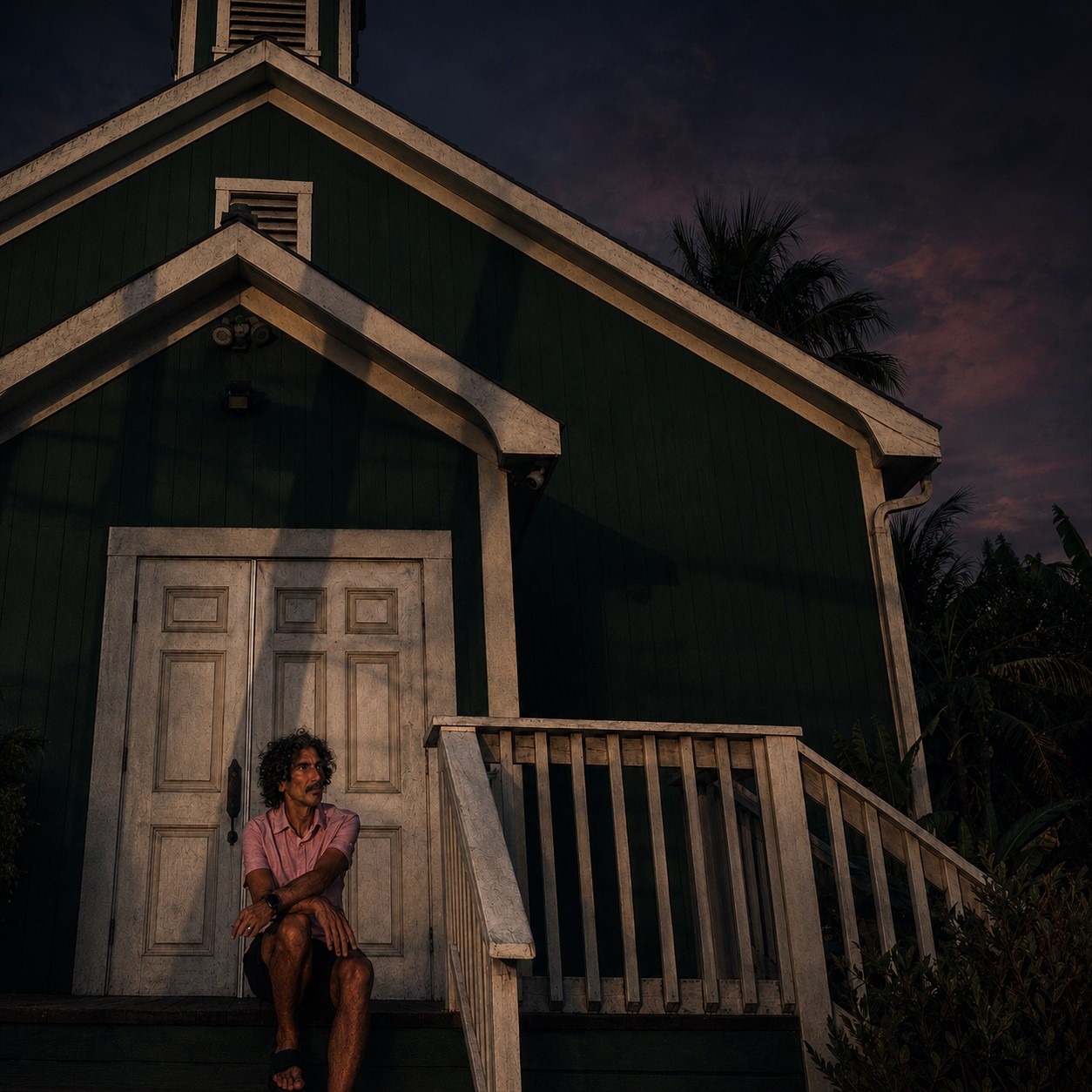
Hello everyone, it’s your host Oliver from DULAXI, and today I’m delighted to be joined by Gianfranco Pescetti, an Italian-American songwriter, producer, and bassist whose music brings electronic textures together with organic performances. Based in Haiku, United States, Gianfranco has developed an artistic identity shaped by his experiences in professional ballet, songwriting, music production, and bass playing. His latest single, “Heidi,” released on September 25, 2026, is the lead single from his forthcoming third album, this side of the door, due November 6, 2026. Rooted in gratitude, loss, and the lasting influence of those who believe in us, the song reflects on a friendship that helped shape his development as a songwriter. Before we begin our conversation with Gianfranco, here’s what you need to know about today’s featured project.
About Gianfranco Pescetti
Gianfranco Pescetti’s creative life has moved through several artistic disciplines, but music has remained a constant presence throughout his journey. An Italian-American songwriter, producer, and bassist, he brings together electronic textures and traditional instrumentation to explore memory, atmosphere, and transformation. His background as a professional ballet dancer has also influenced the way he approaches expression, rhythm, movement, and the relationship between different art forms.
His previous releases reflect an artist willing to explore different ways of communicating emotion through sound. His indie-electronica album Love Is Rain was written and recorded in 2004 before being released in 2014. A decade later, he released Daystar Nocturnal, an instrumental electronic album that challenged him to express emotion without lyrics or the human voice. With his forthcoming third album, this side of the door, Gianfranco returns to a singer-songwriter direction, bringing his voice and personal experiences back to the forefront.
The album’s lead single, “Heidi,” released on September 25, 2026, tells a story that began in the early 1990s, when Gianfranco was playing in a San Francisco band called Borgia. It was during this period that he met Heidi Vincent, a cellist, architect, painter, designer, and multidisciplinary visual artist whose creativity extended across several fields. Their friendship developed through music and a shared appreciation for painting, architecture, design, live performances, and other artistic experiences. For Gianfranco, Heidi was someone who demonstrated how creativity could become a way of life rather than something restricted to a single profession.
Heidi gave Gianfranco a 1977 Fender Precision Bass, an instrument that remains an important part of his musical life. Years after she moved to New York, the two gradually lost touch. When Gianfranco later travelled to the city and attempted to find her, he discovered her memorial instead. The news was deeply painful, bringing the shock of her death together with the regret of having waited too long to reconnect.
“Heidi” also became the starting point for this side of the door. It was the first song Gianfranco wrote for the album, and completing its production helped him understand the emotional direction of the larger project. Although the forthcoming record retains the electronic elements that have characterised his previous work, it moves further towards organic performances and the expressive possibilities of the human voice. Following the instrumental exploration of Daystar Nocturnal, the new album reflects a desire to communicate personal experiences more directly and create music that listeners can connect with through their own lives.
As this side of the door approaches its November release, the single introduces a chapter of Gianfranco’s work that places greater emphasis on the human voice, personal experience, and the connections that continue to shape us.
Having this brief introduction to today’s featured project, I’m sure both new listeners and longtime fans are excited to hear directly from Gianfranco about the story behind “Heidi,” his creative evolution, and the experiences that continue to influence his music. So, without further ado, let’s begin today’s interview.
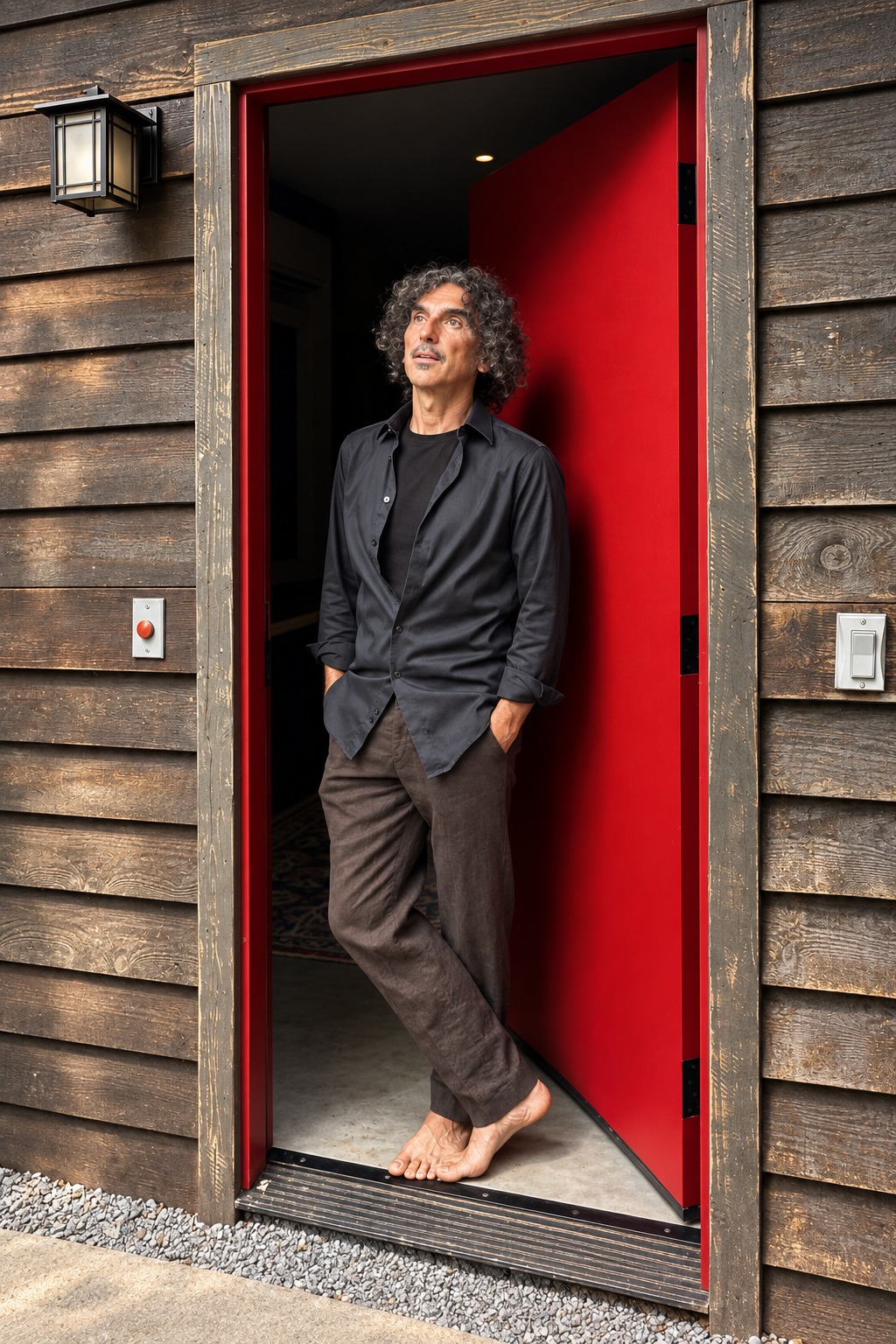
INTERVIEW SESSION
Oliver:
Before we talk about “Heidi,” I’d like to begin with you as a person and artist. You have moved through different creative worlds, including professional ballet, songwriting, production, and bass playing. How have those experiences shaped the way you understand movement, expression, memory, and storytelling in your music today?
Gianfranco Pescetti:
I think the urge to express myself came before I really understood what that meant. As far back as I can remember, I wanted to be a singer, but specifically a storyteller through song. I’ve always been in awe of people who are able to create whole worlds for themselves and invite you into them. Ballet entered my life almost by accident: a girlfriend was taking classes, I went along one day and was recruited. Fast-forward five years and I was a professional ballet dancer, but music was always there, lurking. I loved the whole world of performance too: being in the dressing room waiting to go on, the lights, the costumes, the sets, that moment when an ordinary space suddenly becomes another world. I think all art forms are incredibly connected. Beyond the discipline ballet instills in you, the same ideas keep appearing: timing, rhythm, color, dynamics, how you occupy space, and how you occupy silence. Whether I’m writing a song, playing bass, producing a record, or thinking about movement, I’m drawing on many of the same instincts. The medium changes, but the impulse underneath it really hasn’t.
Oliver:
Your work brings together electronic textures with organic performances, while your earlier releases have moved between indie-electronica and instrumental electronic music. What draws you to the space between electronic sound and human performance, and how do you know when those two elements are working together in the way you want?
Gianfranco Pescetti:
There’s something about electronic music that has always grabbed me, particularly when it’s used to create an atmosphere that serves the song: a texture or sound that might be impossible to achieve with traditional instruments. That’s really how I relate to synths and programmed beats. They’re tools for creating the world I want the song to inhabit. I’m not a technical nerd about it, though, and I don’t have a process that I repeat from song to song. Each new song is a new adventure. At the same time, I’m a sucker for traditional instruments. Even Daystar Nocturnal, which was ostensibly an electronic album, had plenty of them. I also love when something is slightly off: a bit of imperfect timing, a crack in my voice, something that reminds you there’s a human being in there. Sometimes those are the things I become most attached to. For me, the interesting part is finding the balance between those organic elements and the purely electronic ones. this side of the door definitely leans further toward the organic end of that spectrum. I’ve had the privilege of working with some amazing players who brought exactly the human element I was looking for. The electronic tapestry is still there, but this time it’s slightly veiled.
Oliver:
“Heidi” is rooted in gratitude and loss, but at its centre is also the experience of someone believing in you before you are able to believe in yourself. What did Heidi Vincent see in you as a songwriter that you were still struggling to recognise in yourself at the time?
Gianfranco Pescetti:
I met Heidi at a pretty fragile moment in my life. I was transitioning from ballet to making music my primary focus, and it had been a terribly difficult decision. I could easily have had another fifteen good years as a professional dancer. I was earning a living, and I was walking away from something I knew I could do. But I had reached a point where I felt I wasn’t being true to myself. While I was still dancing, I’d been studying bass and piano seriously, and I’d been writing songs since childhood. But writing songs and believing I had something worth saying were two different things. Heidi came into my life at exactly the right moment. We were in a band together, and she was this extraordinary Renaissance woman: a cellist, painter, architect, designer. She seemed capable of doing anything she put her mind to, and being around her reinforced my own sense that all forms of art are connected. I was insecure about my songwriting, but I was bringing songs into the band and she loved them. She kept encouraging me to write and, perhaps more importantly, to trust what I was doing. Coming from someone whose artistry I admired so much, that meant an enormous amount to me. She also gave me the bass I still play today.
Oliver:
You met Heidi while playing together in Borgia in San Francisco in the early 1990s, and your relationship extended beyond music into painting, architecture, and design. What do you remember most clearly about that period of your life and the creative connection you shared with her?
Gianfranco Pescetti:
Heidi lived in one of the most beautiful industrial spaces you could imagine, right across the train tracks in Berkeley. She had transformed it into this extraordinary combination of art studio and living space, and every inch had meaning. That space was a creative home for us. We rehearsed there, made things, cooked, ate, laughed. Our friendship was never confined to music. We’d go to art shows, rock concerts, the ballet, the symphony, really anything that interested us. What I remember most is that there wasn’t much separation between art and everyday life with Heidi. Creativity was simply the way she lived.
Oliver:
Heidi was a cellist, architect, and multidisciplinary visual artist, which means her creative life crossed several disciplines. How did those different sides of her personality influence the way you experienced her as a friend and musician?
Gianfranco Pescetti:
One of the biggest lessons I took from Heidi was not to compartmentalize the different parts of my creative life. She moved so freely between music, architecture, painting, and design that the boundaries almost disappeared. Being around her taught me to let those things overlap, because ultimately they’re connected. That idea still shapes the way I work now.
Oliver:
As you were transitioning from professional ballet into music, Heidi encouraged you to write original songs and trust your own voice. Looking back now, how significant was her encouragement in giving you the confidence to pursue songwriting more seriously?
Gianfranco Pescetti:
It was hugely significant. I had left a life I knew for one that felt much less certain, and having someone whose artistic judgment I trusted tell me, essentially, “keep going,” mattered enormously. It took me a while to understand how important that kind of belief was, but I understand it now.
Oliver:
After Heidi moved to New York, the two of you eventually lost touch, and years later you learned that she had died while you were looking for her. What went through your mind when you discovered that she was no longer there, and how long did it take before you were able to turn that experience into a song?
Gianfranco Pescetti:
I looked her up online, hoping I might find an address or some way of reaching her, and instead I found her memorial. It was deeply traumatic. There was the shock of losing her, but also the realization that I had waited too long to reconnect, and the finality of knowing I would never see her again. It took me five years before I was able to turn any of that into a song.
Oliver:
Writing “Heidi” became a way for you to finally express gratitude that had never been fully expressed while she was alive. Was there something specific you wished you had told her, or does the song represent a broader feeling of appreciation for the role she played in your life?
Gianfranco Pescetti:
The song definitely became cathartic for me. It created a kind of connection to her that I didn’t expect. Every time I rehearse it, I feel a little closer to her. It’s almost like having her picture in my life, but set to music. So I think it represents something broader than anything specific I wish I had said, other than wishing she really knew how deeply grateful I was. It’s my way of acknowledging what she gave me, and keeping that connection with her alive.
Oliver:
One of the most personal details surrounding the recording is that you played the bass part on the 1977 Fender Precision Bass that Heidi gave you years ago. What did it feel like to hold and play that instrument while recording a song written in her memory?
Gianfranco Pescetti:
It was incredibly meaningful. The bass Heidi gave me became an important presence not only in “Heidi,” but in the making of the album as a whole. “Heidi” was the first song I wrote for the record, and in many ways it guided me toward the other thirteen songs. So playing that bass felt like something that went beyond the musical part of it. It became almost an entity in the process, a physical connection to her that helped shape the emotional world of the album.
Oliver:
There is something powerful about turning an object connected to someone into part of a new creative work about that person. Did using Heidi’s bass change your relationship with the song during the recording process, or did it feel like a natural continuation of something you had already shared?
Gianfranco Pescetti:
Beyond all the emotional connections I have to Heidi, the bass became a kind of catalyst. She gave it to me in 1994, and by the time I started writing this album in 2024, it felt as though all the life I had lived in between had somehow accumulated around that instrument. Using it on “Heidi” felt less like a symbolic gesture and more like a natural continuation of something that had been with me all along.
Oliver:
“Heidi” is ultimately a song about more than grief. It is also about the people who quietly influence our lives and sometimes give us the confidence to become the person we eventually grow into. How has Heidi’s influence continued to appear in your creative life, even after all these years?
Gianfranco Pescetti:
She still shows up in the way I think about creativity. One of the things I learned from her was to keep making things without getting too caught up in external approval, especially now. Creativity itself has to remain the reason for doing it.
Oliver:
The song arrives as the lead single from your forthcoming album, this side of the door. What does “Heidi” establish about the emotional and creative direction of the album, and why did it feel like the right song to introduce listeners to this new chapter of your work?
Gianfranco Pescetti:
When I first started writing for this album, I didn’t really know where it would take me. I knew from the beginning that I wanted to make an album with lyrics again, that I wanted to sing on it, and that I wanted it to be deeply personal and honest. I also knew that I wanted to write a song for Heidi. Once I finished producing “Heidi,” I started to see the direction and the overall arc of the album more clearly. It became a kind of emotional starting point for everything that followed. It may not be the most obvious choice for a lead single, but it has enormous value to me, and because so much of the album grew out of it, it felt like the right song to introduce this chapter.
Oliver:
Your forthcoming album follows Daystar Nocturnal, an instrumental electronic release, but this side of the door brings you back towards a singer-songwriter direction. What prompted that return to songwriting and the human voice, and what feels different about expressing yourself through songs with lyrics after working instrumentally?
Gianfranco Pescetti:
Daystar Nocturnal was a challenge I set for myself: could I express emotion without words? When you take lyrics and the human voice away, the music becomes much more naked, and I wanted to prove to myself that compositionally I had reached a place where I could stand on my own two feet. By the time I began this side of the door, I felt that enough life had gone by that I had experiences I wanted to share more directly, and that perhaps I had something of value to offer. Not because I thought I had answers, but because someone might recognize something of themselves in those experiences and relate. Coming back to lyrics and to my voice allowed me to be more specific and more exposed.
Oliver:
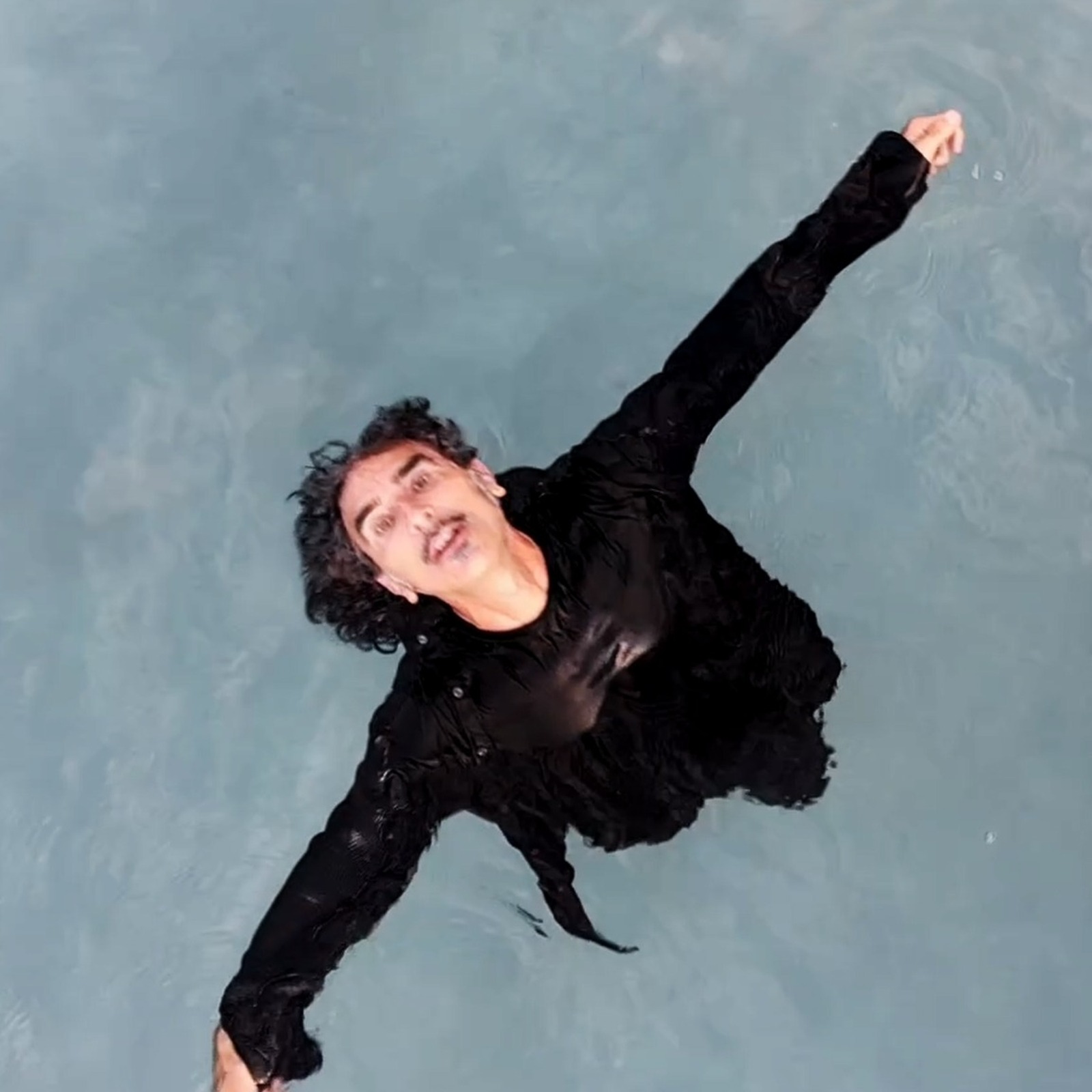
Memory, atmosphere, and transformation are recurring interests in your artistic work. How do those ideas influence the way you approach songwriting, particularly when you are writing about people or moments from the past that have changed meaning over time?
Gianfranco Pescetti:
Memory is our version of things. The way we remember is already an interpretation of the past, so when I write about it I’m often more interested in the atmosphere of a memory than in documenting every detail literally. I don’t really write in a confessional style. I tend to approach lyrics in a more surreal way, with a little splash of magical realism. Usually I know what I want a song to be about. Then I free-write around the feeling or memory and gradually strip things away until what remains feels essential. Transformation is part of life too. I’m not the same person I was even two years ago, so what a memory means to me changes as I change.
Oliver:
You are approaching “Heidi” not simply as a memorial song but as an expression of gratitude. What did you learn about grief, memory, and appreciation through the process of writing it that you did not necessarily understand before you began?
Gianfranco Pescetti:
I already knew that grief doesn’t really disappear; it changes form. Gratitude and regret can exist alongside each other, and sometimes they can feel like one and the same. Writing the song also reminded me that art can be a very powerful tool for healing.
Oliver:
When you think about the people who have encouraged you throughout your life, how important is that kind of creative belief in shaping an artist’s development, and has making “Heidi” changed the way you think about offering that same encouragement to others?
Gianfranco Pescetti:
When I look back to when I was a boy, there were very few people who really encouraged me, and to this day I remember exactly who they were. I also know that when you don’t receive that encouragement, for whatever reason, it can have a lasting effect on a young person’s confidence. I’m always in awe of people who are making something, whether it’s a piece of music, a painting, or anything else, and I always make sure to let them know. You never really know how much a few words of encouragement might mean to someone, or how long they might carry them.
Oliver:
Your work has continued to evolve across more than a decade, from Love Is Rain to Daystar Nocturnal and now this side of the door. When you look across those different periods, what changes in yourself do you hear most clearly in the music, and what parts of your artistic identity have remained constant?
Gianfranco Pescetti:
Love Is Rain was actually written and recorded in 2004, although I didn’t release it until 2014. There was a lot of fear around putting myself out there as a solo artist at the time, and I definitely got in my own way. The biggest practical change since then has been technology and the amount of control I have over the recording process. Love Is Rain was recorded at My Sonic Temple in San Francisco, whereas both Daystar Nocturnal and this side of the door were made in the home studio I built over the course of about a year. Having that space has allowed me to become much more involved in every part of making a record. What hasn’t changed is that I’m still a sucker for blending electronic sounds with traditional instruments, and I still write with the same intention of triggering an emotional response in myself first. It has to move me first.
Oliver:
Finally, as you prepare to release this side of the door, what are you hoping listeners understand about where you are now as a songwriter, producer, and artist? Beyond the music itself, what do you hope people carry with them after hearing “Heidi” and learning the story behind it?
Gianfranco Pescetti:
I’ve always made music with the intention of creating something I can be proud to put out into the world, and with this side of the door, I really feel I achieved that. I also feel more confident now in trusting my instincts, both as a songwriter and as a producer. There’s a line on the album that says, “Now I can really play, nothing to lose, nothing to gain,” and that pretty much sums up where I am now. As for “Heidi,”, if anything, I hope it makes people think about the people who have shaped them, and about the importance of showing appreciation while we still have the chance.
Through “Heidi,” Gianfranco Pescetti turns a deeply personal story of friendship and regret into a reminder that encouragement can change the course of a life. His story also leaves us with a question worth considering: have we told the people who believed in us how much their belief mattered?
~ Oliver (DULAXI Team)
EDITORIAL PERSPECTIVE
What stands out about “Heidi” is how a friendship from decades ago continues to influence Gianfranco’s creative decisions today. The bass Heidi gave him in 1994 connects the song’s personal history to its recording, while the single’s place on this side of the door reflects his return to songwriting with lyrics after exploring instrumental electronic music. His reflections also reveal a consistent interest in combining electronic sounds with traditional instruments, allowing personal experiences to inform his work without limiting his artistic imagination.
~ Oliver (DULAXI Team)
CLOSING
Thank you to Gianfranco Pescetti for joining us at DULAXI and sharing the personal history behind “Heidi.” Our conversation has offered a thoughtful look at his transition from professional ballet to music, the friendship that helped him trust his songwriting, and the experiences that continue to shape his creative life.
“Heidi” is more than a remembrance of someone important to Gianfranco. It also encourages listeners to consider the people who have helped them grow and the importance of expressing appreciation before an opportunity passes. We invite you to listen to the single and explore Gianfranco’s music as he prepares to release this side of the door on November 6, 2026.
Thank you, Gianfranco, for sharing your story with us, and thank you to everyone who has spent time with DULAXI. We look forward to bringing you more conversations with artists whose experiences and creative work offer new perspectives on music and the people behind it. Until next time, keep listening and discovering new music with DULAXI.