

Hello everyone, it’s your host Oliver from DULAXI, and today I’m delighted to be joined by Jude Austin, the artist behind O, a Sydney, Australia-based pop-alternative-blues songwriter, singer, and musician. Jude joins us to discuss his first major release, “Find Me at Home,” released on 26 February 2026, and the deeply personal journey that shaped the song.
Jude’s story is one of music, identity, filmmaking, self-expression, and a long process of finding the confidence to step fully into his own artistic voice. With around 200 songs written throughout his journey, music has served as both a creative outlet and a place of honesty through experiences of bullying, domestic violence, the breakdown of close family relationships, and his transition into his identity as a man.
Before we begin our conversation with Jude Austin, here’s what you need to know about today’s featured project.
About Jude Austin
Jude Austin, performing as O, describes himself as a pop-alternative-blues songwriter, singer, and musician whose music is intended to become a portal through which listeners can discover something within themselves. His journey toward that artistic identity has developed across music, film, performance, production, and visual storytelling, with each discipline contributing another dimension to the way he understands creative expression.
Jude studied the Diploma of Music Performance at South Bank TAFE in 2022, performing original material and covers both solo and with bands. During this period, one of his teachers, Peter T., who had 40 years of experience, described Jude as having the most unique voice he had ever heard and believed that, with the right studio, recording, and song, he could hear that voice on radio. That voice itself has been central to Jude’s story. During his transition, he lost his singing voice for eight months before regaining it as a male voice and undertaking years of vocal retraining.
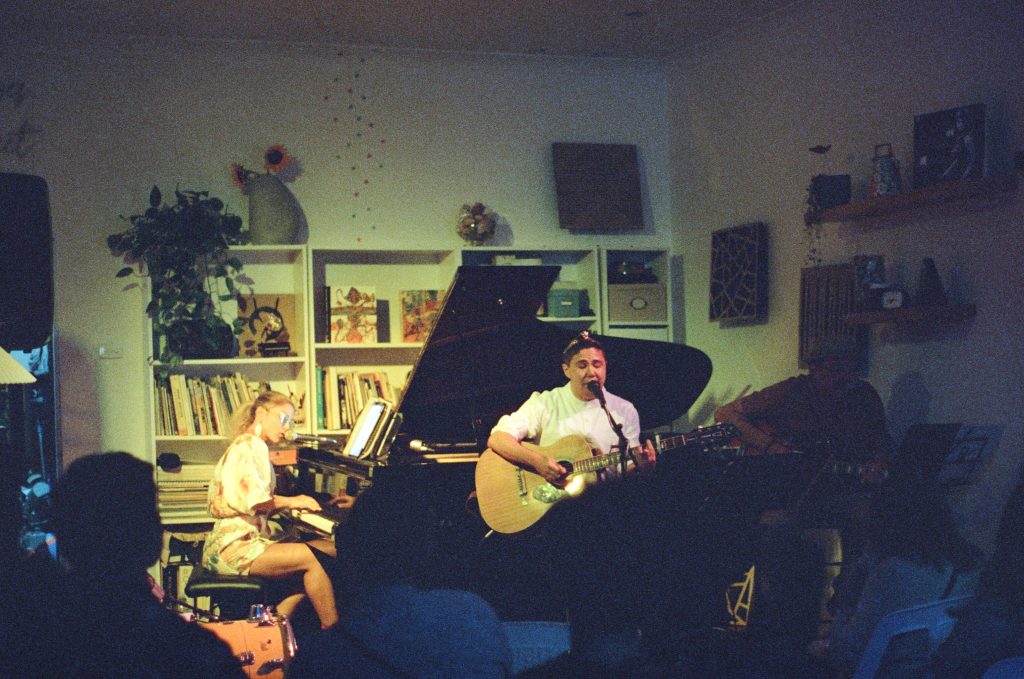
His musical education continued through a Diploma of Music Business at TAFE Ultimo and Music Vocal Production at Ableton Liveschool, which helped him develop the skills to self-produce and promote his music. In 2025, he also completed a Film Scoring Open Academy course at the Conservatorium of Sydney. His development as a performer has included a January 2024 performance with a three-piece band at the Gasoline Pony in Marrickville and a sold-out original show with a four-piece band at Hayes Street Studio in April 2025.
Music, however, is only one part of Jude’s creative world. He has spent 15 years working professionally as a film producer and cinematographer, working on productions involving artists including RÜFÜS DU SOL, Kesha, Baker Boy, and Billie Eilish. His work with RÜFÜS DU SOL extended across eight of their music videos, while his work on a Baker Boy production contributed to a team that was nominated for an ARIA for Best Music Video. These experiences placed Jude behind the camera and inside the visual worlds of established artists long before he began stepping further into his own musical spotlight.
“Find Me at Home” represents an important meeting point between those different aspects of his life. The song began in 2021, only two weeks into Jude’s transition, after a deeply negative encounter with a relative following Jude’s coming out. In a single songwriting session, Jude expressed the experience to Anthony Snape, who responded with driving, accordant chords. Jude developed the lyrics and melody, while both contributed vocals. The song came together in less than an hour, becoming a cathartic expression of the anger, fear, hurt, and vulnerability Jude was experiencing at the time.
His creative ambitions extend beyond this first major release. Jude plans to launch a Kickstarter campaign on 10 October 2026 to help fund the recording and pressing of his debut album, with the album planned for release in September 2027. He also intends to direct his own music videos, continuing the relationship between his musical and filmmaking practices.
At the heart of all of this is an artist who sees music as an ongoing process of discovery. From writing songs during difficult periods to developing his own production skills, from rebuilding his singing voice to performing his original material live, Jude Austin, O is building a creative world in which music, film, performance, and personal experience continually inform one another.
Having this brief introduction to today’s featured project, I’m sure both new listeners and longtime fans are excited to hear directly from Jude. So, without further ado, let’s begin today’s interview.
INTERVIEW SESSION
Oliver:
Before music became such an important part of your story, you experienced some very difficult periods involving domestic violence, bullying, changes within your family, and the deeply personal process of transitioning into your identity as a man. Looking back at those years, which experiences had the greatest impact on the person you became, and how did they change the way you understand your own voice and identity?
Jude Austin, O:
Amazing question. Actually music came first and it informed and impacted my physical transition which came later. I believe music helped me find my own point of view amongst the noise and realise I was a man.
Before music came into my life I do think the bullying I experienced in high school and challenges beyond cultivated in me a desire to treat others with kindness. As I experienced so many years of ostracisation and at times violence, it was a long hard road to finding my voice. But I do understand now that it was in that quiet isolation from a world that didn’t want me that I was able to find something gentle and unique.
I spent a lot more time with nature, writing, and with my parrot- this is what brought me to a still quiet place that connected me with the universe. I’ve seen that what others that are more popular in society miss out on is often the beauty of their own connection to something beyond.
They don’t often need to go looking, so they don’t, and they miss out.
Oliver:
You have written around 200 songs throughout your journey, describing songwriting as something that helped carry you through experiences that were difficult to process. What was it about putting those feelings into songs that gave you something ordinary conversation could not, and when did you first realise that music could become a place where you could be completely honest with yourself?
Jude Austin, O:
Music has always been a place I could be completely honest with myself which is something most (nearly all) ordinary conversations cannot do. I believe the page has been the one safe space I could return to at any point, no matter how overwhelming life got. The page was always safe, and it was always with me- I could be truthful. The beauty of the page is it grows and grows, changing your perspective, your point of view, and then by extension, the world around you changes.
Songwriting came into my life in my early 30s and this was I think only after I had exhausted all modes of external validation and self-expression. I was forced to turn inward, and that’s where the words and songs turns out were living!
Oliver:
Your journey with your voice is particularly powerful because you lost your singing voice for eight months during your transition, eventually regained it as a male voice, and then spent years retraining it. How did losing and rebuilding your voice affect your relationship with singing, and did that experience change what you believe your voice represents beyond simply being a musical instrument?
Jude Austin, O:
Yes, phenomenal questions.
Yes, the transition of my being, my self, my societal function, my physical singing voice are all tied into one. The transition from a place of being in a mis-aligned body represented my own feeling of complete powerlessness to the outside world. As I came into my male voice, appearance, and trained male vocal, I could feel the power of alignment to myself and therefore the universe.
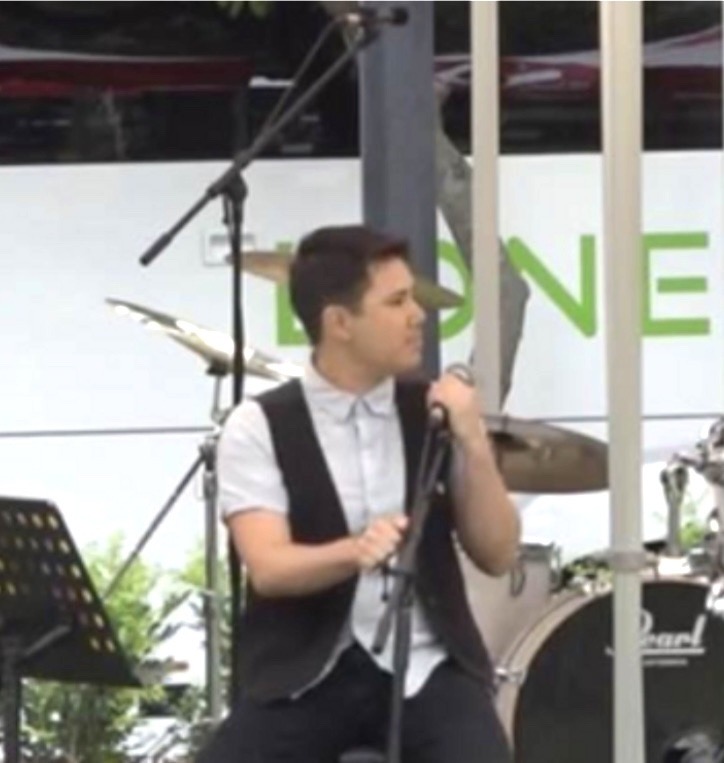
There are video clips online of me singing with my female voice- I believe you can see how lacking in confidence and vulnerable I felt.
The process of losing my voice was frightening. There are so many years of uncertainty. You feel like you are a caterpillar going through a chrysalis, with no control over your shape.
It forced me to surrender to the process because really the transformation of your body is something you have no control over. When my voice came back deep, unique, truly I think it felt like a gift from beyond.
I couldn’t deny something special, this deep sense of purpose because the way I imagined my voice and how I looked before the transition is how I look and sound now and beyond.
My strong deep voice now reflects the very same- a stronger, deeper, more connected human than I was before this process.
Oliver:
Your musical education has taken you through performance, music business, vocal production, and film scoring, while your professional life has also involved 15 years of working as a film producer and cinematographer. How have those different sides of your life shaped the way you think about storytelling, atmosphere, performance, and the emotional impact of a piece of music?
Jude Austin, O:
They balance each other perfectly out.
As a filmmaker I worked in my 20s on teams, for big artists, and travelled around Asia, the USA, and around Australia. So it was very external, very relationship based, very driven by external experience. You are creating through reacting and responding to your environment.
As a songwriter and music producer is all very internal. Lots of long, cold, nights staring at a computer screen! Or holding a guitar with a piece of paper trying to work out how to refine something. But I had the freedom of being able to go anywhere my imagination would take me, which is limited in filmmaking. Film is resource dependent, whereas music (at least the song development stage) is not. I felt a great freedom in that.
Yes I’ve also studied music business, production, performance, and film scoring. All these parts are true aspects of myself, different corners of the same landscape. So by engaging with all of these I can’t express enough how free I feel in my expression, empowered in my place in the world.
In terms of the artistic & business aspect- they all flow from one to another, kind of in a constant micro to macro way. I’m doing a shot for cinematography and it will inspire a lyric I will write that night. When I’m writing the music I’m thinking about the music video or the live performance- the visuals flow into larger and larger stages. When I’m producing the music, I’m thinking about how it will land for an audience.
Oliver:
You describe yourself as a pop-alternative-blues songwriter, singer, and musician, but your work also carries influences from alternative rock, electronic music, and a full-band sound. After exploring so many musical areas through both your education and professional work, how did you arrive at the sound you now recognise as your own, and what do you want that combination of styles to communicate about you as an artist?
Jude Austin, O:
It was a long hard road at landing on my sound. I think it was many years of pain actually! I wrote a lot of songs on guitar, slowly I started to see which ones I liked more.
I also reacted to other artists that came out at the time of my writing certain songs, or I’d feel inspired by a song from the past. Generally for my pop music I had sort of a ‘vision board’ of music I wanted to sound like and I kept moving in that direction for the first album.
As I tried to get there through improving as a lyricist, vocalist, and instrumentalist, I’d bump into organic moments with the universe along the way handing me some unique melody I’d never heard.
I went through the same process with music production. I love certain styles (electronic music and rock) so naturally I’d find myself wanting to include harder kicks or gritty vocals from rock alternative music but still add in reverse melodies and other quirks of electronic music.
I suppose I’m seeking depth in my expression, so through exploring and refining styles, I’m hoping I can bring something unique that reflects my lived experience, my own taste, and my own voice.
Oliver:
“Find Me at Home” began during a very specific and emotionally difficult moment in 2021, only two weeks into your transition, after a negative encounter with a relative who had learned about your transition. When you look back at that songwriting session now, four years after the song was first written, what do you remember most clearly about the person you were in that room and the emotions you were trying to survive at the time?
Jude Austin, O:
Oh totally. It’s so visceral and I’m sure it will remain that way for my life.
I was exhilarated for the transition so it felt like whiplash when I had this argument. Really horrible things were said to me when (although I was excited) I was also vulnerable and undergoing the most intense change of my entire life.
In the room I felt very vulnerable. I was angry, frightened, hurt.
I recorded the song on my phone during that songwriting session then played it 30 times the next day! I realised there was no other song at the time in the universe I needed to hear more than this song that came through us in that songwriting session.
It was cathartic and I did feel better after processing it, listening to it a number of times.
Oliver:
The song was written in less than an hour, with you bringing the lyrics and melody while Anthony Snape developed the driving chord progression and supported the vocal performance with his stronger male lead. What happened during that session that allowed the song to come together so quickly, and how did the collaboration between your emotional experience and Anthony’s musical response shape the final character of the song?
Jude Austin, O:
Anthony is a highly trained guitarist, vocalist, and music performer. We had spoken about the argument beforehand and he was really understanding of my situation.
I think that was enough, actually. Just that he was present, willing to listen, and come together to write a song.
I didn’t question the lyrics or melody coming through and I don’t think he questioned the chords. He just found nice sounds and I sung the melody over them. I was typing the lyrics on my phone as I was singing.
I guess I had this weighty experience to communicate. And he had the technical guitar skill to support it with chords.
I was able to revisit the song years later at a specific time as I was still living residue of that heavy experience. The process of music production and vocal recording helped me process it with true emotion. This also informed the character of the song.
Oliver:
At the centre of “Find Me at Home” is the idea of searching for a place, emotionally and personally, where you can finally feel that you belong. When you think about the title now, what does “home” mean to you, and how has that meaning changed from when you first wrote the song in 2021 to where you are today?
Jude Austin, O:
Home is my life purpose! Home and my longing for it never leave my system. I feel I am now miles closer to what my true north or home is. Physically in a more aligned body, relationship to self, relationship to career.
Home back then was ephemeral. Physically I wasn’t in the right ‘home’ in my body, now I am pretty much at home. That extends outward. It’s all grounded nearly entirely now- meaning feelings I had, thoughts, visions, dreams of my best life have now become parts of my life I just live.
I think the meaning of home stayed the same, but it’s materialised more and more into reality over time.
Oliver:
The song came from an argument connected to your transition, but its emotional themes reach beyond one particular confrontation and speak to the structures, relationships, and expectations that can make a person feel trapped. How did you turn that specific experience into a song that can also speak to anyone who has ever felt that they had to fight to become fully themselves?
Jude Austin, O:
Ah indeed. Well the way you write a song that speaks to universal experience is to not try to write a song that speaks to universal experience. You write a song that is for you and you alone, feel your feelings as deeply as you can feel them (which turns out is infinite depth), and turn to the page to move it from inside you to the page.
Sometimes you luck out and you’ve written something that is deeply for everyone struggling as you’ve been so honest about your own struggles.
Oliver:
There is also something significant about the original vocal on the song because you were still at an earlier stage of your transition and your voice had not yet become the male voice you would later retrain. How did returning to that original performance affect you when you revisited the song in 2025, and what did you hear in that earlier version of yourself that you wanted to preserve?
Jude Austin, O:
Very cool question. Through the process of transition I was constantly interacting with past voice notes, memos, clips of me singing prior to my transition. I was watching for changes as much as trying to urge those changes on. So I wasn’t that confronted by the earlier recording.
I knew it was the right time to produce the song partly because of my technical skills being ready, but also because I was still feeling the same emotions with a problem I was moving through at the time. So I believe even in 2025 that true anger, betrayal, and hurt remained and self-producing the song acted as a catharsis for those remaining emotions.
Oliver:
When you returned to “Find Me at Home” in March 2025, you were no longer the same vocalist or producer you had been when the song was written. After four years of male vocal retraining and developing your production skills, what did you discover about the song that you could not have understood when you first created it?
Jude Austin, O:
I actually did feel the power of the song at the time in 2021, but what changed was actually me. I changed. I believed that maybe I could produce the song myself and was ready as a vocalist to sing it.
All those years before I would feel like I needed to work with other musicians to have structure or competency. By 2025 I felt I had the taste I liked, the skills, and the confidence to try to do it myself.
And then of course producing Find me at Home showed me all that I had learned and that I could do it.
Oliver:
You chose to self-produce the finished recording in Ableton after studying vocal production and completing your music training. How did taking control of the production yourself change the way you were able to shape the emotional weight of the song, particularly in balancing its darker undertone with its pop, alternative, and blues elements?
Jude Austin, O:
I’ve worked with many music producers over the years but I still felt that I knew how the song should sound. I’ve also been a film editor for 20 years & created unique sound designs for university so I have a sensibility to how to work with sound in a creative way that is a bit odd and unique.
I think that learning to produce my own music and producing this song just let me bring my inner world to life in a not too dissimilar way to songwriting. I can just be a lot more nuanced over a longer period of time.
When you work with music producers you only get a day. Some of the techniques I tried to get the dark, bluesy, electronic sound can only come through trial and error, as well as constantly working on the song.
It took me 5 months of production and I was with it for a year, revisiting it, refining it, so that allowed me to get to something unique that I liked- harder to do when constrained by time.
Oliver:
Your background in cinematography also gives you a very strong visual understanding of storytelling, and that becomes especially relevant because you have directed your own music videos, including “White Rivers,” which received several international festival recognitions and won at the 2026 Las Vegas Music Video Awards. How does thinking like a filmmaker influence the way you write and produce songs, and do you hear your music visually while you are creating it?
Jude Austin, O:
I’m quite descriptive in my lyrics. I feel like I’m shooting films even when I’m writing a song or producing it. It’s all visual. My music performance teacher said she could tell I was a story-teller based on my lyrics.
Yes I have synesthesia so I see chords as colours so I’ll try and translate a song from its colour palette to sound.
Oliver:
Having worked professionally on productions involving artists such as RÜFÜS DU SOL, Kesha, Baker Boy, and Billie Eilish, you have spent years seeing music from the production side before stepping further into the spotlight as an artist yourself. What have you learned from being behind the camera that has helped you understand what you want to communicate when you are the person standing in front of it?
Jude Austin, O:
So many things. The list is endless. I wouldn’t be here as I am if I hadn’t observed all those worlds from the outside.
Each artist had such a strong visual identity. They each have a strong world. They have a feeling to convey. That’s what I learned I wanted to do. You learn work ethic. You learn structure. You learn working with the best teams.
Another gift of all that work behind the camera is I have the technical skills to bring the world in my mind to life so can do it with a small harmonious team as I do a lot of the preparation work, as well as the edit.
Oliver:
Your work on “White Rivers” has already brought recognition through international film festivals, while “Find Me at Home” has received strong reactions from people such as mix and master engineer Michael Lethos and artist Shannon K. How have those moments of professional recognition affected your confidence, particularly after such a long and personal journey toward establishing yourself as an artist?
Jude Austin, O:
It’s all vital and highly transformative. It makes you feel like you’re legit particularly after so many years of feeling like maybe you aren’t!
Also obviously I’ve come from another art form where I was behind the scenes for many years. It felt like a long and sensitive process to be recognised as not just a filmmaker, but also a vocalist and songwriter.
I shocked a lot of people along the way who knew me just as a filmmaker (I’m still shocking them to this day when they discover the songs). I believe it’ll probably continue to surprise people in my film career as they discover that I’ve been working on music.
Oliver:
You have also experienced the very different energy of performing your original music live, including a sold-out show at Hayes Street Studio with a four-piece band. What did standing in front of a live audience with your own songs teach you about the emotional connection between a performer and an audience that cannot be learned through recording alone?
Jude Austin, O:
You’re doing it all for performance in the end, I believe. That’s how I feel. I want to bring people together, interact with people, be in these warm experiences.
People will come up to you and say something profound like ‘thank you for that, that was important to me.’ You can’t anticipate these things when you’re writing or recording alone.
Oliver:
“Find Me at Home” began as a song that helped you process a painful moment, but it is now being offered to listeners who may be carrying their own experiences of rejection, identity struggles, family conflict, or the search for belonging. When someone finishes listening to this song, what do you hope they understand or feel about themselves that they may not have been able to express before?
Jude Austin, O:
I hope they get to get in contact with the part of themselves that feels proud of who they are and move forward from that place.
Oliver:
You are now preparing to launch a Kickstarter in October 2026 to fund the recording and pressing of your debut album, with the album planned for September 2027 and your own direction of the accompanying music videos. After everything that has brought you from writing those first songs for survival to building a complete debut album, what kind of story do you want that album to tell about the person you have become?
Jude Austin, O:
The album is about a new state of being. And a new version of our world beyond the one we currently live in- war, terror, conflict.
The album puts out the feeling of alignment, peace, and a new serene world. I believe I’m only able to share this album and these new songs because that’s the hard work I’ve had to do for myself after all these years.
Serenity, alignment, and peace in often tumultuous and unforgiving places.
I hope the story the album puts out is about life purpose and this process of me arriving at my own life purpose sparks that same vision of yours.
Oliver:
You have spent years developing yourself across songwriting, performance, vocal training, production, music business, film scoring, and visual storytelling, while also finding your way through major personal changes. As you look toward the next stage of your career, what do you want O to represent, and what kind of lasting body of work would make you feel that you have truly found your place at home within music?
Jude Austin, O:
I want to do what Coldplay are doing- play to big stadiums and write write write songs until I’m 100 years old.
I’ve already discovered over these last 7 years that music (in performance, writing, instrumentation, and genre) offers infinite space to explore. So I’m hoping to really become a great multi-instrumentalist over my lifetime, keep finding new things in music to learn, then turning those explorations into new albums.
I believe O is here to represent the portal to the new. As long as I keep accessing that place in myself and bringing it to song and album form, I know I’ll keep evolving and be proud of myself.
“‘Find Me at Home’ feels like the beginning of an artist stepping fully into his own creative language, where music, film, identity, and a relentless desire to explore become parts of the same unfolding world.”
~ Oliver (DULAXI Team)
EDITORIAL PERSPECTIVE
Speaking with Jude reveals an artist whose music is inseparable from his instinct to explore. “Find Me at Home” carries that sense of movement through its meeting of pop, alternative, blues, and electronic ideas, while Jude’s approach to production allows him to shape sound with the same visual imagination he brings to filmmaking. What stands out most is the connection between his personal evolution and his creative independence. He is not simply documenting change through music; he is using music as a space to keep discovering what comes next.
~ Oliver (DULAXI Team)
CLOSING
Jude, thank you for taking the time to share such an open and thoughtful conversation with us. Your reflections on songwriting, your voice, filmmaking, production, performance, and the meaning of finding “home” offer a deeper understanding of the person and creative vision behind O.
“Find Me at Home” is a release that comes from a very specific moment in Jude’s life, but the conversation around identity, belonging, self-expression, and finding the courage to move forward can reach far beyond that original experience. We encourage readers to spend time with the song and discover the world Jude is beginning to build through his music.
With a debut album ahead, a Kickstarter campaign planned for October 2026, and a creative practice that continues to bring together music and film, this is clearly only one chapter of Jude Austin, O’s developing story.
Thank you, Jude, for joining us, and thank you to everyone who spent time with DULAXI for today’s interview. We look forward to bringing you more conversations with artists whose stories, ideas, and music deserve to be heard.