
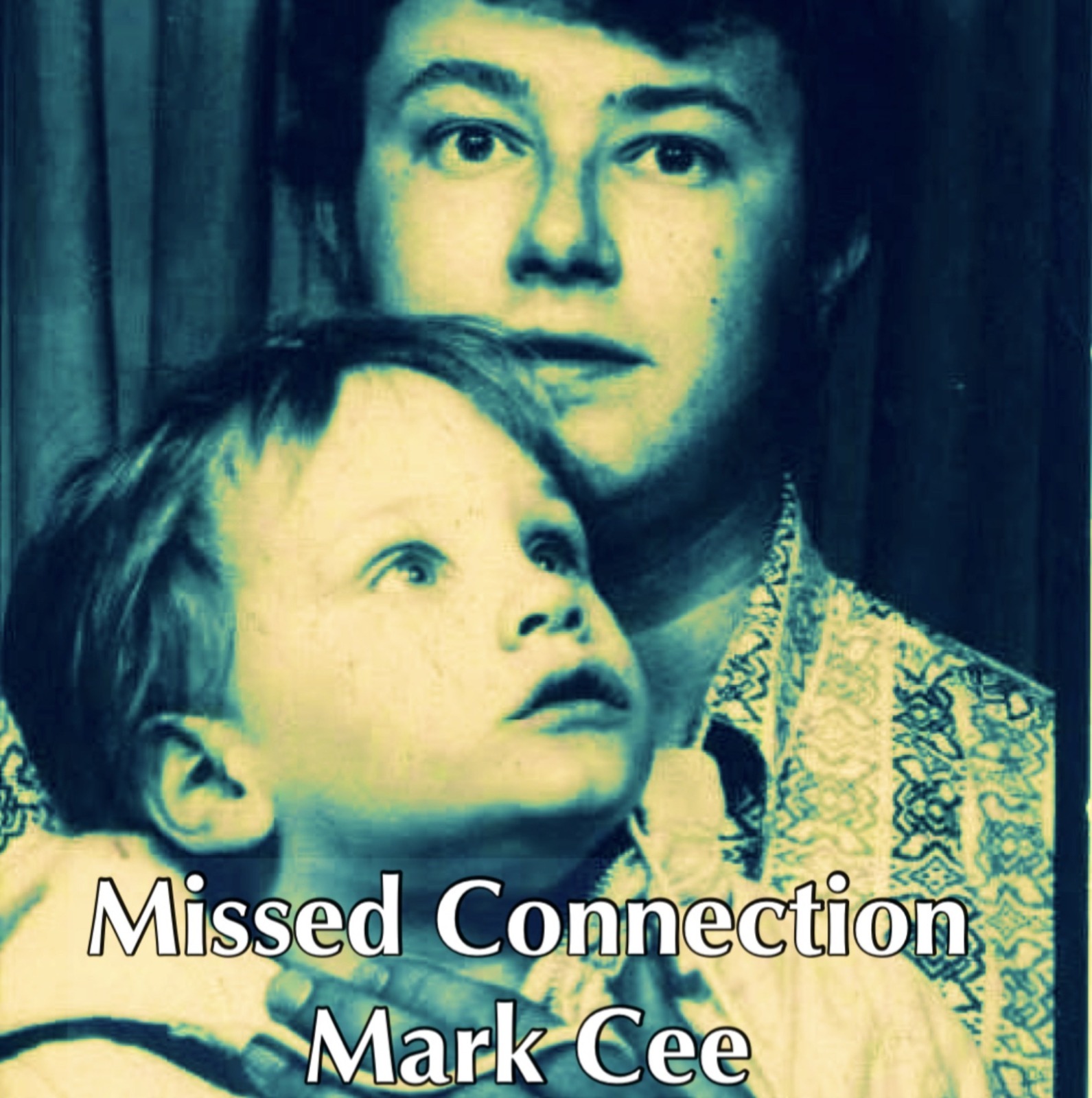
Hello everyone, it’s your host Tehillah from DULAXI, and today I’m delighted to be joined by Mark Chropufka, the artist behind Mark Cee, a Long Island-based ambient indie folk/Americana singer-songwriter whose music is shaped by intimate storytelling, atmospheric guitar, and an intentionally human approach to recording. Based in Babylon, New York, Mark Cee released his latest single, “Missed Connection,” on August 7, 2026, continuing the artistic journey introduced with his debut single, “How You Left Me Still.”
With a songwriting and poetry practice stretching back to 1995, Mark has spent roughly three decades developing a creative identity rooted in lived experience, emotional honesty, and a preference for simplicity over excessive production. “Missed Connection” is the second single from his forthcoming project, It’s Me, Mark Cee, and continues his exploration of sparse, guitar-led songwriting while examining separation, unfinished conversations, grief, and the lingering emotional weight of moments that never reached their intended destination.
Before we begin our conversation with Mark Chropufka, here’s what you need to know about today’s featured project.
About Mark Cee
Mark Cee’s music begins from a place that feels deliberately human. Rather than relying on elaborate production or artificial polish, Mark builds his songs around the direct relationship between voice, guitar, lyrics, and lived experience. His songwriting and poetry practice dates back to 1995, and that long creative history has become an important part of the perspective he brings to his work today. His music reflects what he describes as an unfiltered Gen X experience, one shaped by emotional independence, honesty, and a resistance to anything that feels overly performed.
That philosophy is central to “Missed Connection,” a sparse and atmospheric indie folk/Americana song released on August 7, 2026. Recorded and self-produced in Mark’s home studio in Babylon, New York, the track maintains the intimate acoustic space that has become part of his artistic identity. The song grew from a guitar figure and a lyric that Mark could not shake, eventually becoming a meditation on separation, unfinished conversations, and the strange emotional space created when two paths are pulled apart without warning.
The story behind the song is deeply personal. Mark explains that “Missed Connection” grew out of the sudden death of his father and the disorienting experience of having a conversation effectively ended without warning or resolution. Rather than presenting grief through an oversized emotional arrangement, he chose to approach it through restraint. The result is a song that leaves room for uncertainty and allows the listener to inhabit the unfinished feeling rather than providing a neat emotional conclusion.
This approach follows Mark’s debut single, “How You Left Me Still,” which introduced listeners to his intimate songwriting style and began attracting attention through playlist placement, Release Radar pickup, and independent radio activity. The response gave Mark an indication that songs he had spent years writing privately could reach people beyond his own immediate world. It also marked an important transition from a long period of private songwriting into a new chapter in which his work is being released publicly and discovered by listeners.
For Mark, imperfection is not something to correct. It is part of the recording itself. He records in his den and values the presence of an actual room, an actual performance, and the small imperfections that prove a person was behind the music. His production philosophy is therefore closely connected to his songwriting philosophy: if an instrument, vocal layer, or production element does not serve the emotion, it does not need to be there.
At the center of Mark Cee’s work is therefore a simple but powerful idea. A song does not need to be flawless to be meaningful. Sometimes the room, the breath, the imperfect note, the quiet guitar, and the unfinished thought are precisely what allow a listener to recognize something of themselves in the music.
Having this brief introduction to today’s featured project, I’m sure both new listeners and longtime fans are excited to hear directly from Mark. So, without further ado, let’s begin today’s interview.
INTERVIEW SESSION
Tehillah:
You have been writing songs and poetry since 1995, giving you a creative journey that stretches across roughly three decades. When you look back at the person who first began writing in the mid-1990s and the artist you are today, what parts of that younger version of yourself have remained at the heart of your creative identity?
Mark Cee:
Honestly, the instinct hasn’t changed at all — I still write the same way I did at 25 which is to say I write when something won’t leave me alone until I put it down. What’s different is patience. Back then I wanted a song finished the day I started it. Now I’ll sit with a line for months if it needs it. But the core impulse — using a song to say the thing I can’t say out loud any other way — that’s exactly the same kid who started scribbling in notebooks thirty years ago.
Tehillah:
Your music is closely connected to what you describe as the unfiltered Gen X experience, with lived experience, honesty, and emotional reflection taking priority over polish. How have the realities of growing up and living through that generation shaped the stories you feel compelled to tell now?
Mark Cee:
Gen X grew up latchkey — figuring a lot of things out alone, without anyone narrating our feelings for us. I think that produces a certain bluntness, and also a distrust of anything that feels performed. So when I write, I’m not interested in dressing a feeling up to make it more palatable. I’d rather hand someone the plain, slightly rough version of the truth than a polished version that isn’t quite true.
Tehillah:
After so many years of songwriting and poetry, what personal experiences or turning points have taught you the most about yourself, particularly when it comes to expressing emotions that may be difficult to communicate outside of music?
Mark Cee:
Losing my father suddenly is the most recent and honestly the sharpest example. There are things about grief that I still can’t say in conversation — they come out wrong, or not at all. But I could write them. That’s really what music has always been for me: the place where I can say the true version of something I’d otherwise stumble over.
Tehillah:
You have built your artistic identity around the idea of a “human” recording, choosing simple rhythms, authentic storytelling, and a deliberately unpolished approach rather than relying on AI or heavy production. What does keeping that human element intact mean to you personally?
Mark Cee:
It means the listener is hearing an actual room, an actual take, an actual person who might crack on a note or breathe wrong right before a line. I record everything myself in my den, and I’d rather keep a slightly imperfect take that has a pulse in it than replace it with something flawless and lifeless. AI can smooth all of that away, but the smoothing is exactly what I don’t want. The imperfection is the evidence that a person actually lived through the song.
Tehillah:
Your influences and comparisons range from early Bob Dylan and Elliott Smith to Nick Drake, Sufjan Stevens, Iron & Wine, and Bon Iver. What have you taken from these artists beyond their sound, and how have their approaches to honesty, atmosphere, and songwriting helped shape the kind of artist you want to be?
Mark Cee:
What all of those songwriters share isn’t a genre, it’s a kind of nerve — the willingness to leave a song sparse instead of filling every bar with something. I’ve taken that as almost a rule for myself: don’t add an instrument or a lyric just because you can. Elliott Smith and Nick Drake in particular taught me that quiet can carry more weight than a big arrangement ever could.
Tehillah:
There is something deliberately intimate about the way your music occupies a space between indie folk, Americana, acoustic songwriting, dream pop, and lo-fi guitar music. How did you arrive at this particular musical language, and what does that combination allow you to express that a more conventional folk sound might not?
Mark Cee:
I didn’t set out to blend genres — it’s more that I only ever chase the feeling of a song, and the feeling usually needs a little atmosphere and a little grit at the same time. Straight folk can feel too tidy for what I’m trying to say; straight lo-fi can feel too hazy to land a lyric. Sitting between them lets a song be both intimate and a little unresolved, which is usually closer to how the actual emotion feels.
Tehillah:
“Missed Connection” explores the idea of souls moving in opposite directions, while maintaining the sparse and emotionally direct atmosphere that has become central to your work. What personal or emotional experience first gave you the idea for a song built around that particular kind of separation?
Mark Cee:
The song grew out of my father’s sudden death — that specific, disorienting feeling of two people’s paths being pulled apart with no warning and no chance to finish the conversation. “Missed connection” felt like the right phrase because it isn’t dramatic — it’s quiet and almost mundane, which is closer to how grief actually arrives.
Tehillah:
The title “Missed Connection” immediately suggests something that almost happened, something that existed between two people but ultimately failed to arrive at the right destination. What does that phrase mean to you beyond its literal interpretation, and what kind of emotional space did you want the listener to enter through the song?
Mark Cee:
Beyond the literal meaning, it’s about anything that was real but didn’t get to finish — a conversation, a goodbye, a relationship. I wanted the listener to sit in that unfinished feeling rather than have it resolved for them by the end of the song, because that’s honestly what it feels like in real life.
Tehillah:
Your debut single “How You Left Me Still” introduced listeners to a deeply intimate side of your songwriting, and “Missed Connection” continues in that acoustic space while moving into another emotional story. How did you approach making this second release feel like a continuation of your artistic identity while still allowing it to stand on its own?
Mark Cee:
I kept the same rules — sparse arrangement, one voice, one guitar doing most of the emotional work — because that’s the identity I want people to recognize. But I let this song carry its own specific grief rather than trying to echo the first single’s story. Same handwriting, different letter.
Tehillah:
Your songs have been described as restrained, honest, and powerful precisely because they do not rely on excessive lyrical decoration. When you are writing about something emotionally significant, how do you decide what needs to be said and what is better left unsaid?
Mark Cee:
I usually write the long version first and then cut until only the load-bearing lines are left. If a line is just there to sound poetic, it goes. What survives is whatever the song actually needs to be true — and I trust the listener to fill in the rest with their own experience.
Tehillah:
You recorded and self-produced “Missed Connection” in your home studio in Babylon, New York, keeping the production deliberately sparse. Walk us through how the song developed from its earliest idea into the finished recording, and which parts of that process were most important in preserving its emotional character.
Mark Cee:
It started as a single guitar figure and a lyric I couldn’t shake. I recorded it in my den the way I record everything — voice and guitar close, minimal layering — and resisted the urge to build it up further. The most important part of the process was actually restraint: knowing when to stop adding and just let the take breathe.
Tehillah:
Because you compose and produce your own material, you have considerable control over how the listener ultimately experiences each song. How do you know when a track like “Missed Connection” has reached the point where adding another instrument, vocal layer, or production element would strengthen it rather than take something away?
Mark Cee:
I ask myself if the new element is serving the emotion or just filling space. If I can’t answer that clearly, I leave it out. Producing everything myself means there’s no one else to hide behind — if the song isn’t working, that’s on me, and if it is working, I need to know when to leave it alone.
Tehillah:
Your debut single generated 1835 streams within its first two months , received playlist placement and Release Radar pickup, and later reached 158 streams in a single day through independent radio activation. After spending so much of your creative life writing outside the expectations of mainstream music, what did that early response mean to you personally?
Mark Cee:
It meant a lot more than the numbers themselves suggest. For thirty years this was something I did privately, mostly for myself. Having strangers actually find “How You Left Me Still” and sit with it was proof that the songs could travel outside my own head — that was never guaranteed, and it still isn’t something I take for granted.
Tehillah:
Some of the strongest reactions to “How You Left Me Still” focused on the feeling of sitting across from someone at a kitchen table and hearing them tell a deeply personal story. How important is that sense of closeness between artist and listener to your songwriting, and what kind of emotional relationship do you hope “Missed Connection” creates with the person hearing it alone at night?
Mark Cee:
That closeness is really the whole point. I’m not trying to fill a room — I’m trying to sit across a small table from one person. With “Missed Connection,” I hope whoever’s listening alone at night feels like someone else has actually been where they are, and that they don’t have to explain the feeling to be understood by the song.
Tehillah:
With “Missed Connection” leading into the nine-track It’s Me, Mark Cee project, this period represents a significant introduction to your work for listeners who may be discovering you for the first time. What have these releases taught you about yourself as an artist that you could not have learned simply by writing privately?
Mark Cee:
Releasing things publicly taught me that a song isn’t really finished until someone else hears it — writing privately, I could convince myself a song was done when it was really just done for me. Putting these out into the world, and watching how people respond, has shown me where the songs actually land versus where I only imagined they would.
Tehillah:
As you look toward the release of It’s Me, Mark Cee in the fall, what do you want this collection to establish about who Mark Cee is, not only musically but also as a songwriter who has spent decades turning lived experience into intimate stories?
Mark Cee:
I want it to be clear that this isn’t a persona — it’s thirty years of paying attention to my own life finally being let out into the open. Musically I want people to hear the sparse, human, unhurried approach as a deliberate choice, not a limitation. And as a songwriter, I want the collection to say: these are true stories, told as plainly as I could tell them.
“Mark Cee turns restraint into a form of intimacy, creating music that does not ask to dominate the room, but instead invites one listener to sit quietly with the stories, memories, and unfinished emotions that remain after life changes without warning.”
~ Tehillah (DULAXI Team)
EDITORIAL PERSPECTIVE
“Missed Connection” feels most compelling when its simplicity is allowed to remain exactly that. Mark Cee’s guitar-led approach creates room for the voice and songwriting to carry the emotional weight, while the restrained production keeps the song close and personal. What stands out is the consistency between his creative philosophy and the finished music. Nothing feels added merely to make the song larger. Its atmosphere, pacing, and sense of space support a songwriting approach built around honesty, memory, grief, and the things people never get to finish saying.
~ Tehillah (DULAXI Team)
CLOSING
Our conversation with Mark Chropufka offers a thoughtful look into the creative philosophy behind Mark Cee and the deeply personal experiences shaping his music. From a songwriting practice that began in 1995 to his commitment to preserving the imperfections of human recording, Mark’s approach is grounded in allowing real experiences to remain at the center of the work.
“Missed Connection” gives listeners an opportunity to experience that philosophy through a song shaped by grief, separation, memory, and unfinished conversations. We encourage readers to spend time with the single and discover the emotional world Mark has created through his voice, guitar, and deliberately restrained production.
Thank you to Mark Chropufka for taking the time to speak with DULAXI and for sharing such honest insight into his songwriting, recording process, influences, and artistic journey. We also thank you, our readers, for spending part of your time with us.
This is Tehillah from the DULAXI Team. Until our next interview, keep listening, keep discovering, and keep making room for the stories that music has a way of telling when ordinary words are not enough.