

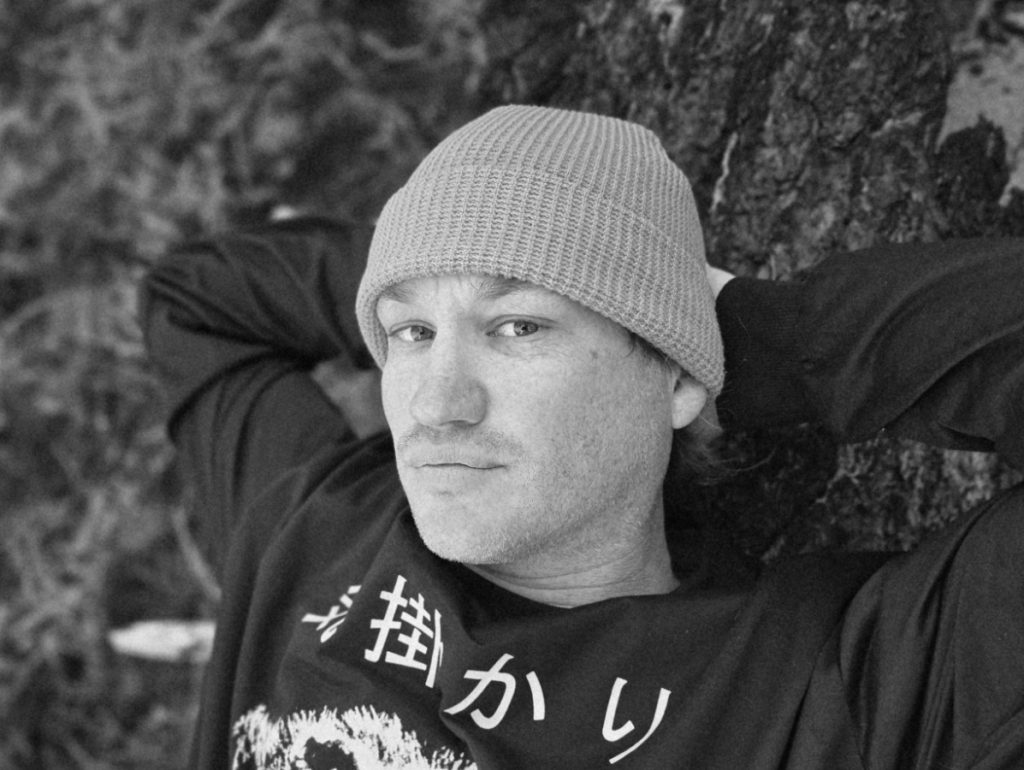
Hello everyone, it’s your host Tehillah from DULAXI, and today I’m delighted to be joined by musician and producer Devon Aviles, the creative force behind Death Popsicle, a Northern Arizona darkwave and industrial project from the United States. Blending darkwave, industrial, synthpop, gothic rock, electronic music, hip-hop influences, and experimental textures, Death Popsicle introduces its debut EP, Komusō, released on July 31, 2026.
Created entirely by Devon Aviles, Komusō explores isolation, identity, emotional neglect, social collapse, outsider identity, and emotional survival through a sound shaped by brooding vocals, synthesizers, industrial textures, rhythmic energy, and cinematic production.
Before we begin our conversation with Devon, here’s what you need to know about today’s featured project.
About Death Popsicle
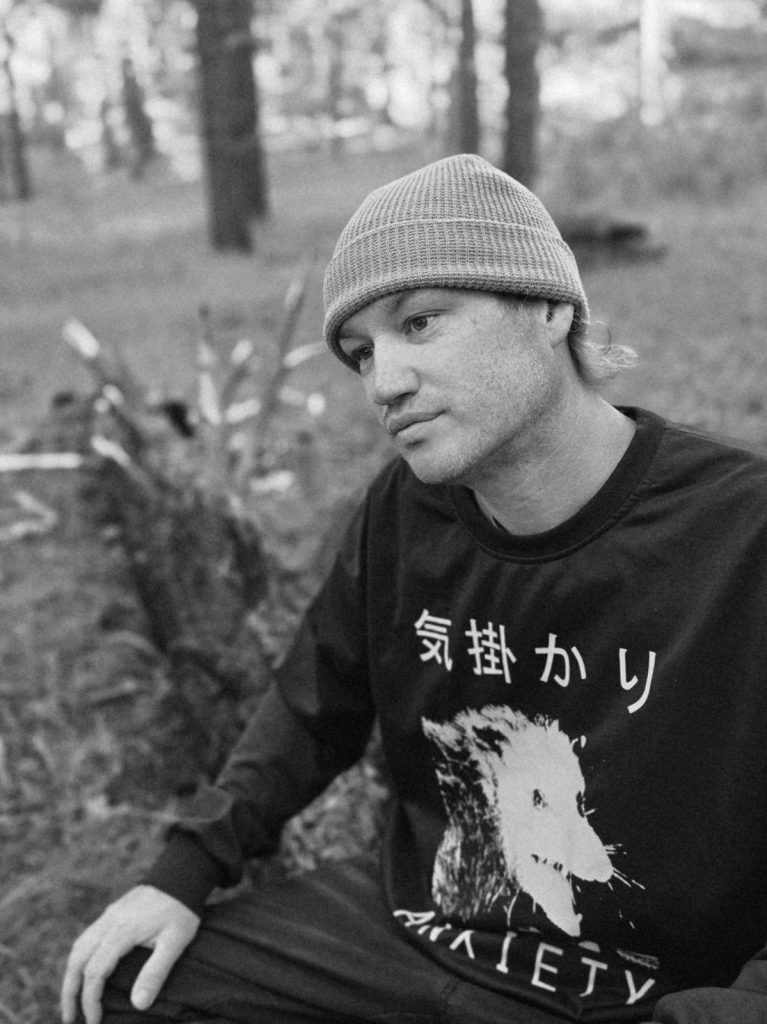
Death Popsicle is a Northern Arizona solo project created by musician and producer Devon Aviles, whose musical journey has taken him through different environments, creative disciplines, and cities before ultimately leading him toward the quiet of the forests. Although he did not originally grow up in Northern Arizona, Aviles spent his early years in the Phoenix area before moving to Los Angeles and later New York. Eventually, seeking distance from the overstimulation and noise of metropolitan life, he moved into the forests of Northern Arizona, where nature and music became important spaces for reflection and creativity.
That sense of distance is central to Death Popsicle. The project was built around an interest in the darker sides of human experience, particularly isolation, alienation, identity, emotional survival, and the uneasy relationship between individuals and the society around them. Rather than attempting to reproduce a particular era or remain inside one established genre, Death Popsicle draws from an unusually broad musical vocabulary. Darkwave, industrial music, synthpop, gothic rock, 80s-inspired synth textures, 90s hip-hop, drift phonk energy, trip-hop, and modern electronic production all contribute to its sonic identity.
Aviles’ influences include Depeche Mode, Nine Inch Nails, Type O Negative, The Prodigy, Orgy, New Order, Mindless Self Indulgence, Nas, J Dilla, and even the songwriting of Max Martin. His previous experience as a DJ, electronic music producer and teacher, as well as his time in a rave-rock band, also feeds into the music. Rather than treating these influences as separate categories, Death Popsicle allows them to converge naturally through Aviles’ own creative instincts.
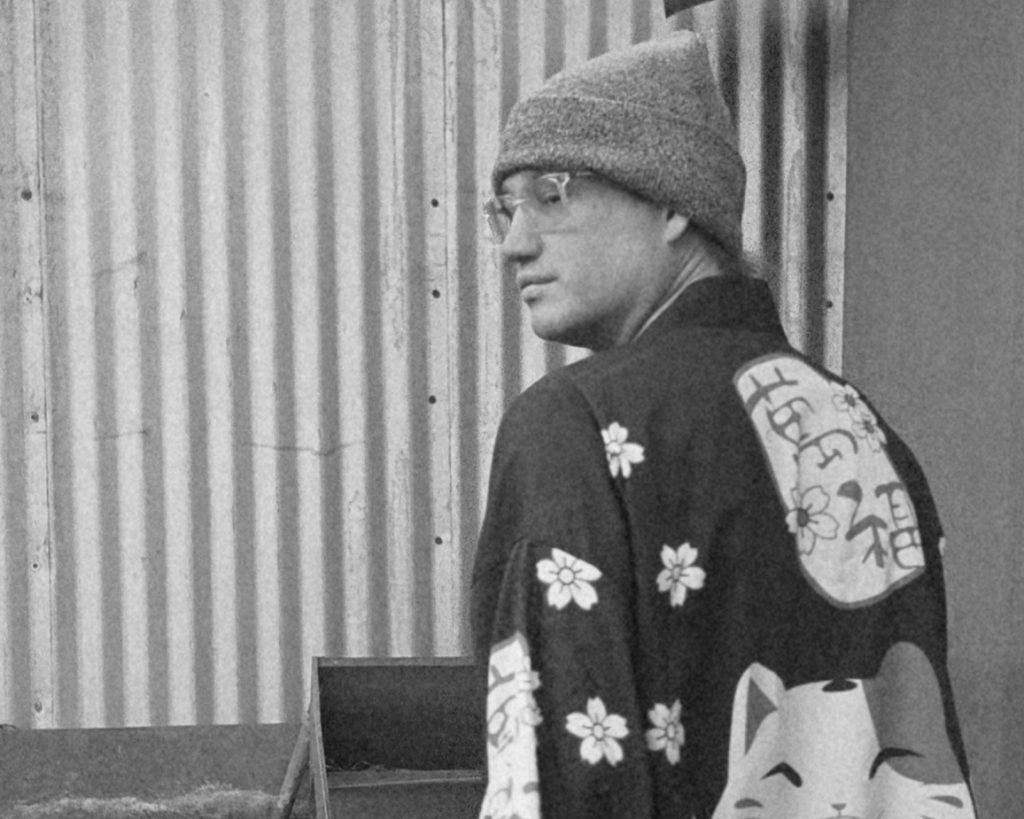
That approach becomes particularly evident in Komusō, the project’s debut EP. Released on July 31, 2026, the five-track project was written, sung, produced, mixed, and mastered entirely by Aviles. Its title references the Komusō, the wandering Japanese monks associated with detachment and their distinctive basket-covered faces. For Aviles, the concept provides a fitting framework for music concerned with distance, searching, uncertainty, identity, and the attempt to find meaning after periods of profound disconnection.
The EP was completed in the forests of Northern Arizona, although its songs were developed across several environments, including an RV in the desert of Phoenix and time spent in the woods of Wisconsin. The freedom of working without people around to judge, interrupt, or impose creative limitations allowed Aviles to explore the music without external constraints. That independence also extends into the production itself. Rather than separating songwriting from production, he approaches the studio as an instrument, using sound design, frequencies, arrangement, keys, textures, and vocal performance as interconnected parts of the composition.
Across Komusō, the project examines different forms of human struggle. “Animal” confronts conformity, control, capitalism, and the instinctive nature beneath modern society. “Dear Friends” explores emotional neglect, loneliness, and the painful consequences of people failing to recognize when someone needs help. “Ugly” turns inward, questioning superficial ideas of appearance and worth while speaking directly to people who have experienced the feeling of being unseen or misunderstood. Together, these ideas create a project concerned not simply with darkness, but with what people do when they find themselves living inside it.
Having this brief introduction to today’s featured project, I’m sure both new listeners and longtime fans are excited to hear directly from Devon. So, without further ado, let’s begin today’s interview.
INTERVIEW SESSION
Tehillah:
Devon, before we dive into the world of Death Popsicle, I would love to understand the person behind the project. Growing up and creating music in Northern Arizona, what experiences, environments, and personal moments shaped the way you view isolation, identity, and human connection?
Devon Aviles:
I didn’t grow up in Northern Arizona; I grew up in the Phoenix area. I then moved to Los Angeles and later New York. In response to the overstimulation and noise, I eventually moved to the woods in Northern Arizona to get away from everything and find peace in the forest.
I’ve had my bands leave me, my friends move away, I’ve moved away, I’ve been ignored and pushed aside—but I am still standing. I’ve never felt like I fit in anywhere. New York was the closest I’ve felt to being comfortable in a metropolitan area. It’s a great city, as far as cities go, but I needed my peace.
I have good friends, but they are mostly misfits and outsiders scattered across the nation and globe. I have a seasonal day job I’ve worked for many years where I see the worst of people, and it has led me to see what I believe is the true nature of humanity. While it’s not all bad, I cannot unsee what I have seen. This has likely contributed to my often extremely introverted/extroverted personality.
In a sense, I moved to the forest out of necessity, but I also just don’t feel like I belong anywhere. Nature and music are my Zen spaces.
Tehillah:
Death Popsicle carries a very distinct emotional atmosphere, exploring themes of alienation, collapse, and survival. Before this project existed, what personal experiences or creative discoveries led you toward expressing those darker and more introspective parts of life through music?
Devon Aviles:
Well, this got deep fast, lol. I try to keep my art honest. I’ve felt a lot of joy, but also a lot of pain in life. I was diagnosed with bipolar II many years ago, although I’m not too big a fan of the psychiatric establishment. As with anything, I believe there are some truths and some untruths.
The thing is, I don’t usually write when I’m happy. I go for a walk, read a book, see a band, play video games, maybe paint abstract art, etc. I turn to the pen when I’m suffering or in pain.
I guess it comes from everything—friendships, relationships, working in politics, and seeing the nature of things without an obfuscated lens. IMO, much of the world is out to get you, buy you, sell you, fuck you, hurt you, or dangle the carrot in front of you for crumbs. But there are authentic relationships along the way that chip away at that capitalist mainframe and allow you to carve some sort of meaning out of your own life.
I think genuinely good people are rarer than we’d like to believe. It’s just about finding those people. I’m a positive nihilist: nothing matters, so you might as well go for it.
Creatively, I’m always experimenting, but I’ve always been drawn to the darker side of music.
Tehillah:
Creating an entire project where you write, sing, produce, mix, and master everything yourself requires a strong sense of independence and vision. What has that complete creative control taught you about yourself as an artist and about the kind of stories you want Death Popsicle to tell?
Devon Aviles:
It teaches you to listen to yourself and your intuition, as well as when to impose limitations and when to open doors—and how to find the right time to do either.
Sometimes, when you can do everything, it makes it harder to do anything. It’s like wandering the grocery aisles and having 1,000 different types of cola to choose from. Having a specific vision helps cut through that noise.
The stories I want to tell will evolve, but for this EP, the sound of the music fit the themes, and they kind of wrote themselves. When inspiration strikes, you have to listen or you lose it.
I believe that if you feel strongly about a concept—if it is truly important—it will reappear or manifest itself in a parallel form, thereby allowing you to once again capture its fleeting essence.
Tehillah:
The name Death Popsicle immediately creates a contrast between something playful and something dark, almost reflecting the balance between vulnerability and heaviness that exists within your music. What does this name represent about the identity and emotional world you are building with the project?
Devon Aviles:
Such is the dichotomy of life, is it not? It’s memorable, thought-provoking, marketable, and subject to interpretation.
We all deal with death at some point, but in my opinion, we should strive to make our lives as flavorful as possible during our short time on this earth—of course, by doing what makes us happy.
Each song and message is going to exist at its own place on the spectrum of life, happiness, and the inverse. But in this project, it’s about creating a platform for that spectrum and for the expression of doubt, uncertainty, confusion, and the contemplation of curiosities that exist within my own personal psyche—things that hopefully others can understand and relate to.
Tehillah:
Your sound draws from darkwave, industrial, synthpop, gothic rock, hip-hop influences, and modern electronic production. How do you approach combining these different influences into a sound that feels cohesive rather than simply being a collection of different genres?
Devon Aviles:
Usually, it starts with a gritty hip-hop beat I can vibe to. I was inspired by ’90s hip-hop like Nas and J Dilla, and even Max Martin pop songs. I also spent a period of my life DJing, producing and teaching electronic music, and I was in a rave-rock band when I was younger. All of that tends to spill into what I do subconsciously.
From there, I add layers of sounds I’ve created around a specific synth vision and sing over them with the concept in mind. There aren’t really rules, just parameters I set for myself. Future albums are free to break them.
It’s probably less calculated than it sounds. Depeche Mode, hip-hop beats, Type O Negative, NIN, The Prodigy, Orgy, New Order, MSI—all of that is swimming around in my head pretty much all the time. It’s authentic to me.
Everyone’s artistic voice is some culmination of outside influences filtered through themselves. Tapping into that personal voice is incredibly liberating.
Tehillah:
Artists like Depeche Mode, Nine Inch Nails, and Type O Negative have each created music that explores darkness while still connecting deeply with listeners. What aspects of their artistry have influenced your own approach to creating music that embraces difficult emotions without losing its human element?
Devon Aviles:
I don’t look at it as being so genre-specific. I think it’s more about the authenticity that resonates with the audience, as well as the sonic palette that defines it. NIN and Type O really aren’t the same genre, but they encapsulate similar emotions at times. To me, combining these two things just makes sense.
The voice maintains the human element. I love synths and I love guitars, although I have not opted to include guitars in Death Popsicle at this moment. Who knows what the future may bring?
I think the DIY approach of Trent Reznor using the studio as an instrument is something that rubbed off on me. I definitely identify with the broodiness in Peter Steele’s voice and the melodic sense and storytelling of Dave Gahan. Bringing my own touch to these things was just second nature.
Tehillah:
The title “Komusō” references the wandering Japanese monks known for their basket-covered faces and their pursuit of detachment. What drew you to this concept, and how does the symbolism behind the Komusō connect with the emotional themes you wanted to explore throughout the EP?
Devon Aviles:
I relate to them. I feel as if I’ve fought a major war, and now I am searching for meaning after returning to what I call home and trying to navigate through this lost and empty space.
I feel the music is the embodiment of such, although I don’t play a wind instrument or wear a basket on my head. Artistic interpretation.
They are often described as “priests of nothingness.” I suppose I’m a purveyor of the unspoken. The positive nihilist in me finds them fascinating, relatable, and uncanny.
Tehillah:
“Komusō” explores isolation, emotional neglect, social collapse, and survival in a world that often feels increasingly disconnected. When writing this EP, were you more focused on documenting the world around you, exploring your own internal experiences, or finding a place where both perspectives could meet?
Devon Aviles:
I did attempt to find a place where both perspectives meet, but judging from the response I have gotten from people, it seems to have landed more toward internal experiences.
In my opinion, it’s both—my internal experiences and my relationship with the world around me. I do inject commentary about the state of certain things. For example, in “Animal,” the rap part says:
«Detrimental, caustic and toxic, agnostic faucets
Drain the blood from the weak and siphon straight into their pockets.
They constantly flaunt it,
But no one questions or comments.
They’re too content to be bothered about such trivial things.»
This is social commentary about capitalism at large slowly draining us while giving people just enough to be content so they don’t do anything about it.
Tehillah:
Songs like “Animal,” “Dear Friends,” and “Ugly” each examine different aspects of human struggle, from conformity and control to broken relationships and self-worth. How did you decide which personal and social themes needed their own individual spaces within the EP?
Devon Aviles:
It doesn’t really work that way for me. Songwriting for me isn’t necessarily so cerebral—at least not the lyrical part. The engineering most definitely is a science.
The way I write vocals most of the time is kind of like practiced freestyling, you could say. I set up a mic and sing whatever comes to me, and I build upon it as the song progresses. Of course, I do doubles, punch-ins, edits, etc. Sometimes I’ll trash stuff or rewrite a verse, but I basically stand up and write on the mic.
A lot of artists create and liken it to becoming one with the universe or letting God speak through you. You basically submit to the flow: don’t think, and write what comes to you. If you follow this, the theme often writes itself. It also yields authentic results.
If I don’t engage in said flow state while recording, 99% of the time I won’t view it as something worth releasing. I view it as a litmus test for authenticity.
Tehillah:
“Animal” examines the instinctive side of humanity beneath modern society and the ways people conform to external pressures. What questions about human behavior and identity were you hoping listeners would consider while experiencing this track?
Devon Aviles:
Well, I think many of us are getting fed up with the system, regardless of where we are in the world.
There are ways to get by—and even thrive—that aren’t conventional. You’re an animal. You’re meant to exist freely. To roam the mountains, parade the streets, and climb the hills. People are conditioned to live this mechanical existence indoors.
Don’t forget who you are and where you come from. Don’t let capitalism, or whatever “ism” you pick—or that picks you—convince you that you are only worth your labor or your bank account. None of that matters. You only have one life.
Tehillah:
“Dear Friends” explores emotional neglect and the fading connections between people, which is a feeling many listeners can relate to in a digitally connected but emotionally distant world. How did you approach capturing that sense of loss and disconnection through both the lyrics and the music itself?
Devon Aviles:
It’s a caricature of my own experiences and those of people around me. I’ve always tried to listen when people are in need because you never know if you could be the last person they speak to.
From my own perspective, some of us have no one to reach out to. We continually cry into the ether and nobody responds. Then, when it becomes too late, people look back and say, “I should have done this. I should have been there.” We can’t change the past, but being there for someone in the moment could potentially save a life.
The song is essentially a depressed individual’s letter to the world around them, progressing through three stages:
- “Hey guys, where are you? I’m hurting.”
- “Save me. I can’t take much more. I’m gonna do it.”
- “I’m gone.”
Technology increases our reach, but it can also deepen our isolation. That contradiction is part of the song. This kind of grief and loneliness is nothing new, but modern life has given us a strange new way to experience it. I’ve felt that isolation myself, and I know others have too—simply having nowhere to turn.
Tehillah:
“Ugly” focuses on appearance, self-worth, and the experience of feeling like an outsider. What inspired you to explore this vulnerable subject, and how did you want the song to speak to people who have struggled with how they see themselves?
Devon Aviles:
We live in such a disgustingly superficial world. I’ve always felt ugly in one way or another—physically, unseen, unimportant, misunderstood. In social situations, I’ve often felt like a fly on the wall.
We all have individual value, but other people don’t always see it. I believe we’re all equal—animals included, but that’s another subject. It doesn’t matter if you were blessed with looks, intelligence, charisma, money, or whatever else. We all have shortcomings.
I think we’ve been trained to be superficial in ways that benefit consumerism and our dopamine addictions to plays and clicks. People will overlook the shortcomings of someone who is conventionally attractive, wealthy, or charismatic while completely overlooking the talent or contributions of someone who isn’t.
“Ugly” is basically saying that we’re all more than what someone sees on the surface. If you look hard enough, everyone has ugly parts of themselves.
I want the obscure, the outsiders, and the weirdos to know they aren’t alone. Saying “don’t be hard on yourself” is easier said than done, but if the song can make someone forget that feeling for a few minutes—or realize they’re more than their appearance—then it has done something worthwhile.
Tehillah:
The production of “Komusō” combines brooding synthesizers, industrial textures, layered baritone vocals, and rhythmic influences from ’90s alternative music and modern electronic styles. How did you build the sonic landscape of the EP, and what role did production play in creating the emotional environment of each track?
Devon Aviles:
I basically created a template or starting place and forced myself to repeatedly use those elements until I had something that felt cohesive.
Like I said earlier, I use the studio as an instrument. In a sense, that lets me approach songwriting like a composer because the song itself is the production. Mixing and mastering come later.
I tend to write with octaves and frequencies in mind so things make harmonic sense without overloading certain ranges. Emotion comes primarily from the vocals, but song keys, dissonant note choices, sound design, and arrangement all contribute to it.
Initially, I approach things almost like a child: experiment, play, and find something interesting. Once something works, the producer/engineer part of my brain steps in, makes everything fit, and arranges it accordingly.
Tehillah:
The EP was created in the forests of Northern Arizona, an environment that naturally carries a sense of distance, quietness, and reflection. How did that setting influence your creative process, the atmosphere of the recordings, and the way you translated emotions into sound?
Devon Aviles:
Actually, it was merely completed in the forests of Northern Arizona. Most of it was written in my RV in the desert of Phoenix, the woods of Wisconsin, and the forests of Northern Arizona before I settled into my cabin in the woods.
All these places, though, carry a similar but unique vibe, yet not quite as solemn as where I am now. I think environment is a very important factor. With no one around to listen, judge, complain, or tell me what I can or cannot do, I can create freely without constraint.
I love where I am, and without the outside noise, I can tap into pure creativity in my own personal space.
Tehillah:
Your music feels designed for different emotional spaces, whether it is a dark club, an industrial warehouse, a lonely highway drive, or a private moment of reflection. How important is it for you to create music that can accompany listeners through specific moments in their own lives?
Devon Aviles:
I think good art is interpretive. It allows the listener to give it its own utility and meaning. I didn’t design it for any specific instance, but now it’s simply out in the world, to be done with what it will.
Of course, as artists, we want our music played at clubs, on drives, etc. I myself am still figuring out and understanding where it belongs.
I just want people to listen, and I would hope they could give meaning to it like I did the first time I heard some of my favorite songs—songs that inspired and helped me through my own personal struggles.
Tehillah:
As a completely self-produced debut EP, “Komusō” represents a significant introduction to the Death Popsicle universe. What challenges did you face while bringing this project from an idea into a fully realized body of work, and what moments made you feel the vision was finally coming together?
Devon Aviles:
It was one of those concepts that just hits you and makes sense—at least to me. The hardest part was mixing and mastering my own music while also trying to make it palatable to other people.
I probably could have compromised more to make it generally appealing, but then it would lose some of its authenticity. It’s kind of like picking your favorite family member or friend, then asking the rest of your family and friends to pay their rent just because, and convincing them all it’s a great idea. It’s hard to prioritize when you’re that close to everything.
Once I put vocals on the first track, though, I had direction. It solidified what Death Popsicle was supposed to sound like.
I make rock and experimental music as well, where I sing higher, scream, play guitar, etc., but my vision for this project was clear. The bigger challenge was knowing when to stop. I think a lot of artists struggle to close a project and say, “Enough is enough.”
It took longer than I anticipated, but eventually I was able to quiet the perfectionist within and call it done. That gets easier the more you do it.
Tehillah:
Dark alternative music has often provided a home for people who feel misunderstood or disconnected from the world around them. What kind of connection do you hope listeners find when they hear Death Popsicle, especially those who may feel forgotten or isolated?
Devon Aviles:
I hope for them to find me and for me to find them. Music is just an extension of self, an expression, and a tool to connect with others.
Like I said before, I hope they can get the same feeling I get when hearing an artist who inspires me or helps me through tough times. I also hope it can open doors to collaborations with others, help me make friends, etc.
Music is healing, inspirational, and can help you reflect on and understand yourself and the world around you. If I can do that for even one person, then I’ve done my job as an artist.
Tehillah:
With “Komusō” introducing listeners to the world of Death Popsicle, what direction do you see this project moving toward in the future, and how do you hope to continue expanding its sound, storytelling, and emotional universe?
Devon Aviles:
I’m still penciling in music video ideas. I plan on releasing a DIY music video for each song on the EP, loosely tied together to tell some sort of story. I’ve seen R&B and prog artists do things like this, and I’ve always thought it was a cool way to get a cohesive message across.
I then want to focus on getting merch together. After that, I plan to hit the streets and promote this EP, build the brand and social media presence when I have enough content, and then I’ll start writing the next one.
I’ve always loved full albums, but I feel EPs are a great way to achieve an impactful message in a similar fashion—especially when you don’t have some huge label financing your lifestyle and recording. In between, there are going to be some covers, singles, etc.
I will almost undoubtedly keep some sense of congruency as far as the sound goes, but I will definitely experiment with sounds and textures. It could be more poppy, it could be more experimental—who knows?
Only time will tell.
“Komusō feels like an artist stepping away from the noise of the world long enough to hear his own voice clearly, then turning that solitude into a meeting place for anyone who has ever felt out of step with everything around them.”
~ Tehillah (DULAXI Team)
EDITORIAL PERSPECTIVE
What stayed with me about Komusō is the sense that its sound and philosophy were developed together rather than separately. Devon’s approach to production gives the EP a strong internal identity, while the vocal performances keep the electronic framework distinctly human. The project also benefits from its willingness to leave room for contradiction, moving between social observation, personal vulnerability, experimentation, and dark rhythmic energy. Speaking with Devon makes that independence even clearer: Komusō is not simply an introduction to Death Popsicle, but a foundation for an evolving artistic language.
~ Tehillah (DULAXI Team)
CLOSING
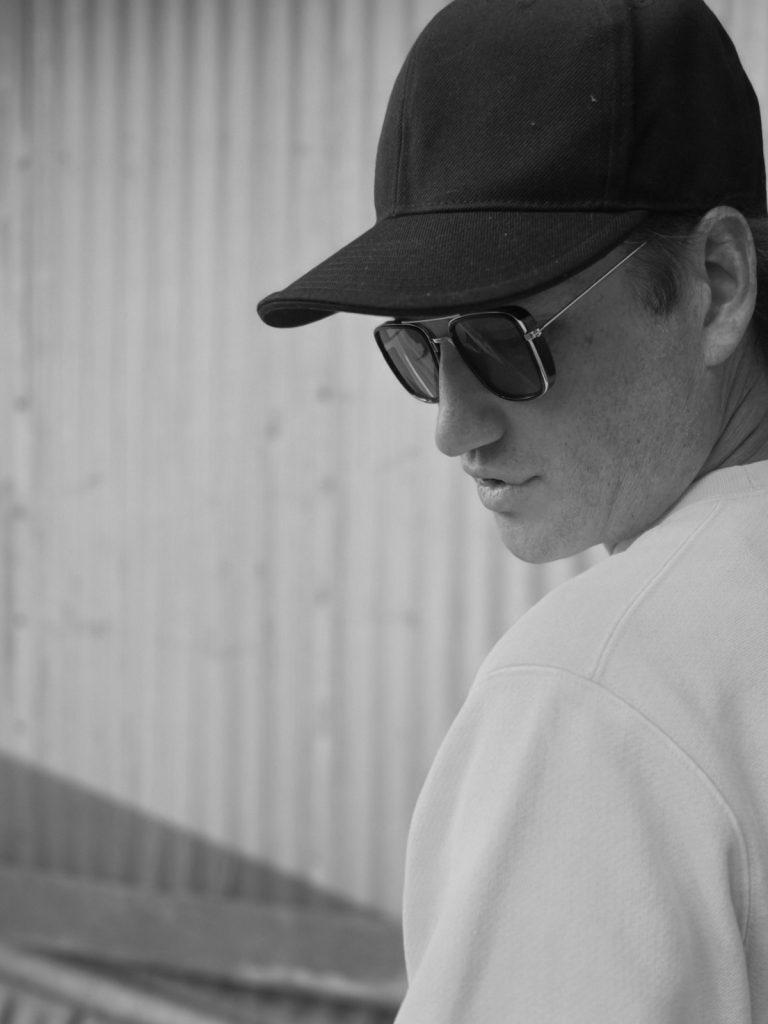
Our conversation with Devon Aviles offers a closer look at the person and creative philosophy behind Death Popsicle, revealing an artist who has built Komusō from a place of independence, experimentation, reflection, and a desire to connect with people who may recognize something of themselves in its darker spaces.
From his decision to leave the noise of metropolitan life behind to his deeply hands-on approach to songwriting and production, Devon’s journey gives greater context to the world surrounding Death Popsicle. Komusō is ultimately an invitation to sit with questions of identity, isolation, connection, and what it means to remain authentic in a world that constantly encourages conformity.
A sincere thank you to Devon for taking the time to speak with DULAXI and for sharing such candid insight into his creative process, influences, experiences, and plans for the future. We encourage readers to experience Komusō for themselves and discover where its five tracks take them.
And to everyone reading, thank you for spending part of your time with DULAXI. We hope this conversation has given you a deeper understanding of Death Popsicle and the ideas behind Komusō. Keep listening, keep discovering, and stay with us for more conversations with artists shaping the many different sounds of today’s music landscape.