
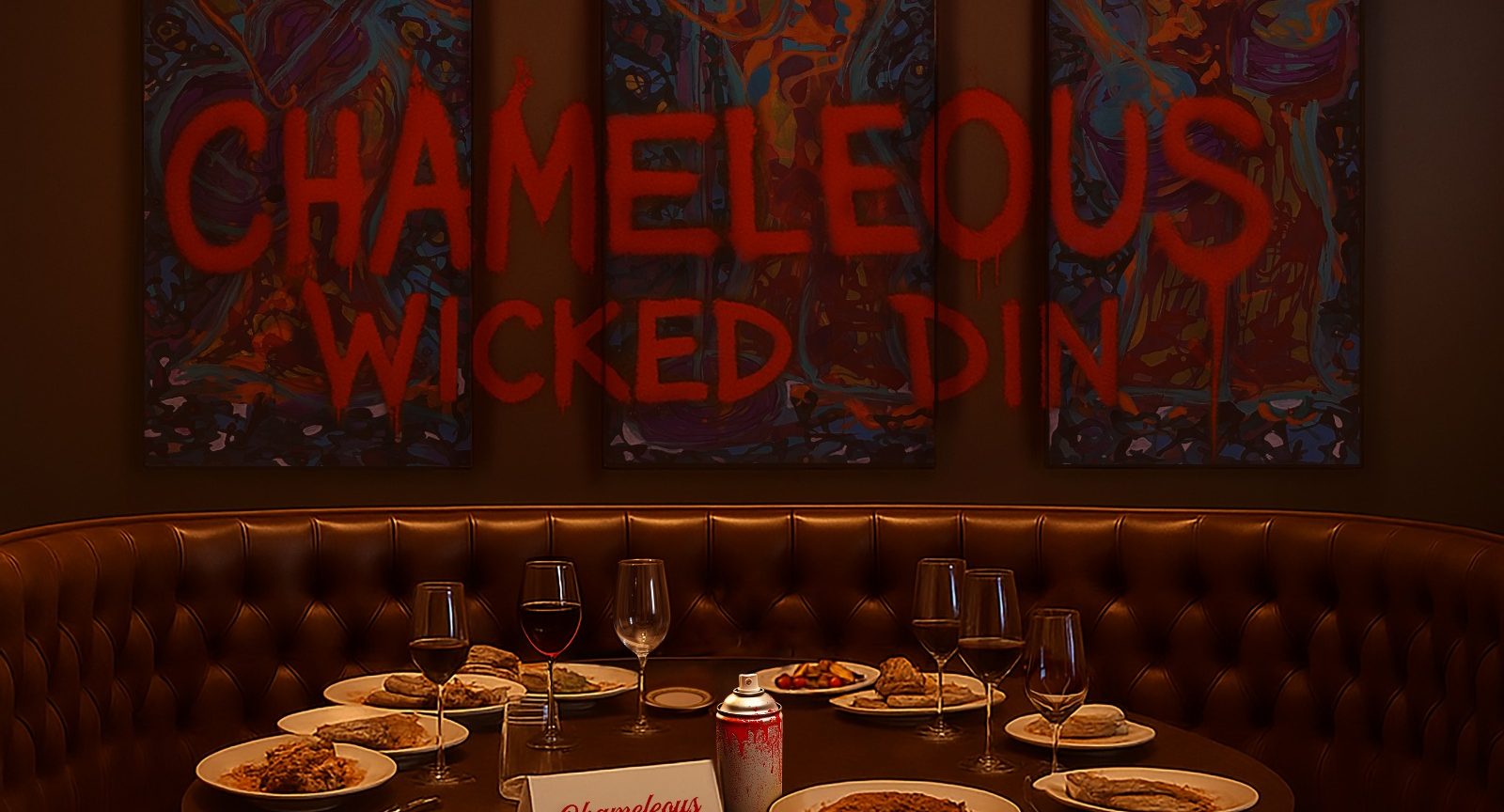
Hello everyone, it’s your host Tehillah from DULAXI, and today I’m delighted to be joined by Mac Bartine, frontman, rhythm guitarist, lead vocalist, and principal songwriter of Tennessee’s six-piece original rock band ChameleouS. Hailing from Knoxville, Tennessee, ChameleouS brings together modern classic rock, alternative rock, psychedelia, roots rock, Southern swing, Americana, and jam-band influences, creating a musical identity that is expansive, melodic, adventurous, and difficult to place within a single genre.
Their debut album, Wicked Din, was released on 1 November 2025 after more than a year and a half of recording, refining, and careful attention to detail. The album brings together songs that Mac originally wrote between the late 1990s and 2006, reimagining them with a band whose six members each bring decades of musical experience to the project. Recorded, mixed, mastered, and produced by Seva at Sequoyah Studios in Knoxville, the album was shaped around an intentionally organic approach that prioritised warmth, energy, character, and the natural interaction between the musicians.
Before we begin our conversation with Mac Bartine, here’s what you need to know about today’s featured project.
About ChameleouS
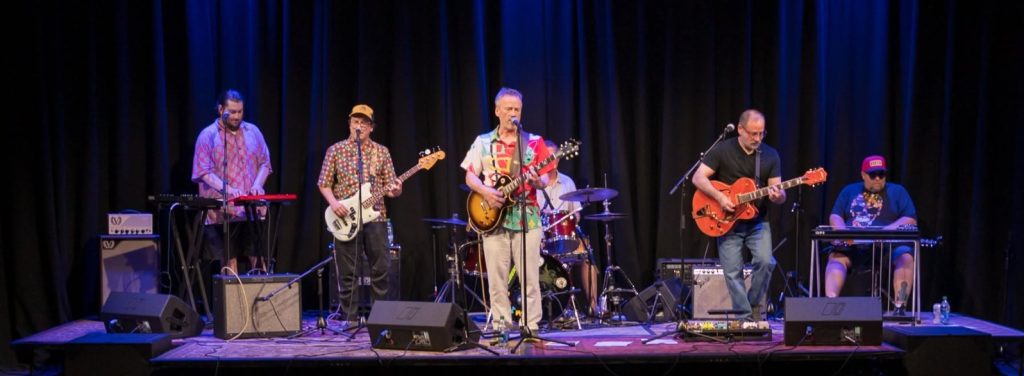
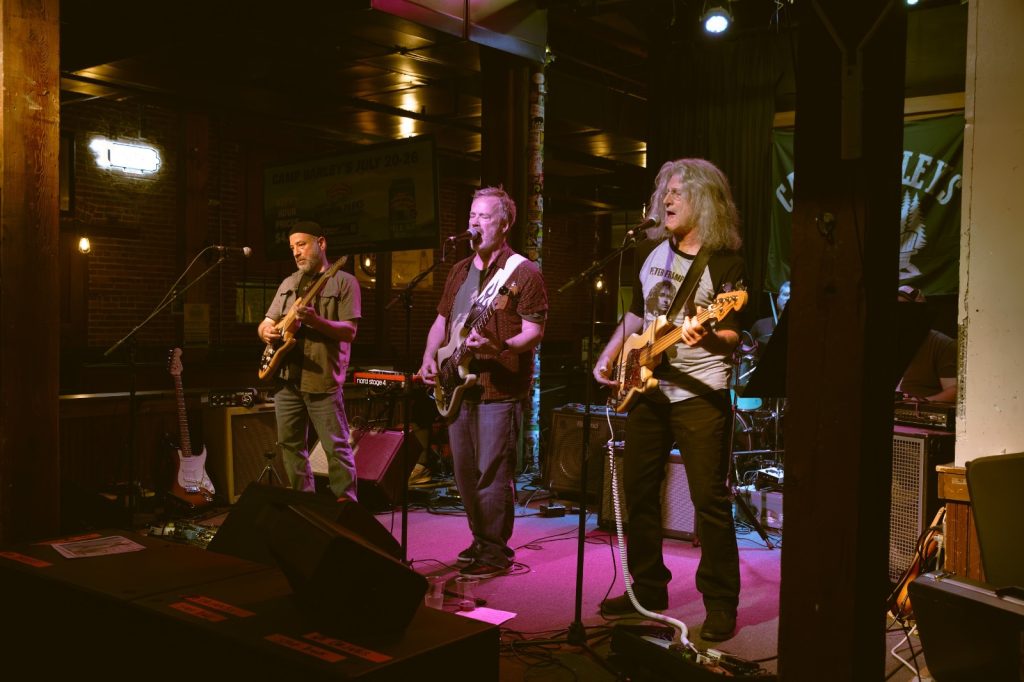
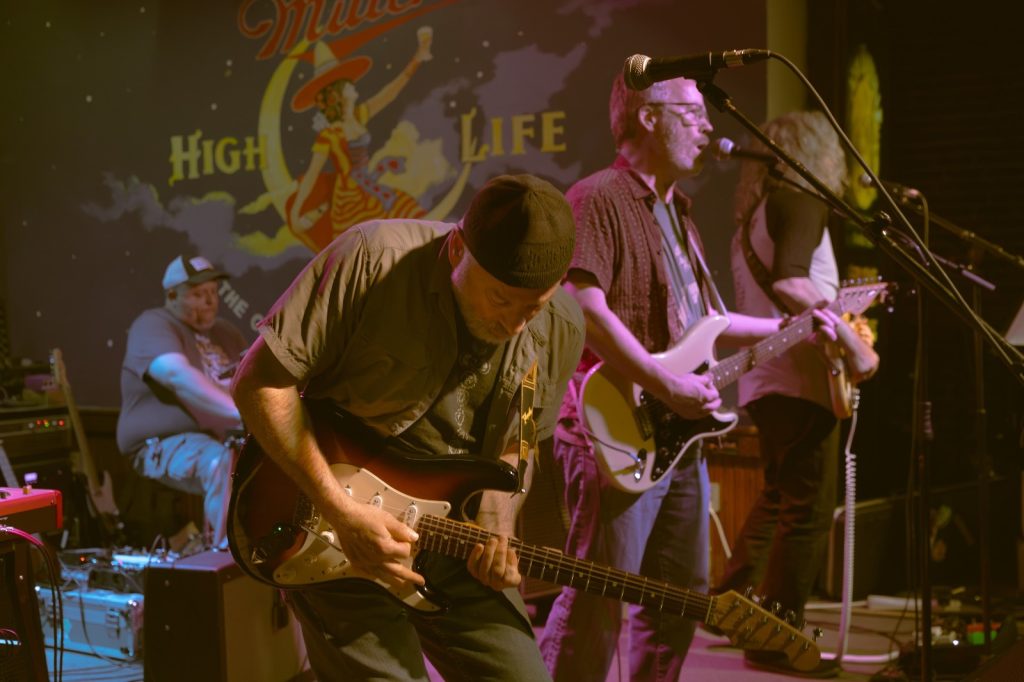
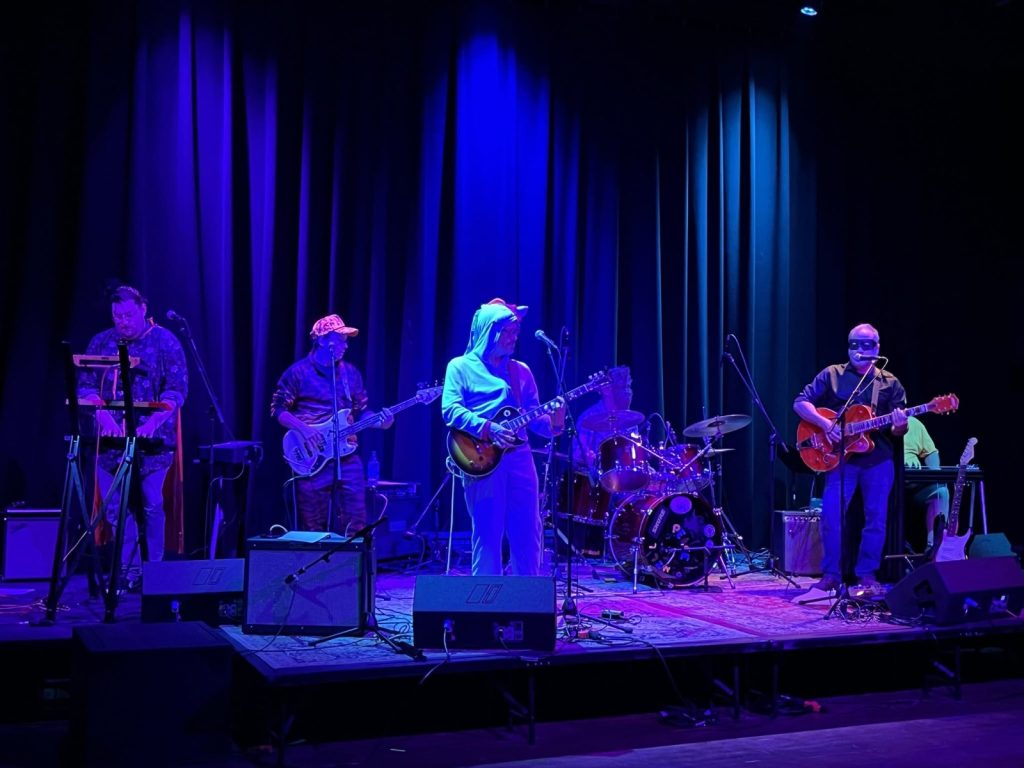
ChameleouS is a six-piece original rock band from Tennessee built around a shared appreciation for musicianship, thoughtful songwriting, adventurous arrangements, and the album as a complete artistic experience. The group features Brian Wooten on pedal steel and lap steel, Heath Nicholls on bass and harmony vocals, J Miller on drums, Jules Bryce on keyboards, Mac Bartine on lead vocals and rhythm guitar, and Rich Adlin on lead guitar and harmony vocals. Together, they draw from a remarkably broad range of musical traditions without allowing any single genre to define the band’s identity.
At the centre of ChameleouS is Mac Bartine’s extensive songwriting history. With a musical journey spanning more than three decades, Mac had accumulated a substantial body of material before the band came together. Many of the songs eventually selected for Wicked Din were written between the late 1990s and 2006, but their age did not prevent them from becoming the foundation for something new. Instead, the songs were brought into a completely different musical environment, where five experienced musicians could interpret, reshape, and expand them through their own instincts and abilities.
That collaborative process became one of the defining characteristics of Wicked Din. Songs that may have existed in relatively stripped-back forms when originally written on acoustic guitar were transformed through pedal and lap steel, electric guitars, bass, drums, keyboards, synthesizers, lead vocals, and layered harmonies. The result is an album capable of moving between intimate passages and expansive rock performances while retaining a consistent sense of identity.
Wicked Din was also conceived as a journey rather than a collection of disconnected songs. ChameleouS wanted to honour the albums that shaped the musicians during their younger years, particularly the records that could be played from beginning to end and leave the listener feeling as though they had travelled somewhere by the time the final track ended. The sequencing therefore became an important part of the creative process, with each transition contributing to the album’s overall emotional arc.
The band’s debut arrives with the confidence of musicians who are not new to their instruments, even though they are new to releasing music together. Their experience has allowed them to approach collaboration with an emphasis on serving the song rather than competing for space. That philosophy continues beyond the album, as ChameleouS has expanded its live set, continued refining its performances, and begun looking toward another album.
For ChameleouS, Wicked Din represents both an ending and a beginning. It captures a particular stage of the band’s development while establishing a foundation for the music still to come. More than simply introducing six musicians to listeners, the album documents the moment when their individual histories began converging into a shared musical language.
Having this brief introduction to today’s featured project, I’m sure both new listeners and longtime fans are excited to hear directly from Mac. So, without further ado, let’s begin today’s interview.
INTERVIEW SESSION
Tehillah:
Mac, your songwriting journey stretches back more than three decades, while many of the songs on Wicked Din were originally written between the late 1990s and 2006. What kept those songs with you for so many years, and what made this particular moment feel right for bringing them into the world?
Mac Bartine:
I’ve written more than 200 songs over the years, and about 60 of them have become lasting favorites of mine. Those songs are like my babies. I’ve always wanted to see them fly from the nest and have lives of their own. Why now? Because I really can’t imagine a better group of musicians to bring my songs to life with me. When my bandmates and I realized how special our collaboration could become, we knew it was time to start recording.
Tehillah:
The members of ChameleouS each bring decades of musical experience to the band, yet Wicked Din is your first release as a group. How did bringing six experienced musicians together change the songs you had originally written, and what did you discover about your own material through that process?
Mac Bartine:
With a few exceptions, I wrote every one of my songs on acoustic guitar. As much fun as I have playing my songs solo, in that state, their nature is pretty bare bones. I had a general sense of “I think these specific instruments played together will sound amazing.”
But when five other musicians who have also spent decades honing their craft joined me and they were playing all those instruments, my songs went from a happy, bubbling little brook of a listening experience in solo performance mode to Niagara Falls with my band mates. My mind was completely blown. Alt folk songs became epic rockers. A Hank Williams-style country blues became a jazz- and swing-infused folk ballad with an ending with enough emotional movement in it to be worthy of closing a pretty rockin’ debut album. It was magical.
Tehillah:
Your name reflects the band’s willingness to move between different textures and styles rather than settle into one musical identity. How do you decide which musical direction serves a particular song, and what does artistic freedom mean to ChameleouS?
Mac Bartine:
The beauty of playing with experienced musicians is that I don’t feel like I need to make all or even most of the decisions.
Artistic freedom means everything to me and to my bandmates. We listen to each other and find our places to shine and lift up the songs. What emerges is very much a kaleidoscope of sounds and styles that somehow work together, and that comes from a creative collaboration, not me or anyone else deciding what everyone else should be playing. When we first play a song, no one says “you do this, you do that” or “let’s make this sound psychedelic;” we just start playing and trust the song and our experience to lead us to the right destination.
Tehillah:
Wicked Din moves between modern classic rock, psychedelia, roots music, jam bands, Southern swing, Americana, and touches of twang. Which of these influences feels most deeply connected to the band’s musical roots, and how do you keep such a broad palette sounding cohesive?
Mac Bartine:
Great question, and honestly, all of the above are big influences. The thing about six people each having decades of musical experience is there are a lot of influences and passions for different genres and artists. The way we play our instruments together is purposely a little unique and hard to pin down or replicate, so even though we’re blending all of those styles together in a single song or focusing on one or two styles in a song, when you hear a ChameleouS song, it always sounds very distinctly like us. Put another way, the genre that best fits a particular ChameleouS song isn’t what makes the song work–it’s the sprinkle of pixie dust that fills the room when the six of us play the song together.
Tehillah:
The album was created with the belief that listeners should experience it from beginning to end rather than simply select individual tracks. What do you believe an album can communicate as a complete journey that a collection of disconnected singles cannot?
Mac Bartine:
We wanted to honor the bands that created the music that we grew up on, but we also wanted to create something that feels new and different. When we were kids in the 70s, our favorite albums were musical experiences that took listeners on a journey. When you played those albums from start to finish, you were somewhere new at the end. That’s what we wanted to achieve with our debut album: to create a 40-minute emotional and musical journey that listeners would want to take again and again, because they were transported somewhere when they heard it the first time. I’m not saying that a song can’t do that, too. But we love the album format, and we wanted to give our listeners that full album listening experience, not just a moment.
Tehillah:
The title Wicked Din has a sense of noise, intensity, and perhaps even contradiction within it. What does the title represent in relation to the album, and how did you arrive at a name that could capture the character of these songs?
Mac Bartine:
The title doesn’t tell the listener exactly what to expect, but we like that, because it isn’t an album you can explain in two words. Tons of amazing albums have taken their title from a track, so that was automatically one of the first options we considered for the title of our first album. We talked about several other title ideas, but Wicked Din, which is the 4th track on the album, felt like a very fitting description of our music. Our sound is big, boisterous, sometimes lush, and early on, we were still figuring out the best ways to rein that in to avoid overwhelming a listener’s ears. Sometimes we got that right, sometimes we didn’t, so calling our sound a “wicked din” often right on the mark. Once we got to mixing and mastering the album, we figured out a lot of places to pull things back, as well as where to push things forward, but that wicked din still shines through in most of the songs.
Tehillah:
Many of the songs began as older compositions before being updated and reimagined for the band. When revisiting material written decades earlier, how did you preserve the emotional truth of the original songs while allowing your present-day perspective to reshape them?
Mac Bartine:
Some of the songs had a lot of meaning to me when I wrote them, but over time most of the emotion that may or may not have gone into them became less important than what the songs would mean to someone hearing them today. So I didn’t worry too much about preserving the songs’ original focus or intent. We each put our own emotions and intent into the recordings, and that’s made them more powerful than my thoughts and emotions of 20 years ago ever could.
Tehillah:
The album can move from intimate, reflective passages into expansive rock anthems without losing its sense of identity. When sequencing Wicked Din, how important was that contrast in creating the emotional movement of the album?
Mac Bartine:
We cared a lot about the sequence of songs for this very reason – we wanted to give that arc of experience–the album journey–from I Knew knocking your socks off right away in track 1 to Unshakable No creating the album’s emotional conclusion that soars to new heights at the very end. Every transition mattered in creating the full arc of the album. We also considered twenty minutes per side for pressing the album to vinyl, because we knew we wanted to do that.
Tehillah:
Brian Wooten’s pedal steel and lap steel, Jules Bryce’s keyboards, and Rich Adlin’s lead guitar give the band a particularly wide instrumental palette alongside bass, drums, vocals, and rhythm guitar. How do the different personalities of these instruments influence the arrangements and emotional character of your songs?
Mac Bartine:
On the album, Rich Adlin is playing guitar leads that paint wonderfully both inside and outside the lines; Brian Wooten is using lap steel and pedal steel guitar to mix in lush, atmospheric undertones one moment and screaming leads or a touch of twang the next; Jules Bryce’s keyboards and synth are bridging the gap between old Hammond organ arena rock and modern synth rock; and Heath Nicholls on bass and J Miller on drums are effortlessly swinging between holding us down or setting us free, depending on what’s needed in the moment. Throw in my rhythm guitar and lead vocals, and some harmonies, then mix all that together and add a dash of sriracha sauce, and that’s Wicked Din. Every performance was delivered with attitude and every performance influenced all the others. It’s a lively way to play music, and Wicked Din captures that moment, which was kind of the end of ChameleouS’s beginning. That was an exciting time, and we love the album. A lot has changed for us since June of 2024 when recording started, and I really can’t wait for people to hear where we’ve taken things since then.
Tehillah:
Seva recorded, mixed, mastered, and produced the album at Sequoyah Studios using an intentionally organic approach that prioritised warmth, energy, and emotional authenticity over perfection. What did the band have to unlearn or resist during that process in order to preserve the natural character of the performances?
Mac Bartine:
This slides back into the reason Wicked Din was a fit for the album name. Honestly, our sound was a lot for a listener to process in June of 2024. We spent 2 full days recording multiple takes of every song, and a day or 2 later, Seva called Rich and me into the studio and effectively said, “Look, I absolutely love your band and I think this album has tremendous potential. But, if we don’t make some decisions as to who is heard most and who goes into the background at any given moment, this album will be unlistenable. I’ve been doing this for decades. Do you trust me?” It was a critical question, and our answer: Yep! We did. And it was honestly a huge relief, because we were well aware of how big our sound was, and that we needed to get control over that. We loved the bigness of it all, but we knew we needed to reign it in to create a good album. Flash forward to today, and we’ve taken that lesson to heart. Our sound is still big and unique – a full tapestry. But we do a lot more listening to each other and purposely only inputting where we can make the greatest impact.
Tehillah:
After spending more than a year and a half recording and refining Wicked Din, was there a particular song, arrangement, or production detail that proved especially difficult to get right, and what finally made you feel that it had reached its proper form?
Mac Bartine:
There were a couple songs that we spent a lot of time on. The biggest one was Life Fever, which is far from the most complex of our tunes, but there’s an instrumental interlude in the middle of the song that’s got a different structure and the time signature changes slightly in one spot. It took several iterations to get it right. We spent many hours in the studio on all 8 of the songs (plus 4 more that didn’t make the cut), but that middle part of Life Fever was the real bear. One of the things that made it hardest was everyone’s schedule went a bit nuts at the same time, so we had to talk about it over text or meet in the studio, try something, listen to it, change it…painful! But worth it. The end of Unshakable No was also a big focus, because we knew it would be the end of the album.
Tehillah:
With six musicians who have spent decades developing their individual craft, collaboration could easily become a matter of competing ideas. How have you learned to balance individual musicianship with the need for every part to serve the song?
Mac Bartine:
This is an aspect of the band that keeps getting stronger over time. It’s a lot easier now than it was 3 years ago. On the whole, we trust each other’s judgement, and all of us feel comfortable speaking up if something isn’t working. Sometimes that’s me; a lot of times it’s someone else. That’s a thing of beauty from my perspective. It’s freeing to not have to worry about making all the decisions myself. That’s true in business, relationships – everywhere. I adore that it’s part of our band’s culture.
Tehillah:
The band’s approach places thoughtful songwriting at the centre of music that also leaves room for adventurous arrangements and dynamic performances. When writing or arranging a song, what tells you that an idea deserves to be developed further rather than simply sounding interesting for its own sake?
Mac Bartine:
In general, we really listen to each other and keep our collective musical taste front and center so we can recognize what’s a good fit for who we are as a band when we hear it. It helps that we practice with headphones on and everyone has an app to put their own preferred mix in their ears. We also record every practice and every show, and try to listen to them afterwards. In short, we take advantage of tools that are available and then actually use them as intended so it’s easy to spot moments that are worth trying to repeat and work into the arrangement of a song. At the end of the day, if something is just quirky or makes us laugh in surprise, that’s fun, maybe clever, but it probably won’t make it into an arrangement unless at least one of us gets really excited and says, “that was awesome! Can you play it again?”
Tehillah:
Although Wicked Din is a debut, the album carries the confidence of musicians who have already spent years performing and developing their craft. How has that accumulated experience changed the way you approached your first album compared with how you might have approached it earlier in your musical lives?
Mac Bartine:
I’m sure we would have muddled through and made a good album together 10 or 20 years ago, but Wicked Din is the best album I’ve been a part of, and I believe the band’s collective time and experiences are the reason for that. Speaking for myself, over the last thirty years, my career as an entrepreneur taught me valuable lessons that are healthy for my creative life, too. Consistently showing up to do the most important things, avoiding perfectionism, being open to criticism and coachable. That’s my experience. The whole band has the benefit of already having lived a full life, and every one of us would rather do what’s best for the band’s performance or recording than to put our own ego first. That comes with experience and maturity.
Tehillah:
You are already writing and recording new material while bringing Wicked Din to audiences through live performances. Now that the band’s first artistic statement has established its foundation, what are you discovering about the direction ChameleouS naturally wants to take next?
Mac Bartine:
We haven’t started recording a new album yet, but we have doubled our set list. Also, before we could have a strong debut album that contained some pretty complex music, we had to edit down to refined versions of the songs. Learning to refine those songs and listening to the result has made our entire set list better, more fun to play, more danceable, more listenable, more memorable. So what’s next? Definitely another album, more gigs, more practicing, and way more talking about how excited we are about what we’re doing. We all seriously love the process of constantly getting better by playing together. Every time we hear an improvement in a song or a set and that improvement stays with us until the next time we play, we get more and more excited about playing out and recording. I think those are the 3 things the album has put us on the path to: continuous refinement of and experimentation with our sound, playing out more, and recording more.
Tehillah:
At a time when music is increasingly consumed through individual tracks and algorithms, ChameleouS has deliberately chosen to make albums that reward patience and repeat listening. What do you hope listeners ultimately understand about your band after experiencing Wicked Din as a complete work, and what kind of musical legacy do you want ChameleouS to build from here?
Mac Bartine:
We want listeners to understand that we love making music together. We’re putting that love back into our music and into our band. And we’re proud of where we’ve been and excited about where we’re going.
And wow. Legacy is a big word. We’re having a blast, but if all we do is the easy stuff, we might become great musicians playing great music together, but we probably won’t be a truly great band. We’ll get some fans, we’ll have some fun, maybe record some more albums, and that’s about it. Honestly, that doesn’t sound too bad. But if we want more, we’ll have to do more.
Here’s the “keep doing these things” plan for a more ambitious version of ChameleouS: practice and improve our craft; produce great albums; have fun; play music with and for people who are happy to share their time with us; and shout to (and maybe from?) the rooftops that we’re really proud of our music and we want people to enjoy it with us. That’s a solid list of time well spent activities for any band that wants a shot at becoming great. If we do that long enough, maybe that’s a workable path towards a future legacy.
“ChameleouS turns decades of individual musical experience into something that feels alive in the present, proving that an album can still be a destination rather than merely a collection of songs.”
~ Tehillah (DULAXI Team)
EDITORIAL PERSPECTIVE
Wicked Din feels like the meeting point between seasoned musicianship and the freedom to experiment. What stands out is not simply the range of instruments or influences, but how deliberately the six musicians make space for one another. The album’s layered arrangements, shifting dynamics, and strong sense of movement reflect a band still discovering how far its collective voice can travel. Mac’s reflections also reveal a creative process grounded in trust, refinement, and a genuine love of playing together. That combination gives ChameleouS a compelling foundation for whatever comes next.
~ Tehillah (DULAXI Team)
CLOSING
Our conversation with Mac Bartine offers a revealing look into the making of Wicked Din, from the decades-old songs that eventually found their way into the band’s hands to the collaborative process that transformed them into the album ChameleouS released in 2025. His reflections also make clear that the band’s story is not defined solely by its debut. It is equally about the musicians’ willingness to keep listening, refining, experimenting, and growing together.
Thank you to Mac for taking the time to speak with DULAXI and for sharing such thoughtful insight into his songwriting history, the band’s creative culture, the making of Wicked Din, and the direction ChameleouS hopes to explore next.
For readers discovering the band for the first time, Wicked Din offers an opportunity to experience ChameleouS on its own terms: as a six-piece whose music draws from a wide range of traditions while remaining committed to the chemistry created when these particular musicians play together. We encourage you to give the album the time it deserves and experience the full journey from beginning to end.
Thank you for spending time with DULAXI. We look forward to bringing you more conversations with artists whose stories, creative processes, and music deserve to be heard.