
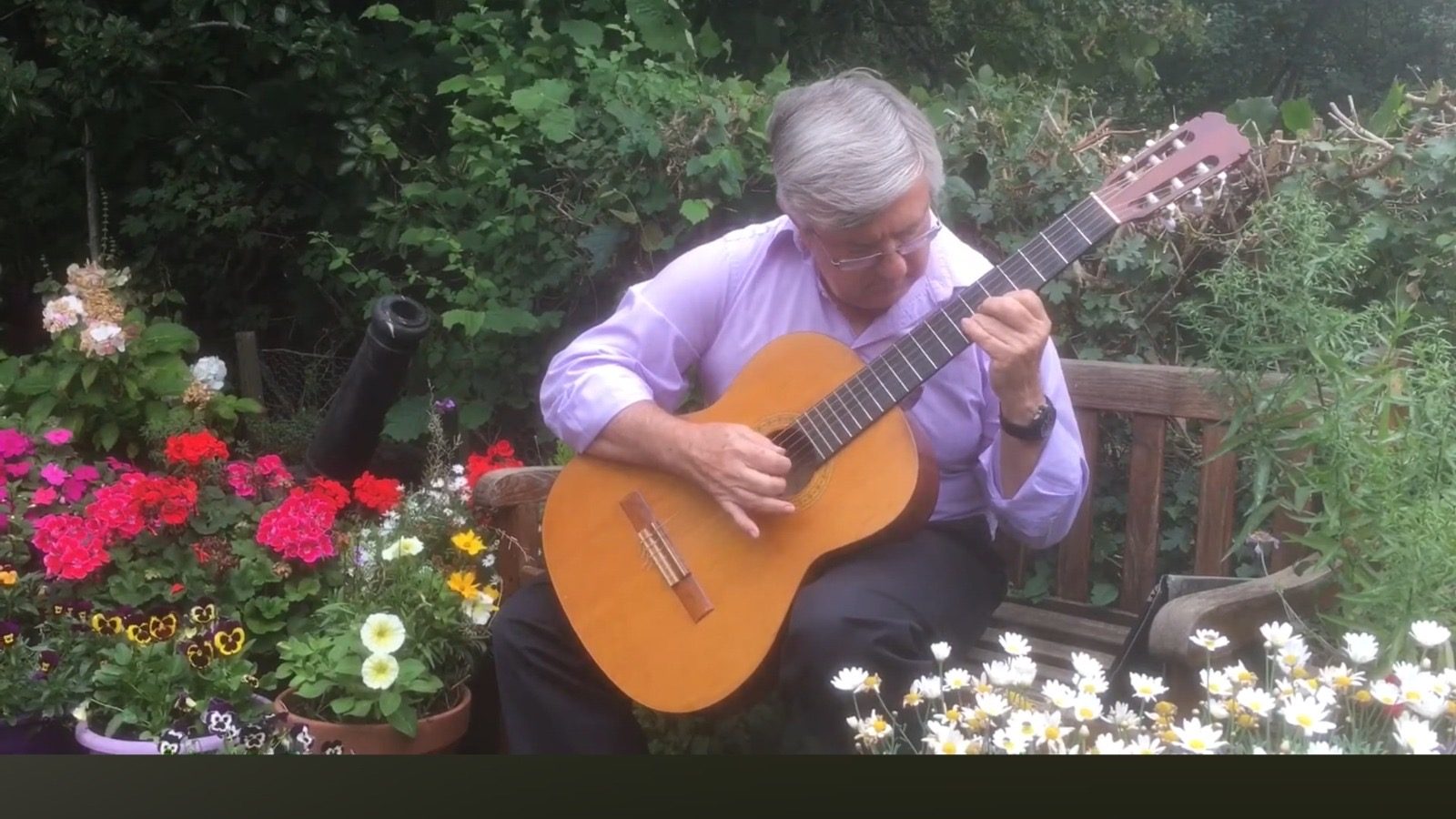
Hello everyone, it’s your host Tehillah from DULAXI, and today I’m delighted to be joined by guitarist and composer Martin Lloyd Howard from Reigate, England. A classically trained musician whose work has expanded across folk, blues, rock, electric and acoustic guitar, Martin brings together a broad range of musical influences while maintaining the discipline that shaped his early development. His latest original instrumental single, “Highland Mist,” was released on 1st August 2026 and explores the expressive possibilities of DADGAD tuning through a Tanglewood steel-string acoustic guitar.
Before we begin our conversation with Martin Lloyd Howard, here’s what you need to know about today’s featured project.
About Martin Lloyd Howard
Martin Lloyd Howard’s musical journey has been shaped by both tradition and curiosity. Originally trained as a classical guitarist, he has spent years broadening his musical vocabulary through folk, blues and rock, while becoming proficient across electric, acoustic and slide guitar. His main instrument remains a fifty-year-old hand-built classical guitar, an instrument that has become closely connected with his musical identity, but his willingness to experiment has led him to explore different instruments, tunings and approaches to composition.
That openness to exploration is particularly evident in “Highland Mist,” an original instrumental single released on 1st August 2026. The piece began not with a fixed concept, but through experimentation with DADGAD tuning for another project. While exploring the tuning, Howard discovered a fingerstyle chord sequence that suggested a sense of quiet mystery and rugged landscapes. From that initial musical idea, the composition gradually developed into a piece inspired by the mist-covered landscapes of the Scottish Highlands.
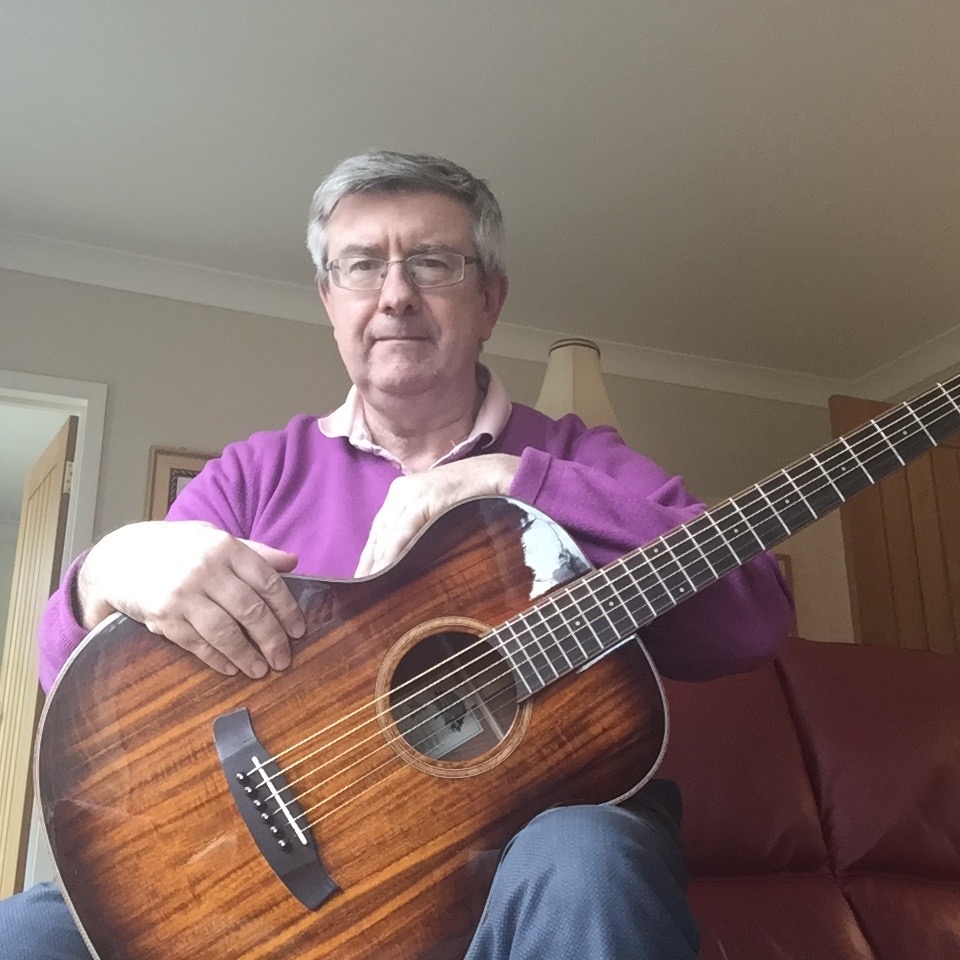
For the recording, Howard moved away from his familiar classical nylon-string guitar and instead used a Tanglewood steel-string acoustic. The decision was partly practical, given the difficulties that altered tunings can create with nylon strings, but it was also an artistic choice. The brighter and edgier character of the steel-string guitar allowed the resonances of DADGAD tuning to become an important part of the piece’s identity.
His musical journey is not confined to solo guitar, either. Alongside his individual work, Howard has collaborated with Mark Johnson, leader of the Kent-based Midnight River Crew. Their collaborative work has opened another creative avenue for Howard, requiring him to move beyond the role of guitarist into areas including production, mixing, mastering and multi-instrumental performance. Their album of original rock, pop and folk music, “The Stories We Tell,” was released as a joint production, demonstrating another side of Howard’s musical identity.
With “Highland Mist,” however, the focus returns to the intimacy of a single guitarist, an altered tuning, and a musical idea allowed to develop naturally. The result is a project rooted in experimentation but guided by a clear belief in the storytelling possibilities of instrumental music.
Having this brief introduction to today’s featured project, I’m sure both new listeners and longtime fans are excited to hear directly from Martin Lloyd Howard. So, without further ado, let’s begin today’s interview.
INTERVIEW SESSION
Tehillah:
You began your musical journey through classical guitar before gradually expanding into folk, blues, rock, electric guitar, slide guitar, and altered tunings. Looking back across that evolution, what experiences or discoveries were most important in helping you move beyond your classical training while still carrying its discipline and precision into everything you play today?
Martin Lloyd Howard:
I think the biggest light bulb moment was in the mid 2000s when I seriously started to play electric guitar. It was only then that I appreciated that it is a wholly different instrument rather than just an amplified acoustic guitar. It seems obvious now, but it was a big shift for me and very influential – even if, from time to time, I still use some classical guitar chops in my electric work.
Tehillah:
Your fifty-year-old hand-built classical nylon-string guitar has been your main instrument for much of your work, which makes your decision to use a Tanglewood steel-string acoustic for “Highland Mist” particularly interesting. What does your relationship with that older classical instrument mean to you, and what did the steel-string guitar allow you to express on this piece that your usual instrument could not?
Martin Lloyd Howard:
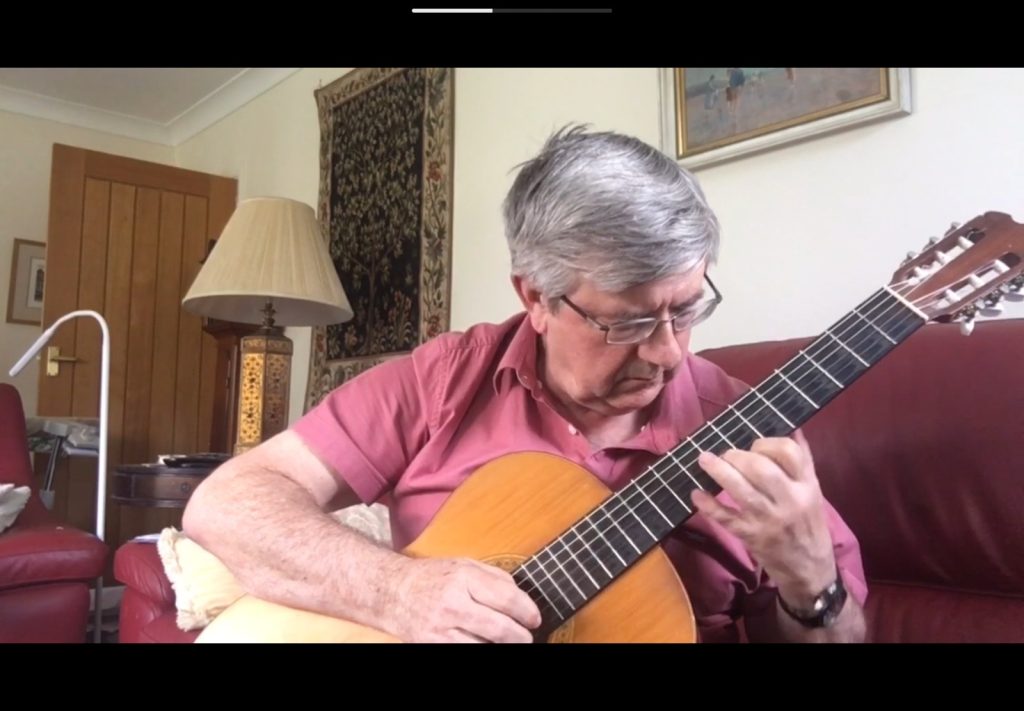
My old K-Yairi classical guitar is almost always my go to instrument. It is to all intents and purposes an extension of my musical personality. However, having decided to go down the DADGAD route, I thought the Tanglewood acoustic (which I bought on a whim in Newcastle) was a better option. Part of the reason was severely practical: using altered tunings with nylon strings generally leads to a world of pain. But in addition I wanted a brighter and edgier tone to bring out all those lovely DADGAD resonances that are a key part of Highland Mist.
Tehillah:
Your musical influences stretch from the classical artistry of Julian Bream to the folk traditions of Martin Simpson, the contemporary guitar work of Dominic Miller, and the altered-tuning explorations of Jimmy Page and Ritchie Blackmore. How have such different approaches to the guitar shaped your understanding of what an instrumental composition can communicate without relying on a vocal or lyric?
Martin Lloyd Howard:
I guess it’s maybe about the versatility of the guitar in all its guises. The range of tones, textures and sounds available to a guitarist is huge and that contributes to my eclectic set of influences. It also means that you have a large palette of instrumental sounds that (to some extent) can substitute for a vocal contribution.
Tehillah:
You have described your broader mission as creating original solo guitar music that remains accessible while still painting pictures and telling stories in the listener’s imagination. What first drew you toward this idea of using instrumental music as a form of storytelling, and what do you believe a guitar can communicate that words sometimes cannot?
Martin Lloyd Howard:
I don’t think there was any one driver – except maybe that I’m a lousy singer! The idea of writing and performing solo guitar pieces that can paint pictures in the mind of the listener evolved more or less of its own accord as I built my compositional repertoire. It’s also worth saying that most of my pieces start out as technical musical exploration and experimentation rather than a deliberate attempt to write something about a particular mood or image: that tends to emerge later as the piece develops.
Tehillah:
“Highland Mist” began almost accidentally while you were experimenting with DADGAD tuning for another project and discovered a fingerstyle chord sequence that immediately suggested quiet mystery and rugged landscapes. What was it about those first few chords that made you recognize that you had discovered the beginning of a completely different piece?
Martin Lloyd Howard:
I think it was the D minor tonality, combined with some melodic leaps between notes that prompted images of a rugged, beautiful landscape wreathed in mist.
Tehillah:
The title “Highland Mist” immediately creates an image of a particular landscape, yet the composition itself contains no lyrics explaining what the listener should imagine. How deliberately did you shape the melody and harmonic movement to evoke the Scottish Highlands, and how much did you leave open for each listener to create their own version of that landscape?
Martin Lloyd Howard:
As I said the imagery emerged from my initial doodlings and I tried to reinforce it as the piece developed. But – and I can’t stress this enough – this is how I hear/see it. The melody might suggest a completely different but equally valid sense to another listener. That’s absolutely fine with me. The main thing is that they enjoy it.
Tehillah:
DADGAD is often associated with Celtic and folk guitar because of the harmonic possibilities it creates, but you have taken an especially interesting approach by using the tuning melodically rather than simply relying on it for atmosphere or texture. What did working with DADGAD reveal to you about melody, chord movement, and the expressive possibilities of the guitar during the creation of this piece?
Martin Lloyd Howard:
I have been using DADGAD tuning on and off for many years ever since I learned to play “Black Mountainside” made famous by Jimmy Page on the first Zeppelin album – which in itself is a quite melodic track. I do sometimes use it as an underlying texture particularly in conjunction with slide guitar – see “Paint on Canvas” or “A Thousand Jewels” from the album “The Stories We Tell” just released as a joint production with Mark Johnson of the Midnight River Crew. But in general, I tend to enjoy finding unexpected melodies and harmonies from experimenting with different chord shapes and scales in the DADGAD tuning and see where they take me.
Tehillah:
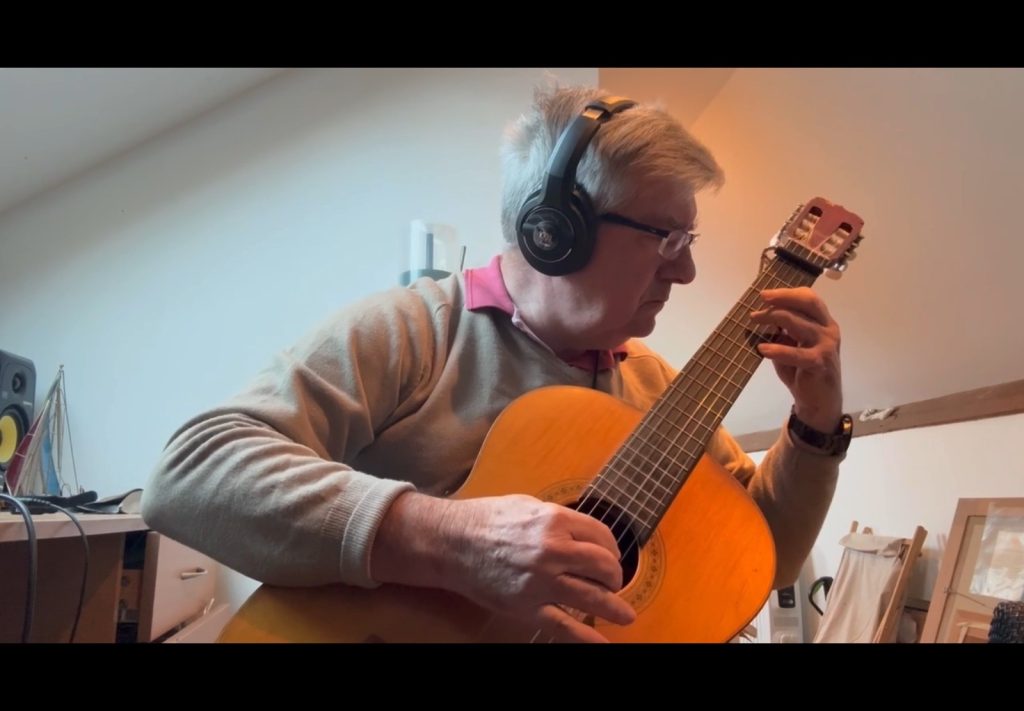
There is something particularly intimate about recording a composition in your own home loft with a single Rode NT4 microphone positioned only about nine inches from the join between the neck and body of the guitar. What were you trying to preserve through such a simple recording setup, and how did that closeness to the instrument influence the character of the final recording?
Martin Lloyd Howard:
To be honest that is generally how I record solo guitar in my home studio – aka my loft! The positioning is the result of a lot of experimentation. I find that using the NT4 mic in that way brings out the true timbre of an acoustic guitar (whether steel or nylon) while letting it breathe and keeps the need for any subsequent processing to a minimum. It suits me, but it might not suit others.
Tehillah:
Your previous instrumental works include “Selene,” “Winter’s Light,” and “Hidden Andalucia,” each suggesting a strong connection between music and a sense of place or atmosphere. When you compare “Highland Mist” with those earlier compositions, what feels different about the way you approached imagery and musical storytelling this time?
Martin Lloyd Howard:
Apart from the use of a steel strung guitar and DADGAD tuning, the process was very similar for all these works, though two were inspired by actual paintings (Selene and Winter’s Light).
Tehillah:
Because there are no vocals or lyrics to direct the emotional journey, every element of your guitar performance becomes important, from the phrasing and dynamics to the spaces between notes. How do you approach those details when composing a piece that needs to communicate a mood and a sense of movement entirely through the guitar?
Martin Lloyd Howard:
Lots of practice and honing the details of phrasing and tonality once the composition is more or less complete. I play the piece (or sometimes parts of it) over and over again until it is really in my fingers both technically and emotionally. Then I feel ready to record – even then it still usually takes several takes to get it right.
Tehillah:
Your classical background remains an important part of your playing even as you explore folk, blues, and rock. When working on a piece as atmospheric and folk-oriented as “Highland Mist,” how does that classical foundation influence your fingerstyle technique, musical discipline, arrangement decisions, or approach to composition?
Martin Lloyd Howard:
I think you’re right to describe it as a foundation. For me, having started in the classical tradition, I feel I have a solid musical backing and a well developed right hand technique. Those help me in composition and arrangement but I try not to let them become any sort of technical straitjacket.
Tehillah:
You have spent many years moving between musical traditions rather than remaining within a single genre, and “Highland Mist” brings classical discipline, folk-inspired sonorities, and contemporary instrumental storytelling together in one piece. What have you learned about your own musical identity through refusing to let one particular genre define the boundaries of your guitar work?
Martin Lloyd Howard:
I think my classical training will always be an underlying influence on my musical identity. But overall, moving between disciplines has made me a more complete and versatile musician. It’s made me more confident about trying to fuse different styles in a way that allows the whole to be more than the sum of its parts. A lot of my work on the new album with Mark Johnson eg the title track “The Stories We Tell” reflects this approach – which in turn is enriched by Mark bringing a whole different set of influences and skills to bear.
Tehillah:
“Highland Mist” is built around the idea of transporting the listener into the mist and mystique of the Scottish Highlands rather than simply presenting them with a technically impressive guitar performance. When you listen back to the finished piece, what emotional or visual journey do you hope unfolds in the listener’s mind from the opening notes to the final moment?
Martin Lloyd Howard:
For me, the piece conjures images of harsh but beautiful landscapes wreathed in mist, and I hope that listeners get that same sense. But I can’t impose that on them. It could be that the sound of the tune generates other images which may be equally valid for a different listener. The main thing is that I want them to enjoy it.
Tehillah:
Your work places considerable value on authenticity, and the decision to record this piece in a home environment with a deliberately uncomplicated microphone setup seems closely connected to that philosophy. How has your understanding of authenticity in instrumental music developed over the years, particularly as recording technology has made it possible to alter almost every aspect of a performance?
Martin Lloyd Howard:
I think it’s just a question of trying stuff out. I think there is a difference between recording single acoustic instruments, where, to me, a simple approach is usually the best, and putting together an ensemble piece including the use of electrically driven instruments, like guitar, bass, keyboards etc where you can use more sophisticated recording technology to good effect. But even in the latter case, I tend to be fairly sparing in my use of processing tools.
Tehillah:
While “Highland Mist” explores a quiet Celtic atmosphere, your next project moves in another direction, with an album of original rock, pop, and folk music arriving through your collaboration with Mark Johnson of the Midnight River Crew. How does working collaboratively change your creative process compared with the solitary discipline of composing and performing solo guitar pieces?
Martin Lloyd Howard:
My collaborative work with Mark and others tends to occupy a separate space, even if, frequently, the original musical idea for a collaboration comes from me messing around on a solo guitar. Collaborations also engage a whole extra set of skills: mixing, mastering, blending different sounds (including capturing vocals, which bring a set of new challenges), and in general acting as a producer and multi-instrumentalist rather than just a guitar player. Putting together the album has been an excellent example of that and has been a major learning process for both of us.
Tehillah:
After developing a body of work that includes “Selene,” “Winter’s Light,” “Hidden Andalucia,” and now “Highland Mist,” alongside your upcoming collaboration with Mark Johnson, what would you like the next chapter of your musical journey to reveal about you as a composer, and what kinds of landscapes, stories, or musical ideas are you still eager to explore?
Martin Lloyd Howard:
I don’t think there’s any great plan to be honest. It’s always been about making music that I like and that others do too. I like to push boundaries and try new approaches, but it’s always with that end in mind. Hopefully that’s how listeners see it as well.
“Highland Mist” is a compelling example of how a single guitar can become a meeting point between discipline, experimentation, and imagination, allowing an artist’s technique to serve not just the music itself, but the world the music invites each listener to discover.
~ Tehillah (DULAXI Team)
EDITORIAL PERSPECTIVE
What stands out about Martin Lloyd Howard‘s approach is the freedom behind the discipline. His classical foundation gives his playing structure, but his willingness to experiment with tunings, instruments, and genres keeps the music open-ended. “Highland Mist” feels particularly personal because its imagery developed naturally from musical exploration rather than being imposed from the beginning. The intimate recording method further suits that philosophy, preserving the sense of a guitarist allowing an idea to speak for itself.
~ Tehillah (DULAXI Team)
CLOSING
Our conversation with Martin Lloyd Howard offers an illuminating look into the creative thinking behind “Highland Mist” and the broader musical journey that brought him to this point. From his classical beginnings to his exploration of folk, blues and rock, Martin has developed an approach that values both musical discipline and the freedom to experiment.
We would like to thank Martin for taking the time to speak with DULAXI and for sharing such thoughtful insight into his instruments, influences, creative process, recording philosophy and approach to instrumental storytelling. His reflections also offer a useful reminder that music does not always need words to create a sense of place. Sometimes, a melody, a particular tuning and the character of an instrument can be enough to leave the listener somewhere entirely different.
We encourage readers to spend some time with “Highland Mist” and discover what landscape, atmosphere or story the piece creates in their own imagination. As Martin himself explains, the image he hears is his own, and every listener is free to find something different within the music.
Thank you for spending time with DULAXI. We hope you will continue exploring Martin Lloyd Howard’s work and following the next stages of his musical journey, including his collaborative work with Mark Johnson. We look forward to bringing you more conversations with artists, composers and musicians from around the world.