

Released on 17th June 2026, “Don’t Tell Me How to Grieve” sees D.D.R. transform the deeply personal experience of loss into a moving melodic rock power ballad that refuses to offer easy answers. Instead of portraying grief as a journey with a clear destination, the song embraces its unpredictable nature, reminding listeners that mourning unfolds differently for everyone. From the opening moments, D.D.R.’s vocal delivery establishes an atmosphere of quiet devastation, beginning with hushed, almost fragile expressions before gradually expanding into powerful, emotionally charged passages that capture the frustration, sorrow, and exhaustion that accompany profound loss. Those dynamic transitions never feel excessive because they are driven entirely by the emotional progression of the lyrics. The song immediately draws attention to its central message that no outsider has the authority to dictate how another person should process heartbreak, making every vocal phrase feel less like a performance and more like a genuine emotional confession that invites listeners into an intensely vulnerable space.

What gives “Don’t Tell Me How to Grieve” its greatest emotional strength is the relationship between D.D.R.’s expressive vocals and lyrics that consistently reject superficial comfort. The line, “Listening to the sound of silence that your absence left behind,” beautifully captures how emptiness can become overwhelmingly loud, turning silence itself into an emotional presence. Equally affecting is the reflection, “If I know the last time I saw you would be the last time I saw you,” which expresses the painful hindsight that so often accompanies bereavement. Yet the emotional centerpiece arrives through the repeated plea, “Don’t tell me how to breathe,” a statement that grows beyond grief itself and becomes a declaration of personal autonomy. D.D.R. delivers these moments with remarkable sincerity, shifting effortlessly between restrained vulnerability and aching intensity without ever losing authenticity. Rather than presenting resilience as moving on quickly, the song argues that genuine healing comes from allowing every emotion to exist naturally, validating the messy, nonlinear reality of grief while refusing to surrender to the expectations imposed by others.
The musical arrangement strengthens that emotional narrative through careful restraint and gradual expansion. Inspired by classic arena rock while maintaining an intimate atmosphere, the song combines soaring guitars, emotional piano passages, expressive saxophone, cinematic orchestration, and understated percussion to create a soundscape that never competes with the lyrical message. Spacious production leaves room for every vocal nuance to resonate, while subtle ambient textures reinforce the lingering feeling of absence that defines the composition. The clean mix allows the vocals to remain the emotional focal point, with tasteful reverb adding a haunting sense of distance that mirrors memories echoing through silence. Instead of relying on dramatic instrumental shifts, the arrangement slowly builds through careful layering, allowing emotional tension to grow naturally before reaching an anthemic final chorus that feels completely earned through everything that precedes it.

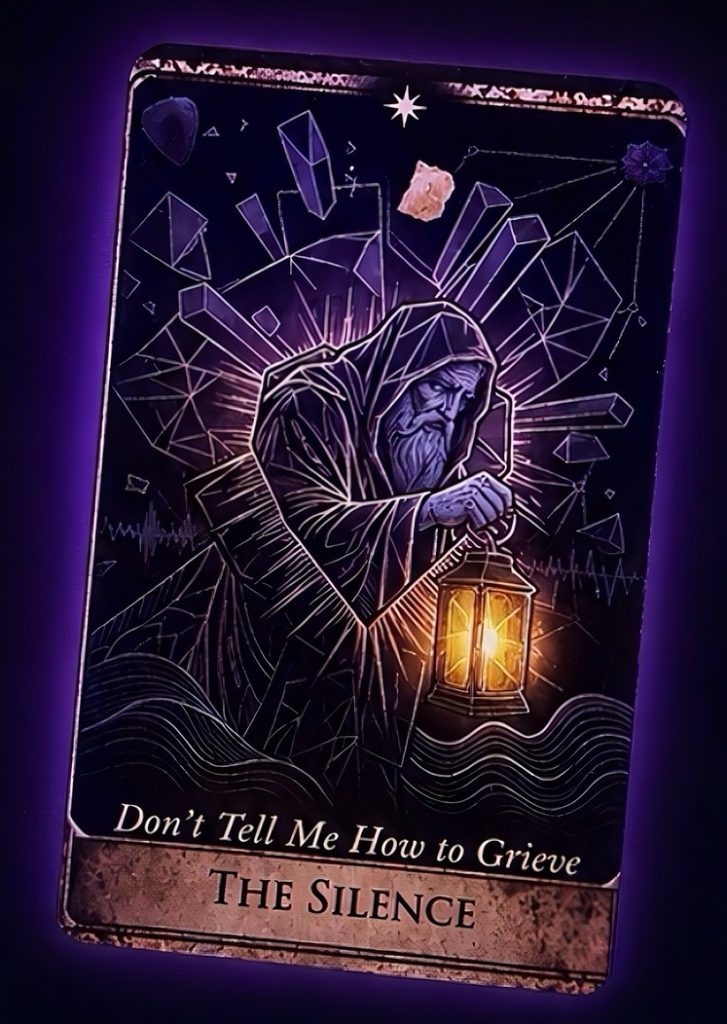
Beyond its musical qualities, “Don’t Tell Me How to Grieve” succeeds because every creative element contributes to a unified artistic vision. Created through Musiversal with musicians and vocalists from multiple countries, the collaboration gives the song both emotional intimacy and broad musical richness without sacrificing cohesion. The original tarot-inspired artwork, accompanying visual campaign, and lyric video extend the emotional narrative beyond the music itself, encouraging listeners to engage with its themes from multiple perspectives. While the soaring instrumentation certainly leaves a lasting impression, it is ultimately D.D.R.’s emotionally transparent vocal performance and unwavering commitment to the song’s message that define the experience. By acknowledging grief as deeply individual while encouraging resilience without forcing resolution, the single becomes more than a reflection on loss; it becomes a compassionate reminder that healing does not require permission, approval, or a prescribed timeline, making its emotional impact linger long after the final chorus fades.
Don’t Tell Me How To Grieve Reminds Us Healing Cannot Be Rushed Or Prescribed; Its Heartfelt Message Honors Every Individual’s Right To Mourn, Endure, And Recover Authentically.
~ Daniel (Dulaxi Team)
Behind D.D.R. (Divorced Dad Rock) is Indiana-based novelist and songwriter Stephen Paul, whose lifelong passion for rock music and storytelling shapes every composition. Drawing inspiration from legendary arena rock acts including Bon Jovi, Def Leppard, Journey, Warrant, and Shinedown, he combines soaring melodies, memorable guitar-driven arrangements, and emotionally honest lyricism into songs that feel both timeless and deeply personal. His collaborations with professional musicians from around the world further enrich each release, while his background as a published novelist brings a distinctive narrative depth to his songwriting. “Don’t Tell Me How to Grieve” perfectly reflects that artistic identity, delivering an emotionally resonant experience that lingers long after it ends. For listeners who appreciate heartfelt rock ballads with meaningful lyrics, powerful vocals, and lasting emotional impact, this is a track that deserves an attentive listen.