

Hello everyone, it’s your host Oliver from DULAXI, and today I’m delighted to be joined by Christopher Lawyer, the creator behind The Lonious Monk, an emerging musical identity from Accokeek, United States. Working across jazz, blues, rhythm and blues, reggae, rap, soul, funk, groove, gospel, pop and other styles, The Lonious Monk released his debut album, Songs to Feel To, on August 1, 2026.
Before we begin our conversation with Christopher Lawyer, here’s what you need to know about today’s featured project.
About The Lonious Monk
Christopher Lawyer, known artistically as The Lonious Monk, arrives in music through an unconventional route. A lifelong writer, storyteller and passionate lover of music, Lawyer has spent much of his professional life working in research and analysis within the defense and homeland security sectors, where science, mathematics and problem-solving form an important part of his daily world. His creative life, however, has always existed alongside that analytical discipline, giving him another space in which to explore imagination, storytelling and human experience.
Music became a new extension of that creative world through his experimentation with AI as a creative partner. Rather than approaching music from the traditional background of a vocalist or instrumentalist, Lawyer brings the perspective of a writer who is learning how to structure songs and use sound as another means of storytelling. His earliest experiments were deeply personal, transforming poems written for his wife throughout their relationship into songs that eventually became an album created as an anniversary gift. That experience opened the door to a much larger musical journey.
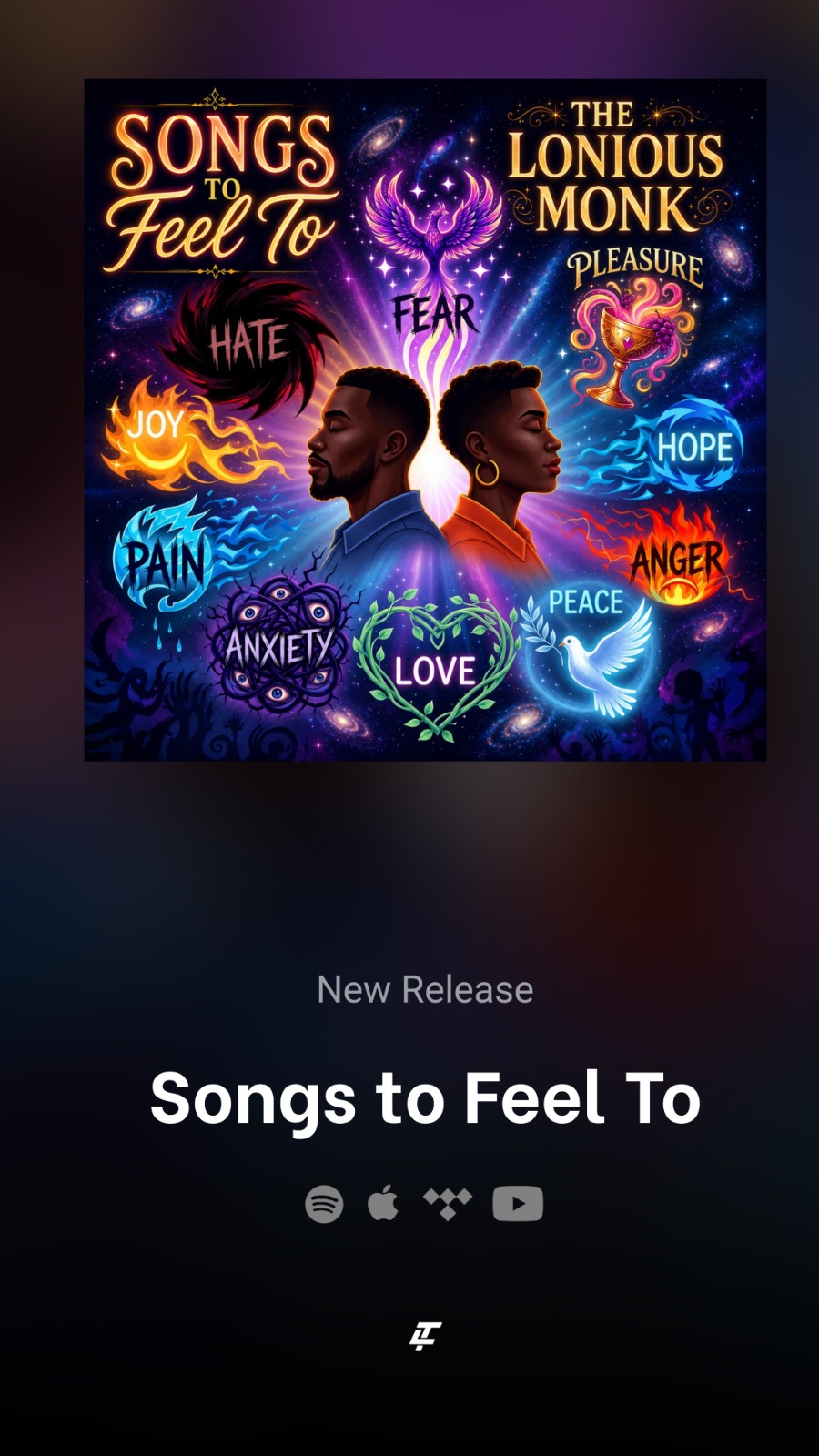
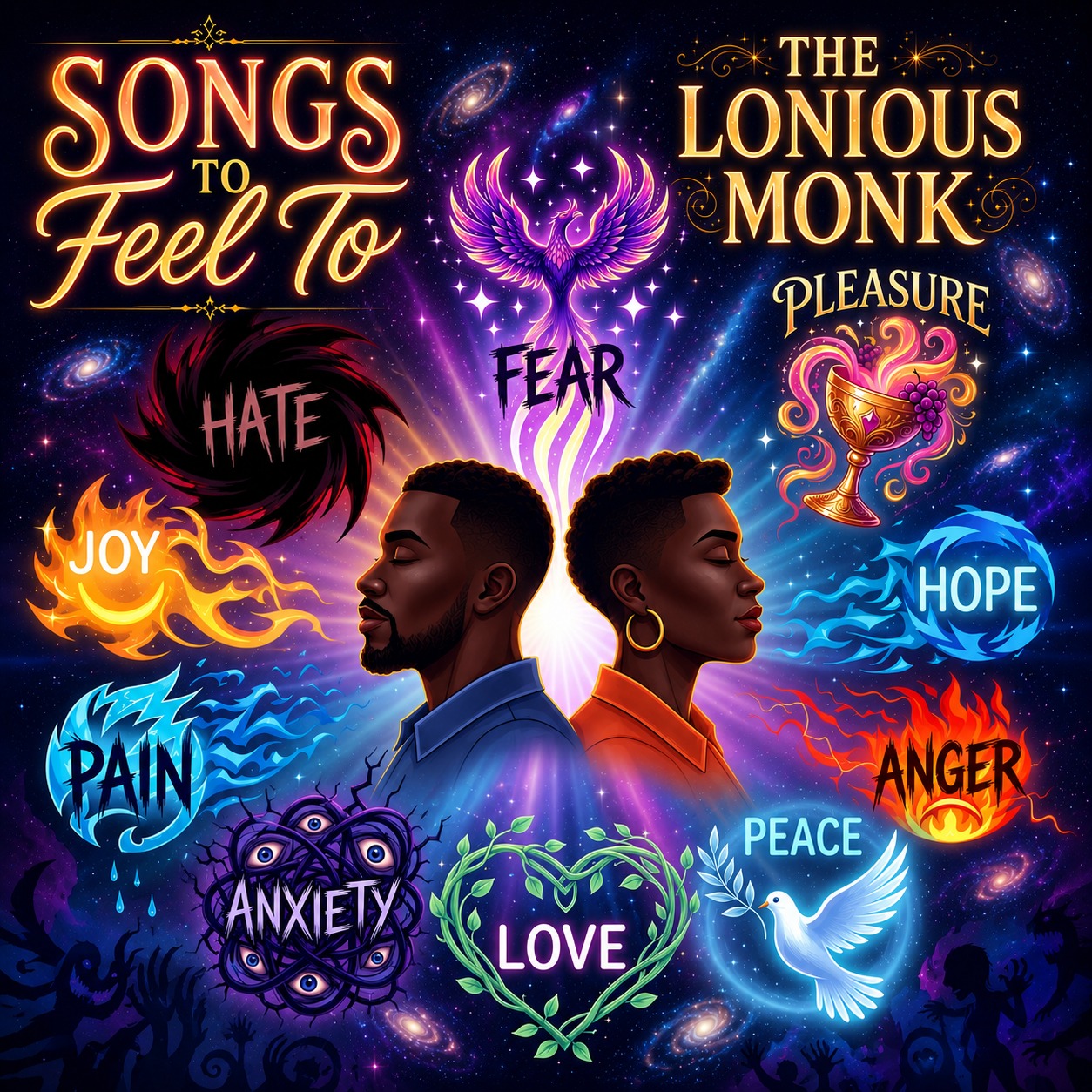
The result is Songs to Feel To, The Lonious Monk’s debut album, released on August 1, 2026. Built around ten distinct emotions, the project deliberately refuses to remain within a single genre. Instead, each feeling is given its own musical environment, allowing the style, rhythm and atmosphere to reflect the character of the emotion being explored. Anger finds an aggressive musical identity, while pleasure moves into a warmer and more soulful space. Elsewhere, the album explores the difficult and uplifting sides of the human experience, allowing contrasting emotions to exist within the same larger narrative.
The concept came before the words. Lawyer approached the album with the idea that each song would represent a different feeling, but in many cases he first imagined how an emotion should sound before deciding exactly what he wanted to say about it. That process allowed the musical identity of each track to develop alongside its lyrical perspective. Some emotions immediately suggested a genre, while others required the writing to come first before the appropriate sound became clear.
The album’s emotional range is also connected to Lawyer’s personal outlook. His wife, two daughters and Christian faith have played important roles in shaping his creative perspective. Family was, in fact, at the beginning of his experimentation with AI-assisted music, while his faith has influenced the hopeful dimension of his later work. These influences contribute to an artistic approach concerned not simply with describing emotion, but with examining what those emotions mean and how people respond to them.
The album ultimately reflects an artist interested in the full spectrum of being human. It does not limit itself to comfortable emotions or attempt to present a one-sided picture of life. The difficult feelings are allowed their place alongside joy, hope and other positive experiences, creating a project concerned with balance, understanding and the possibility of growth.
For The Lonious Monk, music is therefore another form of storytelling. The objective is not simply to create something pleasant to hear, but to give listeners something that can make them feel, think and perhaps look at familiar experiences from another perspective. With Songs to Feel To, Christopher Lawyer has taken the first major step in turning that philosophy into a musical body of work.
Having this brief introduction to today’s featured project, I’m sure both new listeners and longtime fans are excited to hear directly from Christopher. So, without further ado, let’s begin today’s interview.

INTERVIEW SESSION
Oliver:
Before we get into The Lonious Monk, I’d like to start with Christopher Lawyer the person. You have built a professional life around research, analysis, science, mathematics, and problem-solving, while also carrying a lifelong passion for writing, storytelling, and music. How have those two very different sides of your life shaped the way you understand yourself and the world around you?
Christopher Lawyer:
I like science and mathematics because they are a challenge and because learning and conquering the challenge is rewarding. As I’ve gotten older that’s become the “business” side of my life. It’s what I do to be able to exist in this world. Writing stories and now songs has become my means for creative expression. It’s more the “pleasure” side. For me, balance has always been important. The more I’ve been able to indulge in that creative side, the more balanced I feel. I’ve found I’m happier when I can engage in both sides.
Oliver:
There is an interesting contrast between working in defense and homeland security, where precision, evidence, and structured thinking are important, and creating music that deals with imagination, emotion, and human complexity. How do those parts of your personality interact when you sit down to create, and what does one side of you give to the other?
Christopher Lawyer:
For me, those two sides aren’t as different as they seem. I think my writing relies on similar precision and structure, almost to a fault. Lol, I write fantasy stories, and my favorite part of that is the world-building. Sometimes I have to stop myself from getting too bogged down in the detail. So, for me, it’s all about taking the same set of gifts and learning how to use them to produce two very different types of products. It’s taken time to get it right, but that journey has been part of the fun.
Oliver:
Your wife, your two daughters, and your Christian faith are important foundations in your life and creative outlook. How have those relationships and beliefs influenced the stories you choose to tell and the way you think about emotions, purpose, and the human journey?
Christopher Lawyer:
It’s funny. The first music I made using the AI tool consisted of songs I made from poems I wrote for my wife over the course of our relationship. I created an album from those songs and gave it to her as an anniversary gift. So, my dabbling in this music quite literally came about because of my family. They gave me my purpose in this arena. I’d say my faith is like the lens through which I see things now. I think the album is a lot more hopeful now than it would have been if I had created it when I wasn’t as active in my faith.
Oliver:
Writing and storytelling have been part of your life for years, but music has now given those ideas another form of expression. Can you take us back to the point when you realised that some of the stories and ideas living in your imagination needed to become songs rather than remaining simply written thoughts?
Christopher Lawyer:
The strange thing is that’s not how it really worked for me. What you described is very much how my novels work. I have the stories in my head, and it’s just a matter of getting them out and crafting them into professional products. The songs are different. In a lot of cases, I have more of an idea for the kind of sound I want the song to have than the subject matter to be addressed. I come up with words that I think would best fit that sound. In the case of this album, I had the concept and knew each song would represent a different feeling, but I didn’t have the words until after I figured out how each emotion should “sound.”
Oliver:
The Lonious Monk does not seem interested in being confined to one genre or one emotional identity. You move between jazz, blues, R&B, reggae, rap, soul, funk, gospel, pop, and other sounds depending on what the music requires. What does creative freedom mean to you, and how do you decide which musical language is capable of expressing a particular idea or emotion most honestly?
Christopher Lawyer:
Some emotions were easy to represent with a genre. What fits anger better than an aggressive metal track? What genre is more suited to expressing pain than the blues? I think some of the choices were obvious. Others, like anxiety, did not jump out at me as quickly. In those cases, the writing preceded the genre selection. Once I had the words, the sound followed naturally. I have very eclectic musical tastes these days. That definitely contributed to how I went about creating this album.
Oliver:
Curiosity and imagination are central to the way you describe your creative identity, and AI has become a creative partner in helping you turn those ideas into fully realised music. What does that partnership actually look like during your creative process, and how do you maintain your own artistic voice while using a technology capable of generating so many possibilities?
Christopher Lawyer:
I just had to be honest about what I bring to the table. I don’t play any instruments, and I can’t sing. I’m a writer, and I’m learning to structure songs. Those are my strengths and how I express my creativity. I would have loved to have access to a human band that I could have collaborated with to create this album. Unfortunately, I didn’t have that access, so I had to make do with the AI tool. Its ability to generate so many possibilities is its strength. It’s how I was able to make an album with so many different genres represented. That said, it did have its own challenges. Communicating with an AI model is not the same as with an actual person, and getting it to produce what you want it to produce is not as straightforward as it would be with actual people.
Oliver:
Songs to Feel To is your debut album, but rather than presenting a single genre or sound, you built the project around ten distinct emotions, allowing each feeling to influence the musical world surrounding it. What made you want your first major musical statement to be structured around human emotion rather than around a particular genre, story, or personal timeline?
Christopher Lawyer:
I had the concept in my head first, and the desire to bring the concept to life is what drove me to create an album. I didn’t really put much thought into the fact that it would be my first musical statement. I wasn’t even sure I’d release it. I just wanted to give the idea form. I’m happy with how it came out, but I do recognize that the format might make it challenging to find the right audience for the work. I think the album is really something you have to listen to from beginning to end to get. If you’re a general music lover like me, that’s not so hard. However, if you only gravitate to one or two genres, then the album as a whole might not appeal to you as much. That said, I think everyone can get something from it.
Oliver:
The title Songs to Feel To suggests that the album is meant to be experienced emotionally rather than simply listened to passively. When you imagined someone moving through the complete album, what kind of emotional journey did you want them to experience from the opening feeling through to the final track?
Christopher Lawyer:
Well, the album starts off with the negative emotions. Maybe listening to them takes the listener to a low or dark point. We have all been there. We’ve all experienced those emotions to some extent. They can be uncomfortable, but they are often unavoidable. They don’t have to define us, though. We may sink, but we can also rise. That’s what I want the listener to feel as they transition to the second part of the album, the positive emotions. Ultimately, I hope the album feels like a journey through the human experience.
Oliver:
One of the most interesting creative choices on the album is allowing the genre to change according to the emotion being explored, with the metal-inspired intensity of “Anger” standing in sharp contrast to the soulful warmth of “Pleasure.” How did you match particular sounds, rhythms, and musical textures to individual emotions, and what did you discover about the relationship between genre and feeling while making the album?
Christopher Lawyer:
I didn’t discover anything about that relationship as much as I was able to express the conclusions I had already developed from a life of listening to music. Every emotion has its own feel. If I was going to do justice to that reality, I needed a way to really distinguish them from each other. How better to do that than to use different genres for each song? Anger can be intense. The song needed to have a sound that reflected that. Metal was the best choice for that. Pleasure can be inviting and seductive. Soul music has always been good at capturing those sensations. The concept was like a puzzle. All the pieces came together perfectly.
Oliver:
“Anger” and “Pleasure” represent very different points on the emotional spectrum, yet both are given a complete musical identity rather than simply being described through lyrics. When you were creating these songs, how did you translate an internal human feeling into something as physical and immediate as sound?
Christopher Lawyer:
I knew I couldn’t write every song from the same angle. If I did, the music might have sounded nice, but the lyrics would come off as monotonous. I wanted to avoid that, so I had to figure out what about each emotion stood out. For anger, I was most struck by how anger could control you if you’re not careful. So that’s what came out in the song. I wrote it from the viewpoint of the emotion itself and explored how it affected the person feeling it. For pleasure, I thought about how everyone loves to feel it but also how overindulging in it can be damaging. So, I wrote a song comparing pleasure to a drug. That struck me as a good way to explore the emotion. I went through that process for each emotion. Each song is different, and that reflects the fact that every emotion is different.
Oliver:
Because the album moves through ten distinct emotions, there is an opportunity to explore feelings that people often celebrate alongside emotions they may find uncomfortable or difficult to acknowledge. How did you approach the less comfortable sides of the human experience, and why was it important for the album to make room for both the highs and lows?
Christopher Lawyer:
It was important for me to tell the whole story. We all feel both the good and the bad. As I said before, balance is important to me. Only dealing with the good or the bad would have made the album feel lopsided. I actually enjoyed writing about the negative emotions more to be honest. They tend to represent challenges we all face. The fight to overcome those challenges is a more interesting narrative than simply feeling good in my opinion.
Oliver:
You have described your goal as creating music that makes people feel, think, and potentially see the world from a different perspective. When writing the stories and concepts behind these songs, how do you balance your own interpretation of an emotion with leaving enough space for listeners to bring their own memories and experiences into the music?
Christopher Lawyer:
To be honest, I’m a pretty subdued person when it comes to how I feel things. In some ways, how I feel might be pretty bare-bones compared to how others feel them. I think the way I wrote the songs reflects that. My words might just give the skeleton of the experience. When people listen to the songs and think about how they feel, they should naturally be able to flesh the ideas out for themselves.
Oliver:
Bringing an album like this together requires more than simply having ten ideas; each emotion needs its own atmosphere, musical character, and narrative identity while still belonging to the same overall project. What were the biggest creative challenges in making the individual songs feel distinct without losing the sense that they were chapters of one album?
Christopher Lawyer:
Making the songs feel distinct wasn’t a major challenge. As I said before, it all kinda fell in place from that standpoint. The challenge came from writing for emotions I don’t experience as much. Anxiety is the best example. It’s not something I suffer from, but many people do. I’ve had conversations with people who struggle with those feelings. I wanted to make sure I did the emotion justice and really captured what they feel.
Oliver:
This debut represents a major step from being a lifelong writer and music lover into becoming a recording artist with a completed body of work. What has creating Songs to Feel To taught you about yourself that you could not have discovered simply by writing stories or working within your professional world?
Christopher Lawyer:
Writing songs is much different from writing novels or even poems. Going into this project, I wasn’t sure it was something I could even do. Making songs that sound distinct and deliver messages while also being engaging and entertaining. That seemed to be a daunting task, and it wasn’t easy, but completing this project showed me it was something I can do. I want to do more of it.
Oliver:
Your background in analytical thinking naturally gives you a different perspective on problem-solving, while songwriting asks you to embrace ambiguity and emotion. During the making of this album, was there a particular creative breakthrough or unexpected discovery that changed the way you thought about your abilities as an artist?
Christopher Lawyer:
No, I don’t think there was anything in particular. I think the process itself was the breakthrough. I realized that I could look at the songs and the album itself like a puzzle or a problem to be solved, and that helped me create. I wasn’t sure that such an approach would bear fruit, but it did. That was a pleasant discovery.
Oliver:
Because the emotions explored on Songs to Feel To are experiences that exist across cultures, generations, and personal circumstances, the album has the potential to mean something different to every listener. What do you hope someone discovers about themselves when a particular song or emotion on the album connects with something they have personally lived through?
Christopher Lawyer:
I hope that people come away understanding how universal these emotions are. Sure, we all feel them differently, but we all still feel them. Maybe if people understand that fact, it’s something that can bring us together. Maybe listening to the album with friends will spur conversation that leads to people finding common ground they never knew they had. Or maybe that experience would expose how they are different and also show that those differences don’t have to drive us apart.
Oliver:
Now that Songs to Feel To has introduced The Lonious Monk to the world, where do you want to take this artistic identity next? Are there particular stories, emotions, musical worlds, or creative ideas you are eager to explore as you continue turning your imagination into music?
Christopher Lawyer:
I went straight from this album into the next project. Once the creative juices start flowing, they can be hard to stop. In the next project, each song features a unique instrument or musical style and concept taken from or inspired by a different nation or region in the world. The album is like a musical trip around the world.
Oliver:
When you look at The Lonious Monk beyond this debut album, what kind of artistic legacy would feel meaningful to you? Considering your love of storytelling, your family and faith, your curiosity, and your desire to explore the complexity of being human, what do you ultimately want your music to leave behind in the people who encounter it?
Christopher Lawyer:
I want to remind people that music isn’t just something nice to listen to. It’s art, and art can teach. It can inspire. It can make you feel. I’m not claiming that my music is the best in the world, but I make it with a purpose and a story to tell. My hope is that people can understand that story and take something of meaning from it.
“Songs to Feel To treats emotion not as something to escape from, but as a landscape worth travelling through, turning ten very different feelings into one thoughtful journey of reflection, struggle, faith and possibility.”
~ Oliver (DULAXI Team)
EDITORIAL PERSPECTIVE
Songs to Feel To is most compelling when its concept and musical choices work together as one idea. The movement between contrasting genres gives each emotional chapter its own character, while the writing keeps the larger human story in view. What stands out most after speaking with Christopher Lawyer is how naturally his analytical mindset has become part of his creative process. Rather than separating logic from imagination, he uses both to construct music with intention, giving this debut the feeling of an artist discovering a new language while already knowing what he wants that language to say.
~ Oliver (DULAXI Team)
CLOSING
Our conversation with Christopher Lawyer offers an illuminating look into the creative thinking behind The Lonious Monk and Songs to Feel To. From the relationship between his analytical professional life and his storytelling instincts to the deeply personal role of family, faith and curiosity in his creative journey, it is clear that this project began with an idea and grew into something much larger through the process of bringing it to life.
Thank you to Christopher Lawyer for taking the time to speak with DULAXI and for sharing such thoughtful insight into the person, process and purpose behind The Lonious Monk. His willingness to discuss both the possibilities and challenges of creating music with AI adds another dimension to an album that is already built around the idea of exploring different perspectives.
For listeners, Songs to Feel To is an album that asks to be experienced as a complete journey through contrasting emotional spaces. Whether a particular feeling immediately resonates or simply encourages reflection, the project offers listeners an opportunity to consider the emotions that form part of all our lives.
We encourage you to spend time with the album and continue following The Lonious Monk as Christopher Lawyer develops this new chapter of his creative life. With another concept already underway, his musical journey is clearly only beginning.
Thank you for spending time with DULAXI. We look forward to bringing you more conversations with artists, storytellers and creators from around the world.