
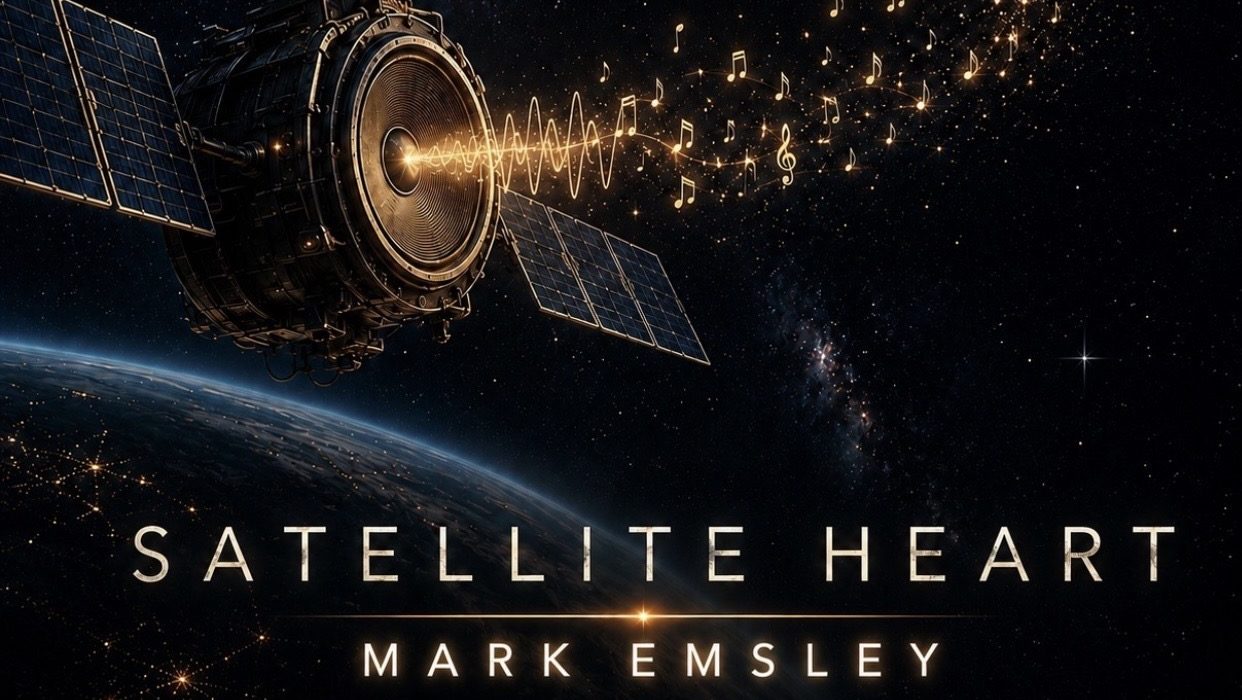
Hello everyone, it’s your host Tehillah from DULAXI, and today I’m delighted to be joined by UK singer-songwriter Mark Emsley, a Bedford-based musician whose work brings together melodic rock, pop-rock and guitar-driven songwriting. Mark joins us to discuss his latest single, “Satellite Heart,” released on 4 September 2026, and the personal experiences, creative changes and renewed sense of purpose that have shaped this new chapter of his music.
“Satellite Heart” represents the brighter and more commercially immediate side of Mark’s sound, combining rock guitars, contemporary pop accessibility and a large melodic chorus. Produced with Karl Morey, the single follows Mark’s recent releases “Wish I Could Hate You” and “Suitcase in the Wind,” continuing his focus on direct songwriting rooted in real experience.
Before we begin our conversation with Mark Emsley, here’s what you need to know about today’s featured project.
About Mark Emsley
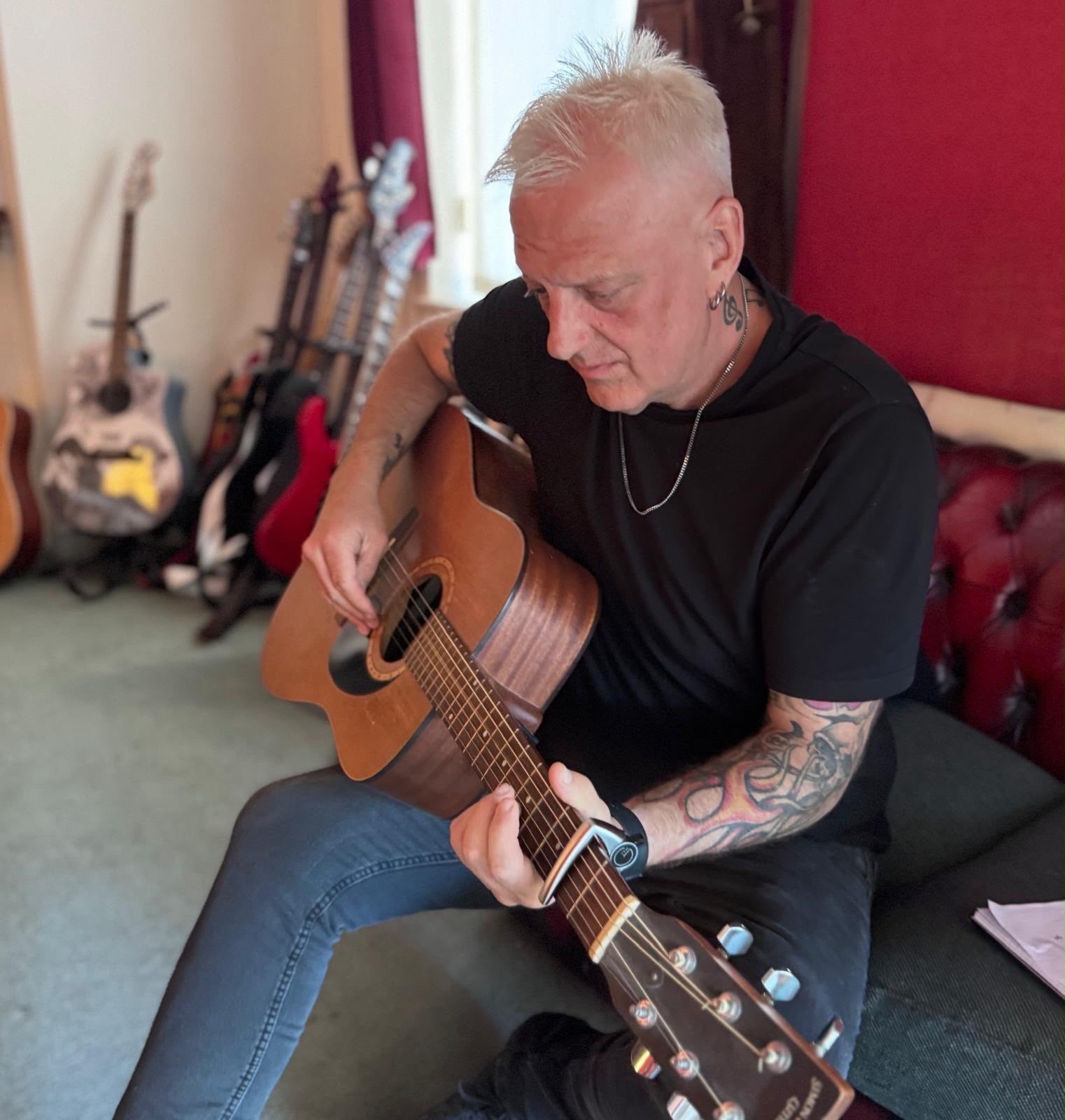
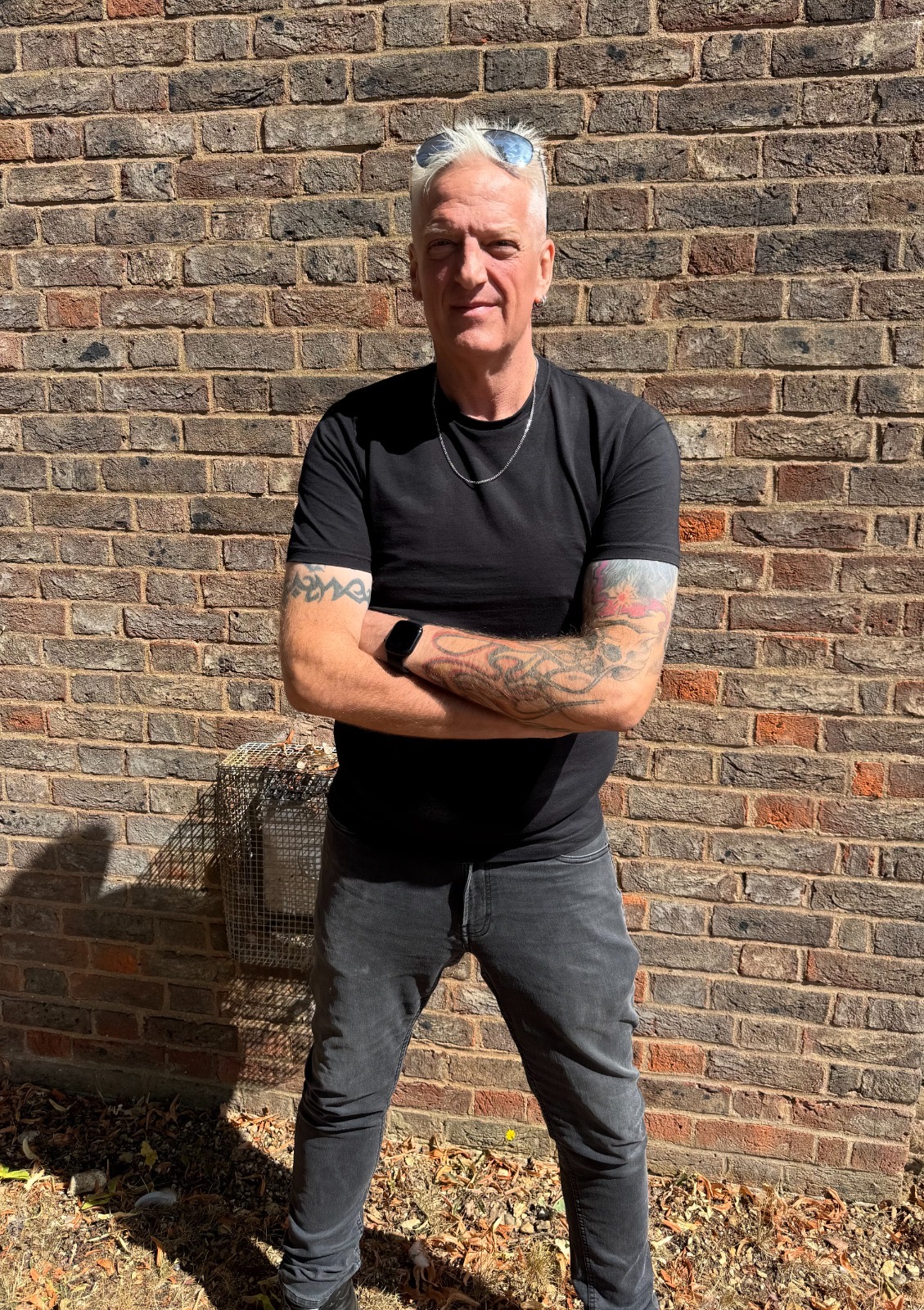
Mark Emsley is a UK singer-songwriter from Bedford whose musical identity is built around guitars, melody and honest songwriting. A lifelong musician with a background across the music industry, Mark has returned his attention to writing and recording his own material during a significant new chapter in his life. After getting clean and sober in October 2024, he found himself approaching both life and music with a renewed sense of purpose, using his experiences of love, loss, heartbreak, recovery and hope as the foundation for his songwriting.
His recent catalogue has explored emotionally difficult territory, with “Wish I Could Hate You” and “Suitcase in the Wind” establishing a direct and personal approach to songwriting. Rather than creating stories detached from personal experience, Mark draws from things he has actually lived through, allowing difficult experiences to become the starting point for songs that can connect with other people.
“Satellite Heart,” released on 4 September 2026, introduces a different musical energy without abandoning that honesty. Produced with Karl Morey, the single moves further into the melodic and commercial side of Mark’s sound, combining layered guitars with a modern pop-rock edge and a large chorus designed for immediate melodic impact. Its upbeat musical character creates an interesting contrast with the more painful relationship story at its centre.
The song’s central image comes from the idea of someone remaining in orbit without ever truly meeting you where you are. That concept gives the title its emotional meaning, while the arrangement allows the personal story to exist inside a much larger, more energetic musical setting. Mark’s intention was not to manufacture a commercial sound, but to follow what the song itself seemed to demand as the melody and arrangement developed.
The result is a release that represents an important point in Mark’s current musical journey. Radio presenter Emma Scott has described the single as having particularly strong commercial appeal, while Mark sees its melodic accessibility as an opportunity to connect with listeners who may not traditionally consider themselves rock fans. At its core, however, the song remains connected to the principles that guide his work: strong songs, memorable melodies and an honest relationship with the listener.
As Mark continues rebuilding his catalogue and exploring different sides of his sound, “Satellite Heart” offers a glimpse of an artist who is no longer looking backwards. It is part of a wider period of renewed creativity, greater ambition and an openness to whatever the next stage of his musical journey may bring.
Having this brief introduction to today’s featured project, I’m sure both new listeners and longtime fans are excited to hear directly from Mark. So, without further ado, let’s begin today’s interview.

INTERVIEW SESSION
Tehillah:
You have described yourself as a lifelong musician with a background across the music industry, but your recent chapter has involved returning your attention to writing and recording your own material after getting clean and sober in October 2024. How has that personal turning point changed the way you see yourself, both as a person and as an artist, and what has becoming more present in your own life allowed you to say through music that you could not say before?
Mark Emsley:
Getting clean and sober completely changed the way I see myself. Before October 2024, I’d got to a point where I wasn’t really living my life properly anymore. Music had always been a massive part of who I was, but I’d stopped doing anything meaningful with it.
Getting sober gave me my life back, but it also made me incredibly aware of how much time I’d wasted. Rather than beating myself up about that, I’ve tried to use it as motivation. I’m more creative now, more driven and probably more comfortable being myself than I’ve been in years.
It’s also made me much more honest in my songwriting. I’m not interested in inventing some version of myself that sounds impressive. I can write about heartbreak, addiction, loss, relationships and starting again because I’ve actually lived it. I think becoming present in my own life has finally allowed me to stop hiding from some of those things and turn them into songs instead.
Tehillah:
Much of your songwriting is rooted in real experiences involving love, loss, heartbreak, recovery, and hope. How has living through those experiences influenced the kind of stories you feel compelled to tell, and what have you learned about yourself through turning difficult chapters of your life into songs?
Mark Emsley:
I’ve realised that the difficult stuff is often where the songs are. Not because I want to spend my life being miserable, but because those are the experiences that tend to leave something behind.
Relationships, heartbreak, grief, addiction and recovery have all changed me, so naturally they find their way into what I write. I don’t sit down thinking, “Right, what traumatic event can I turn into a song today?” Usually something has been sitting in my head for a while and eventually a line, a melody or an idea gives me somewhere to put it.
What I’ve probably learned most is that I’m far more resilient than I ever gave myself credit for. I’ve come through some pretty difficult chapters and I’m still here, clean and sober, making music and genuinely excited about my life again.
If somebody hears one of those songs while they’re dealing with their own shit and recognises something of themselves in it, then something difficult has been turned into something worthwhile.
Tehillah:
Your music is built around melodic, guitar-driven rock and pop-rock, with strong choruses and direct lyrics at the center. What first drew you toward that combination of emotional songwriting and big, accessible melodies, and which elements of that sound feel most essential to your identity as an artist?
Mark Emsley:
I’ve always loved guitars, but I’ve also always been obsessed with melody. For me those things have never been mutually exclusive. I can love a huge guitar sound and still want a chorus that somebody hears once and is singing ten minutes later.
A lot of the music I’ve loved throughout my life has had that combination — great guitar playing, energy, emotion and massive melodies. That’s naturally found its way into the music I make.
The things that are probably essential to my identity are melody, guitars and honesty. The production can change and one song might lean more towards rock while another goes closer to pop, but if those three things are there it still feels like me.
I don’t particularly want to fit neatly into a box anyway. If somebody wants to call it melodic rock, pop-rock, guitar-pop or something else entirely, that’s fine by me. I just want to make really good songs.
Tehillah:
Wish I Could Hate You and Suitcase in the Wind established a more emotionally reflective side of your recent work, while Satellite Heart arrives with a noticeably brighter and more immediate energy. What were you experiencing creatively that made you want this particular song to move toward optimism, momentum, and a more celebratory side of your personality?
Mark Emsley:
The interesting thing is that I don’t actually see Satellite Heart as lyrically optimistic or celebratory. Musically it absolutely is — it’s bright, energetic and makes you want to turn it up — but the story underneath it is still quite painful.
It’s about giving everything to someone who knows exactly how you feel but still chooses not to meet you there. So there’s actually quite a big contradiction between the lyric and the music.
I loved that contrast. I didn’t want another song that sounded as hurt as the situation behind it felt. There was something much more exciting about taking that experience and putting it against big guitars, loads of energy and this enormous chorus.
Maybe that reflects where I am now. Difficult things still happen, but I don’t necessarily want to sit inside them anymore. I can take something painful and turn it into something that feels alive.
Tehillah:
Satellite Heart opens a different door into your music through its upbeat guitar-driven production, layered guitars, modern pop edge, and enormous singalong chorus. When you first began shaping the track, what was the musical or emotional spark that told you this needed to be bigger, brighter, and more immediate than some of your previous releases?
Mark Emsley:
It happened very naturally. I didn’t start writing it with a plan to make “the commercial single.” The song just wanted to move.
Once that central idea and the melody started developing, it became obvious that it needed energy. The chorus especially felt like it should explode when it arrived rather than just gently turn up.
From there, everything was about supporting that — the guitars, the production and the dynamics. Karl Morey and I both recognised that there was something really immediate about the song, so we didn’t want to get in its way by overcomplicating it.
Sometimes you’re halfway through writing something and you suddenly realise what the song wants to be. Satellite Heart was definitely one of those.
Tehillah:
The title Satellite Heart is striking because it combines something vast and distant with something deeply human and emotional. What does a “Satellite Heart” represent to you within the song, and how did that image help you express the story or feeling you wanted the listener to experience?
Mark Emsley:
The satellite image really captured the relationship I was writing about. She was always there, orbiting around me, but she never actually landed.
I was the one reaching out and sending the signal. And importantly, the signal wasn’t lost — she received it. She knew exactly how I felt. But however much I reached out, she still never came down and met me there.
That’s really what a “Satellite Heart” represents to me — someone who remains in your orbit, close enough that you keep reaching for them, but who never actually comes down and meets you there.
Once that image came into my head, it just seemed to describe the situation perfectly. Always in orbit, just out of reach, but never landing.
Tehillah:
You have emphasized the importance of writing from real experience rather than manufactured storytelling, but Satellite Heart is also your most commercial release so far. How did you approach making the song highly accessible without compromising the honesty and personal connection that have become such an important part of your songwriting?
Mark Emsley:
I didn’t really approach it as a balancing act because the commercial side wasn’t something I deliberately added afterwards. The song came from a genuine experience first, exactly like the others do.
It just happened to develop into something very immediate and accessible.
I think you get into trouble creatively if you start thinking, “What can I write that people will like?” I’d much rather write something I believe in and then, if it turns out to have a massive chorus and commercial potential, brilliant.
I never want accessibility to mean sanding all the personality off something. Satellite Heart still comes from me and from something real. It just happens to arrive wearing a much brighter jacket.
Tehillah:
The chorus is designed to stay with the listener after one play, which places a lot of responsibility on the melody and phrasing. When you were writing the song, how did you work toward that kind of immediate melodic impact, and what tells you that a chorus has reached the point where it can carry the emotional weight of the entire track?
Mark Emsley:
I’m incredibly instinctive with melody. I don’t sit there analysing what intervals or phrasing are going to make something catchy. Usually I’ll keep singing ideas until one of them feels inevitable.
That’s probably the best way I can describe a great chorus — when you can’t imagine the song going anywhere else.
With Satellite Heart, I wanted the chorus to lift massively, but I wasn’t consciously trying to manufacture an earworm. The melody just kept pushing the song in that direction.
My test is really simple: does it still excite me after I’ve heard it a ridiculous number of times? If I’m still wanting to turn it up after living with the song throughout writing, recording and mixing, that’s normally a very good sign.
Tehillah:
Working with Karl Morey has been an important part of developing this material, and Satellite Heart pushes further into layered guitars and polished pop-rock production. How did you and Karl determine which production choices would give the song its commercial energy while still preserving the rawness and guitar-driven character of your music?
Mark Emsley:
Karl and I have developed a really good working relationship because there’s a lot of trust between us. I normally arrive with the song written and a pretty clear idea of what I hear in my head, and Karl is brilliant at helping turn that into a finished record.
With Satellite Heart, we knew the guitars and chorus had to feel huge, but we didn’t want to bury the song underneath production.
The layered guitars give it width and energy, while the production gives it that more contemporary pop-rock edge. But underneath everything, it’s still a song that would work if you stripped all of that away.
Karl is also perfectly happy to tell me when something isn’t working, which I love. There’s no ego involved. We’ll try something, and if it’s rubbish we’ll bin it and try something else. The song always wins.
Tehillah:
There can be a fine line between making a rock song feel polished and making it lose the imperfections that give it personality. What aspects of Satellite Heart were particularly important for you to keep sounding human and emotionally alive as the production became bigger?
Mark Emsley:
The guitars were particularly important. I love modern production, but I don’t want guitars polished until they stop sounding like somebody actually played them.
There’s a physical energy to rock music that I think you can lose if everything becomes too perfect. Little imperfections, the attack of the playing, the way parts interact — those things give a recording personality.
The same applies emotionally. You can make something sound enormous without removing the human being from the middle of it.
So with Satellite Heart, the goal wasn’t perfection. It was excitement. I’d much rather somebody feels something coming out of the speakers than sits there admiring how technically immaculate everything is.
Tehillah:
Radio presenter Emma Scott has described Satellite Heart as having particularly strong commercial appeal, and you have spoken about your belief that the track can reach beyond a traditional rock audience. What does reaching listeners outside the usual guitar-rock space mean to you, especially after building your sound around a clear melodic rock identity?
Mark Emsley:
When Emma Scott told me she thought Satellite Heart had the biggest commercial potential of the songs she’d heard from me, obviously that was incredibly encouraging because I really respect her experience.
But reaching beyond a traditional rock audience doesn’t mean abandoning rock music for me. It means recognising that melody can travel.
Somebody doesn’t need to identify as a “rock fan” to respond to a great chorus. Likewise, somebody who loves guitars doesn’t necessarily want every song they hear to fit into exactly the same little box.
If Satellite Heart can get somebody who normally listens to pop singing along to a song full of guitars, brilliant. And if a rock fan loves the fact that it’s ridiculously melodic, equally brilliant.
I’d much rather bring people together with a song than worry about which genre shelf they’re standing beside.
Tehillah:
Your recent catalogue has moved through very different emotional territories, from heartbreak and resentment to reflection, recovery, and now a more uplifting sense of possibility. Looking at that progression as a whole, what does it tell you about the person you are becoming compared with the songwriter who was writing from those earlier places?
Mark Emsley:
I think you’re probably hearing my life changing in real time.
Some of those earlier songs came from places where I was trying to understand what had happened to me or process relationships and situations that had hurt. Those feelings were completely real when I wrote them.
I’m still the same person and I’m still going to write about difficult things, but I’m not living permanently in those places anymore.
There’s more hope in my life now. There’s excitement. I’m nearly 55 and instead of thinking everything interesting is behind me, I genuinely feel like I’m starting something.
So I don’t think the catalogue is a carefully planned emotional journey. It’s just an honest record of somebody rebuilding his life — and thankfully the person writing the newer chapters is in a much better place than the person who lived some of the earlier ones.
Tehillah:
Getting clean and sober in October 2024 is a major personal milestone, and it also happened before this new period of writing and recording your own songs. How have recovery and the discipline that comes with rebuilding your life influenced the way you approach creativity, consistency, and your ambitions for music today?
Mark Emsley:
Recovery taught me that changing your life isn’t one massive dramatic decision. It’s getting up and making the right decision again and again and again.
I’ve carried a lot of that into music. I’m writing constantly, recording, releasing songs, doing interviews, speaking to radio, promoting things and learning an industry that has changed enormously since I worked in it.
I probably have more ambition now than I’ve had for years, but it’s different from when I was younger. I’m not chasing some fantasy of being famous. I want to find out how good I can make this music and how many people I can genuinely reach with it.
Getting sober gave me the opportunity to start again. I’m absolutely determined not to waste it.
Tehillah:
One of the clearest principles running through your work is the desire for strong songs, memorable choruses, and an honest relationship with the person listening. What does that connection look like to you beyond streams or numbers, and what kind of response from a listener would make you feel that one of your songs had genuinely reached them?
Mark Emsley:
This has probably become even clearer to me since releasing music.
Of course I look at the streaming numbers — I’m human, and I’d be lying if I said I didn’t. But a number on a screen can’t tell you what happened at the other end.
Someone messaging me and saying a lyric described exactly how they felt means far more. Somebody telling me they’ve had the songs on repeat, sharing one with a friend, or hearing something in a song that makes them feel less alone — that’s connection.
If one of my songs finds somebody on a horrible day and gives them three or four minutes where they feel understood, that’s genuinely important to me.
I’d obviously like thousands and eventually millions of people to hear the music. I’m not going to pretend otherwise! But I never want the numbers to become more important than the people those numbers represent.
Tehillah:
Satellite Heart represents the most commercial and immediate expression of your sound so far, but it still sits within a catalogue shaped by very personal experiences. As you continue building that catalogue, how do you decide when a song should remain emotionally intimate and when it deserves to open up into something larger, louder, and built for a room full of people singing along?
Mark Emsley:
I mostly let the song decide.
I don’t sit down with a spreadsheet and think, “Right, this one’s the intimate one and the next one’s the stadium anthem.” Sometimes a lyric needs space around it and putting enormous guitars everywhere would completely destroy what makes it special.
Other songs almost demand to be played loud.
Satellite Heart was definitely the latter. The melody, rhythm and chorus all wanted that scale. It would have felt wrong to restrain it just because the story behind it is personal.
That’s something I really enjoy about songwriting. An intimate experience doesn’t necessarily need an intimate arrangement. Sometimes taking something incredibly personal and turning it into a chorus that a room full of people could sing back at you is actually the most powerful thing you can do with it.
Tehillah:
You have already returned to your own material with a renewed sense of purpose and now have several releases establishing different sides of your artistry. Looking ahead, what kind of musical and personal chapter do you want to create next, and where would you like this new era of songwriting to ultimately take Mark Emsley?
Mark Emsley:
I want to keep finding out where this goes.
I’ve already got plenty more music written and recorded, and I really like that it doesn’t all sound exactly the same. Some songs lean towards big melodic rock, some have more of a pop-rock edge and others are much more stripped back and personal. I don’t want to make Satellite Heart another ten times just because people respond to it.
Personally, I want this chapter to be about saying yes to life again. I’m clean and sober, I’m making music I’m incredibly proud of, I’m playing live again and I’m meeting people all over the world through these songs.
I’m nearly 55, which apparently is an age where I’m supposed to start behaving myself and becoming sensible. I can’t see that happening.
I’d love to play more shows, keep growing the audience and eventually hear rooms full of people singing these songs back at me. But mostly I want to keep making music that’s honest, enjoy the ridiculous journey I’m on and see just how far I can take it.
I’m nowhere near finished yet.
“Satellite Heart shows how a deeply personal story can become something expansive without losing the human feeling at its centre. Mark Emsley turns a difficult experience into a song that feels made to be heard, remembered and sung back.”
~ Tehillah (DULAXI Team)
EDITORIAL PERSPECTIVE
“Satellite Heart” stands out for the tension between its energetic musical character and the emotional weight of its story. The guitars and expansive arrangement give the song a sense of movement, while Mark’s straightforward songwriting keeps the personal meaning close. Speaking with him also reveals how deliberately he protects that honesty as the production grows larger. What makes this chapter particularly interesting is not simply a change in sound, but the sense of an artist using renewed purpose to explore what his music can become.
~ Tehillah (DULAXI Team)
CLOSING
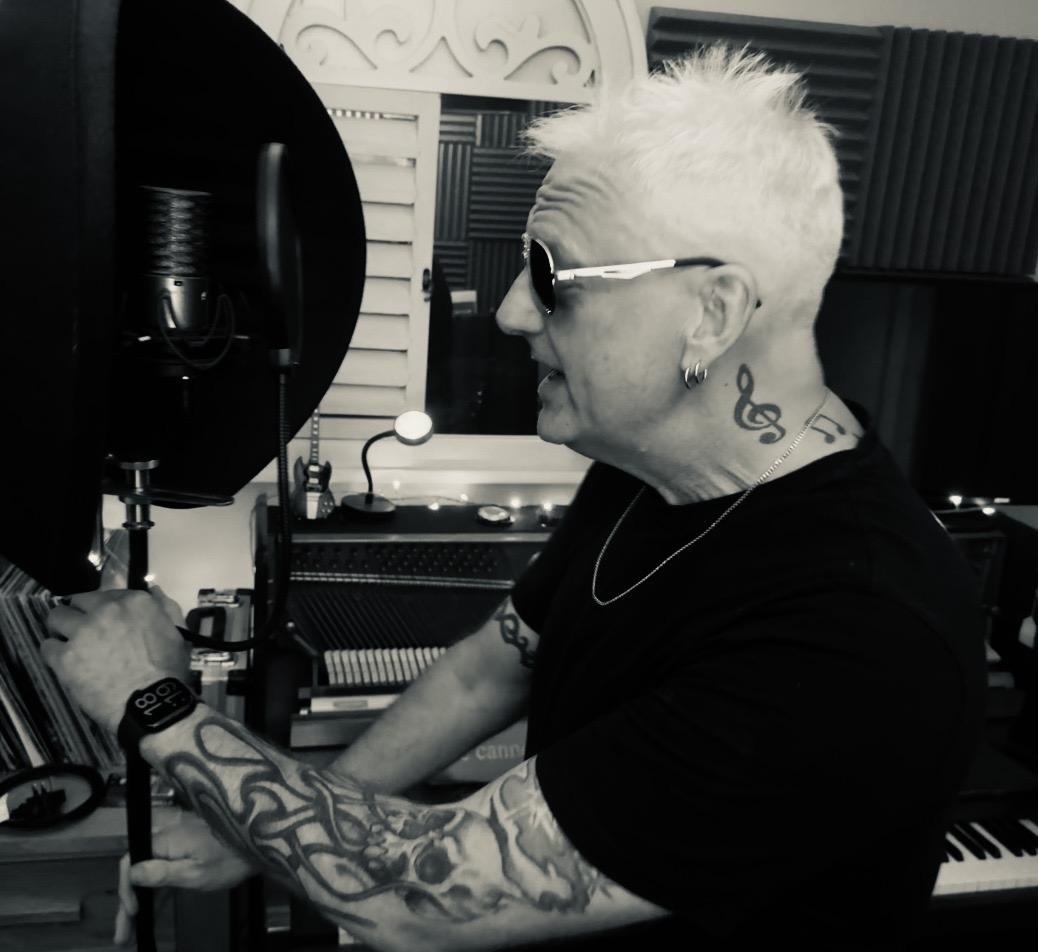
Thank you to Mark Emsley for taking the time to speak with DULAXI and for sharing such open and thoughtful insight into his music, creative process and the personal experiences behind this new chapter. His conversation offers a deeper understanding of “Satellite Heart,” not only as a melodic pop-rock release, but as part of a much wider story of rebuilding, creativity and looking forward.
We encourage readers to spend time with “Satellite Heart” and explore Mark’s growing catalogue, particularly if you appreciate guitar-driven songwriting that places melody and personal experience at the heart of the music. As Mark continues writing, recording and performing, there is clearly more still to come from this new chapter of his journey.
From all of us at DULAXI, thank you for spending time with us. We hope you continue discovering new artists, new stories and new music through our interviews. Until our next conversation, keep listening and keep exploring.