
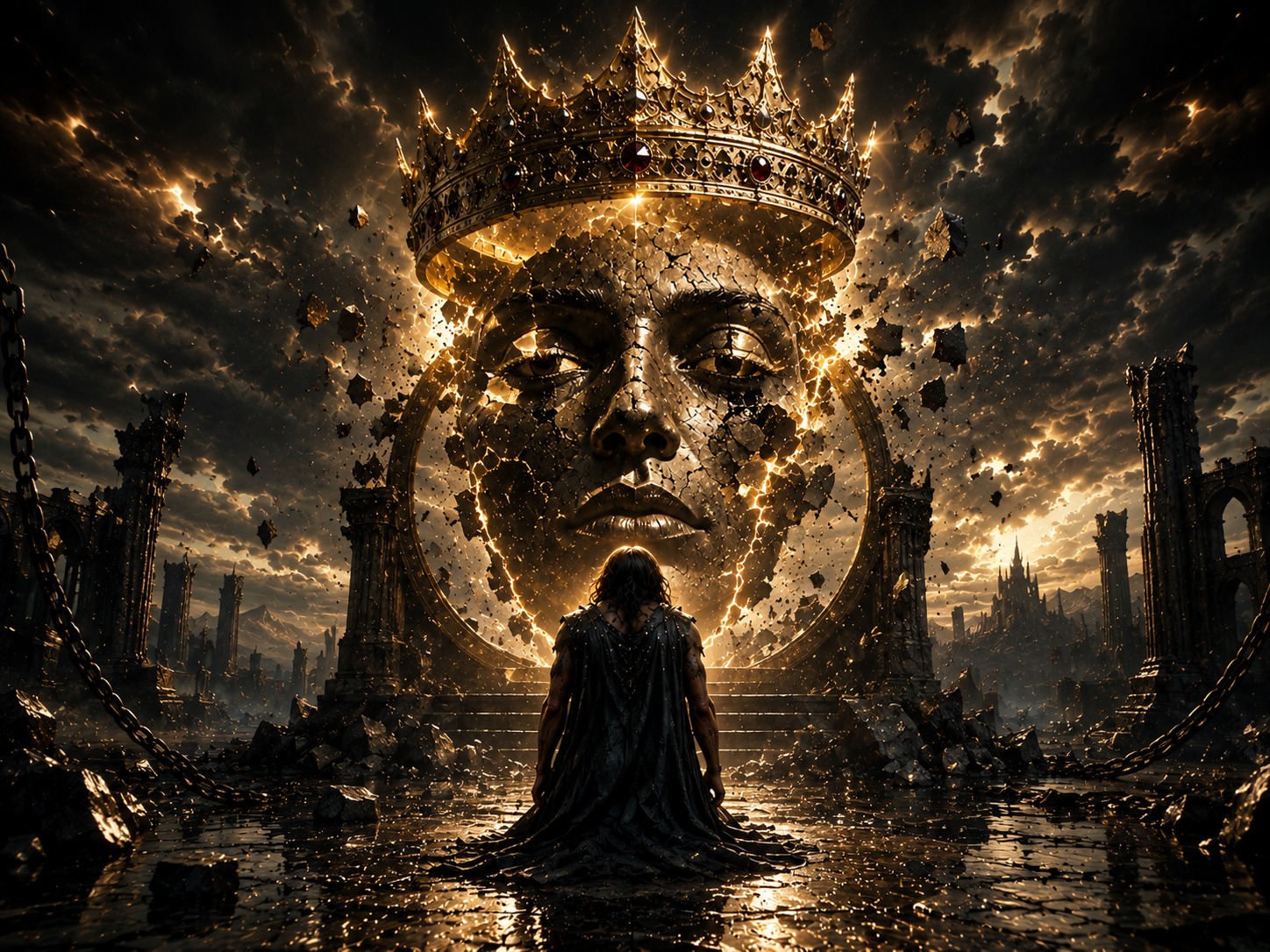
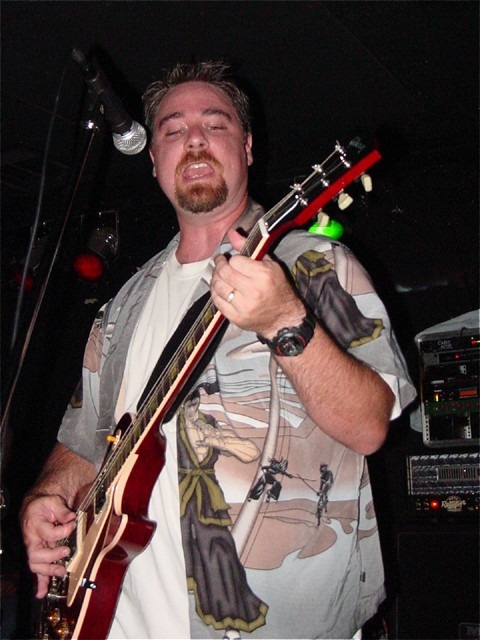
Hello everyone, it’s your host Oliver from DULAXI, and today I’m delighted to be joined by Ben Lazzaro, the creative force behind The Lazz, a high-concept hybrid-human modern metal project based in San Diego, United States. With more than four decades of experience as a composer and guitarist, Lazzaro brings together longstanding musicianship, visual communication, digital art, cinematic storytelling, and emerging technology through The Lazz. His latest release, “The Crown,” arrived on 05 Sep 26 and opens Act IV: The Return, a new four-song chapter exploring what happens when transformation has already taken place and the individual must return to ordinary life with everything they have learned.
Before we begin our conversation with Ben Lazzaro, here’s what you need to know about today’s featured project.
About The Lazz
The Lazz is the high-concept metal project of composer and guitarist Ben Lazzaro, whose musical experience stretches back more than 40 years. That long relationship with guitar, songwriting, composition, recording, arrangement, and performance forms the foundation of the project, but The Lazz is also shaped by another major part of Lazzaro’s creative background: visual communication and digital art.
Lazzaro holds an Associate of Science in Visual Communication with Honors and spent 13 years working professionally as a 3D Digital Artist in the video game industry. That combination has given The Lazz a creative identity that extends naturally across music, visual storytelling, digital production, and narrative design. Rather than treating the music and visuals as separate creative disciplines, the project uses them as different ways of expressing the same underlying ideas.
That approach is particularly evident in “The Crown,” the opening chapter of Act IV: The Return. The song follows a broader narrative concerned with Shadow, Persona, transformation, and the psychological consequences of believing that inner work has finally been completed. The previous chapter, Act III, focused on transformation itself, including the dismantling of an old identity, confrontation with the Shadow, integration of opposing forces, and survival through internal conflict. Act IV begins from the more complicated position of what happens after that transformation.
“The Crown” therefore examines the danger of ego inflation after personal growth. Its central symbol is deliberately contradictory. A crown can represent strength, sovereignty, and something genuinely earned through difficult personal work. At the same time, it can become a new mask when the person wearing it begins to believe that their transformation places them above others or proves that they have reached a final state of understanding.
The visual side of “The Crown” expands the same psychological conflict into a cinematic setting. The accompanying video follows two separate protagonists who independently rise into positions of symbolic power before arriving at the same realization and ultimately relinquishing their crowns. The imagery of crowns, thrones, ceremonial clothing, monumental spaces, distance, and elevated positions develops the song’s central ideas through visual language rather than simply illustrating its lyrics.
The video is scheduled for release on 19/09/26, extending the release into another stage of The Lazz’s broader multimedia world. Lazzaro personally writes, directs, creates, edits, and produces the official videos, using AI-assisted visual production alongside extensive human-directed editing and post-production.
Beyond “The Crown,” Act IV: The Return is planned as a four-part progression through Power, Projection, Vulnerability, and Participation. Following “The Crown,” “Refraction” explores projection and the way other people can impose their own expectations, fears, desires, and assumptions onto someone who has changed. “The Wounded King” moves toward vulnerability, examining how wounds and weakness can remain even after transformation. The final chapter, “The Return,” asks whether a person can participate fully in ordinary human life without needing to remain elevated, exceptional, isolated, or protected by another Persona.
Having this brief introduction to today’s featured project, I’m sure both new listeners and longtime followers of The Lazz are interested in hearing directly from Ben about the ideas, technology, music, visual storytelling, and creative philosophy behind “The Crown.” So, without further ado, let’s begin today’s interview.
INTERVIEW SESSION
Oliver:
You have been writing, composing, performing, and working with guitar for more than four decades, while also developing a career as a formally trained visual artist and 3D digital artist. How have these different creative disciplines shaped the way you understand yourself as an artist today, and how did they eventually come together through The Lazz?
Ben Lazzaro:
I don’t really see the music and visual work as separate disciplines anymore. They’ve always been different ways of doing the same thing: building an emotional idea into something another person can experience.
Guitar and songwriting came first. I started playing as a teenager and spent decades writing, recording, playing in bands, and learning how arrangement, tone, dynamics, and performance shape emotion. Visual art came from a different direction, but it trained another part of the same instinct. Formal visual communication taught me composition, hierarchy, color, pacing, and how to guide someone’s attention. Working as a 3D digital artist added world-building, lighting, camera, texture, and the ability to think spatially and cinematically.
The Lazz is really where those parts finally stopped living in separate rooms. I can write a song around a psychological idea, build the music to carry it, and then create a visual language that extends the same concept rather than simply illustrating the lyrics. With “The Crown,” for example, the music is about ego inflation after transformation, while the video takes that idea into architecture, clothing, crowns, thrones, distance, and eventually the act of walking away from those symbols.
At this point, I think of myself less as only a guitarist or only a visual artist and more as a storyteller who happens to work in several mediums. The Lazz gave me a place where all of those decades of experience finally made sense together.
Oliver:
The Lazz is built around a “Hybrid-Human” approach that combines your original human-performed guitar and bass work with a modified generative production engine. What led you to develop this approach, and what does the human element need to contribute for the final music to genuinely feel like The Lazz?
Ben Lazzaro:
The “Hybrid-Human” idea came from wanting to use new technology without giving up the part of music that actually makes it mine. I had decades of guitar writing, riffs, arrangements, unfinished songs, and ideas sitting around, and generative tools suddenly offered a way to explore those ideas in ways that simply weren’t practical for me before. But I never wanted the technology to become the author of the project.
For me, the human element has to provide the identity. The riffs, chord movement, bass lines, arrangement, structure, lyrics, and overall emotional direction have to come from me. My guitar playing in particular is probably the strongest fingerprint The Lazz has. There are certain rhythmic choices, note relationships, harmonies, and ways I naturally build a song that come from more than forty years of playing. If you remove that and just ask a system to generate a metal song, it might sound impressive, but it wouldn’t necessarily sound like The Lazz.
I began treating the generative side more like a production engine than a songwriter. I could give it something that already had a musical identity and use it to explore vocal performance, texture, production ideas, or possibilities I might not have access to otherwise. Then I would pull that material back into my own production process, edit it, rebuild around it, and make decisions based on what the song actually needed.
“The Crown” is a good example of that philosophy. The technology helped expand the scale of the production, but the composition, concept, guitar language, lyrics, and psychological meaning existed because I put them there. The machine can contribute capability. The human has to contribute intent.
And that balance has continued to evolve. The more I work with these tools, the more important the human contribution has become to me. I’m increasingly interested in using AI very selectively while bringing more of the final performance and production back into my own hands. The goal was never to make music with less human involvement. It was to use technology to make music I otherwise couldn’t fully realize, while still making sure that when someone hears The Lazz, they’re hearing me. For a complete start-to-finish detailed article on how I write the songs, record, and then how I use generative AI in the process, I wrote an article because I had substantial inquiries about it. That can be found here: thelazzmusic.com…s-done
Oliver:
Your work explores Jungian ideas around the Shadow and Persona, but you are not simply using those concepts as decoration around the music. What drew you personally to Jungian psychology, and how has exploring these ideas changed the way you think about identity, transformation, and creativity?
Ben Lazzaro:
Jungian psychology gave me a language for things I had already been thinking about for years: identity, the parts of ourselves we present to the world, the parts we suppress, and the way those forces can come into conflict. The ideas of the Persona and the Shadow especially resonated with me because they describe something very human: we build versions of ourselves to function in the world, but those versions are never the whole person.
What interested me was not using Jung as decoration or as a set of symbols to make the music seem deeper. I became interested in what happens when you actually follow those ideas through. If you confront the Shadow, integrate parts of yourself you’ve rejected, and go through a genuine transformation, what comes next? That question is really what led into The Crown.
The Crown explores a danger that can appear after growth: the belief that because you’ve learned something about yourself, you’ve somehow finished the work. The ego can survive transformation by simply changing its language. Instead of saying, “I’m better than everyone,” it can say, “I’m more evolved, more aware, more enlightened.” That is still ego, it has just learned to speak more convincingly.
Personally, exploring these ideas has made me think of identity as something less fixed than I once did. We are constantly negotiating between who we think we are, who other people think we are, and who we are becoming. Creativity works the same way for me. A song can begin as one thing, but if you allow yourself to follow it honestly, it may reveal something you didn’t consciously intend at the beginning.
That’s probably the biggest influence Jung has had on The Lazz: the work is less about providing answers and more about examining the tension between opposing parts of the self. The Crown is really about realizing that transformation is not a destination. The moment you believe you’ve arrived may be the moment you need to start questioning yourself again.
Oliver:
“The Crown” opens Act IV: The Return, following an earlier cycle focused on transformation and shadow integration. What changed between those earlier chapters and this new act, and why did you feel the story needed to move beyond transformation into the question of what happens afterward?
Ben Lazzaro:
Act III was really about transformation itself, dismantling the old identity, confronting the Shadow, integrating opposing forces, and surviving that internal conflict. But once I got to the end of that cycle, it started to feel incomplete to simply stop at “transformation achieved.” Real life doesn’t work that way. You don’t go through some profound psychological change and then live permanently in a state of enlightenment.
That became the starting point for Act IV: The Return. The question shifted from “Can I transform?” to “Can I remain whole when I return to ordinary life?” You still have relationships, responsibilities, other people’s projections, old wounds, ego, uncertainty, and all the pressures that existed before. In some ways, that can be more difficult than the transformation itself.
“The Crown” opens that new phase by looking at one of the first dangers after growth: ego inflation. You survive something, learn something important about yourself, and suddenly there’s a temptation to believe you’ve arrived, that you’re somehow above the person you used to be, or even above other people. The crown represents that contradiction. It can symbolize genuine inner sovereignty, but it can also become another mask.
So Act IV needed to move beyond transformation because I wanted to explore what integration actually looks like when it has to survive contact with the world. The Crown begins with power, but the larger arc moves through projection, vulnerability, and eventually participation. The point isn’t to become untouchable. It’s to return to being human without losing what you learned along the way.
Oliver:
The central idea behind “The Crown” is that self-knowledge and personal growth can themselves become another mask for the ego. What made that particular danger interesting enough for you to build an entire song and narrative chapter around it?
Ben Lazzaro:
What made that idea compelling to me is that ego doesn’t always return in an obvious form. It can become much more sophisticated. You can do real work on yourself, confront parts of yourself you’ve avoided, become more self-aware, and still find a way to turn that growth into a new identity to defend.
That contradiction interested me because it feels very human. You can genuinely change and still become attached to the idea of being someone who has changed. At that point, growth itself can become a kind of Persona. Instead of identifying with status, success, or strength, you begin identifying with being enlightened, self-aware, healed, or somehow beyond the person you used to be.
That is where “The Crown” came from. The crown is not simply a negative symbol. It represents something real: sovereignty, earned strength, surviving difficult internal work. The problem begins when you confuse the symbol with the self—when you start believing the crown proves you have arrived.
That is why one of the most important lines in the song for me is, “The mask wasn’t broken / It learned how to speak.” The ego has not necessarily disappeared. It may have simply learned the vocabulary of growth and transformation.
I thought that was important enough to open an entire new act with because it changes the question. The earlier material asked what it takes to transform. “The Crown” asks whether you can experience transformation without turning it into another identity. That felt like the natural next conflict for The Lazz.
Oliver:
The crown represents both genuine inner sovereignty and the temptation to turn wisdom, survival, or transformation into a form of superiority. How do you distinguish between authentic personal growth and the moment when growth starts becoming another identity that a person uses to elevate themselves above others?
Ben Lazzaro:
I think the distinction is humility. Authentic growth should make you more aware of your own complexity and limitations, not more convinced of your superiority. The more honestly you examine yourself, the harder it becomes to divide the world neatly into people who “get it” and people who don’t.
The warning sign, for me, is when growth becomes something you need other people to recognize. When being self-aware, transformed, healed, or enlightened becomes part of the image you have to maintain, you’ve started building another Persona. You’re no longer simply using what you’ve learned; you’re using it to define your position relative to everyone else.
That’s the contradiction represented by the crown. There is nothing wrong with recognizing that you survived something difficult, learned from it, or became stronger. That can be genuine inner sovereignty. The problem is when you begin wearing that achievement as evidence that you’re somehow above the people around you.
In “The Crown,” the lyrics say, “Mistook what I’d learned / For something I owned.” That distinction is important to me. Wisdom isn’t really a possession or a rank you achieve. It’s something you continually have to practice, question, and sometimes revise.
So I think authentic growth leaves room for doubt, vulnerability, and continued work. The moment the transformation becomes proof that you’ve finished transforming, that’s probably when the crown has started becoming another mask.
Oliver:
The song ultimately argues that transformation is not a finish line and that the work is never completely finished. Has working through this concept changed the way you personally think about the idea of becoming a “better” or more complete version of yourself?
Ben Lazzaro:
Yes, it has. I think I used to imagine personal growth more in terms of progression, that you keep learning, keep improving, and eventually become a more complete version of yourself. I still believe in growth, but I’m much less interested now in the idea of reaching some finished state.
Working through The Crown made me think more about growth as an ongoing relationship with yourself rather than a destination. You can become more aware, more disciplined, more honest, and more integrated, but that doesn’t mean old patterns disappear forever. They can return in different forms, sometimes more subtly than before.
That is really what the song is warning about. Even the desire to become a “better version” of yourself can become another identity to defend. You can become attached to the image of being healed, transformed, strong, or self-aware, and suddenly you are performing that version of yourself instead of continuing to question it.
So I think differently about completeness now. I don’t see it as becoming flawless or finally resolving every contradiction. I see it more as becoming capable of holding those contradictions without being controlled by them.
For me, growth now means staying willing to examine yourself, revise your assumptions, admit when you’ve become attached to a new mask, and continue doing the work. That is why the ending of The Crown matters so much to me: “There is no ending / The work isn’t done.” It isn’t meant to be pessimistic. I actually find it freeing. You don’t have to become a finished person. You just have to remain engaged in the process.
Oliver:
Musically, “The Crown” brings together groove metal, melodic metalcore, djent, thrash, and power-metal influences. What did you want each of those elements to contribute to the track, and how did you decide where the heavier rhythmic sections, melodic passages, and vocal contrasts should sit within the composition?
Ben Lazzaro:
I didn’t really think about those styles as separate boxes while I was writing it. They all serve different functions, but the goal was to make them feel like parts of one language rather than genre changes stitched together.
The groove-metal and djent influence gives the song its weight and physicality. A lot of The Crown is built around syncopation and that heavy, deliberate rhythmic push, because the concept needed to feel imposing. There’s a sense of authority and momentum in those sections that supports the idea of the narrator believing he has become something larger than he was.
The melodic metalcore and power-metal side gives me contrast. I wanted places where the song could open up emotionally instead of staying locked in aggression the entire time. Melody is important in The Lazz because I don’t want heaviness to flatten everything into one emotional color. The melodic sections let some vulnerability and reflection come through.
The thrash influence is more about urgency and attack. When the song needs to feel like it’s pushing forward or the certainty starts cracking, that sharper rhythmic energy helps create tension.
The male and female vocal contrast works in a similar way. I didn’t want them to feel like two unrelated narrators or like the arrangement had to switch characters every time the voice changed. I thought of them more as different emotional angles within the same psychological conflict. One voice can feel confrontational or forceful, while the other can expose another layer of the same idea.
Structurally, I usually let the guitar arrangement tell me where those contrasts belong. The heavier sections establish confidence and power, the melodic passages create space for reflection, and as the song moves toward the realization that “the mask wasn’t broken,” the arrangement becomes less about triumph and more about instability. By the end, the music still has weight, but the meaning of that weight has changed.
That balance is really what I was after with “The Crown”: something that sounds powerful enough to make the crown believable, but dynamic enough to eventually question whether it should be worn at all.
Oliver:
The heavy syncopated guitar work gives the track considerable physical force, while the contrasting male and female vocals add another dimension to the arrangement. What were you trying to achieve through that contrast, both musically and in relation to the themes of the song?
Ben Lazzaro:
The contrast was really about creating two different kinds of force inside the same song. The syncopated guitar work gives “The Crown” its physical weight, it feels controlled, heavy, almost architectural. I wanted the riffs to carry that sense of power and authority because the song is about someone who believes they’ve reached a higher state and earned the right to wear the crown.
The male and female vocals add a different kind of tension. I didn’t want them to function like two separate characters taking turns telling the story. I thought of them more as two emotional perspectives within the same internal conflict. One voice can sound more forceful, confrontational, or certain, while the other can expose vulnerability, doubt, or another layer of the same thought.
That contrast is important thematically because “The Crown” is built around contradiction. The narrator feels powerful and transformed, but underneath that confidence there is still instability. The music can sound triumphant while the lyrics are already beginning to question that triumph. Having two contrasting vocal textures helps reinforce that sense that there is more than one thing happening psychologically at the same time.
I also like what the female vocal brings against such heavy guitar work. It creates a different color without reducing the weight of the track. Instead of softening the music, it gives the arrangement another dimension and makes the heavier sections feel even heavier by comparison.
So the goal was never simply “male voice here, female voice there” for variety. The contrast had to support the central idea of the song: strength and doubt, sovereignty and ego, certainty and vulnerability all existing at once.
Oliver:
You write, compose, arrange, perform the original guitar and bass parts, and oversee the final production, while the generative engine contributes vocals, drums, effects, and other sonic elements. How do you maintain a clear artistic direction when so many different stages of the production process are involved?
Ben Lazzaro:
The key for me is that the artistic direction exists before the generative stage ever becomes involved. I already know what the song is about, what the emotional arc is, where the riffs need to go, how the arrangement should rise and fall, and what I want the listener to feel. That gives everything else a center of gravity.
I tend to build from the guitar outward. The riffs, bass movement, structure, transitions, and overall arrangement establish the musical identity first. Once that foundation is there, I can use the generative engine to explore vocals, drums, textures, effects, or other production possibilities without allowing those elements to redefine what the song fundamentally is.
I think of the technology more as a production environment than an autonomous songwriter. It can offer possibilities, but I’m still deciding what belongs, what doesn’t, what needs to be changed, and what needs to be rebuilt. There may be many stages involved, but the decision-making stays centralized.
With “The Crown,” that was especially important because the music had to support a very specific psychological progression. The song begins with confidence and authority, moves into inflation and instability, and eventually arrives at self-recognition. So every production choice, the weight of the guitars, the vocal contrasts, the dynamics, the density of the arrangement, had to serve that progression.
Ultimately, I maintain direction by asking the same question at every stage: does this sound like the song I intended to write, and does it still communicate the idea I started with? If the answer is no, then it doesn’t matter how impressive the technology is, it doesn’t stay. This is also detailed in the “How it’s Done” article I wrote here: thelazzmusic.com…-done.
Oliver:
Your background in visual communication and 3D digital art also gives you a different perspective when creating music videos. When you begin developing a visual concept for a song like “The Crown,” do you think about the music and imagery simultaneously, or does one usually establish the direction for the other?
Ben Lazzaro:
Usually the music establishes the direction first, but the visual ideas start forming very early. I tend to think cinematically while I’m writing, so even before there is a finished video concept, I’m already sensing things like scale, movement, atmosphere, contrast, and pacing.
My background in visual communication and 3D art definitely affects that. I don’t hear a heavy section and just think “this needs a dark image.” I start thinking about composition, lighting, architecture, camera placement, texture, visual hierarchy, and what kind of space would make the emotion feel larger.
With “The Crown,” the psychological idea came first: transformation turning into ego inflation. Once that was clear, the visual language followed naturally. The crown, throne, ceremonial clothing, monumental spaces, and elevated positions all became extensions of that idea. Then, as the song moves toward self-recognition, those symbols begin to lose their power and the imagery becomes more human and grounded.
So I’d say the music gives me the emotional structure, and the visuals become another way of expressing the same underlying idea. They develop together, but one isn’t there just to decorate the other. Ideally, the song and the video should feel like two different languages telling the same story. Unfortunately, I couldn’t sync up the release of the video with the audio release, but the video release is scheduled for 9/19/26.
Oliver:
The music video follows two separate protagonists who independently rise into positions of symbolic power before discovering the same truth and ultimately relinquishing their crowns. Why was it important to tell this idea through two parallel journeys rather than through one character?
Ben Lazzaro:
Using two protagonists was important because I didn’t want the idea to feel like one person’s private failure. The danger in “The Crown” is broader than that. It’s the tendency to mistake transformation for completion, and that can happen to anyone.
By giving the story to two separate people, I could show the same psychological mistake developing in different lives, different environments, and through different forms of power. They don’t know each other, they’re not influencing one another, and yet they arrive at the same place. That makes the crown feel less like a literal object and more like a universal symbol.
It also helped me avoid making the song feel too autobiographical or too narrowly tied to one character. The two journeys let the idea breathe. One person’s rise might look more severe or authoritarian, the other more ceremonial or elevated, but underneath both is the same temptation: “I survived this, I learned from it, therefore I must have arrived.”
The moment they both relinquish their crowns is where the parallel structure pays off. They reach the same realization independently, and only after that do their paths finally cross. I liked that because it suggests recognition rather than romance or destiny. They don’t complete each other. They simply recognize someone else who has come through a similar internal journey.
That felt right for The Crown, because the song is ultimately about giving up the need for the crown to prove anything at all.
Oliver:
The moment when both protagonists give up the crowns they believed represented completion seems central to the visual story. What does that act of surrender mean within the larger narrative, and what did you want that moment to communicate without simply explaining the message directly?
Ben Lazzaro:
I see the technology as a way to expand the scale of an idea, not replace the need for direction. The generative tools can give me access to environments, performances, camera movement, atmosphere, and visual possibilities that would be difficult or impossible for me to produce traditionally at the same scale. That part is incredibly useful.
But the technology still needs a point of view. I’m deciding what the song means visually, what the characters represent, how the imagery should evolve, what belongs in the story, and just as importantly, what doesn’t. I’m also deciding when something the system generates is technically impressive but emotionally wrong.
With “The Crown,” there were moments where the AI introduced visual ideas I hadn’t planned that actually strengthened the concept. I’m happy to keep those discoveries when they serve the story. But there are also times when identity, continuity, symbolism, pacing, or physical logic need to be corrected. That’s where my own intervention takes over through prompting, regeneration, editing, restructuring, and post-production.
The final authority is always the edit. I don’t treat generated footage as something that has to remain intact just because the system created it that way. I can cut it apart, rearrange it, shorten it, combine different takes, or discard it completely. My background in visual communication and 3D art probably makes me especially comfortable with that, because I’m used to thinking in terms of composition, continuity, lighting, camera, and visual hierarchy.
So the balance for me is fairly simple: technology expands the range of what I can create, but I still have to decide what the audience actually sees and why. The tool can generate possibilities. The artistic responsibility is still mine.
Oliver:
The Lazz connects music, psychology, visual storytelling, technology, and a continuing narrative rather than treating each release as an isolated song. How important is the larger world around the music to the way you compose, and could “The Crown” exist in the same way without the chapters that came before it?
Ben Lazzaro:
The larger world is essential because it changes the way I write. I’m not just thinking, “What does this song need to say?” I’m also thinking, “Where does this song belong in the psychological journey, and what question should it leave behind for the next chapter?”
That doesn’t mean every song has to function like a piece of exposition. It still has to work musically on its own. But the larger narrative gives me another layer of structure. It affects the lyrics, the emotional arc, the arrangement, the visual language, and even which contradictions I want the song to leave unresolved.
“The Crown” could still exist as a standalone song because the central idea is understandable without knowing anything that came before it. Someone can hear it simply as a song about ego, self-knowledge, and the danger of believing you’ve finally conquered yourself.
But I don’t think it would exist in exactly the same way without the earlier chapters. Its meaning is stronger because it comes after a cycle about Shadow integration and transformation. The song isn’t asking whether transformation is possible. That work has already happened. It’s asking what new problems appear once someone believes they’ve transformed.
That context is what makes the crown such an important symbol. It isn’t the beginning of the journey. It’s what can happen after someone has already survived a difficult one.
So for me, the continuing world around The Lazz isn’t just background mythology. It gives the music somewhere to go. Each release can stand on its own, but together they form a larger argument about identity, transformation, and what it means to keep becoming without mistaking any one version of yourself for the final one.
Oliver:
After more than 40 years of musical experience, what has working on a concept as psychologically and visually layered as The Lazz taught you about your own creativity that you could not have discovered through making conventional standalone songs?
Ben Lazzaro:
It has, mainly because The Lazz forces me to think in longer arcs instead of isolated moments.
With a standalone song, you can explore one emotion, one idea, or one event and leave it there. With The Lazz, every song has to live inside a larger psychological progression, so I’m constantly asking what this chapter reveals, what it changes, and what unresolved tension should carry forward. That has made me much more aware of how I build meaning over time.
It also showed me that my creativity is more interconnected than I realized. Music, visual art, psychology, narrative, and production used to feel like separate parts of my life. The Lazz made me see that they are all different ways I process the same questions. A riff can express something that later becomes an image, a character, or a psychological idea, and sometimes the visual concept will reveal something about the song that I didn’t consciously understand when I wrote it.
After more than forty years of making music, that was a surprising discovery. I thought experience would mostly make me more certain about my process. Instead, The Lazz has made me more comfortable with uncertainty and with allowing one idea to evolve across different mediums.
I think that has been the biggest lesson: creativity does not have to be linear, and maturity as an artist does not necessarily mean having all the answers. Sometimes it means becoming better at asking deeper questions and giving those questions enough space to keep unfolding.
Oliver:
Act IV: The Return is described as a four-song cycle asking how someone can remain whole after transformation while returning to an imperfect and fragmented world. What questions are you hoping the remaining songs will explore that “The Crown” has only begun to introduce?
Ben Lazzaro:
Act IV: The Return is really a four-part progression, with each song testing a different part of what it means to come back into the world after transformation.
“The Crown” is the first step, and it deals with power, specifically the danger of ego inflation after growth. The central question is whether self-knowledge, survival, or transformation can become another identity that separates you from everyone else. The crown represents both genuine sovereignty and the temptation to mistake that sovereignty for superiority.
The second song, Refraction, moves into projection. It asks what happens when other people begin defining you through their own expectations, fears, desires, and assumptions. After you’ve changed internally, can you remain yourself when the world keeps reflecting distorted versions of you back at you?
The third song, The Wounded King, is about vulnerability. Transformation does not erase pain, weakness, grief, or old wounds. The question becomes whether you can remain whole even while still carrying those wounds. The idea there is that the wound can remain and the kingdom can still stand.
The final song, The Return, is about participation. After confronting ego, projection, and vulnerability, can you return to ordinary human life without needing to be elevated above it? Can you participate, connect, and live among imperfect people without retreating into superiority, isolation, or another Persona?
So the full movement of the act is Power, Projection, Vulnerability, Participation.
The larger question underneath all four songs is: Can I remain whole while living inside a fragmented world?
And I think the most important thing is that the cycle doesn’t end with someone becoming more powerful or enlightened. It ends with someone becoming more fully human.
I’d frame the rest of Act IV as moving from internal achievement to real-world testing.
“The Crown” asks what happens when transformation becomes something the ego wants to own. The remaining songs broaden that question. Refraction moves into projection: what happens when other people see you through their own expectations, fears, desires, and assumptions, and how do you remain yourself when everyone seems to be assigning you a different identity?
The Wounded King takes that further by confronting vulnerability. Integration does not mean pain disappears. You can become more whole and still carry wounds, uncertainty, grief, and weakness. That song is really about whether strength can include being wounded without collapsing back into the belief that something has gone wrong.
Then The Return asks the largest question of the cycle: after all of that inner work, can you come back into ordinary human life without needing to be exceptional? Can you participate, connect, contribute, and live among other imperfect people without retreating into superiority, isolation, or another carefully constructed identity?
So the arc moves from power, to projection, to vulnerability, to participation. “The Crown” introduces the first danger: believing transformation has made you complete. The remaining songs test whether that transformation can survive contact with other people, pain, and ordinary life.
That is where I want Act IV to end—not with someone becoming more godlike, but with someone becoming more fully human.
Oliver:
Your work brings together human musicianship and emerging generative technology while remaining firmly rooted in your own writing, composition, guitar playing, visual direction, and artistic philosophy. Looking ahead, how do you see The Lazz evolving as technology changes, and what parts of the project do you believe must always remain unmistakably human?
Ben Lazzaro:
I think The Lazz is going to become more human, not less, as the technology improves.
The technology is useful because it can extend what I’m capable of realizing, especially visually, and in areas where I may not have access to a full traditional production team. But the more I’ve worked with generative tools, the clearer it has become to me that the parts that give The Lazz its identity have to remain human: the writing, the composition, the guitar language, the arrangement, the concept, the psychological direction, and ultimately the decisions about what belongs and what doesn’t.
That is already changing the way I produce the music. Beginning with Refraction, I’m moving toward rebuilding the tracks from the ground up with human-performed or human-programmed instrumentation. My goal going forward is for the vocal performance to be the only AI-generated element within the song when I need it, with the rest of the music performed, created and reconstructed by me. So the Hybrid-Human idea is evolving. It is becoming less about how much technology can contribute and more about where it actually adds something I cannot reasonably provide myself.
Visually, I expect the opposite in some ways. I think generative technology will continue opening doors for larger worlds, more ambitious cinematography, better character continuity, and ideas that would normally require a much larger production infrastructure. But even there, I don’t want the technology making the artistic decisions for me. I still want to be directing, editing, choosing performances, restructuring scenes, and deciding how the imagery serves the music.
I’m also beginning to expand the world around the songs with The Lazz — Beyond the Frame, which is a recurring video production with an ai version of me (Lazz) and the female character from my video “The Descent” (Sindra) as the hosts. The show will interview all the characters from my full video catalog as if they were real actors with questions in a “studio” environment, answers, story explanations and some humor, which gives me another way to explore the characters, ideas, and creative process outside the boundaries of a music video. I am also going to begin “live” guitar playthroughs of me playing the guitar parts switching split screen during multiple guitar parts. I see that as part of the project becoming a broader creative world rather than simply a sequence of releases.
So I don’t really view the future of The Lazz as a choice between human creativity and technology. I think the technology will keep changing, and I’ll keep adapting how I use it. What cannot change is authorship and intent. The riffs have to sound like something I would write. The concepts have to come from questions I genuinely care about. The visuals have to communicate something I chose to say.
Technology can expand the canvas. The human part has to decide what belongs on it.
Oliver:
Finally, if someone encounters “The Crown” without knowing anything about The Lazz or the wider Jungian-inspired story, what would you most like the song to make them question about their own relationship with achievement, transformation, identity, or the idea that they have finally “arrived”?
Ben Lazzaro:
I’d want them to question whether “arrival” is even a healthy goal.
Achievement and transformation can be meaningful, but they can also become very seductive identities. You accomplish something difficult, survive something, gain insight, become stronger, and there is a natural temptation to say, “This is who I am now. I made it. I’m on the other side.”
What interests me is what happens when that certainty hardens. Does growth make you more open, more grounded, more curious, more capable of seeing other people clearly? Or does it become another way of separating yourself from them?
That is really the question at the center of “The Crown.” Not whether achievement is bad, or whether transformation is false, but whether we start using those things as proof of our value or superiority.
If someone hears the song without knowing anything about The Lazz, I’d hope it makes them ask, “What am I wearing as my crown?” Maybe it is success, wisdom, survival, status, self-awareness, even the identity of being someone who has overcome something.
And then the harder question is: if you took that crown away, would you still know who you are?
That is where the song ultimately lands for me. Growth matters, but the moment you need it to prove that you have finally arrived may be the moment you need to keep going.
“The Crown turns the language of transformation into a deeper question about what happens after we believe we have changed. Through its music, visual world, and continuing narrative, The Lazz examines the uncomfortable possibility that even growth can become another identity to protect.”
~ Oliver (DULAXI Team)
EDITORIAL PERSPECTIVE
What stands out about The Lazz is the way music, visual storytelling, and psychological ideas operate as parts of one creative language. “The Crown” carries its central tension through its guitar-driven structure, contrasting vocal textures, and evolving sense of certainty, while the larger concept gives those musical decisions another dimension. Ben Lazzaro’s discussion also makes clear that technology is being treated as part of an evolving production process rather than as a replacement for authorship. The result is a project where the questions surrounding identity and transformation extend beyond the song itself.
~ Oliver (DULAXI Team)
CLOSING
Our conversation with Ben Lazzaro offers a deeper look into the creative thinking behind The Lazz and “The Crown,” from the decades of guitar experience that shape the project’s musical foundation to the visual, psychological, and technological ideas that continue to expand its world. His reflections also reveal that Act IV: The Return is not simply another chapter in an ongoing story, but a deliberate exploration of what happens when transformation has to exist within ordinary human life.
We thank Ben for taking the time to share such detailed insight into his creative process, the ideas behind “The Crown,” his approach to Hybrid-Human production, and the wider direction of The Lazz. For listeners discovering the project for the first time, “The Crown” offers an entry point into a larger narrative while remaining capable of standing on its own as a modern metal release.
We encourage readers to experience the music and explore the visual world surrounding it, while following The Lazz as Act IV continues to unfold through its next chapters. With Refraction, The Wounded King, and The Return still ahead, the story is continuing to develop its questions around power, projection, vulnerability, participation, and the challenge of remaining whole in an imperfect world.
Thank you for spending time with DULAXI and joining Oliver for this conversation with Ben Lazzaro. We look forward to bringing you more conversations with artists, composers, producers, and creative voices from around the world in future DULAXI interviews.