

Hello everyone, it’s your host Oliver from DULAXI, and today I’m delighted to be joined by Kit Cooper, songwriter and frontman of Drums for Clowns, an alternative rock project from Gateshead, England. With a musical identity rooted in rock, electric guitar-based music, alternative rock, alt rock and melodic indie, Cooper has spent decades creating emotionally direct songs shaped by experiences of grief, love, addiction, hope and survival.
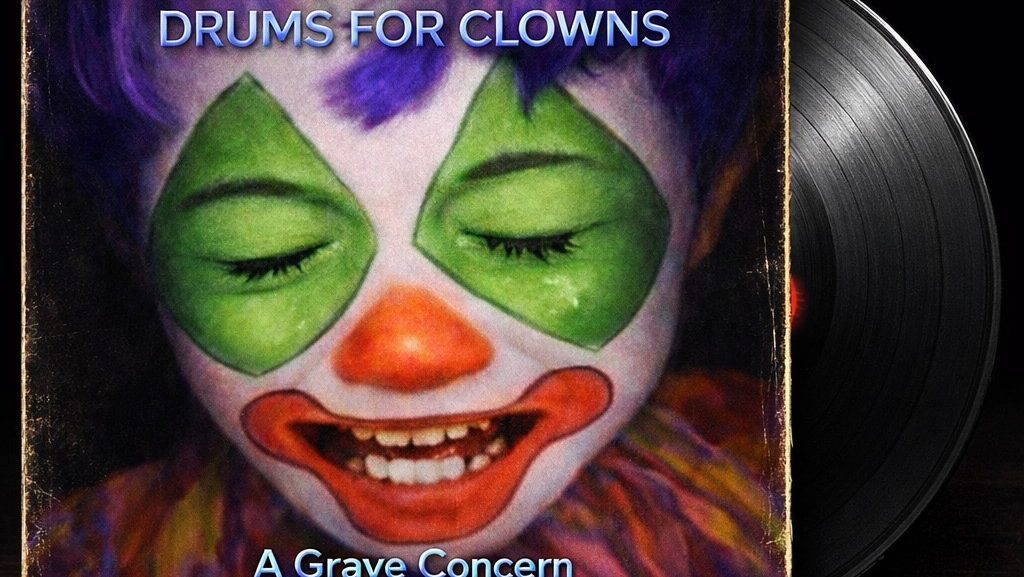
Today, we are discussing Drums for Clowns’ “Grave Concern”, a song originally released in 2003 and revisited for a new generation, with the supplied release information listing 4 August 2016 as its release date. The track explores loss, grief, mental health and the lasting effect people can have on our lives long after they are gone. Its return is accompanied by a new official video featuring Cobain Cooper, giving the song a new visual perspective while preserving the emotional heart of the original recording.
Before we begin our conversation with Kit Cooper, here’s what you need to know about today’s featured project.
About Kit Cooper
Emerging from Gateshead, England, in the late 1990s, Drums for Clowns developed an identity built around emotionally charged songwriting and powerful live performances. The band went on to build an audience across Europe, North America and Canada, developing a catalogue that combines elements of alternative rock, post-punk and melodic indie with a strong emphasis on personal songwriting.
At the centre of that songwriting is Kit Cooper, whose work has consistently drawn from experiences that are difficult to separate from ordinary life. Grief, love, addiction, hope and survival have all found their way into his writing, not as subjects selected to follow musical trends, but as experiences that have demanded expression. His approach has remained deeply personal, with music providing a place to communicate feelings that can sometimes be difficult to explain directly.
That honesty is particularly evident in “Grave Concern”. Originally released in 2003, the song has returned more than two decades later with its original emotional core intact. The track explores loss, grief, mental health and the lasting presence of people who continue to affect us after they are gone. Rather than presenting those subjects from a distant perspective, the song comes from a deeply personal place, reflecting the emotional confusion and internal struggle that shaped its creation.
The return of “Grave Concern” also provides an opportunity to view the song through a different generation. Its new official video features Cobain Cooper and places the story within a cinematic setting of open landscapes, railways, solitude and quiet reflection. Rather than attempting to illustrate every element of the song literally, the visual approach gives the music room to breathe, using Cobain’s understated presence to introduce themes of innocence, loss, confusion and memory from a fresh perspective.
For Cooper, revisiting “Grave Concern” has also meant confronting the person and songwriter he was when the song was first written. What once felt like an immediate experience of pain can now be viewed with greater distance and understanding, while the emotions at the centre of the song remain recognisable. The release therefore becomes more than a return to an older recording. It is also a reflection on survival, memory, creative history and the way a song can acquire new meaning as its writer and audience move through time.
Having this brief introduction to today’s featured project, I’m sure both new listeners and longtime fans are ready to hear directly from Kit about the history behind the song, the experience of revisiting it and what may come next for Drums for Clowns. So, without further ado, let’s begin today’s interview.

INTERVIEW SESSION
Oliver:
Drums for Clowns emerged in the late 1990s and went on to build an audience across Europe and North America. When you think back to the early days of the band, what experiences, relationships and moments from that period still feel central to the person and songwriter you are today?
Kit Cooper:
Those early years shaped almost everything I became. We were young, fearless and probably a little naïve, but we genuinely believed the music could take us somewhere. The friendships, the arguments, the endless travelling and those nights playing to a handful of people all mattered just as much as the bigger shows.
What stays with me most is the feeling that we were creating our own world. We didn’t have much, but we had belief in one another and in the songs. There was pain underneath it all, though. I carried something inside me that I couldn’t name or explain, and music became the only place where I could release it without having to understand it first.
Oliver:
Your songwriting has explored subjects including grief, love, addiction, hope and survival, often drawing from experiences rather than trying to follow whatever direction music happens to be moving in. What first gave you the confidence to make personal experience the foundation of your songwriting?
Kit Cooper:
I don’t think it began as confidence. It was probably desperation. I have always had this crippling pain inside me, and I still couldn’t tell you exactly what it is or where it comes from. Sometimes it feels like grief for something I’ve lost, and sometimes it feels like grief for something I never had.
Writing songs was the only way I could give that pain somewhere else to live. I wasn’t brave enough to sit down and explain myself to people, but I could hide the truth inside a melody or a line. Once listeners began recognising their own lives in those songs, I realised that being personal didn’t shut people out—it invited them in.
Oliver:
Drums for Clowns have remained independent throughout a long career, even as the band’s music reached audiences in different countries and generated millions of record sales. What has staying true to your own artistic decisions meant to you personally, particularly during periods when there may have been pressure to change direction?
Kit Cooper:
It has meant everything, although it has never been the easiest road. Independence gives you freedom, but it also means carrying the responsibility when something succeeds or fails. There were certainly moments when people suggested that we soften something, follow a trend or become easier to sell. But once you begin making music for approval, you can lose the very thing that made anybody care in the first place.
These songs come from a deeply personal place. I couldn’t polish away the pain or pretend to be somebody else simply because it might be more commercially convenient. Whatever else people say about Drums for Clowns, I want them to know that it was real. We made the records we believed in.
Oliver:
“Grave Concern” was originally released in 2003, yet its subject matter still centres on loss, grief, mental health and the lasting effect another person can have on your life. When you return to a song written more than two decades ago, how do you personally relate to the emotions in it now compared with when you first wrote it?
Kit Cooper:
When I originally wrote it, I was trapped inside those emotions. There was no distance between me and the song. I wasn’t observing the pain; I was living in it. More than twenty years later, I can listen with a little more understanding and compassion for the person I was then.
The pain hasn’t completely disappeared. I still carry it, and I still don’t entirely understand what it is. The difference is that I no longer believe it has to destroy me. When I hear “Grave Concern” now, I hear a young man trying to survive his own mind. There is sadness in that, but I also hear the fact that he did survive.
Oliver:
You described “Grave Concern” as one of those songs that would not leave you alone. What was happening around you when the song first demanded to be written, and what made you realise that those emotions needed to become a song?
Kit Cooper:
There wasn’t necessarily one dramatic moment. It was more like an accumulation of things—loss, confusion, anger and that terrible nervous feeling you can’t explain, even when there appears to be nothing to feel nervous about. The song kept circling in my mind, refusing to let me rest.
I’ve carried a kind of crippling pain for much of my life. I don’t know what it is, and I don’t have a clever explanation for it. Sometimes it feels older than I am. “Grave Concern” grew out of that place. I didn’t decide that the emotions should become a song; the song decided for me. Writing it was the only way to quieten everything for a while.
Oliver:
The song deals with the way someone can continue to affect us long after they are gone. When you were writing it originally, were you trying to make sense of a particular loss, preserve a memory, or simply give shape to feelings that were difficult to express in everyday life?
Kit Cooper:
It was probably all three. Loss is rarely one clean emotion. It carries love, anger, guilt and all the things you wish you had said. I wanted to preserve something, but I was also trying to understand why certain people remain inside us after they have gone.
More than anything, I was giving shape to feelings I couldn’t express in ordinary conversation. I have never been particularly good at explaining that internal pain. Ask me where it comes from and I honestly don’t know. But give me a guitar, a melody and a few words, and somehow I can show you what it feels like. The song became an emotional photograph—imperfect, but truthful.
Oliver:
The new release gives “Grave Concern” a second life without changing the song at its heart. What made this particular track feel right for revisiting now, and what did you discover about it by hearing it again after so many years?
Kit Cooper:
Some songs belong completely to the time in which they were recorded, but others seem to wait for you. “Grave Concern” felt unfinished in that sense—not musically, but emotionally. Its themes have become even more relevant as people have grown more willing to speak about grief, depression and mental health.
Returning to it showed me that the song had understood something before I did. When I was younger, I thought I was simply pouring out confusion. Now I recognise that it was also about survival and the traces people leave behind. We didn’t want to rewrite its history or clean away its rough edges. We wanted to open another door into the same room.

Oliver:
There is an interesting contrast between the darkness of the song and the new video’s focus on innocence, open landscapes, railways, solitude and moments of reflection, with Cobain Cooper at the centre of the story. How did you and the team approach giving an older song this completely new visual perspective?
Kit Cooper:
We wanted to avoid illustrating every lyric too literally. The song is already emotionally intense, so the video needed space, silence and innocence around it. The open landscapes create a sense of freedom, but they also make a solitary figure appear very small. Railways suggest movement and escape, yet they can also represent separation and destinations we never reach.
Putting Cobain at the centre allowed us to view those heavy emotions through younger eyes. He isn’t acting out the song’s pain in an obvious way. He is moving through a world shaped by memory, loss and things he may not fully understand. That felt truthful because children often sense far more than adults realise, even when nobody has given them the words for it.
Oliver:
Cobain Cooper brings another generation into a song that was written in 2003, creating a connection between the original story and the present day. What did it mean to you personally to see him become part of the visual story, particularly given the themes of loss, innocence and memories that run through the project?
Kit Cooper:
It was incredibly emotional. The song came from a much younger version of me, so seeing Cobain inside its new visual world created a connection between who I was, who I am and what continues after me.
There is something very powerful about placing innocence beside a song born from pain. It reminded me that the things we carry can pass through generations, but they do not have to be passed on unchanged. They can be transformed into understanding, art or even hope. Cobain gave the video a heart that I couldn’t have created alone. He didn’t merely appear in it; he changed how I understood the song.
Oliver:
The decision to keep Cobain’s performance understated rather than making the video overly dramatic seems to leave room for the song’s emotions to speak for themselves. What were you hoping audiences would feel or understand through that quieter visual approach?
Kit Cooper:
Real grief is often quiet. It doesn’t always announce itself through dramatic gestures. Sometimes it is simply a person walking alone, holding onto an object or looking towards something they cannot reach. We trusted the audience enough not to explain every image.
Cobain’s restraint gives people room to place their own memories inside the video. I hope viewers feel tenderness, concern and perhaps a recognition of their younger selves. The quietness also reflects the way people often hide emotional pain. Someone can appear calm while carrying something unbearable inside them. That contrast—between what the world sees and what a person actually feels—is central to the song.
Oliver:
Your music has been described through haunting melodies, soaring guitars and memorable choruses, while “Grave Concern” is also presented as an atmospheric and cinematic piece. When you were originally writing and recording the song, how did you use the guitar, vocals and arrangement to communicate the weight of its subject matter?
Kit Cooper:
I wanted the music to feel like an emotion building until it could no longer be contained. The guitars needed to carry both beauty and danger. The melody draws you in, while the sound underneath it feels unsettled, as though something might break at any moment.
Vocally, I wasn’t interested in sounding perfect. I wanted the cracks, tension and desperation to remain because they were part of the truth. The arrangement moves between restraint and release, which mirrors how I experience difficult emotions. You try to contain them, you convince yourself you are fine, and then they rise again. The memorable chorus gives that pain somewhere to open up and become bigger than the person singing it.
Oliver:
More than twenty years separate the original release from this new chapter, and during that time both music and audiences have changed considerably. When you hear “Grave Concern” today, what aspects of the recording feel firmly connected to the era in which it was created, and what qualities do you think allow it to connect with people now?
Kit Cooper:
You can hear the period in the guitars, the production and the physical way the band plays together. There is a rawness that comes from musicians being in a room and pushing against one another. Records today can be incredibly precise, but sometimes precision removes the struggle, and struggle was an important part of our sound.
What allows it to connect now is the emotion. Technology changes, fashions return and disappear, but grief still feels like grief. People still love, lose, remember and try to survive. The recording belongs to 2003, but its emotional questions don’t belong to any particular decade. That is why it can meet somebody today as honestly as it met a listener then.
Oliver:
Drums for Clowns built a substantial following across Europe and North America, and the band’s catalogue continues to reach listeners beyond its original release periods. What have you learned from seeing different generations and audiences find personal meaning in songs that were written from very specific experiences?
Kit Cooper:
I’ve learned that the more honestly you write about something specific, the more universal it can become. I might know exactly which person, room or moment inspired a line, but somebody thousands of miles away can hear it and attach it to their own life.
Once a song is released, it doesn’t belong entirely to the writer anymore. Listeners carry it into relationships, funerals, long journeys and private moments we will never know about. That is one of the greatest privileges of making music. The song begins with my pain, but it doesn’t have to end there. It can help another person recognise their own feelings or realise that they aren’t completely alone.
Oliver:
Your career has included the intensity of performing live as well as the more solitary side of songwriting. How do those two experiences influence each other when you are creating music, particularly when the subject matter is as personal as grief and loss?
Kit Cooper:
Songwriting is usually where I am most exposed, even though I’m alone. It is me trying to make sense of things I cannot explain to anybody else. Performing is the opposite: that private feeling suddenly becomes communal and comes back at you through an audience.
Onstage, the pain inside a song can turn into energy. It becomes something physical, loud and shared. That doesn’t remove its meaning, but it changes its weight. When people sing the words back, the experience no longer feels like mine alone. Knowing how a song feels live also affects how I write—I leave space for release, for guitars to rise and for a chorus to carry emotions that are too large for ordinary conversation.
Oliver:
Looking at the wider history of Drums for Clowns, how has your understanding of songwriting changed since the band’s early years, and what have the experiences of building a career over several decades taught you about writing honestly?
Kit Cooper:
When I was younger, I thought songwriting meant capturing every emotion at its most extreme. I wanted each song to bleed. Age has taught me that honesty can also be quiet and that sometimes one simple line reveals more than a page of explanation.
What hasn’t changed is the reason I write. That unexplained pain is still there. It can be crippling, and I still don’t know precisely what it is. I’ve stopped believing that I must solve it before I can speak about it. Songwriting isn’t always about finding an answer; sometimes it is about describing the question truthfully. After all these years, I trust instinct more, disguise less and understand that vulnerability is not the same as weakness.

Oliver:
Revisiting “Grave Concern” also means revisiting a particular chapter of your own creative history. Was there anything about returning to the song that surprised you emotionally or creatively, or that made you see your younger self or the original recording differently?
Kit Cooper:
I was surprised by how vulnerable the younger version of me sounded. At the time, I thought the song was angry and forceful. Listening now, I hear somebody frightened underneath all that noise—someone trying to protect himself by making everything louder.
I feel more compassion for him than I once did. I used to be embarrassed by certain parts of myself and wanted to outrun them. Now I can recognise that he was doing the best he could with emotions he didn’t understand. Creatively, I was also struck by how instinctive the recording was. We weren’t trying to analyse every moment. We followed the song, and that lack of calculation is probably one reason it still feels alive.
Oliver:
The new video introduces the song to people who may never have heard the original recording, while longtime listeners can experience the same song through a different visual story. How do you think about that balance between respecting the history of a song and allowing a new generation to create its own connection with it?
Kit Cooper:
You respect a song’s history by protecting its emotional truth, not by trapping it in the past. We didn’t want to recreate 2003 or pretend nothing had changed. The original recording already exists and carries that time within it. The new video needed to bring something honest from the present.
Longtime listeners may see memories of where they were when they first heard the song. New listeners arrive without that history and are free to build their own relationship with it. Both responses are valid. If a song is still alive, it should be able to gather new meanings without losing its original heart. That is what we hoped this new chapter would achieve.
Oliver:
After a career that has taken Drums for Clowns across different audiences and musical eras, what keeps you personally interested in continuing to write and perform rather than simply looking back at what the band has already achieved?
Kit Cooper:
I continue because the feeling that made me write the first songs has never gone away. There is still something inside me demanding to be expressed. I wish I could explain what that pain is, but I can’t. It sits somewhere beyond language until music gives it a form.
Looking back can be comforting, but I don’t want nostalgia to become a cage. Whatever we achieved in the past matters, but it cannot write the next song. I remain curious about what is still buried in me and what might happen when the band enters a room together again. As long as that hunger and nervousness remain, I don’t think I’ll ever feel completely finished.
Oliver:
“Grave Concern” ultimately returns to the idea that some people leave an imprint on us that remains long after they are gone. Looking at your own songwriting catalogue, what do you hope listeners remember most about the human stories and emotions you have tried to preserve through your music?
Kit Cooper:
I hope they remember that the songs were human. They were never written from a place of having everything worked out. They came from love, mistakes, illness, grief, addiction, friendship and the effort to keep going when disappearing might have seemed easier.
If listeners remember anything, I hope it is the sense that somebody else understood, even briefly, what it was like to feel too much. I have spent much of my life trying to describe an invisible pain that I cannot properly name. Perhaps the songs are the closest I will ever come. If they preserve the people we loved and help someone feel less alone, then they have done something worthwhile.
Oliver:
As you look ahead, what would you like the next chapter of your work with Drums for Clowns to explore, and are there particular stories, emotions or areas of your creativity that you feel you have not yet fully expressed?
Kit Cooper:
I would like the next chapter to explore what happens after survival. We have written extensively about darkness, but surviving something does not mean it disappears. You carry it differently. I’m interested in that space between pain and hope—where you are no longer who you were, but you are still discovering who you have become.
There are stories I haven’t been brave enough to tell and emotions I still don’t fully understand. That crippling feeling inside me remains, but I no longer see it only as an enemy. It has hurt me, certainly, but it has also driven me to create. I want the next music to be fearless, melodic and honest—to acknowledge the darkness without surrendering to it.
“More than two decades after its original release, ‘Grave Concern’ feels like a conversation between the songwriter who first lived through its emotions and the artist who can now look back at them with greater distance, while the new visual chapter gives that story another generation through which to breathe.”
~ Oliver (DULAXI Team)
EDITORIAL PERSPECTIVE
“Grave Concern” carries the sense of a song that has remained connected to its original emotional purpose while gaining another layer of meaning through time. The guitars, vocals and arrangement work together to create a space where tension and vulnerability can coexist, while the new video gives the song a quieter visual language through Cobain Cooper’s presence. Speaking with Kit Cooper also reveals how closely the music is connected to his approach to honesty, memory and survival. The result is a release that connects its history with the possibility of new interpretations.
~ Oliver (DULAXI Team)
CLOSING
Our conversation with Kit Cooper offers a thoughtful look at a song that has travelled a long distance from its original release in 2003 to this new chapter. “Grave Concern” carries the experiences and emotions of the songwriter who created it, while its new visual interpretation allows those themes to be encountered from another perspective.
Thank you to Kit for taking the time to speak with DULAXI and for sharing such open reflections on songwriting, memory, creativity, the history of Drums for Clowns and the continuing life of this particular song. His thoughts also give listeners another way to approach the music, not simply as a recording from the past, but as a piece of work that can continue to gather meaning through new experiences and new audiences.
For readers discovering “Grave Concern” for the first time, this is an opportunity to experience the song alongside the story behind it. For longtime listeners, the new chapter provides another perspective on a recording that has remained part of Drums for Clowns’ musical history.
Thank you for spending time with DULAXI and with today’s interview. We hope you continue to follow Kit Cooper and Drums for Clowns as their creative journey develops, and we look forward to bringing you more conversations with artists and musicians from around the world.