
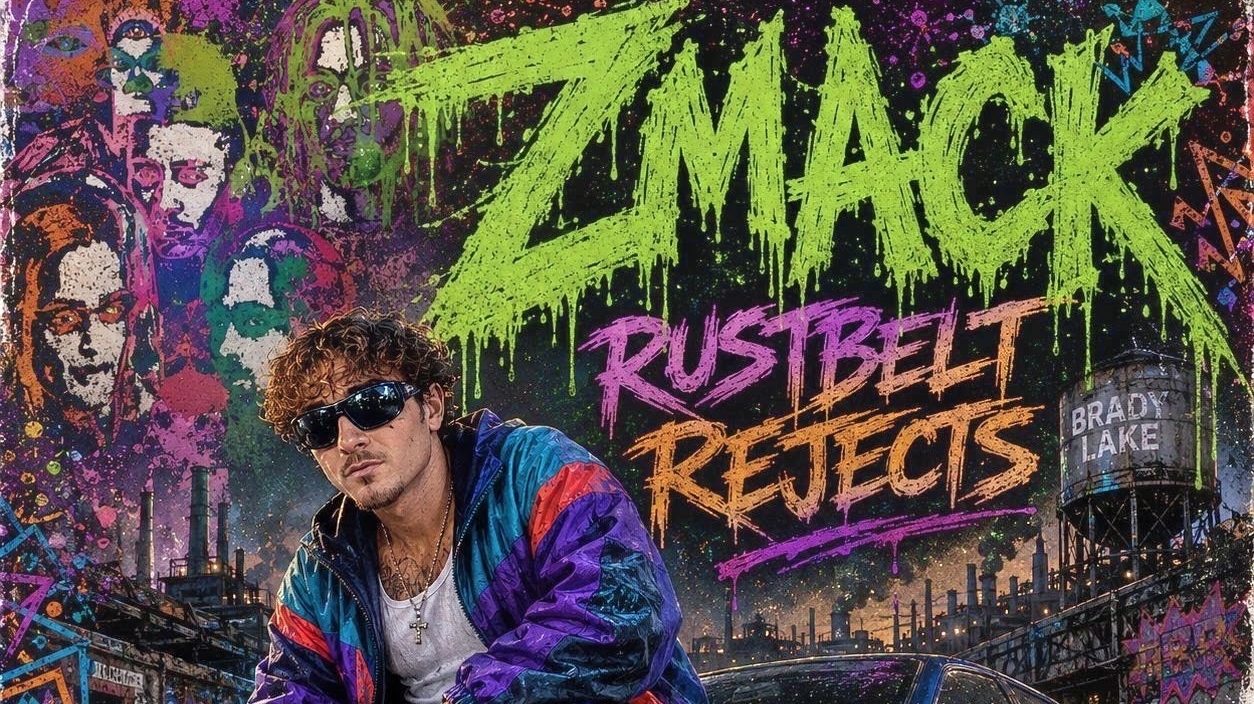
Released on August 1, 2026, “Rustbelt Rejects” presents Zmack’s musical world as one shaped by environment, memory, experimentation, and personal experience. Rooted in Akron, Ohio, the album draws heavily from the atmosphere of America’s Rust Belt, where industrial history, visible decay, resilience, frustration, pride, and humour coexist. Rather than attempting to reproduce one established sound, Zmack brings together Memphis trap, Horrorcore, shadow rap, doom, sludge, industrial, New Wave, funk-metal, nu-metal, dubstep, and phonk. These influences give the album a constantly shifting character while maintaining a strong sense of identity, creating music that feels connected to the place and experiences from which it emerged.
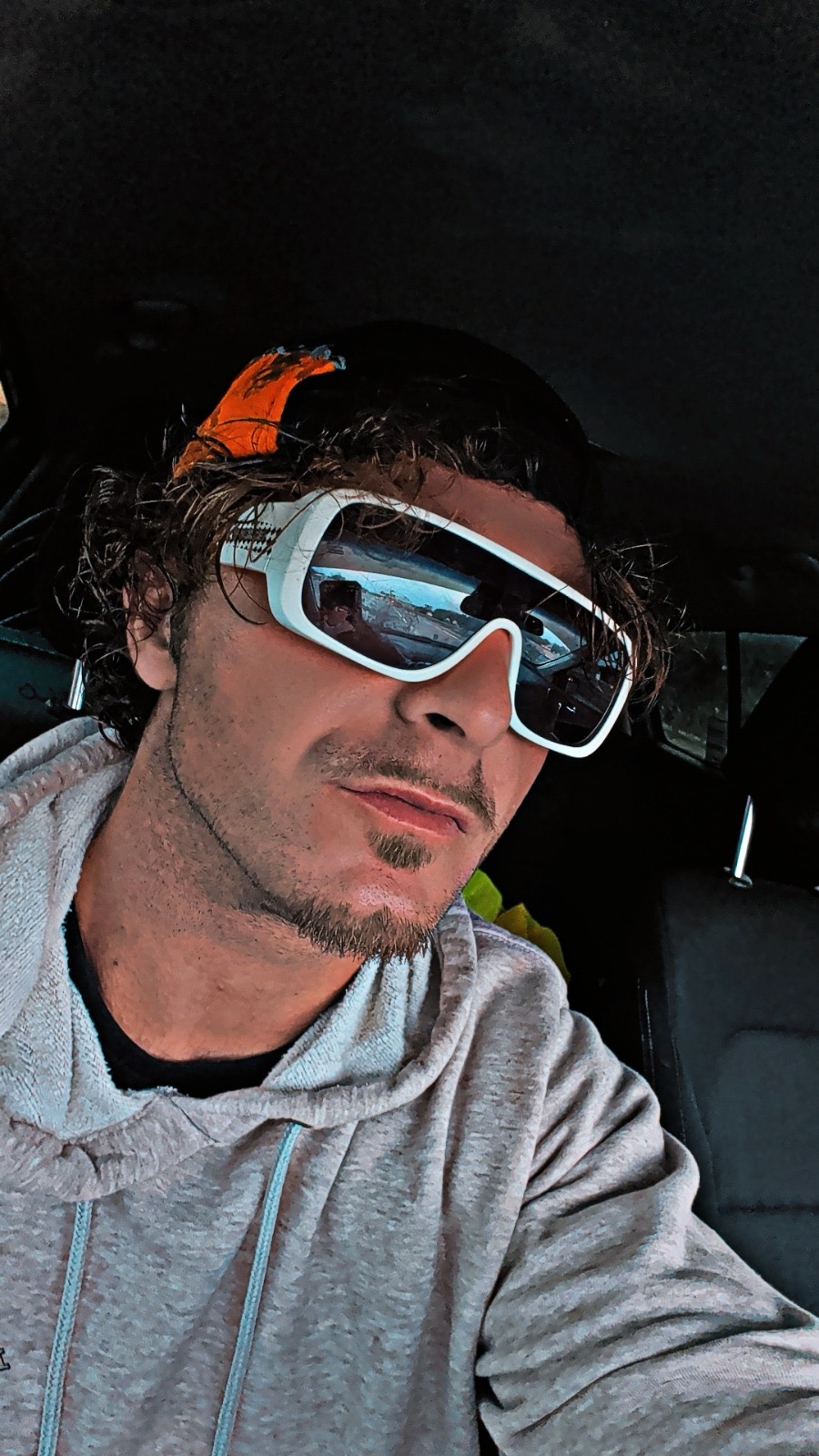
The production gives “Rustbelt Rejects” much of its distinctive character. Zmack’s use of distorted slap-bass introduces a rough, physical quality to the arrangements, while industrial power-tool textures add mechanical layers that reinforce the album’s connection to its surroundings. Dubstep-influenced low frequencies provide weight underneath Memphis-inspired drum patterns, creating a rhythmic foundation capable of supporting both the heavier and more groove-oriented elements. The contrast between abrasive textures and enjoyable grooves is particularly important to the album’s overall personality. Instead of smoothing these contrasting sounds into something conventional, Zmack allows them to interact freely, giving the production an experimental quality that remains grounded in rhythm.
Rustbelt Rejects Album Track Reviews:
Rust Sound:
“Rust Sound” opens “Rustbelt Rejects” with an abrasive industrial force that immediately establishes the album’s gritty Midwest atmosphere. The production is built around a pounding Memphis trap beat and heavily distorted slap bass, creating a thick rhythmic foundation where sludge rock textures collide with raw electronic low end. High frequency industrial sounds resembling power tools and grinding metal cut sharply through the dense bassline, adding a mechanical edge to the arrangement. The mix is intentionally saturated and claustrophobic, with layers of distortion and noise creating an atmosphere that feels rough, weathered, and intensely physical. Despite its chaotic surface, the instrumental remains carefully structured, with each element contributing to the track’s heavy momentum and distinctive sense of decay. Zmack’s vocal performance matches that intensity through a commanding, grave delivery positioned deep within the mix. His voice moves between a low guttural growl and rapid fire cadence, closely following the aggressive movement of the rhythm section. Dark vocal harmonies and atmospheric ad libs sit beneath the main verses, giving the hook a ghostly, multi layered quality. His tight cadence emphasizes the beat’s heavy syncopation, keeping the performance relentless from beginning to end.

Blood of the Irish:
“Blood of the Irish” shifts into a sharper rhythmic direction, built around hard hitting boom bap drums and a prominent driving bassline. The arrangement uses sparse but impactful pauses and heavy downbeats, allowing the percussion to establish a forceful, forward moving pulse. Beneath that foundation, subtle dark synth pads and resonant low end pulses introduce a modern edge, while an eerie, folk influenced harmonic undertone adds atmosphere and depth. The combination gives the production an aggressive character without overwhelming its rhythmic structure, allowing each percussive element to remain pronounced and purposeful throughout the track. Zmack’s vocal performance is equally direct, delivering an accented rhythmic flow that cuts cleanly through the instrumentation. His delivery moves between a steady, conversational tone in the verses and explosive shouted emphasis at key line endings, creating strong dynamic contrasts. Additional vocal layers and wide stereo panned backing vocals expand the hook, giving the refrain a choral, anthem like quality. This layered vocal arrangement reinforces the track’s themes of heritage and identity while adding weight and presence to Zmack’s commanding performance.
Streetlights:
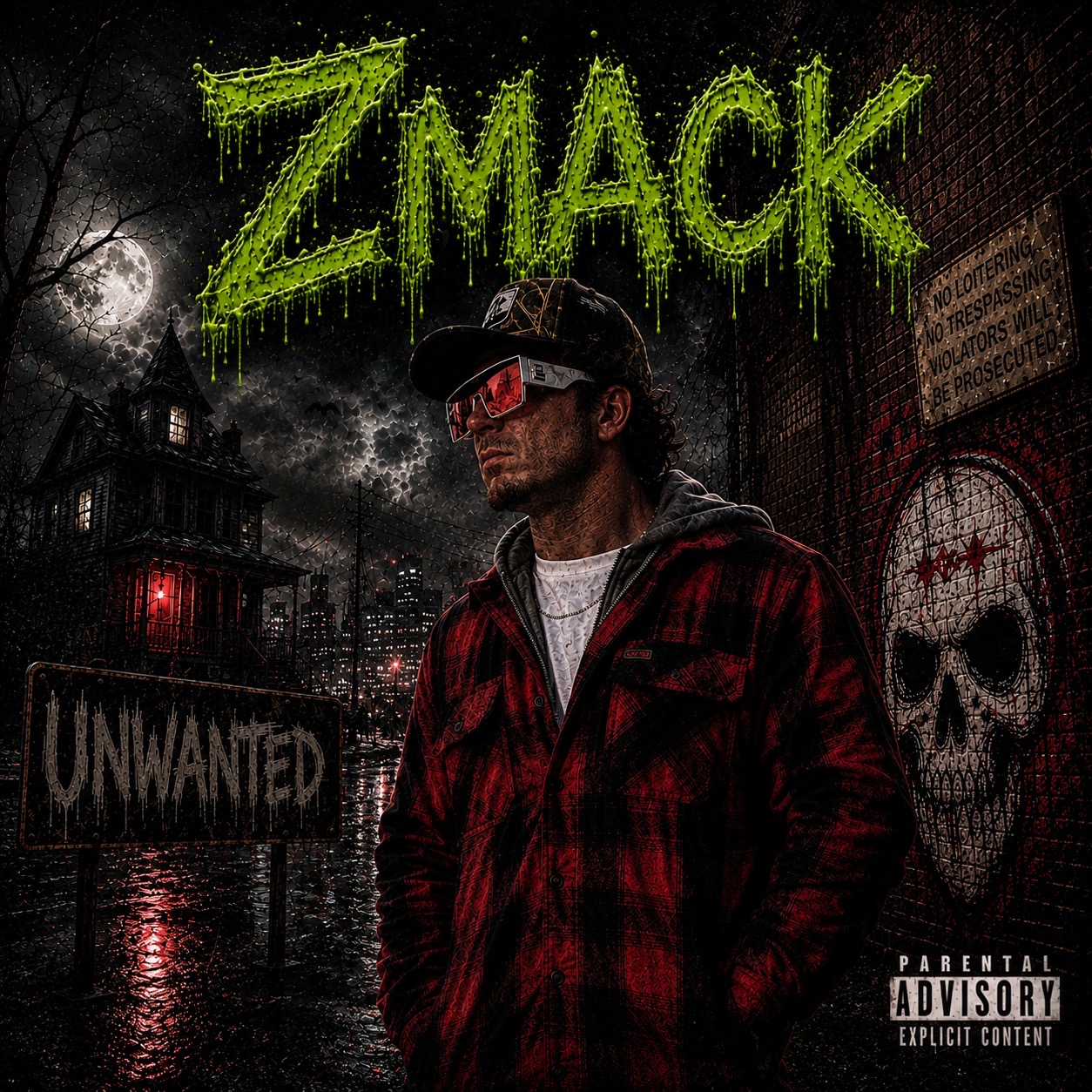
“Streetlights” introduces a striking change in atmosphere, moving away from the heavier distortion of the surrounding material into airy ambient synths and a misty nocturnal soundscape. Smooth, rolling trap percussion forms the foundation, combining rapid hi hat rolls with a deep 808 bass kick and subtle echoing synth melodies that drift across the stereo field. The spacious, reverb heavy production gives each element room to breathe, creating an immersive late night urban atmosphere that feels expansive and reflective. The balance between the low end and floating electronic textures gives the arrangement both rhythmic movement and atmospheric depth. Zmack’s vocal performance mirrors this contrast through a light, fluid, and melismatic approach that transitions into fast double time rap during the verses. Breathy tonal shifts, pitched down vocal echoes, and delicate background vocalizations blend naturally with the floating synth textures. The refrain uses smooth melodic phrasing before giving way to rapid fire verbal precision, demonstrating strong technical control and dynamic versatility throughout the performance.
Dirty Muskrat:
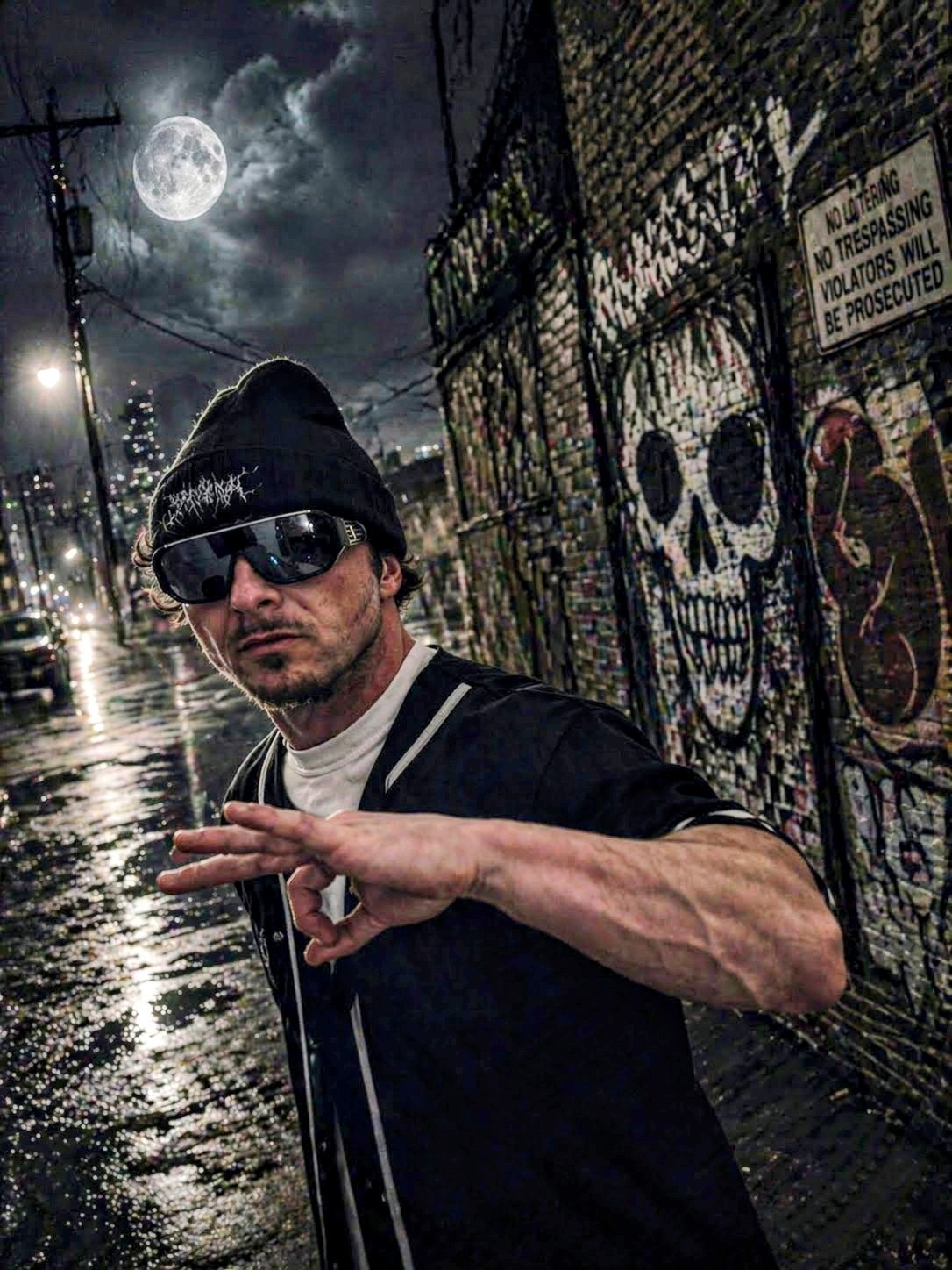
“Dirty Muskrat” delivers a genre bending collision of industrial funk metal textures, heavy dubstep bass drops, and aggressive percussion. Its instrumental layers harsh metallic sound effects, including power tool inspired samples, over a thick, bouncing bassline and sharp snapping snares. The arrangement remains deliberately unpredictable, shifting between heavy half time dubstep breakdowns and faster funk infused rhythms. These changes continually reshape the track’s momentum, allowing dense industrial textures and energetic grooves to coexist while maintaining a forceful rhythmic character. The contrast between its crushing low end and rapid rhythmic passages gives the production a restless, constantly mutating quality. Zmack matches the instrumental’s unrestrained energy with a playful yet biting vocal performance. His delivery moves between raspy, energetic bark like phrases, eccentric pitched ad libs, and sudden tonal drops that emphasize the track’s dark humour. Dense vocal layering adds further movement, with pan shifted vocal cuts and raw backing vocals reinforcing individual rhythmic hits and punchlines. The result is a highly kinetic performance that complements the track’s unconventional production.
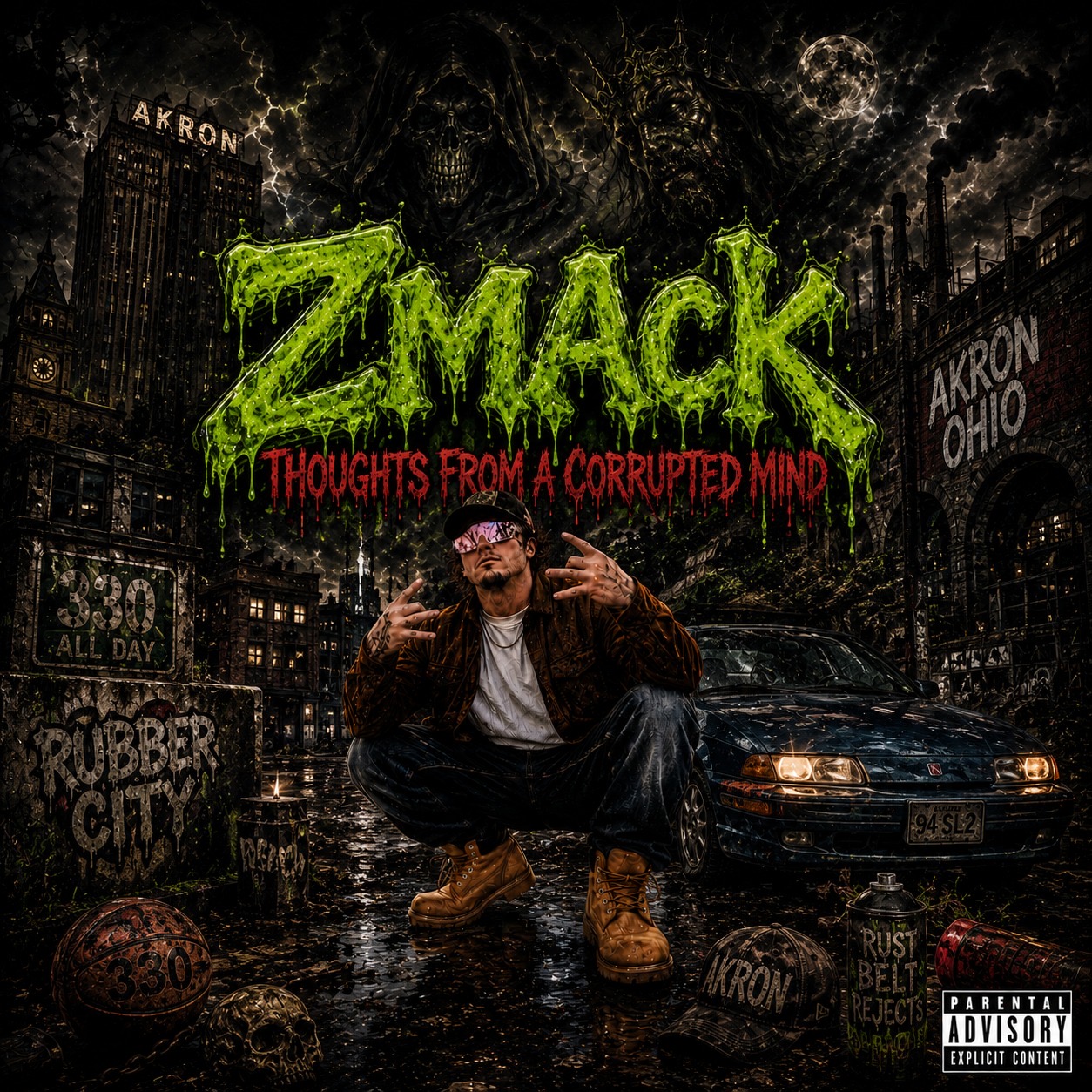
The album also carries a strong emotional dimension beneath its heavier sonic exterior. Its subject matter draws from loss, relationships, identity, resilience, personal history, and the experience of trying to understand life through periods of significant change. The Rust Belt becomes more than a geographical setting, functioning as an important part of the album’s atmosphere and perspective. The surrounding environment provides a backdrop for reflections on what has changed, what remains, and how people continue building something meaningful from what they have. At the same time, Zmack’s Irish-American identity contributes another personal layer, allowing heritage and individual experience to exist alongside the broader themes without making the project dependent on a single subject.
The album’s independent creation further strengthens this sense of authenticity. “Rustbelt Rejects” was developed between Zmack’s home setup and Dave’s studio in Northeast Ohio, with Zmackproducing the beats and recording the vocals himself. Dave contributed production assistance along with mixing and mastering, while longtime friends Charles and Jordan provided ideas and creative feedback. Rianna encouraged Zmack to put the music out, while Rob supported the project through promotion and reviewing. This collaborative circle exists around a fundamentally self-driven creative process, allowing the album to retain the character of an artist building his sound from the resources immediately available to him.
Rustbelt Rejects Is A Raw And Experimental Album Where Industrial Textures, Heavy Rhythms, Personal Loss, Heritage, And Rust Belt Resilience Form Zmack’s Distinctive Sonic World
~ Faithfulness (Dulaxi Team)
That independent spirit connects directly to Zmack’s journey as an artist. His musical foundation began in middle school through years of rapping and making beats with his late best friend CJ, whose influence remains deeply connected to the craft Zmack has developed since his passing. Over the years, Zmack continued refining his production, vocals, and songwriting while drawing from an unusually broad range of musical influences and personal experiences. His journey has resulted in an artist who does not simply combine genres but uses them as different tools for expressing his own perspective. “Rustbelt Rejects” therefore becomes a reflection of Akron, personal history, friendship, loss, identity, and perseverance, while establishing Zmack’s independent voice as the central force holding its many influences together.
For more information about Zmack, click on the icons below.