
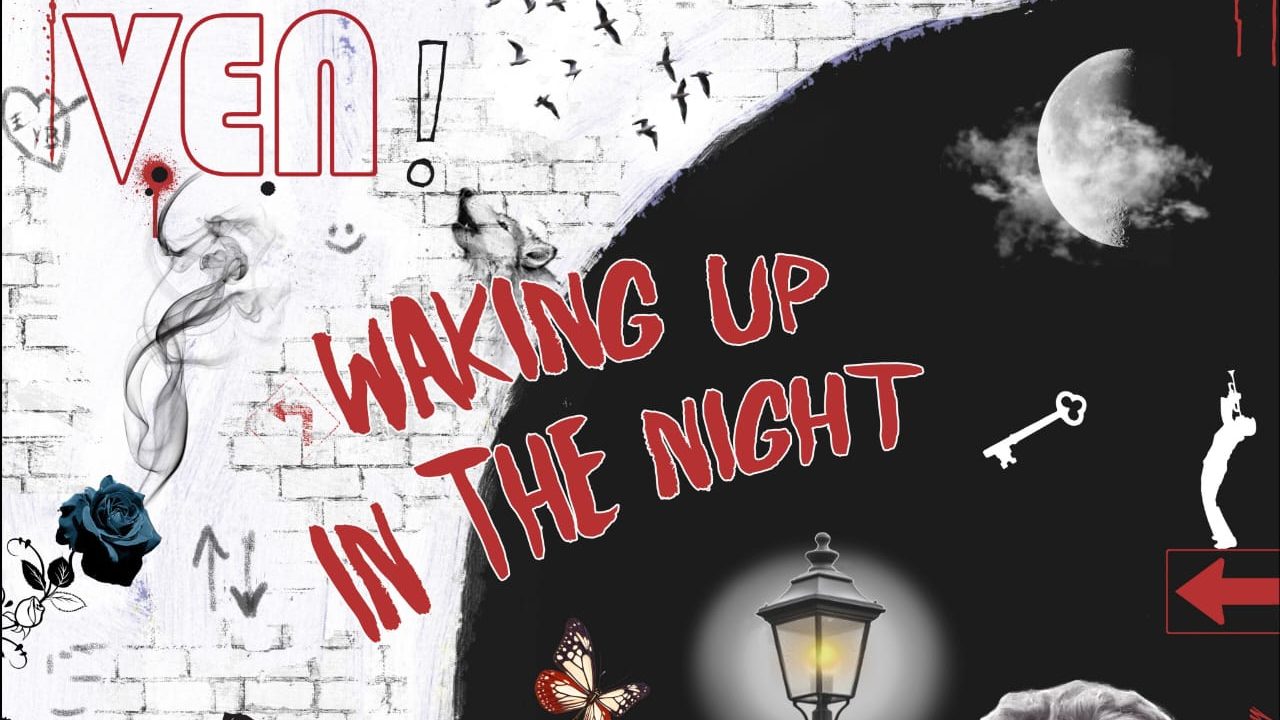
Hello everyone, it’s your host Oliver from DULAXI, and today I’m delighted to reconnect with Edu Campoy, the musician behind V.E.N! (Virtual Emotions Network), a solo project from Seville, Spain, that brings together melodic power-pop, alternative rock, progressive elements and atmospheric textures. With his latest six-track EP, Waking Up In The Night, released on October 9, 2026, Campoy continues exploring the intersection of expressive guitar-driven music, introspective songwriting and socially conscious themes.
Before we begin our conversation with Edu Campoy, here’s what you need to know about today’s featured project.
About V.E.N!
V.E.N! is the solo musical project of Spanish songwriter Edu Campoy, whose musical identity draws from 1960s pop, Britpop, post-punk and alternative rock. Combining melodic power-pop with progressive influences, expressive electric guitars and atmospheric arrangements, the project moves between energetic rock passages and more restrained, intimate moments. Its songwriting reflects personal experiences, philosophical questions, spiritual references and observations about contemporary society, allowing the music to maintain a balance between melodic accessibility and deeper reflection.
Released on October 9, 2026, Waking Up In The Night is a six-track EP built around the idea of exploring the unknown aspects of the human mind and discovering what remains hidden within ourselves. The concept treats the night as a space for introspection, transformation and spiritual discovery rather than something to escape. Across songs including “Connection,” “Break The Compass,” “The Scared Animal,” “Crossing The Last Valley,” “Evolution” and “The Home Of The New Man,” Campoy explores vulnerability, losing one’s sense of direction, personal evolution and the possibility of finding hope through difficult experiences.
The EP’s focus track, “Connection,” introduces these ideas through reflections on emotional distance, loneliness and the need to reconnect with ourselves and the world around us. Its combination of energetic guitars, direct melodic appeal and more introspective passages reflects the contrasting qualities that run throughout the release. Campoy’s vocal approach also contributes to the EP’s character, moving between delicate, vulnerable expressions and more intense, expansive performances, while progressive dynamics and atmospheric textures allow the compositions to develop naturally. The lyrics remain deliberately open, inviting listeners to approach the songs through their own experiences and interpretations.
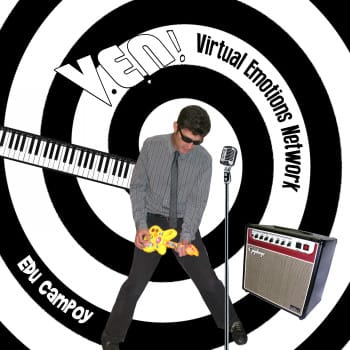
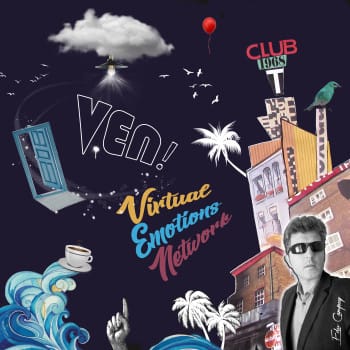
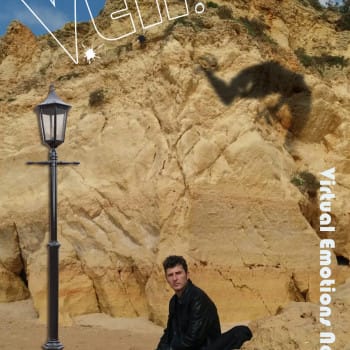
Beyond the music, V.E.N! maintains a creative relationship with visual art, using pop art, collage, colourful imagery and graphic composition to develop an artistic identity that extends across its releases. Each song receives its own artwork, designed as a visual continuation of its lyrical and emotional ideas rather than a literal interpretation. With Waking Up In The Night, Campoy continues to develop an independent creative universe that brings together music, visual expression and personal reflection, while remaining open to the unexpected changes that can emerge during the songwriting and recording process.
Having this brief introduction to today’s featured project, I’m sure both new listeners and longtime followers are ready to hear directly from Edu. So, without further ado, let’s begin today’s interview.
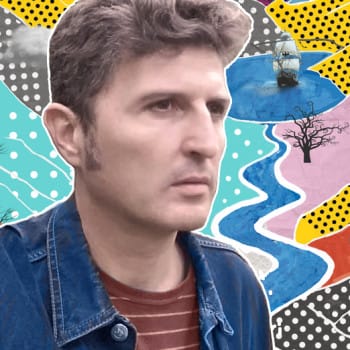
INTERVIEW SESSION
Oliver:
- Edu, it’s great to reconnect with you. Since our previous conversation, V.E.N! has continued to develop its musical and visual identity, and you’ve now introduced a new six-track EP. Looking back at your more recent period as an independent artist, what changes in your personal outlook or creative priorities have had the greatest influence on the direction you’re taking with V.E.N! today?
V.E.N!:
It’s a pleasure to meet again, too.
Throughout these years, the creative process has always had a common thread: trying to be honest and sincere with myself. Not giving up what I believe in, either because of trends or inherited influences, and showing myself as I am.
Sometimes through vulnerability, exposing my contradictions and beliefs; at other times, through a more energetic attitude, rebelling against social problems that I believe could be improved, keeping my feet on the ground and without idealism.
Changes are usually shaped by the circumstances and personal experiences of each moment. They are not premeditated. Those experiences guide me unconsciously, I suppose, and are part of my own evolution.
Oliver:
- Your music brings together melodic power-pop, alternative rock and progressive elements, but there’s also a noticeable emotional and philosophical side to your work. As your artistic identity continues to develop, how do you decide which parts of your musical personality should take centre stage in a particular release, and how do you maintain a recognisable V.E.N! identity while allowing yourself room to experiment?
V.E.N!:
I don’t really try to maintain an identity that is necessarily recognisable or a clearly defined profile. But inevitably, certain concerns, doubts, suspicions and beliefs end up shaping that artistic profile.
I write pieces of music and songs with a vague idea of how they might take shape and how I will go about creating each instrumental layer. Then I leave them in a kind of musical warehouse, waiting for them to find their place in each new EP.
This is the most spontaneous stage and probably the one I enjoy the most, because the song still has room to grow and transform.
Then I start selecting and prioritising the music. Once I begin recording, I write the lyrics. What I feel at that moment is what ultimately guides the rest of the process.
Oliver:
- You draw inspiration from several musical traditions, including 1960s pop, Britpop, post-punk and alternative rock. With Waking Up In The Night, where energetic guitar arrangements sit alongside atmospheric and more restrained passages, which influences were particularly important during its creation, and how did you reinterpret those inspirations rather than simply reproduce familiar sounds?
V.E.N!:
The influences you mention, along with many others, are deeply ingrained in me, unconsciously. I imagine that, as is often the case with other people, they eventually find their way out and filter through my own musical and aesthetic vision.
It’s not something I plan in advance. Each song calls for a particular arrangement, and that’s where the reinterpretation of those influences emerges naturally.But there is one constant: serving the song, letting it breathe, not burying it under arrangements or forcing styles when they don’t flow naturally.
That duality many people comment on, between emotional intensity and more restrained, intimate passages, may be a reflection of what I’m like in my everyday life. I’m on an emotional Ferris wheel that never stops.
Oliver:
- The title Waking Up In The Night suggests a moment of awareness, almost as though someone is beginning to discover parts of themselves that have remained hidden. You describe the night as a magical and unknown place that we must eventually learn to explore. What personal experiences or observations brought you to this particular concept, and when did you realise it could become the foundation for an entire EP?
V.E.N!:
Like many children, I was terrified of the night when I was little. I used to have terrible nightmares.
In many of my songs, the night, with its darkness and irrationality, represents the fear of the unknown. Life pushes you to explore it, and if you resist, the darkness will only grow.
Not knowing yourself can be very dangerous. You risk giving up your own personality and ending up lost, living someone else’s life. That mystery of venturing into the dark side of the mind has been a constant theme in my songs.
Oliver:
- You have identified “Connection” as the starting point for the EP, exploring the distance people sometimes experience from the world around them and the possibility of finding connection through silence. What made this particular subject important enough to introduce the project, and how did its central idea influence the emotional and musical direction of the other five songs?
V.E.N!:
I chose “Connection” as the single because it perhaps captures well the interplay between power-pop vitality and the more restrained, intimate moments found in many of my songs.
The lack of connection is one of the great problems of our time. We live in overcrowded urban hives, surrounded by noise, but with very little real connection.
Social media partly disguises this loss of empathy and human contact, while individualism keeps breaking bonds that once came about much more naturally.
Sometimes we need to stop running without knowing where we’re going, pause and listen to the silence. It’s another way of disconnecting from the superficial and from false promises of happiness, so we can regain perspective and truly connect with the people around us.
Oliver:
- The six tracks, “Connection”, “Break The Compass”, “The Scared Animal”, “Crossing The Last Valley”, “Evolution” and “The Home Of The New Man”, explore vulnerability, uncertainty, transformation and the search for a new beginning. Although they don’t follow one continuous storyline, what connects these songs beneath the surface, and is there a particular sequence in which you believe listeners should experience them to appreciate the project’s wider meaning?
V.E.N!:
All the songs are connected by the idea of never losing hope of finding a light, even in the darkest night. Perhaps in some of them that hope doesn’t appear until the very last line, but it always ends up appearing as the song comes to a close.
As for the order of the tracks on the EP, it is based mainly on musical considerations and emotional development.
Oliver:
- “Break The Compass” is an interesting title because a compass traditionally represents direction, guidance and certainty. Within a project concerned with self-discovery, what does losing or breaking that sense of direction represent to you? Is it something you associate with the difficulty of making important life decisions, or can losing your way sometimes be necessary for personal growth?
V.E.N!:
I mean the need to get lost, to break the compass, in the sense of questioning inherited beliefs and values, as well as the subtle influence of hegemonic media narratives.
I’m afraid we only learn through pain. Sometimes we need to venture into the darkness, leaving certainties behind, with no guide other than our own lived experiences and beliefs, which will eventually transform. And we will change along with them.
Oliver:
- Another intriguing title is “The Scared Animal”, which immediately suggests vulnerability, instinct and the human response to unfamiliar situations. What inspired this particular song, and how did you approach expressing its emotional subject through the lyrics and musical arrangement without making its meaning too obvious to the listener?
V.E.N!:
We live in a permanent silent war. The animal instinct to fight and dominate has not been tamed.
In our seemingly civilised societies, where we take cordiality and understanding for granted, the very inertia of a system based on competition awakens that survival instinct every morning, both at work and in our relationships.
Other people’s success can be perceived as a threat. There’s a lot of toxicity disguised as good intentions.
But the song also explores the possibility of finding refuge in someone who truly knows you, who understands what you’re like and why you do the things you do.
Someone with whom you can stop being afraid and let your guard down. Perhaps that’s where one of the most genuine forms of love lies.
Musically, the guitar lines are sharper than in other songs, precisely to convey this atmosphere of conflict.
Oliver:
- Your description of the EP highlights a recurring interest in spiritual connection, personal transformation and the search for meaning. At the same time, your writing also addresses contemporary social realities. How do you balance these two perspectives, particularly when personal reflection and criticism of the outside world can sometimes demand very different approaches to songwriting?
V.E.N!:
It’s true that the subject matter of a lyric affects the kind of emotion a song conveys. If it focuses on social protest or criticism directed outwards, it usually brings about a faster rhythm or more aggressive guitars. You could almost say that the music itself becomes more extroverted.
In the same way, more intimate songs call for more restrained melodies, while a more abstract or open subject matter may call for more atmospheric textures. But it doesn’t always work in such a predictable way.
Oliver:
- One of the distinctive features of your music is the way your lead vocals move between delicate, vulnerable expressions and much rougher, more expansive performances when the guitars become more prominent. How do you approach these changes in vocal delivery during recording, and do you generally allow the emotional character of each song to determine how far you push your voice?
V.E.N!:
Yes, I generally try not to over-process the vocal takes. Starting from a very open initial idea, I gradually find the tone that each verse, or the lyrics themselves, seem to call for, depending on the emotion that emerges at that moment. In this way, the song grows, and the contrast between the different vocal registers appears naturally.
Personally, from the outside I may give the impression of being calm, but inside there are more storms than anyone might imagine.
Oliver:
- Your compositions combine direct pop melodies with energetic electric guitars, progressive arrangements and atmospheric textures. When developing the sound of Waking Up In The Night, how did you determine where a song needed a stronger instrumental presence and where it would benefit from restraint? Were there any particular production decisions that significantly changed your original vision for the EP?
V.E.N!:
I compose many songs starting out with an acoustic guitar. In my head, I can imagine the sounds and the different instrumental layers, but when I enter the studio, the structures and what I had imagined can take an unexpected turn.
“Break The Compass”, for example, was going to be a little, whispery song, with acoustic guitar, barely two minutes long, accompanied by some keyboard sounds that would create an unreal atmosphere. But during the process, the acoustic guitars turned into electric ones, the drums eventually came in, and the pulse and speed increased. In the end, the song acquired much more intensity and passion than I had initially imagined.
As for progressive dynamics, the idea that a song doesn’t begin and end with the same rhythm or intensity is something that is part of the musical heritage I’ve been nurturing from a very young age. I feel comfortable creating songs that grow and change character as they unfold.
Oliver:
- V.E.N! has always brought music and visual art together, with each song receiving its own artwork inspired by its lyrical and emotional content. Your use of pop art, colourful collages and graphic composition gives the project an identity beyond the music itself. How do you translate an abstract musical idea into a visual concept, and how important is it that listeners understand the artwork as another part of the storytelling?
V.E.N!:
Each song has its own cover artwork, generally an open-ended pop collage, much like the lyrics themselves. There is colour, torn paper, overlapping images and a lot of symbolism. Sometimes an apparent chaos emerges, while at other times there is a geometric order. But despite the abstraction of some compositions, they are closer to rationality than to surrealism.
On Bandcamp or in Spotify’s Canvas videos, you can view all the covers and appreciate more clearly the aesthetic journey that accompanies the songs.
The images don’t really interpret the lyrics literally. They are more like a continuation of the texts, a visual expansion of the songs. They can also work as a kind of prelude, a first point of contact before listening to them.
Oliver:
- Independent artists often have to manage several creative responsibilities while protecting the quality of their work. With V.E.N!, you are developing the music alongside its wider visual identity and independent artistic direction. What has been the most demanding part of bringing Waking Up In The Night together, and was there a particular moment during its creation when you had to reconsider your approach or make a difficult creative decision?
V.E.N!:
Indeed, when you work independently, you have to take on many different roles and keep changing hats. First, that of a creator in all its different facets, and then that of someone who has to contact the media and promote their music.
I don’t think I’m the only one who admits that the promotional side is what I find most difficult. It’s an unfamiliar, ever-changing and, to some extent, unpredictable world that is constantly reinventing itself. I’ve lived through all those changes, and it demands an enormous amount of energy. Navigating those turbulent waters as an independent artist is difficult, although in reality it’s also another form of creativity.
Independence comes at a price. It means you can create without obligations or the need to satisfy a large audience, but often it also leaves you isolated. Independent media outlets are precisely what serve as a bridge and help to compensate, at least to some extent, for those inequalities.
Oliver:
- Your previous work has received encouraging recognition from independent music publications, including Indie Dock Music Blog, which described V.E.N! as “fierce and tender, urgent and melancholic”, and Illustrate Magazine, which highlighted the melodic and socially conscious qualities of your music. How have these responses influenced your confidence as an independent artist, and do you find that external interpretations of your music sometimes reveal things about your own work that you hadn’t consciously recognised?
V.E.N!:
Since I’ve been on this journey for a long time now, and this is my 16th EP, I’ve come to know myself better, both in my creative processes and in the way I put the different responses and interpretations I receive into perspective. That’s why I can identify with most of them.
There will always be media outlets or individuals who pick up on some aspects of the music more than others. Certain interpretations can sometimes be surprising, but that also adds richness to the connection between the creator, the media outlet and the audience.
Until relatively recently, I hadn’t taken part in promotional campaigns. I was more immersed in creating and releasing new music. That’s why the positive reception given to my latest EPs has been an important emotional boost, and I’m very grateful for it. It’s the nourishment I need to keep composing, recording and releasing new material.
What’s more, receiving support from independent media outlets in countries whose music has been a major part of what I’ve listened to since I was a child is doubly satisfying.
Oliver:
- Since releasing Waking Up In The Night on October 9, 2026, what has the response from listeners been like so far? Have people connected with particular songs or interpreted the project’s central ideas in ways that surprised you? I’m also interested in whether the reactions have influenced how you view the EP now that it has moved from your creative space into the hands of listeners.
V.E.N!:
I don’t feel that my perception of the EP has changed because of the reactions from the media, the audience or the people close to me.
At first, my own view just after releasing a song is somewhat confused, because it has been a long process, with many stages, from the moment it first takes shape until it finally becomes a reality. That whole journey is something other people cannot see.
As time goes by, I tend to forget the process and become just another listener. I leave behind everything that was left along the way and look ahead.
Oliver:
- Your lyrics deliberately leave room for interpretation, allowing the same image or idea to carry different meanings depending on someone’s experiences. In an age where music is often consumed quickly, how important is it to you that listeners spend time with your songs and discover their own meanings? What would you hope someone going through a period of loneliness, uncertainty or personal change takes away from this EP?
V.E.N!:
Yes, the lyrics deliberately have a very open structure, with the intention of allowing them to be interpreted through the perspective and circumstances of whoever reads them. I don’t intend to lead anyone towards a specific, closed narrative. Someone with spiritual inclinations may feel that the music and lyrics are speaking to them about a connection with other worlds, while an agnostic person may interpret them in a radically different way.
Of course, I do have an intention, and I’m not simply improvising thoughts out loud. There are ideas and beliefs behind the songs, although also contradictions that are part of life. But I like them to remain open to other interpretations, allowing each person to make them their own.
As for those going through moments of uncertainty or change, I’m not in a position to give anyone advice. I simply hope they can find a little hope in these songs. A real kind of hope, one that doesn’t ignore the darkness, because it comes precisely from having gone through it, from having walked through the darkest night.
This collection of songs deals with painful processes and, for that very reason, I believe that this thread of hope makes even more sense. Many of the melodies have a melancholic character, but there’s something I try to convey: acknowledging pain and turning it into your ally. I don’t see any other way when you cannot escape certain inevitable circumstances of life or your own process of growth.
Oliver:
- Now that Waking Up In The Night is out, are you already considering how its ideas and musical direction might influence your next creative chapter? I’d also like to know whether you’re interested in exploring collaborations with other musicians or visual artists, or whether you currently prefer developing the V.E.N! universe independently and maintaining complete creative control over its direction.
V.E.N!:
The next EP, a six-track release entitled “Abyss”, is already finished. It will be released on streaming platforms in a few months. The cover’s aesthetic concept is the antithesis of what the artwork for my previous releases has been like. In fact, I’ve had to make an effort to create a more minimalist cover, showing the emptiness of an immense ocean, in contrast with my usual more chaotic and baroque approach to collages.
Some of the songs deal with waking up in the face of a permanent game of deception, the fear of the void, or rebelling against very subtle messages of social control that end up turning us into children without judgement.
As for collaborating with other artists, I’m not closed to the idea, but for now, after years of playing and working with other musicians, I feel very comfortable and free to create whatever I naturally feel I need to at any given moment, without impositions or having to make compromises with the market or other musicians.
Oliver:
- Finally, looking beyond this particular release, what would you like the next stage of V.E.N! to represent? Whether that’s exploring new musical territory, reaching a wider international audience, developing the visual side of the project or tackling different subjects through your songwriting, what are the ambitions currently driving you? And when people look back at the body of work you’re building, what would you ultimately like them to understand about the person and creative vision behind V.E.N!?
V.E.N!:
I’d like to grow my audience and have new listeners approach my discography without prejudice. I’d like them to listen to the EPs as a continuous sequence of songs that belong together. I think they’re much more enjoyable that way. I know this is difficult at a time when listening habits are so fast-paced and restless.
New musical adventures will surely emerge in the future, perhaps new sonic territories, and other themes in the lyrics too, but I suppose there will be a common thread that remains. The mystery of what we cannot see will continue to guide many of my lyrics.
Although I have many compositions waiting in the wings, I never know exactly how they will turn out, because they can transform unexpectedly during the recording process. Everything changes, and that is a source of inspiration in itself. You observe and search until all of that finds its place in the songs.
As for how I would like people to understand my music in general, from a thematic point of view, it would be very satisfying if this idea of hope that can emerge from darkness could be understood as a realistic way out. And that people would simply enjoy the music directly, interpreting it in their own way.
“V.E.N! finds a meaningful balance between the uncertainty of exploring the unknown and the hope that can emerge from confronting it, building songs that leave listeners free to discover their own sense of direction.”
~ Oliver (DULAXI Team)
EDITORIAL PERSPECTIVE
What stands out in Waking Up In The Night is the way Edu Campoy allows contrasting musical and emotional expressions to coexist without forcing them into a single identity. The guitar arrangements, changes in vocal intensity and willingness to let compositions evolve give the songs room to breathe. His reflections also reveal an independent artist who values creative freedom, questions familiar assumptions and leaves space for listeners to form their own interpretations. The EP’s underlying message of hope feels rooted in acknowledging uncertainty rather than avoiding it.
~ Oliver (DULAXI Team)
CLOSING
Our sincere thanks to Edu Campoy for taking the time to reconnect with DULAXI and for sharing such thoughtful insights into the creative process, philosophy and visual identity behind V.E.N! and Waking Up In The Night. This conversation offers a closer look at the ideas shaping his music, from the importance of questioning inherited beliefs to the role of silence, vulnerability and hope in navigating the unknown.
We encourage readers to experience Waking Up In The Night for themselves and explore the six songs in the order Campoy has carefully arranged them. Whether you connect with the project’s melodic rock elements, its philosophical reflections or its visual expression, there is room to approach the music from your own perspective and discover something personal along the way.
Thank you for spending your time with DULAXI. We look forward to bringing you more conversations with independent artists, musicians and creative minds from around the world. Until our next interview, keep listening, keep discovering and keep supporting independent music.