
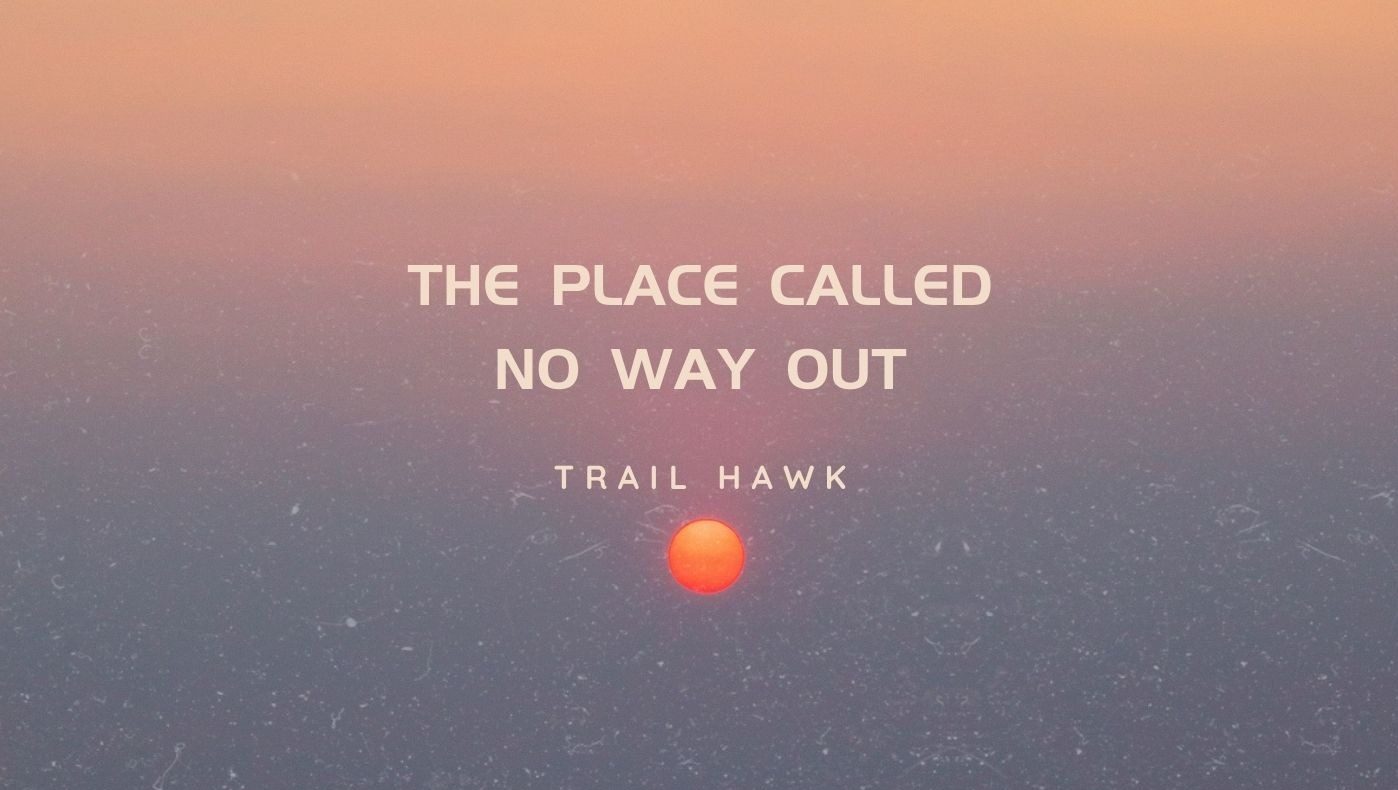
Released on 10th February 2026, “The Place Called No Way Out” by Trail Hawk immediately establishes itself as more than a song about addiction; it feels like a deeply personal testimony delivered without emotional filters. The track carries the painful reality of a father confronting both his own struggles with addiction and the devastating loss of his son to the same battle. What gives the song its emotional intensity is the vocal performance, which never sounds theatrical or exaggerated. Instead, Trail Hawk sings with bruised honesty that allows grief to exist naturally within every phrase. His voice moves with a weary steadiness, reflecting the exhaustion of families who have spent years trying to save someone they love from self-destruction. The emotional transparency embedded in the delivery transforms the song into something listeners do not merely hear, but emotionally absorb.
The songwriting within “The Place Called No Way Out” becomes even more powerful because of how vividly it captures addiction as a psychological and spiritual prison rather than simply a destructive habit. One of the song’s defining ideas describes addiction as “a destination you don’t want to go, not on a map or any road,” and that imagery alone encapsulates the terrifying isolation surrounding substance abuse. The lyrics shift between remembrance, helplessness, and reflection, portraying the unbearable reality of watching someone disappear emotionally while still physically present. Trail Hawk’s words are especially devastating when the focus turns toward family grief, particularly the pain experienced by his son’s mother. Yet despite the darkness dominating much of the narrative, the song does not surrender entirely to despair. Spiritual themes gradually emerge throughout the track, introducing ideas of forgiveness, redemption, and peace through Jesus, giving the song a solemn emotional depth that lingers long after the final lyric fades.
Vocally, Trail Hawk understands the importance of restraint, and that decision becomes one of the song’s greatest strengths. Rather than overwhelming the listener with dramatic vocal explosions, he allows emotion to accumulate gradually through tone, phrasing, and vulnerability. The performance feels conversational at times, almost as though he is recounting painful memories directly to the listener. This approach makes every emotional crack in his voice feel authentic and devastatingly human. There is also a powerful sense of compassion woven into the performance, particularly because the song was written not only as a tribute to his son, but also as an offering of solidarity for others facing addiction within their own families. That sincerity explains why the song has already connected with listeners so strongly, accumulating 84,000 streams since release. The vocals never romanticize suffering. Instead, Trail Hawk presents addiction with brutal honesty, allowing the song to function simultaneously as mourning, warning, remembrance, and healing.
Musically, “The Place Called No Way Out” balances traditional country-folk storytelling with atmospheric production choices that expand the emotional scale of the song. The acoustic guitar work forms the backbone of the arrangement, providing an organic texture that reinforces the song’s confessional nature. Around it, delicate string instrumentation drifts through the mix with haunting softness that intensifies the overwhelming sense of grief embedded within the narrative. The production also incorporates ambient textures and spacious reverb effects that create the sensation of emotional distance, almost as though the listener is wandering through memories too painful to fully escape. Despite these cinematic elements, the arrangement never loses its intimacy because the production consistently prioritizes the vocals and lyrical storytelling above everything else. That balance between raw acoustic instrumentation and atmospheric layering gives the track a somber, immersive quality that perfectly reflects its themes of addiction, loss, and spiritual searching.
The Place Called No Way Out Reveals Addiction As A Silent Prison Where Grief, Faith, Loss, And Love Collide, Leaving Families Searching Desperately For Peace.
~ Daniel (Dulaxi Team).
Behind the emotional weight of “The Place Called No Way Out” is Trail Hawk, a Frankfort-based songwriter whose artistry is deeply shaped by personal survival, grief, and spiritual resilience. As a recovering alcoholic, Trail Hawk understands addiction not as a distant subject, but as a lived reality he narrowly escaped through faith and the unwavering prayers of his mother. After stepping away from songwriting for nearly three decades, he returned to music as a way of processing the devastating loss of his son to addiction and the emotional destruction it left behind for their family. That painful authenticity is what gives his music such emotional gravity and purpose. “The Place Called No Way Out” is not simply a song to hear casually; it is a deeply human experience that deserves to be felt, reflected upon, and shared with anyone navigating loss, addiction, or healing.
For more information about Trail Hawk, click on the icons below.