
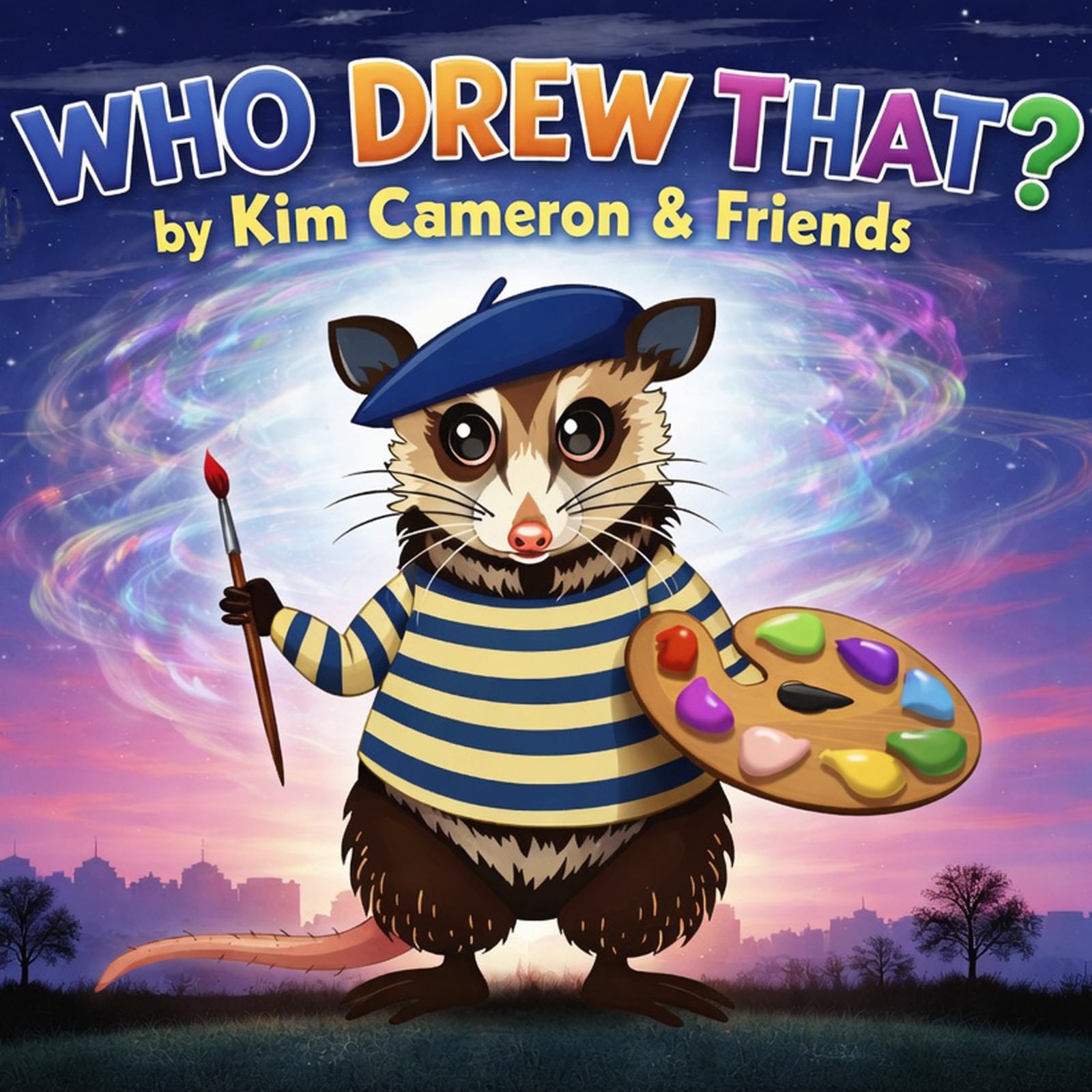
Hello everyone, it’s your host Tehillah from DULAXI, and today I’m delighted to be joined by Kim Cameron, the Miami-based artist, filmmaker, children’s author, and multidisciplinary creator behind the Seaper Powers universe. Known for her work across electronic dance music, animation, children’s storytelling, and film, Kim brings those worlds together on her first full-length children’s album, Who Drew That?, released on July 1, 2026.
The album introduces young listeners to visual art through an energetic collection of dance-driven songs inspired by artists including Salvador Dalí, Pablo Picasso, Henri Matisse, Charles M. Schulz, Chuck Jones, Barbara 62, and Gershon Iskowitz. Moving through styles including Future House, Amapiano, Microhouse, NuDisco, Deep House, and Drum & Bass, Who Drew That? approaches art history from a distinctly musical and imaginative direction. Released as part of Kim’s wider Seaper Powers creative world, the project is designed for children and families while also offering an accessible way into the stories behind influential artists.
Before we begin our conversation with Kim Cameron, here’s what you need to know about today’s featured project.
About Kim Cameron
Kim Cameron’s creative career has never been confined to a single medium. Based in Miami Beach, the three-time Billboard-charting and 25-time iTunes-charting artist has built a body of work spanning electronic dance music, filmmaking, screenwriting, animation, children’s literature, and live performance. Her music has taken her to international stages and festivals, while her songs have appeared across television and film platforms including Hulu, Amazon, Bravo, CMTV, Fox, MTV, Discovery, Disney, and MUN2. Her work has also received recognition through the American Songwriting Award, multiple music and video honours, and her 2023 induction into the Indie Music Channel’s Hall of Fame.
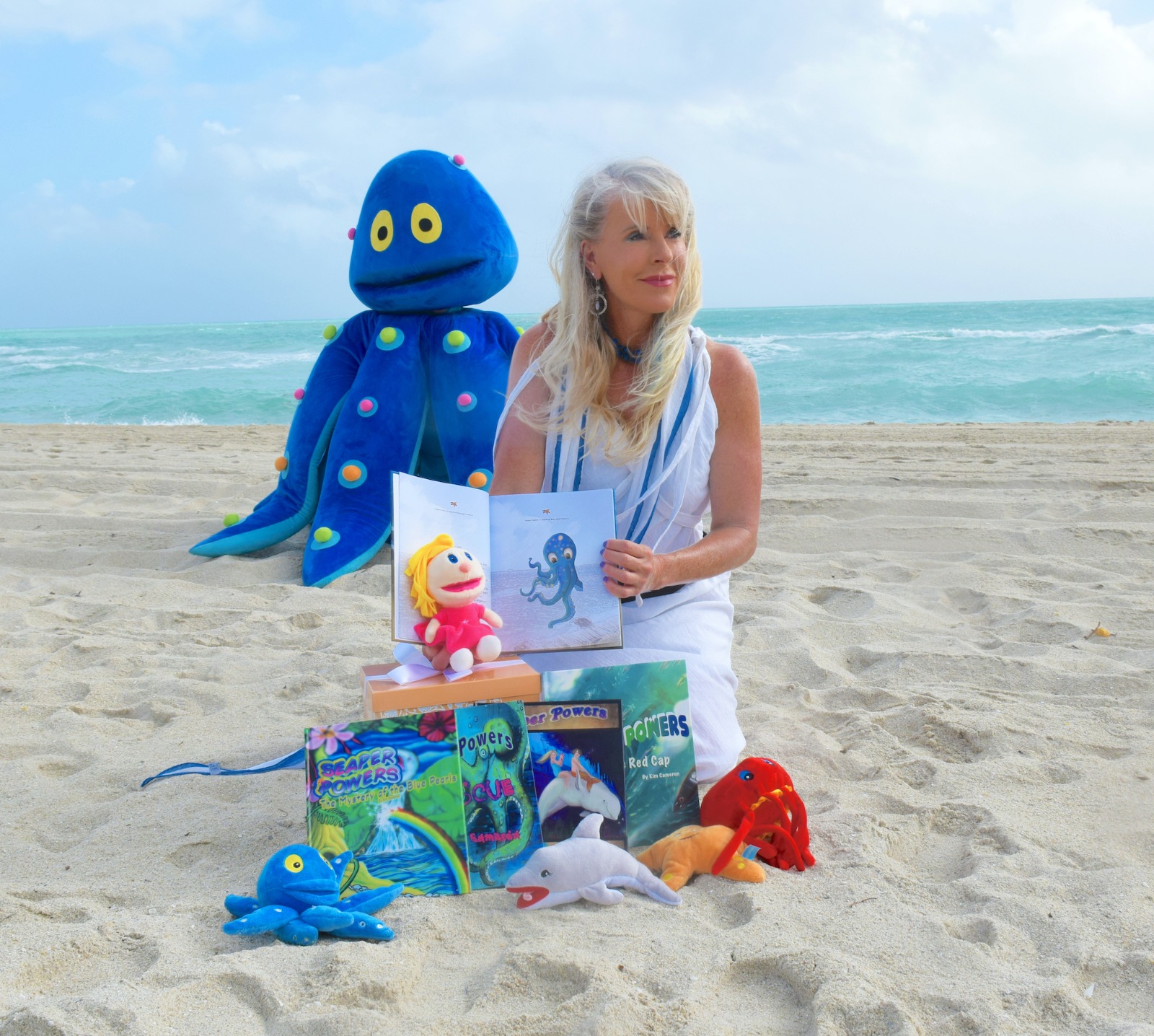
Alongside her music career, Kim has spent years developing stories specifically for younger audiences. Since 2013, her Seaper Powers books and films have created an expanding world of sea-life adventures, combining entertainment with opportunities for children to learn and explore. She has written a series of Seaper Powers children’s books, produced and directed three full-length animated films, created music documentaries, and developed additional film and stage projects. Her third Seaper Powers film, Seaper Powers: The Rescue, has received more than 15 film festival awards, while Kim is now working on another feature production.
That long relationship with children’s storytelling provides an important foundation for Who Drew That?, but the album moves into a different area of discovery: visual art.
The project began with Kim’s interest in introducing some of the world’s most recognisable artists to very young listeners. Salvador Dalí, Pablo Picasso, Henri Matisse, Charles M. Schulz, Chuck Jones, Barbara 62, and Gershon Iskowitz each enter the album through a musical story, allowing their artistic identities and individual histories to become the foundation for songs rather than remaining distant names in an art-history lesson.
Songs such as “Dreaming Like Dalí” and “I Paint” translate the visual characteristics associated with Dalí and Picasso into contrasting musical worlds, while “Barbara’s Color Splash Day” brings the history of street art into the project through a faster Drum & Bass approach. Elsewhere, the album explores cartoon culture and other artistic influences, creating an eight-track journey through different forms of creativity.
Kim wrote every song on the album and serves as the primary vocalist, while selected tracks feature additional vocalists and instrumentalists, including Vivan Fang Liu, Suzanne Grzanna, Michelle Wade Jones, and Karen Olson. The musical experience is accompanied by animated videos for every song, extending the project beyond the recordings and reinforcing the connection between sound, movement, colour, and visual storytelling.
There is also a deeper idea underneath the bright colours and dance rhythms. Kim’s approach is rooted in the belief that children can encounter serious ideas without those ideas needing to be presented in a rigid or conventional educational format. The stories of the artists featured on Who Drew That? include playfulness, experimentation, imagination, resilience, and, in Gershon Iskowitz’s case, the use of artistic expression following profound personal trauma.
Having this brief introduction to today’s featured project, I’m sure both new listeners and longtime fans are excited to hear directly from Kim. So, without further ado, let’s begin today’s interview.

INTERVIEW SESSION
Tehillah:
You have built a remarkably diverse creative life across music, filmmaking, screenwriting, animation, children’s literature, and live performance. Before all of those achievements became part of your career, what was the earliest experience that made you realize you were someone who needed to create stories, and how has that instinct stayed with you through all these different artistic chapters?
Kim Cameron:
This is a new question for me for sure. I guess, when I started babysitting, 12ish, for the neighbors, I had to distract the kids….convince them to go to bed. The only way I could convince them is to read them stories, and I had to use animated voices or they would not listen. When I saw their reaction—bringing the story to life, I started developing short plays with the kids in the backyard.
Tehillah:
Your Seaper Powers world has been connecting children with adventure through books and films since 2013, while your music career has taken you onto international stages and major charts. How has working directly with children and families over the years changed your understanding of what captures a child’s imagination and, perhaps more importantly, what makes learning feel exciting rather than like a lesson?
Kim Cameron:
While the world has changed around us, kids, I think, are relatively the same. We, as children, always found learning more ‘fun’ when there was a song or a good story. Think about the ABC’s song. We all still have that in our head. Think about all the way the story of the three bears was used in classrooms. Kids today want that same interaction with music and stories today – they have a hunger for education, it’s just how we deliver it.
Tehillah:
Your own musical identity is strongly associated with Deep House, yet you have spent your career moving comfortably between music, visual storytelling, animation, and other forms of creative expression. How do you think that multidisciplinary background has shaped the way you hear a song visually, and the way you approach music as something that can create an entire world rather than simply exist as audio?
Kim Cameron:
It’s been a baby step process. All of these disciplines take an enormous amount of time to learn and execute…and I am still learning each day how to do it, say it, sing it, create it better. I would not call is comfortably moving in between the mediums but rather I have forced myself to learn how move in and out of mediums because I want the story to be told. To me, stories live in songs, books, movies, shorts, poems – they all need to be told.

Tehillah:
Who Drew That? grew out of the connection you saw between the uninhibited way children experiment with colors and shapes and the adventurous spirit of artists such as Salvador Dalí, Pablo Picasso, Henri Matisse, and the other figures explored across the album. What was it about that connection that made you feel these artists could become characters within a musical experience for young children?
Kim Cameron:
I have had the privilege of seeing in person, all of these artists’ work. They each have added to our creative society in a different way – and that is their story. When I looked around, I did not see their story being told to the very youngest mind, and I wanted to change that.
Tehillah:
The decision to turn visual art history into a dance album for children is an unusually specific creative concept, especially when each artist is introduced through a different dance genre. How did you determine which musical style belonged to each artist, and what did you want the genre itself to communicate about their personality, work, or artistic approach?
Kim Cameron:
I wish I could tell you that I have a deep analytical process first, but I did not. As I was creating with my animation team the artist’s style in a friendly animation format, I could hear which dance genre fit. I had the story ready, but needed the visuals to figure out how the music would bring the lyrics to life. Using different genres was to keep the album interesting to kids, give them a taste of what kinds of dance music are out there and finally, to better tell the master’s work.
Tehillah:
The album moves through Future House, Amapiano, Microhouse, NuDisco, Deep House, Drum & Bass, and other dance influences while remaining accessible to children ages three to seven. What were the biggest creative challenges in preserving the character and energy of those genres while making the music simple, inviting, and understandable for such a young audience?
Kim Cameron:
I really focused on the lyrics. If you keep the lyrics fun, kids will listen. It you add a bit of humor, like Toon Time’s ‘Beep Beep’ or in ‘Life as a Cartoon’ “my silly shoes ran out the door” then you have them hooked.
Tehillah:
“Dreaming Like Dalí” uses Microhouse to introduce children to Salvador Dalí’s surrealist world, while “I Paint” brings Picasso’s Cubist exploration into a Future House setting. When you were writing these songs, how did you decide which aspects of each artist’s work could be translated into lyrics and music without reducing their art to something overly simple?
Kim Cameron:
I Paint – if you notice the animation, has a stiffness to it. It’s supposed to feel a little harsh, because Picasso’s lines were a little harsh, so having Future House rhythms made sense. Dali always struck me as playful and filled with imagination, so a softer, playful microhouse approach, I believe, brought the story to life.
Tehillah:
Barbara 62’s story receives a particularly energetic treatment through “Barbara’s Color Splash Day,” combining her reputation for bright colors with Drum & Bass and contributions from Suzanne Grzanna and Michelle Wade Jones on vocals and violin and viola. What drew you to Barbara’s story specifically, and what did you hope introducing a pioneering female graffiti creator would add to the artistic range of the album?
Kim Cameron:
I had the traditional painters represented, I had the cartoonist represented, but a big part of art today is street art. I really wanted street art as a part of the album. I had remembered reading about Barbara 62 a couple of years ago, along with her most famous work of the child in yellow and orange, and felt like she was the perfect fit for this colorful album.
Tehillah:
Gershon Iskowitz’s story carries a very different emotional weight because his painting became part of his process of healing after surviving the Holocaust. When you bring artists with such different histories and emotional backgrounds into a project designed to feel playful and celebratory, how do you approach those deeper stories with enough honesty while still creating something children can engage with?
Kim Cameron:
If you read about Gershon, once he started a painting, he would forget everything. That is such an important lesson for kids, because all of us have some type of trauma. We have to decide will be deal with our trauma or will our trauma deal with us. Gershon dealt with his in such a positive way – I wanted that story for the kids.
Tehillah:
You wrote every song yourself and also serve as the primary vocalist across the album, while bringing in additional vocalists and instrumentalists on selected tracks. How did you decide when a particular song needed another voice or live instrumentation, and what did those collaborators bring to the songs that you could not have achieved through your own performance alone?
Kim Cameron:
I always love adding people to my projects. I think it makes the best of a song with you have other ears or voices involved. It’s kind of like writing a book without an editor…..it might be good, but it could be great with a new set of eyes. And, as far os the individuals selected, they are the best of the best at what they do.
Tehillah:
Your background as an animator became another part of the album because every song received its own brightly colored animated video. How did creating the visual world alongside the music influence the songwriting itself, and were there moments where an animation idea actually changed the way you approached a song?
Kim Cameron:
I can say, honestly, no. I knew from the story I wanted to tell exactly how the animation should be flowing.
Tehillah:
You have already created three animated Seaper Powers films, written a continuing series of children’s books, produced music documentaries, and received recognition across both music and film. With Who Drew That?, you are bringing those creative disciplines together more directly than before. What did this project teach you about your own abilities that you would not have discovered by working within just one medium?
Kim Cameron:
I guess this project was an experiment; if I use visuals and music hand in hand to tell a specific story, will the kids listen, and will they learn. I am hoping the answer to both is yes.
Tehillah:
Your career includes Billboard and iTunes chart success, international festival performances, global music placements, numerous music-video awards, and your 2023 induction into the Indie Music Channel’s Hall of Fame. After reaching so many of those milestones, what motivates you to keep taking creative risks rather than simply repeating the formulas that have already proven successful for you?
Kim Cameron:
I am still after the same goal. To create the best song in the world. It is not possible, I realize, but it’s always out there for me to reach for.
Tehillah:
Because Who Drew That? is designed for children, teachers, homeschoolers, caregivers, and parents, the album has the unusual possibility of functioning both as entertainment and as an educational tool. What do you hope happens in a room where a child is dancing to one of these songs while, almost without realizing it, becoming curious about the artist and artwork behind it?
Kim Cameron:
I hope they ask questions; who is Picasso, why did he paint in that style; what happened to Barbara 62, etc. I want them to be curious.
Tehillah:
One of the most compelling ideas behind this project is your belief that learning can be an adventure, something you have carried through the Seaper Powers books and films. After spending so much time creating educational entertainment, what have you learned about the difference between simply giving children information and creating an experience that makes them genuinely want to discover more on their own?
Kim Cameron:
I really create stories that I find interesting. Kids are super smart. If it is not interesting to me, it will not be interesting to them. I love learning new things, so why not embed that with stories?
Tehillah:
With a fourth feature film currently in development and Who Drew That? expanding the Seaper Powers universe into music and art education, your creative world continues to grow across multiple forms. As you look at what comes next, what kinds of stories, artistic worlds, or creative combinations are you most eager to explore that could push your work into a new chapter?
Kim Cameron:
My first love is the sea, so at the beginning of summer, I began SeaTime stories. Short 1-2 minute stories about different aspects in the sea. I want to see where that takes me on the ocean side. I am in production with the 4th, and perhaps last Seaper Powers movie, but also have a completely different film that I am hoping to start by next year which would be comprised of half animation and half live action. So, like a duck, while I am sitting on the pond, my feet and paddling really fast.
Who Drew That? turns a children’s dance record into a colourful meeting point between sound, movement, imagination, and the history of visual art, proving that an introduction to great art can begin with a beat before it ever begins with a textbook.
~ Tehillah (DULAXI Team)
EDITORIAL PERSPECTIVE
What makes Who Drew That? especially intriguing is the way Kim Cameron treats music, animation, and education as parts of the same storytelling language. The album does not approach its young audience by removing complexity, but by giving complex artistic ideas a more playful entry point. Its changing electronic styles create distinct spaces for each story, while the accompanying visuals strengthen the relationship between what children hear and what they see. Most importantly, the project carries a genuine sense of curiosity, making discovery feel like something to participate in rather than simply receive.
~ Tehillah (DULAXI Team)
CLOSING
Our conversation with Kim Cameron offers a fascinating look into an artist whose creative work continues to move across boundaries. From electronic dance music and international performances to animated films, children’s books, screenwriting, and now a full-length project centred on art history, her career has consistently been shaped by a desire to tell stories in different forms.
With Who Drew That?, those different creative paths meet in one colourful space. The album invites children and families to dance, listen, watch, and perhaps most importantly, become curious about the artists and ideas waiting beyond each song. Whether experienced at home, in a classroom, or simply as a lively listening session, the project offers a different way of encountering art through music and imagination.
Thank you to Kim Cameron for taking the time to speak with DULAXI and for sharing the creative thinking, experiences, and stories behind Who Drew That?. We encourage our readers to spend time with the album and explore the wider creative world surrounding it.
And to everyone reading, thank you for spending part of your day with DULAXI. We look forward to bringing you more conversations with artists, creators, and storytellers from around the world.