
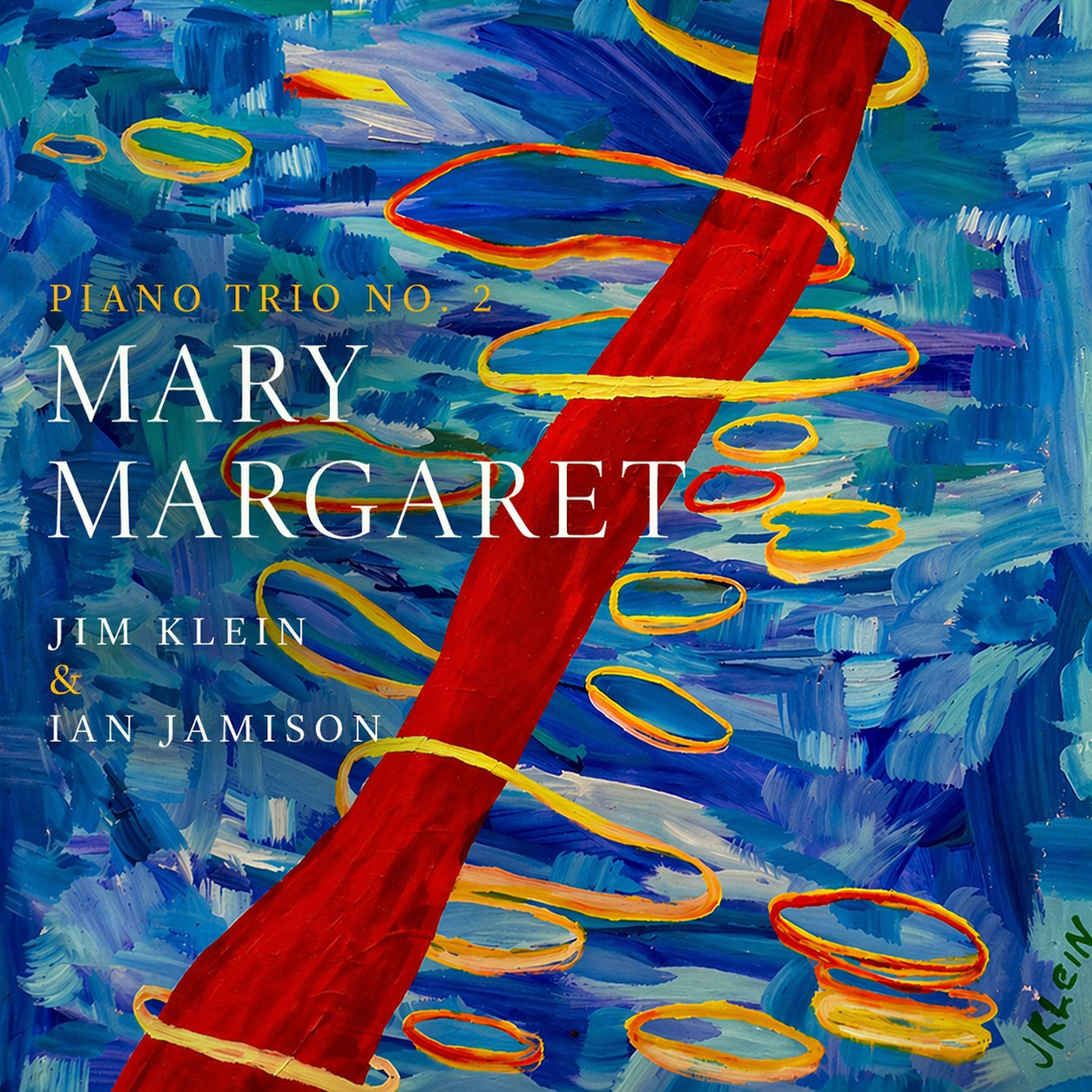
Hello everyone, it’s your host Oliver from DULAXI, and today I’m delighted to be joined by composer Ian Jamison, one half of the acclaimed contemporary classical composing partnership Klein & Jamison. Ian joins us to discuss the duo’s latest original album, Piano Trio No. 2 “Mary Margaret,” released worldwide on June 5, 2026. Written as a five-movement, thirty-one-minute contemporary classical work, the composition stands as a heartfelt musical elegy inspired by the life of Jim Klein’s infant granddaughter, Mary Margaret. Through its remarkable blend of emotional honesty, technical sophistication, and intimate chamber writing, the project invites listeners into a deeply reflective journey where grief, remembrance, hope, and love coexist within every movement.
Before we begin our conversation with Ian, here’s what you need to know about today’s featured project and the creative partnership behind it.
About Klein & Jamison
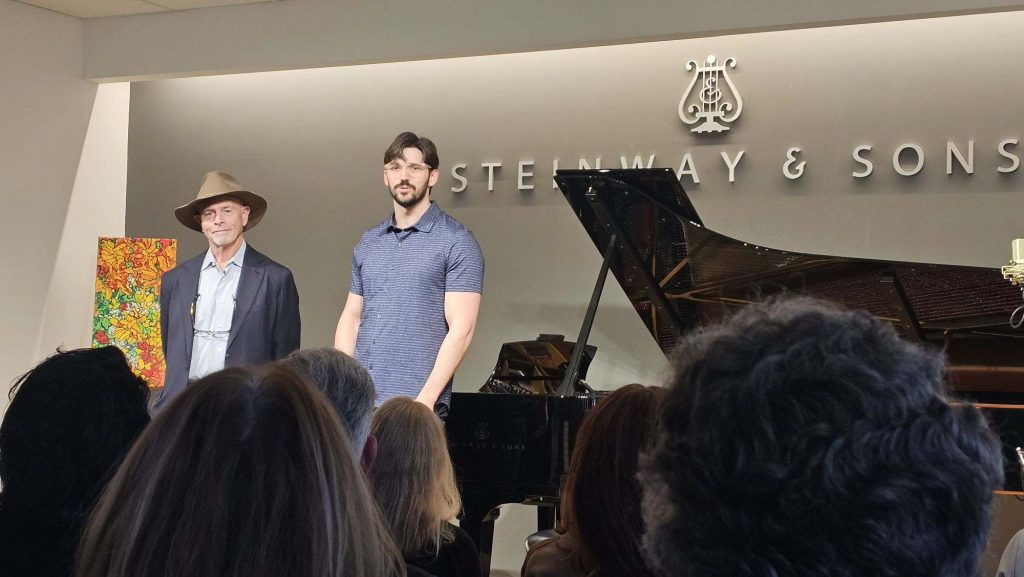
Since beginning their collaboration in 2018, Jim Klein and Ian Jamison have steadily established themselves as one of contemporary classical music’s most distinctive composing partnerships. Working across Colorado and Arizona, the duo has produced an extensive catalogue that spans chamber music, orchestral works, piano sonatas, woodwind sonatas, choral compositions, film scores, and symphonic music, demonstrating an unwavering commitment to writing music that combines intellectual craftsmanship with genuine emotional expression.
Over the years, their works have been performed by accomplished musicians and respected ensembles, including renowned Steinway Artist Adam Żukiewicz, whose long-standing collaboration with the composers has helped introduce many of their works to audiences throughout the United States. Their music has appeared in prestigious concert settings such as Beethoven in the Rockies, while compositions including The Flood, The Blue Diamond, Sailing Symphony, numerous sonatas, and orchestral projects have continued to strengthen their reputation within the modern classical landscape.
Their newest release, Piano Trio No. 2 “Mary Margaret,” represents perhaps the most personal chapter of their artistic journey to date. Published by Polytropos Publishing, the five-movement work was conceived as an elegy for Jim Klein’s infant granddaughter, Mary Margaret, who tragically passed away just ninety minutes after birth. Rather than portraying grief through dramatic excess, the composition embraces quiet reflection, vulnerability, and emotional sincerity, allowing listeners to experience a work that speaks as much about love and remembrance as it does about loss itself.
The project also reflects the unique creative relationship between both composers. Jim Klein’s melodic ideas, born directly from personal grief, became the emotional foundation of the composition, while Ian Jamison carefully developed those musical fragments into a large-scale chamber work shaped by his own philosophical reflections on mortality, human existence, and the search for meaning. The result is a composition that remains deeply rooted in one family’s story while simultaneously inviting listeners to contemplate their own experiences of memory, compassion, and healing.
Choosing the piano trio as the medium proved equally significant. Rather than expanding the work into a full orchestral setting, Klein and Jamison deliberately chose the intimacy of chamber music, believing that the dialogue between piano, violin, and cello could communicate emotional nuance in ways that larger ensembles sometimes cannot. The work received its world premiere in January 2026 at Steinway & Sons Scottsdale, performed by the Colorado Piano Trio featuring Steinway Artist Adam Żukiewicz, before later being recorded with the support of the FAMES Project, whose production captures every subtle dynamic, texture, and expressive detail with exceptional clarity.
What further distinguishes Mary Margaret is the thoughtful conversation surrounding its creation. Alongside the music itself, audiences are invited to explore three complementary perspectives through a series of videos shared by the project collaborators. Jim Klein reflects on the deeply personal family story that inspired the elegy. Ian Jamison discusses the compositional techniques and philosophical ideas that shaped the music’s structure, while Adam Żukiewicz offers the unique perspective of a performer entrusted with interpreting such an emotionally demanding work. Together, these viewpoints enrich the listening experience by revealing the many artistic and human layers that exist beyond the written score.
Even as Klein and Jamison continue expanding their catalogue with new projects, including a recently completed Cello Sonata planned for recording in Vienna and Ian Jamison’s ongoing work on Piano Sonata No. 4, Piano Trio No. 2 “Mary Margaret” stands as one of their most profound artistic achievements. It is a work that demonstrates how contemporary classical music can preserve memory, transform personal grief into enduring beauty, and remind listeners that even the briefest life can leave a permanent mark upon the world.
Having this brief introduction to today’s project, I’m sure both new listeners and longtime admirers are excited to hear directly from Ian. So, without further ado, let’s begin today’s interview.
INTERVIEW SESSION
Oliver:
Ian, before people discover your music, they first discover the person behind it. Looking back on your own journey, what experiences, values, or defining moments have shaped the way you approach both life and composition, and how have those experiences naturally found their way into the music you create with Jim Klein?
Ian Jamison:
The defining thread for me has been learning to trust my intuition about what music, and art more generally, can be. Critical and popular reception is fickle. Reputations rise and fall while the music itself remains exactly what it always was. J.S. Bach’s manuscripts, so the story goes, were used as butcher paper before Mendelssohn revived his music. The notes hadn’t changed, only the world’s attention. That lesson has stayed with me. I like digging into IMSLP, finding underrated composers of the past, and exploring their catalogues, and I value making up my own mind, whether that means going with the current or against it. That independence, no doubt, shapes my writing, and the value I place on others’ work, for that matter.
Oliver:
You and Jim have collaborated since 2018, creating works that span chamber music, orchestral compositions, piano sonatas, and film scores. Creative partnerships lasting this long are often built on trust as much as talent. Looking back over those years, what have you learned about each other’s creative instincts, and how has that relationship influenced the way you compose today?
Ian Jamison:
Jim Klein and I are like family. Trust is something I never question with him, and it’s such a blessing to have a mentor and friend like that in life. I really encourage young people to go out and find a mentor.
The creative process has changed over the years as we’ve come to understand each other better. Back in 2021, I was really into Baroque suites and wanted to write a neo-Baroque keyboard suite. I would ask Jim, “When you send over melodies, could you try to make them like a gigue? In other words, six-eight meter, ONE two three FOUR five six, instead of three-four: One and two and three and…” His melodic fragments and improvisations didn’t always fit the traditional forms I had in mind for them. Since then, my attitude has become much more “just do what comes naturally.” I let Jim improvise freely and catalogue his ideas in detail, so that I can search for, say, six-eight meter when a piece calls for it. Put simply, we speak different musical languages, and I’ve learned to translate between them in a way that keeps Jim’s melodic input substantial and salient in the final product.
This is fresh in my mind, since we just recorded that neo-Baroque suite, Memoirs (2021), last month, and we’re looking forward to releasing it later this year.
I’ve also put these techniques for incorporating Jim’s melodies into formal structures to use in my own “Ian Jamison” solo compositions. It was a ready-made toolkit for putting my themes into traditional shapes.
Oliver:
Piano Trio No. 2 “Mary Margaret” was written as an elegy for Jim’s infant granddaughter, who lived for only ninety minutes. Creating music from such a deeply personal loss requires enormous emotional courage. At what point did you realize this story needed to become a full-length piano trio, and what emotions guided those earliest conversations between you and Jim?
Ian Jamison:
Jim and I spoke about this on the phone a lot as it was happening. He said, in so many words, “We’ve got to do something. Her voice must guide us and live on through our music.” I ruled out anything symphonic because it lacked the intimacy of chamber music. We’d had a great experience working with the Colorado Piano Trio on our first piano trio, Blue Diamond (2022), so I felt the piano trio would strike a balance between “we want this to be monumental” and “we don’t want to compromise the intimacy of smaller forces.” We asked them whether they’d be willing to perform and record the piece, and they agreed, and it was very liberating to know we could write our hearts out with competent, artistically sensitive musicians downstream to interpret it.
They premiered and recorded Blue Diamond for Centaur Records, released in 2025, and we’re hopeful they’ll record Mary Margaret in the future. Although they premiered Mary Margaret, we engaged other musicians to record this release so the piece could be out in the world sooner. Attendees of the performances in Scottsdale and Colorado were asking where they could listen to it, as were people who had missed the concerts. The premiere at Steinway & Sons Scottsdale was sold out, so some who hoped to attend were unable to secure seats.
Oliver:
While developing Jim’s melodic ideas into this larger composition, you’ve shared that you also found yourself reflecting on your own existential thoughts. How did those personal reflections coexist with Jim’s family story, and how did you ensure the piece remained both deeply personal and universally meaningful?
Ian Jamison:
Our frames of mind converged. Jim was considering the life of his granddaughter, and I the weightier aspects of life in general. Jim’s side of that is tangible in the score. He records his improvisations as voice memos, which I take in by the batch and collate, and as far as I can tell every melody that made it into the piece was recorded while he was grieving. Her story lives in the raw material itself, not merely in the title.
On my side, “considering” isn’t really the right word. It was more visceral than contemplative. Of everything I was reading and watching at the time, Dostoevsky’s The Brothers Karamazov and Kurosawa’s Red Beard best capture the spirit of it. I felt as though my consciousness was being imbued with a new, radical humility. That translated into the music in the sense that I worked from first principles at every opportunity and deliberately changed my approach to writing. It was rigorous. The first manuscript page of the fourth movement took me a full month to write. Formulae were unwelcome, and I took as much time as I needed to develop every aspect of the piece’s depth and expressivity to its fullest. All told, I put about nine months into writing the manuscript and finalizing the score.
Oliver:
The subtitle “Mary Margaret” gives listeners a name instead of simply describing grief. What did it mean to preserve her identity within the title, and why was it important that audiences understand there is a real child and a real family behind every movement of this composition?
Ian Jamison:
That’s a good point. I will give away the ending. The piece closes in a celebration of life. As Jim said in his Klein Perspective interview series, “She was born perfect, and died perfect.” I know Jim is very sincere in his hope that this piece will help those grieving the loss of a loved one, especially an infant, find solace in the music.
Oliver:
Rather than relying on lyrics, this five-movement composition tells its story entirely through melody, harmony, rhythm, and silence. When shaping the emotional journey, how did you decide which musical ideas could communicate feelings that words often cannot?
Ian Jamison:
The five movements form a palindromic architecture. The main theme of the first movement returns in reverse as the theme of the last. This birth-and-death, alpha-and-omega aspect of the music may not be immediately perceptible, but I think it confers consistency on the piece as a whole. The middle movement is the soft, sweet core of the piece, easing listeners through the broader structure. I think it’s the most approachable of the movements. Movement by movement, the first is rich and slightly neo-Romantic, the second is a quasi-fugal hall of mirrors in five-four, the third is straightforward and tuneful, the fourth is the densest and most daring, and the last is a canopy of comforting counterpoint that gives way to a final celebration of life.
Oliver:
Your catalogue demonstrates an ability to write for many different ensembles and musical settings, yet this trio feels unusually intimate despite its technical sophistication. What made the piano trio the right musical language for telling Mary Margaret’s story instead of a larger orchestral work?
Ian Jamison:
As I mentioned earlier, the piano trio struck the right balance. We wanted the piece to be intimate and monumental at the same time.
Oliver:
The Colorado Piano Trio, featuring Steinway Artist Adam Żukiewicz, premiered this work at Steinway & Sons Scottsdale before the studio recording was released worldwide. How did hearing the composition performed live influence your perspective on the piece, and were there any moments that surprised you emotionally?
Ian Jamison:
Listening to the Ravel piano trio programmed before ours, I remember thinking, “Ravel is so good. I hope people will like our piece.” So it meant a great deal when several attendees told us afterward that they had connected with ours even more, and that they found its idiom more digestible.
As for the music itself, hearing it live, the second movement shone in a way I hadn’t fully anticipated. The cello opens the fugal exposition alone, the violin follows in imitative entry, and the piano underpins them with a deliberate austerity, a Baroque dreamworld rendered painfully human. The last movement also sounded delightfully expressive, with all three players crafting the interlocking phrases. The Colorado Piano Trio brought a lot of life to the piece, across the board.
Oliver:
Your compositions often balance technical craftsmanship with emotional storytelling. When writing music that asks so much of the performers, how do you ensure the technical demands never overshadow the human story at the heart of the composition?
Ian Jamison:
I don’t really try to ensure that. Our music sits on the more direct, human side of new music, whereas many other composers lean into technical emphasis. In any case, I don’t think much about technical demands beyond “Is this playable?” and, if so, “How comfortably can it be played?” Generally speaking, if a passage is more personal and heartfelt, I want it to be as comfortable for the musicians as possible.
Oliver:
Throughout your years of collaboration, you have written music inspired by personal memories, historical ideas, and meaningful relationships. Looking across your body of work, where does Piano Trio No. 2 “Mary Margaret” sit emotionally within your catalogue, and what makes it different from everything that came before it?
Ian Jamison:
I think it, along with our most recent piece, the Sonata for Cello and Piano (2026), represents a new level in our output, at least in the scope of their ambition. I spent longer on these pieces than on anything else we’ve written, and I spared no effort in realizing their potential. Mary Margaret is very heavy and deep, and at over thirty minutes it asks more of the listener than any of our pieces. But listeners who have given it that attention tell us it repays them.
Oliver:
Listeners have the opportunity to hear three different perspectives surrounding this composition through the video series shared by yourself, Jim Klein, and Steinway Artist Adam Żukiewicz. Each viewpoint explores the work from a unique angle, whether as composer, family member, or performer. What do you hope audiences gain by experiencing these different conversations alongside the music itself?
Ian Jamison:
I hope the series does two things, gets people to listen to the piece and offers perspectives that deepen the experience as they listen.
Oliver:
Adam approaches the piece from the perspective of an accomplished pianist bringing every note to life, while Jim shares the deeply personal family story behind the composition, and you explain the creative and philosophical ideas that shaped its structure. How do these three perspectives complement one another, and why was it important to present the music through all of these voices instead of allowing the recording to stand entirely on its own?
Ian Jamison:
I think the record is allowed to stand alone. The interviews were a way to introduce bite-sized pieces of a massive work, promotional material and, I suppose, album liner notes for the internet era.
As for how the three perspectives complement one another, they’re so different that each offers its own advantage. I wrote the manuscript, Jim brought the personal, human perspective, and Adam Żukiewicz brought the authority of a seasoned performer with esteemed credentials.
Oliver:
Much of your recent work has continued to expand into new artistic territory, from chamber music and orchestral compositions to film scoring. How have those different creative experiences influenced the musical language and compositional choices that listeners hear throughout Mary Margaret?
Ian Jamison:
The experience of working with the Colorado Piano Trio and Adam Żukiewicz certainly shaped the choice of medium, but beyond that I approach each new piece as its own thing, irrespective of our previous artistic territory. If I were going to write, oh, I don’t know, a piece about a heroic blue whale, I might consider a tuba concerto. Our back catalogue would have little, if any, impact on the artistic direction.
Oliver:
Grief is something every person experiences differently. When someone who has experienced profound loss listens to this trio years from now, what do you hope they discover within the music that perhaps they cannot find elsewhere?
Ian Jamison:
I hope they discover someone who really understands, someone who put sincere effort into being there for the grieving listener.
Oliver:
Your journey continues with a forthcoming Cello Sonata planned for recording in Vienna, while you’re also developing Piano Sonata No. 4. After releasing such an intensely personal work, how has this experience changed the direction of your future compositions, and what excites you most about the next chapter of your musical partnership?
Ian Jamison:
Jim and I have learned a great deal over the past eight years, and you can hear it in how we’re working now. The Cello Sonata will be recorded in Vienna, we’re collaborating with tonmeisters for the first time, and we’re moving steadily toward securing reputable musicians to premiere it.
But what excites me most is what Mary Margaret did to our standards. It raised the bar, and everything we write from here inherits its richness and resonance. I can’t wait to hear what we come up with next.
OLIVER’S FEATURED PULL QUOTE
“Piano Trio No. 2 ‘Mary Margaret’ is more than a contemporary classical composition. It is a heartfelt conversation between memory, love, and hope, demonstrating how music can preserve a life, comfort the grieving, and remind us that even the briefest existence can leave an everlasting resonance.”
~ Oliver (DULAXI Team)
OLIVER’S EDITORIAL PERSPECTIVE
Sitting down with Ian Jamison offered something that extended far beyond a discussion about composition. It became a conversation about why music matters when words begin to fall short. While Piano Trio No. 2 “Mary Margaret” is rooted in one family’s unimaginable loss, what struck me most throughout our discussion was how intentionally both Jim Klein and Ian Jamison chose not to allow grief to become the work’s only identity. Instead, they transformed remembrance into something capable of offering hope to anyone carrying their own experiences of loss.
Listening to the album before this interview, I found myself drawn to its remarkable balance between technical sophistication and emotional sincerity. Every movement feels purposeful, not because it seeks to impress through complexity alone, but because every compositional decision serves a larger emotional narrative. The dialogue between piano, violin, and cello never feels performative. It feels deeply human, as though each instrument contributes its own voice to a shared conversation about memory, vulnerability, and acceptance.
Speaking with Ian also revealed the extraordinary level of thought behind the music’s architecture. Learning how Jim’s improvised melodic ideas, born directly from grief, became the foundation upon which Ian constructed this expansive work gave the composition an entirely new dimension. Rather than simply writing music inspired by tragedy, they preserved genuine emotional moments within the score itself, allowing Mary Margaret’s memory to remain woven into every phrase.
One aspect I particularly admire is the restraint demonstrated throughout the project. Contemporary classical music often carries the misconception that technical brilliance must come at the expense of emotional accessibility. Mary Margaret quietly disproves that notion. Its complexity never overshadows its humanity. Whether through the contemplative beauty of its slower passages, the intricate counterpoint of its larger architectural design, or the quiet optimism that emerges by its conclusion, the work continually reminds listeners that profound musical ideas and genuine emotional connection can exist together.
Equally compelling is the openness with which Ian discusses the philosophical influences that shaped the composition. His reflections on humility, mortality, and the search for meaning reveal a composer willing to challenge his own creative process in pursuit of something more truthful. That honesty resonates throughout the music and helps explain why the album feels so deeply authentic.
Perhaps what remains with me most after both hearing the album and speaking with Ian is the overwhelming sense of compassion that surrounds this project. Piano Trio No. 2 “Mary Margaret” is not simply an elegy, nor is it merely a technically accomplished chamber work. It is an invitation for listeners to remember, reflect, and heal in their own way. Few contemporary classical releases achieve such emotional clarity while maintaining this level of compositional excellence.
For anyone who appreciates music capable of engaging both the intellect and the heart, this is a work that deserves to be experienced in its entirety. It asks for patience, reflection, and attention, but the emotional rewards it offers are immeasurable.
~ Oliver (DULAXI Team)

CLOSING
Ian, thank you very much for taking the time to speak with us and for sharing the remarkable story behind Piano Trio No. 2 “Mary Margaret.” Your insights into the creative process, the emotional significance of the work, and the enduring partnership you share with Jim Klein have given our readers a deeper appreciation for a composition that stands as both a deeply personal tribute and an exceptional achievement in contemporary classical music.
To our readers, we hope you’ve enjoyed this conversation as much as we have. If you haven’t yet experienced Piano Trio No. 2 “Mary Margaret,” we encourage you to spend time with the full five-movement work and explore the accompanying perspectives shared by Ian Jamison, Jim Klein, and Steinway Artist Adam Żukiewicz. Together, they offer a richer understanding of the music and the profound story that inspired it.

Thank you for joining us for another DULAXI Interview. We’ll see you again soon with more conversations celebrating the artists, creators, and stories shaping today’s music.