
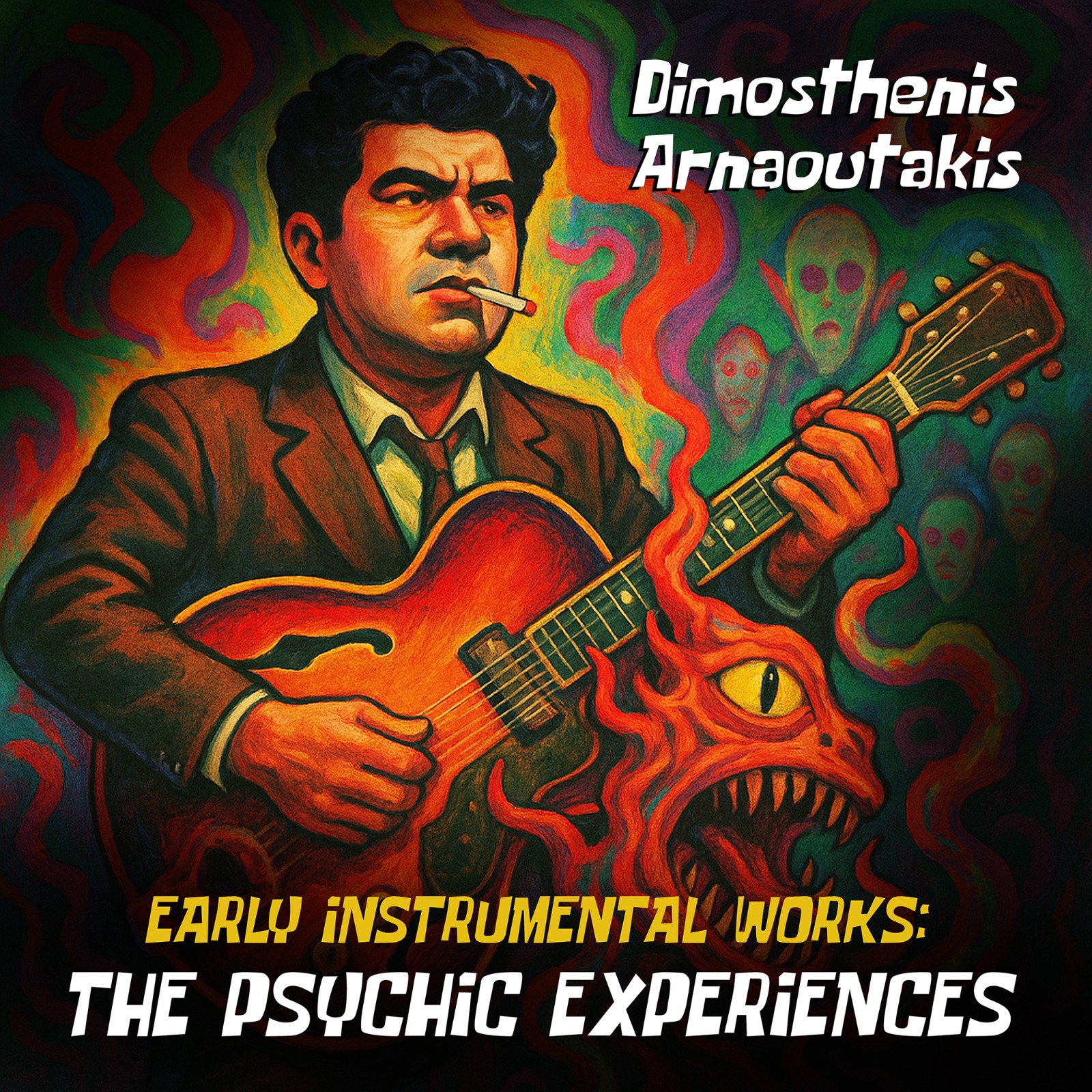
Hello everyone, it’s your host Tehillah from DULAXI, and today I’m delighted to be joined by composer and multi-instrumentalist Dimosthenis Arnaoutakis.
Before we begin our conversation with Dimosthenis Arnaoutakis, here’s what you need to know about today’s featured project.
About Dimosthenis Arnaoutakis
Dimosthenis Arnaoutakis is an independent Athenian multi-instrumentalist and composer who has been active professionally since 2020. Originally making his mark within the underground music scene under the one-man project banner Roswell 47, releasing tracks that fused Greek lyrics with dark, cinematic arrangements, Arnaoutakis made a definitive transition in 2026. Parting ways with his former label Music Mirror, he embraced total artistic independence to focus entirely on self-produced, guitar-driven instrumental music.
Rooted in a childhood steeped in global and traditional music research thanks to his father Vangelis, Arnaoutakis draws from an unusually expansive palette. His sound seamlessly bridges American roots and vintage instrumental guitar music from the 1940s through the 1970s, including instrumental rock, Spaghetti Western soundtracks, surf, jazz, blues, country, and psychedelic rock, with mid-twentieth-century Mediterranean and Greek traditions such as dimotiko, rebetiko, and traditional dance rhythms. He channels the spirit of legendary Greek bouzouki virtuosos like Iordanis Tsomidis alongside pioneering global figures, translating these deep-seated influences into a distinct, deeply personal sonic identity.
Following his earlier 2026 offerings Epistrofi sto chorafi and Budai Sun & Roswell 47 project: Early instrumental works, Arnaoutakis released his second full-length album of the year on June 19, 2026, titled Early Instrumental Works: The Psychic Experiences. Uniting previously released singles, such as the Syrtos-infused lead piece “Salamandra”, the Spaghetti Western-inspired “Il Traditore”, and the soulful “Jugador Blues”, alongside unreleased compositions from 2023 to 2025, the collection captures a transformative era of personal survival, fatherhood, quiet late-night creation, and spiritual growth. Recorded entirely in single-take, unedited live performances to preserve raw human emotion, Early Instrumental Works: The Psychic Experiences stands as a masterclass in organic, non-verbal storytelling.
Having this brief introduction to today’s featured project, I’m sure both new listeners and longtime fans are excited to hear directly from Dimosthenis. So, without further ado, let’s begin today’s interview.
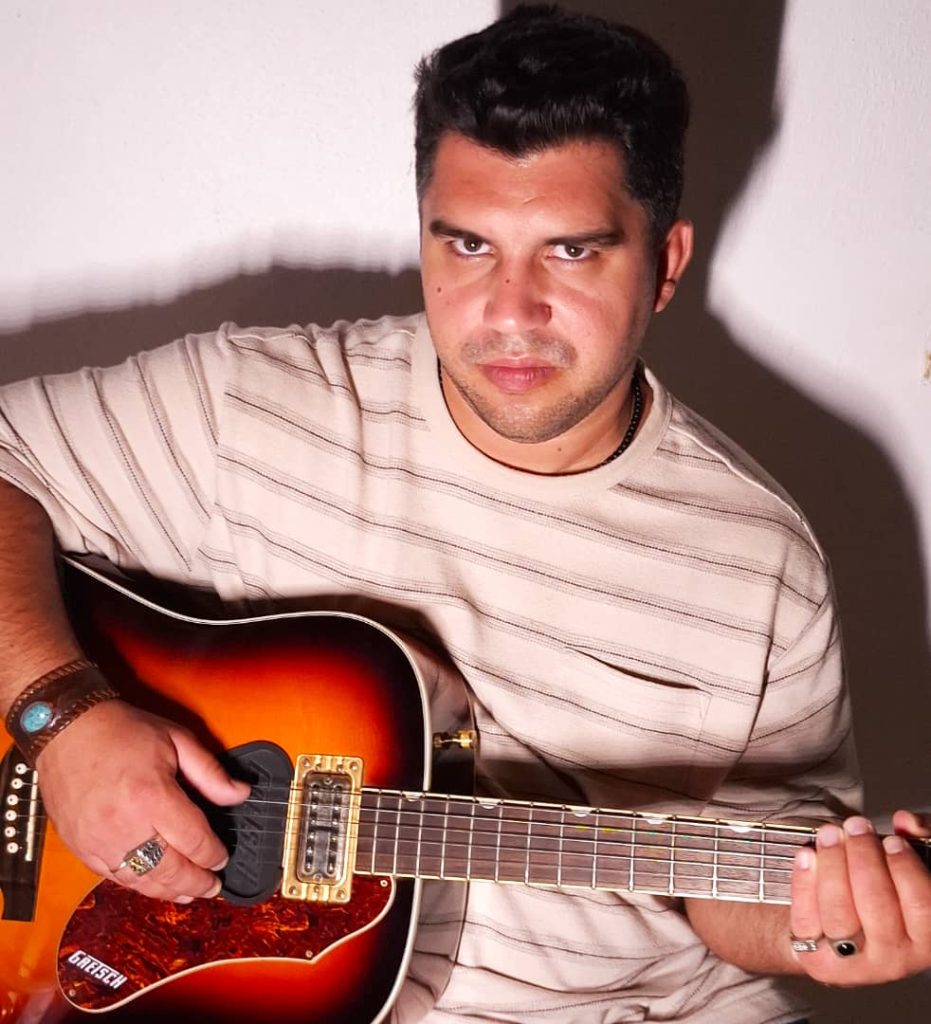
INTERVIEW SESSION
Tehillah:
Your musical journey has developed through different chapters, from your early work under the one-man project Roswell 47 to your decision in 2026 to step forward independently and focus more deeply on instrumental music. Looking back at everything that brought you to this point, how has your personal and artistic growth shaped the musician you are today?
Dimosthenis Arnaoutakis:
Let’s take it from the beginning. Before Roswell 47, I had a release “Covering Meditation” under the name Budai Sun. Roswell 47 came as an idea later because I liked the sci-fi, occult, conspiracy aesthetic. My only goal back then was to record my songs at any cost. In fact, I was in a hurry because I was afraid I could die before releasing my music. You know, I got some trouble with the Greek mob, and I was on the run for almost 6 years. I was hiding, moving from place to place, changing names frequently. I didn’t party, didn’t communicate much with people, and my only company was my guitar and a four-track recorder. Because of this, it was difficult for me to find a band or other musicians because I had to move a lot, so I learned how to do things on my own. It was a strange period in my life; I was living like a wanted man with the constant fear of being killed, but on the other hand, I had the time to focus on music and practice guitar without the distractions of everyday life. The first two Roswell 47 releases “To Horafi tou Kain” (Field of Cain) and “Asmata Thanatou” (Death Songs), were the only thing I hoped I’d do when I began. I didn’t expect to get any further, and it was a dream for me to get them recorded and find a label that’d release them… I thought back then that “Asmata Thanatou” was my Magnum Opus and I wouldn’t have the inspiration to write more songs… But happily, I was wrong on that. After a few months, I wrote other songs and never stopped experimenting and recording music. And here I am now living a normal family life with my supportive wife and my daughter, and my inspiration is still limitless.
Tehillah:
Coming from Athens, Greece, you have been surrounded by a rich musical heritage that includes traditions such as Greek folk, dimotiko, and rebetiko. How did growing up within that cultural environment influence your understanding of melody, emotion, and storytelling through music?
Dimosthenis Arnaoutakis:
Look, coming from Athens, Greece doesn’t automatically mean that you are surrounded by all that stuff. To a certain point, yes, but most people, especially nowadays, don’t know anything about that stuff. I was lucky to be raised in an artistic environment because both of my parents were close to the arts, and especially my father, Vangelis Arnaoutakis, has been a music researcher and collector all his life. Thanks to him, I have been exposed from my early childhood to most of the old Greek repertoire and not only the Greek but also the good music from all around the globe. Theodorakis, Kazantzidis, Papasideris, Vamvakaris co-existing with Django Reinhardt, Enrico Macias, Elvis, John Lee Hooker, Omar Khorsid, Gabor Szabo, Ry Cooder, Tom Waits, and the list goes on. So I have been “brainwashed” with what we consider good music and not only from one genre. Exploring music genres and styles is very important in the evolution of a musician. It’s impossible to go in depth, of course, but I believe that all music has something to offer. For example, jazz and classical in the broader view, are very special because even if you just listen to these genres you become a better musician than you already are. But folk music gave me a lot because it’s different than everything. For example, in Greek folk music there are many rhythm patterns in 4/4, 3/4, 9/8, 5/8 etc and also the Greek scales (folk musicians call them “roads”) are a very useful knowledge to have.
Tehillah:
Before becoming known for your instrumental compositions, you created music that included Greek lyrics alongside instrumental works through Roswell 47. What inspired your transition toward letting instruments carry the entire emotional message, and what did you discover about yourself as a composer during that change?
Dimosthenis Arnaoutakis:
Even though I have experimented with instrumentals before Roswell 47, I never thought I’d ever come to the point of creating mostly instrumental music. Because most of the time I wrote the lyrics first and built the music around them or wrote the lyrics while playing guitar. My inspirations back then were the great country singer-songwriters like Hank Williams, Jimmy Rodgers, Johnny Cash, Waylon Jennings, and old blues guys like Robert Johnson, Blind Lemon Jefferson, etc. I tried to do something like that but in a more personal style with a “Greek flavor”. My First Official instrumental release was Roswell 47 “Deblo” (Deblo was my nickname in the streets of Athens) with four spaghetti western-style tracks. When I did this release, I said: “You know what? I could easily do that without lyrics”. It was a kind of artistic awakening for me because I discovered that music has the ability to express things that words lack to express. When you listen to Classical music or the old bebop era players like Dizzy Gillespie or Charlie Parker you get something that is so powerful that it needs no words; the same goes for Morricone and all great composers through the ages.
Tehillah:
Your influences span a remarkable range, from instrumental rock and spaghetti western soundtracks to jazz, blues, country, folk, and traditional Greek music. How do you personally bring together such different musical worlds while ensuring that the final result still feels like one authentic artistic voice?
Dimosthenis Arnaoutakis:
That’s difficult to explain. I think I don’t do it, it gets done by itself. After all, those are my influences, but the music I create is different from all. I think the secret to this is to be true to yourself. If you carry those different music styles from a very young age, you subconsciously know when and where “Jazz meets folk” or “blues meets rebetiko”. And the greatest mistake you can make is to say “Oh yes, mix some rock with some jazz and add some folk”, no, it doesn’t work like that; it has to come naturally.
Tehillah:
Every artist’s journey is shaped by a combination of personal experiences, unexpected situations, and the people they encounter along the way. Looking back, were there any moments in your life where circumstances created misunderstandings about who you were or the environments you were connected to? How would you like to clarify those experiences for your audience?
Dimosthenis Arnaoutakis:
I never engaged in criminal activities or had any personal ties with the underworld, but it happened to be around some people that were involved financially without my knowledge and I became a victim of circumstances.
Tehillah:
Your music often feels like it tells stories without using words, allowing listeners to create their own interpretations and emotional connections. What attracts you to instrumental storytelling, and what do you believe music can express that sometimes cannot be communicated through lyrics?
Dimosthenis Arnaoutakis:
They used to say about my lyrics the same thing about the “storytelling”. But there are key differences. With music you can express yourself more freely. You express things that you know, but you also express things you don’t know, deep emotions that no words can describe. Words can be expressive to a certain point, but music goes even further. Also, when I sing a song in Greek, you may get an idea of what I’m saying, but when you listen to an instrumental track I wrote, you get what I’m saying and what I’m not saying. But the best part is that you don’t get my perception but yours. And of course, music is a global language we all can communicate so I can speak to you and express my feelings without the need to explain anything and you also get it from your perception with no need for explanation.
Tehillah:
Early Instrumental Works: The Psychic Experiences revisits previous singles and unreleased compositions while presenting them as a complete artistic statement rather than simply a collection of older material. What made you feel that these pieces belonged together as an album, and how did you approach transforming separate compositions into one connected experience?
Dimosthenis Arnaoutakis:
This year I have released three works under my name. The first was “Epistrofi sto chorafi” (Back to the field) where I re-recorded five songs from my first releases as Roswell 47 with different arrangements, and some of those tracks were completed re-composed, plus the original version of “Tha gyriso” (I’ll be back) from the first Roswell 47 digital E.P. The second release was named “Budai Sun & Roswell 47 project: Early instrumental works” which included 11 instrumental tracks from 2020 to 2022. The third is Early Instrumental Works: The Psychic Experiences, which included tracks from 2023 to 2025. My plan at first was to release all the instrumental tracks from my previous projects in one collection, but because there were some key differences in the way I did things back then, and I considered the experience I gained and how I evolved as a player, it would be wiser to split ’em into two parts. Most tracks in the Psychic Experiences were recorded in 2025, so I was pretty much in the same mood, and they have a similar compositional direction.
Tehillah:
The title Early Instrumental Works: The Psychic Experiences immediately creates a sense of mystery and personal reflection. What does the concept behind this title represent for you, and how does it connect with the emotions and ideas explored throughout the album?
Dimosthenis Arnaoutakis:
Most recordings in this album were made in a period that changed my life completely. While the recordings of the first period were made under a more “wild” lifestyle, the tracks in “Psychic Experiences” were nothing like that. I got married, I became a father, I was sober, but I also had no friends, no work, and no steady income. Things were financially difficult, and I had to sell vinyls, books, artifacts, and other collectible stuff. I had hard times before, but it’s different when you are on your own and when you have a wife and a kid, so I had to adjust and reassess my life. I was sad because, like several other musicians, I struggled for a few euros. I thought I was stuck in this situation, and I had to keep myself out of trouble or going insane. So I was lost in music. I had my guitars and my wife’s old keyboard, and I began to experiment with it. A very strange time where the recordings were done mostly late at night until morning.
Tehillah:
“Salamandra” serves as one of the defining pieces of this project, combining the traditional Greek Syrtos rhythm with electric guitar improvisations and reverb slide guitar textures. What inspired you to merge such a deeply rooted Greek musical tradition with elements of instrumental rock and blues?
Dimosthenis Arnaoutakis:
The rhythm is closer to “bayo” than syrtos but the lead lines and the melody gives a more danceable feeling. This track and the way I worked on the lead improvisations was inspired by the U.S. recordings of a Greek bouzouki Player, Iordanis Tsomidis.
Tehillah:
With “Salamandra,” the guitar becomes almost like a narrator, carrying feelings of heritage, memory, and identity without needing words. When you were shaping the melodies and improvisations, what emotions or images were you hoping the listener would experience?
Dimosthenis Arnaoutakis:
I don’t know. Something dark, folk and electrified, I guess. For me it was all about a hot desert, lizard-like creatures, a beach with black sand and the mythical salamanders of alchemy dancing flames.
Tehillah:
Tracks like “Jugador Blues” and “Il Traditore” explore blues expression and cinematic influences, particularly the atmosphere associated with classic Spaghetti Western music. What draws you toward these styles, and how do you approach creating a sense of narrative and character through instrumental arrangements?
Dimosthenis Arnaoutakis:
“Jugador Blues” was inspired by the great American blues guitarist Hubert Sumlin. It is one of the very few times I fingerpicked. I see it more like “Hubert Sumlin on acid guitar sound” approach. “Il traditore”, the title came up when I watched the 2019 omonymous Italian film. It is based on 3/4 Tsamikos rhythm. It begins with an improvisational intro in the scale “poimenikos minore”, like “Salamandra”, then I kept it simple with not many surprises. Takeshi Terauchi’s version of “Uskudara” was also a guide that kept me from overplaying. The cinematic character is not something I do but something that co-exists in the process from the beginning. People who like my music usually point out that my tracks could be used in films. I can proudly say that I have watched most films from the early 20th century until now. Cinema has always been a major inspiration.
Tehillah:
“Jazzin’” showcases another side of your musicianship, exploring improvisation, harmonic movement, and rhythmic conversation. How does your approach change when you move from traditional storytelling influences into the more spontaneous and exploratory world of jazz?
Dimosthenis Arnaoutakis:
I think the title could also be “Bluesin'” because it’s a simple blues progression, but I experiment with the keyboard and add some more “jazzy” flavor inspired by Modern Jazz Quartet, Art Blackey’s Jazz Messengers etc. The inspiration behind this composition came from John Carpenter’s soundtrack for the film “They Live”.
Tehillah:
Across the album, your guitar performances focus heavily on emotion, using techniques such as expressive bends, vibrato, slides, and carefully placed notes rather than simply showcasing technical ability. How important is restraint and emotional intention in your playing, and how do you decide when a melody needs more space rather than more complexity?
Dimosthenis Arnaoutakis:
That was my father’s advice “Abstraction is the alpha and omega in art”. Music is like communication. It’s better to speak a few words with meaning than to speak endlessly and say nothing.
Tehillah:
The production of Early Instrumental Works: The Psychic Experiences embraces warmth, natural dynamics, and the feeling of live musicianship rather than relying on overly polished sounds. What production choices helped you preserve the human character and emotional atmosphere of these recordings?
Dimosthenis Arnaoutakis:
I record with my recorder, then I do the mix with it or on my computer. I have a secret. I record what I want to listen to from the beginning; I don’t fix errors, I don’t cut, copy, or paste. I spend a great amount of time finding the sound and the effects I want to use. Every instrument is being played from the beginning to the end straight, so if I make a mistake, I start all over again. That’s why I don’t like most studios nowadays. They don’t do that. They cut, they paste, you make a mistake, and they say, “let’s go back to the same point and re-record it”. It’s a soulless thing. I like my recordings to be as close to a live experience as possible. I don’t fix my vocals. It’s the real me with no bullshit to fool the audience. My purpose is not to be a successful artist relying on music engineering and hiding behind effects. I just want to give true stuff to the people.

Tehillah:
Creating instrumental music requires every instrument and arrangement choice to communicate meaning without the guidance of vocals or lyrics. During the development of this album, what were some of the biggest creative challenges you faced, and how did you overcome them?
Dimosthenis Arnaoutakis:
It pretty much came easily, but the biggest challenge was not to overplay. Without the guidance of vocals, it’s very easy to get lost in improvisations and overplay, so I had to be careful about that.
Tehillah:
After leaving your previous label and becoming fully independent, you have taken greater control over your creative direction. How has that independence changed your relationship with your music, your decision-making process, and the way you define success as an artist?
Dimosthenis Arnaoutakis:
It was a little strange in the beginning, because when you are in a label you only have to worry about your music and the album covers. When you do it all by yourself, you have complete control over everything but also more work to do. For a one-man artist like me, it becomes very exhausting at times, and I get disappointed because it’s like being in a constant battle against time. Many things to do, many things to try, many ideas but not enough time; especially with the responsibilities of everyday life, it becomes a heavy weight to carry. I’m sure it’s worth it, but for an artist, especially the ones who are into composing and songwriting, working a 9-5 job to have a steady income for you and your family is like a prison. It sucks every drop of energy, inspiration, and happiness you have. And you have no choice because the pennies you get from music are not enough even for coffee and cigarettes. Success for me is to free myself from this misery and focus solely on creation and spend time with the people I love. In my opinion, the most successful artist was Vangelis Papathanasiou. He was something like “a music monk in artistic pilgrimage” with a very spiritual connection to music and a great knowledge of sound. He was not only an inspiration but also an example of a true artist.
Tehillah:
Looking at the journey from your earlier Roswell 47 releases to Early Instrumental Works: The Psychic Experiences, what are some of the biggest lessons you have learned about yourself as a musician, and how have those lessons influenced the way you create today?
Dimosthenis Arnaoutakis:
I grabbed the guitar at the age of 14. I used to play for many hours every day. My purpose was to just release the songs I have written. I would give my life to do that. I really wanted it badly, and it happened officially in 2021. I made it. That was my big success. After that, I didn’t care what would happen. The greatest lesson I have learned is that the only way to get it done right is to know who you are and embrace that. It’s not about being great like Elvis or Louis Armstrong. It’s about being great like yourself. Even though you may not have financial success, your work will be authentic. I know there are better players than me, better composers, better songwriters, etc. But I have a unique way to do things, and that makes me special. I’m not the best, but I’m the one and only in what I do.
Tehillah:
Instrumental music gives listeners the freedom to attach their own memories and emotions to each composition. What kind of personal connection do you hope people build with Early Instrumental Works: The Psychic Experiences when they experience the album in their own way?
Dimosthenis Arnaoutakis:
I can’t answer that, but whatever it is, I hope people enjoy the album.
Tehillah:
As you continue developing your independent path and exploring instrumental music, what future directions are you excited to explore, and what kind of artistic legacy do you hope your compositions leave behind?
Dimosthenis Arnaoutakis:
There are many things I intend to explore, from acoustic, electric, synth-based, etc. I have many ideas. I can assure you that more stuff will come. I can only tell you for now that I am in the recording process of new material inspired by my vacations in Matala, Crete. A few guitar-based instrumental tracks to honour the place and its legacy in the counter-culture of the late 60s and 70s. As for the last question, I can only hope my compositions inspire artists and give motives for future musical exploration.
“Dimosthenis Arnaoutakis transforms raw human survival and deep-seated Mediterranean tradition into a hauntingly pure guitar tapestry, proving that absolute artistic truth requires no words, only an unwavering soul.”
~ Tehillah (DULAXI Team)
MY EDITORIAL PERSPECTIVE
Listening to Early Instrumental Works: The Psychic Experiences reveals a composer who understands that silence and restraint carry as much emotional gravity as the notes themselves. Dimosthenis Arnaoutakis crafts a rich, atmospheric dialogue where Mediterranean scales, Spaghetti Western tension, and blues grit intertwine seamlessly. By capturing whole, unedited performances on tape, the album radiates an undeniable warmth and vulnerability. It is a profoundly moving, cinema-for-the-mind experience that establishes Arnaoutakis as an authentic master of modern instrumental storytelling.
~ Tehillah (DULAXI Team)
CLOSING
I want to extend my sincere thanks to Dimosthenis Arnaoutakis for sharing his extraordinary story, personal journey, and deep creative philosophy with us today. Early Instrumental Works: The Psychic Experiences is a deeply moving and soulful body of work that deserves to be experienced in its entirety. I encourage all our readers to explore Dimosthenis’ album and follow his ongoing artistic evolution. Thank you to our readers for spending time with DULAXI today, and stay tuned for our upcoming interview features.
FOR MORE INFORMATION ABOUT DIMOSTHENIS ARNAOUTAKIS, CLICK ON THE ICONS BELOW