
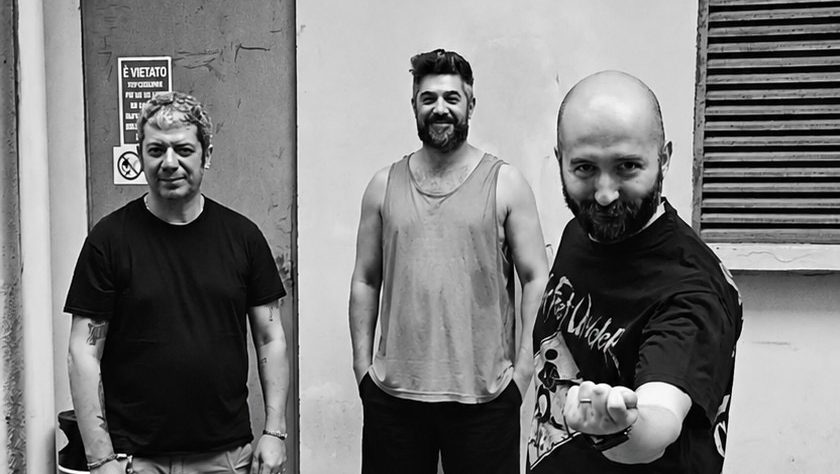
Hello everyone, it’s your host Oliver from DULAXI, and today I’m delighted to be joined by IDKs, a three-piece punk rock band from Milan, Italy, to discuss their debut EP, I’m Not Dead, released on 26 June 2024. Rooted in hardcore punk and punk rock, with influences extending into metal and ska, the band combines direct musical expression with a strong independent spirit. Since forming in 2023, IDKs have continued to develop their sound through live performances, recordings, and a growing presence within the independent punk community, reaching listeners in Italy and beyond through radio airplay and music media coverage. In our conversation, we explore the experiences that brought the band together, their relationship with punk culture, the creative decisions behind their debut EP, and the ideas that continue to shape their music.
Before we begin our conversation with IDKs, here’s what you need to know about today’s featured project.
About IDKs
Formed in Milan in the summer of 2023, IDKs began with Edu, Matteo, and Gianluca coming together after a previous musical project had ended. What followed was an opportunity to return to music with renewed purpose, drawing on their individual experiences and shared desire to create something that reflected their identities. From the outset, the band embraced a direct and energetic approach to punk rock, guided by a DIY mentality and a preference for music that communicates honestly rather than relying on elaborate presentation.
The band began performing live in 2024, bringing its music to venues across Milan and the surrounding areas. Their debut EP, I’m Not Dead, arrived on 26 June 2024, presenting five tracks that introduced listeners to the group’s developing musical identity. Alongside its digital release across major platforms, the EP was made available on audiocassette, connecting the band’s contemporary work with a physical format that holds a particular place in independent music culture. This decision also reflects a broader question about how listeners discover, experience, and maintain a lasting connection with the music they choose.
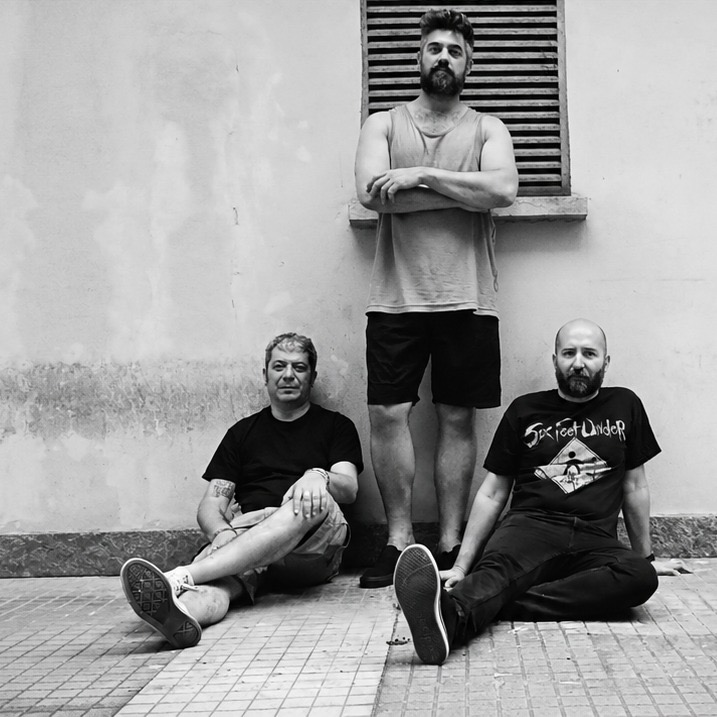
In 2025, the band’s lineup developed into a three-piece, with Edu moving to bass. The change brought a more concentrated arrangement to their work, placing greater responsibility on each member while allowing the contribution of every instrument to remain clear. Their subsequent releases, including Propaganda, Far from Home, Face the Truth, and Run, have continued this progression, with the band taking a more deliberate approach to building songs that work together as part of a live set. Their willingness to examine their own material critically has become an important part of this development, helping them identify what works and where their songwriting can improve.
Their 2026 single, Run, explores the emptiness and frustration that can emerge when everyday life becomes repetitive and the passage of time leaves someone feeling disconnected from their younger self. Its perspective examines the tension between nostalgia and the present, questioning whether familiar routines genuinely improve our lives or simply keep us occupied. The song’s accompanying official music video premiered through Tuttorock Magazine, adding another chapter to the band’s ongoing recording and release activity.
With their debut EP providing the foundation and their subsequent releases continuing to expand their catalogue, IDKs remain focused on developing their music while preserving the qualities that brought them together. Their story is one of renewed creative purpose, shared experience, and a commitment to making music on their own terms.
Having explored the background of IDKs and the ideas behind I’m Not Dead, it is time to hear directly from the band about their beginnings, creative process, and ambitions. So, without further ado, let’s begin today’s interview.
INTERVIEW SESSION
Oliver:
IDKs came together in Milan during the summer of 2023, following the end of a previous musical project. Sometimes, the end of one chapter creates the opportunity to begin something more meaningful. Looking back, what was happening in your lives at that point, and what made the three of you decide that continuing together through a new band was the right direction?
IDKs:
When we began this project, we didn’t know each other; yet we all felt that something was missing. In the wake of the collective trauma of Covid, the importance of being together, of playing an active role in a community and forging connections with people who share the same passion and vision for both music and life, became clear. From the very start, we chose the more challenging path: to create original music that possesses both a classical sensibility and a strong, contemporary resonance.
Oliver:
The three of you have different personalities, experiences, and perspectives that eventually meet through music. Before discussing the band’s sound and identity, could each of you share a little about your individual backgrounds and the personal experiences that first brought music into your lives?
IDKs:
(Edu) I think that as many teenagers, I found myself in music during high school. Playing was then an automatic choice, I didn’t want only to enjoy music but also be a part of it.
(Gluca) When I was a kid in the 80s , I had friends a few years older than me who introduced me to punk/hardcore music. Through them, I started listening to groups like Sham 69, The Damned, UK Subs as well as the first wave of Italian punk/hardcore and got into NY hardcore.The decision to start playing music was just a natural consequence.
(Matteo) I have always felt music as pure energy and an outlet. From the very beginning, I was drawn to rock and more intense sounds; sitting behind the drums was the moment when everything fell into place. It wasn’t just about listening: it was about physically channeling adrenaline, rhythm, and tension. Playing has been, and still is, my way of making sense of everyday life, finding a driving force, and connecting with people who share that same spark, authentic and unfiltered.
Oliver:
Punk has always been associated with independence, questioning authority, and expressing yourself without waiting for permission. What does the punk movement represent to each of you personally, and how have its values influenced the way you approach life beyond the music?
IDKs:
(Edu) From my point of view punk culture embraces acceptance of yourself as of others. This brings to an approach based on respect for human beings and a consequent refusal of all the ideologies (political, religious or economical) that are rooted in inequality.
(Gluca) In a nutshell: respect, freedom, and the fight for a better world.
(Matteo) In my view punk is essentially a matter of authenticity, immediacy, and a DIY mentality: you don’t wait for the perfect conditions to arise or someone else’s approval: you simply build things with your own hands. Beyond the music, this approach has shaped how I navigate daily life and work: staying grounded, questioning rigid dogmas, and having zero patience for pretentiousness. It means taking responsibility, moving forward, and maintaining an honest, human connection to things.
Oliver:
You describe your approach as raw, direct, aggressive, and energetic, with a strong DIY attitude. In a musical environment where production and presentation can sometimes become more important than the message itself, what does maintaining that raw and unfiltered identity mean to IDKs, and what are you determined never to lose about your sound?
IDKs:
We think that every musician comes to a moment when the word “compromise” starts to appear. We know that our music needs an audience and promotion is necessary to reach as many people as possible but, at the end of the day, it is also important to recognize yourself in what you do. We would like our records to give the same feeling of our shows: raw, loud and imperfect as we are.
Oliver:
Milan has a long-standing independent music culture, with different underground communities and artists contributing to its identity. How has being part of the Milan punk scene influenced your development as a band, and what have your experiences performing alongside groups such as Rappresaglia and Pimples Marmelade taught you about the community you are building within?
IDKs:
We get the feeling that in the last decades the approach to live music changed, and not always for the better, but the need of being part of a community hasn’t diminished (or even increased). The punk scene, in the end, is just a group of people willing to share the same passion for music, with teenage kids sharing the stage with bands that have been around for 30-40 years, feeling part of the same thing.
Oliver:
Your debut EP, I’m Not Dead, arrived in June 2024 as a five-track introduction to IDKs. The title carries a strong sense of resistance and determination, almost like a declaration from people who refuse to disappear or give up. What personal circumstances or collective experiences inspired the title, and what did you want this first release to establish about the band?
IDKs:
You got the idea behind the title. A project like IDKs, with not-exactly-young musicians coming together to make new music, is a sort of second chance: it’s the opportunity to put yourself again into something that matters for you and that remained silent for years (buried under the daily routines).
Oliver:
The EP was released digitally across major streaming platforms and also made available on audiocassette. Choosing cassette in an increasingly digital music industry is an interesting decision, particularly for a punk band with a connection to underground music culture. What attracted you to that physical format, and how important is preserving the traditional independent spirit of punk when presenting your music to listeners?
IDKs:
Digitalization has enormously simplified the distribution of music, but, on the other hand, it has eliminated any tangible contact with artists. We all grew up in an era when seeking out new music meant going to a place (a space shared with other people) and returning home with a physical object, one destined to remain ours forever. Today, that is no longer the case: we consume music without ever truly owning it. Choosing to release the EP on a tape is a sort of tribute to a time when we genuinely selected the music we wanted to take with us; albums were listened to from start to finish, with no commercial interruptions and no option to skip tracks.
Oliver:
With five tracks on I’m Not Dead, the EP offered an opportunity to introduce different sides of your musical identity while maintaining a consistent punk rock direction. How did you approach selecting and arranging the songs, and what made these particular tracks the right introduction to IDKs at that stage of your development?
IDKs:
Songs are always a reflection of the present we are living, as individuals and as a band. For the first release we selected the songs that were able to represent the creative and chaotic phase of the beginning. The different influences and personalities are not smashed into a forced blend but expressed directly on a common ground.
Oliver:
Punk rock often works best when its message is direct and unapologetic, but behind that simplicity there can be considerable thought and personal experience. When writing for I’m Not Dead, how did you balance the instinct to express yourselves immediately with the need to give each song its own identity, meaning, and emotional direction?
IDKs:
Lyrics are a key element of our songs and we always try to tell a story, which can be ours or one which we feel connected to. That story then needs to feel completed by the music, with the right sound, rhythm and energy. If we feel that this balance is not reached, it means that the work is not done and we have to decide to keep it or leave it. We want to play the same song over and over again for years, it’s not possible if the song is not completely ours.
Oliver:
As a three-piece, each instrument has an important role in shaping the band’s overall character. With the guitar, bass, and drums working together to create your aggressive and energetic sound, how do you approach composition and musical arrangements to ensure that every instrument contributes something essential without overcrowding the songs?
IDKs:
All songs start from an idea of one of us (Gianluca, most frequently) but then evolve organically. Each one of us is open to contribute to develop the parts and to continue until the result is what the song deserves.
Oliver:
In 2025, the band’s lineup changed, with Edu moving to bass and IDKs continuing as a three-piece. Changes in a band’s structure can affect everything from musical arrangements to personal relationships and creative communication. How did this transition influence the chemistry between you, and what new possibilities did it introduce into your musical direction?
IDKs:
Being just three can be a limit but also a great blessing at the same time. Everyone is responsible to bring its part with the right energy, there is no space for the unnecessary. But on the other hand the voice of everyone can be clearly identified and every detail is the result of a conscious choice and non-negotiable.
Oliver:
Your recording journey has continued beyond the debut EP, with releases including “Propaganda,” “Far from Home,” “Face the Truth,” and “Run.” Looking across these releases, what changes have you noticed in your songwriting, musical confidence, and understanding of the kind of band you want IDKs to become?
IDKs:
After recording the first EP we immediately thought “well, this was a good starting point. Let’s do more!”. We decided to have a look on what we have done and try to be cruelly honest on what was working and what wasn’t. We moved from trying to make good songs to trying to make songs that sounded better together, capable of creating powerful and varied setlists to propose live.
Oliver:
Your song “Run” explores emptiness, nostalgia for lost youth, and the frustration of feeling trapped in an unchanging routine, almost like being a ghost caught between living and simply existing. These are feelings that many people experience but do not always know how to express. What inspired you to explore this particular subject, and how did you approach turning such a personal and difficult emotional state into a punk rock song?
IDKs:
One of the inspiring images for “Run” was the opening scene of Trainspotting, where the endless loop of dreadful consumerism seems to have drug addiction as the only escape. The years passed and our addictions became more “socially acceptable” but we still do not ask ourselves as a society if we are working and suffering to improve our lives and relationship or just to decorate a hamster wheel to forget our nonsensical run. The song and the lyrics give the sense of this continuous repetition, just with small changes to keep our attention.
Oliver:
The idea of losing touch with your younger self is particularly interesting because it raises questions about time, identity, and the expectations people place on themselves as they grow older. When writing “Run,” how did you interpret the relationship between nostalgia for the past and the frustration of feeling unable to move forward in the present?
IDKs:
Nostalgia is a powerful emotion but it’s inherently dishonest. Doesn’t show us the past but only the things we are not willing to forget, creating a distorted sugarcoated lie that is becoming more and more a weapon against us. Punk music is not a new language and many of the themes we represent can easily fall in the clichè, but the message is that we don’t want to replicate or live in the past, we want to express continuity to ideas and battles that seems to have faded but are still painfully current.
Oliver:
Your music has received international attention, including regular airplay on Punk Rock Demonstration Radio Station in the United States, support from Soho Radio in Finland and Punk Radio Underground in Poland, and the premiere of your “Run” music video through Tuttorock Magazine. Coming from an independent punk background in Milan, what has it meant to see your music reach audiences outside Italy, and how has that international recognition affected your ambitions?
IDKs:
We value the possibility to share our music with everyone who can enjoy listening to it as the most important thing we can achieve. The results we obtained are still modest but helps us to understand which songs are more appreciated (even if it is surprising sometimes), not to chase the taste of the moment but to understand what did not work in songs we thought were good. As we said before, our way of making music together requires honesty with ourselves and the ability to identify and overcome our mistakes.
Oliver:
You have also appeared on Freedom Street Radio and the Live Motel programme, giving audiences opportunities to understand the people and ideas behind the music. How important are interviews, radio appearances, and other forms of media exposure in helping independent bands establish their identity, particularly when they are working outside the traditional music industry structure?
IDKs:
I would say that independent radios and media have a lot in common with bands, we share the passion for music and the desire to have an original voice outside the mainstream channels. For us it is always a pleasure to share what is behind the band in interviews and radio appearances, not only to support the project but also to get in touch with another creative and passionate community.
Oliver:
Playing live remains an important part of IDKs’ identity, from performing at venues across Milan and its surrounding areas to sharing stages with established names within the local punk community. What does the live environment bring out of IDKs that listeners might not necessarily experience through streaming, and how do the reactions of an audience influence the energy you bring to each performance?
IDKs:
Live performance always gives another dimension to music, it’s able to establish a human bond between us and the audience. The fact that we are in the same room, seeing each other jumping to the music and singing together creates a collective moment where we are together, as a small community of people living that specific moment and sharing the same energy.
Oliver:
Looking ahead, you have already established a foundation through I’m Not Dead and continued to expand your catalogue with several singles. As you move into the next chapter of IDKs, what would you like to explore creatively, what ambitions do you have for taking the band beyond the Italian underground scene, and what kind of legacy would you ultimately like to leave within punk rock?
IDKs:
Our first album “I Don’t Know”, which was released in June this year, is another important milestone, an opportunity to develop the concept already initiated with the EP with a clear message: “We are here, we want to give the best of us and share it with anyone who wants to enjoy some noise together”. But singles and records are still a way of getting in touch with new fans and convincing them to join us live, in Italy and in Europe.
“IDKs remind us that returning to music can be an act of renewal, but staying true to that return requires honesty, a willingness to question yourself, and the courage to keep creating without waiting for permission.”
~ Oliver (DULAXI Team)
EDITORIAL PERSPECTIVE
What stands out about IDKs is the connection between their musical independence and the way they approach life and creativity. Their preference for direct songwriting is matched by a willingness to examine their work honestly, while their reflections on nostalgia, routine, and community reveal ideas that extend beyond punk’s familiar rebellious image. The band’s appreciation for physical music formats and live performance also speaks to their desire for genuine connections between artists and listeners. With I’m Not Dead as their starting point and further releases expanding their catalogue, IDKs continue to build a musical identity grounded in participation, conviction, and creative freedom.
~ Oliver (DULAXI Team)
CLOSING
A sincere thank you to IDKs for joining DULAXI and sharing the experiences, values, and creative decisions behind I’m Not Dead. From the circumstances that brought the band together to their thoughts on punk culture, physical music formats, songwriting, and the importance of playing live, this conversation offers a closer look at the people behind the music and the principles that continue to guide them.
For readers who have not yet experienced I’m Not Dead, the EP is a good place to begin exploring IDKs’ catalogue and the sound they established in their early days as a band. Those already familiar with the release can also follow their later work, including Propaganda, Far from Home, Face the Truth, Run, and their album I Don’t Know, as they continue developing their music and pursuing opportunities to perform in Italy and across Europe.
Thank you for spending time with DULAXI and for supporting independent music and the artists who continue to create outside the mainstream. This has been Oliver, and we look forward to bringing you more conversations with musicians whose stories, ideas, and creative work deserve to be heard.