
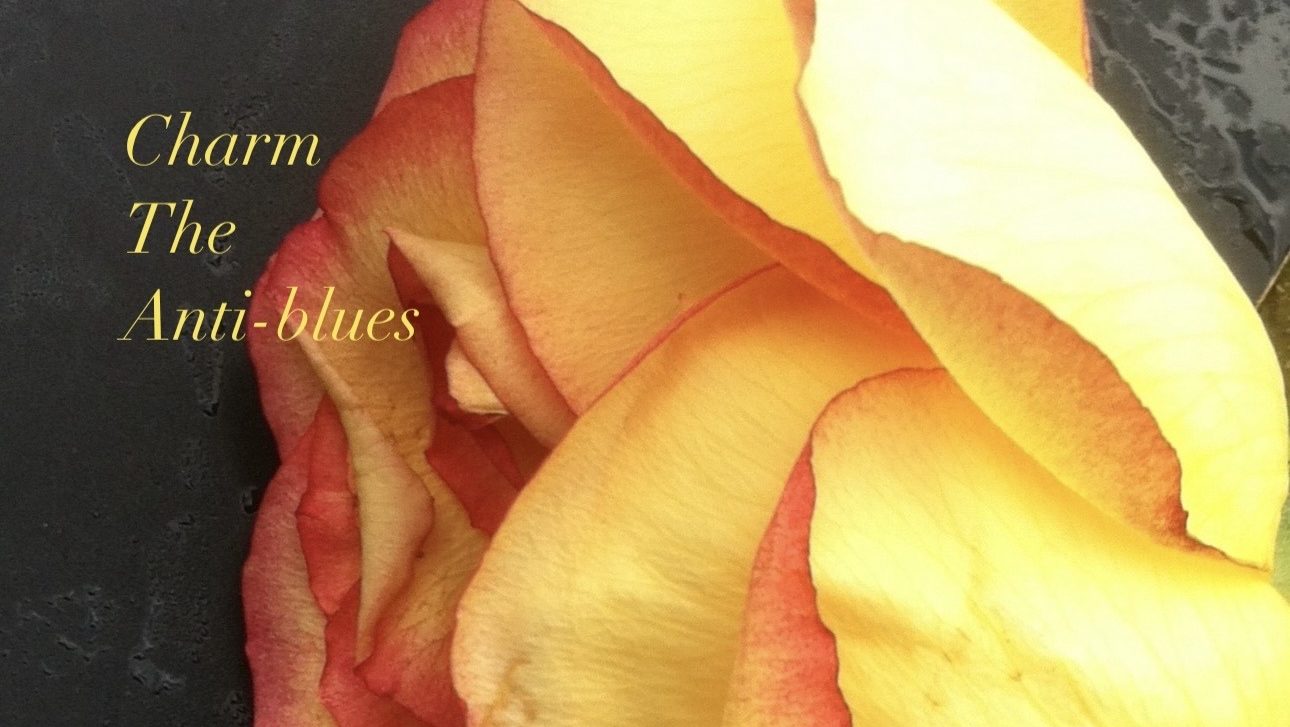
Hello everyone, it’s your host Oliver from DULAXI, and today I’m delighted to be joined by Charm, an independent singer-songwriter from Vancouver, Canada, whose music brings together jazz, blues, and a deep appreciation for the sounds of earlier musical generations. We are here to discuss her original release, The Anti-Blues, released on September 26, 2026, and the unusual idea behind a collection that celebrates love and happiness through a genre often associated with heartbreak and disappointment.
ABOUT Charm
Before stepping into music as a public performer, Charm spent decades writing songs privately, drawing inspiration from the jazz, classical, blues, and big-band music she encountered during her teenage years. Although she had no formal musical training until 2026, her lifelong interest in music continued to develop through listening, writing, and experimenting with melodies. Her journey took an unexpected turn when backing tracks for her original songs encouraged her to begin performing publicly in January 2026. Since then, she has written more than 30 songs, established a band, and begun preparing further releases.
The Anti-Blues brings together four songs that challenge the familiar emotional expectations of traditional blues. Rather than concentrating on romantic betrayal, suffering, or the end of a relationship, the collection celebrates the happiness, passion, and fulfilment that can come from being with someone who genuinely makes life better. The idea emerged naturally from Charm’s songwriting rather than from a planned attempt to redefine the genre. It was only when she began preparing the songs for release that she recognised how their subject matter offered a different perspective on the musical traditions she loved. The result reflects her interest in combining familiar musical influences with an independent approach to songwriting.
Charm’s wider creative interests extend beyond romance into personal growth, healing, joy, loss, and the humorous details of everyday life. Her songs can be playful and unconventional, sometimes using satire and cheeky lyrics to challenge expectations and encourage listeners not to take life too seriously. She is also developing new material that explores different cultural influences, more jazz-oriented compositions, and music inspired by earlier generations of performers. With several projects in preparation and a growing catalogue of original songs, Charm is entering a new stage of her musical life while learning from experienced musicians and discovering what her creative voice can become.
Having this introduction to Charm and the story behind The Anti-Blues, there is plenty to explore, from the musical traditions that shaped her listening habits to the unexpected moment that encouraged her to share her own compositions with the world. So, without further ado, let’s begin today’s interview.
INTERVIEW SESSION
Oliver:
Charm, your relationship with music began during your teenage years in Vancouver, where you spent time around classically trained musicians with interests ranging from jazz and blues to opera and big band music. Looking back, what do you remember most about those early experiences, and how did being surrounded by musicians with such different musical backgrounds influence your appreciation of music?
Charm:
when I was a kid, my mom always had the radio on so I had been used to listening to music all the time, but it was generally a different kind of music then what I was exposed to as a teenager hanging around with musicians that were all educated many of them in classical, but they were into jazz and blues and big band music all that kind of stuff and there was a lot of particular music that was very striking to me, especially some classical music. There was a lot of jazz too that I really like probably more than anything. I like the jazz and some classical music I just loved it. I didn’t really know anything about music, but I just really loved the jazz and the classical and some extent I enjoyed the blues but more so classical and jazz so and big band music. I really loved big band music. As a result of that, that’s what I listen to for the next 30 years pretty much.
Oliver:
You have mentioned that for more than 30 years, your listening habits were strongly shaped by CBC programming, particularly its classical, jazz, blues and big band selections. Artists such as Earl Bostic and Tommy Dorsey were part of that musical environment. What was it about this era and style of music that held your attention for so long, and which qualities from those musical traditions do you recognise in your own compositions today?
Charm:
I think it was just that I was used to listening to that kind of music and I did listen to music that was modern- I knew a lot of the bands that were happening. You know Led Zeppelin, and The Beatles and Moody blues and you know The Rolling Stones they were all happening then as well and you know if I was out of the clubs I would hear that music but in my daily life, I just listen to jazz and classical and I didn’t really know much about it I mean, I had no Music training and I didn’t really know who some of the music was by but. I just enjoyed it and. I just gravitated towards it because to me that was real Music I guess I wasn’t really ever a fan of many more modern genres and I suppose it’s because of the music that I was listening to I mean, I love the Rolling Stones. You know I love the Beatles. I love Moody blues I loved it’s a beautiful day. There was a lot of great bands and I enjoyed Bob Dylan and James Taylor and all of those types of music as well. There were a lot of really great bands that had really highly trained musicians so even in the modern music, you could hear when you had really good musicians as well in that music because of all the music I’ve been listening to and I think I definitely had an ear for good music because of the music I listened to for so many years
My own musical style my favourite music I guess is definitely a jazzy type of music I like blues but I like my blues with some jazz flavor. More than anything else. I like to do jazzy music it is not necessarily pure jazz but everything pretty well has a real jazz flavour to it cause that’s just the flavour I like. I particularly loved big band and a lot of the old like 1920s 1930s Bessie smith Tampa Red I’m actually thinking about doing an album a tribute to some of these musicians from the 1920s in 1930s cause I loved a lot of that it was like old-time blues. Some of it was very jazzy but I also liked you know very jazzy stuff like chick corea I mean there were some really great jazz band over the years . You know in the 1900s 1940s 50s 60s there were some incredible jazz musicians around, but there was also the likes of Louis Armstrong and muddy Waters and a lot of people that I really loved as well – a lot of times when I’m looking for what I wanna do in Music or what kind of feel or what kind of vibe I want that’s who I look to is a lot of these people like Louis Armstrong and that kind of thing. I really love Louis Armstrong -I actually have a couple of songs that I wrote inspired by what a wonderful world I really wanted to write something that was inspired by that and ended up actually writing a few songs that are inspired by what a wonderful world particularly
but it’s just an era or a couple of eras. I guess a couple of generations of music that I like:
Oliver:
One of the most remarkable aspects of your story is that you began writing songs approximately 30 years ago, yet continued developing your musical ideas without formal musical training. What encouraged you to keep writing during those years, and how did you find ways to express your musical ideas before you began receiving formal musical guidance
Charm:
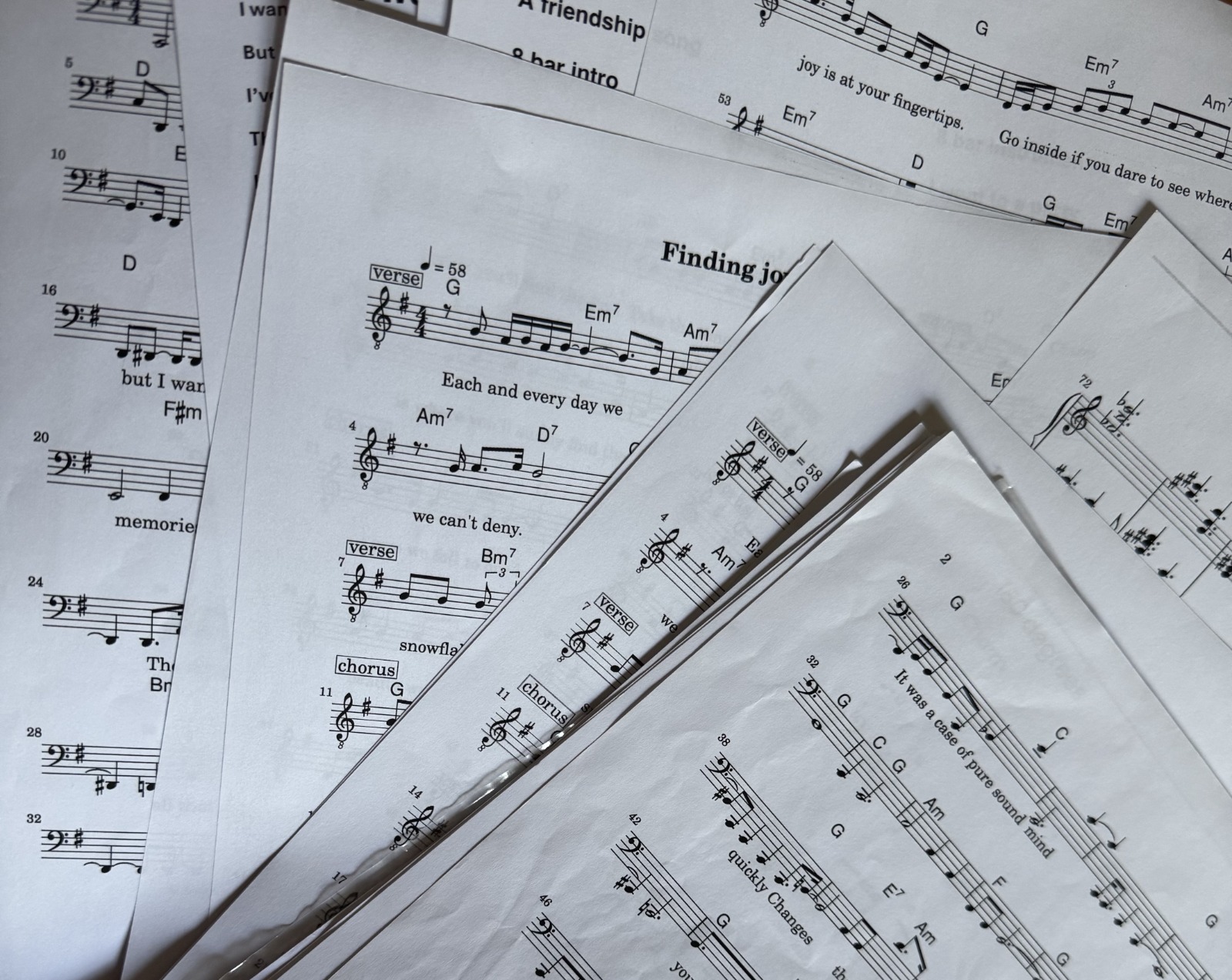
I’m just a writer I write poetry. I write music. I spent a lot of time researching music. I learned a few chords on a guitar so I play a little bit of guitar, but I’m not very good at it. I just started taking lessons this year, but I never like I took any training before I just kinda knew a few basic chords but songs come into my head sometimes they just come in and with this EP those songs I wrote 30 years ago fortunately I did actually write them down and I had the melodies in my head so I could sing them, but it wasn’t until 2012 maybe I actually found somebody to make the sheet music for those songs I don’t know if he did it right but anyway I did hire a guy in 2012 to make some sheet music for those songs because I thought well maybe someday I might ask somebody to play it. I might get the courage to do it and so that happened in 2012 but you know whatever I didn’t start singing until this year when somebody made me some backtrack – prior to that I didn’t sing any of my songs in public cause I couldn’t play them. I wasn’t a good enough guitar player. I knew like eight chords or something so I didn’t have any knowledge on how to play these songs I didn’t even know how to determine what key they were in or whatever cause I just didn’t know enough about anything to do with playing any instruments and I couldn’t read music and so the songs were just in my head that’s all
Oliver:
Until January 2026, you had never sung publicly, despite having written songs for many years. Something eventually changed, leading you to step forward as a vocalist and begin sharing your music with others. What was happening in your life at that time, and what finally gave you the confidence to move from writing songs privately to performing them publicly?
Charm:
somebody made me some backtracks and when I heard them, I went oh my gosh what am I doing? I need to do music so then I just totally started focussing on music and now I have written like over 30 songs. I’m producing more songs right now I’ve got together a band I got a website. I’m setting up all the social media. You know whatever we’re trying to do 1 million things all related to getting this going. It’s kind of wild.
Oliver:
By June 2026, you had written 27 songs, begun singing publicly and established a band. That represents a remarkable period of creative development within just a few months. How would you describe this unexpected change in your life, and has discovering your abilities as a vocalist and songwriter changed the way you see yourself beyond music?
Charm:
those are very good questions I wrote a song I’ve written a couple of songs about these questions. One song is called 180° cause my life 180° turn when I heard my first those first four songs when I actually heard them with a backtrack I’m like oh my God I have to do music so that happened and then I’ve been so focussed on music. I wrote another song called just a rhyme in my mind, which is basically a song that just talks about you know all I wanna do is singing right morning, noon and night kind of thing which is about what I do and it’s been incredibly exciting and in terms of how I see myself beyond music I don’t know it’s like I’m reinventing myself. I guess I didn’t plan it if somebody told me and you know this time last year even November October November last year if somebody had said a year from now this is what you’re gonna be doing. I would’ve never believed it. The first guy that did my backtracks he had produced a musical for a friend of mine and I saw saw parts of it at a meeting that we were at, and then I asked the guy if you could make me the back that was like the last week of December. I think we started working together and then by the second week of January, when I had those backtracks, I was out singing in publicly you know, going to open mics and things and you know starting to get some gigs and playing around town and you know it just was an amazing amazing process you know that I had no idea what was gonna happen. It’s like it’s like a long time ago. I talked about having dreams and how you never wanted to say them out loud because you know if you set them out loud they didn’t happen you’d be so full of disappointment so you just don’t even think about it or mention it doing music was a dream I had for a very, very long time, but it was just like dormant and then all of a sudden sprouted like a weed
Oliver:
Your musical authorship draws primarily from jazz and blues, while also incorporating cultural beats and other influences. Rather than limiting yourself to one established musical category, you appear comfortable allowing different traditions to inform your work. How do you decide which musical styles belong in a particular composition, and what does having this freedom mean to you as an independent artist?
Charm:
well here again, interesting questions first of all my songs don’t necessarily, follow any rules of a song
I even have a song about that too call rule breaker, but I don’t really follow any rules. I don’t even know the rules like somebody told me I break a lot of rules with my songs and I’m like well. What rule did I break cause I don’t even know the rules tell me what the rule is and tell me how I broke it you know cause I don’t know anything about those kinds of things all I know is songs come into my head
I do know I guess I’m a little more intentional with my writing because sometimes I I think oh I should write a blues song so then I’ll sit down and write a blue song or sometimes I like the song I wrote this one song, which is influenced by what a wonderful world i wanted to write a song that relates to what a wonderful world – that’s inspired by that and I did – the song I wrote actually ended up being inspired by two songs what a wonderful world and, Simon & Garfunkels , Scarborough, fair, and what happened there is I have a coach and my coach gave me this Melody and he said here you know you could use this if you want and I ended up writing a song called finding joy which is actually coming out fairly soon and that song really has to do with the beauty of the planet, but you know again I got a melody for it and I wrote the song and it’s very jazzy but most of my songs like some of them they just come into my head. Sometimes I figure out the melody later sometimes I wanna do a blues song and then I just write a blues song
I will get some idea in my head. I’ll write a song a lot of my songs are very Hilarious really if you’ll listen to the lyrics, I have a lot of comedy there but yeah so there’s no rhyme or reason to what or how or why but the only thing again I don’t know the rules so I’m sure I break them all the time and I’m still breaking them left right in centre because I don’t know them and I don’t even know if I wanna know them. I don’t care about the rules. I just write what comes into my head and I just put it down on paper if it comes into my head with a melody, I sing it into my phone. I record myself singing it and then I try to figure out what the chords are
but sometimes it is intentional in terms of if I wanna do a blues song or something
I write it down whether or not the Melody came to me
I really didn’t know how to figure out what my melody was but now I also I’m taking piano lessons. I just started taking piano lessons. I have a piano too so at least I can find notes on there so that kind of helps too with writing music if I’m trying to find notes or if I already have a melody in my head, like trying to figure out the chords
Oliver:
Your EP, “The Anti-Blues,” introduces an interesting concept by taking a musical genre traditionally associated with heartbreak, disappointment and troubled relationships and using it to celebrate the opposite. What initially inspired you to challenge the familiar emotional direction of blues music, and when did you realise that this idea could become the identity of an entire four-song collection?
Charm:
it wasn’t planned at all. It just came into my head and I those songs down. There was no premeditated process at all. They just came into my head and they came with melodies and I wrote them down and I could sing them and basically I would sing them to people on my couch – I’d hold them hostage and get them to listen – here listen to this song. But when I produced the album, I realize that I was turning the blues on its head literally and that’s what it was gonna happen by releasing this music and I thought great you know like so what just because that style of music is associated generally with pain and suffering. Well, maybe it’s time to change it up a bit. Let’s just change it up and do something new with that genre
there’s no reason you can’t sing a nice happy song in that genre and yeah, it’s kind of a cool. I think it’s kind of a cool trademark for me to leave in the music world.
Oliver:
You describe the four songs on “The Anti-Blues” as celebrations of being in a wonderful relationship, with love, passion and happiness taking the place of the familiar heartbreak narratives often associated with the genre. Why did you feel it was important to explore the happier side of romantic relationships through blues, and do you think music sometimes gives more attention to emotional pain than to the joy of finding someone who genuinely makes life better?
Charm:
that sounds like a funny question, but it may have some validity however, again the songs just came into my head. I wrote them down and I could sing them because I had a melody in my head that came with the songs but looking back now I think publishing them is kind of Brave because I am really rattling the cage of generations of one particular genre by choosing to do the exact opposite of what that particular genre is known for but at the same time, I’m quite thrilled that I did it and I think it’s great. I think it’s a good concept and maybe I’ve started a whole new sub genre in the blues world and who says that’s a bad thing maybe that’s a good thing.
Oliver:
There is an interesting contrast between the traditional blues atmosphere and the positive emotional direction of your EP. The music retains its blues foundations and jazzy feel, but the stories move away from the familiar themes of betrayal and heartbreak. How did you approach maintaining the musical character of blues while giving the songs a completely different emotional personality?
Charm:
As I say at the time when I wrote the songs, they came into my head with a melody even at the time I don’t know that I necessarily would have categorized them. They just were songs that came into my head, but when it came around to actually producing them and of course the one song is called the anti-blues so it definitely had a blues flavour to it anyway but I guess they all had a jazzy Blues feel because my musical influences- my background of the music that I listened to I guess that’s why it came to me that way but then when it came to putting it all together, I realize like well this was really quite a concept that was like you know rolling around in my head for 30 years. I mean very interesting to me Never mind anybody else
Oliver:
The title “The Anti-Blues” is playful, direct and immediately communicates that listeners should expect something different from a conventional blues collection. Did you always know that this would be the title of the EP, or did the name emerge as the four songs began taking shape? What does the idea of being the opposite of the blues represent to you beyond its humour?
Charm:
well the title of the anti-blue song was because the lyrics of the song where I’m gonna sing the anti-blues so that’s the chorus. I’m gonna sing the blues it’s a new blues for you. That’s just the way the song came into my head and then when I was putting together this first EP I had other songs I’d written, but those four to me that was the anti blues and so naturally it had to come out the way it did and it makes perfect sense that it all goes together perfectly and yeah, it was just a thing it was just its own thing. I guess it had a life of its own. I still find it crazy that those songs were in my head for 30 years and that EP was produced like that I mean it’s just crazy that it came that it happened that way.
Oliver:
Your songwriting also explores love, loss, joy, pain and what you describe as healing energy shifts. These subjects suggest that your creative interests extend beyond romantic relationships into different stages of human experience. How do you draw inspiration from these emotional changes, and do you find that writing about different experiences helps you understand your own feelings more clearly?
Charm:
a lot of my music is satire and humor, but I also am very much into self healing. personal growth
in my life you know I’ve been a trauma therapist for 25 years and i also come from some difficult past myself and so my music yeah it’s very open and flexible re topics
. Some of my music is about. What are we doing with our energy? What are we hanging onto that we don’t need to hang onto. What are we forgetting about that it’s OK to remember
Is our focus helping us or is it hindering us? You know are we looking to the outside world to make us happy you know I mean if happiness is an inside job than the outer world (even tho beautiful.) Is it gonna provide that happiness so there’s a lot of different kinds of themes and again some of it is very bratty or comical
some songs I wrote I’m like how can anybody listen to this song and not be laughing like if I look at them and I’m singing this song and they’re very serious and I’m singing some goofy song I’m like how could they? how could they be so serious
like I have this song that I wrote called kitty Kat blues now kitty Kat blues is basically a song about a couple that break up and one of them runs off with the cat and the other ones upset they want their cat back so they have the kitty Kat blues because they want their cat back but I mean the song is just it’s just a joke you know it’s just a funny thing although the reality is that there are people that have gone through that and will relate to it but it’s just funny. – you know I want my cat – did you take my cat it is just corny but you know that’s the lived experience of people so it’s kind of in a way making fun of. Oh somebody ran off with my cat l
I mean how can you not laugh? I don’t know how anybody could listen to that song and not laugh unless they just lost their cat maybe I don’t know.
Oliver:
Humour and occasionally bratty lyrics are also part of your creative personality, which introduces an interesting contrast to the more serious emotional subjects you explore. What attracts you to using humour in songwriting, and do you see it as a way of challenging expectations, expressing confidence or simply reminding people that music and life do not always have to be taken so seriously?
Charm:
yes don’t take life too seriously! And everyday life can have its funny side. I guess the comedy does kind of challenge people’s expectation, but like I say, I don’t follow any rules so you know whatever the rules are don’t worry about that cause that isn’t even gonna be relevant and as far as confidence, I mean, I don’t know. I just get these ideas and I write about them and some of them are funny that’s all but it depends on who’s looking at it. I mean, somebody might hear those songs specifically and for them it brings up something you know and then other people they could just sit there and laugh because they could see the humor. So it varies.
Oliver:
You have spoken about spending much of your early musical life around talented instrumentalists, yet your own journey into music has been largely self-directed. How has that combination of early exposure to accomplished musicians and your later experience of learning through experimentation influenced the way you approach songwriting, vocal performance and working with other musicians?
Charm:
well that questions kind of deep I think that I always wanted to do music, but I just never really had confidence to in a learn well not so much to learn but to perform I mean, you know I tried karaoke a couple times, but that wasn’t really my thing and I did have a friend when I was in my 20s or 30s he used to have jams that his basement they used to call me Janis and I go down there and they be playing like blues melodies and I just make up lyrics for something to do, but that was a very small circle of people that I did that around and I mean, I would sing just in front of my friends, I just wouldn’t say in public and like I say I never had the courage to do that until that guy made those he made me the backing tracks for those four songs like I sang the songs to him and then he played he figured out what chords they were and he played the chords and I sang the song we sang it together and then he went you know he went he made he made backtracks for those songs and then I could start. I started singing publicly and like I said when I heard my music I was like oh my God I need to do music and. Still have my Achilles heel is that I have no Music Training really I still don’t know how to read music. I don’t know how to write it or read it. My piano teacher is starting to teach me like today. He was teaching me how to repeat like if this signal this if you see this on the paper this means repeat you know and he doesn’t write. He doesn’t write the notes he just writes like OK C major and then because his piano he says OK but you know you put your finger on you know discord discord in discord or just this note that makes that cord so he’s kind of writing it down that way for me right now just so I don’t like where to put my hand where to put my hands or my fingers so it’s pretty pretty pretty basic but even though that’s the case, I do have some charts and the one good thing about now that I’ve got the keyboard is that at least when I’m when I’m writing a song like now at least I can use the keys to find notes and figure out OK what key is this in or or what? What chords am I using like if it’s basic cords but I do have charts if I can’t I’d have to you know HUNT around and look on my charts and try and figure it out like OK this isn’t an E this might be a E major seven so but I don’t know I need major seven so I’ve gotta look up all. I’ll say it’s an E but it’s not exactly a E so I will have to. You know look at all the different forms of a GE cord and then figure out which one it is as E minor as E major as E major seven is it you know you know as a D sharper E flat I guess E flat yeah you know so but I’m just starting to learn that stuff now but at least I can you know at least I can find. I can find notes when I’m writing a song that I mean, I’m I’m reminded by certain people that have told me some of the best musicians in the world were just like me they couldn’t actually read or write music. I don’t know how they managed to do it because they didn’t actually know how to do it for example Prince and Jimi Hendrix apparently didn’t have any musical training and neither did Thelonious Monk and I’m sure there’s many more and that was helpful to me to be aware that there was some great musical artists in the world that had no musical training either and you know it helped me with my imposter syndrome as it relates to being an artist in the musical world. on another note I have the great privilege of working with some really incredible musicians with 40 or 50 years experience the piano player has been playing music and recording around the world for 50 years the flute player I’m working with this world famous. The drummer has travelled around the world drumming on cruise ships and has even worked I mean these individuals are incredible and given my own history in relation to music, I guess it makes sense that I would have such wonderful musicians to work with. It’s such a blessing to be able to work with these people. I almost can’t believe it myself but what’s really important about it is that I realize that I really do have something to offer because these individuals would not be working with me if I didn’t have something valuable that they appreciate and so that’s really amazing to be in that position. I feel very, very fortunate and blessed.
Oliver:
Having now formed a band after beginning your public singing journey in January 2026, you are no longer developing your music entirely as an individual songwriter. How has working with other musicians changed your creative process, and what do you enjoy most about hearing your original compositions take shape through the contributions of other performers?
Charm:
the bands, we haven’t done a lot of gigs yet we’re working on promotion, materials and things, but my approach to working with these people is that they are all so professional and so like top of the game I don’t try to tell them how to do the songs I give them a sense of the flavour of what I’m looking for and I just say you do you and I let them bring their wisdom and intuitive experience as such incredible musicians to the process so that makes it very interesting because I never know what exactly they are gonna come back with but it’s been really wonderful to see how they take whatever piece of music and make their contribution to it. I mean, you know The Drum part is very different than the lead saxophone for example like what’s gonna happen there The Drum is like OK this is the beat. We’re looking for this is the vibe it’s you know it’s a different kind of situation than what the sax player will do where you know all he has is a song with some singing on it and he’s got to fill in all the blanks as he wishes and that’s quite amazing what they come up with. It’s really wonderful too to experience my music coming to life that way
Oliver:
You have indicated plans to produce three to four EPs over the coming year, suggesting that “The Anti-Blues” is only the beginning of a much larger body of work. How are you approaching this next stage of your creative development, and do you already have a sense of the musical or emotional directions you would like these upcoming projects to explore?
Charm:
currently I’ve just finishing producing three songs which will be another real stamp in the music world. One song is basically too very well somewhat different cultures integrating two melodies from two different cultures into one song and bringing some real traditional aspects into it. It’s gonna be really something. It’s really a beautiful song and then related to that I have two other songs which are one of them is one of the songs that was inspired by what a wonderful world and the other one is about it’s about energy and what we’re doing with our energy and about connecting to the Earth so that very soon and then I’ve got another EP coming out which is gonna be more. It’s more of a jazz flavour for the songs are pretty much jazz type songs and there’s one that’s not really jazz, but we’ll make it as jazzy as we can so it kind of fits in with the other ones or else I’ll release it as a single I don’t know yet so there’s that and then I’ve also got six more blue songs and some other songs that will blend well I’ll make them jazzy and the blue songs will be jazzy and they’ll that’ll make her that’s like a whole album right there but it’s not anti-blues. It’s the before the anti-blue some blues album. It’s kind of like the you know one song is gonna like you know I’m walking out the door another ones like I won’t miss you all that good stuff though it’s like the opposite of the anti-blues you know in terms of what the to but there’s that and then I have a whole bunch of other music which I wouldn’t say is classic jazz or blues, but I will make those songs as jazzy as I can. I also wouldn’t categorize them as like a country song or a folk song or anything like that either really but I guess you could say they’re a bit funky, but I’ll make them as jazzy as they could possibly be and it’ll be kind of a mishmash of a bunch of different stuff. One album is more about energy and healing or one EP and then there’s the blues album and then there’s this jazz EP that’s coming out so I’ve got now. I’ve got like over 30 songs to produce and I’ve only produced 4+ these three that are coming out right away these three songs and so that gives me about 24th 2024 songs or something still to do to produce, so I’m just planning how I’m gonna structure that what’s gonna be released as singles will be released as E peas or will I just do a full album out of a bunch of it that part I haven’t decided yet but I’m working on it… to be determined
Oliver:
As someone who has spent decades writing songs privately before discovering the confidence to sing publicly, your experience offers an interesting perspective on creative timing and personal courage. What would you say to people who have creative ambitions but continue to postpone sharing their work because they feel they lack the training, confidence or experience to take that first step?
Charm:
I would tell them Prince had no Music Training Thelonious Monk had no Music Training. Jimi Hendrix had no musical training and they made a huge impact on the world and there’s many more also in the you know classical world so it doesn’t really matter like Art is something very special to share with people whatever the art form you’re interested in like I think you just have to kind of like you know hold your breath and just dive in and see what happens.
I actually also went to school late in life. I had a grade 8 education. I left home very young and in my 30s I went back to school and I spent 15 years in university getting a bachelors, a masters and a PhD and while I was going to school, I had these little quotes that I hung onto that kind of got me through school. One of them was accept a commitment towards your goal and great and mighty forces will come to your aid and then the other one said something like you know a journey of 1000 miles starts with a single step
these kinds of things so sometimes we just have to put our foot into the world and and the world will respond to it. You know energetically the world responds to what you’re doing and the battle is always with the self when it comes to these things so whatever it is, that’s blocking you you could say is your work or your family or you’re this or you’re that but when it comes to following a dream, the battle is with the self not with your family not with your work. It’s a choice like you either choose that or you don’t choose that I mean I just chose to do music on the couch for 30 years you know I researched a lot of music I could sing a ton of songs you know, but I never did it out the world I sang to the Kat or I sang in the shower or sang in bed or I sang in my car or whatever sometimes I had an audience and sometimes I didn’t Generally, the audience was the cat but whatever the case, the dream of Music was there for a very long time and I I wasn’t doing often but I was playing around with music like you know looking up music you know especially from the 20 1920s 1930s 1940s like what were people singing about and I was just really into that kind of stuff and so I came in even though I have no training like I came in with some kind of knowledge. I don’t know what you would call it because like I didn’t know all the classical music that I listened to who they were, I didn’t know all of the blues ones I did know a few jazz people.I mean who they were, but I wasn’t really educated in any of that so all I had was ears to hear I had a heart to explore. You know something that I loved I was interested enough that i did kind of learn music on the couch.
Oliver:
With “The Anti-Blues,” you are inviting listeners to experience a different emotional side of a familiar musical tradition. What would you most like people to feel when they listen to these four songs, and what kind of connection do you hope to build with listeners who discover your music for the first time?
Charm:
we can enjoy life and it’s OK to allow ourselves to enjoy good relationships
not all relationship. are full of love and pain like there are people out there in the world that just have loving relationships. I like to say that, Love and pain are not synonymous.
Oliver:
Looking ahead, how would you like your identity as a songwriter, vocalist and recording artist to develop? With your growing collection of songs, your newly established band and plans for several upcoming EPs, what would make you feel that you are building the musical career and creative legacy you have always wanted?
Charm:
I just wanna keep sharing my music with the world and I do have some areas I want to explore musically
I also have some particular people‘s music. I want to research more like I really love Leonard Cohen and I’d like to really look more deeply into his music and his writing. You know he’s an inspiration for me because he was famous because of his writing not because of his singing, he was incredible and a very iconic, Canadian author. I’m inspired by his work and his authorship. I’m just sort of pondering what directions I wanna go in when the blues album is produced I really wanna look at getting into more jazz like more serious jazz and I also wanna do some tribute albums. I think I mentioned that earlier I really wanna do some tributes to some of the music from the 1920s 30s and 40s in that era there’s some particular music I’m very interested in and I also really love the flavour of earl bostic and Tommy and jimmy dorsey. Earl Bostic was one of my absolute favourite big bands. I would be very interested in bringing back Earl Bostic‘s music or something in that area of music cause I just really love that music. It was so incredible. It was the kind of music that was used in movies was great dance music it was very inspirational. Really really beautiful music and then I really wanna look at how I can take some songs that I like that are like newer and reinvent them – music that I like, but reinvent them into really serious jazz music so basically my own interpretation… my own internal vision for some music that’s already out there and I already have some specific music that I’m interested in – there’s a number of musicians , Roy Orbison and Chris Isaak wrote a song called wicked game. I’d love to turn that into a serious jazz song. Yeah there’s a lot of a lot of modern music that I think could be turned totally into a jazz music just reinterpreting it the way I would like to sing it so that’ll be a bit of an adventure.
“Charm’s story is a reminder that a creative life does not always begin with a grand plan. Sometimes, decades of quiet listening and private songwriting are waiting for one unexpected opportunity to become something real.”
~ Oliver (DULAXI Team)
EDITORIAL PERSPECTIVE
What stands out about Charm’s approach is the freedom she gives her songs to develop without forcing them into established rules. Her affection for jazz, blues, and big-band music provides a foundation, while her lyrics make room for humour, personal reflection, and an unusual celebration of healthy relationships. The story behind The Anti-Blues also adds another dimension to the release: songs that remained private for decades have become the starting point for an active musical career. Charm’s willingness to experiment, learn, and collaborate gives her growing catalogue room to move in several directions.
~ Oliver (DULAXI Team)
CLOSING
My sincere thanks to Charm for sharing her story with DULAXI and giving us a closer look at the experiences, influences, and unexpected turns that have shaped her musical life. Our conversation has explored not only the idea behind The Anti-Blues, but also the courage it can take to bring a long-held creative ambition into the world.
For listeners who enjoy jazz and blues with a different emotional perspective, The Anti-Blues offers an opportunity to hear a familiar musical tradition approached through the celebration of love, happiness, and lasting companionship. I also look forward to seeing how Charm’s upcoming projects develop as she explores more jazz, cultural influences, and tributes to the music that has inspired her over the years.
Thank you, Charm, for joining me for this conversation, and thank you to everyone who has taken the time to read this DULAXI interview. We encourage you to explore the release, discover more of Charm’s music, and follow her continuing development as a songwriter and performer.
I’m Oliver from the DULAXI Team, and we look forward to bringing you more conversations with artists whose stories and creative ideas deserve to be heard.