

Released on 13th May 2026, “Heaven Is Here” by Gideon Unna featuring Naomi Shapira approaches its central idea with a striking sense of simplicity: paradise is not somewhere distant, but something that can be recognized within the life already being lived. The song’s greatest strength is the way its vocals communicate this philosophy without turning it into an abstract lecture. Gideon Unna’s delivery feels reflective and grounded, carrying the words with the intimacy of someone sharing a personal realization rather than making a grand declaration. Naomi Shapira’s soft, delicate harmonies complement him beautifully, adding tenderness and warmth to the message. Their voices work together with an understated sincerity that makes the central lyric, “Heaven is here,” feel less like a slogan and more like a genuine awakening. The vocal chemistry gives the song an inviting emotional character, allowing its ideas about peace, freedom, consciousness, gratitude and appreciation for life to settle naturally.
What makes the lyrical message especially effective is its rejection of the constant human tendency to search elsewhere for fulfilment. “Heaven Is Here” turns that search inward and toward the immediate world, insisting that beauty, connection and contentment can already exist in ordinary experiences. Gideon Unna’s songwriting presents this philosophy with optimism, encouraging listeners to open their eyes, hearts and minds to what surrounds them instead of waiting for some perfect future or distant paradise. The song also establishes a clear philosophical contrast with John Lennon’s “Imagine”: rather than asking listeners to envision an ideal world that does not yet exist, Unna argues that heaven is already present and must simply be recognized. That idea gives the lyrics their emotional purpose. The repeated declaration that “Heaven is here” becomes a reminder to cherish life, respect others and become more conscious of the beauty that already exists. The vocals strengthen this message because neither singer overwhelms the words; every phrase retains its humanity, warmth and accessibility.
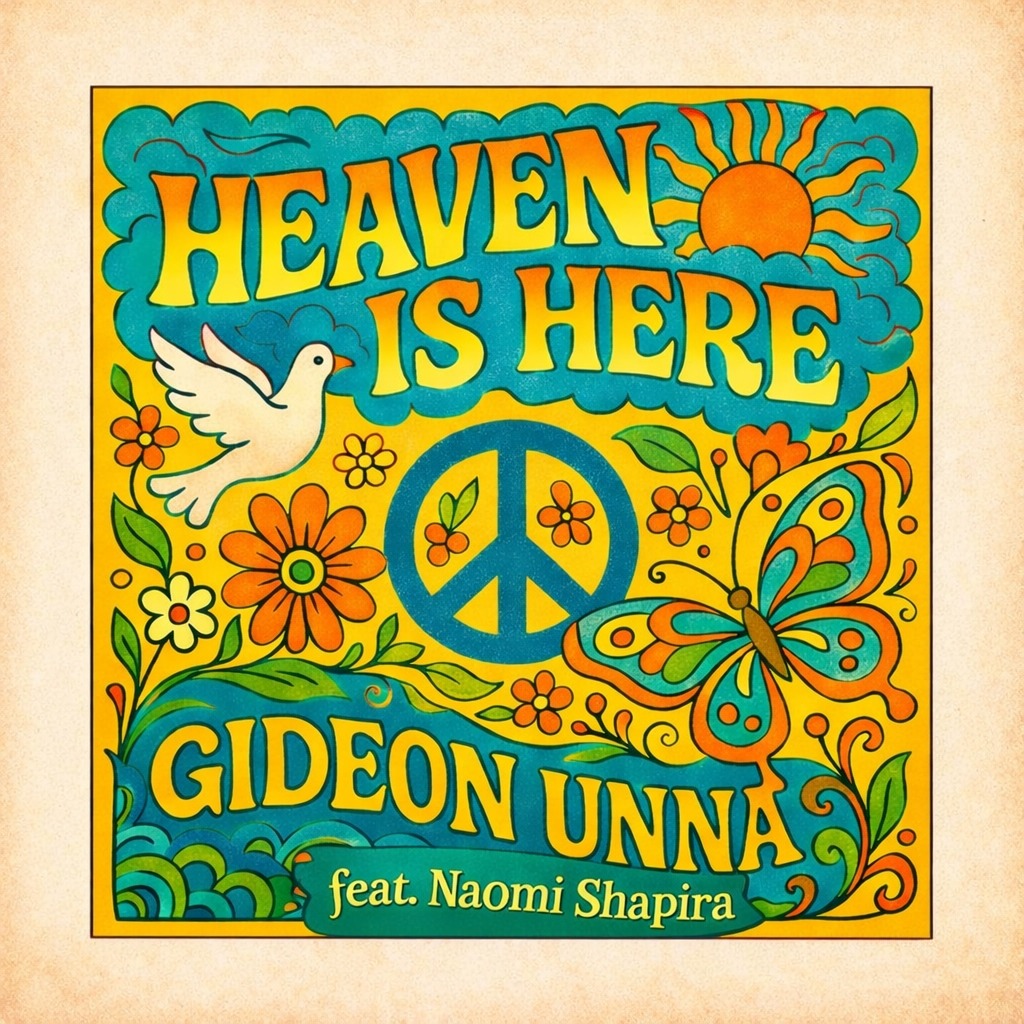
Musically, Gideon Unna builds the song around a warm, retro folk-pop character influenced by Scott McKenzie’s “San Francisco” and the idealism of 1960s counterculture. The acoustic guitar provides the foundation with bright, articulate plucks, while a melodic walking bassline adds gentle movement beneath the relaxed rhythm. Soft drum taps, shakers and brushed percussion maintain an organic pulse without distracting from the vocal narrative. This restrained arrangement is important because it gives Gideon and Naomi sufficient space to make the message the centre of attention. Their voices remain surrounded by a spacious, sun-drenched atmosphere, while playful instrumental flourishes and layered harmonies introduce moments of lightness. The production, developed through Gideon’s longstanding creative partnership with Lior Medan, incorporates AI into the arrangement process, while Yoav Asif recorded the vocals and handled the mixing and mastering at his home studio in Moshav Tzrufa, Israel. The result preserves an intimate character that fits the song’s philosophy perfectly.
There is a deliberate sense of closeness throughout “Heaven Is Here,” and that intimacy ultimately makes the song’s optimism convincing. The production avoids an excessively polished presentation, allowing the acoustic instruments, natural vocal textures and room character to remain perceptible. Gideon Unna’s grounded performance and Naomi Shapira’s sincere harmonies create the impression of two people sharing a thought that has become deeply meaningful to them, rather than performers attempting to manufacture an emotional climax. That choice gives the song its strongest identity. Its warmth, however, is not merely aesthetic; it directly reinforces the lyrical argument that fulfilment can be discovered through presence, gratitude and connection. The acoustic textures feel appropriately human, while the relaxed rhythm keeps the message from becoming heavy-handed. By bringing together 1960s-inspired folk-pop sonics, intimate vocals and a philosophy centred on appreciating the present, “Heaven Is Here” becomes a gentle but purposeful statement about recognizing the extraordinary within everyday life.
“Heaven Is Here” Reminds Us That Paradise Is Not Distant; It Lives In Gratitude, Connection, Peace, Consciousness, And The Beauty Surrounding Us Each Day.
~ Daniel (Dulaxi Team)
Gideon Unna’s identity as an Israeli musician and songwriter from Kibbutz Ein Carmel gives “Heaven Is Here” a natural connection to the themes of spirituality, gratitude, human connection and appreciation for life that define his wider artistic journey. His music brings together Israeli traditions, Jewish spirituality and traditional melodies with contemporary songwriting, while influences from 1960s vocal harmony groups such as The Mamas & the Papas and The Carpenters contribute to his warm, melodic approach. Beginning many songs with his guitar and questions surrounding love, consciousness and faith, Gideon uses music as a way to explore truth, connection and the beauty of existence. That philosophy comes through strongly here, making “Heaven Is Here” more than a pleasant folk-pop composition. It is a thoughtful reminder to recognize beauty in the present, cherish life and remain conscious of what already surrounds us. I encourage listeners drawn to warm vocals, meaningful lyrics, gentle instrumentation and uplifting messages to give this track their full attention, because its simple philosophy carries a lasting emotional impact.