
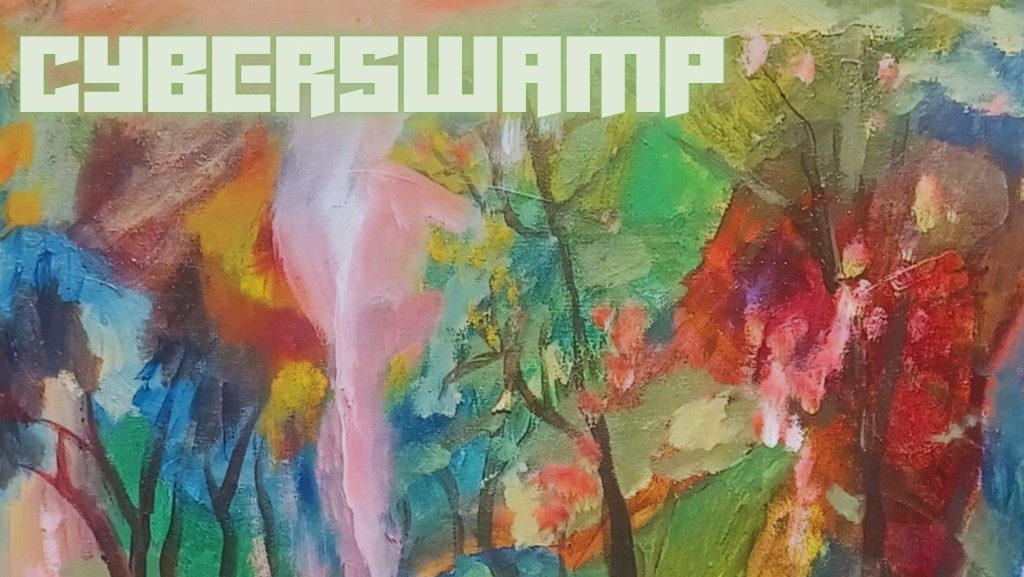
Hello everyone, it is your host Oliver from DULAXI, and today I am delighted to be joined by Robert Radcliff, the songwriter and creative force behind Cyberswamp, a musical project based in Sacramento, United States. Blending melodic pop rock, Latin rock, power pop, electric guitar-driven arrangements, and contemporary synth-pop elements, Radcliff brings decades of songwriting, collaboration, and musical experimentation together on Mi Amada & Other Love Songs. Released on August 23, 2025, according to the supplied release information, the album represents a lengthy creative process that began in 1998 at Sacramento’s EME Recording Studio. With its combination of romantic expression, cinematic influences, social commentary, and modern production, the record offers a closer look at an artist whose musical ideas have continued to develop over many years. Before we begin our conversation with Robert Radcliff, here’s what you need to know about today’s featured project.
About Cyberswamp
Cyberswamp is the musical project of Sacramento-based songwriter Robert Radcliff, whose approach to music has been shaped by a longstanding commitment to songwriting, instrumental exploration, and the expressive possibilities of sound. What began as a Brill Building-inspired exercise in writing one song every day eventually developed into a much larger undertaking, bringing together musicians, educators, colleagues, and family members in a collaborative project that would take decades to reach its eventual form.
Radcliff’s early songwriting ambition was influenced by the work ethic of professional songwriters who produced material at a remarkable pace. His intention was to create a substantial collection of songs while continually developing his musical abilities. The project also grew from his appreciation for artists who combined strong songwriting with distinctive instrumental performances. Over time, his interest in guitar sounds, arrangements, and production techniques became central to the way he approached his compositions.
The album Mi Amada & Other Love Songs began taking shape in 1998 at EME Recording Studio in Sacramento, a studio that hosted established acts, including the Deftones, before eventually closing. The recordings developed across approximately two decades, with technological changes influencing the project’s direction. During this period, Radcliff explored different guitars and effects pedals, experimented with arrangements, and learned more about recording and production. Engineer Matt Erich introduced him to Pro Tools, opening up new possibilities for editing, refining, and reconstructing the material. Radcliff also began filming studio sessions on a VHS camera to study the recording process, an experience that would later help him develop his production skills.
The project’s musical identity reflects an unusually broad range of influences. Radcliff has drawn inspiration from composers and musicians such as Lalo Schifrin, Antonio Carlos Jobim, Dave Grusin, Michel Legrand, Deodato, and Quincy Jones. Their work, particularly their contributions to cinema, helped shape his interest in compositions that communicate through atmosphere, arrangement, and musical detail.
Another important influence was Jeff Buckley’s Grace. Buckley’s death in 1997 affected Radcliff deeply, strengthening his desire to create an album in which every song would feel substantial rather than serving as filler. Radcliff wrote hundreds of songs before selecting approximately 35 that he considered worthy of recording.
The album’s collaborative history is equally significant. Guitarists Mark Boerner and Robert Radcliff, bassists Rob Lemus and Sato, keyboardists Jimmy Malone, Robert Radcliff, and Nic Radcliff, and drummer Jon Chingary contributed to the recordings. Vocal performances came from Robert Radcliff, his son Nic Radcliff, his daughter Jasmine Radcliff, and Amanda Poppe. The involvement of Sato, a Japanese bass player who collaborated with Radcliff during the project’s earliest sessions before returning to Japan, remains an especially poignant part of the album’s history. His performances are preserved on tracks including “All The Same” and “World We Never Made.”
Released on August 23, 2026, Mi Amada & Other Love Songs brings together the results of this extended process. The album reflects Radcliff’s determination to preserve his songwriting vision while allowing the material to evolve through changing technology, collaboration, and experience. With two further collections, Cyberdelic World and Everything, planned around songs that did not make the original selection, the story of Cyberswamp continues beyond this release.
Having this brief introduction to today’s featured project, I am sure both new listeners and longtime fans will be interested in hearing directly from Robert about the experiences, influences, and creative decisions behind this remarkable undertaking. So, without further ado, let’s begin today’s interview.
INTERVIEW SESSION
Oliver:
Robert, your songwriting journey began with an ambitious Brill Building-inspired challenge of writing one song every day. What was happening in your life when you first committed yourself to that discipline, and how did that early experience shape the songwriter you eventually became?
Robert Radcliff:
In 1985, I saw an ad for a guitar demonstration in a classroom at The University Of Florida. When I got there I witnessed a young woman getting some incredible sounds out of her electric guitar, all by herself, in front of the class-Emily Remler. She revealed a commitment to learning a Wes Montgomery tune everyday. That planted the seed.
Writers like Carol King, Neil Diamond and David Gates would write songs rapidly for the Monkees tv show and their album sales exploded, outselling the Beatles and the Stones combined. They put out 3 albums in one year to keep pace with the tunes being played on the tv show. I figured that writing a song a day would work as well as learning to play another guitarist’s songs. Prince took it even further by writing and performing a song a day for his vault.
Oliver:
You have described Jeff Buckley’s death in 1997 as a deeply affecting moment that helped inspire this album. What was it about Buckley’s music, particularly Grace, that stayed with you so strongly, and how did that experience influence the standards you set for your own songwriting?
Robert Radcliff:
I released my album on August 23rd 2026-the 30th anniversary of the release of “Grace.” My son accidentally listed the year as 2025 when he uploaded the album to cd baby and I had to decide to leave it up or take it down. Jeff Buckley and Emily Remler’s passing both affected me deeply. A few years before that I got to hang out with Randy California, who also drowned around that time Jeff Buckley did. It runs in threes sometimes. Jeff Buckley got the biggest advance up to that time for a new artist, and he released an album where every song was epic and intimate at the same time. Even the outtakes like “Forget Her” and “Vancouver” were haunting reminders of what we lost when he passed. I wrote hundreds of songs and settled for around 35 that were epic enough to be recorded. It took over 20 years to record them and the remaining tracks will make up two more albums- “Cyberdelic World” & “Everything.”
Oliver:
The album began in 1998 but took approximately two decades to reach its eventual form. Looking back across that long period, what kept the project meaningful to you, particularly during the years when it was shelved and its completion seemed uncertain?
Robert Radcliff:
During that time, I acquired a substantial collection of around 60 guitars and 40 effects pedals which I used like an artist uses a pallet with different colored paints. A few times I traded pedals for studio time at $30 an hour. I became obsessed with chasing the different sounds I was hearing in my head. Halfway through the recordings engineer Matt Erich introduced Pro Tools and the songs were re-recorded to take advantage of the new technology. Misplaced drum fills could now be quantized. I began filming Matt using Pro Tools on my VHS recorder to figure out how to use it. Then I got a dedicated desk top pc with all the tracks recorded on it, with pro tools, for me to produce music after EME Studios shut down. After covid hit, everything changed for me musically and the last lyric I wrote was during the January 6th insurrection. The project was then shelved for years until my son and I finished “You Can’t Handle The Truth” and recorded the lp together.
Oliver:
You describe many of your compositions as miniature films, drawing inspiration from cinematic composers such as Lalo Schifrin, Antonio Carlos Jobim, Dave Grusin, Michel Legrand, Deodato and Quincy Jones. How has your relationship with film music influenced the way you construct melodies, arrangements and emotional scenes within your songs?
Robert Radcliff:
I got to talk with Michel Legrand between sets when he appeared at the Diplomat Hotel in Miami. He studied with Nadia Boulanger and attended the Sorbonne in France. It dawned on me that the complexity of his soundtrack music was a reflection of his virtuosity on the piano. He could literally play rings around any of his competition. Even Henry Mancini and John Barry paled by comparison. Miles Davis picked up on this and couldn’t wait to work with Legrand. You hear this piano virtuosity on Legrand’s complex “Windmills Of Your Mind” from “The Thomas Crown Affair.” This taught me to develop my writing and guitar playing side by side so both evolve into something epic.
Oliver:
“Mi Amada” explores love in a world where carrying a gun can make someone a casualty regardless of which side of the law they occupy. You also wanted the guitar solo to evoke the sounds of gunfire and machetes. How did you approach balancing the song’s romantic foundation with such a violent underlying image, and what did you want that contrast to communicate?
Robert Radcliff:
I have a close degree of separation with the book and film “The Adventurers.” The book is a thinly veiled, fictionalized account of the fascinating life of Porfirio Rubinosa- diplomat, polo pony/ race car enthusiast, suspected hit man for the Trujillo regime, lover of Zsa Zsa Gabor, Marilyn Monroe and Veronica Lake. Neither the book nor the movie really captured this experience-but the music did. Deodato conducted Antonio Carlos Jobim’s score, using a combination of original music and standards like “That Old Black Magic.” You can hear gunfire and machetes in Jobim’s “God & The Devil In The Land Of Sun.”
“Amparo” is the romantic theme throughout the movie, named after the film’s love interest. Leigh Taylor Young, who played Amparo, and I exchanged emails in the late 90s.
The protagonist in the film is played by Yugoslavian actor Bekim Fehmiu, who spent his final years in Belgrade, Serbia-Where my son lives today. Fehmiu’s last major US film role was in the movie “Black Sunday,” where he plays a terrorist who kidnaps a teenager played by Kim Nicholas-Kim and I did children’s theatre at the Ruth Foreman North Miami Playhouse.
This connection inspired both “Mi Amada” and “Things Have Changed,” the latter being a Bossa Nova. For Mi Amada, I balanced the yearning for a lover or mother “writing everyday” with the bitter stoicism of a child soldier in an African warlord’s army like Nigeria’s Joseph Kony. It’s a place where
“They won’t let you feel-carrying a gun, My beloved One (Mi Amada.)”
Oliver:
“All The Same” is described as an introduction to existentialism. What questions about existence, identity or the human condition were occupying your thoughts when you wrote it, and how did you translate those ideas into a song?
Robert Radcliff:
My company sent 2 coworkers and me to computer school, after letting us know they were shutting down. We all got certificates in Microsoft engineering. Fast forward ten years and the three of us are working for a different company doing customer service-the same job we did before computer school. None of us advanced at all-”in the end it’s all the same-” pushing the boulder up a hill until it falls on you.
This is how life is. Why not death? You believe everyone outside your religion is going to hell, then you die and find out it’s all the same. Randy Newman would let you “break out the booze and have a ball, if that’s all there is.” Kierkegaard advises us to make a “leap of faith” when confronted by the abyss. Go figure.
Oliver:
“You Can’t Handle The Truth” was written during the January 6th insurrection, with media manipulation at the centre of its subject matter. What did you observe during that period that compelled you to write the song, and how did you approach expressing your concerns without losing the personal and artistic character of the music?
Robert Radcliff:
“You Can’t Handle The Truth” was written about media manipulation, political turmoil and the difficulty of distinguishing reality from manufactured narratives. In a few short hours we saw political leaders denounce and then commend the rioters. We heard right wing media reinterpreting the insurrection as the new Woodstock-a gathering of the tribes. Then all the lawsuits followed & were won by the companies who count the votes. The pardoned rioters are now suing the government, causing Congress to look at legislation to prevent this. Rather than sounding preachy, I decided to focus on how the big picture in Washington affects little old me and you at our Thanksgiving dinner. How facts win arguments on a level playing field and sink in quicksand after partisan social media bots tells us what to believe when no corroborated evidence is provided.
Oliver:
In “First Impressions,” you turn towards the dilemma of people who feel disinherited in a society shaped by oligarchic power. What aspects of that social divide did you want to bring into focus, and how did you decide to approach such a broad subject through an individual song?
Robert Radcliff:
This was one of the first songs I wrote. It’s ahead of its time. I didn’t know we’d have over 1000 billionaires with worldwide unemployment on the horizon when I wrote “Everybody gets what they want and leaves you with nothing.” Homes and travel are less and less affordable with no relief in sight. Each generation is less sociable than the previous generation, as if to blame them for creating the world they were born into.
Oliver:
“When Day Is Done” explores the experience of longing for someone more intensely as the day progresses. What inspired this particular emotional perspective, and how did you capture the way ordinary time can seem to deepen the absence of someone you love?
Robert Radcliff:
The quiet, unmarked, routine passage of hours and days—has a unique way of making their absence feel heavier, deeper, and more concrete. You realize how often you’re in situations where you feel out of place and how thankful you are that someone is there to relate to on all levels. The first ten years of my life were spent in boarding school and foster homes. Since then I never felt at home with any group of people. I’m in a better relationship now, in a world of my own making. And I can’t wait to get home when day is done.
Oliver:
“Ring of Fire” examines the fine line between obsession and restraint. What interested you about that tension, and how did you approach portraying the difference between being deeply drawn to someone and allowing that attraction to become consuming?
Robert Radcliff:
When you’re living in a foster home with another family, you need to be on your best behavior despite the temptation to do otherwise. An incident that might get you grounded with your parents can get you locked in a dark closet for dinner-this happened to me.
The work place is less sociable than ever these days and my reluctance to pursue the object of my obsession is common practice in the “me too” era. Restraint is now HR policy while obsession is treated with Zoloft and Abilify.
Oliver:
In “Smaller,” the departure of a loved one is described as cutting the world in half. What does that image mean to you personally, and how did you approach conveying the scale of emotional loss without making the song’s message feel overstated?
Robert Radcliff:
After a couple breaks up, the world becomes smaller socially when your friends take sides and stop seeing you. I joined a grief therapy group for a minute only to discover that a break up has similar stages of death as a death itself-anger, denial, acceptance etc. The same counseling was used for grief due to divorce or death. Smaller is a meditation about the irony of unprecedented loneliness experienced on a planet where communication is less expensive & more impossible than ever . Phone calls and digital wrist watches are probably the only two things that have gotten lower in price over the years-but nobody has the time to return your calls anymore.
Oliver:
“All Night Rain” uses the image of duplicity falling like hailstones. What kind of betrayal or dishonesty were you exploring through this song, and why did you feel the imagery of a sudden, relentless downpour was appropriate for expressing it?
Robert Radcliff:
A relationship can become a bad storm you need to ride out. You notice the distance first, then comes the lies and excuses. Sometimes you need to distance yourself from the drama and “hide yourself away,” in the words of Lennon & McCartney.
I was going for an “LA on a rainy day” vibe similar to “Tinseltown In The Rain” by the Blue Nile.
Oliver:
“World We Never Made” brings together climate change and the social network as forces capable of breaking people apart, both literally and figuratively. How did you connect these environmental and technological concerns, and what does the title suggest about the world people have inherited compared with the one they hoped to create?
Robert Radcliff:
“All the same” and “World We Never Made” were completely different songs when first written in 1998. I was collaborating with a bass player from Japan named Sato. We bought the Ampex reel and entered the studio for the first time. I didn’t know how it would sound without a drummer but Sato displayed a virtuosic command of the drum machine. We finished the two tracks and Sato went back to Japan.
I was not happy with the melody line or my guitar parts. Even the vocals sounded strained. The bass and drum parts, however, were stellar. I remember how Frank Zappa recorded two albums based on music he wrapped around his old guitar solos-”Joe’s Garage Volume One & Two.” This inspired me to re-write both songs with better melody lines and lyrics. Spanky McFarland of Spanky & Our Gang was recording at EME and the engineer was so impressed he played “World We Never Made” for her. They called me to give me pointers on it and I re-recorded it again.
When I wrote “World We Never Made” climate change hadn’t yet replaced global warming as a go to term. Cancel culture wasn’t in gear. The internet was still dial up. Cell phones only made calls.
The song reflects on how the pressures of everyday life can exert a strain on relationships. Relationships are like structures prone to environmental changes. They can break apart figuratively and literally.
Oliver:
“My Beloved One” revisits the world of “Mi Amada,” this time as a dance number. What made you want to return to that song’s central idea in a different musical setting, and how does changing its energy affect the way its romantic theme is experienced?
Robert Radcliff:
I originally recorded the English & Spanish language versions of “Mi Amada” with the same rhythm arrangements. The English language version was missing something so I re-recorded it with a different drum track. The solo references the solo on the Spanish language version rather than duplicating it, as it did on the previous English language version. After hearing it I liked how the flow of the song better matched the English language lyrics so I went with this version. It still has that driving “gunfire and machetes” propulsion without the tropical influences.
Oliver:
In “Things Have Changed,” you compare getting back together with reheating a soufflé, suggesting that some things cannot simply be restored to their original condition. What inspired this unusual comparison, and what does it reveal about the complications of revisiting a relationship after time and distance have changed it?
Robert Radcliff:
For better or worse, it’s never the same. I studied Brazilian guitar progressions and came up with this modern bossa nova. Every relationship is like this “happy sad” dance and you need to change your moves or stop dancing altogether.
Oliver:
“Quiet Storm” makes the case that nobody wants a fair-weather lover. What does loyalty mean within the relationship explored in this song, and what experiences or observations informed your decision to write about the importance of remaining present through difficult times?
Robert Radcliff:
I was working for a former fashion model whom I developed a crush on. She was also an ex-college basketball player and no one to mess with, hence the “quiet storm” characterization. I would fax orders to her and call her to go over them. That’s how I came up with “and I’m holdin’ on. On the other line.” I literally wrote the song while on hold. Nothing ever got serious enough for loyalty issues. I was between relationships looking for a rebound. The more I pushed the more pushback I received.
Oliver:
“Everything Fades Away” closes the album with the idea of an ending that arrives quietly rather than dramatically. Why did you feel this was the right emotional destination for the record, and what did you want the listener to be left contemplating as the final song ends?
Robert Radcliff:
Around the time my mother passed away, I was comforted by a Pete Townsend song titled “The Sea Refuses No River.” We weren’t worried about an AI related existential risk when I wrote “Everything comes to pass. This all can come down. You know it’s not built to last.”
Current events have given the song new meaning. People remark that it ends with a final note reminiscent of “A Day In The Life” which stays with you long after the album is over.
Oliver:
The album brought together music store employees, teachers, colleagues and members of your family, while your son Nic eventually helped revive the project through contemporary production techniques. How did this multigenerational collaboration change your original vision, and what was it like seeing a project that began as your personal songwriting ambition develop into a shared family and creative achievement?
Robert Radcliff:
The meanings of the songs changed over time and the songs took on a life of their own. When they were written, I often couldn’t put my finger on what I was trying to say. They were in a virtual incubator. When my son and I dusted them off, they were of this time-ahead of their time. The people I brought into the studio seemed to sense this and I was never pressed to release the tracks before I did.
Oliver:
Much of the album’s history is connected to EME Recording Studio, where the recordings developed over many years. You also mentioned Sato, whose bass performances remain part of the record and whose story is connected to the project’s earliest sessions. What do those original recordings and the contributions of the people involved mean to you now, particularly knowing how much time has passed since those sessions?
Robert Radcliff:
Sato was never heard from again and I suspect he may have fallen victim to an earthquake that hit his province. He really wanted to stay in America and impressed everybody he played for over here. His father ordered him home after receiving Sato’s grades. I also lost track of Mark Boerner, who played lead guitar on “First Impressions.”
Jimmy Malone, Jon Chingary and Rob Lemus continue to teach and pick up the occasional weekend gig. I will always be grateful to them for sensing the vision of this album when I myself couldn’t quite put it into words. I made a commitment to make the best album I could to honor their voluntary involvement.
Oliver:
With Mi Amada & Other Love Songs finally reaching listeners after such a long creative process, what has the response to the complete album taught you about the connection people can form with music, and what would you most like listeners to carry with them after experiencing the record from beginning to end?
Robert:
The response to the album in general and the title track in particular has been very favorable. I made several test cds of the album with different track sequences until I found the right sequence you have now. It’s interesting how the people who don’t know what “Mi Amada” is about and don’t speak Spanish tend to like it more. I would like the listener to view Mi Amada & Other Love Songs as a complete statement even though the listener can find a track they love on it by selecting any one of them individually. You can sum it all up with a line from the last song on the album- “Everything Fades Away:” “Look at us. You see we’re all hanging on. Stakin’ a claim on a dream before all the dreams are gone.”
Some albums are shaped by a moment, while others carry the marks of an entire lifetime. Cyberswamp’s Mi Amada & Other Love Songs brings decades of songwriting, personal history, and shared musical effort into one collection, revealing how songs can continue to change in meaning long after they are first written.
~ Oliver (DULAXI Team)
EDITORIAL PERSPECTIVE
What stands out about Mi Amada & Other Love Songs is the relationship between its long creative history and the different ideas that shape its songs. Romantic longing sits alongside questions about society, identity, and the passage of time, while the combination of guitar-led writing, Latin-inspired rhythms, and contemporary production reflects Robert Radcliff’s wide-ranging musical interests. The involvement of his son Nic also gives the album an important generational dimension, allowing early recordings to find a new direction without losing their connection to the past. The result is a project whose significance extends beyond its individual tracks to the decades of work and collaboration behind them.
~ Oliver (DULAXI Team)
CLOSING
A special thank you to Robert Radcliff for joining us at DULAXI and sharing the stories, experiences, and creative decisions behind Cyberswamp’s Mi Amada & Other Love Songs. From the album’s beginnings at EME Recording Studio to the years of songwriting, experimentation, and collaboration that shaped its eventual release, this conversation has offered a deeper understanding of the people and ideas behind the music.
The album brings together personal reflections, romantic themes, cinematic influences, and observations about the world around us. Listeners are encouraged to experience the record in full, allowing its different songs and musical directions to come together as Robert intended, while also discovering the individual tracks that speak to them most strongly.
We thank you, our readers, for spending your time with DULAXI and joining us for another conversation with an artist whose work reflects years of dedication to the craft of songwriting. Continue exploring Cyberswamp’s music through the links below, and stay connected with DULAXI for more interviews that bring you closer to the people, experiences, and ideas behind the music.
Until next time, thank you for reading DULAXI. We look forward to bringing you more conversations with artists from around the world.