
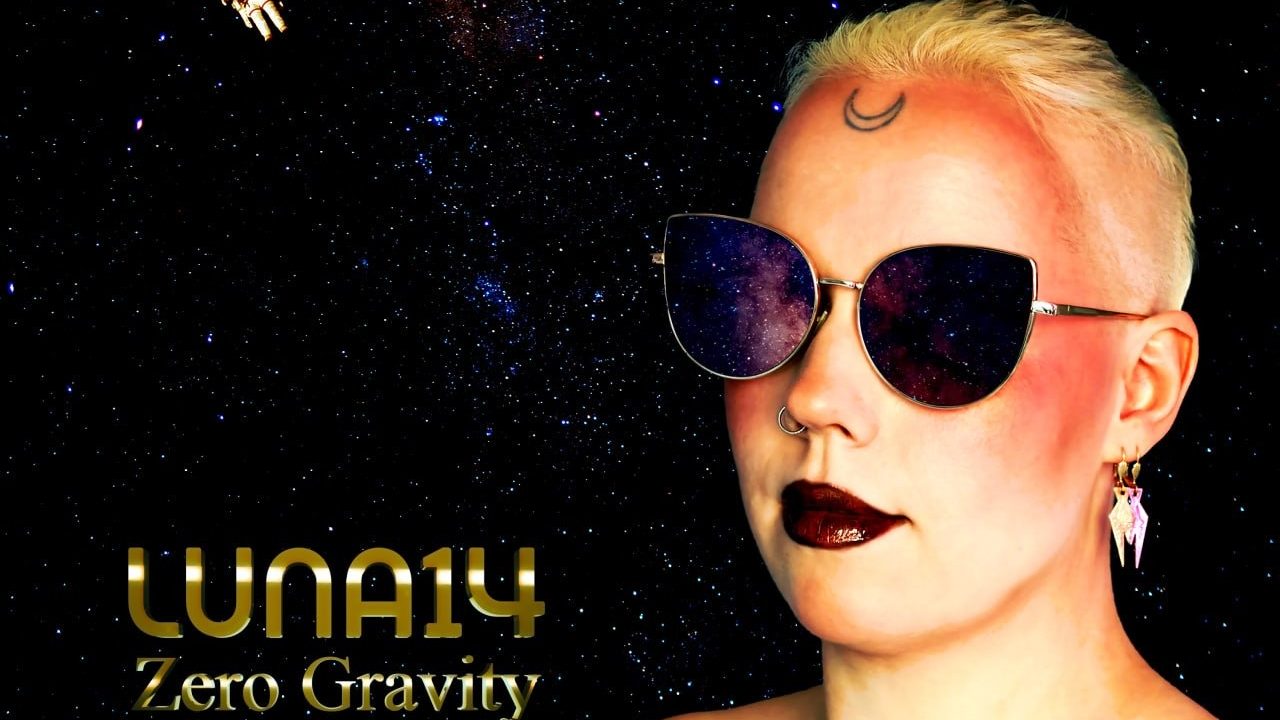
Hello everyone, it’s your host Oliver from DULAXI, and today I’m delighted to be joined by Lunafacious and Gasher, the Berlin-based creative duo behind LUNA14. Blending indie pop, alternative pop, and synth pop with female vocals and an experimental approach to production, the duo officially came together in July 2026. Their debut single, “Zero Gravity,” released on September 16, 2026, introduces a project built around creative freedom, unconventional ideas, and a strong belief in the value of human expression. Through its exploration of polyamory, non-hierarchical relationships, and resistance to increasingly formulaic commercial music, the single offers an introduction to LUNA14’s artistic identity and the ideas shaping its music.
Before we begin our conversation with Lunafacious and Gasher, here’s what you need to know about today’s featured project.
About LUNA14
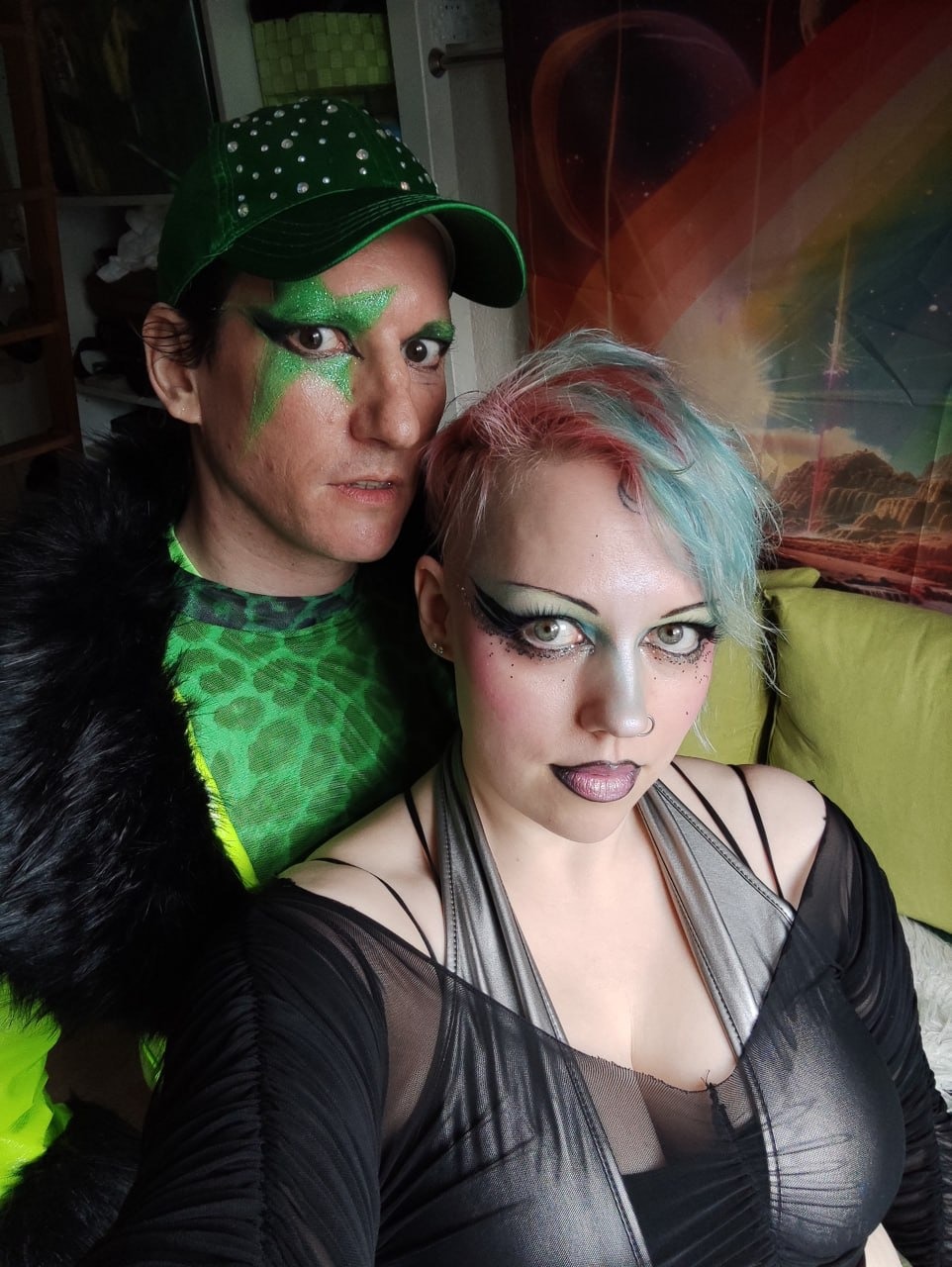
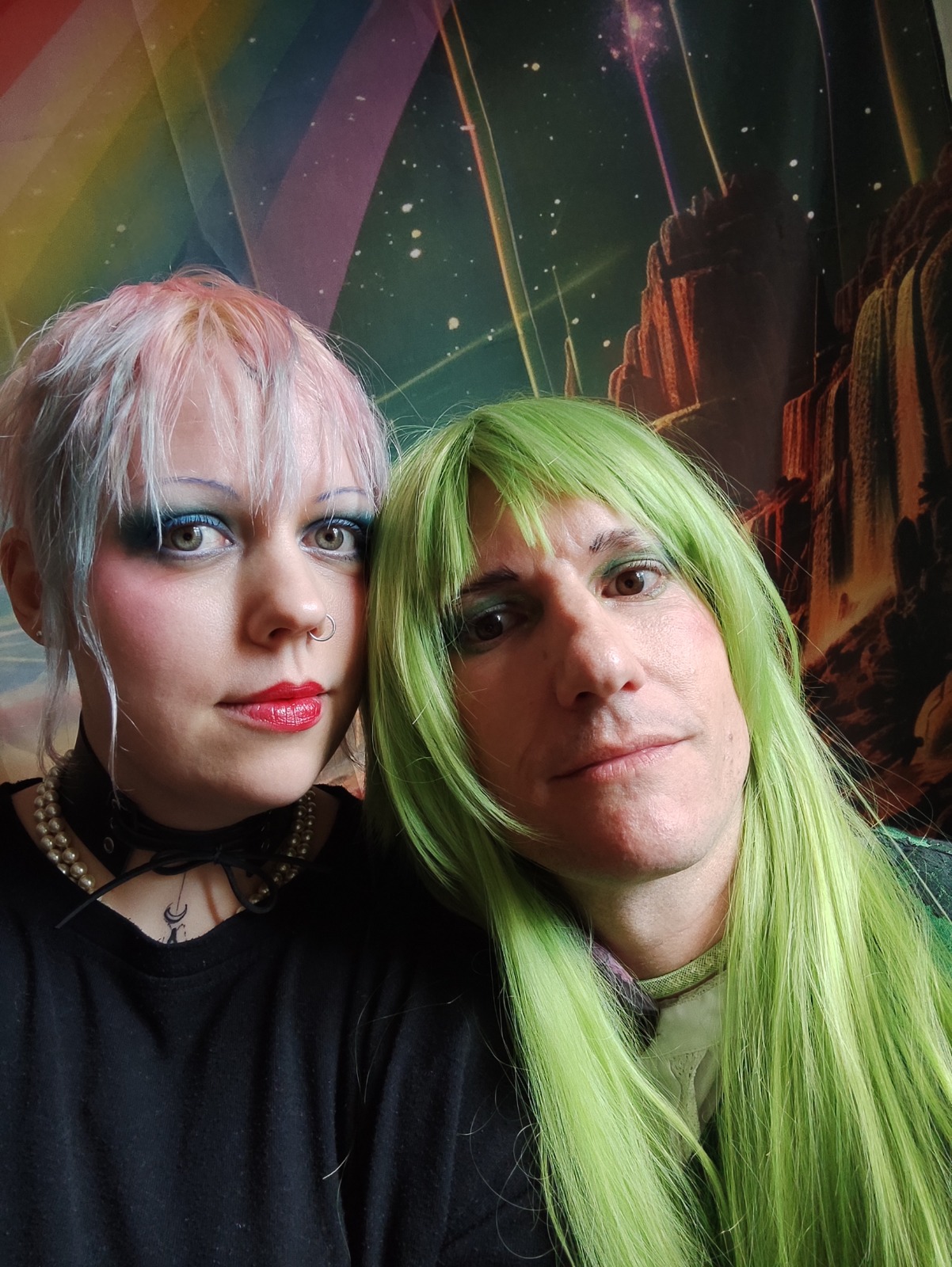
Founded in Berlin in July 2026, LUNA14 brings together two artists whose individual experiences and creative interests have developed along different paths. Before establishing the duo, Lunafacious worked on solo music, primarily ambient tracks, while also pursuing painting and nail art. Gasher, meanwhile, built a musical background as a guitarist and violinist in the former band Clash Clash Bang Bang. Their partnership grew out of an existing creative connection that extended beyond music into makeup, photography, music videos, and the practical exploration of music production. With LUNA14, these interests converge in a project that gives both artists room to experiment and exchange ideas.
The duo’s first single, “Zero Gravity,” began as an idea Lunafacious had carried for several years. Its lyrics explore polyamory and non-hierarchical relationships through the imagery of floating freely in space, offering a perspective on love that does not depend on traditional expectations of permanence, ownership, or hierarchy. The song reflects a personal understanding of emotional freedom while opening a conversation about the different ways people can experience connection. Its science-fiction imagery also draws inspiration from the elaborate alien themes and space-related references associated with Gasher’s former band, Clash Clash Bang Bang, a creative influence that helped shape the song’s original concept.
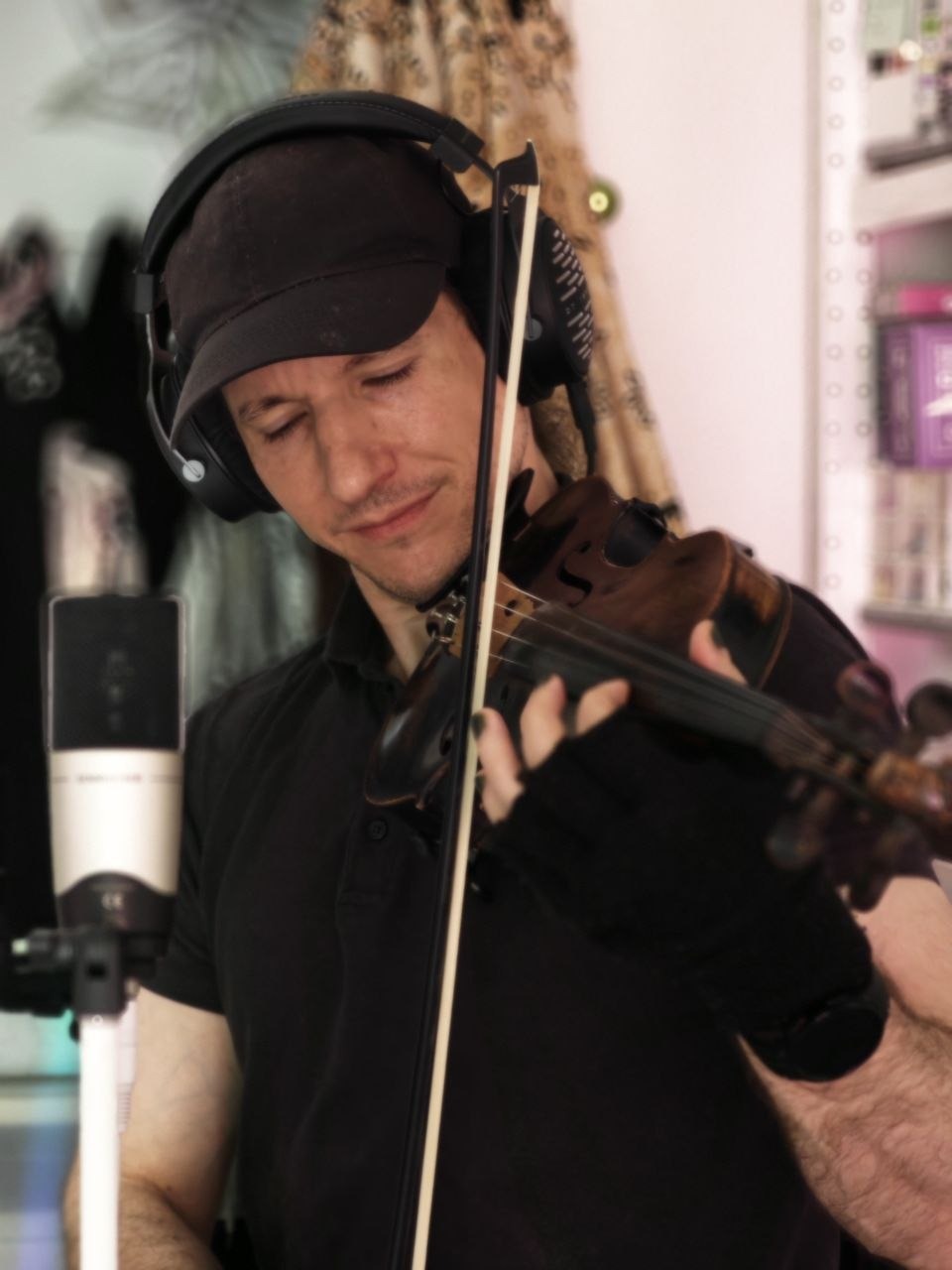
The production of “Zero Gravity” reflects LUNA14’s interest in detail, experimentation, and the possibilities of working beyond conventional structures. Inspired by the maximalist production associated with the late William Orbit, particularly his work on Madonna’s Ray of Light, the duo developed a richly layered arrangement from a relatively simple starting point. Lunafacious created the melody, after which Gasher added guitar chords and expanded the instrumental foundation by performing multiple guitar parts, violins, synthesizers, and drums using an old-school 24-track recorder. The recording process then became a collaborative exchange, with Lunafacious organising the material, making editorial decisions, incorporating reverb effects, and shaping the layers into a coherent arrangement.
At a broader level, LUNA14’s approach to “Zero Gravity” challenges the expectation that music must be perfectly polished, commercially streamlined, or shaped around predictable formulas to find an audience. The duo’s criticism of AI-generated music is rooted not simply in the use of technology, but in concerns about the economic and creative pressures that can encourage impersonal production. For Lunafacious and Gasher, imperfections, unexpected details, and the decisions made during the creative process are important parts of what makes music personal. Rather than rejecting technology outright, they emphasise the importance of retaining human intention and artistic independence.
Having explored the story behind LUNA14 and its debut single, it is time to hear directly from the artists about their creative partnership, the ideas behind “Zero Gravity,” and the principles guiding their work. So, without further ado, let’s begin today’s interview.
INTERVIEW SESSION
Oliver:
LUNA14 came together in Berlin in July 2026, bringing together two artists with different creative backgrounds. Lunafacious had previously explored solo ambient music, while Gasher had experience playing guitar and violin in Clash Clash Bang Bang. How did your individual paths first cross, and what was it about your respective creative personalities that made you feel there was something worth building together?
Lunafacious:
I was immediately intrigued by Gasher’s alien band and couldn’t help but get inspired. It took a while but eventually I convinced them to let me collaborate creatively – I started doing Gasher’s makeup, helped with photoshoots and eventually took part in creating three musicvideos with Clash Clash Bang Bang. At the same time it was Gasher who brought me into music making, provided me with my first pieces of music gear and taught me music production. So us making music together kinda is the consequence of our paths joining.
Gasher:
As for when our paths first crossed – that’s actually a funny story. In 2018, Lia Hell, the singer from my former band Clash Clash Bang Bang, wrote her first fantasy novel. Lunafacious and I were invited to her first public reading, and that’s where our paths crossed for the very first time.
Oliver:
Lunafacious, your creative interests extend beyond music into painting and nail art, while Gasher, your background has been more strongly rooted in musical performance and instrumentation. How do these different artistic interests influence the way you approach creativity, and do you find that working across different art forms changes how you express ideas through music?
Lunafacious:
It’s fascinating to me that all creative work feels parallel in a way. Visually, acousticly, sensually – it’s all about dynamics. You create a background, then start layering. Sometimes you subtract, sometimes you mix. I’m a visual thinker first, I prefer working in my DAW, seeing the track as a linear piece and visualizing sounds as events located on a timeline. I’m pretty sure that shapes the way I make music. It’s always coming from a visual perspective translated into another medium.
Oliver:
Before forming LUNA14, you had both developed individual creative identities and gained experience in different musical environments. Looking back at those experiences, what new creative possibilities has working as a duo opened up for you, and how has the partnership influenced the direction you want to take as artists?
Lunafacious:
Gasher is basically my band, or orchestra even. I wouldn’t be making pop music without him. But on top of that he’s obviously bringing his own creative input. Most of the time we have very similar musical inspiration but sometimes we don’t and it’s interesting for me to let go of expectations and see where our brains take us.
Gasher:
For me, the workflow is fun! We’re very good at — as the saying goes — tossing the ball back and forth; you know, when you’re doing something that involves tossing a ball back and forth.
Oliver:
Your first single, “Zero Gravity,” began with an idea Lunafacious had been carrying for several years before it eventually became a LUNA14 release. What initially inspired the concept, and how did an idea that had existed for so long finally find its way into a finished recording once the two of you started working together?
Lunafacious:
On my journey of finding out how to create music I made a couple of attempts to manifest this song, many of which included differing amounts of support from Gasher. Nothing came into fruition. This time it must have been convergence of many factors. Maybe I’ve learned enough and maybe I also needed to reach a point where I am able to open up towards external input.
Oliver:
The song explores polyamory and non-hierarchical relationships, challenging conventional ideas about love, commitment and emotional attachment. What initially drew you towards these subjects, and were there particular personal experiences, observations or beliefs that made you feel they were worth exploring through music?
Lunafacious:
I can’t really help but write from the perspective of my own internal world. And as my first fully realized song this one might make a lot of sense. It’s very personal and at the same time challenging societal norms, so that’s a very personal experience.
Gasher:
Lunafacious wrote the lyrics, but I can relate very much to them.
Oliver:
There is an interesting relationship between the song’s title and its subject matter. “Zero Gravity” suggests a world without the usual forces holding things down, while its lyrical concept explores relationships that do not follow traditional structures. How did you develop this connection between the imagery of space and your ideas about love, and how did you use that metaphor to shape the song’s storytelling?
Lunafacious:
I was very inspired by Gasher’s then-band Clash Clash Bang Bang. They had this elaborate alien motive with many references to space and other Science Fiction themes. Secretly I wrote this song for them.
Gasher:
I didn’t know!
Oliver:
The opening lines, “No strings attached, I am cut loose, no need to settle down, I am free to choose,” immediately establish a sense of independence and freedom. What personal beliefs or observations inspired this opening, and how important was it for you to establish the idea of personal choice before introducing the song’s wider perspective on relationships?
Lunafacious:
It’s just what I felt at the time. There had been a huge shift in my life, a complete uprooting and new beginning. Once the terrifying part was over I was able to embrace my new found freedom.
Oliver:
One particularly interesting image in the song is the idea of being a self-contained unit, orbiting another planet while deciding where and when to connect. It presents independence and emotional connection as things that can exist together without one person becoming responsible for the other’s identity. How do you understand this balance, and what does it reveal about the kind of relationships you wanted to explore through “Zero Gravity”?
Lunafacious:
Maybe finding this balance is part of my cosmic arc. I tend to have very symbiotic relationships, once I’ve committed. At the same time I can be very guarded and push away any connection that becomes too close for me. How do I keep my individuality while at the same time allowing someone in? How can I succumb to loving completely without losing myself? Well, this might be another song worth writing…
Oliver:
The repeated phrase “Relationship anarchy” becomes the central statement of the song, especially alongside the lines “No expectation, no hierarchy, love shining through a prism.” What does relationship anarchy mean to each of you beyond its definition, and why did you feel music was an interesting way to introduce or explore this relationship philosophy with a wider audience?
Lunafacious:
There’s a complete lack of representation, that’s why. People want to feel music and relate to music and listen to songs that help them process their own lived experiences. And anarchy as a concept is near and dear to me in most aspects of my life. It’s a lense I can use for organizing my workflows, my relationships and I have some ideas on a more communal level as well.
Gasher:
99% of pop songs are about heteronormative, monogamous, romantic love. Does anyone ask whether this was necessary, given the redundancy? Certainly not me! I believe music is emotional, and expressing emotions through music is therefore only logical — and if I feel a certain way, it is highly probable that someone else might resonate with that, too.
Oliver:
Towards the end, the lyrics introduce an interesting image of two people travelling through space together, with one describing themselves as “a satellite of love.” However, the invitation comes with an important distinction: sharing an experience does not necessarily mean promising permanence. What inspired this perspective on temporary connections, and do you believe a relationship can be meaningful and beautiful without having to last forever?
Lunafacious:
I absolutely believe that. I’ve always felt the Vergänglichkeit of everything. Nothing is forever. I never understood the mononormative tale of the One And Only til Death Do Us Part. People evolve, relationships change and ending isn’t a failure, it’s just a new chapter. Spending a part of your life is inherently meaningful.
Oliver:
There is an interesting contrast between the song’s playful space imagery and its deeper criticism of conventional relationship structures and expectations. Rather than presenting love as something that must involve ownership or permanent attachment, you describe it as something that can exist freely between independent individuals. Do you hope listeners will reconsider their own understanding of love after hearing “Zero Gravity,” or is the intention simply to celebrate the freedom to choose a different way of living and connecting?
Lunafacious:
I wrote it mainly as an expression of my feelings at the time and as a love song that’s not from the conventional heteronormative, mononormative perspective. It would be cool if it also inspired people to reflect on norms, though.
Oliver:
One of the most distinctive aspects of your creative identity is the decision to embrace maximalist production rather than keeping things minimal or commercially streamlined. The influence of producer William Orbit is also mentioned as an important reference point for “Zero Gravity.” What was it about his approach to production that attracted you, and how did you interpret that influence without losing your own identity as a new duo?
Lunafacious:
We listened to Madonna’s “Ray of Light” album that Orbit produced and really loved the plethora of details, ear candy, weird sounds, evolving sounds. I think that’s something on my internal vision board that we’ll keep striving for. Always add another detail, another instrument, don’t be afraid of a random sound. And then I’ll always go back in and subtract again – maybe that’s where my own personal aesthetic comes through.
Gasher:
For me, this is also a new way of working. In Clash Clash Bang Bang, every member had a fixed instrumental role, and beyond that, there was very little ear candy. With LUNA14, I can really go wild with the details and that makes listening to the finished tracks just as much fun as producing them in the first place.
Oliver:
Gasher, the recording process involved you building an entire instrumental arrangement yourself, moving between multiple guitar tracks, violins, synthesizers and drums using an old-school 24-track recorder. What was the thinking behind taking such an instrument-heavy approach, and how did you manage to give each layer its own purpose within the overall composition?
Gasher:
Over the years, I’ve accumulated not just instruments, but also skills. With Clash Clash Bang Bang I played “only” the violin and guitar – any more wasn’t possible, simply for my lack of extra limbs! With LUNA14, I’m able to incorporate the Hydrasynth and even do some drumming myself using the Roland HPD20. While I’ve often enjoyed programming synthesizers and rhythms on a computer, I really love playing these instruments especially since the Hydrasynth features polyphonic aftertouch, which adds an entirely new layer of expression.
Oliver:
Lunafacious, once Gasher presented you with the different instrumental recordings, you took responsibility for organising the material, making cuts, introducing reverb effects and developing the arrangement into a coherent musical narrative. How do you approach the editing and production stage, particularly when you are working with a large number of sounds and possibilities, and what helps you recognise when a track has reached the right balance?
Lunafacious:
Maybe due to not being a natural musician and rather a visual person I have to go step by step. One instrumental track after another, one beat after another. And then visualizing the timeline like a narrative arc. What’s the intro, what’s the development? What’s the backdrop, what’s in the foreground? Is this part too full, should that part have more details? I’m never afraid of cutting something out because I always feel that each element needs room to shine.
Oliver:
Working as a duo means bringing two creative perspectives into the same room, and those perspectives will not always align. How do you approach disagreements during the creative process, and how do you decide which ideas deserve to remain in the final composition, particularly when one person’s musical vision takes the song in a direction the other had not originally imagined?
Lunafacious:
I feel like I’ve made a lot of progress letting go and watching what evolves with Gasher’s input. None of the songs we’ve worked on so far came out anything close to what my first idea was. I love that. Because this project is about finding out what comes out when we both throw our ingredients into the cauldron. So it’s less about disagreements and more about finding out who has a clear vision for something and who is ready to follow. Usually this works rather organically.
Gasher:
It’s quite similar for me. I often start with an initial idea, and if that idea ends up having nothing to do with the final result, it usually means the result is better than the original idea.
Oliver:
Despite being created in a small living room, “Zero Gravity” contains numerous instrumental layers, detailed sound effects and a noticeable tempo change in its second half that almost makes it feel like another composition. What inspired this structural shift, and how important was the element of surprise in shaping the listener’s experience of the song?
Lunafacious:
This part just happened when I started singing the melody to myself. It was there from the beginning and it was one of the things I was sure of.
Gasher:
For a long time, I didn’t understand the tempo change at all. When everything came together I realized how refreshing I find it.
Oliver:
You have made it clear that neither of you is particularly interested in presenting music as a perfectly polished product at the expense of genuine human creativity. Lunafacious is not a formally trained singer, and you have deliberately embraced overprocessing imperfect vocal recordings as part of the fun of production. How do you distinguish between experimentation that adds character to a recording and production choices that might take away from the emotion or authenticity of a performance?
Lunafacious:
That’s something we’re still finding out, part of our creative journey. On the one hand I’m a very strict producer – I want to work with vocals that are crispy clean and ideally have many takes to choose from. On the other hand my lyrics tend to be personal and emotional and that should come through in the singing voice. At the moment we’re still experimenting with singing techniques and vocal processing and we’ll just see where this will take us.
Gasher:
I could record the violins over and over again because they don’t sound perfect, but at the same time, these are my violin tracks, I played them, that character is part of it. Perhaps they don’t even need to sound like the violins played by someone else.
Oliver:
Your statement that AI could never recreate what went into “Zero Gravity” connects directly with the track’s wider message against AI-generated music and the increasingly streamlined commercial music industry. Beyond the technology itself, what concerns you most about the direction of modern music production, and what do you believe could be lost if creativity becomes too dependent on automated processes and predictable formulas?
Lunafacious:
I don’t necessarily see technology as a threat to creativity. The only threat is oppression and currently the oppression is coming from late stage Capitalism. It’s not creative people relying too much on automation or machine learning. It’s exploitive people abusing these techniques.
Gasher:
AI-generated music triggers a process of reflection. If, while listening to a song, I find myself thinking that this could easily have been created via a prompt, then perhaps the song itself lacks a personal touch. We have grown increasingly accustomed to impersonal songs and I ask: Why is impersonal and perfect a good thing in accoustic art? This question arises because of AI-generated music, and it’s a valid question, so I am grateful for this.
Oliver:
As an independent duo, getting your music heard can be just as challenging as creating it. How do you approach finding an audience for your work, and what do you think independent artists need to do to remain visible without compromising their creative identity or allowing commercial expectations to dictate their artistic decisions?
Lunafacious:
Our approach is the same as with this whole project – we do what we want to do. If we feel like employing any platform to reach an audience, we do that. But we’re not in for the money, just l’art pour l’art. Of course it’d be cool to get some attention but that’s not something people have the means to achieve these days.
Gasher:
I create LUNA14 music the way I want to. In the past, I used to worry more about marketing and being agreeable. I have no desire to cater to the capitalist music industry.
Oliver:
Your commitment to creating visuals for your music also suggests that LUNA14 sees its artistic identity as something that extends beyond the recording itself. The “Zero Gravity” artwork began with Lunafacious sketching and conceptualising the cover before Gasher modelled for the photograph, digitally created the satellite, and Lunafacious brought the final elements together. What was the creative thinking behind this visual concept, and how do you decide how the imagery should communicate the same ideas as the music?
Lunafacious:
Our creative process is rooted in two conditions: lack of money and wild imagination. So when we came up with the concept it had to be executable without needing funds exceeding the cost of a new pair of sunglasses. And the idea was basically a relaxing vacation in space because that’s what the mood of the song feels like.
Gasher:
I had already developed this collage-like workflow combining photos or videos with worlds created in the open-source program Blender and for me, it offers the greatest possible creative freedom.
Oliver:
Both of you have worked with creative tools and techniques that allow room for experimentation, but your process also involves working within the limitations of a small living room and making the most of the equipment available to you. How important are limitations to your creativity, and do you sometimes find that working without an elaborate studio setup encourages more interesting ideas than having unlimited resources?
Lunafacious:
I’m pretty positive we’d be very creative if we had unlimited resources. But we’ll never know. Anyway limitations might be more something that guides creativity. There can’t be a finished product without the limiting idea of a final version. There won’t be a song without the limits of sujet and language. I love limitations and we’re good at finding work-arounds. But I wouldn’t mind if someone proposed to throw money at us.
Gasher:
We have financial limits and time limits that I wouldn’t mind seeing removed. That said, every tool comes with its own inherent limitations, and these limitations necessitate making choices and choices are part of the creative process.
Oliver:
“Zero Gravity” introduces LUNA14 as a new project, but it also brings together years of individual experience, previously developed ideas and a shared interest in artistic independence. What would you like listeners to recognise about your identity after hearing this first release, and what kind of relationship do you hope to establish with people who connect with your music and creative philosophy?
Lunafacious:
We are humans and we love music and it would be awesome to connect to other humans who love music. We love music production, details, little surprises. Maybe there’s a little ADHD brain that feels attracted to a tempo change or a weird synth in the background. Maybe people feel comforted by the little imperfections because they are an antidote to AI pollution.
Gasher:
LUNA14 is an invitation to engage more deeply with music, an invitation to perceive different layers, an invitation to listen to music at high volume given the presence of dynamic contrasts and an invitation to reflect on one’s own indifferent attitude toward music.
Oliver:
You have already mentioned that you are working on your next recording, which means the creative process behind LUNA14 is continuing beyond this debut single. Having established your sound through such a detailed and experimental first release, where would you like to take the project next? Are there new musical styles, production techniques, visual ideas or creative subjects that you are particularly interested in exploring together?
Gasher:
We are currently working on three additional songs, each at a different stage, ranging from “nearly finished” to “concepts of a plan” and we will shoot a music video for “Zero Gravity,” while also getting lost in FM synthesis.
Lunafacious:
We keep getting inspired, we can’t help it. I’ll be into Fleetwood Mac one week, Frutiger Aero next. And Gasher will be playing around with a new Synth or effects pedal. Or we’ll listen to a podcast about Max Martin or something and go, “Oh, that’s a cool approach!”. There’s always something new to explore and we can do that with each new song.
“LUNA14 reminds us that music does not have to be flawless to be meaningful. In ‘Zero Gravity,’ the unexpected details, personal convictions, and freedom to experiment become part of a wider statement about what happens when artists choose expression over formulas.”
~ Oliver (DULAXI Team)
EDITORIAL PERSPECTIVE
“Zero Gravity” introduces LUNA14 through a meeting of contrasting artistic strengths, with Gasher’s instrumental performances providing an expansive foundation for Lunafacious’s visual approach to arrangement and production. The song’s shifting tempo and dense layers reflect a willingness to leave familiar structures behind, while its exploration of relationship anarchy brings a personal subject into a musical space where it is rarely addressed. Their discussion of AI and commercial pressures adds another dimension to the release, revealing a duo more interested in protecting creative independence than following established expectations.
~ Oliver (DULAXI Team)
CLOSING
A sincere thank you to Lunafacious and Gasher for joining DULAXI and sharing the stories, ideas, and creative decisions behind LUNA14’s debut single, “Zero Gravity.” Their conversation offers a closer look at the experiences that brought them together, the personal beliefs informing their songwriting, and the collaborative process that allows their different strengths to shape a shared musical identity.
For readers who have not yet experienced the release, “Zero Gravity” offers an opportunity to discover LUNA14’s layered production, unconventional approach to songwriting, and celebration of creative freedom. It is also an invitation to listen more closely, notice the details, and consider the value of the human decisions that shape the music we hear.
With three additional songs in development and a music video planned for the debut single, there is more to look forward to from the Berlin-based duo. We encourage readers to follow their work and stay connected with the ideas and experiments that will shape their next releases.
Thank you for spending time with DULAXI. This has been Oliver, and we look forward to bringing you more conversations with artists whose music, experiences, and creative perspectives deserve to be heard.