
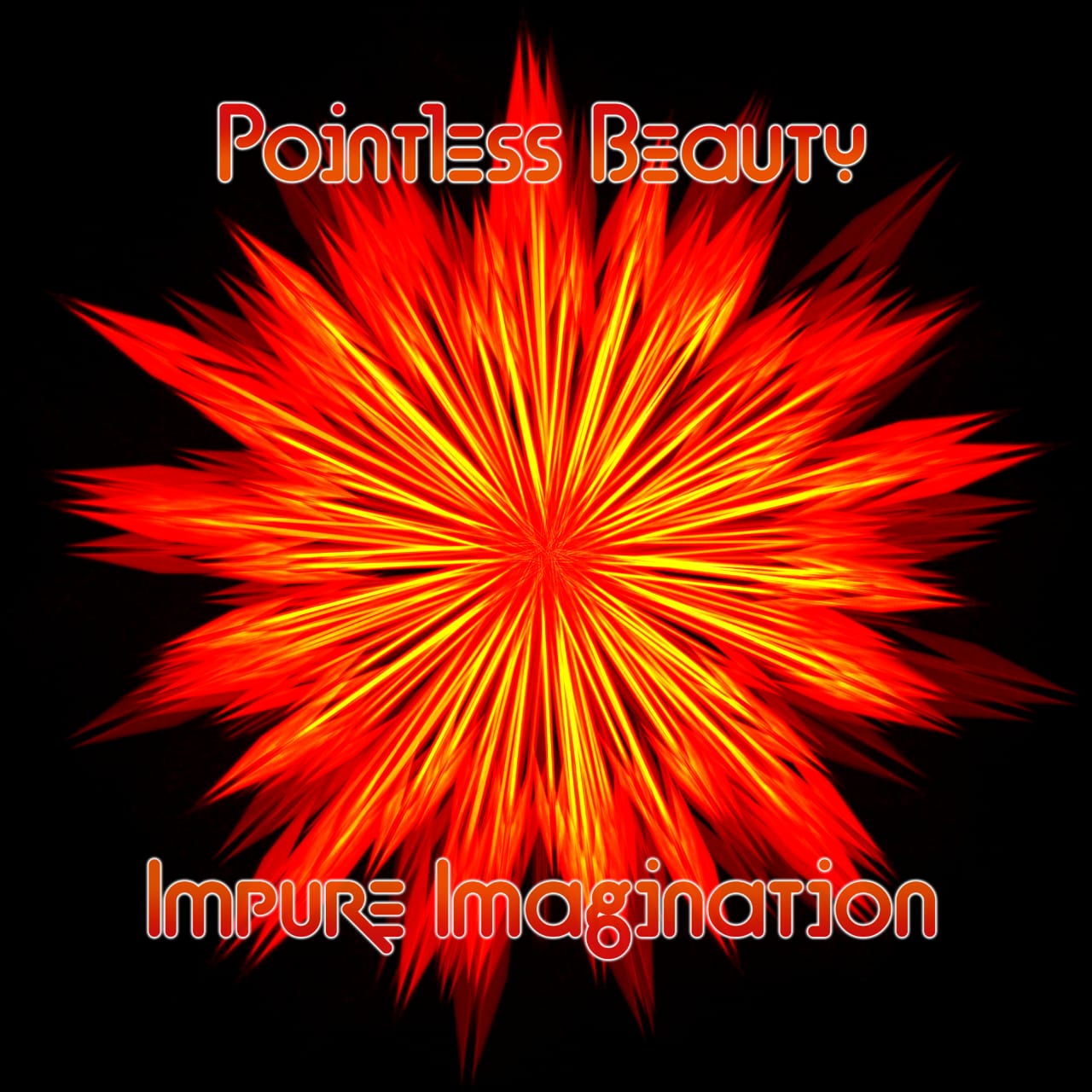
Hello everyone, it’s your host Oliver from DULAXI, and today I’m delighted to be joined by Bristol-based bassist, composer, producer and multi-instrumentalist Al Swainger, the creative force behind the long-running musical project Pointless Beauty. Working across jazz, progressive music, art rock, ambient sound design and electronic experimentation, Al has developed an individual approach to composition that embraces improvisation, collective interaction and the freedom to move beyond established musical boundaries. Today, we’re exploring Impure Imagination, the latest Pointless Beauty album, released on September 18, 2026.
Before we begin our conversation with Al Swainger, here’s what you need to know about today’s featured project.
About Al SWAINGER’S POINTLESS BEAUTY
Pointless Beauty provides a creative space for Al Swainger to bring together his diverse musical interests, drawing on decades of experience as a performer and composer. His relationship with music began in childhood, initially through classical instruments and ensembles before expanding into jazz, pop, rock and experimental forms. Over the years, his work has developed through different instrumental roles, including bass, synthesizers, guitar and piano, allowing him to approach composition from several perspectives. Influences such as Miles Davis, Chick Corea, Prince and David Bowie reflect his appreciation for artists who have maintained distinctive identities while continually exploring new creative directions.
Impure Imagination is the third full-band Pointless Beauty album, continuing an artistic exploration that began with earlier releases and has gradually developed into a more defined creative philosophy. Rather than treating genre as a boundary, Al brings together progressive jazz, electronic production, ambient textures, pop structures, art rock and free improvisation. The album explores identity, agency, belonging and the influence of invisible systems on everyday life, particularly the increasingly complicated relationship between human expression and automated processes. Its title reflects a playful challenge to the expectation that imagination should conform to established categories or accepted ways of thinking.
The album’s development involved a combination of independently created material, collaborative performances and extensive production. Several compositions began as shorter pieces shared with Al’s Bandcamp subscribers before being expanded and brought together into a larger collection. The core quintet recordings took place over three days at Yellow Shark Studios, Cheltenham, with Al, drummer Jon Clark, pianist and Rhodes player George Cooper, guitarist Mike Outram, and trumpeter and flugelhorn player Gary Alesbrook working together without prior rehearsal. Additional material was recorded and developed separately, while the subsequent editing and production process allowed Al to shape the performances into their final arrangements. He also incorporated generated voices into two compositions, using spoken-word texts he had written himself to explore questions surrounding identity, technology and agency.
Beyond the individual compositions, Impure Imagination reflects Al’s interest in how musicians interact, share responsibility and create opportunities for one another. His approach to Pointless Beauty challenges conventional musical hierarchies, encouraging an environment where leadership and support can move between players according to what each composition requires. Alongside his work with the ensemble, Al remains responsible for the album’s compositions, arrangements, production, editing, original photography, artwork and sleeve design, with mixing and mastering completed by Alex Killpartrick. Through this combination of musical experimentation and thoughtful creative direction, the album continues to develop the project’s distinctive identity while leaving room for further exploration.
Having this brief introduction to today’s featured project, I’m sure both new listeners and longtime followers of Pointless Beauty are interested in hearing directly from Al about the ideas, experiences and creative decisions behind Impure Imagination. So, without further ado, let’s begin today’s interview.
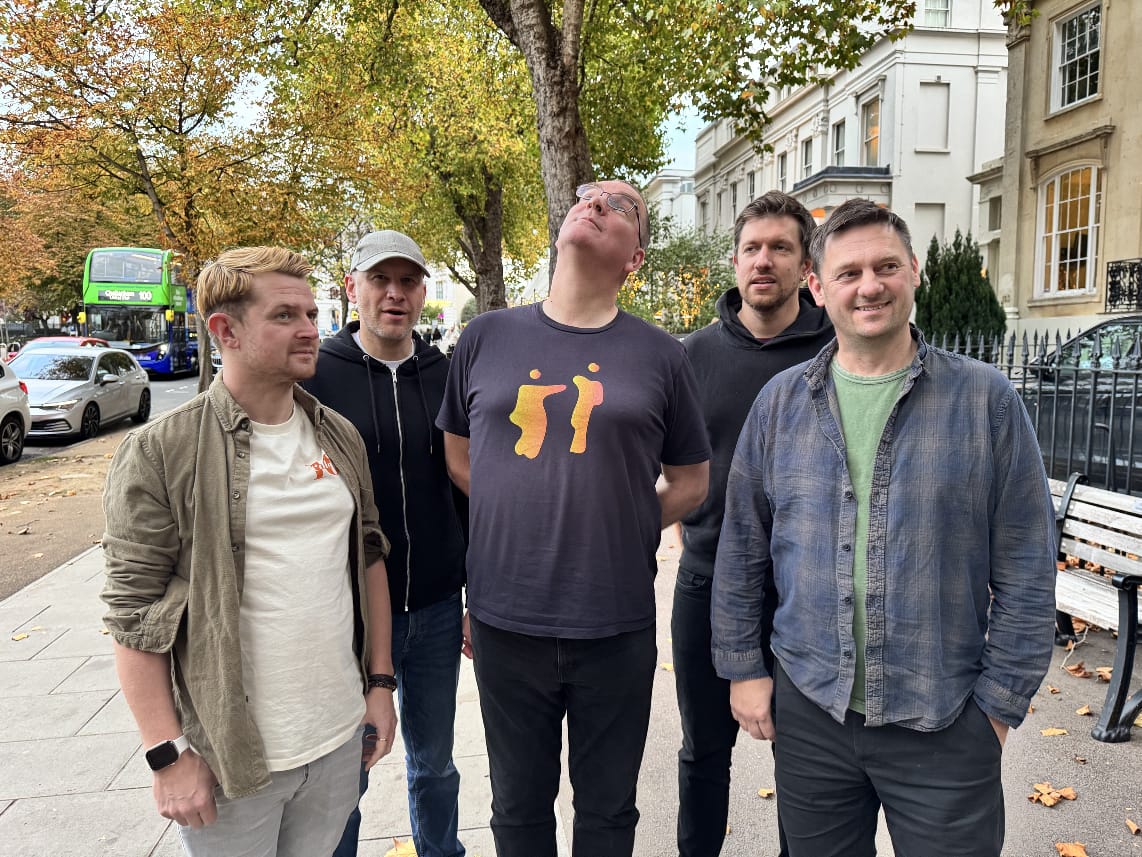
INTERVIEW SESSION
Oliver:
Al, you have developed Pointless Beauty over a long period while working across composition, performance, production, and several different instruments. Looking back at the experiences that brought you to this point, what initially drew you towards making music, and how has your relationship with it changed as your life and creative priorities have evolved?
Al Swainger:
I think I first got interested in music because I saw other people having fun making it and wanted to join in. I started on cornet and piano at about six, then played tenor horn and keyboard in a primary school musical before moving longer term to French horn at eleven. I enjoyed having a purpose while also being a little separate from everything else.
Although I initially played in mainly classical ensembles, when I saw the county big band, I knew this was music I really wanted to play. There weren’t any French horn parts, but my teacher showed me how to transpose the trumpet and trombone parts, and I learned to do it at sight.
I also joined the high-school pop group where we often swapped instruments, as several of us were multi-instrumentalists. I started on keyboard, taught myself bass and electric guitar, and even sang occasionally. We played everything from On Green Dolphin Street to Stairway to Heaven. It never occurred to us that genre should keep those choices apart.
I took up double bass in my early twenties to play more traditional acoustic jazz, and my interests have become increasingly experimental. But my relationship with music hasn’t fundamentally changed. Pointless Beauty gives me somewhere to bring that expanding circle of interests together and see what happens when people make music.
Oliver:
You describe belonging as something that can emerge through curiosity, shared uncertainty, and accepting that things do not always need to fit established expectations. Where do you think this understanding of belonging comes from in your own life, and how has it influenced the way you approach both your creative work and your relationships with other musicians?
Al Swainger:
I’ve worked in so many ensembles, with countless numbers of people, over nearly 50 years now. It’s been a long road of both being a regular member of groups and doing one-off pick-up gigs.
Despite all the differences, I’ve noticed there’s often a similar process. You want to be involved and get the opportunity, then there’s that uneasy moment before you play anything together, wondering whether it’s going to work. You engage in what appears to be required, the players relax when it becomes apparent that it’s working, and then you move beyond the functional into exploration.
There’s a process of ongoing trust being built that gradually extends from the musical into the social. I think that’s where the sense of belonging really comes from for me.
Knowing when to take risks and when to back off. Knowing how, and when, to lead or support. The greatest musical experiences are when there’s genuine shared awareness and trust to allow spontaneous decisions to flourish.
There’s a particular joy in that, whether the ideas work or not. They’re epic when they do, but even the attempt has merit in the right hands.
With my own music, I’m always trying to create the conditions where that kind of exploration can happen. I want each piece to be a different sort of invitation to the musicians, so we don’t just fall into the same roles and reinforce the same hierarchies and power dynamics every time.
Oliver:
Pointless Beauty moves between musical languages rather than settling into one recognisable genre. With influences ranging from Miles Davis and Chick Corea to Prince and David Bowie, what have you taken from these artists beyond their musical techniques, and how have their different approaches to creative freedom shaped your own artistic identity?
Al Swainger:
For me, all these artists share a core quality: they have instantly recognisable personas despite being chameleons. Say any one of their names individually and you get strong associations with what you think makes them unique.
When you start getting into the nuances of their recorded output, though, there’s an enormous amount of variety to take on board. They all worked with multiple line-ups, shifted their compositional and production philosophies multiple times, and composed music that could be instantly accessible or extremely challenging.
How magical that they can be so fluid and yet coherent, so various and yet individual, so contradictory and yet consistent.
Those are the qualities I aspire to. I’m not trying to be any of them, but looking back, I think that’s what has motivated and inspired me about their work.
Oliver:
You have described the spaces between existing musical ideas as an important reason for creating something new. What does artistic exploration mean to you in practical terms, and how do you recognise when a musical idea is taking you somewhere genuinely unfamiliar rather than simply combining influences you already know?
Al Swainger:
I’m not sure anything we make can be completely unfamiliar. How could you choose to do something you have no awareness of? What I can do is work with things I’m less familiar with, or create conditions where something happens that I couldn’t have planned.
This Paper House developed through repeated solo piano improvisation and refinement. I was playing with my impression of what Erik Satie’s music feels like, particularly how he makes the piano carry the whole arrangement, and wondering what might happen if it were a little more jazzy and chromatic. I didn’t reference his actual compositions because that wasn’t really the point. I kept pushing notes into places that initially seemed uncomfortable, then allowing repetition to change how they felt.
Fractured Grace was almost the opposite: a one-shot solo bass improvisation where the system I’d set up mattered more than the notes. After playing a single note, I used a MIDI controller to manipulate a collection of effects pedals, creating drones, delays, distortion and pitch-shifted harmonies. It reminded me of a pipe organ playing counterpoint, like Bach or something — again, a shadow impression rather than a reference to particular music.
I love creating conditions where I can surprise myself and respond to what happens in the moment. It’s really exhilarating, whether the starting point is familiar or something I’ve never tried before.
Oliver:
Impure Imagination is the third full-band album under the Pointless Beauty name and represents a particularly personal and socially aware statement. What made this the right moment to bring these ideas together into an album, and what did you feel you needed to express here that perhaps had not been fully explored in your previous work?
Al Swainger:
I don’t think I started with a particular statement I felt I needed to make. For me, the creative process involves following curiosity, curating ideas that seem to belong together and then reflecting on what meaning I might attribute to the work or find within it.
I’m constantly trying to negotiate how I feel about the world, how I interact with it and the systems that govern it. That’s an ongoing process, and I think it inevitably finds its way into the work I make.
The relationship between humans and machines has long been part of what I’m exploring, but the recent explosion of AI has made questions of agency and identity much more acute, and the debates around them increasingly polarised. When something is presented as a binary choice, I’m naturally drawn to exploring the space in between. That’s something I’m exploring conceptually in Impure Imagination and, hopefully, demonstrating through the music itself.
So I don’t think of this album as a sudden change of direction. It’s more a continuation of an ongoing exploration that occasionally produces moments of clarity. I’d like to think I’m gradually becoming more articulate as an artist, if not necessarily better at explaining it in words. The work itself is the articulation, and my internal reflection is the gradual gravitational pull towards clarity.
Oliver:
The title Impure Imagination challenges the idea that creativity should be cleanly defined or restricted by established stylistic boundaries. What does the word “impure” represent in this context, and how does the title reflect your wider attitude towards experimentation, artistic identity, and the freedom to create without seeking easy classification?
Al Swainger:
It digs deeper into that idea of polarisation. In all areas of life, we see a drive towards tribalism. We believe ‘this’ idea or ‘that’ idea and it’s really hard to change people’s minds once they’ve dug themselves into a bunker like that. People can get so hooked on being right that the possibility there might be more to an idea or belief than they’ve allowed for takes a distant second place to ego and defensiveness.
The idea of having an ‘impure’ imagination is kind of satirical. An imagination should be free to go wherever it wants. It might be employed to comfort or to challenge, but the idea that we should use it to conform is the antithesis of a healthy mind from my perspective.
How we choose to act or interact should, of course, be measured by an awareness of consequence, but the consideration of possibility should not.
Musically, Impure Imagination is a practical demonstration of this. I consider myself a jazz musician because improvisation is at the heart of my approach, but I also find myself in a lot of conversations where I’m having to battle against this idea of ‘getting jazz wrong’, because what I’m doing isn’t readily identifiable as mimicking something that’s already achieved mainstream acceptance.
I’m not choosing to defy genres. I’m just letting my imagination go where it feels it needs to go and embracing whichever ideas help fulfil that.
Oliver:
Throughout the album, you examine invisible systems that influence people’s lives, particularly questions surrounding identity, agency, expression, and the growing presence of automated processes. When did these concerns become such an important part of your thinking, and what experiences or observations made you want to explore them through music?
Al Swainger:
As a bass player it’s noticeable that the degree of agency you have relative to other musicians can be pretty limited. The job is chiefly to support. Jazz is more open, but even there it’s built into the language: horn players ‘take’ solos, while rhythm section players are ‘given’ them.
The inequity isn’t always obvious until you step outside your usual role. A horn player generally gets to improvise with the support of a rhythm section, but when a bassist takes the lead, the harmonic and rhythmic foundation they normally provide isn’t automatically taken over by anyone else. So it’s harder to be as articulate, and you get fewer opportunities to develop that voice in the first place. Being given a solo isn’t necessarily the same as being given the conditions to really explore what you can do with it.
I don’t think this generally comes from people deliberately trying to exclude anyone. It’s simply what everyone has learned to expect. Noticing these ‘invisible norms’ in music has made me much more aware of them elsewhere. Social media is one example: we adjust how we express ourselves to fit what platforms appear to reward, whether or not we’ve correctly understood how the system works. We risk exclusion if we fail, or are unable, to conform.
With Pointless Beauty, I’m motivated to rebuild the system. That means considering how the responsibilities of leading and supporting can move between musicians, and what needs to change around someone to make that possible. It’s not about turning the hierarchy upside down so my voice becomes the most prominent, or making everyone equally prominent all the time. It’s about creating conditions where everyone can feel heard and represented.
Oliver:
Your album statement raises an important question about what happens when society prioritises speed, repeatability, and instant recognition over patience, imperfection, and surprise. How do you personally navigate those competing values as a contemporary musician, especially when the creative process often requires time, uncertainty, and decisions that cannot be easily measured?
Al Swainger:
It’s tricky. The truth is I blunder along and decide what to do on a whim most of the time. My time management is wildly inconsistent. I can struggle to find any motivation to begin something and, at other times, become so absorbed in what I’m doing that days and weeks disappear. Tasks other people might automate or barely think about can become half a day’s work for me. I tend to think deeply about whatever I’m asked and reconsider my position each time.
Of course, I still have to decide what pays the bills and make time for that. I need money to fund the next piece of work, but the work is the focus, not accumulating wealth. So much of its value comes from exploring processes, developing awareness and craft, and allowing things time to unfold.
I’m not against efficiency or automation. If something is genuinely repetitive, I’m happy to find a shortcut. What concerns me is applying that thinking where judgement and aesthetic choices are fundamental. If you don’t understand what a shortcut bypasses, you may not know what to ask for, or recognise whether the result is any good.
Online, the pressure to attract attention and monetise things encourages ever greater output in smaller fragments, but more output doesn’t necessarily mean more variety. The current trend for ‘clipping’ risks stripping moments of the context that gave them meaning. I worry we’re being encouraged to behave as though people can’t engage with anything that isn’t immediately understandable.
I think some of the appeal used to market generative AI is the promise of eliminating time and effort. But for many creatives, the time spent making something isn’t an inconvenience. It’s the reason to do it. At the same time, I’m fascinated by technology when it offers possibilities I couldn’t easily achieve by other means, particularly when the results surprise me.
Oliver:
Several compositions began as shorter pieces created for your Bandcamp subscribers before developing into larger works. What is it about that smaller, more direct starting point that makes it creatively useful, and how do you decide when an initial idea has enough potential to become something more substantial?
Al Swainger:
The Bandcamp subscription was something I had to navigate conceptually first. I wanted to give people a way to support what I’m doing financially, but didn’t want my creativity to become a production line just to fulfil a subscription commitment. At the same time, people need to feel they’re getting something worthwhile.
I’m pretty much doing what I’ve always done, but the subscription motivates me to ‘show up’ and share more of the process. The initial pieces just need to interest me enough to want to spend time with them. They don’t have to be long or developed to album standard but they do need to make sense on their own terms. It’s more of a process diary, I guess. I’ve published around 500 minutes of music for subscribers now, with plenty more in my archives.
As I make things, I put them into playlists and gradually curate ideas that seem to belong together. Sometimes I combine them into longer tracks or reimagine them. I don’t really decide that something has ‘enough potential’. The ideas tend to decide for themselves when I find myself wanting to return to them and keep listening.
I also like bringing together ideas from different periods. The consistent thread is me, but my interests shift over time, and those differences can complement each other.
On Borrowed Dreams is a good example. The first section had been bugging me for about fifteen years without finding a home. The second was two or three years old, and I liked it but didn’t feel there was enough there on its own. Putting them together made the second a payoff to the first. Both ideas seem stronger now, with a narrative neither had separately.

Oliver:
One of the album’s most unusual creative elements is the use of generated voices on two tracks, with spoken-word texts written by you and the resulting voices directed, edited, and musically placed within the compositions. What attracted you to using this technology as an artistic device, and how did you approach giving those generated voices a meaningful role without losing the human perspective at the centre of the album?
Al Swainger:
Initially it was just playing with a new toy! I’d never tried voice generation, so I wrote some text to mess about with it. For I Wish (Upon a Disused Star), I imagined a character openly admitting it wasn’t human while trying to persuade the listener to feel sorry for it.
I’d previously worked with recordings of spoken word in collaborations, cutting them up and composing music around them. The difference this time was that the technology prompted me to write the words myself. I doubt I’d have written something for a human performer just to see what happened.
I edited the speech to control its phrasing and emphasis, introducing repetitions, stutters and effects that helped shape the character’s vulnerability.
What began as gentle satire gradually became more about losing agency: having decisions made about you, or being told who you are, without being part of the conversation. Choosing a female voice emphasised how women can be foregrounded or fetishised without necessarily having greater agency. It was important for the voice to stay artificial. That sense of dehumanisation helped me recognise that I’m also that character, as we all are to some degree. Her concerns are mine, although I’m not claiming to represent anyone else’s particular experience.
On Borrowed Dreams took another path. It began as a concern about AI borrowing and regurgitating human ideas, but developed into a reflection on how we all stand on the shoulders of giants, drawing on others to create something new. I replaced the more obviously inhuman voices with a mixture of genders and accents to broaden that meaning.
In an ideal world I’d have liked real people to perform those parts, but the additional organisation, expense and effort didn’t feel justified for voices that complemented the music rather than being its focus in that instance.
Oliver:
The core quintet sessions for Impure Imagination took place over three days at Yellow Shark Studios without prior rehearsal, with generally only two or three takes. Other material was also recorded and developed separately before being brought into the album’s wider production. What did working under these conditions reveal about the musicians’ instincts and collective understanding, and how did you balance preserving the spontaneity of the ensemble performances with the precision required during the longer editing and production process?
Al Swainger:
I pretty much regard studio time as producing source material. In an ideal world everyone nails everything just the way I like it and I don’t need to touch anything afterwards! I want to pay musicians as fairly as I can, which limits rehearsal time. I prepare demos and charts, but the first time we all play together is usually in the studio.
I like putting the pieces in front of the musicians, letting everyone play and seeing what happens. Sometimes they interpret something differently, and that’s an opportunity to explore together. There’s a difference between having a fixed idea of exactly what everyone should play and knowing what you want the music to communicate emotionally. If something doesn’t feel right, I’ll suggest trying something else.
We’ll generally do two or three takes. After that I find there’s a danger everyone starts thinking too much and the playing becomes more intellectual than emotional. But expecting five musicians to play unfamiliar music perfectly straight away, especially when there’s a lot of improvisation involved, isn’t particularly realistic either!
So I’ve embraced editing as part of composition. I think of it like sculpture: I’ve got all this material and can carve away at it, combining performances and gradually revealing the version that works best for me. All those performances actually happened, just not necessarily in one spontaneous outburst of mutual brilliance.
There’s sometimes a slightly macho attitude in jazz that an unedited take is somehow more authentic. I don’t subscribe to that. A recording is something people can revisit and pay attention to every detail, whereas live performance is about what we achieve together in the moment. Even attempting something can have value.
If I could afford more rehearsal and development time, I’d probably take it. It would produce very different music. But I’m not disappointed by how I work now. It’s just a different approach.
Oliver:
You describe Pointless Beauty as a project where leadership and support can shift between musicians rather than being determined by a fixed hierarchy. How do you create an environment in which players can contribute freely while still maintaining a clear musical direction, particularly when the compositions move between tightly structured passages, groove-led sections, and open improvisation?
Al Swainger:
I think a lot of it comes down to how much information I give people, and what I choose to leave open. The compositions might begin as elaborate electronic sketches, but preparing them for musicians means deciding what’s important to retain and what I can take away. By the time we get into the studio, the people are the most important part. There’s not much point inviting musicians to contribute if I’ve already filled all the space!
The parts establish different levels of structure and freedom. If there’s something specific I want, I’ll write it out. For rhythmically structured passages I might provide the harmonic information but leave players free to interpret it. Open sections might have a few words about how I imagine the music developing, or occasionally just ‘use your ears and respond’.
Once we’ve played something, we can listen, discuss and decide whether to keep it or try something else. I have a sense of what I want to communicate emotionally, so if something doesn’t feel right I’ll suggest another approach.
Part of making sure the support for soloists is equitable is recognising that flugelhorn, guitar and keys generally have the familiar foundation of bass and drums. The same isn’t automatically true when bass or drums take the lead. That’s where I can use technology to anticipate what the other musicians might not naturally provide. I’m very happy to lay down synth bass or pads if it frees me up to go somewhere else, or create a harmonic or rhythmic foundation for Jon to interact with rather than leaving him playing in a vacuum.
Ultimately, they’re my compositions and I’m responsible for the direction, but I want the arrangements to open up possibilities for expression that might otherwise be limited.
Oliver:
Your role on the album extends beyond bass performance to synthesizers, guitar, piano, composition, arrangements, editing, production, photography, artwork, and sleeve design. What motivates you to remain involved in so many aspects of a release, and how does having control over its visual presentation and final production help you communicate the same artistic identity across the entire project?
Al Swainger:
I think it’s curiosity mixed with practical necessity. I’ve accumulated musical ideas, photographs and other visual material for years, so when an album comes along there’s plenty to curate and develop.
I tend to get deeply involved in whatever has my attention. Arranging and editing led me into production and mixing, and one thing leads to another. I enjoy understanding how things work and developing the skills to achieve what I’m after.
That doesn’t mean I want to do everything myself. Other people can do things much better than I can, which is why I work with musicians and don’t mix or master the full-band albums myself. There’s a financial reality too: I simply couldn’t afford to pay others for much of what I do. I’d actually like to collaborate more, but finding people with the right skills, initiative and compatible artistic sensibility isn’t always easy.
I have firm opinions about what works for me, but I might not have an opinion until there’s something to respond to. I’m open to other people’s ideas, but that can create tension when we feel strongly about different things, and it’s not always possible to find a compromise that satisfies everyone.
This is part of why I make a point of paying those I work with on Pointless Beauty, both to value their contributions and to make my responsibility for the finished work clear. I want genuine creative freedom and trust between us, but ultimately I have to decide what belongs in the final result.
As for artistic identity, I don’t consciously impose consistency. The visual material has its own history, just as the music does. I enjoy finding relationships between things and discovering how they might transform one another. I guess the common thread is simply ‘me’, making choices and building narratives that help everything make sense.
Oliver:
The album features Jon Clark, George Cooper, Mike Outram, and Gary Alesbrook, each bringing a different instrumental background and creative perspective to the compositions. How do you approach writing and arranging music around their individual strengths, and what have you discovered through hearing them interpret and develop the ideas you bring into the studio?
Al Swainger:
The consistent thing about all four is that they’re versatile, open and imaginative. I have an overview of what I’d like to hear, but they realise it with more nuance and understanding than I could prescribe. If I’m unclear, they’ll ask questions and experiment rather than needing to be cajoled. They’re fabulous soloists, but none needs to be the soloist all the time, and I never feel I’m battling anyone’s ego.
It’s a two-way process. I’ve chosen these players for their strengths, and I compose towards those strengths to feature what they do best. The music is shaped by the people I want to play it.
Jon has the twin gifts of free improvisation and Cuban music. He’s incredibly sensitive to texture, but can also play precise grooves with flair without sounding like he’s performing a constant drum solo.
George is a gifted pianist and a great drummer. He comps better than anyone I know at laying down a groove for others in funk or pop. He also has a producer’s ear for textural possibilities, like combining piano and Rhodes in ways I hadn’t considered.
Mike is genuinely my favourite guitarist in the UK. His vocabulary is extraordinarily broad, and he understands jazz and rock as different musical and physical approaches, not just a collection of stylistic tricks. His solos are full of instantly memorable melodic fragments.
Gary’s comfort zone is funk and hip-hop, and he’s got wonderful time and phrasing. His preference for flugelhorn suits me — it’s such a rich sound. He’s also got a natural intuition for ambient music, and I love making room for a side of his playing that he’s rarely asked to explore elsewhere.
They’re a lovely mixture of friendly and professional, with a strong feeling of common purpose. Of course, I’m also SUPER picky about who I take into the studio on my own dime!
Oliver:
Track four, “Pacing the Web,” is the only composition credited to you and Jon Clark together, while the remaining compositions are credited to you alone. What was distinctive about developing that particular piece collaboratively, and how did sharing the compositional process with Jon influence its eventual musical direction?
Al Swainger:
This one actually began as a collaboration rather than me bringing Jon a composition to work on. During Covid we were both looking for ways to keep ourselves occupied creatively, so we’d record a single element, send it to the other person and see what they added. We’d keep passing things backwards and forwards until something started to emerge.
We both started with percussion parts, then Jon added a cello bassline and I added the strings. Gradually it fleshed out into an arrangement. My strength in this way of working is seeing how to structure and produce the ideas to create variety and momentum.
It then sat around for a few years as a sort of shell. When I started preparing it for Impure Imagination, I carved out more space for the other musicians and introduced some reharmonisation to create tension for the soloists. The original had quite a few more layers of hand percussion, but once Jon moved to drum kit in the studio, they were taking up too much room alongside it, so much of that material had to go. Bars 9–16 of the finished track pretty much sum up what Jon and I originally made together, before I went to town on the rest of it!
Oliver:
With eleven tracks across 59 minutes, Impure Imagination moves through different textures and approaches while maintaining a wider conceptual identity. When arranging the album’s sequence, how did you decide the order in which listeners should encounter these compositions, and what kind of overall experience did you want the progression from “This Paper House” to “On Borrowed Dreams” to create?
Al Swainger:
I knew fairly early that I wanted This Paper House and On Borrowed Dreams as the bookends. The first feels like a prelude, while the last is more of a summation. Then it was a matter of trying the other pieces in different orders until the whole thing felt right. I think I went through about twelve versions of the playlist before it settled.
I’ve always been interested in the emotional architecture of albums. Growing up listening to records from the 70s and 80s, I loved how they sustained your interest by shifting moods, introducing new textures and creating anticipation about what might happen next. It’s not just whether individual tracks work, but how they affect listening to the ones around them.
Perhaps less obviously, I’d already settled the track list before we went into the studio, using demos made for Bandcamp subscribers to experiment with the running order. I’d have preferred the album nearer 45 minutes. It’s easier to hold attention for that long; once you’re past 50 minutes, I think it becomes harder to keep processing new ideas. But there was nothing I was willing to lose from the architecture. We recorded two other tracks which I’ll release separately, but I knew they didn’t belong here.
There’s a practical reason to plan ahead too: paying to get five musicians together means I can’t afford to discover afterwards that I’ve missed something essential. There’s no financial room to go back!
Of course, I don’t know exactly how long the finished pieces will be, or what they’ll sound like once everyone’s contributed and I’ve finished producing them. But I know what each piece needs to contribute, and where the shifts in mood and energy need to happen. I might not know every detail, but I know what the architecture is.
Oliver:
You have spoken about the value of fragility, imperfection, and unresolved ideas, particularly in a culture that often expects everything to be polished and immediately understandable. Has embracing those qualities changed the way you evaluate your own work, and have there been moments when leaving something uncertain or imperfect produced a more honest artistic result than trying to resolve it?
Al Swainger:
I think there’s a difference between being comfortable with imperfection and deliberately seeking it out. I don’t really evaluate my work in terms of perfection or imperfection. There’s no objective bar for either, as far as I’m concerned. It’s more of a gut response, although I do try to give myself time to sit with things before making decisions. If something bugs me a couple of times, that might just be a coincidence. If it still bugs me after the twentieth listen, that’s probably something I’m going to want to change. Whether something is technically perfect or imperfect doesn’t really come into it.
I’m also not entirely sure what ‘unresolved’ means in this context. I don’t feel any particular obligation to make things emotionally or conceptually unambiguous, but neither am I deliberately trying to leave questions unanswered. I make what feels satisfying to me. Perhaps things remain conceptually unresolved simply because reflection is an ongoing process, and my understanding of what I’ve made can continue to change long after I’ve finished making it.
Oliver:
Having developed Pointless Beauty across three full-band albums, how do you feel your understanding of the project has changed since its beginnings? Are there creative ambitions or questions that have become more important to you over time, and how does Impure Imagination reflect that evolution?
Al Swainger:
I think the spirit of Pointless Beauty is essentially the same as when I made After & Before in 2017. It actually goes back to A Lonely Vigil in 2014, technically the first release under the name, although the three subsequent albums are the full-band projects. I’ve always wanted to combine different musical influences and explore what technology can contribute, but I’ve become more nuanced in how I bring those things together with live musicians.
When I made After & Before, I didn’t really expect to perform it live. Learning how to do that changed things. Hearts Full of Grace was made knowing we’d play much of it on stage, so the sense of it being a band was much stronger. The live quartet has also meant I take on the guitar role in places, largely for financial reasons, which has pushed me to develop my soloing and embrace the rock sound that feels natural to me.
My thinking has developed too. The early titles were evocative, and I was certainly thinking narratively about mood, but there’s now more of an ethos to what I’m exploring. I spend more time considering what I’ve made might mean, including ideas that weren’t consciously there when I created it.
I used to worry about ‘doing something naughty’ when I worked outside traditional jazz expectations. I’m more comfortable fighting my corner now, and better at explaining why I think there’s value in it.
It’s still hard getting promoters, reviewers and listeners to engage, though responses are generally very positive when they do. Reviews of Impure Imagination suggest there’s a little more oxygen for this music. Electronica and genre-crossing have become more familiar, so perhaps I’m now in an adjoining room to the jazz scene rather than a completely different building. Whether that’s because I’m getting better at it or the world is catching up, I’m not sure.
Oliver:
Finally, you describe music, art, and live performance as places where you feel a genuine sense of belonging, while also suggesting that there is room for listeners to find their own connection to that world. As you look towards the next chapter of Pointless Beauty, what would you like people to carry away from Impure Imagination, and what possibilities are you most interested in exploring through your future compositions, collaborations, and performances?
Al Swainger:
I hope they feel hypnotised by it, and that it sparks their curiosity to keep wondering what might happen next. I really want to hold people’s attention and give them a reason to be patient and reflective.
That’s what made music and albums seem so magical to me when I was young. The records I grew up listening to, particularly those from the 70s, invited that kind of attention. The idea that music was just something to accompany other activities was never really a consideration for me. I like music that’s intended to be listened to for its own sake, and that rewards that attention.
I love it when something I’ve made prompts a conversation or gives someone a reason to think more deeply. It might be about the music itself, how it made them feel, or the ideas behind it. I’m interested in what other people find in the work, which may be quite different from what I find there myself. Communication and mutual understanding are things I’d like to encourage both in the art and beyond.
A couple of years ago I experimented with improvising visuals alongside the music during live performances. It was a lot of fun, but adding yet another job to being bandleader, roadie, mixing engineer, videographer and performer ultimately felt like a bridge too far!
I’d love to collaborate with people to explore that further, and I’m similarly interested in film, art and dance. I’ve occasionally moved through those creative orbits, and trying to understand someone else’s intentions when they’re working in a completely different medium is a particularly interesting challenge.
I don’t see that replacing what I’m already doing musically, just adding other possible dimensions. The desire to engage people and stimulate their curiosity is still at the heart of it, whatever form it takes.
“Al Swainger’s Impure Imagination reminds us that creativity does not have to follow a predetermined path. Through its shifting musical ideas and the thoughtful conversations behind them, the album invites us to question familiar boundaries, reconsider the systems that shape our lives and remain open to the possibilities that emerge when curiosity takes the lead.”
~ Oliver (DULAXI Team)
EDITORIAL PERSPECTIVE
What stands out about Impure Imagination is the relationship between its musical construction and the ideas Al explores beyond the instruments. The combination of piano, bass, drums, electronic textures and generated voices creates opportunities for different perspectives to coexist without forcing them into one direction. Our conversation also revealed how much thought goes into the conditions surrounding collaboration, particularly the importance of allowing musicians room to contribute. It is an album shaped by curiosity, but equally by a clear sense of responsibility towards the creative process.
~ Oliver (DULAXI Team)
CLOSING
A special thank you to Al Swainger for taking the time to speak with us and for sharing such thoughtful insights into his musical development, creative philosophy and the many ideas behind Impure Imagination. Our conversation offered a closer look at the person behind Pointless Beauty, from his early musical experiences to his approach to collaboration, experimentation and the changing relationship between creativity and technology.
For readers who have not yet experienced the album, Impure Imagination offers an opportunity to explore a collection of compositions that moves beyond familiar musical expectations while raising questions that extend well beyond music itself. We encourage you to spend time with the record, explore its different instrumental and electronic elements, and discover the connections that emerge through repeated listening.
You can also continue following Al’s work through his official platforms and keep up with the ongoing development of Pointless Beauty.
Thank you for spending your time with DULAXI. We appreciate your continued support and look forward to bringing you more conversations with talented musicians, composers and creative minds from around the world.
Until next time, keep discovering new music and supporting the artists who make it possible.