
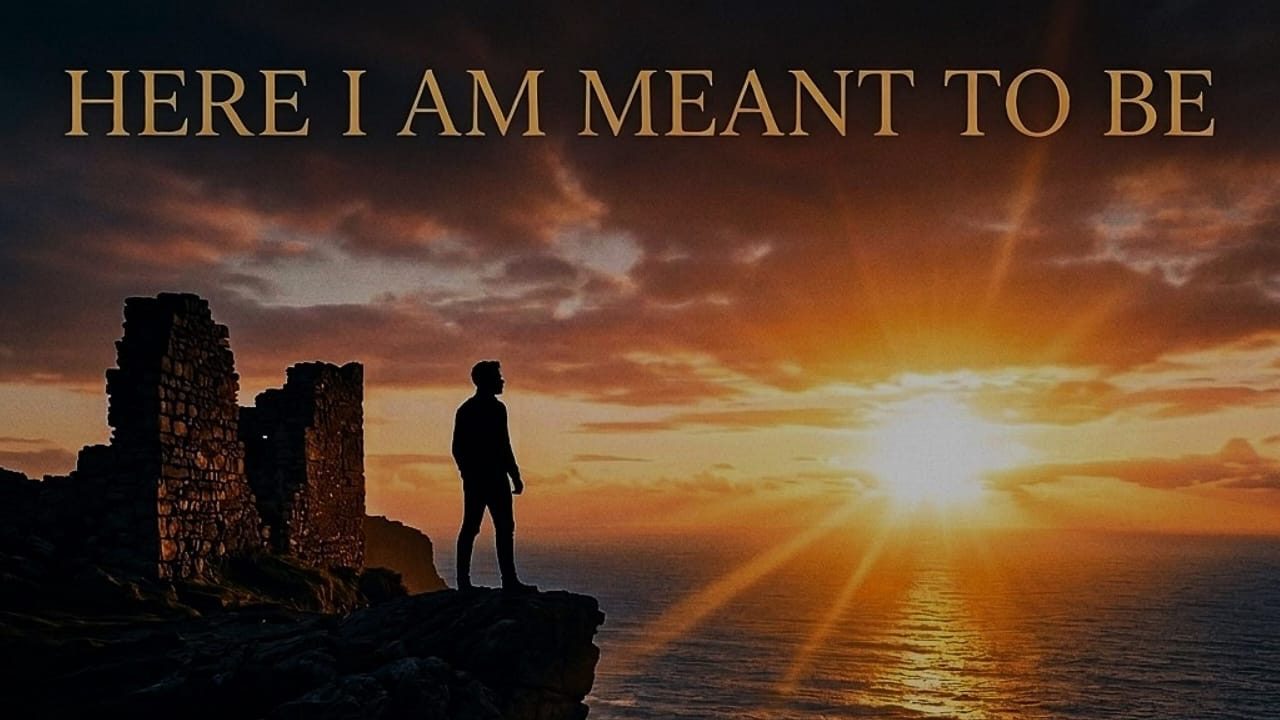
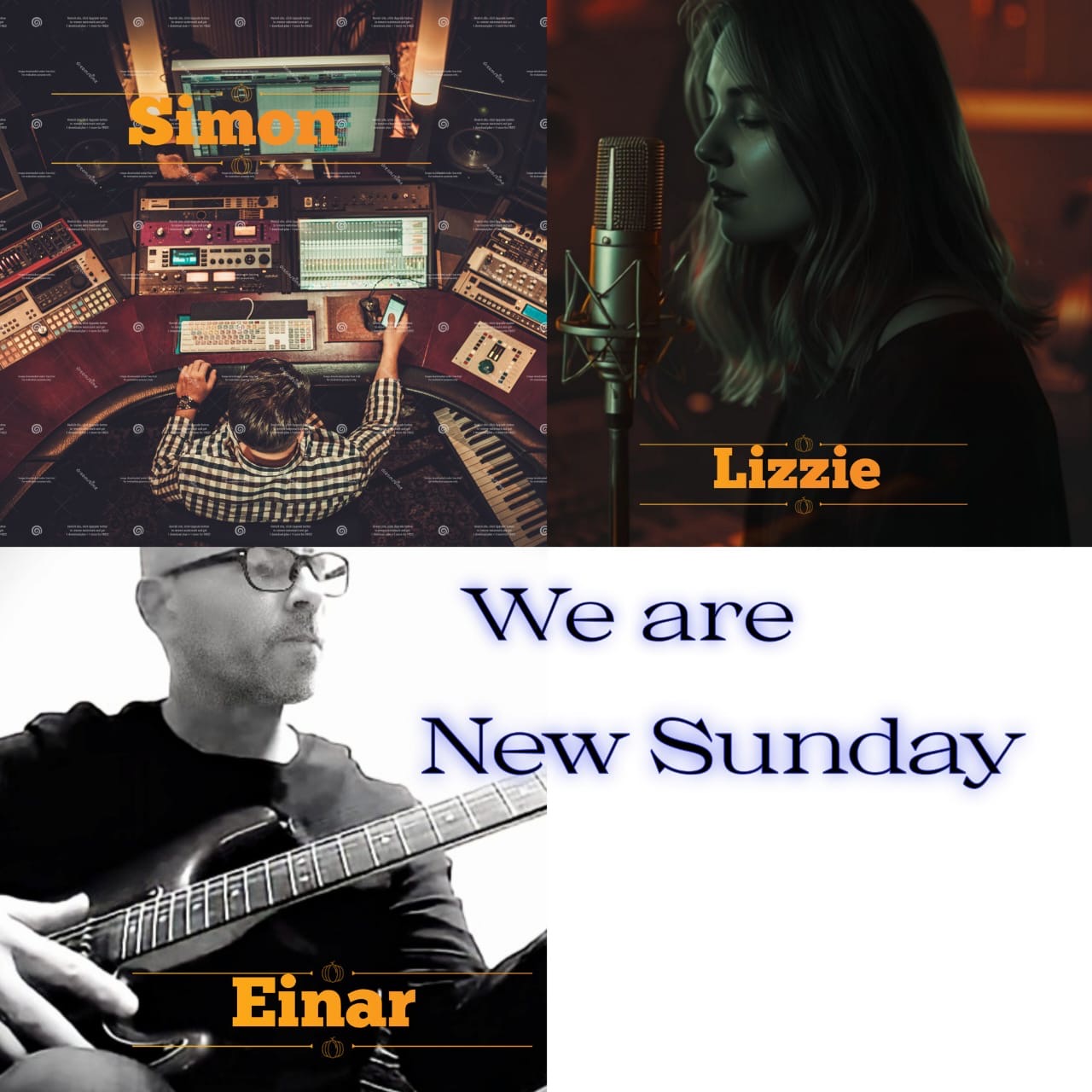
Hello everyone, it’s your host Oliver from DULAXI, and today I’m delighted to be joined by Einar Askelsson, the songwriter behind New Sunday, an Icelandic studio project based in Hafnarfjordur. Working across folk, Americana, country, and indie-influenced music, Einar has developed a distinctive songwriting approach that begins with lyrics and personal stories before the music takes shape. His latest single, “Here I Am Meant To BE,” was released on 14 September 2026, marking the fourth release from New Sunday. The project brings together Einar’s compositions, the vocals of Elizabet “Lizzie,” and the production work of Simon in a collaborative process that allows each contributor to shape the finished songs.
Before we begin our conversation with Einar Askelsson, here’s what you need to know about today’s featured project.
About New Sunday
New Sunday began in January 2026 as a studio project created by Icelandic songwriter Einar Askelsson. Rather than building a conventional band around live performances, Einar established the project to give his compositions a professional recording identity through collaboration with a vocalist and producer. Elizabet, known as Lizzie, has provided the vocals from the beginning, while Simon handles production. Although the three collaborators have never met in person, they maintain regular communication throughout the creative process, working together to develop the arrangements and determine how each song should sound before its release.
Einar’s path into songwriting was neither planned nor conventional. Approximately twelve years ago, while struggling with Complex Post-Traumatic Stress Disorder (CPTSD), he found himself facing mornings marked by severe anxiety and emotional exhaustion. During his recovery, his therapist encouraged him to find something constructive to focus on when those difficult mornings began. Einar turned to a guitar he already owned, knowing only a few chords at the time. What started as a daily attempt to manage his anxiety gradually became an important part of his life, eventually opening the door to songwriting.
Poetry also became central to his recovery. Einar began writing about his feelings and experiences, using words to process thoughts that he had difficulty communicating to others. He later discovered that these poems could provide the foundation for songs, developing a creative process in which lyrics and storytelling come before the music. Over time, he taught himself to play guitar more confidently and developed his understanding of music theory, learning through experience rather than formal musical education.
Released on 14 September 2026, “Here I Am Meant To BE” is the fourth single from New Sunday. It follows “Echoes In The Dark” and “The Empty Street,” releases that Einar identifies as important in establishing the project’s emerging musical identity. Rather than treating that sound as a fixed formula, he sees it as a natural result of the group’s developing collaboration, leaving room for future songs to take different directions.
The latest single centres on the experience of recognising dissatisfaction, searching for change, and eventually finding a place where life begins to feel right. Its themes connect with the wider storytelling approach behind New Sunday, where personal experiences, older poems, and new ideas can all become starting points for a song. Einar does not necessarily recreate individual events from his life. Instead, he combines fragments of experiences and other sources of inspiration to develop stories that listeners can interpret through their own circumstances.
For Einar, music has become much more than a creative pursuit. What began as a way to navigate a difficult period of recovery has developed into a serious songwriting practice and a means of expressing experiences through stories, lyrics, and melodies. With “Here I Am Meant To BE,” New Sunday continues to build its catalogue while Einar explores where his work might lead next.
Having learned more about Einar’s journey and the collaborative process behind New Sunday, it is time to hear directly from the songwriter about his recovery, creative development, latest single, and ambitions for the future. So, without further ado, let’s begin today’s interview.
INTERVIEW SESSION
Oliver:
Einar, your introduction to music began under circumstances you probably never imagined would eventually lead to becoming a songwriter. What started as an attempt to manage difficult mornings gradually developed into something that would become a major part of your life. Looking back at the person you were when you first picked up the guitar, how would you describe the changes music has brought into your life, both creatively and personally?
Einar Askelsson:
I can´t find the words to describe it. In the beginning of my recovery I was totally burnt out so looking back it was like I was creating a new version of me. One of the things that has always been a part of me is an artist element. Before I didn´t nurture it because I didn´t know about it. Music was one of my most effective self helper and has changed me and my life completely. Also writing poems or lyrics.
Oliver:
You have spoken about a particularly difficult period when anxiety made even the beginning of an ordinary day challenging. Your therapist encouraged you to find something to fight against, and that advice eventually led you towards the guitar. Do you remember what was going through your mind during those first mornings of playing, and when did you begin to realise that music was becoming more than simply a way to cope?
Einar Askelsson:
I remember when my therapist gave me this assignment. You see I woke up (if I did sleep at all), with extreme anxiety. Felt like a huge stone were in my stomach. In that situation I couldn´t face the world and it took me until in the late afternoon to have courage to go out.
I remember picking up the guitar and start jamming. The first important thing about this was to have a task to do every day. It had a slow impact on me and I don´t remember exactly how long it took me to feel a progress in my health. What I remember most is I was trying to play music by other artists. I don´t know why but I always ended to create something. The beginning of me writing music.
Oliver:
Poetry also played an important role in your recovery, giving you a way to turn difficult thoughts and emotions into words. You eventually began using those poems as inspiration for songwriting. What did writing poetry allow you to express that you perhaps struggled to communicate in everyday life, and how did you discover that those written experiences could become the foundation for music?
Einar Askelsson:
When I had the energy to write I started to write about what I was going through, my feelings etc. That´s an effective self help tool for me. I always feel when writing I´m talking to another person. It´s very strange. If I was writing about people I was struggling with it helped to me to see the other side of the communication.
I had never written a poem in my life. One night I was having terrible panic attacks and you do everything to fight it and make you feel a bit better.
The day after I saw I had written a poem but couldn´t remember doing it. I obviously was simply in desperation to make me feel better.
Like writing the poems became a kind of a diary. To me a poem is like a photo. It captures a moment in the life. I could express myself how I felt and what I was dealing with in that moment.
When I had learned more how to play the guitar and about the music theory I started to write songs using the poems as an inspiration. When I was sick I couldn´t talk to anyone about it. I didn´t know what was wrong and didn´t who to talk to. When I tried later I simply didn´t find any therapist who specialized in Complex PTSD. There were many in PTSD but that treatment was useless for Complex PTSD.
Since I started writing music inspired by a poem that became my habit in songwriting. Lyrics first. Music later.
Oliver:
One particularly interesting aspect of your story is that you describe yourself as someone who accidentally became a musician. You initially knew only a few guitar chords, yet over the years you developed your playing ability, learned music theory and built your own songwriting approach without formal training. What kept you motivated to continue learning, especially during moments when progress might have seemed slow or uncertain?
Einar Askelsson:
Since I used playing guitar and later writing songs as a self help tool (it calmed me down) I slowly created a new path to follow in my life. I mention earlier I found the artist element in me so that was it. It became natural to me. It´s only for the last 2-3 years I have taking songwriting seriously by releasing songs. Before that I wrote a bunch of crappy songs or parts of song. Luckily I recorded everything so today If I´m stuck I check If I find anything useful to kick of a new song to write. After I started my New Sunday project last January I feel I´m on a run.
Oliver:
You have made it clear that your ambitions have never necessarily revolved around becoming a conventional performing musician or pursuing life on the stage. Instead, your strongest interest appears to be creating songs and finding the right people to bring them to life. When did you become comfortable with the idea that your identity as a songwriter did not have to follow the traditional path of becoming a frontman or performing artist?
Einar Askelsson:
The main reason is because of my health. Though I did recover as best I could from CPTSD I´ll never bee the same again regarding daily energy and my threshold for stress. I would never be able to go struggling on the road. Well I´m not gonna write off to do some concerts but this is not why I´m in music. I´m first and foremost a songwriter.
Oliver:
New Sunday was established in January 2026 as a studio project built around your songwriting, with Elizabet, known as Lizzie, handling vocals and Simon taking responsibility for production. What made you decide to bring these particular creative roles together under one band identity, and what did you hope this arrangement would allow you to achieve that you might not have been able to accomplish independently?
Einar Askelsson:
Since I started to write music recording it has been a problem and still is because of limited budget. I just can´t afford to jump into a studio or record at home. Before Lizzie I have hired other vocalist a few times to sing over audio files. I tried my best to arrange it and make it sound professional but it was mission impossible. It wasn´t until I decided to spent money on a producer that things changed. I write lyrics, music, do an initial arrangement (using instruments from the database in Hookpad) and create an audio file to sing over. That´s just not enough. When I heard what a producer could do for my songs for the first time it was jaw-dropping. He sees new opportunities in arrangements, adds instruments if needed and of course mixes and creates a master.
I did release a few songs under my name. Maybe I´m wrong but from a marketing point of view I think it´s better to use a band´s name. I´m the only real member of the band. If I need or want to I could use a different vocalist. I´ve used Lizzie and Simon for the last 4 singles mainly because they are so good and through those songs we have created I would like to call a unique sound for the band.
My goal that´s still a dream is to gain attention from other musicians to record and release my music. That would make me happy and proud.
Oliver:
One unusual aspect of New Sunday is that you, Lizzie and Simon have developed this musical partnership without ever meeting in person. Despite the physical distance, you describe your communication as constant and your working relationship as a genuine collaboration. How have you managed to establish trust and creative understanding between three people working remotely, and has the distance ever influenced the way you approach musical decisions?
Einar Askelsson:
Yes. Otherwise I wouldn´t have used for 4 tracks now. Like I said in my answer to your previous question together we have created a unique sound. Solo artists do this since the technology allows you to do it. Maybe if we would meet on work a song together the outcome would be better. But that costs money I don´t have and I´m not even sure if it add something extra to each song. We´ll probably meet one day.
Oliver:
Your songwriting process places lyrics before music, which is an interesting approach because many songwriters begin with a melody, chord progression or instrumental idea. You often return to poems and written material that may have existed for years before becoming songs. How do you recognise when a particular poem has the potential to become a complete musical composition, and what usually happens when you begin translating its words into a musical idea?
Einar Askelsson:
All my poems are part of my recovery from CPTSD. I used the poems to learn how to write songs. When you do that you´re a kind of attached to the poem. In writing the songs for New Sunday I´ve used my poems to create a story that becomes the lyrics. So it isn´t one specific poem in one lyric. So you can say I´m still processing and healing from CPTSD by creating the lyrics to our songs.
What happens is I create a story and I somehow can visualize the story (like a film in my mind). The lyrics are not necessarily plain forward as the story is. I might use metaphors, double meanings in words….to give the reader chance to create his own version of the story. So that becomes a material for a musical idea.
Oliver:
You have developed a distinctive way of using Hookpad, manually establishing the time signature, tempo, key, chord progressions, melodies and structure of each composition. Rather than relying on an automatic songwriting system, you use the platform as a creative workspace where you can build the instrumental foundation yourself. How has learning to work with music theory changed your understanding of songwriting, and what advantages has this technical knowledge given you as a self-taught musician?
Einar Askelsson:
No you´re misunderstanding how I use Hookpad. I write the basic structure of my songs on guitar for each part of of the songs. When I feel the song is ready. Instead of creating a demo of me singing the song on acoustic guitar I use Hookpad. To be able to use Hookpad you need to have some knowledge in music theory. Hookpad is a template and there nothing automatic and it´s not at all like an AI tool. The purpose of using Hookpad is to be able to create an instrumental audio file. While using the Hookpad I get some new ideas and change the the music or the lyrics to fit the melody. After writing the song on guitar I have the melody in my mind. Hookpad gives the opportunity to write the melody as notes within a chord or chords. From Hookpad I create the initial arrangement of the song.
The music theory has not changed my songwriting style. If I´m writing a song in A major then I know what chords fits in that key.
Oliver:
You previously mentioned that you tended to use numerous different chords across verses, pre-choruses and choruses, but your philosophy has gradually shifted towards believing that less is more. This suggests an important development in how you understand musical expression. What experiences or discoveries led you to simplify your arrangements, and how did you learn to trust a melody to communicate an emotion without constantly adding more musical elements?
Einar Askelsson:
That was just a step in my learning process as a songwriter. I started to focus more on the melody rather than chords. It´s easy to fall into the trap of trying to use chords as the melody. Some great songs are written like that. If you analyze Paul McCartney songs like Here, There And Everywhere. Paul uses a lot of chords and when you strum the chords on guitar you can hear the melody. Those who write mostly on piano have the tendency to use many chords and also more complicated chords.
I think because I´m totally attached to the story from the lyrics the melody usually comes to me. I changed my way, how to write a melody and from that I realized I sometimes don´t need as many chords as I thought.
Oliver:
Let’s turn to your latest single, “Here I Am Meant To Be”, released on 14th September 2026. As the fourth single from New Sunday, it arrives after “Echoes In The Dark” and “The Empty Street”, two releases that helped establish the band’s musical identity. What was the original idea behind this particular song, and what personal story or emotion did you want its lyrics and melody to communicate?
Einar Askelsson:
I think I´ve answered this question from answers before. Yes I have a lot of material to work from but I still have to create the lyrics that begins with a story. I simply got this idea of a person who realises is stuck in life or not happy and wants to change it. Something many of us relate to. That was the starting point. That person in that song found a place or whatever and feels this is what I was looking for.
Oliver:
The title “Here I Am Meant To Be” carries a sense of belonging, acceptance and perhaps discovering one’s place after a period of uncertainty. Considering the experiences that led you into songwriting, the title could also invite a personal interpretation about finding direction in life. What does this phrase mean to you, and what would you like listeners to take away from it?
Einar Askelsson:
Your questions are good and not easy to answer.
I would like listeners to believe you can face any challenge in your life and make it. You can´t think it away you have to do something about it. If you do it honestly you´ll be rewarded. And therefore you´re where you meant to be.
I´ve been through a lot in my life so I know what I´m talking about.
Oliver:
You have explained that every New Sunday song begins with a story, and that the music is developed to reflect the emotional direction of its lyrics. You also mentioned that your experiences have had a considerable influence on the subjects you explore. How do you decide which personal experiences are ready to become songs, particularly when the material touches on difficult memories or emotions that may still carry some weight?
Einar Askelsson:
Like I answered before I´m not making a story of one specific experience in my life. It could be bitch and pieces from my material or I just happen to read a quote about something. What I´m trying to say is it could be anything that triggers the idea of a story. When I start to write I´m not even sure where it leads me. I always believe it leads me to where it should be. Even if some of my lyrics sound dark or sad I hope they´re also encouraging for people who needs it.
Oliver:
Your creative process involves several stages before a song reaches its final form. You establish the initial arrangement, send the instrumental to Lizzie, and then Simon works on the production, with everyone exchanging ideas until you agree on the version to release. How do you respond when Lizzie’s vocal interpretation or Simon’s production ideas take a composition somewhere different from what you originally imagined, and can you recall an instance when that creative exchange significantly improved one of your songs?
Einar Askelsson:
I want both Lizzie and specially Simon to do that. Lizzie for example knows she has artistical freedom. During this process we are going back and forth and sometimes Lizzie needs to sing some parts again or add backing vocals.
When I could afford to hire a producer it was a game changer for my songs. Simon always comes up with new idea of arrangement and so far our collaboration, including Lizzie has been smooth. And improved all my songs.
Oliver:
Lizzie’s role is particularly important because she gives a human voice to songs that initially exist through your own writing and instrumental arrangements. Since you have developed a consistent partnership from the beginning of New Sunday, how has her vocal personality influenced the way you write melodies, structure verses and choruses, or approach the emotional delivery of your lyrics?
Einar Askelsson:
There is no co-incident I´ve used Lizzie in all my songs so far. When she puts her vocals on the instrumental file she is also testing if the melody works. Yes I sometimes change some words or notes based what she suggests or what I hear. We are collaborating in this phase of the process.
Before Lizzie starts to sing I give her instructions. Luckily Lizzie has been able to understand the story and the mood in the song. Her vocals are according to that.
Oliver:
“Here I Am Meant To Be” follows the musical direction established through your previous singles, but you have also made it clear that developing a signature sound does not mean repeating the same formula. How do you identify the musical qualities that make a song recognisably New Sunday while still allowing each new release to have its own personality, atmosphere and creative direction?
Einar Askelsson:
I believe I or we are improving after each song. There´s no formula really. Like I´ve said I believe we have found our sound that naturally affects the songwriting but does not stop me from finding new ideas and try them out. I´m not thinking or trying to make a song recognisable in the same way of my previous songs. It just happens. Specially in the arrangements and producing the song.
You see if you have found a sound you wanna use that makes New Sundays song recognisable. Also what instruments are used. We have used strings in all our songs to help to create the mood of the songs.
Even if we use the same sound as before, same instruments etc..you never know what happens. One thing listeners can be sure is I´m never trying to repeat myself. My mind is to creative to do that.
Oliver:
Building an independent music project also involves practical challenges that audiences do not always see. You have spoken openly about having a limited budget, saving money to work with professional collaborators and finding affordable ways to promote your releases. What has been the most difficult part of sustaining New Sunday financially, and how have you managed to keep investing in your music while working within those limitations?
Einar Askelsson:
After working with Lizzie and Simon I know what the expected cost is to finish a song ready to release. To promote the song is tricky. It´s so hard for new artist to break through into the mainstream. I´ve been trying the best as I can to understand how The algorithms work on Spotify to name one streaming service. The more I read the more I don´t understand really. To buy promotion you must be very careful. I found a website where I can check if a promoter is legit or not. The promotion business is a jungle. You only need to enter the promoter website to have the same promoter sending me emails. I´m drowning in those kind of emails.
I have found a few promotion services but even if they are legit and real people are listening it doesn´t guarantee you´ll get royalties from all the streams.
So far the royalties from our song are covering the cost. Now I´m praying to be lucky.
Oliver:
One of your stated ambitions is to attract the interest of other musicians who might want to record your compositions. This suggests that you see songwriting as something that could extend beyond the current New Sunday project. What would it mean to you to hear your compositions interpreted by other musicians, and are there particular types of artists or musical arrangements you would be interested in exploring through future collaborations?
Einar Askelsson:
Like I believe I said earlier one of my goals is to get other artist to record your songs. Artists who have fanbase and therefore I get the royalties from the streams. That would be great to hear how other musicians would approach my song in arrangement for example. No I have no special artist in mind. Also I´m open to collaborate with other songwriters. I´ve tried it but hasn´t worked out yet.
So I feel I´m on the edge of making it….but not yet!
Oliver:
New Sunday currently operates as a studio band, with live performances not forming part of the immediate plan. However, you have not completely ruled out taking the project onto the road once the catalogue has grown. What would need to happen creatively and practically before you considered performing live, and how do you imagine translating the band’s recorded sound into a live experience?
Einar Askelsson:
Just imagine the cost of doing this. And all the work behind it. I don´t have that time and not the money to go on the road with the band. To go and play live has nothing to do with the creativity. Practically like I said. I can´t afford it. I´m not ruling it out because if we will get lucky and create a solid fanbase then the demand will probably follow. Then I might thinking about it.
Oliver:
Finally, Einar, when you look back at the journey from someone who picked up a guitar during a difficult period of recovery to an independent songwriter who has established New Sunday and released four singles, there is a remarkable amount of personal development behind the music. If you could speak to the version of yourself who first started writing poems and experimenting with those few guitar chords, what would you tell him? And as you continue developing New Sunday, what kind of musical legacy would you ultimately like your songwriting to leave behind?
Einar Askelsson:
The version of myself in the beginning was striving to stay alive. For real. To pick up the guitar and jam it each day was then first and foremost a tool that helped me to calm me down. I can´t tell that version of myself anything musically. Later when I was feeling a bit better and starting writing poems I can only say well done. Keep it up. And that´s what I did. You see when you´re sick then my musical mind isn´t dreaming of a success. I´m dreaming of recover. It´s not until the last 2-3 years I´m aiming to make a living out of music.
Musical legacy? I could answer this after maybe 5 years. Today my legacy is to say art (for me writing songs and lyrics) helped me me a lot to save my life when I was so sick I wasn´t sure I would make it. Because of that I found music. Or vice versa.
“New Sunday’s story is a reminder that a song can begin long before its first melody is written. For Einar Askelsson, music grew out of a personal struggle and became a way to turn difficult experiences into stories that might help someone else find their own sense of direction.”
~ Oliver (DULAXI Team)
EDITORIAL PERSPECTIVE
What stands out about New Sunday is the care Einar gives to the relationship between words and music. His decision to begin with a story, often shaped by years of personal writing, gives each composition a clear creative starting point. The partnership with Lizzie and Simon adds another dimension, allowing the initial ideas to develop through vocal interpretation and production. “Here I Am Meant To BE” also represents a broader ambition: to build a lasting songwriting practice without following the traditional expectations of a performing artist. Einar’s journey gives that ambition a deeply personal foundation.
~ Oliver (DULAXI Team)
CLOSING
Our sincere thanks to Einar Askelsson for sharing his story with DULAXI and offering such an honest look at the experiences, decisions, and creative processes behind New Sunday. His reflections reveal how songwriting can develop in unexpected circumstances and how a personal interest can gradually become a serious artistic pursuit.
“Here I Am Meant To BE” is another step in New Sunday’s evolving catalogue, bringing together Einar’s story-led songwriting with the collaborative contributions of Lizzie and Simon. We encourage readers to spend time with the single and explore the project’s earlier releases, “Echoes In The Dark” and “The Empty Street,” to hear how its musical identity has developed.
As Einar continues writing and hopes to connect with more musicians who can bring his compositions to life, we look forward to seeing where his work leads. Thank you for spending time with DULAXI and joining us for this conversation. Stay connected for more interviews exploring the people, experiences, and creative ideas behind today’s music.