
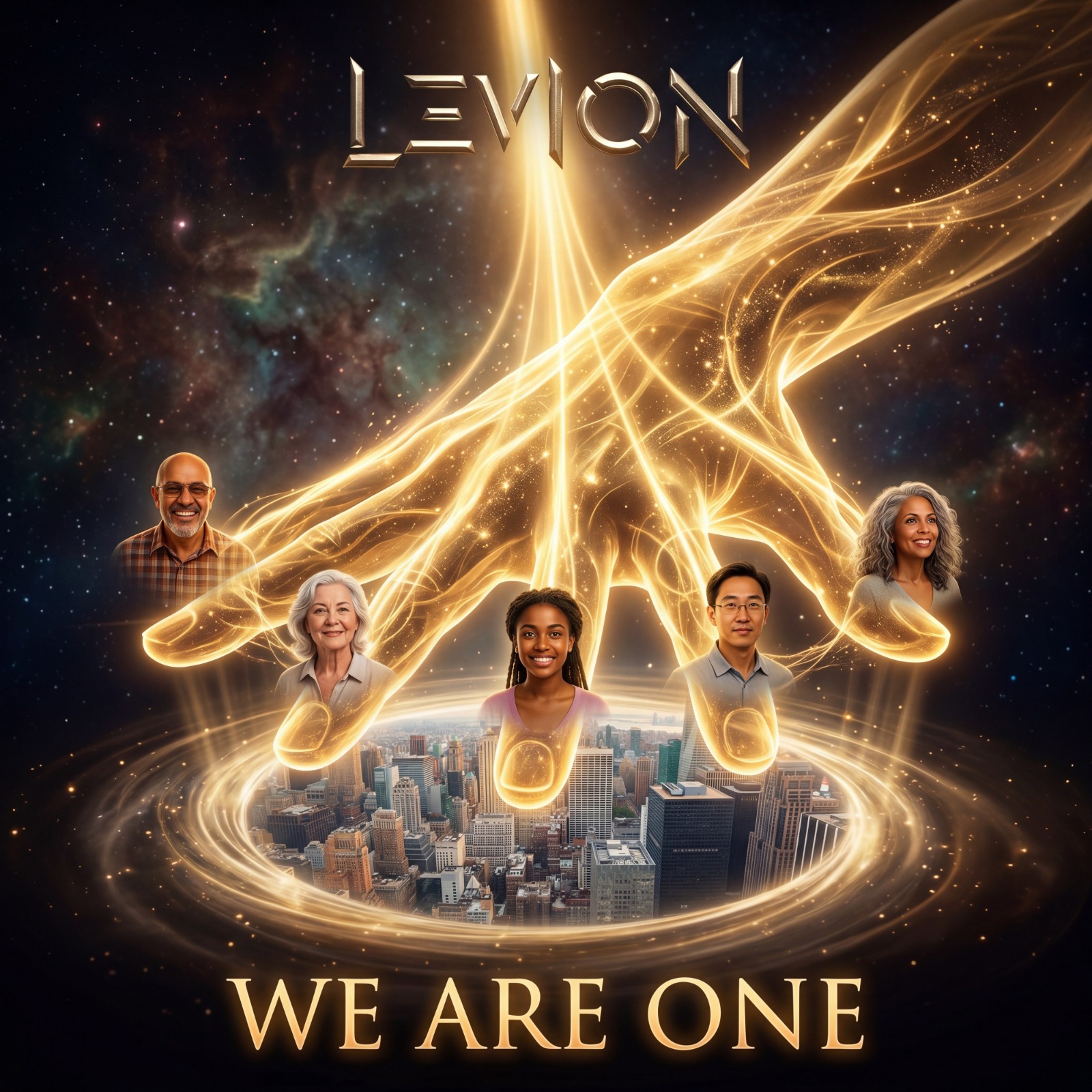
Welcome to DULAXI. Today, we sit down with LeVioN, the Romanian Spiritual Cosmic Metal project formed by Liviu Căldărescu and Ovidiu Joița, to explore the ideas, creative process, and human story behind their latest release, We Are One. Released on July 12, 2026, the track continues LeVioN’s distinctive approach to combining hard rock, heavy metal, speed and thrash with themes of spirituality, consciousness, unity and human connection.
Before we begin our conversation with LeVioN, here’s what you need to know about today’s featured project.
About LeVioN
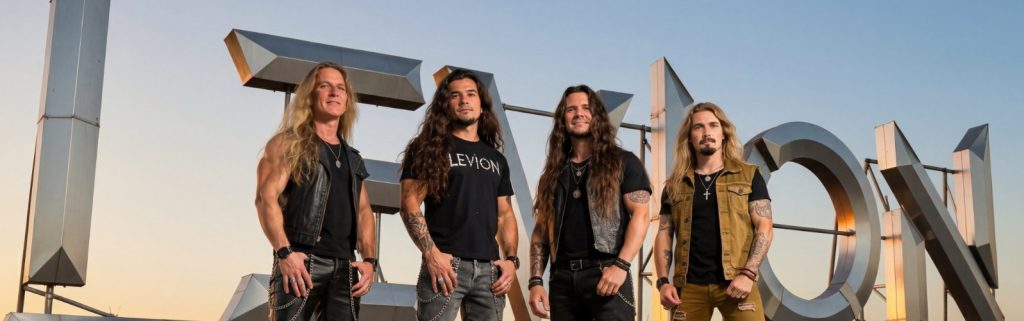
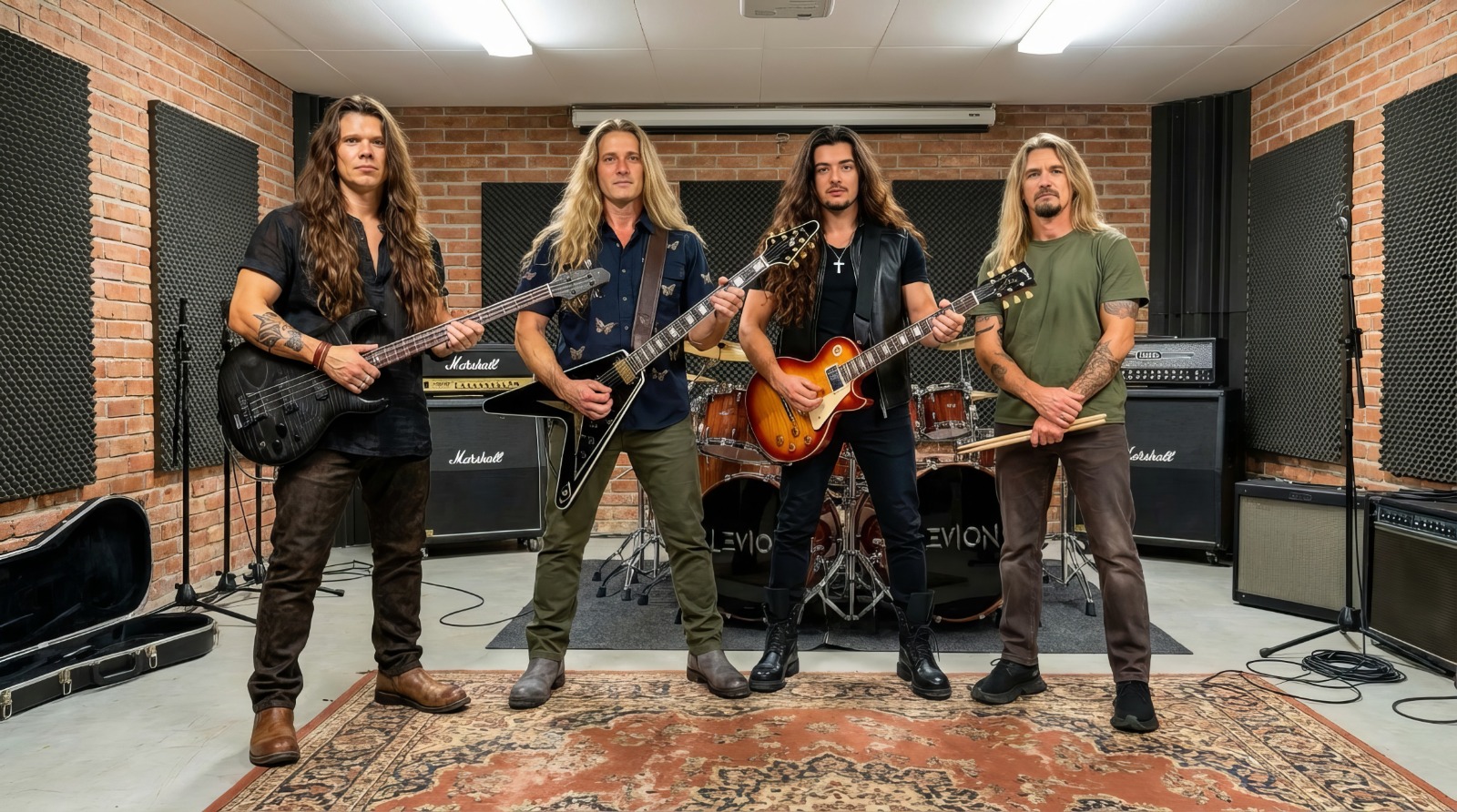
LeVioN is a Spiritual Cosmic Metal project from Bucharest, Romania, created by Liviu Căldărescu and Ovidiu Joița. Although the project officially came to life on October 17, 2025, its roots stretch back to May of that year, when the idea that would become LeVioN first began to take shape.
Both musicians are veterans of the Romanian rock and metal scene, having shared stages with acts including Dark Tranquillity, Evergrey, Tristania, and Iris. Within LeVioN, Liviu contributes bass while Ovidiu handles lead guitar and harmonies. Together, they have built the project’s musical and visual universe independently, without a label or agency.
Their approach is ambitious. Before the first LeVioN release arrived on March 20, 2026, the two musicians had already created three albums, comprising 36 songs, alongside ten official music videos. Their work has since reached listeners in more than 30 countries, accumulated more than 1.4 million views on their own YouTube channel and attracted over 26,500 subscribers.
At the centre of LeVioN’s identity is the term “Spiritual Cosmic Metal”, a description created because the musicians felt no existing genre label adequately captured their sound. Their music moves between hard rock, heavy metal, speed, occasional thrash and modern rock, while incorporating a broader atmospheric and spiritual dimension. The result is music designed not simply to sound heavy, but to carry ideas about consciousness, elevation, unity and light.
The band’s name itself carries several layers of meaning. LeVioN brings together Lev, the Hebrew word for heart; Ion, representing pure energy and the movement of light; and Levitas, referring to lightness and elevation in Latin. Together, these ideas reflect the project’s central concept of a heart freeing itself from the weight of shadows and joining the divine spark.
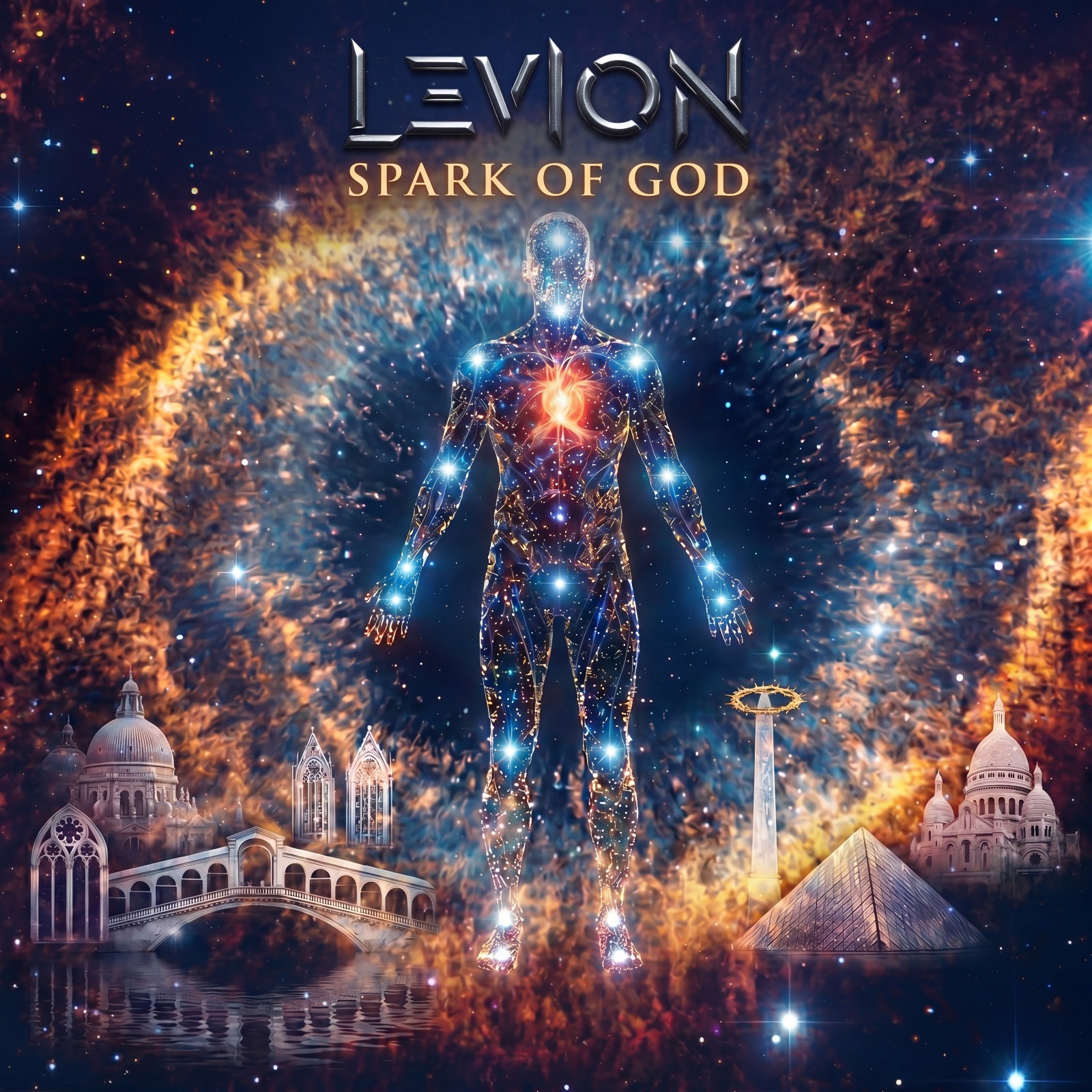
Their three initial albums were conceived as chapters of a larger spiritual journey. Embrace the Light represents awakening and release from fear, Thankful to God explores gratitude and truth lived every day, while Spark of God focuses on the recognition that humanity is connected to the same source.
The project’s creative philosophy extends to its unusual use of artificial intelligence. LeVioN describes its process as “Human Composition, AI Instruments.” The compositions, lyrics, structures, arrangements and overall creative vision originate entirely from the two musicians, while AI performs the instrumental and vocal parts. From the beginning, they have openly disclosed this approach rather than presenting the technology ambiguously.
For LeVioN, technology is therefore not the source of the music’s meaning. It is a tool through which their human compositions can be performed and brought into the world.
We Are One continues that philosophy while focusing on one of the project’s most universal themes: the idea that beneath the borders, labels and divisions created by humanity, people remain connected. The song turns that idea into a musical journey from individuality towards collective recognition, reflecting LeVioN’s wider belief that music can remind people of something they have always shared.
Having this brief introduction to today’s featured project, I’m sure both new listeners and longtime fans are excited to hear directly from LeVioN. So, without further ado, let’s begin today’s interview.
INTERVIEW SESSION
Oliver:
You and your fellow musician are not newcomers to music, having shared stages in Romania long before LeVioN existed. Before we get into the band, could you take us back to that earlier chapter of your lives and tell us what those years of making music and performing together gave you as musicians and as people?
LeVioN:
“We both started with a guitar in our hands and a teacher in front of us. Then came the stage: the high school band, the rehearsal rooms, the concerts, the television studios, the recording sessions. We found each other in Bucharest, in a band, and that is where the serious years began. As musicians, those years gave us the craft: how a song is built from the first bar to the last, how you hold a room, how you play when nobody is waiting for you. As people, they gave us something rarer: a friendship that went through every change life brought and never broke. Everything LeVioN is today grows out of that friendship.”
Oliver:
You have described May 2025 as the moment when the idea behind LeVioN first appeared, followed by the band’s official birth on October 17, 2025. What was happening between those two dates, and what was the moment that made you both realise this was no longer simply an idea but the beginning of something you genuinely had to create?
LeVioN:
“Between those two dates there was work, a lot of it and all of it quiet. The idea came in May, and from there we kept building, with no name and with nobody knowing. The moment it stopped being just an idea was the day we gave it a name. When something receives a name, it also receives a responsibility. On the 17th of October we both understood that we were no longer talking about a project we could put down whenever we liked, but about something we had to carry into the world.”
Oliver:
There is something quite remarkable about the scale of what you built so early. Before the first release arrived in March 2026, the two of you had already created three albums, 36 songs and 10 videos, handling everything from the writing to the visual side yourselves. What drove you to create such an enormous body of work before you had even had the opportunity to see how an audience would respond to LeVioN?
LeVioN:
“The music came first. The albums took shape as whole works, each one with its own journey, and we did not want to go out into the world with them in pieces. Then came the decision that delayed us the most: we did not want to release the music without its visual universe. Every song asked for a world to live in, and those worlds are built slowly. What drove us was not the question of how an audience would react. It was the conviction that this music had to reach the world, and that it had to reach it whole. When the first song went out, in March, the albums were already there. The videos came one by one, along with the releases, until the trilogy was closed.”
Oliver:
When you look at those first three albums now, do you see them primarily as separate bodies of work, or as chapters in one larger journey that you and your collaborator were already trying to tell? What connects those 36 songs beneath the surface?
LeVioN:
“Chapters, from the very beginning. The three albums are one journey: Embrace the Light is the awakening and the release from fear, Thankful to God is gratitude and truth lived every day; Spark of God is the recognition that we are all part of the same source. From the cross to the cosmos, from sacrifice to stars. Each album has a beginning and an end, and it is meant to be heard in order. What connects the thirty-six songs beneath the surface is a single idea, said in thirty-six ways: you are not alone, you are part of something larger, and life is meant to be lived with joy.”
Oliver:
The name LeVioN carries several layers of meaning through Lev, Ion and Levitas, and you have connected the project to ideas of spirituality, elevation and consciousness. How did that identity develop between the two of you, and what did you want the name itself to communicate before someone had even heard a single note?
LeVioN:
“The name came on the 17th of October 2025, the day we consider the band’s birthday. LeVioN brings together three roots: Lev, the heart in Hebrew; Ion, the particle of pure energy and the movement of light; Levitas, lightness and elevation in Latin. Together they say the same thing: the heart that frees itself from the weight of shadows and joins the divine spark. We did not choose the name to sound good. We chose it because it said, in one word, why we make this music. We wanted someone who had not heard a single note to already know, from the name, where the road leads: upward.”
Oliver:
You describe the sound of LeVioN as “Spiritual Cosmic Metal,” bringing together hard rock, heavy metal, speed and thrash with ideas surrounding consciousness and spirituality. What does that combination allow you to express that a more conventional metal identity would not?
LeVioN:
“No existing label fit us, so we had to invent one. The sound starts from hard rock and heavy metal, climbs into speed, lets a thrash passage through here and there, and it is modern rock, built and produced today. What the combination allows us is to put the raw force of rock in the service of a message of light. Metal has always known how to carry weight. We wanted it to carry height as well. A song of ours does not stay in one place: it moves through several states until the last chord, exactly the way a person moves through a day.”
Oliver:
You have both spent years around rock and metal, but LeVioN seems to approach those traditions from a different philosophical direction. Which artists, bands or musical movements have had the greatest influence on the way you think about heavy music, and how have you transformed those influences into something that feels distinctly like LeVioN?
LeVioN:
“We grew up on heavy metal: Metallica, Megadeth, Iron Maiden, Dream Theater, Slayer, Sepultura, Accept, and many more after them, up to bands of today. What we took from them is the conviction that heavy music can carry the weight of meaning, not only the weight of sound, and the discipline of construction: a good riff is a well-written sentence. What is ours is the direction. The same tools, the same force, but turned away from anger and towards light. Every LeVioN song starts heavy and ends open. That is the transformation: we did not change the instruments; we changed the destination.”
Oliver:
There is a powerful philosophy behind your statement that you are giving God “the shape of sound,” with every track becoming a kind of prayer and every riff carrying a call toward the light. Where does that spiritual relationship with music come from personally, and how has it influenced the way you approach composition?
LeVioN:
“We are both spiritual people, and that did not arrive with LeVioN. It was there long before. Music has always been, for us, the place where the world stops and only what is true remains. When Liviu said that LeVioN is the way we give God the shape of a sound, he meant exactly that: we do not sing about God as a subject; we sing from the place where we feel Him. What we want is to pass on to the world our messages about a life lived in harmony with everyone around us. In composition, this shows in a simple way: we do not start a song until we know what it has to say. Meaning comes first, and the sound follows it.”
Oliver:
At the centre of We Are One is a deceptively simple idea: beneath the borders, labels and divisions that human beings create, we are still connected. How did you turn such a universal philosophical concept into something emotionally personal enough to become a song rather than simply a message?
LeVioN:
“A message is something you read and move on from. A song is something that happens to you. The difference was not to state the idea but to live it inside the song: to start from a single spark and grow until a chorus where you can no longer tell the voices apart. “There is no other. There is only One creation wearing seven billion faces.” We wrote that not as a thesis but as something we feel every time a whole room sings the same chorus, people who do not know each other and breathe together. The song is built to do that to whoever hears it: to take them in alone and leave them part of something.”
Oliver:
When you write about humanity being one energy despite everything that separates us, are you also responding to something you have personally witnessed in your own life or career? Is there a particular experience that made this idea of unity feel especially important to you?
LeVioN:
“Yes, and not one experience but a whole life on stage. For years we saw the same thing from behind the instruments: people walking into a room divided, each with their own day, their own opinions, their own worries, and walking out together, after singing the same chorus for three minutes. Nobody told them to make peace. The music reminded them of something they already knew. We did not read the idea of unity in a book. We saw it with our own eyes, hundreds of times, and we understood that we are not creating something new. We are remembering something old. We Are One is that memory, put into sound.”
Oliver:
Looking specifically at We Are One, what musical elements do you feel best represent the song’s central idea of unity? Are there particular riffs, melodies, vocal moments, rhythmic choices or changes in intensity that you consider essential to the way the song communicates that message?
LeVioN:
“The song opens with a piano, which is rare for us: we do not have a piano in many songs. We Are One is among the few, and that is how we felt this one had to be orchestrated. The piano is a single voice, a single spark. Then the guitars and the rhythm section come in, and the song grows like a circle widening, up to the chorus, where everything opens at once. What is essential is that road from one to all: it begins alone and it ends together. The chorus is not shouted; it is sung in full, because it is not a fight, it is a recognition.”
Oliver:
Across LeVioN’s music, you move between hard rock, heavy metal, speed and thrash elements while also leaving space for a much more atmospheric and spiritual dimension. When you begin composing a track, how do you decide where the heavier passages, melodic sections, rhythmic intensity and more expansive moments should sit within the arrangement, and what role does that contrast play in telling the song’s story?
LeVioN:
“The classic way. We start from the lyrics, because they tell us where the song needs to breathe and where it needs to strike. Then the rhythm section, which holds the frame, then the guitars, which carry the story. We do not decide in advance where the heavy passage goes and where the open one goes; the words decide it. Where the verse asks for weight, the arrangement presses; where the verse rises, the arrangement opens. The contrast is not an effect; it is the story itself: every LeVioN song moves from a heavy place to a bright one, and the arrangement is the road between them.”
Oliver:
With LeVioN, the music is carrying ideas about spirituality, consciousness, unity and human connection, but those ideas also have to work purely as music before a listener understands any of the philosophy behind them. How do you use melody, riffs, rhythm, atmosphere and intensity to make those emotions felt through the sound itself, even for someone hearing LeVioN for the first time without knowing what the song is about?
LeVioN:
“The music has to work before anyone understands a single word; otherwise, the philosophy has nothing to stand on. That is why we work with what every good band works with: a riff that grabs you from the first bar, a melody you can hum, a chorus that opens up, a dynamic between heavy and wide. Someone hearing LeVioN for the first time, knowing nothing, has to feel that the song starts from a place of pressure and arrives in a place of light. That is the emotion. If they feel it in the body, the words come after, and they already understand them.”
Oliver:
One of the most unusual aspects of LeVioN is your creative model: every composition, lyric and element of the artistic vision is created by humans, while artificial intelligence performs the music. What made the two of you decide to draw that particular line between human creativity and machine performance?
LeVioN:
“The line was simple for us, because it was drawn by what we had and what we did not have. We had the songs, the lyrics, the structure, the vision, years of stage behind us. We did not have what a record label has: a studio full of people, an orchestra, a team. There are two of us. So we built one. We write the words and the structure of each song, then we build the arrangement channel by channel, as in a classic studio: the drums with the bass, the harmonies, the lead guitars, the voice. Artificial intelligence plays what was written. It is our orchestra and our voice, not our composer. The line sits exactly there: everything that carries meaning is ours, everything that is execution can be its.”
Oliver:
You have also made a deliberate decision to disclose the use of AI openly in your titles, on your website and across your platforms rather than allowing listeners to discover it later. In an industry where AI involvement can sometimes be hidden or presented ambiguously, why was complete transparency important to you from the very beginning?
LeVioN:
“Because we would rather be honest than clever. We wrote Human Composition, AI Instruments on the first release and on every one since, in the titles, on the site, on every platform, because we did not want anyone to find out later something they could have known from the first second. In an industry where this is hidden or half said, we put it on the table from day one. And the reason goes deeper than honesty: our message is about truth. You cannot sing about light and keep something in the shadow.”
Oliver:
Has working this way changed your understanding of what it means to be a musician, songwriter or producer? In other words, when the composition, lyrics, emotion and creative direction originate from two human beings but the instruments are performed by AI, where do you believe the essence of musicianship actually lives?
LeVioN:
“In the ear, in the choice and in the intention. A musician is not his instrument; the instrument has always been a tool, from the first wooden guitar to today. The musician is the one who knows which note is missing, who feels that a chorus comes in one bar too early, who refuses a song until it says exactly what it was meant to say. Working this way, we understood that more clearly than ever: everything that matters in a song happens before anyone touches a key. And we are still musicians with the instruments in our hands, in the room where we play to this day.”
Oliver:
Because the two of you have built the music and visuals yourselves, there is also a strong sense that LeVioN is not simply a band releasing songs but an entire artistic universe. How do you divide the creative process between yourselves, and how much discussion goes into deciding not only what a song should sound like but what its visual world should look and feel like?
LeVioN:
“We do not divide it, we do it together. We both receive and we both create. Every song is discussed from the first verse to the last frame: what it says, where it sits in the album, what world it needs around it. The visual universe does not come after the music, as an illustration; it comes with it, from the same place. When a song is finished, we already know what colour the sky is in its video. The conversation between the two of us is, in fact, the whole process.”
Oliver:
Creating 36 songs and 10 videos across three albums must have brought its own frustrations, unexpected discoveries and moments where the original vision had to change. What has been the most difficult part of building LeVioN in this way, and what did that difficulty teach you about yourselves as artists?
LeVioN:
“The hardest part was patience with the truth of a song: not releasing it until it says exactly what it was meant to say, even if that means starting again. The video for Mesia was the hardest one to make in the whole trilogy; it only let itself be built once we stopped forcing it. And the hardest thing now is a different one: making this music heard. What it taught us: that we do not control when something arrives, only how ready we are when it does. And that a road that gets blocked is not the wrong road, it is a road asking something else of you.”
Oliver:
You have already seen LeVioN reach listeners internationally through platforms, radio and music media, but I imagine there is a difference between seeing numbers grow and receiving a personal reaction from someone who says the music genuinely changed something inside them. What has been the most meaningful response you have received so far, and why did it stay with you?
LeVioN:
“Someone wrote under one of our songs that the lyrics are strength for the truth, for everyone who has walked broken roads and come out polished like a crystal in the sun. He was not describing the song. He was describing himself. That stayed with us, because it is exactly what it means for the music to do its work: not to be praised, but to become a place where someone recognises himself. The numbers grow and we are glad of it. But a message like that, from a country we have never set foot in, is the answer to why we do all of this.”
Oliver:
You have said that if one of your songs makes somebody kinder to the person standing beside them, then the song has done its work. When you think about that goal, what do you actually hope a listener carries with them after spending time inside the LeVioN universe, even if they never fully understand every philosophical idea behind the music?
LeVioN:
“Nobody needs to understand a single philosophical idea. We would like them to walk out of a song a little lighter than they walked in, a little better with the person next to them and with the planet we live on, and with the feeling that they are not as alone as it seemed. If one day of someone’s life is better after three minutes of our music, the song has done its job. But whoever wants to dig, let them dig: they will find. Our videos are built like a Dan Brown novel, full of symbols and meanings, from the clothes the characters wear and their colours, to the places we chose, the objects that appear and the order in which they appear. Nothing is there by chance. Every album is a journey with a beginning and an end, every video has its story written underneath it, and whoever listens in order finds a thread that ties everything together, from the first song of the first album to the last frame of the last video. There are whole layers nobody has discovered yet. We leave them there, like gifts, for whoever comes back a second and a third time. And whoever only wants to listen is just as welcome. Joy does not need explanations.”
Oliver:
On September 11, you open the fourth album with the single One Creation. After everything you have already created across the first three albums, what makes this song the right doorway into the next chapter of LeVioN, and what does “One Creation” mean to you at this particular point in the band’s journey?
LeVioN:
“One Creation is the song that starts from the beginning: from Genesis, from what was here before all of us. Mountains rising, rivers carving their claim, oceans, fire, one creation we are all part of. It is God’s plan, told in sound. But the song does not stay there. It has a surprise inside, a plan that is as real and as human as it gets, and we will not reveal it now, because the video will do it better than our words. That is why it is the right doorway: after a trilogy that went from the cross to the cosmos, the fourth album starts again from Creation, but this time with our own hands in it. “We’re the hands that build, the hearts that burn.” Creation is not only what we were given. It is also what we do with it.”
Oliver:
Finally, if someone looks beyond the songs, the AI technology, the numbers and the visual universe, what is the deeper human story you hope people eventually understand about the two musicians who created LeVioN? When this project is much further along, what would make you feel that everything you started in May 2025 was truly worth creating?
LeVioN:
“The story is simple, and we believe it belongs to many: two friends who played, dreamed, believed, then life did what life does, and the fire did not go out. It only changed its clothes. We are not a band that appeared out of nowhere; we are two musicians who did not give up, and who found, when the time was right, the tools to say what they had to say for a long time. When would it be worth it? It already was, the day someone from a foreign country wrote to us that a song had changed one of their days. But if you ask what we would wish for when all of this is much further along: that the message has travelled farther than we have. That people say “we are one” without remembering where they first heard it. And, one day, to play all of this live, in a concert like nothing seen before, one we have already built and are only waiting for the moment to make real.”
“LeVioN turns the weight of metal into a language of elevation, using human composition, technology and a deeply personal spiritual vision to remind listeners that music can build bridges where the world has created divisions.”
~ Oliver (DULAXI Team)
EDITORIAL PERSPECTIVE
Speaking with LeVioN reveals a project built around an unusually clear creative conviction: that technology can serve an idea without becoming the idea itself. Their approach to spirituality, unity and music is equally deliberate, while the scale of what they have created independently gives the project an intriguing sense of purpose. Most striking is their belief that music does not always have to teach something new. Sometimes, it can simply remind us of what we already know.
~ Oliver (DULAXI Team)
CLOSING
Our conversation with LeVioN offers a deeper look into a project built not only around heavy music, but around friendship, conviction, spirituality and an ambitious belief in what music can communicate. From the origins of the band and the creation of its three-album trilogy to the philosophy behind We Are One and its Human Composition, AI Instruments approach, every part of the project reflects a deliberate creative decision.
Thank you to LeVioN for taking the time to share these insights with DULAXI and for allowing us to look beyond the music into the ideas, experiences and creative choices shaping the project. We encourage readers to experience We Are One for themselves and follow LeVioN as they move into their next chapter.
And to our readers, thank you for spending this time with DULAXI. We look forward to bringing you more conversations with artists whose stories, ideas and music deserve to be heard.